咖啡

Search documents
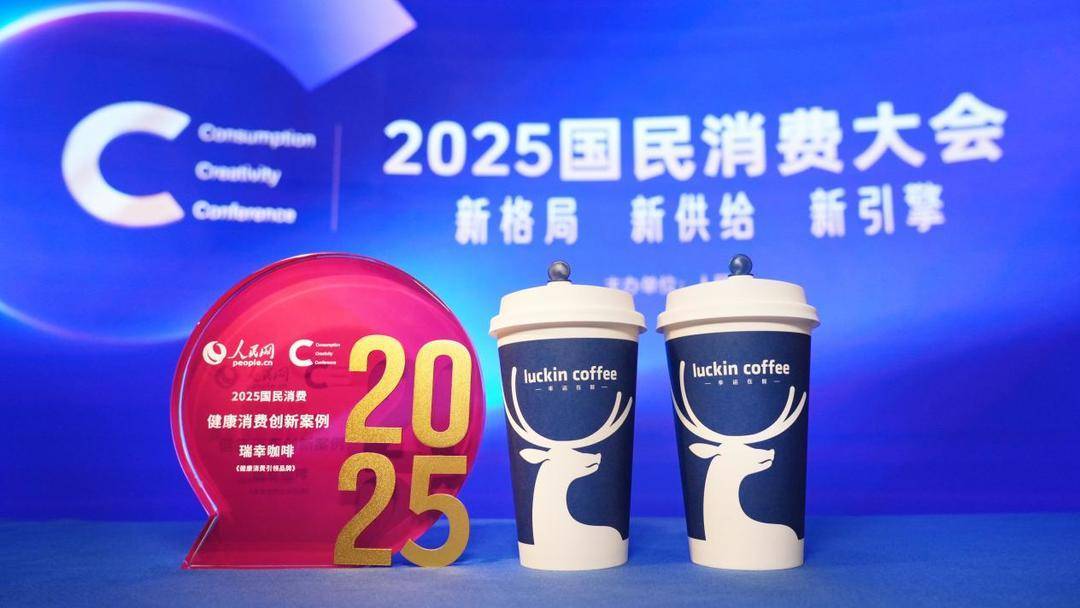
瑞幸连续三届入选国民消费创新案例,今年获评“健康消费引领品牌”
Sou Hu Cai Jing· 2025-12-01 06:49
Core Viewpoint - The health-oriented upgrade has become a significant direction for product innovation in the coffee industry, with Luckin Coffee recognized as a leading brand in this transformation, winning the "Health Consumption Leading Brand" award at the 2025 National Consumption Conference [1][3]. Group 1: Company Innovation and Recognition - Luckin Coffee has been continuously innovating in the health beverage sector, leading to its selection as an innovative case for three consecutive years, highlighting its market performance and standard-setting efforts [1][3]. - The company has launched several star products that balance health and flavor, such as the Coconut Latte, Orange C Americano, and the Little Butter series, which have gained widespread trust among consumers [3]. Group 2: Industry Trends and Standards - The ongoing health-oriented trend in ready-to-drink beverages is driven by Luckin Coffee's commitment to quality and innovation, including the establishment of standards for light milk tea in collaboration with the China National Institute of Standardization [4]. - Luckin Coffee has initiated the "Clean Formula Project" to upgrade product formulations, ensuring higher quality and healthier options for consumers [4]. - The company actively collaborates with nutrition experts and KOLs to promote the health benefits of coffee through various channels, effectively advocating for a healthy lifestyle among consumers [4]. Group 3: Market Insights - The health awareness among consumers and the national "Three Reductions and Three Healths" initiative are driving the inevitable trend towards health-oriented ready-to-drink beverages, with Luckin Coffee serving as a model for industry transformation [4].


华伦天奴中国员工举报大中华CEO,“经常说脏话侮辱员工、腐败还独裁”
Sou Hu Cai Jing· 2025-12-01 06:41
Group 1 - Casetify, a mobile phone case brand, reported an annual revenue of 3.6 billion yuan, attracting young consumers to its high-priced accessories [1][4] - The price range for Casetify's products includes phone cases priced between 289 yuan and 729 yuan, with some collaborative designs already sold out [2][4] - The average replacement cycle for phone cases is 4.3 months, significantly shorter than the average smartphone replacement cycle of 15 months, indicating a lucrative market for phone cases [4] Group 2 - Xiaomi announced that it will open "immediate vehicle selection" for its cars, allowing customers to purchase vehicles that have passed strict quality checks [5][7] - In November, Xiaomi's car delivery volume exceeded 40,000 units, indicating strong demand [7] Group 3 - Huawei's AI emotional companion toy, priced at 399 yuan, sold out quickly after its launch, highlighting strong consumer interest in AI-driven products [9][10] - The toy features voice interaction and a memory system, designed to provide emotional companionship [9] Group 4 - The fashion brand Valentino is facing allegations of corruption and exploitation from its employees in the Greater China region, targeting CEO Janice Lam [33][34] - The brand's revenue has faced challenges, with a reported annual revenue of 1.31 billion euros for 2024, showing a nearly flat performance compared to 2023 [35] Group 5 - The Shanghai Lego Park has welcomed over 1 million visitors, setting a record for the fastest Lego park to reach this milestone globally [27][29] - The park is set to undergo expansion in the coming years, indicating growth potential in the family entertainment sector [27] Group 6 - The world's first AI-driven fashion show is scheduled to take place in Manchester, UK, in February 2026, showcasing a new retail model that allows for immediate shopping [30][32] - The event aims to set a new global standard for fashion experiences through interactive technology [32]


中国咖啡效率革命:外资退守,本土资本海外反向输出商业模式
Nan Fang Du Shi Bao· 2025-12-01 05:10
Core Insights - The Chinese coffee market is undergoing a competitive restructuring characterized by "foreign retreat and local acceleration" [2][4][6] - Domestic brands are gaining momentum, with significant investments and acquisitions reshaping the landscape [2][6][17] - The market is shifting from a reliance on high-priced foreign brands to a focus on efficiency and cost-effectiveness [2][12][19] Group 1: Market Dynamics - Recent developments include Luckin Coffee surpassing 10,000 global stores and JD.com entering the coffee sector with "Seven Fresh Coffee" [2] - Major investments include Hillhouse Capital acquiring 60% of Starbucks' China operations and plans by Hillhouse to bid for Costa Coffee [4][6] - The competitive landscape is influenced by unique Chinese market factors such as mobile payments, delivery systems, and rapid urbanization [2][19] Group 2: Pricing Strategies - The "9.9 yuan price war" initiated by Kudi Coffee marked a significant turning point in the Chinese coffee market [8][10] - Luckin Coffee quickly adopted this pricing strategy, making 9.9 yuan a standard price point, which has pressured other brands, including Starbucks, to lower their prices [10][12] - The shift in consumer perception has led to a questioning of the high prices of foreign brands, as consumers find satisfactory alternatives at lower prices [13][19] Group 3: Digital Transformation - Domestic brands like Luckin and Kudi have leveraged digital tools from their inception, allowing for rapid expansion and efficient operations [16][19] - The digitalization of foreign brands has lagged, with Starbucks only recently enhancing its online services in China [14][16] - The unique digital landscape in China has facilitated the growth of local brands, which are better adapted to consumer preferences [16][19] Group 4: Future Trends - The ongoing price wars are expected to lead to further market segmentation, with large chains focusing on low prices and high frequency, while independent cafes emphasize quality and experience [18][19] - There is a growing trend of Chinese capital considering reverse export of local business models to international markets [17][18] - The coffee market in China is evolving into a unique ecosystem that blends global brand influence with local operational strategies [19]

华尔街日报:中国曾经是西方公司的摇钱树,现在却成了试验场
美股IPO· 2025-12-01 01:03
Core Viewpoint - The era of easy profits for Western companies in China has ended, with increasing competition and a more cautious consumer base leading to significant challenges in the market [1][3]. Market Dynamics - China's economic slowdown has made consumers more cautious, resulting in intensified competition and price wars, which have significantly compressed profit margins [3][7]. - Local competitors are rapidly gaining market share, often outpacing international brands in various sectors [4][6]. Strategic Adjustments - International brands are adapting their strategies to better align with Chinese consumer preferences, including product adjustments, faster R&D, different marketing approaches, and price reductions [3][4]. - Companies like Starbucks have had to sell majority stakes in their Chinese operations due to competition from local brands like Luckin Coffee, which has surpassed Starbucks in sales and store numbers [4][6]. Industry-Specific Challenges - The automotive sector is experiencing fierce competition, with local brands like BYD overtaking established foreign brands such as Volkswagen, which reported a 7% decline in quarterly deliveries in China [9][10]. - Volkswagen is shifting its strategy to focus on local R&D and production to better cater to Chinese consumers, highlighting the need for foreign companies to remain competitive in the local market [10][12]. Consumer Expectations - Consumer demands in China have evolved, with higher expectations for quality relative to price, prompting brands like Guerlain to introduce more affordable luxury products [14][15]. - Companies like IKEA are lowering prices on popular items and investing significantly in the Chinese market, while Procter & Gamble is focusing on innovative products tailored for Chinese consumers [16][17]. Performance Insights - Some companies are still thriving in the Chinese market, with Ralph Lauren reporting over 30% sales growth and Estée Lauder seeing a 9% increase in revenue [20]. - 3M has identified China as its fastest-growing market, emphasizing the need for rapid product development to keep pace with local manufacturers [22].

瑞幸CFO安静跳槽不少 至少在7家企业任职 能否帮助瑞幸重返美股?
Xin Lang Cai Jing· 2025-11-30 13:57
Core Viewpoint - Luckin Coffee reported strong revenue growth in Q3 2025, but faced a decline in net profit, indicating a situation of increasing revenue without corresponding profit growth [4][6]. Financial Performance - In Q3 2025, Luckin Coffee achieved a revenue of 15.29 billion yuan, representing a year-on-year increase of 50.2% [4]. - The Gross Merchandise Value (GMV) reached 17.32 billion yuan, while the net profit attributable to shareholders was 1.28 billion yuan, showing a year-on-year decrease of 1.9% [4]. Cost Structure - Delivery expenses surged to 2.89 billion yuan, marking a significant year-on-year increase of 211.4%, with the expense ratio rising from 9.1% to 18.9% [4]. - Despite the increase in delivery costs, the CFO noted that the delivery cost per order has decreased year-on-year, indicating improved operational efficiency through scale [4]. Market Outlook - The ability of Luckin Coffee to relist in the U.S. market depends on regaining the trust of American investors regarding its financial reports, a challenge stemming from its past financial fraud incident [6]. - Currently, there is no clear timeline for the company's relisting on the main board, reflecting ongoing uncertainties in its market strategy [6].
“咖啡浓度”超越北上广!粤港澳咖啡师竞技江门,撬动亿级消费池
2 1 Shi Ji Jing Ji Bao Dao· 2025-11-30 12:20
Group 1 - The coffee industry in China is approaching a market size of 1 trillion yuan, with cities like Jiangmen showing higher coffee shop density than major cities like Beijing and Shanghai [1][2] - As of October 15, 2025, Jiangmen has 2,718 coffee shops, ranking fifth in the country for coffee shop density, with an average of 5.64 shops per 10,000 people [1] - The Guangdong province is hosting the 2025 Guangdong Barista Skills Competition in Jiangmen, attracting 23 teams and 68 baristas, highlighting the region's focus on talent development in the coffee sector [1][4] Group 2 - Guangdong leads the coffee shop count among coastal provinces with 41,959 shops, followed by Zhejiang and Jiangsu, while cities like Guangzhou, Shenzhen, and Foshan rank in the top 10 for total coffee shops [2] - The coffee consumption market in China is expected to grow significantly, with the market size reaching 617.8 billion yuan in 2023 and projected to exceed 1 trillion yuan by 2025 [2] - The average per capita coffee consumption in China is expected to rise from 9 cups per year in 2020 to 22 cups per year by 2024 [2] Group 3 - Jiangmen has developed a complete coffee industry chain, with over 21 coffee enterprises producing more than 6,000 tons annually, accounting for over 20% of national exports [3] - The coffee equipment sector in Jiangmen includes over 300 companies with an annual output value exceeding 2 billion yuan, while more than 1,900 coffee businesses generate over 500 million yuan in sales [3] - The company Hongbozhi Coffee Technology has introduced a globally innovative coffee machine, with expected revenue growth to 2 million yuan by 2025, indicating strong market demand [3] Group 4 - The Guangdong government is focusing on talent development to support the coffee industry, aiming to establish Jiangmen as "China's Coffee Master City" and a hub for coffee talent in the Greater Bay Area [4][5] - The region is exploring new economic growth opportunities over the next five years, leveraging the coffee industry as a key component of modern service sectors and youth entrepreneurship [5]
一杯咖啡12899元,是智商税还是物有所值?上海天价手冲背后的消费密码
Sou Hu Cai Jing· 2025-11-30 11:50
Core Insights - The recent viral post about a coffee shop in Shanghai selling a hand-brewed coffee for 12,899 yuan has sparked debate about consumerism and the high-end coffee market [1] Group 1: Price and Product Details - The coffee's high price is justified by its core ingredient, the 2025 BOP (Best of Panama) auction-winning coffee beans, which are limited to only 20 kilograms globally [3] - The auction price for these beans has already broken industry records, with a similar gift box on e-commerce platforms priced at 22,999 yuan, making the cost per gram nearly 300 yuan [3] - The raw material cost for a cup of this coffee, assuming 15 grams per cup, approaches 4,500 yuan, highlighting the extreme pricing strategy [3] Group 2: Consumer Experience and Market Positioning - The coffee shop emphasizes a unique customer experience through a combination of limited availability, high costs, and a sense of ritual in the brewing process, targeting niche high-end consumers [4] - Despite the high price, there is a consistent customer base that orders regularly, indicating that consumers are paying for scarcity, identity recognition, and experiential value rather than just the coffee itself [4] Group 3: Market Trends and Consumer Behavior - The pricing strategy reflects a broader trend where luxury products are transformed into "social currency" or "asset symbols," appealing to high-net-worth individuals seeking unique experiences [5] - The existence of such high-priced coffee illustrates the fragmentation and diversification of the current consumer market, where different segments have varying demands [6] - The market is witnessing a shift where high-end products are not just about higher prices but also about offering distinct experiences and narratives [7] Group 4: Cultural and Social Implications - The coffee's price transcends its function as a beverage, becoming a social experiment on value perception, with discussions around its worth indicating successful marketing [8] - The contrasting market dynamics show a divide between affordable coffee options and premium, story-driven coffee experiences, reflecting a broader trend in consumer preferences [9]

喝完咖啡啃杯子!这款“能吃的咖啡杯”风靡全国
3 6 Ke· 2025-11-30 02:02
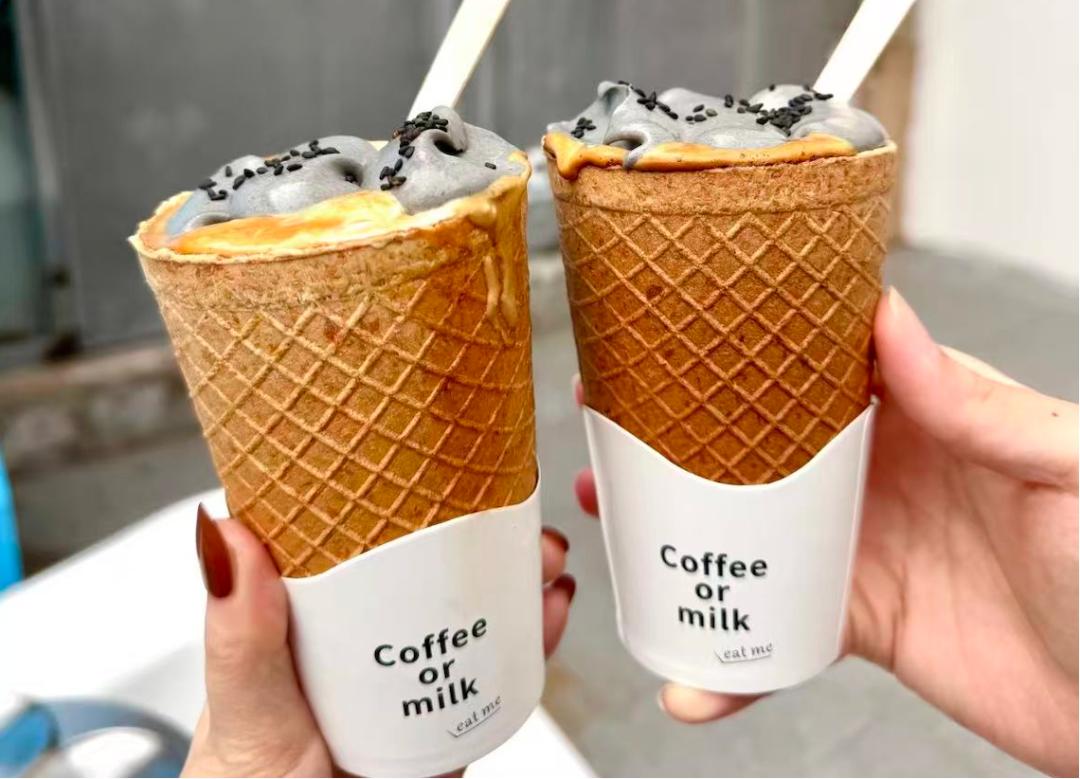
Core Insights - The "edible coffee cup" trend has rapidly gained popularity across various cities in China, offering a unique experience of consuming both coffee and the cup itself, which is made from oat cookies and features a chocolate lining to prevent leakage [1][9][10] Group 1: Product Overview - The edible coffee cup is made from oat cookies with a chocolate coating, allowing consumers to drink their coffee and then eat the cup, creating a dual experience [1][10] - Popular coffee shops like ACOC in Chongqing and others in cities like Nanjing and Wuhan have introduced this product, which has become a significant draw for customers [1][3][7] Group 2: Market Response - Social media buzz around the edible coffee cup has led to increased customer engagement, with many consumers traveling long distances to try it [3][10] - The product has received positive feedback for its rich flavor and unique experience, with some consumers humorously suggesting that it reflects a "laziness" in washing cups [3][10] Group 3: Cost and Production Challenges - The production cost of the edible cup is significantly higher than that of traditional paper cups, making it primarily feasible for boutique coffee shops [13][15] - The edible cup requires precise manufacturing processes to ensure durability and prevent leakage, which adds to its cost [13][16] Group 4: Consumption Guidelines - It is recommended that the edible cup be consumed within 30 minutes to ensure optimal taste and prevent leakage, as the chocolate lining provides temporary protection [16][18] - Most establishments are focusing on in-store sales to avoid issues with the product's integrity during delivery [18] Group 5: Future Outlook - The edible coffee cup represents a shift in consumer preferences towards experiential and environmentally friendly products, appealing particularly to younger demographics [19][22] - For broader adoption, improvements in production efficiency, cost reduction, and product durability are necessary [21][22]
贾跃亭已在美国拥有第二家上市公司,设第二信托欲加速偿还中国债务;疯狂动物城2票房破15亿元;宇树科技IPO辅导工作完成丨邦早报
创业邦· 2025-11-30 01:07
Group 1 - Jia Yueting has established a second irrevocable trust in the U.S. to accelerate the repayment of debts in China, with assets sourced from 50% of shares granted through FF's equity incentive and 50% of approximately 7% shares in Nasdaq-listed AIXC [3][4] - FF has officially become the controlling shareholder of AIxCrypto, which has recently changed its name and stock code to AIXC, with a market capitalization of approximately $13.41 million as of November 28 [3] - Jia Yueting plans to reinvest the remaining 50% of assets into FF to support its EAI flywheel business and expedite debt repayment [4] Group 2 - The "one-price" model for ride-hailing services has faced criticism from drivers due to fixed pricing that does not account for real-time changes in duration and distance, leading to lower earnings for drivers, especially in non-first-tier cities [4] - The animated film "Zootopia 2" has achieved a box office of 1.54 billion yuan, setting a record for single-day viewership in China's animation history [4] Group 3 - XPeng Motors has reported that a controversial low-quality video circulating on social media was generated by AI technology, and the company has filed a police report against the malicious use of AI to damage its brand image [7] - The number of Chinese tourists traveling to Japan has significantly decreased, with a 56% increase in flight cancellations from China to Japan compared to the previous month, leading to concerns in Japan's tourism industry [10] Group 4 - Shanghai Lego Land has welcomed over 1 million visitors, setting a record for the fastest Lego park to reach this milestone globally, with plans for a second phase of expansion [10] - The AI industry is expected to become more monopolistic, with companies like Google and Nvidia potentially reaching market capitalizations of $10 trillion [11][11] Group 5 - Sergey Brin, co-founder of Google, has donated over $1.1 billion worth of Alphabet stock, primarily to a nonprofit organization he founded, focusing on neurological disease research and climate change solutions [13] - Tesla's performance in the Indian market has been underwhelming, with only about 100 vehicles sold in over two months since its launch [14] Group 6 - Yushu Technology has completed its IPO counseling work, indicating readiness for IPO submission, focusing on high-performance consumer and industrial robots [16] - Shanghai Aoyi Technology has completed over 100 million yuan in Series B3 financing, while He Shan Technology has secured several billion yuan in financing across two rounds [16][16] Group 7 - The EU new car sales have seen a steady increase, with electric and hybrid vehicles leading the market, while traditional gasoline and diesel vehicle sales have declined significantly [19] - The global demand for energy storage batteries is projected to grow by approximately 50% in 2026, driven by rapid expansion in the energy storage sector [20] Group 8 - The pet economy in China is experiencing significant growth, with a 30.4% increase in job postings related to the pet industry, driven by the rising number of pet owners among the post-2000 generation [20] - Beijing's AI industry is expected to exceed 450 billion yuan in scale by 2025, with a 25.3% year-on-year growth in the first half of 2025 [20]

我为什么劝你少喝9.9元的咖啡?
洞见· 2025-11-29 12:35
Group 1 - The article highlights the rising popularity of Yunnan coffee, particularly its high-quality Arabica beans, which are gaining attention from major brands like Starbucks and Luckin Coffee [9][62][64] - Yunnan coffee is characterized by its rich flavor profile, low caffeine content, and health benefits, making it suitable for a wider audience, including those with sensitive stomachs [66][78] - The article emphasizes the health-conscious aspect of Yunnan coffee, which is free from additives like sugar, creamers, and artificial flavors, appealing to consumers focused on wellness [70][72][88] Group 2 - The article introduces a specific product, a freeze-dried coffee developed by the Yunnan Agricultural Academy, which retains the aroma and flavor of fresh coffee while being convenient to prepare [15][19][31] - This product is marketed as a healthier alternative to traditional instant coffee, with a clean ingredient list and no artificial additives, making it attractive to health-conscious consumers [24][70][72] - The pricing strategy is also discussed, with promotional offers making the product accessible, thus encouraging trial among potential customers [36][38][90] Group 3 - The article also features a premium milk product from Xinjiang, highlighting its high nutritional value and strict quality control measures throughout the production process [39][44][99] - The milk is sourced from high-quality Holstein cows raised in a pristine environment, ensuring a clean and natural product free from additives [101][111] - The marketing emphasizes the milk's rich flavor and health benefits, appealing to consumers looking for high-quality dairy options [113]