
快餐

Search documents
美股三大指数开盘涨跌互现,AMD跌超2%
Feng Huang Wang Cai Jing· 2025-11-05 14:37
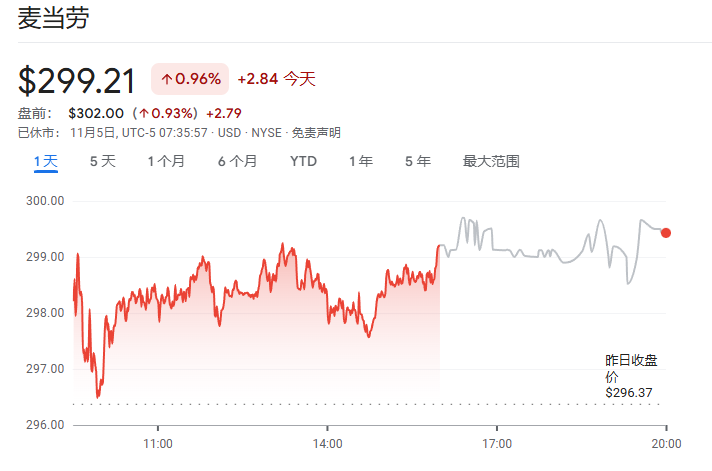
Market Overview - On November 5, US stock indices opened mixed, with the Dow Jones down 0.01%, S&P 500 down 0.04%, and Nasdaq up 0.06% [1] Company News - SoftBank Group and OpenAI announced the establishment of a joint venture, SB OAI Japan GK, aimed at providing "Crystal Intelligence" solutions to innovate management and operational models for Japanese enterprises, with plans to launch the product in 2026 [2] - IBM announced plans for layoffs in the fourth quarter, affecting a "low single-digit percentage" of its global workforce of approximately 270,000 employees as of the end of 2024 [3] - McDonald's reported third-quarter net profit of $2.278 billion, a year-on-year increase of 1%, with revenue of $7.078 billion, up 3% [4] - Toyota's second-quarter operating profit was 839.55 billion yen, a year-on-year decrease of 27%, while net profit for the same period was 932.08 billion yen, up 62%. The company revised its full-year operating profit forecast for 2026 to 3.40 trillion yen from 3.20 trillion yen [5] - Pony.ai launched its seventh-generation Robotaxi, which will operate in cities like Guangzhou and Shenzhen starting November. The new model features 100% automotive-grade components and a 70% reduction in the cost of the autonomous driving suite compared to the previous generation [6]

McDonald's(MCD) - 2025 Q3 - Earnings Call Transcript
2025-11-05 14:32
McDonald’s (NYSE:MCD) Q3 2025 Earnings Call November 05, 2025 08:30 AM ET Company ParticipantsIan Borden - CFODexter Congbalay - VP of Investor RelationsAndy Barish - Managing DirectorLauren Silberman - DirectorChris Kempczinski - Chairman and CEODavid Palmer - Senior Managing DirectorDennis Geiger - Executive DirectorConference Call ParticipantsJeff Bernstein - Equity Research AnalystJohn Ivankoe - Managing Director and Equity Research AnalystSara Senatore - Senior Research AnalystJon Tower - Director and ...

McDonald's(MCD) - 2025 Q3 - Earnings Call Transcript
2025-11-05 14:30
Financial Data and Key Metrics Changes - In Q3 2025, McDonald's reported global comparable sales growth of over 3.5% and system-wide sales growth of more than 6% in constant currency, driven by new unit openings [3][11] - Adjusted earnings per share was $3.22 for the quarter, reflecting a 1% decline on a constant currency basis due to a higher effective tax rate [18][19] - Total restaurant margin dollars exceeded $4 billion, marking a 4% increase in constant currency, the first time surpassing the $4 billion mark [18] Business Line Data and Key Metrics Changes - In the U.S., comparable sales increased by 2.4%, with the successful launch of Snack Wraps contributing to strong unit performance [11][12] - Internationally operated markets (IOM) saw comparable sales growth of 4.3%, with strong performances in Germany and Australia [15] - The U.S. Extra Value Meals (EVM) program accounted for about 30% of total transactions, with a targeted discount level of 15% [13][32] Market Data and Key Metrics Changes - QSR traffic from lower-income consumers in the U.S. declined nearly double digits, while traffic from higher-income consumers increased nearly double digits [4][11] - In Germany, McDonald's achieved its strongest comp sales results in two years, driven by disciplined execution of its value menu [15][16] - Japan has seen market share gains for six consecutive quarters, supported by strong local marketing and innovation [7][15] Company Strategy and Development Direction - The company is focused on its "Accelerating the Arches" strategy, emphasizing value, menu innovation, and marketing execution to drive traffic and guest count [3][19] - McDonald's is investing in high-growth categories such as chicken and beverages, with new product launches aimed at enhancing long-term growth [10][19] - The company plans to continue expanding its restaurant footprint, targeting 50,000 restaurants globally by the end of 2027 [20] Management's Comments on Operating Environment and Future Outlook - Management remains cautious about the health of consumers in the U.S. and top international markets, expecting pressures to continue into 2026 [4][11] - The company is optimistic about its ability to deliver solid growth in Q4, driven by strong execution across value, marketing, and menu innovation [45][46] - Inflationary pressures are expected to persist, impacting margins, but management believes that focusing on value and affordability will yield long-term benefits [29][48] Other Important Information - McDonald's announced a 5% increase in its dividend, marking the 49th consecutive year of dividend increases, reflecting the company's commitment to returning capital to shareholders [20][21] - The company is actively investing in digital transformation and loyalty programs to enhance customer engagement and drive sales [14][71] Q&A Session Summary Question: How can McDonald's improve restaurant profitability while enhancing value perception? - Management emphasized that delighting customers and driving traffic will ultimately improve unit economics, with a focus on getting more customers through the door [27][28] Question: What level of support is McDonald's providing to franchisees for the value strategy? - The company is providing $40 million in marketing support for EVMs and co-investing in price reductions, with expectations for continued support into Q1 2026 [31][33] Question: What is the outlook for U.S. sales trajectory in the coming quarters? - Management expects comp sales growth to accelerate in Q4, driven by successful promotions and a favorable comparison to last year's food safety incident [45][46] Question: Is there evidence of share shift from fast casual to QSR among higher-income consumers? - McDonald's continues to gain share with higher-income consumers, with strong performance attributed to value and digital initiatives [66][70] Question: What will it take to turn the low-income consumer from a headwind to a tailwind? - Management noted that relief in cost of living and growth in real incomes are necessary for improvement in spending behavior among low-income consumers [64][65]
ADP Payrolls Rise, Mortgage Rates Stall and "Impressive" MCD Earnings
Youtube· 2025-11-05 14:30
Economic Data - The ADP private payroll report showed an increase of 42,000 jobs, surpassing the expected 25,000 and a previous decline of 32,000 jobs [2][5] - Job creation was primarily driven by larger companies, with those employing 500 or more workers contributing significantly to the hiring [3] - Sector breakdown revealed gains in trade and transportation utilities (+47,000), education and health services (+25,000), and financial activities (+11,000), while leisure and hospitality (-5,000), professional and business services (-15,000), and information services (-17,000) saw declines [3][4] Mortgage Applications - Mortgage applications decreased by 1.9% this week, following a significant increase of 7.1% the previous week [7][8] - Purchase applications fell by 6%, while refinance applications dropped by 2.8%, although the overall trend in the last two weeks has been positive [8] Federal Reserve Outlook - The probability of a 25 basis point rate cut by the Federal Reserve has risen to 72%, up from a previous 60% [9] Company Earnings - McDonald's stock rose by approximately $8 to $9 in pre-market trading despite an earnings per share miss, attributed to better sales and revenue, along with strong guidance [12] - AMD's stock experienced a decline of about $5 to $6 in pre-market trading, but it has seen a substantial increase of 153% over the last six months, indicating strong overall performance despite short-term fluctuations [13][14]


麦当劳Q3净利润小幅下滑,同店销售超预期,“超值套餐”推动美国市场复苏 | 财报见闻
Hua Er Jie Jian Wen· 2025-11-05 13:07
Core Insights - McDonald's third-quarter revenue and adjusted earnings per share fell short of market expectations, but global same-store sales growth exceeded forecasts, indicating the effectiveness of the company's "value meal" promotions in attracting cautious consumers [1][2]. Financial Performance - Third-quarter revenue was $7.08 billion, a 3% year-over-year increase, but slightly below the expected $7.1 billion [2]. - Adjusted net income for the quarter was $2.31 billion, a slight decrease from $2.32 billion in the same period last year [2]. - Adjusted earnings per share were $3.22, missing analyst expectations of $3.32 and down from $3.23 a year ago [2]. Same-Store Sales Growth - Global same-store sales increased by 3.6%, slightly above the analyst average expectation of 3.55% [2]. - In the U.S. market, same-store sales grew by 2.4%, primarily driven by an increase in customer spending per visit, significantly higher than the 0.3% growth in the same quarter last year [5]. Market Response - Following the earnings report, McDonald's stock initially dropped in pre-market trading but later recovered to rise by 0.9% [2]. - Year-to-date, the company's stock has increased by 3.2%, underperforming compared to the S&P 500 index's 15% gain during the same period [2]. Promotional Strategies - The "value meal" initiative has been pivotal in reviving the U.S. market, with the $5 value meal promotion maintained for over a year and additional discounts introduced in August [5]. - The introduction of a $2.99 snack wrap in July significantly boosted demand, although growth momentum slowed in August and September [6]. International Market Performance - International sales grew by 4.3%, with Germany and Australia being key contributors to this growth [6]. - Sales from restaurants operated by local partners surged by 4.7%, largely driven by the Japanese market [6]. Customer Traffic Challenges - Despite the positive sales figures, overall customer traffic declined by 3.5% from July to September, compared to a 2.3% decline in the fast-food sector overall [6]. - Analysts express concerns about the long-term sustainability of the value meal strategy, particularly regarding the financial support needed to maintain significant discounts for franchisees [6].
海底捞,正在抢夺西贝大金主
盐财经· 2025-11-05 09:39
Core Viewpoint - The competition for the children's dining market is intensifying among major restaurant brands, with Haidilao making significant investments in family-friendly dining experiences as a response to challenges faced by competitors like Xibei [2][10][40]. Group 1: Market Dynamics - The children's dining market in China has reached a scale of 450 billion yuan, with expectations to exceed 500 billion yuan in the next five years, indicating a strong growth trend [5][20]. - Haidilao's entry into the children's dining segment is driven by the declining performance of its core hot pot business, which has seen a drop in revenue and table turnover rates [15][19]. - The overall restaurant industry is experiencing increased competition and declining average prices, with the average dining price dropping to 39.8 yuan, a 6.6% decrease year-on-year [14][15]. Group 2: Haidilao's Strategy - Haidilao has launched various initiatives targeting family customers, including themed restaurants and special children's menus, to attract more diners and increase average spending per table [21][22]. - The introduction of family-friendly features, such as play areas and specialized children's meals, has resulted in a significant increase in family customer traffic, with some locations reporting up to 60% of weekend customers being families [25][26]. - Despite the increase in family traffic, the longer dining times associated with families may negatively impact table turnover rates, posing a challenge for profitability [25][39]. Group 3: Competitive Landscape - The children's dining market has historically been dominated by Western fast-food brands like McDonald's and KFC, but Chinese brands are increasingly entering this space, with Xibei leading the way in developing specialized children's meals [28][30]. - Other restaurant brands, such as Jiumaojiu and Laoxiangji, are also beginning to explore children's dining options, indicating a broader trend within the industry [31][33]. - The competition for family dining is not just about menu offerings but also about creating a safe and engaging environment for children, which requires significant investment in facilities and staff [37][39].


国信证券:维持百胜中国“优于大市”评级 创新举措驱动同店稳健增长
Zhi Tong Cai Jing· 2025-11-05 07:46
Core Viewpoint - Guosen Securities maintains an "outperform" rating for Yum China (09987), adjusting the net profit forecast for 2025-2027 to $9.27/9.93/10.66 billion, with a slight decrease of -2.0% for 2025 and no change for the following years, while EPS is projected at $2.62/2.95/3.30 [1] Financial Performance - In Q3 2025, the company achieved revenue of $3.206 billion, a year-on-year increase of 4.4%, and operating profit of $400 million, up 7.8% year-on-year, driven by improved restaurant operational efficiency; however, net profit attributable to shareholders was $282 million, down 5.1% due to pre-tax investment losses of approximately $10 million [1] - KFC division generated revenue of $2.404 billion, up 4.0% year-on-year, with operating profit of $384 million, a 5.5% increase; operating margin was 16.0%, up 0.2 percentage points [2] - Pizza Hut division reported revenue of $635 million, a 3.3% increase, with operating profit of $57 million, up 9.6%; operating margin was 8.9%, an increase of 0.4 percentage points [2] Same-Store Sales Growth - In Q3 2025, system sales increased by 4%, with KFC and Pizza Hut growing by 5% and 4% respectively; overall same-store sales grew by 1%, maintaining resilient growth [3] - KFC's transaction volume increased by 3% year-on-year, while average transaction value decreased by 1%; Pizza Hut's average transaction value continued to decline, but transaction volume increased by 17% [3] Store Expansion - In Q3 2025, the company added 536 new stores, with a total of 1,119 new stores added in the first three quarters, maintaining a target of 1,600-1,800 new stores for the year; total store count reached 17,514 [4] - The franchise ratio for KFC and Pizza Hut reached 41% and 28% respectively, indicating a continued increase in franchise operations [4] - By the end of Q3 2025, the total number of group members reached 575 million, with member sales accounting for 57% of total sales [4] Operational Efficiency - In Q3 2025, salary and employee benefits accounted for 26.2% of total costs, up 1.1 percentage points; food costs accounted for 31.3%, down 0.4 percentage points; property rent accounted for 25.2%, down 1.0 percentage points; management fee rate was 4.7%, down 0.3 percentage points, indicating continuous improvement in efficiency [5] Innovation and Shareholder Returns - The number of K Coffee stores has exceeded 1,800, surpassing initial guidance, and the new K Pro store-in-store concept has expanded to 100 locations [6] - The target for shareholder returns in 2025 is set at $1.5 billion, with dividends and buybacks progressing steadily [6]

国信证券:维持百胜中国(09987)“优于大市”评级 创新举措驱动同店稳健增长
智通财经网· 2025-11-05 07:43
Core Viewpoint - Guosen Securities maintains an "outperform" rating for Yum China (09987), adjusting the net profit forecast for 2025-2027 to $9.27 billion, $9.93 billion, and $10.66 billion, with a slight adjustment of -2.0% for 2025 and no change for the following years, while considering share buybacks and projecting EPS of $2.62, $2.95, and $3.30 [1] Financial Performance - In Q3 2025, the company achieved revenue of $3.206 billion, a year-on-year increase of 4.4%, and operating profit of $400 million, up 7.8% year-on-year, driven by improved restaurant operational efficiency; however, net profit attributable to shareholders was $282 million, down 5.1% due to pre-tax investment losses of approximately $10 million [1] - KFC division revenue reached $2.404 billion, up 4.0% year-on-year, with operating profit of $384 million, a 5.5% increase; operating margin was 16.0%, up 0.2 percentage points [2] - Pizza Hut division generated revenue of $635 million, a 3.3% year-on-year increase, with operating profit of $57 million, up 9.6%; operating margin was 8.9%, an increase of 0.4 percentage points [2] Same-Store Sales Growth - In Q3 2025, system sales increased by 4%, with KFC and Pizza Hut growing by 5% and 4% respectively; overall same-store sales maintained resilient growth at 1% [3] - KFC's transaction volume increased by 3% year-on-year, while average transaction value decreased by 1%; Pizza Hut's strategy focused on high-value products, leading to a decline in average transaction value but a 17% increase in transaction volume [3] Store Expansion - In Q3 2025, the company added 536 new stores, with a total of 1,119 new stores added in the first three quarters, maintaining a full-year target of 1,600 to 1,800 new stores; total store count reached 17,514 [4] - The franchise ratio for KFC and Pizza Hut reached 41% and 28% respectively, indicating a continued increase in franchise operations [4] - By the end of Q3 2025, the total number of group members reached 575 million, with member sales accounting for 57% of total sales [4] Operational Efficiency - In Q3 2025, salary and employee benefits accounted for 26.2% of total costs, up 1.1 percentage points; food costs accounted for 31.3%, down 0.4 percentage points; property rent accounted for 25.2%, down 1.0 percentage points; management fee rate was 4.7%, down 0.3 percentage points, indicating continuous improvement in efficiency [5] Innovation and Shareholder Returns - The number of K Coffee stores has exceeded 1,800, surpassing initial guidance, and the new K pro store-in-store concept has expanded to 100 locations; the shareholder return target for 2025 is set at $1.5 billion, with dividends and buybacks progressing steadily [6]
从星巴克合营看洋品牌的本地化生死局
Sou Hu Cai Jing· 2025-11-05 07:41
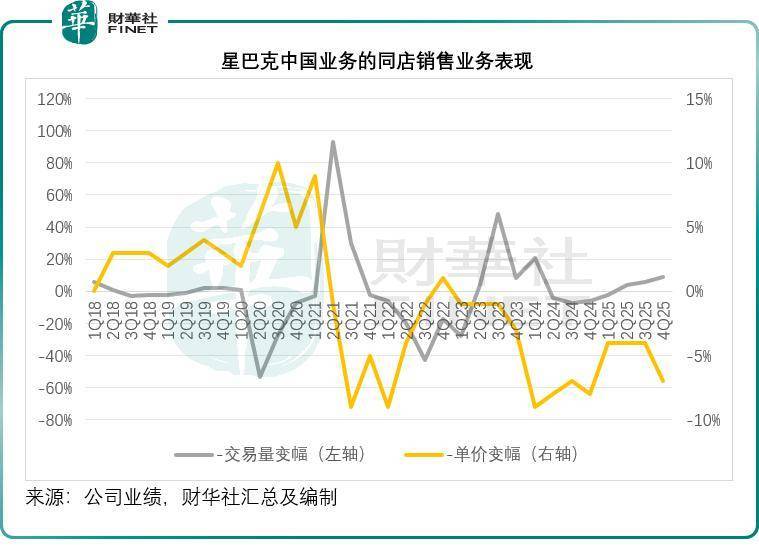
Core Insights - Starbucks has announced a strategic partnership with Boyu Capital to establish a joint venture for its retail operations in China, with Boyu holding up to 60% of the equity [1] - This move reflects a broader trend among foreign brands in China, emphasizing the importance of local partnerships and operational control to navigate market challenges [2][3] - The joint venture represents a shift from a heavy asset model to a lighter asset approach, allowing Starbucks to maintain brand ownership while reducing operational burdens [8] Company Challenges - Starbucks' "third space" model is showing signs of fatigue in the Chinese market, with high operational costs and strategic indecision impacting its performance [4] - The company has faced increased competition from local brands and lower-priced competitors, leading to a paradox of rising transaction volumes but declining average spending [6][7] - Despite a growing coffee consumer base in China, Starbucks struggles to maintain its market position amid fierce competition from brands like Luckin Coffee [6][7] Capital Strategy - The joint venture with Boyu Capital allows Starbucks to transition from a heavy asset operation to a model focused on revenue sharing and brand licensing, optimizing risk and returns [8][9] - Starbucks will retain 40% equity in the joint venture and continue to earn licensing fees, ensuring a stable cash flow while benefiting from market growth [9] - This partnership aligns with a trend among foreign brands in China, where capital cooperation has become essential for navigating complex market dynamics [10][12] Market Dynamics - The competitive landscape in China is intensifying, with independent coffee brands and fast-food chains aggressively targeting the same consumer base [6][7] - The rise of local competitors has led to a significant increase in the number of coffee drinkers, yet Starbucks has not capitalized on this growth effectively [6][7] - The operational model of local brands, which often includes flexible pricing and strategic location choices, poses a significant challenge to Starbucks' traditional high-end positioning [6][7] Lessons from Other Brands - Other foreign brands like McDonald's and Yum China have successfully implemented local partnerships to enhance operational efficiency and market penetration [10][11] - The experiences of these brands highlight the importance of balancing local operational control with maintaining brand integrity and long-term value [12][18] - Successful models involve a mix of equity sharing and licensing fees, allowing for both local responsiveness and stable revenue streams for the parent company [10][11][18]

财报前瞻 | 超值策略获顾客青睐 麦当劳(MCD.US)Q3同店销售额料再度增长
智通财经网· 2025-11-05 07:17
Core Viewpoint - McDonald's is set to report its Q3 2025 earnings, with Wall Street expecting revenue of $7.1 billion and earnings per share of $3.33, indicating a focus on consumer spending trends and the company's strategic responses [1] Group 1: Financial Performance - Wall Street anticipates a 3.5% increase in global same-store sales for McDonald's in Q3, with U.S. same-store sales expected to grow by 1.9% [1] - The company is projected to achieve same-store sales growth for the second consecutive quarter, benefiting from its value strategy [1] Group 2: Product Strategy - McDonald's has reintroduced the "Snack Wraps," a portable chicken wrap product, for the first time in nine years, and has also launched value meals that were previously paused during the pandemic [1] Group 3: Market Sentiment - Despite concerns from investors regarding the restaurant industry and the overall economy, McDonald's stock has only risen by 3% this year [1] - The company is viewed as a barometer for consumer financial health, particularly among low-income consumers, who have shown reduced spending over the past year [1]