
炼油

Search documents
山东地炼开工率连续七周上涨至53.49%,9月以来炼油利润却缩水近六成
Mei Ri Jing Ji Xin Wen· 2025-09-27 04:34
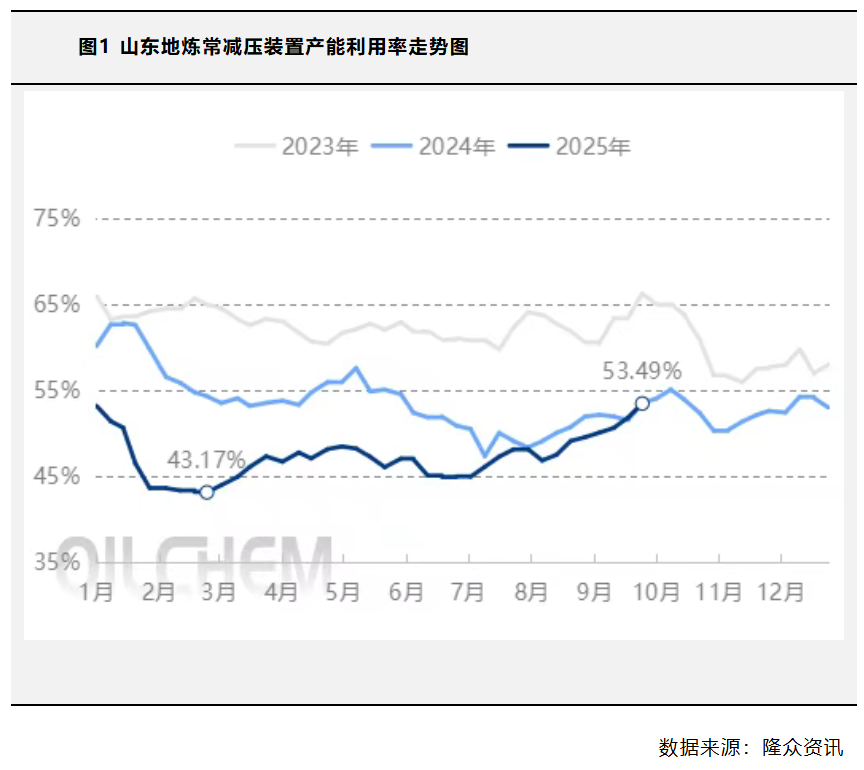
每经记者|彭斐 每经编辑|魏官红 随着集中检修季进入尾声,山东地方炼厂的开工率呈现持续回升的态势。 根据隆众资讯的最新数据,截至9月25日的当周,山东地炼常减压开工率已攀升至53.49%,不仅实现了连续七周的上涨, 更创下了今年以来的最高纪录。 《每日经济新闻》记者注意到,这一涨势始于8月7日当周的46.87%开工率,标志着市场供应正逐步恢复。彼时,受燃料油 税改及油轮接卸新规等多重因素影响,山东地炼开工率曾在2月28日当周跌至43.17%,创下自2020年4月以来的新低。 不过,在看似回暖的景象之下,仍有寒流侵袭着地方炼厂的盈利能力。与持续走高的开工率形成鲜明对比的是,炼油利润 正经历下滑。数据显示,截至9月25日,山东独立炼厂加工进口原油日度综合利润跌至132.83元/吨,较9月上旬利润缩水近 六成。 更广泛的行业背景是,中国炼油产业正面临着结构性挑战。新能源汽车的加速替代以及过去几年炼化项目集中投产带来的 巨大产能,构成了行业产能过剩的困局。 创年内新高,山东地炼开工率实现"七连涨" 进入2025年下半年,山东地炼的生产节奏明显加快。 根据隆众资讯的数据,截至9月25日的当周,山东地炼常减压装置的产能利 ...

七部门:2025—2026年,石化化工行业增加值年均增长5%以上
Di Yi Cai Jing· 2025-09-26 07:21
Core Viewpoint - The article discusses the implementation of a work plan by seven government departments to stabilize and optimize the petrochemical industry in China from 2025 to 2026, focusing on innovation, investment, market demand, development carriers, and international cooperation [1][2]. Group 1: Industry Growth and Innovation - The petrochemical industry is expected to achieve an average annual growth of over 5% in value added from 2025 to 2026, with improved economic benefits and enhanced technological innovation capabilities [1]. - Emphasis is placed on supporting key products such as electronic chemicals and high-end polyolefins, as well as upgrading bulk products like coatings [1]. Group 2: Investment and Capacity Control - The plan includes strict control over new refining capacity and a scientific approach to the release of new capacities for ethylene and paraxylene, aiming to prevent overcapacity risks in the coal-to-methanol industry [1]. - There will be a push for the renovation and upgrading of outdated facilities, alongside the implementation of AI in the petrochemical sector [1]. Group 3: Market Demand Expansion - The strategy aims to tap into consumption potential in traditional sectors like construction and automotive, while also fostering new applications in emerging fields such as renewable energy and low-altitude economy [2]. - The integration of domestic and foreign trade is highlighted as a key focus area [2]. Group 4: Development Carriers and Competitiveness - The plan includes evaluating the competitiveness and intelligence levels of chemical parks, guiding them to improve and focus on strengthening industrial chains [2]. - The goal is to cultivate advanced manufacturing clusters and characteristic industries among small and medium enterprises [2]. Group 5: Open Cooperation and International Standards - The work plan emphasizes the importance of stabilizing foreign trade policies and advancing overseas resource development through joint ventures [2]. - There is a focus on enhancing cooperation in fields such as fine chemicals, green low-carbon technologies, and artificial intelligence, along with improving standards and product certification systems to align with international practices [2].
工信部等7部门:严控新增炼油产能,防范煤制甲醇行业产能过剩风险
Hua Er Jie Jian Wen· 2025-09-26 07:13
Core Viewpoint - The Ministry of Industry and Information Technology, along with six other departments, has issued the "Work Plan for Stable Growth in the Petrochemical Industry (2025-2026)", aiming for an average annual growth of over 5% in the industry's added value during this period [1] Group 1 - The petrochemical industry is expected to achieve an average annual growth rate of over 5% in added value from 2025 to 2026 [1] - There will be strict control over the addition of new refining capacity, with a focus on rationally determining the scale and pace of new ethylene and paraxylene capacity [1] - The plan aims to prevent the risk of overcapacity in the coal-to-methanol industry [1]
专家分享:从反内卷到全球出清石化行业的结构性机遇
2025-09-26 02:29
Summary of the Conference Call on the Petrochemical Industry Industry Overview - The petrochemical industry in China is facing challenges such as refining capacity nearing its limit and an oversupply of ethylene, necessitating adjustments in supply through anti-involution policies for high-quality development [1][2][4] - The overall profitability of the chemical industry is weak, with only a few resource-advantaged products performing well [1][5] Key Points and Arguments - **Regulatory Changes**: The Ministry of Industry and Information Technology (MIIT) will implement policies to stabilize growth in response to industry demand changes, particularly focusing on refining and ethylene sectors [2][4] - **Capacity Control**: New refining projects will require equivalent replacements, and approvals for small coal-to-methanol projects will become more stringent [1][4][7] - **Old Facility Elimination**: Small, outdated refining and ethylene facilities, especially those over 20 years old, will face elimination, with approximately 60 million tons of capacity targeted for adjustment [1][12][15] - **Investment Trends**: Investment in propane dehydrogenation units is decreasing due to poor profitability, while ethylene capacity is regulated to maintain reasonable industry profitability [5][6] Market Dynamics - **Global Market Opportunities**: As European and Korean petrochemical industries face supply tightness and shutdowns, China is positioned to fill market gaps through modern, large-scale production facilities [2][14][17] - **Export Potential**: China can leverage its cost advantages to export to Europe and Southeast Asia, especially as global ethylene markets are expected to rebalance with increasing demand [2][22] Challenges and Future Outlook - **Approval Challenges**: New projects must incorporate advanced materials technology to gain approval, complicating the project initiation process for many companies [8][9] - **Environmental Standards**: The government is emphasizing energy efficiency and environmental standards, which will impact the approval of new projects and the operation of existing facilities [10][13] - **Employment Impact**: The consolidation of small, inefficient facilities may lead to job losses, but the government plans to mitigate this through retraining and support measures [26][28] Strategic Directions - **Industry Consolidation**: The government aims to increase industry concentration by encouraging the integration of smaller firms into larger, more efficient operations [29][33] - **Focus on High-Quality Development**: The anti-involution policy seeks to reduce ineffective competition and promote larger, more capable enterprises to enhance international competitiveness [33][36] Conclusion - The petrochemical industry in China is undergoing significant structural changes driven by regulatory reforms, market dynamics, and a focus on sustainability. The future will likely see a consolidation of capacity, increased export opportunities, and a shift towards high-quality, environmentally friendly production practices.
印度要求美国允许其购买伊朗石油以制约对俄贸易
Xin Lang Cai Jing· 2025-09-25 11:56
印度官员再次向特朗普政府表明,若要该国炼油商大幅削减俄罗斯石油进口,美方需允许其从受制裁的 伊朗和委内瑞拉购买原油。谈判知情人士透露,本周访美的印度代表团在与美方官员会谈时重申了这一 要求。知情人士补充称,印度代表强调同时切断印度炼油商从俄伊委三大产油国的供应可能导致全球油 价飙升。印度于2019年停止购买伊朗石油,今年随着美国加紧制裁,该国最大私营炼油商信实工业也停 止采购委内瑞拉原油。炼油商可转而增加中东原油采购,但这将推高成本并扩大总体进口开支。 ...
利比亚西部发生激烈武装冲突
Xin Hua She· 2025-09-24 14:38
扎维耶炼油公司对其设施附近冲突表示"深切关注",称"生命和重要基础设施面临严重威胁"。该公司呼 吁立即停火,强调任何针对炼油厂的袭击"都将直接破坏利比亚人民的资源和国家财富"。 冲突发生后,扎维耶教育局宣布地区内所有学校停课。当地政府还敦促居民待在室内,尽量避免外出。 自卡扎菲政权2011年被武力推翻后,利比亚陷入动荡。现阶段,得到联合国承认的民族统一政府与支持 它的武装力量控制利西部一些地区,国民代表大会则与"国民军"结盟,控制东部和南部大部分地区,双 方割据对峙。 (文章来源:新华社) 的黎波里消息:据利比亚媒体24日报道,在距离该国首都的黎波里以西约60公里的扎维耶地区,利比亚 民族统一政府内政部下属一安全部门当天同当地武装组织爆发激烈冲突。 据利比亚通讯社报道,冲突的起因是安全部门逮捕了当地武装组织卡布塔特几名成员。 据当地消息人士说,冲突迅速蔓延到该市居民区和炼油厂周围。社交媒体上流传的视频显示,冲突中使 用了中型和重型武器。当地媒体称,已有一名石油设施保安被迫击炮弹击中身亡。冲突区域的主要道路 上部署了重型军事增援部队。 ...
英国炼油时代式微
Zhong Guo Hua Gong Bao· 2025-09-23 03:00
Group 1 - The UK refining industry is experiencing its most significant contraction in decades, with the closure of the Grangemouth refinery and the bankruptcy of the Lindsey refinery, leaving only four major refineries operational in the UK [1] - The UK refineries primarily process light, low-sulfur crude oil, focusing on gasoline production, but the shift towards diesel vehicles and the rise of foreign refined oil production have led to a diesel shortage in the UK [1] - The UK is projected to import 624,000 barrels per day of clean fuels in 2024, with 265,000 barrels per day of diesel primarily sourced from the US, Saudi Arabia, the Netherlands, and Belgium, further undermining the profitability of domestic refineries [1] Group 2 - The slow pace of the UK's energy transition may provide some breathing room for domestic refineries, as high electric vehicle costs and geopolitical influences on battery materials could lead consumers to retain their diesel vehicles longer than anticipated [2] - If demand for diesel does not decline as quickly as expected, there may still be a viable future for the UK refining industry, although aggressive promotion of electric vehicles could lead to the eventual closure of domestic refineries [2]
英国炼油时代式微
Zhong Guo Hua Gong Bao· 2025-09-23 02:51
Group 1 - The UK refining industry is experiencing its most significant contraction in decades, with the closure of the Grangemouth refinery and the bankruptcy of the Lindsey refinery, leaving only four major refineries operational in the UK [1] - The UK refining sector primarily processes light, low-sulfur crude oil, focusing on gasoline production, but is facing challenges due to a shift towards diesel vehicles and increasing imports of diesel fuel [1] - The UK’s net-zero strategy aims to phase out new petrol and diesel car sales by 2030, putting additional pressure on domestic refineries and raising concerns about their viability [1] Group 2 - The slower-than-expected energy transition in the UK may provide some breathing room for refineries, as high electric vehicle costs and geopolitical influences on battery materials could lead consumers to retain diesel vehicles longer than anticipated [2] - If demand for diesel does not decline as quickly as expected, the UK refining industry may still have a chance for survival, although forced electrification could lead to the closure of remaining refineries [2]
打中大动脉!乌军持续打击俄罗斯炼油厂,摧毁航空燃料生产大厂
Sou Hu Cai Jing· 2025-09-22 07:21
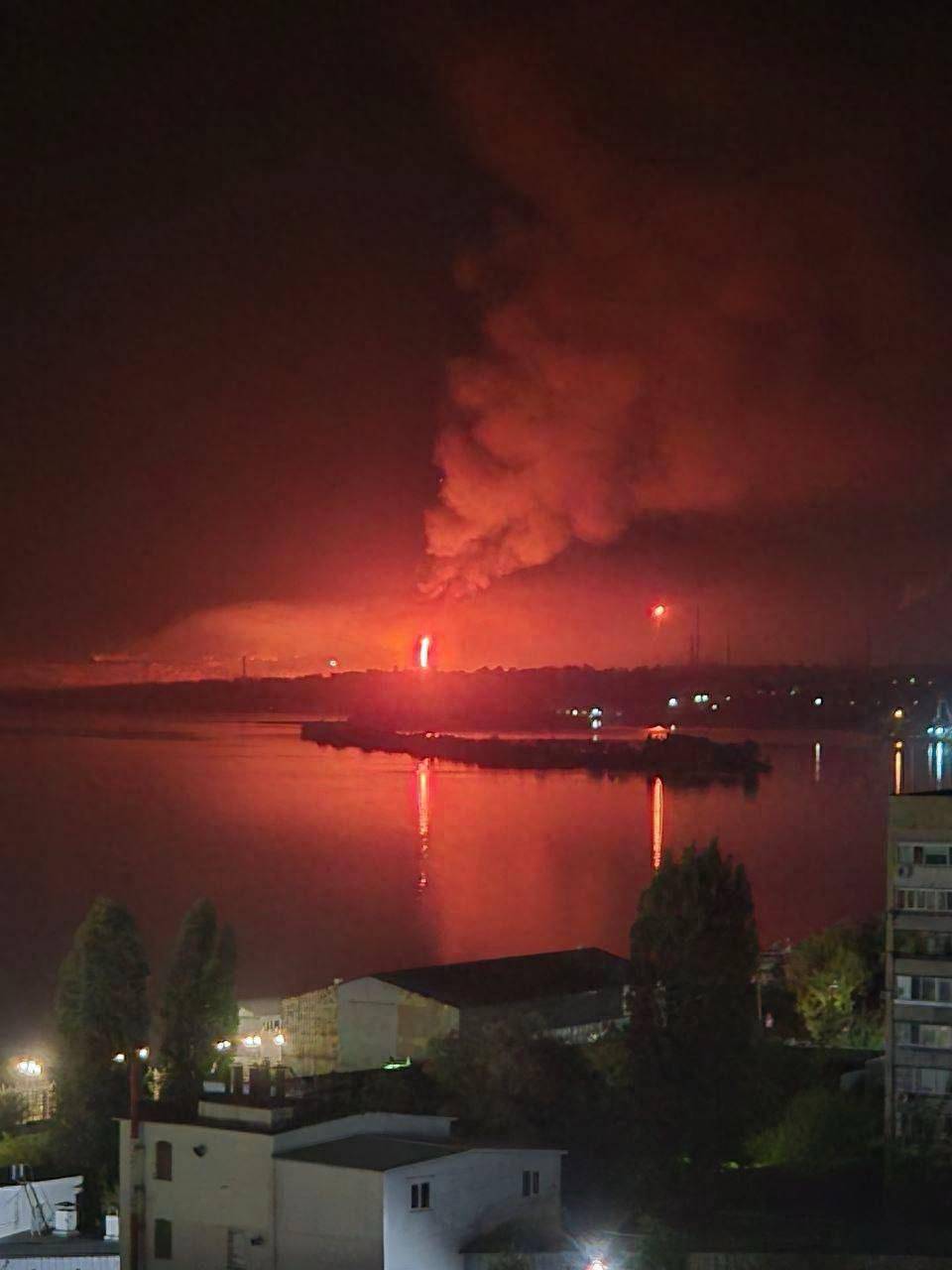
Group 1 - Ukrainian military has launched a new round of precise strikes on Russian energy facilities, significantly impacting the Russian refining industry [1] - The Saratov refinery, processing approximately 20,000 barrels of crude oil daily, was heavily targeted, accounting for over 2.5% of Russia's refining capacity [3] - The New Kuibyshevsk refinery, with an annual processing capacity of nearly 9 million tons, has been hit multiple times this year, serving as a crucial fuel supply for Russian military aircraft [4] Group 2 - The Samara dispatch station, a key oil export hub responsible for distributing millions of barrels of Urals crude oil daily, was also attacked, affecting the stability of Russian oil exports [6] - Ukrainian forces emphasize that all targeted facilities are integral to the Russian military's logistics system, aiming to weaken the opponent's war machine through sustained strikes on energy nodes [6] - Reports indicate that the energy conflict has entered a new phase, with potential for escalated attacks in the future [7]
管涛:稳物价有待供需两端进一步发力 | 立方大家谈
Sou Hu Cai Jing· 2025-09-22 04:05
Core Viewpoint - The article discusses the challenges and recent developments in China's consumer price index (CPI) and inflation, emphasizing the government's efforts to improve supply-demand relationships through various policies and reforms, particularly focusing on the "anti-involution" measures in the supply side to stabilize prices [1][2][3]. Economic Indicators - In the first eight months of the year, China's CPI decreased by 0.1% year-on-year, while the core CPI, excluding food and energy, grew by 0.5%. The Producer Price Index (PPI) fell by 2.9%, indicating significant challenges in achieving the inflation target set at around 2% [2][3]. - The core CPI has shown a positive trend since May, with a month-on-month increase reaching 0.9% in August. The PPI's year-on-year decline has narrowed for the first time after five months of continuous expansion [2][3]. Supply-Side "Anti-Involution" Policies - The "anti-involution" measures aim to combat excessive competition that distorts market mechanisms and harms consumer interests. These measures include promoting industry self-discipline and optimizing market competition [4][5]. - Key actions include regulating local government behaviors, enhancing industry standards, and revising laws to prevent unfair competition and price manipulation [5][6]. Industry-Specific Developments - The government has implemented policies to improve the competitive landscape in various sectors, including coal, steel, and new energy vehicles, leading to a reduction in price declines in these industries [3][5]. - The focus on quality competition encourages companies to invest in technology and brand development rather than engaging in price wars, which is expected to foster a healthier market environment [6][7]. Demand-Side Considerations - The article highlights the need for demand-side measures to complement supply-side reforms, as the current "anti-involution" efforts have not significantly boosted commodity prices compared to previous supply-side reforms [8][9]. - The disparity between industrial output growth and consumer spending indicates a need for policies that stimulate demand, particularly in the service sector, to enhance overall economic activity [10][11]. Employment and Investment Strategies - Employment remains a critical focus, with policies aimed at increasing job opportunities for key demographics, including graduates and migrant workers, to boost consumer spending [11]. - Investment in infrastructure and private sector development is essential for expanding domestic demand, with ongoing efforts to streamline project approvals and enhance support for private enterprises [12].