外卖

Search documents
“外卖大战该结束了”,强监管信号释放,美团、阿里、京东股价应声大涨
Mei Ri Jing Ji Xin Wen· 2026-03-26 01:12
Core Viewpoint - The ongoing subsidy war among food delivery platforms is detrimental not only to restaurant owners but also to the livelihoods of ordinary people, with calls for a shift towards healthy competition based on innovation and service optimization rather than capital-intensive price wars [1][6] Industry Overview - The food delivery market has seen intense competition since February 2025, initiated by JD's entry with significant subsidies, leading to a costly battle among platforms like Meituan, Taobao Shanguo, and JD [2][3] - The financial reports reveal substantial losses for major players, with Alibaba's adjusted EBITA dropping by 46% year-on-year, JD's new business losses reaching 466 billion yuan, and Meituan forecasting a loss of 233 to 243 billion yuan for 2025 [4] Impact on Supply Chain - The price war has pressured restaurants, with 39% of surveyed merchants switching to cheaper suppliers and 30% negotiating harder with suppliers, indicating a ripple effect on the supply chain [5] Regulatory Actions - The Chinese government is intensifying regulatory measures against "involutionary" competition, with recent actions including discussions with major platforms to address issues stemming from unhealthy competition [1][6] Future Competition Landscape - The industry is expected to transition from a subsidy-driven model to one focused on efficiency, service quality, and technological innovation, with platforms needing to reassess their profit models and prioritize sustainable growth [7][8] - The competition will shift from price-based strategies to factors like delivery speed, service quality, and customer experience, marking a new phase in the industry [8][9]

深夜中国资产集体爆发!美团大涨14.43%,美股芯片股狂飙,ARM涨超16%
Jin Rong Jie· 2026-03-26 00:27
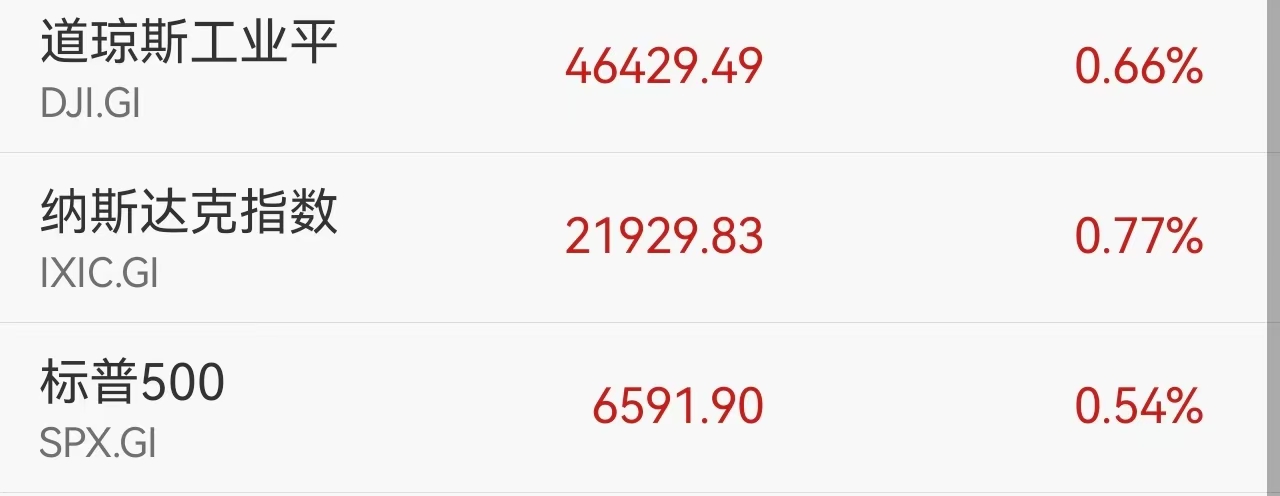
Market Performance - The three major U.S. stock indices closed higher, with the Dow Jones Industrial Average rising by 305.43 points (0.66%) to 46,429.49 points, the Nasdaq Composite increasing by 0.77% to 21,929.83 points, and the S&P 500 gaining 0.54% to 6,591.90 points [1][2]. Technology Sector - The Wande American Technology Seven Giants Index rose by 0.80%, with notable gains from Amazon (up 2.16%), NVIDIA (up 1.99%), and Tesla (up 0.76%). However, Microsoft saw a slight decline of nearly 0.5% due to mixed market sentiment [3][4]. Semiconductor and Storage Stocks - The Philadelphia Semiconductor Index increased by 1.21% to 7,967.74 points, indicating a strong performance in the semiconductor sector [5]. - In contrast, the storage sector experienced a downturn, with Western Digital falling by 1.63%, Seagate by 2.6%, and Micron Technology dropping over 3%. This decline was attributed to concerns over AI storage demand following Google's introduction of a new memory compression technology [7]. Chinese Stocks - Chinese assets saw a significant rally, with the Nasdaq Golden Dragon China Index rising by 1.86% and the Wande Chinese Technology Leaders Index increasing by 1.93%. Notable individual stock performances included Meituan surging by 14.43% and JD.com by 8.30% [8][9]. Commodity Market - Precious metals continued their strong performance, with COMEX gold futures rising by 2.2% to approximately $4,530 per ounce and silver futures increasing by 2.6% to $70.41 per ounce. Gold stocks also performed well, with Harmony Gold rising over 5% [10]. - Conversely, international oil prices fell significantly, with light crude oil futures dropping by $2.03 to $90.32 per barrel, and Brent crude futures down by $2.27 to $102.22 per barrel, influenced by easing tensions in the Middle East [11]. Inflation and Interest Rates - U.S. Treasury yields fell, with the 10-year yield decreasing by 7.6 basis points to 4.32%. Rising inflation concerns, driven by increased oil prices, have altered market expectations regarding the Federal Reserve's interest rate path, with no anticipated rate cuts for the year [12].

强监管信号释放 美团、阿里、京东股价应声大涨:“外卖大战该结束了”
Mei Ri Jing Ji Xin Wen· 2026-03-25 16:26
Core Viewpoint - The ongoing subsidy war among food delivery platforms has significant implications not only for restaurant owners but also for the livelihoods of ordinary people, indicating a broader economic impact [1] Regulatory Actions - On March 25, the National Market Supervision Administration reposted a commentary titled "The Takeaway War Should End," which garnered strong market attention [2] - This marks the second significant regulatory action against "involution-style" competition in a short period, with the Beijing Market Supervision Bureau recently conducting talks with 12 platform companies to address issues identified in their competitive practices [3] Financial Impact - The subsidy war, branded as "hundred billion subsidies," has led to substantial financial losses for major platforms. Alibaba reported an adjusted EBITA of 83.499 billion yuan for the nine months ending December 31, 2025, a 46% year-on-year decline [4] - JD.com disclosed a loss of 46.6 billion yuan in its new business segment, which includes its food delivery service, while Meituan projected a loss of approximately 23.3 billion to 24.3 billion yuan for 2025 [4] Supply Chain Effects - The price war has also affected the supply chain, with 39% of surveyed merchants opting for cheaper suppliers and 30% negotiating harder with suppliers to manage costs [5] Shift in Competition Dynamics - The commentary from the Economic Daily and its reposting by the regulatory body signal a shift towards ending the reliance on capital-intensive competition and promoting healthy competition through technological innovation and service optimization [5][6] - Experts suggest that while the subsidy war may pause, competition will continue in other areas, necessitating a clear distinction between "reasonable market competition" and "involution-style competition" [8] Future Industry Outlook - The food delivery industry is at a critical turning point, with regulatory actions and media positioning indicating a move away from aggressive subsidy strategies towards a focus on efficiency and service quality [10] - Companies will need to balance efficiency and scale while leveraging technological innovations to create differentiated advantages in the market [10]
北水净买入港股223亿港元,大手笔加仓泡泡玛特、美团和阿里
Ge Long Hui· 2026-03-25 14:21
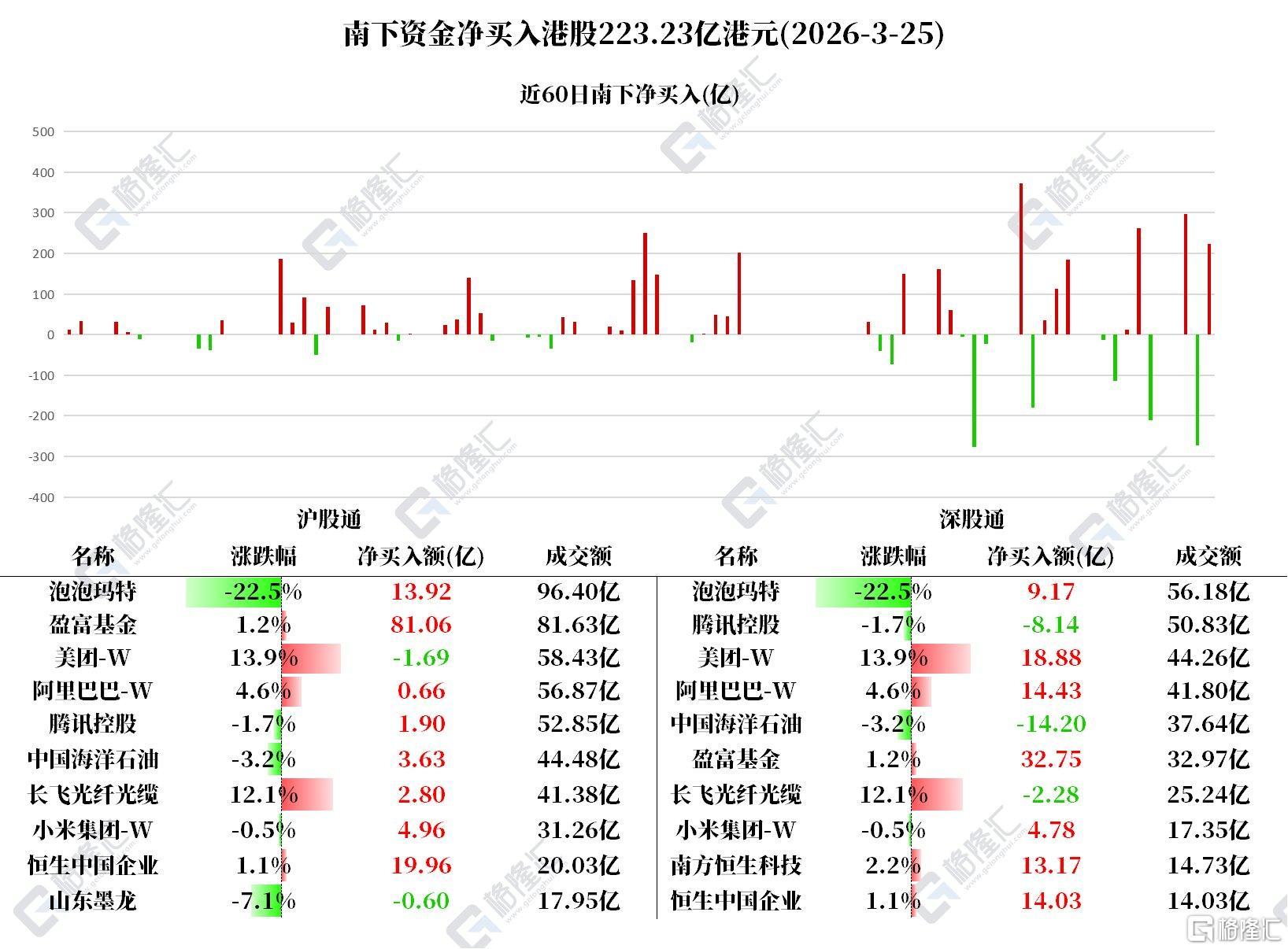
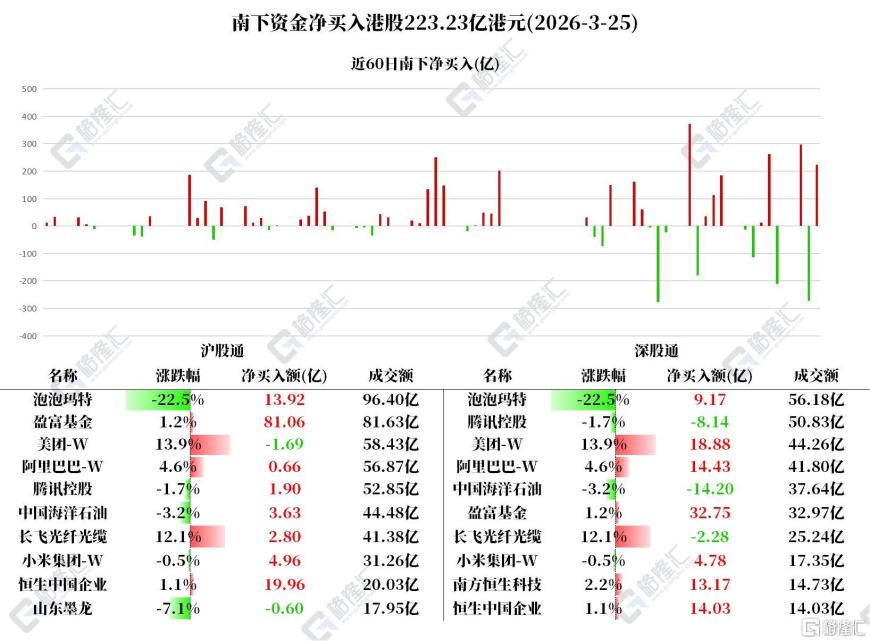
Group 1: Market Activity - The net buying amounts for various stocks include: 11.38 billion for Yingfu Fund, 3.399 billion for Hang Seng China Enterprises, 2.309 billion for Pop Mart, 1.719 billion for Meituan-W, 1.508 billion for Alibaba-W, 1.317 billion for Southern Hang Seng Technology, and 0.973 billion for Xiaomi Group-W [1] - The net selling amounts include: 1.057 billion for China National Offshore Oil Corporation and 0.624 billion for Tencent Holdings [1] Group 2: Stock Performance - Pop Mart experienced a decline of 22.5% with a net buying amount of 1.392 billion and a transaction volume of 9.64 billion [4] - Tencent Holdings saw a decrease of 1.7% with a net buying amount of 1.90 billion and a transaction volume of 5.285 billion [4] - Alibaba-W had an increase of 4.6% with a net buying amount of 0.66 billion and a transaction volume of 5.687 billion [4] Group 3: Company Highlights - Pop Mart reported a revenue of 37.12 billion for 2025, a year-on-year increase of 184.7%, with an adjusted net profit of 13.08 billion, up 284.5% [5] - Meituan and Alibaba's stock prices rose following a commentary on the impact of price wars in the food delivery sector, emphasizing the need for healthy competition [5] - Xiaomi Group's new SU7 model achieved 15,000 pre-orders in 34 minutes, with a target of 410,000 deliveries in 2025 and 550,000 in 2026 [6] - Tencent launched a desktop version of its AI-native application Yuanbao, enhancing user interaction and functionality [6]
港股有好几个炸裂的消息
表舅是养基大户· 2026-03-25 13:33
Group 1 - The core viewpoint of the article discusses the unexpected surge in stock prices of major food delivery companies like Meituan, Alibaba, and JD after a government article suggested the end of the "food delivery war," which has negatively impacted market prices and CPI [1][3][4] - The article highlights the unusual timing of the market reaction, noting that the stock prices only began to rise after the article gained traction, despite being published earlier in the day [5][6] - The author believes that the article's impact is overstated, as regulatory measures regarding the food delivery industry have been ongoing since last year, and the competition will continue in a more regulated manner rather than coming to an end [8] Group 2 - Pop Mart's stock experienced a significant drop of 22.5% on the day of its earnings report, marking its largest single-day decline and turnover rate in three years [12][14] - The decline occurred in two phases: an initial drop of 15% after opening, followed by a further decline post-earnings call, attributed to lower-than-expected revenue and concerns over the company's reliance on a single IP, Labubu, which constitutes over 38% of total revenue [11][16][17] - The earnings call revealed a pessimistic outlook for future growth, with management indicating that the company has moved past its high-growth phase, which further contributed to the stock's decline [18] Group 3 - Xiaomi's stock initially fell 3.5% after its earnings report but rebounded due to the positive sentiment from the food delivery industry news, ultimately closing down only 0.5% [22] - The decline in Xiaomi's profits was primarily driven by a 30% drop in operating profit in Q4, largely due to challenges in its smartphone business, although its automotive segment has shown promise [22] - Li Auto's stock rose over 4% following a $1 billion share buyback announcement, reflecting its strategic response to competitive pressures in the new energy vehicle market [23][25] Group 4 - The article discusses the competitive landscape among new energy vehicle manufacturers, highlighting the challenges faced by Li Auto compared to its rivals NIO and Xpeng, particularly in terms of market positioning and product offerings [26][28] - Li Auto's strategy of focusing on family-oriented vehicles has become less effective due to increased competition in the SUV and MPV markets, and regulatory changes favoring pure electric vehicles have complicated its growth prospects [27][30] - The article suggests that the future of Li Auto may be uncertain, as it struggles to keep pace with competitors who have successfully launched popular models [29][30]
资金动向|北水净买入港股223亿港元,大手笔加仓泡泡玛特、美团和阿里
Ge Long Hui· 2026-03-25 11:59
Group 1 - The net buying amounts for various companies include: 11.38 billion for Yingfu Fund, 3.399 billion for Hang Seng China Enterprises, 2.309 billion for Pop Mart, 1.719 billion for Meituan-W, 1.508 billion for Alibaba-W, 1.317 billion for Southern Hang Seng Technology, and 0.973 billion for Xiaomi Group-W [1] - The net selling amounts include: 1.057 billion for China National Offshore Oil Corporation and 0.624 billion for Tencent Holdings [1] - Southbound funds have continuously net bought Pop Mart for three days, totaling 3.44988 billion Hong Kong dollars [3] Group 2 - Pop Mart International Group reported a revenue of 37.12 billion in 2025, a year-on-year increase of 184.7%, with adjusted net profit of 13.08 billion, up 284.5% [4] - The LABUBU family generated revenue of 14.16 billion, while the Chinese market revenue reached 20.85 billion, growing by 134.6% [4] - Meituan and Alibaba's stock prices surged following a commentary article discussing the negative impact of price wars in the food delivery industry on both restaurant owners and consumers [4] Group 3 - Xiaomi Group's new generation SU7 sold 15,000 units in 34 minutes, with over 30,000 units sold in three days, indicating strong demand [5] - Xiaomi aims to deliver 411,000 vehicles in 2025 and 550,000 in 2026, with plans to invest 60 billion in AI over the next three years [5] - Tencent announced the launch of its AI-native application Yuanbao, which now has a desktop version that supports multi-device message synchronization and file sharing [5]
【笔记20260325— 外卖指数石锤】
债券笔记· 2026-03-25 10:38
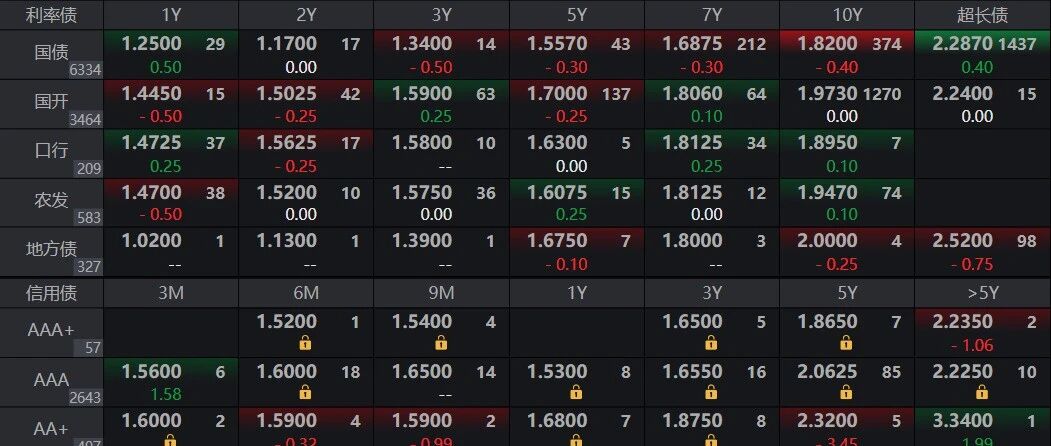
Core Viewpoint - The article emphasizes the importance of trends and strategies over specific market points, advocating for the establishment of a personal investment system that utilizes analytical frameworks for market analysis and investment strategies for market response [1] Group 1: Market Conditions - The funding environment is balanced and slightly loose, with the central bank conducting a 7-day reverse repurchase operation of 78.5 billion yuan, resulting in a net injection of 58 billion yuan after 20.5 billion yuan of reverse repos matured [3] - The interbank funding rates are stable, with DR001 around 1.32% and DR007 around 1.44% [3] - The stock market rose over 1%, recovering above 3900 points, influenced by the easing of geopolitical concerns following the U.S. submission of a ceasefire proposal to Iran [5] Group 2: Interest Rates and Bond Market - The 10-year government bond yield fluctuated around 1.82%, indicating a stable sentiment in the bond market [5] - The weighted rates for various repo codes show slight changes, with R001 at 1.40% and R007 at 1.52%, reflecting a mixed trend in the short-term funding market [4] - The government bond yields for different maturities indicate a range of rates, with the 1-year yield at 1.25% and the 10-year yield at 1.82%, showing a general upward trend in longer maturities [10] Group 3: Industry Insights - The regulatory stance on the "takeout war" suggests that it should come to an end, leading to significant stock price increases for Meituan and Alibaba, as indicated by the "takeout index" [6] - There is a debate regarding the impact of the takeout war on consumer price index (CPI) declines, questioning whether it is due to lower prices or weak income expectations and consumer confidence [6]
黄金坑 | 谈股论金
水皮More· 2026-03-25 09:10
Market Overview - A-shares saw a collective rise in the three major indices, with the Shanghai Composite Index increasing by 1.30% to close at 3931.84 points, the Shenzhen Component Index rising by 1.95% to 13801.00 points, and the ChiNext Index up by 2.01% to 3316.97 points [3] - The trading volume in the Shanghai and Shenzhen markets reached 2.19 trillion yuan, an increase of 968 billion yuan compared to the previous day [3] Investor Sentiment - Global investor sentiment has been fluctuating due to concerns surrounding geopolitical tensions, particularly influenced by former President Trump's actions [4] - Recent developments indicate that both parties involved in the conflict have proposed agreement terms, suggesting a potential de-escalation, which positively impacted global markets, including A-shares [4] Sector Performance - Most sectors are undergoing a valuation recovery, with the exception of the energy (oil and gas, coal) and photovoltaic sectors, which experienced declines [5] - The military and power sectors continued their strong performance, contributing significantly to market gains, with approximately 4800 stocks rising and only about 580 declining [5] Financial Sector - The three major financial sectors—banking, insurance, and securities—recorded around 1% gains without any significant sell-off [6] - The banking sector showed initial adjustments but stabilized in the afternoon, providing crucial support for the index [6] Hong Kong Market Dynamics - The Hang Seng Index experienced volatility, initially declining before recovering due to positive news from Alibaba and Meituan, which saw stock price increases of up to 15% and 6% respectively [6] - The article highlighted the impact of low-price competition in the food delivery sector on the Consumer Price Index (CPI), which is a critical macroeconomic indicator [6] Company-Specific News - Pop Mart experienced a significant drop of approximately 23% in its stock price, attributed to market reactions to its underwhelming performance expectations and over-reliance on a single intellectual property [7]

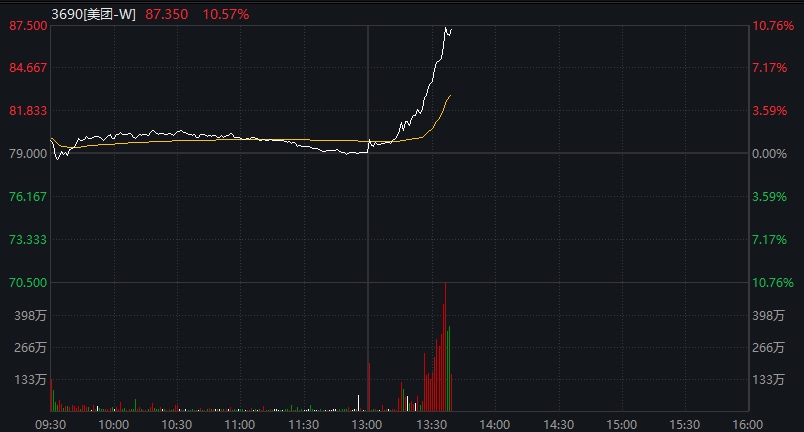
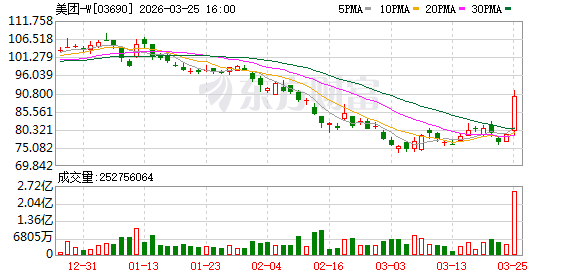
港股收评:美团狂飙14%,官媒一句“外卖大战该结束了”,直接把港股喊活了!
Ge Long Hui A P P· 2026-03-25 08:25
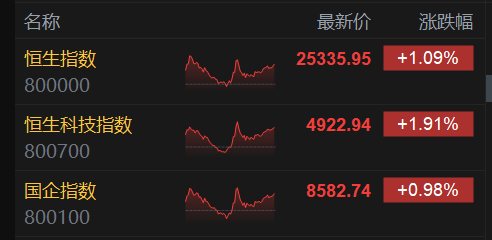
Core Viewpoint - The article highlights a significant rebound in Hong Kong's stock market, driven by technology stocks, amidst calls from state media to end the "food delivery war" [1] Group 1: Market Performance - The Hang Seng Technology Index surged by 2.6% at one point, ultimately closing up by 1.91% [1] - The Hang Seng Index and the National Enterprises Index rose by 1.09% and 0.98%, respectively, marking the second consecutive day of market rebound [1] - Southbound capital net purchases of Hong Kong stocks exceeded 20 billion HKD [1] Group 2: Sector Movements - Major technology stocks contributed to the market's recovery, with Meituan experiencing a notable increase of nearly 14% [1] - Other tech giants like JD.com and Alibaba also saw gains, following the upward trend [1] - AI collaborations between Microsoft and Nvidia in the nuclear sector boosted related stocks, with Longi Green Energy rising over 12% [1] Group 3: Other Sector Developments - Domestic airline ticket bookings during the Qingming holiday increased by approximately 20% year-on-year, leading to a continued rebound in airline stocks [1] - The ceasefire in the Middle East positively impacted gold prices, which surpassed 4,500 USD, driving gains in gold and non-ferrous metal stocks [1] - Various sectors including semiconductors, military industry, heavy infrastructure, brokerage, banking, and insurance stocks also experienced upward movements [1] Group 4: Declines in Other Sectors - Consumer stocks that had previously surged saw declines, with Haidilao dropping by 11% and Mixue Group falling by 6% [1] - Energy stocks, including Kunlun Energy and China National Offshore Oil Corporation, exhibited weakness, with declines of over 8% and 3%, respectively [1] - Leading lithium battery manufacturer CATL has faced a three-day pullback [1]
市监总局刊文“外卖大战该结束了”,美团、阿里直线拉升,这一战曾半年烧光800亿
Sou Hu Cai Jing· 2026-03-25 07:42
Core Viewpoint - The article emphasizes the need to end the intense subsidy war in the food delivery sector, advocating for healthy competition based on innovation and service rather than capital expenditure and price wars [1][18]. Regulatory Environment - The market regulatory authority has indicated a clear stance against the ongoing subsidy wars, suggesting that the competition should shift from price wars to service quality [1][12]. - In February, major platforms including Alibaba, Meituan, and JD were urged to comply with various laws to ensure fair competition and avoid "involution" [3][12]. Market Dynamics - The food delivery market has evolved into a three-way competition among Meituan, Alibaba (Ele.me + Taobao Flash), and JD, with respective market shares of approximately 46.9%, 42.8%, and 10% as of Q3 2025 [4]. - The total investment by the three major platforms in the subsidy war has exceeded 800 billion yuan, with Meituan facing the most direct financial impact [8][10]. Financial Performance - Meituan reported a core local business loss of 14.1 billion yuan in Q3 2025, with marketing expenses soaring to 34.3 billion yuan [8]. - Alibaba's instant retail business saw a revenue increase of 60% year-on-year, with significant marketing expenses that were somewhat offset by increased commission and advertising revenues [10]. - JD's new business segment reported a loss of 15.7 billion yuan, indicating challenges in scaling its food delivery operations [11]. Strategic Shifts - Meituan is shifting its focus towards instant retail and has ceased low-efficiency operations, while Alibaba is integrating its platforms to enhance service delivery [12][13]. - JD is concentrating on high-value segments and has opted to abandon aggressive scale competition in favor of quality service [12][13]. Economic Impact - The subsidy war has adversely affected the restaurant industry's pricing structure, leading to a decline in consumer prices and impacting overall economic recovery [15][16][17]. - The regulatory intervention aims to stabilize the economy and ensure that competition does not disrupt the recovery process, which is crucial for consumer spending and employment [17][18].