实体零售

Search documents
商务部消费促进司负责人谈2025年7月我国消费市场情况
Shang Wu Bu Wang Zhan· 2025-08-22 07:05
Group 1 - The overall development of China's consumption market in July is stable, with total retail sales of consumer goods reaching 3.88 trillion yuan, a year-on-year increase of 3.7%, which is 1 percentage point higher than the same period last year [1] - From January to July, total retail sales of consumer goods amounted to 28.42 trillion yuan, with a year-on-year growth of 4.8%, and service retail sales increased by 5.2% [1] - The retail sales of goods showed steady growth, with home appliances, furniture, and mobile phones continuing to sell well. In July, retail sales of goods increased by 4.0%, with retail sales of home appliances, furniture, communication equipment, and cultural office supplies growing by 28.7%, 20.6%, 14.9%, and 13.8% respectively [1] Group 2 - The summer consumption highlights include a strong performance in cultural, sports, and tourism sectors, with double-digit growth in retail sales for leisure services, tourism consulting, and transportation services [2] - The popularity of summer vacation destinations surged, with a significant increase in searches for "summer cooling destinations." Museum bookings saw a year-on-year growth of over 200% [2] - The online retail sector experienced rapid growth, with online retail sales increasing by 9.2% year-on-year, and physical goods online retail sales growing by 6.3%, outpacing the overall retail sales growth by 1.5 percentage points [2]
名创优品(09896.HK)上半年营收21.1%至人民币93.93亿元 二季度经营利润同比双位数增长
Ge Long Hui· 2025-08-21 08:53
Core Insights - Miniso reported a 21.1% year-on-year increase in revenue for the first half of 2025, reaching RMB 9.3931 billion, with a gross profit growth of 22.6% to RMB 4.1569 billion [1] - The company achieved a gross margin of 44.3%, up from 43.7% in the same period last year, while operating profit increased by 3.4% to RMB 1.5459 billion [1] - Net profit for the period was RMB 906 million, down from RMB 1.1774 billion in the previous year [1] Revenue and Profitability - In Q2 2025, revenue grew by 23.1% year-on-year to RMB 4.9661 billion, exceeding the company's previous guidance of 18% to 21% [2] - The operating profit for Q2 increased by 11.3% to RMB 836.2 million, while net profit was RMB 489.5 million, down from RMB 591.4 million year-on-year [2] - Adjusted net profit rose by 10.6% to RMB 691.5 million [2] Store Expansion - As of June 30, 2025, the total number of stores reached 7,905, with a net addition of 842 stores year-on-year [3] - Miniso's store count in mainland China was 4,305, with a net increase of 190 stores, while overseas stores numbered 3,307, with a net increase of 554 stores [3] - TOP TOY had 293 stores, with a net addition of 98 stores, and began expanding into overseas markets [3] Strategic Outlook - The CEO expressed optimism about the company's performance, noting a positive same-store sales growth in mainland China and improvements in overseas markets, particularly in Europe and North America [3] - The company anticipates further acceleration in revenue growth for the second half of 2025, driven by investments in direct operations [4] - TOP TOY reported an impressive 87.0% revenue growth, attributed to strong performance in trendy toy products and an improved store network [3] Financial Returns - The CFO highlighted that the overall performance exceeded expectations, with a 23.1% revenue growth and a gross margin increase of 0.4 percentage points [4] - The board approved a mid-term cash dividend of approximately RMB 639.5 million for the first half of 2025, with total shareholder returns reaching about RMB 1.071 billion, representing 84% of adjusted net profit [4]
上半年,哪些消费投资人赚到大钱?
3 6 Ke· 2025-08-01 02:17
Group 1 - The investment landscape in the consumer sector in 2025 shows a stark contrast between successful exits and significant losses, highlighting the volatility of the market [1] - Bee Chao Capital achieved a remarkable exit from Pop Mart with a return of 31.23 billion HKD, while Jiangsu Hongxin faced a -10.6% IRR loss on its IPO [1] - The report analyzes various consumer industry exit events in the first half of 2025, aiming to provide insights into successful and unsuccessful investment strategies [1] Group 2 - Notable successful exits include companies like Honey Snow Group, which reported a staggering 401,276x return, while Jiangsu Hongxin and others faced negative returns [3] - The data indicates that some investors in the consumer sector have achieved returns exceeding 200%, while others have suffered losses of over 10% [2][3] - The analysis categorizes different consumer sectors based on their performance, identifying which sectors are gaining traction and which are being overlooked [1][2]


亚马逊VS沃尔玛 美国零售业价格战蔓延
Bei Jing Shang Bao· 2025-07-07 15:02
Core Insights - The ongoing competition between Amazon and Walmart has intensified, with both companies launching significant promotional events to attract consumers [2][3] - Amazon's Prime Day is set to take place from July 8 to July 11, 2023, with an expected transaction volume of $23 billion, while Walmart will launch its "Walmart Deals" on the same day, extending its promotional period to July 13 [3][4] - The retail landscape is shifting as consumers prioritize lower prices due to economic pressures, leading to a "loyalty crisis" where price becomes the primary concern for shoppers [6][9] Amazon's Performance - In Q1 2025, Amazon's North American net sales reached $92.89 billion, a year-on-year increase of approximately 7.6%, but the operating profit growth slowed significantly [5] - The operating profit margin for Amazon in North America was only 6.3%, below market expectations, indicating a challenging environment for the company [5] Walmart's Growth - Walmart's e-commerce sales in the same quarter grew by 21% to $112.2 billion, achieving profitability for the first time in its e-commerce segment [5] - Walmart's market penetration in e-commerce has surged to 43%, making it the second-largest e-commerce platform in the U.S. after Amazon [5] Consumer Behavior Trends - A significant portion of American consumers are experiencing financial strain, with over half reporting their financial situation as "average" or "poor," leading to a decline in discretionary spending [6] - The trend of consumers seeking lower-priced goods has been noted, with discount retailers like Dollar General reporting a shift towards essential purchases [6] Retail Strategy Shifts - Retailers are increasingly focusing on online sales, with many closing underperforming physical stores to concentrate on profitable areas [7][8] - Companies like Kohl's have closed multiple stores as part of a strategy to enhance efficiency and profitability, despite ongoing sales declines [8] Future Outlook - The retail industry is expected to undergo significant changes, with a focus on fewer, higher-quality stores rather than a larger number of mediocre ones [9] - Retailers must adapt to evolving consumer preferences and economic conditions to remain competitive in the market [9]



福州工会以赛促融 探索AI赋能实体零售新路径
Huan Qiu Wang Zi Xun· 2025-07-02 08:39
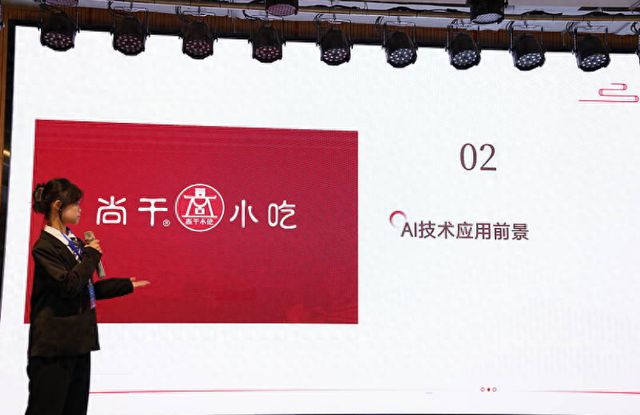
Core Viewpoint - The competition aims to enhance the digital transformation of traditional retail stores in Fuzhou by leveraging AI tools and innovative management practices [1][3]. Group 1: Competition Overview - The "2025 Digital New Retail Entity Store Innovation Management Challenge" was held in Fuzhou, focusing on AI application and digital management in retail [1]. - The competition featured a format of "pre-competition training + final competition," with over 100 participants receiving targeted training from AI experts and industry mentors [3]. - A total of 30 participants advanced to the finals, showcasing their skills in optimizing store displays, enhancing customer experience, and improving sales performance through various AI tools [3]. Group 2: Evaluation and Outcomes - The evaluation criteria included the depth of technology application, creativity, feasibility of solutions, and observable business results [3]. - Awards were given to 3 first-place winners, 5 second-place winners, and 10 third-place winners, along with monetary prizes to encourage continuous skill enhancement [5]. - The competition successfully stimulated interest in digital technology among retail employees and aims to contribute to the innovative development of Fuzhou's physical commerce [5].
天虹数科签约玄武云 共建智慧CRM
Ge Long Hui· 2025-07-01 07:46
Core Insights - The retail industry is undergoing a rapid digital transformation, with smart retail models that integrate online and offline becoming the core of competition. It is predicted that the smart retail market in China will exceed 1 trillion yuan by 2025 [1] - Tianhong Digital Commercial Co., Ltd. (stock code: 002419) is a leader in smart retail, having signed a partnership with Xuanwu Cloud (stock code: 2392.HK) to develop a smart CRM system driven by AI for B2B customer management [1][2] Group 1 - Tianhong Digital was established in 1984 and is a state-controlled listed company, consistently ranked among China's top 100 chain enterprises. The company focuses on three main business formats: department stores, shopping centers, and supermarkets, operating multiple brands including "Tianhong," "Junshang," and "sp@ce" [1] - Since 2012, Tianhong Digital has embarked on a digital transformation journey, implementing strategies centered on digitalization, experiential retail, and supply chain management, achieving full coverage across all stores, formats, and processes [1] - The integration of online and offline retail has led to a "store-to-home" model, positioning Tianhong Digital as a leader in technology-driven retail [1] Group 2 - The collaboration with Xuanwu Cloud aims to accelerate Tianhong's marketing digital transformation by integrating various systems such as OA, ERP, and finance, creating a centralized marketing management hub [2] - The CRM system being developed will focus on the sales process, covering the entire lifecycle from lead generation to payment collection, emphasizing system collaboration, data integration, and flexibility [2] - Key features of the CRM include customer management, lead management, and opportunity management, which will enhance the efficiency of sales processes and improve competitive bidding capabilities [2][3] Group 3 - The CRM will also provide intelligent bidding information subscription services, enabling quick access to business opportunities and supporting efficient knowledge management through a categorized knowledge base [3] - Integration with third-party systems will facilitate data sharing and streamline business approval processes, enhancing overall business collaboration efficiency [3] - The smart CRM system is positioned as the "nerve center" connecting users, products, and services, aligning with Tianhong's customer-centric strategy and multi-channel platform development [3]

物美如何将单品出清从1小时缩至5分钟?
虎嗅APP· 2025-06-25 15:06
Core Viewpoint - The collaboration between Duodian Shuzhi and Wumart Group aims to address the persistent issue of unsold fresh and short-shelf-life products in the retail sector by implementing a "data-driven + process reconstruction" strategy to create an intelligent dynamic clearance system, which can be replicated across the retail industry [4][5][6]. Group 1: Industry Challenges - The retail sector faces significant profit erosion due to unsold products, particularly in the fresh and short-shelf-life categories, where traditional discounting methods are ineffective [5][6]. - Rigid promotional mechanisms fail to adapt to the unique inventory and customer flow dynamics of different stores, leading to inefficiencies [5][6]. Group 2: Dynamic Clearance System Implementation - The dynamic clearance project focuses on high-value clearance scenarios within the "people, goods, and environment" triangle of retail, starting with high-priced, high-volume meat products in busy Wumart stores [5][6]. - The implementation process involves a closed-loop system that simplifies the clearance workflow from five manual steps to just one, significantly reducing the time required for product clearance from one hour to five minutes [5][6]. Group 3: Data and Process Integration - The system utilizes a variety of data types, focusing on key factors such as inventory, real-time sales, and store type to optimize discount decisions [15][17]. - The integration of online and offline processes allows for unified configuration of clearance plans, addressing the previous fragmentation in promotional activities [19][20]. Group 4: Employee Engagement and Training - To mitigate resistance from store staff regarding process changes, the solution emphasizes real-life experiences of employees who benefit from reduced workload and increased efficiency [6][29]. - The project involves training and demonstrating the system's effectiveness through pilot stores, ensuring that employees see tangible benefits from the new processes [22][29]. Group 5: Scalability and Future Expansion - The dynamic clearance system is designed to be scalable, with the potential to extend its application from fresh products to short-shelf-life items and other categories, contingent on accurate data management and industry knowledge integration [33][34]. - The system's success hinges on continuous feedback and adjustments based on real-world performance, allowing for fine-tuning of strategies to suit different store types and customer behaviors [31][32].

啤酒交易所、自然食材商店、宠物健身房,这些「新物种」商店火了
Sou Hu Cai Jing· 2025-06-18 07:45
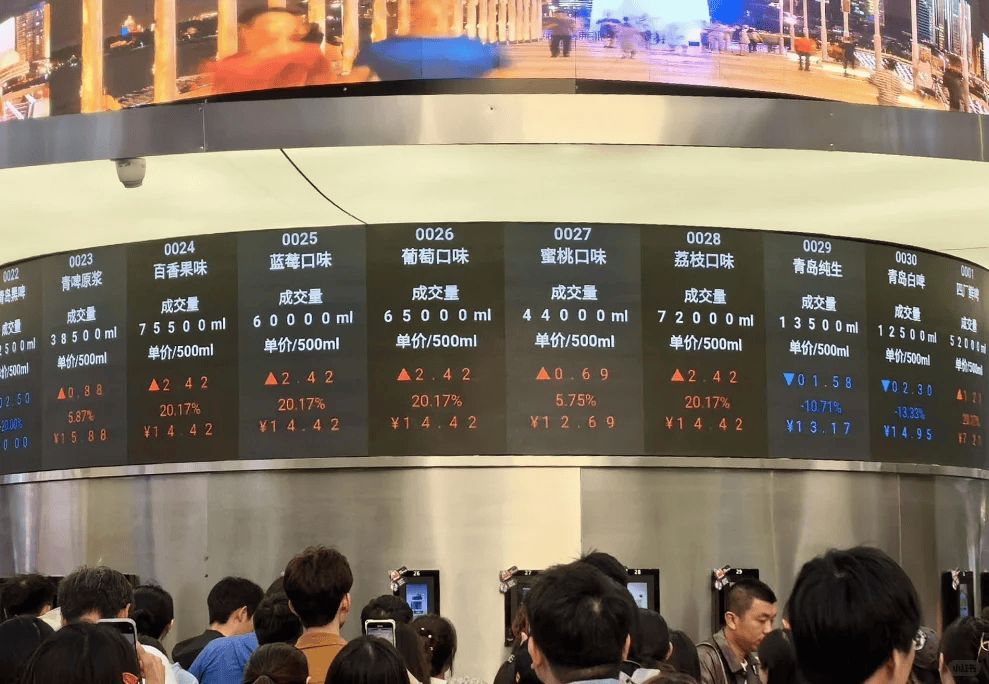
Core Insights - The current commercial landscape is witnessing a shift from standardized models to unique, immersive experiences that resonate with consumers' emotional and individual needs [2][22] - New retail formats, referred to as "new species stores," are emerging, but they face challenges such as profitability and scalability despite their initial appeal [2][22] Group 1: New Retail Formats - The Qingdao Beer Exchange, a new retail concept, allows consumers to purchase beer in a stock market-like environment, with prices fluctuating based on demand [4][6] - GOGOGYM, a high-end pet gym in Shanghai, focuses on pet health and fitness, offering personalized training plans and a unique shopping experience [9][11] - Loyal Hall, inspired by traditional Chinese medicine, combines cultural elements with modern consumption trends, offering herbal ice cream and immersive experiences [16][19] Group 2: Consumer Behavior Trends - Consumers are increasingly seeking experiences that provide emotional connections and a sense of belonging, moving beyond mere product purchases [21][22] - The rise of "emotional economy" reflects a shift towards valuing health, wellness, and unique experiences, particularly among younger demographics [11][19] - The success of these new formats indicates a growing demand for immersive and meaningful consumer experiences that transcend traditional shopping [22]
银座集团突然换帅,这家拥有120家门店的国企,这次能赌赢吗?
3 6 Ke· 2025-06-09 23:14
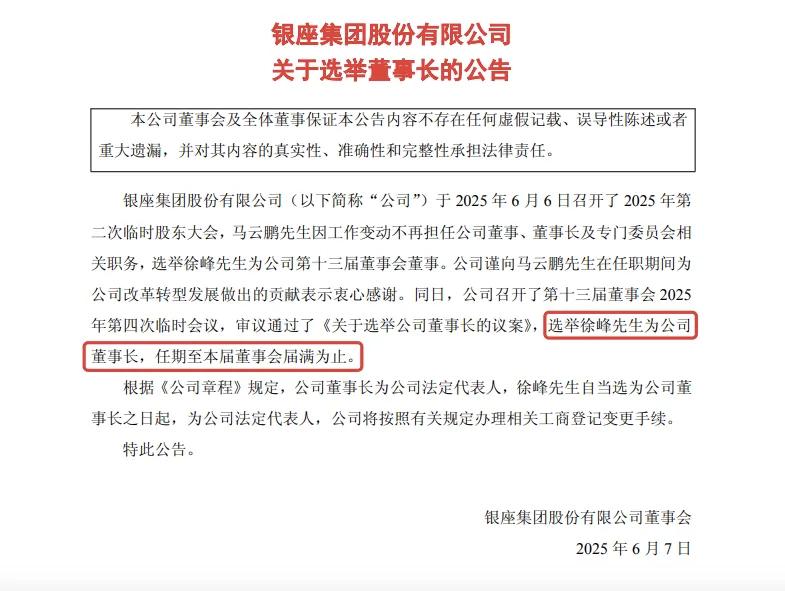
Core Viewpoint - The leadership change at Yinzuo Group, with Xu Feng replacing Ma Yunpeng as chairman, is a critical step for the company to navigate its operational challenges and seek transformation in the retail sector [1][5][18]. Financial Performance - In 2024, Yinzuo Group reported a revenue of 5.419 billion yuan, a decrease of 2.17% from 5.539 billion yuan in 2023, and a net profit of 67.6519 million yuan, down 68.77% from 217 million yuan in the same period of 2023 [3][4]. - For Q1 2025, the company continued to face difficulties, with revenue of 1.6 billion yuan, a year-on-year decline of 4.32%, and a net profit of 72.2997 million yuan, down 20.66% [4]. Business Segments - The revenue breakdown for Q1 2025 shows: - Department stores: 576.5157 million yuan, with a gross margin of 30.45%, down 11.60% year-on-year - Large supermarkets: 595.7755 million yuan, with a gross margin of 19.61%, down 0.40% - Shopping centers: 128.5605 million yuan, with a gross margin of 41.96%, up 15.71% [4]. Leadership Transition - Ma Yunpeng's resignation was prompted by the company's ongoing struggles in the retail sector, and Xu Feng's appointment is seen as a strategic move to revitalize the company [5][12]. - Xu Feng brings extensive experience in financial management and cross-regional business coordination, which is crucial for Yinzuo's current needs [13][18]. Strategic Focus - Under Xu Feng's leadership, the company aims to enhance digital transformation, accelerate business innovation, and reshape its supply chain to improve competitiveness [18]. - The transition is viewed as an opportunity for Yinzuo to address the challenges left by Ma Yunpeng and to pursue a path of growth and market relevance in the evolving retail landscape [18].

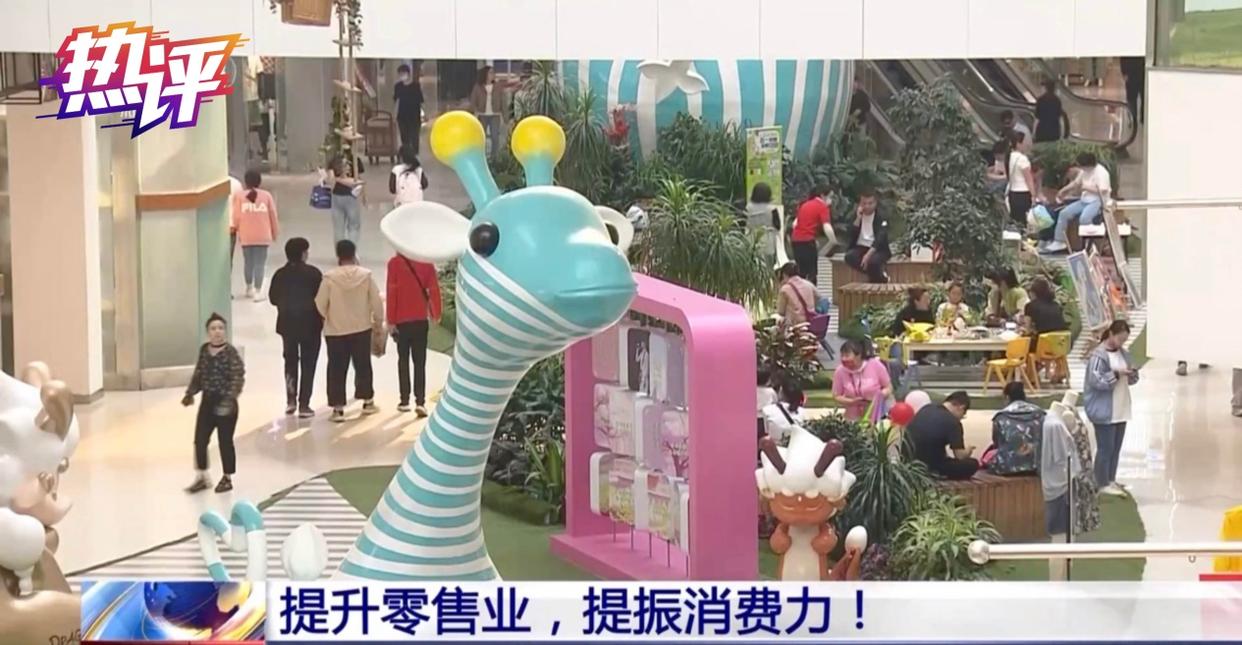
热评丨零售业创新的多重路径探索
Yang Shi Xin Wen· 2025-06-08 00:59
Core Insights - The retail industry is undergoing a significant transformation driven by government initiatives aimed at enhancing innovation and efficiency, with the first batch of pilot cities announced for a systematic upgrade by 2029 [1][6] - The shift from traditional retail to a service-oriented experience is exemplified by a commercial complex in Wuhan, which combines retail with entertainment and lifestyle offerings to meet diverse consumer needs [3] - The integration of physical retail with digital platforms is crucial for enhancing retail efficiency, as seen during the upcoming "618" shopping festival where brick-and-mortar stores leverage online sales channels [5] Group 1: Government Initiatives - The Ministry of Commerce and other departments have launched the "Retail Innovation and Enhancement Project," aiming to address issues like outdated business models and insufficient quality supply [1] - A total of 38 cities, including major urban centers like Beijing and Shanghai, have been selected as pilot locations to explore long-term mechanisms for retail innovation [1][6] - By 2029, the goal is to establish a modern retail system characterized by rich supply, balanced layout, diverse channels, quality service, and sustainability [6] Group 2: Consumer Experience - The evolution of retail is marked by a focus on providing a satisfying consumer experience, moving beyond mere transactions to creating enjoyable shopping environments [3] - The combination of retail and experiential offerings, such as amusement parks and food streets, aims to fulfill various consumer desires in a single location [3] Group 3: Digital Integration - The upcoming "618" shopping event highlights the deep integration of physical retail with digital platforms, allowing consumers to order online and receive same-day delivery [5] - Innovations such as AI-driven smart shelves and cashier-less stores are reshaping the retail landscape, transitioning from traditional models to intelligent ecosystems [5]