智能驾驶

Search documents
中国独角兽排行榜2025
泽平宏观· 2026-02-12 16:06
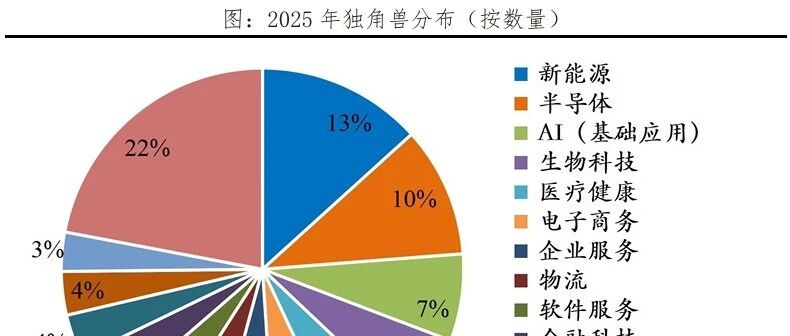
Core Insights - The 2025 China Unicorn Rankings report highlights a slowdown in primary financing, a surge in secondary listings in Hong Kong, and explosive growth in three key sectors: AI, new energy, and robotics [3][5]. Financing and Market Trends - As of May 2025, the total scale of Chinese unicorns reached 8.46 trillion yuan, a slight increase of 0.23% from 2024 [3]. - The number of new unicorns is insufficient to fully replace those that have gone public, with notable companies like Mixue Ice Cream and Horizon Robotics achieving pre-IPO valuations exceeding 60 billion yuan [3]. - The trend of unicorns choosing to list in Hong Kong is significant, with 60% of unicorns opting for this route between April 2024 and April 2025, and 67% of these companies seeing an increase in market value post-IPO [4][33]. Sectoral Growth - The unicorn landscape is dominated by three core areas: AI applications, emerging technologies (commercial aerospace, biotechnology, AI+AR), and cultural exports through social media and gaming [5][14]. - In the AI sector, there are 39 unicorns, with a total valuation of 262.2 billion yuan, making it the leading area of growth [6][8]. - The intelligent driving sector is also thriving, with companies like Yihang Intelligent achieving valuations in the hundreds of billions [11]. Regional Insights - Hangzhou and Shenzhen are emerging as strongholds for new unicorns, while Beijing and Shanghai remain foundational for innovation [4][20]. - Beijing leads with 65 unicorns valued over 3 trillion yuan, accounting for 35.6% of the national total [23]. - Shenzhen has 30 unicorns with a total valuation of 926.9 billion yuan, showing a 13% increase from 2024 [29]. IPO Trends - The number of unicorns going public has decreased, with 40 companies listing between April 2024 and April 2025, totaling a market value of 104.2 billion USD, down from 54 companies and 168.2 billion USD in 2024 [33][34]. - The average market value of listed unicorns has also declined, with Hong Kong becoming the preferred market for smaller unicorns [36][38]. Cultural and Gaming Exports - The cultural export sector is gaining traction, with companies like ByteDance and Xiaohongshu leading the way in global user engagement and revenue growth [17][18]. - The gaming industry is also a significant contributor to cultural exports, with titles like "Black Myth: Wukong" achieving nearly 1 billion USD in revenue [18][19].

千里科技任命赵明为联席董事长,加速“AI+车”战略商业落地
Jing Ji Guan Cha Wang· 2026-02-12 12:34
Core Viewpoint - The appointment of Zhao Ming as a non-independent director candidate and potential co-chairman at Qianli Technology marks a strategic move to enhance the company's capabilities in the AI and automotive sectors, aligning with its "AI+Car" strategy and accelerating its market presence [1][2][4]. Group 1: Company Announcement - Qianli Technology's board approved the amendment of the company's articles of association to add a co-chairman position and nominated Zhao Ming as a non-independent director candidate [1]. - Zhao Ming has over 25 years of global technology management experience, previously serving as CEO of Honor, where he significantly increased market share [2]. Group 2: Strategic Development - Qianli Technology is in a phase of rapid business growth, focusing on a dual-driven strategy of technology and terminal business, with an emphasis on AI and internationalization [3]. - The company has made significant progress in developing smart driving solutions, with a roadmap for L2+ to L4 level products, and has successfully integrated its core technology systems [3]. Group 3: Future Outlook - The company aims to transition from "technical validation" to "commercial validation" in 2026, focusing on deep integration of technology and products across multiple terminals [4]. - Zhao Ming's expertise is expected to enhance the company's commercialization capabilities, facilitating the integration of AI technology into automotive applications and driving the "AI+Car" strategy from concept to market [4][5]. Group 4: Management Synergy - The collaboration between the current chairman, Yin Qi, and Zhao Ming is anticipated to create a complementary advantage, bridging the gap between technology development and market implementation [5]. - Zhao Ming's industry resources and management experience will support the integration of supply chain resources and optimize business layout, promoting the marketization of smart mobility products [5].

智驾天梯榜年度黑马解析:地平线凭什么实现超越?
Xin Lang Cai Jing· 2026-02-12 12:12
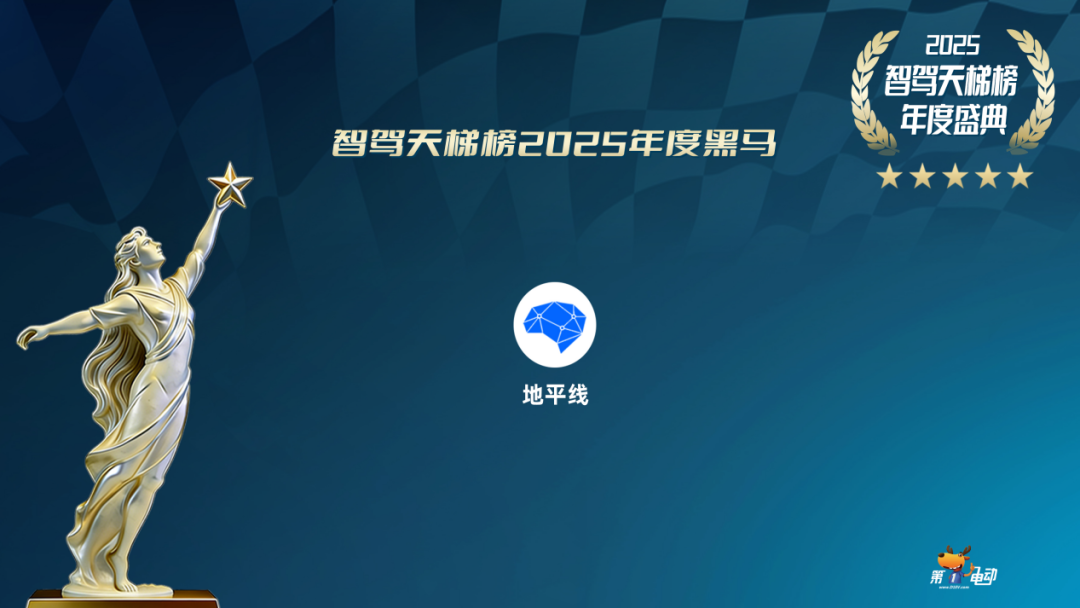
作者|李艳娇 在1月31日的2025智驾天梯榜年度盛典上,地平线一举斩获"天梯榜年度黑马"大奖。 仅参与1次智驾大赛、2轮测试的地平线,何以摘得这一重磅殊荣?为客观评判其智驾技术实力,本文将从场景、效率、安全、总得分四大核心维度展开解 析。 值得注意的是,智驾天梯榜四大年度榜单的评选,设有 "累计测试满6次且累计上榜满6次" 的准入门槛,地平线因未达标准暂未纳入排名。而若打破这一 限制将其计入榜单,整体排名格局将发生何种变动?地平线又将跻身怎样的位次? #01 场景:超越季军小鹏,逼近亚军理想 | 4 . | | | | | 智驾天梯榜2025年度场景榜汇总 城区NOA | | | | | | | | | --- | --- | --- | --- | --- | --- | --- | --- | --- | --- | --- | --- | --- | | | | | | | 统计周期:2025年4月 - 2026年1月 | | | | | | | | | 年月 | 特斯拉 | 理想 | 小腹 (激光雷达+视觉) | Momenta 元戎启行 | | 小米 | | 华为乾崑智驾 极気千里浩瀚 | 蔚来 ...
千里科技:增设联席董事长 提名赵明为非独立董事候选人
Zheng Quan Ri Bao Wang· 2026-02-12 11:45
有分析人士指出,作为曾带领荣耀实现独立发展、稳居手机行业头部阵营的实战派管理者,赵明在消费电子终端领域拥有 深厚的积累,对商业逻辑具有敏锐的判断力,擅长整合资源、构建运营体系,并推进商业落地。在战略层面,董事长印奇将更 侧重于把握AI科技的发展战略,赵明则将重点推进AI商业模式的闭环战略。印奇和赵明的合作将实现科技与商业的深度互补, 有望加速推进千里科技进入从AI技术布局到规模商业化的新阶段。 本报讯 (记者冯雨瑶)2月12日晚间,重庆千里科技股份有限公司(以下简称"千里科技")发布公告称,公司第六届董事 会第三十次会议,审议通过了《关于修订<公司章程>的议案》,增设联席董事长一名。同时,根据《关于增补董事暨提名第六 届董事会非独立董事候选人的议案》,同意提名赵明先生为公司第六届董事会非独立董事候选人。根据公告信息,赵明曾任荣 耀终端股份有限公司CEO,执掌荣耀品牌10年。作为资深科技产业领袖,赵明拥有逾25年全球科技企业管理经验。 自去年启动以"AI+"为核心的战略转型以来,千里科技现已完成智能驾驶、智能座舱和Robotaxi的业务布局,迈出了战略转 型的第一步。随着千里科技转向商业化攻坚阶段,赵明的加盟被 ...
四维图新获680万套智驾方案定点,股价近期承压
Jing Ji Guan Cha Wang· 2026-02-11 10:38
经济观察网近期,四维图新(002405)在智能驾驶领域持续聚焦战略转型。重组后的"新鉴智"平台累计 获得680万套智驾方案新增定点,覆盖超20家主流车企,这些订单预计随客户量产进度在中长期逐步释 放收入。公司高级副总裁孟庆昕强调,四维图新已完成从"地图人"到"AI人"的战略跃迁,致力于通过AI 算法与芯片能力提供一站式舱驾协同解决方案。 股票近期走势 以上内容基于公开资料整理,不构成投资建议。 四维图新股价近期承压,截至2026年2月11日收盘报10.50元,当日下跌1.69%,近5日累计跌幅达 3.85%。资金流向方面,2月10日主力资金净流出1702.52万元,2月11日主力净流出进一步扩大至约7711 万元,反映短期市场情绪偏谨慎。 ...

元戎启行跻身高阶段智驾第一梯队,复星锐正长期资本与产业赋能见成效
2 1 Shi Ji Jing Ji Bao Dao· 2026-02-11 09:02
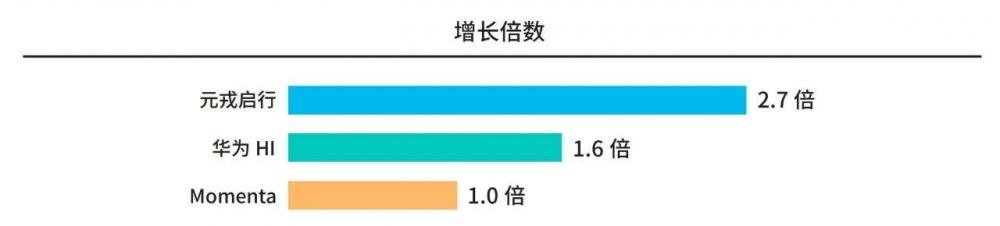
Core Insights - The report highlights that Yuanrong Qixing has emerged as a leading player in the third-party urban NOA market, achieving nearly 40% market share and a growth rate of 2.7 times by October 2025 [2] - The shift from rule-based algorithms to data-driven models is transforming the assisted driving industry, providing opportunities for tech startups [3] - Yuanrong Qixing's strategy focuses on deep partnerships with core automakers and aims to deliver over 1 million vehicles equipped with its intelligent driving solutions by 2026 [4] Market Position - By October 2025, Yuanrong Qixing's market share in the third-party urban NOA sector reached nearly 40%, with a significant increase in delivery volume, surpassing 200,000 units across more than 15 models [2] - The company has rapidly transitioned from a new entrant to a top player in the industry, demonstrating substantial growth and market penetration [2] Technological Transformation - The industry is experiencing a paradigm shift from "rule-driven" to "data-driven" approaches, with advancements in end-to-end and VLA model technologies [3] - Yuanrong Qixing leverages its systematic capabilities in algorithm development, product experience, and mass production to establish deep collaborations with major automakers like Great Wall, Geely, and smart [3] Strategic Focus - Yuanrong Qixing's strategy involves binding closely with core automakers and focusing on popular models to accumulate real-world data for scaling production [4] - The company plans to achieve cumulative deliveries of over 1 million vehicles equipped with its intelligent driving solutions by 2026, laying the groundwork for Robotaxi and fully autonomous driving services [4] Investment Support - Fosun Ruijin has been a significant early investor in Yuanrong Qixing, participating in multiple funding rounds since 2019 and currently holding the position of the second-largest shareholder [5] - The investment strategy of Fosun Ruijin aligns with its focus on cutting-edge technology and innovative companies with core competitive advantages, providing substantial support for Yuanrong Qixing's technological development and market expansion [5]
地平线总裁换人:宁德时代前高管,中科大校友
3 6 Ke· 2026-02-10 11:16
Group 1 - The core point of the article is the appointment of Zhu Wei as the new president of Horizon Robotics, succeeding Chen Liming, and the significance of this leadership change in the context of the company's strategic direction and recent partnerships [1][4][11]. Group 2 - Zhu Wei, a graduate of the University of Science and Technology of China, has a diverse career background, including roles at Mercedes-Benz and as an executive at CATL, where he was responsible for passenger vehicle business [1][6][8]. - The recent collaboration between CATL and Horizon Robotics involves CATL supplying intelligent chassis and Horizon providing intelligent driving assistance systems, aimed at offering solutions to OEMs [2][4]. - Chen Liming, the former president, has transitioned to the role of vice chairman at Horizon, focusing on major strategic decisions for the company [4][11]. Group 3 - Zhu Wei's previous experience includes significant roles in multinational companies and a focus on overseas markets, which aligns with Horizon's recent emphasis on international expansion and establishing a European headquarters [11][12]. - The automotive industry is increasingly prioritizing internationalization, with companies recognizing that entering overseas markets is critical for survival rather than just growth [11].

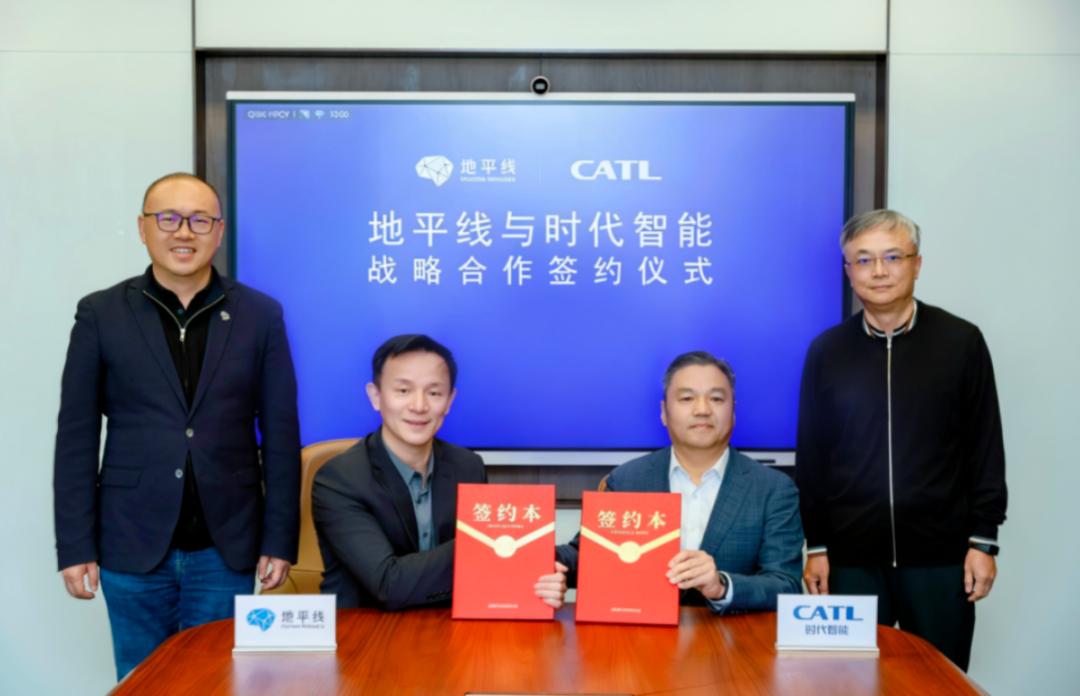
地平线新任总裁朱威亮相 陈黎明转任副董事长
Zhong Guo Jing Ying Bao· 2026-02-10 09:50
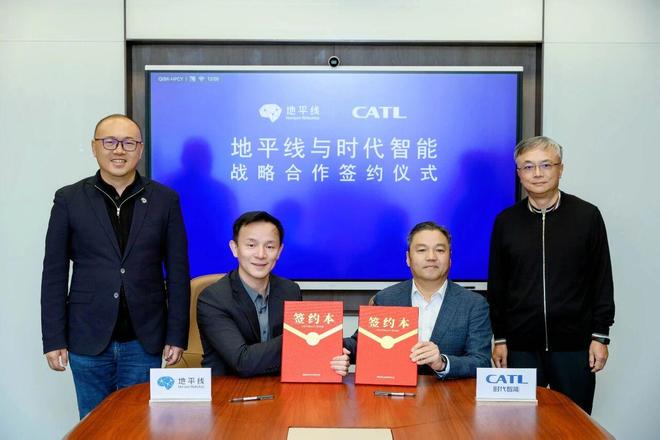
《中国经营报》记者采访了解到,朱威本科毕业于中国科学技术大学精密仪器专业,拥有耶鲁大学商学 院MBA学位,是宁德时代原执行总裁。原地平线总裁陈黎明转任副董事长聚焦公司重大战略决策,进 一步推进公司治理体系完善及重大战略落地。资料显示,朱威在宁德时代任职8年,负责公司乘用车以 及海外储能业务。加入宁德时代前,朱威曾任法雷奥中国区副总裁,负责汽车舒适及辅助驾驶业务。其 职业经历横跨智能驾驶和新能源,并在国内和国际业务上都有丰富的经验。 据介绍,根据协议,时代智能将提供其磐石底盘系列化产品与技术,地平线则将贡献其全场景辅助驾驶 产品以及解决方案等汽车智能化核心能力。双方通过软硬协同、跨域融合,共同探索从底层架构到顶层 应用的完整智能化体系,为海内外OEM客户提供更具竞争力与多样化的产品选择与服务支持。 时代智能是宁德时代旗下专注一体化智能底盘产品研发和技术服务子公司,核心产品为磐石底盘。磐石 底盘作为独立的智能移动载体,高度集成电池、电驱、热管理及底盘域控制器等关键技术,大幅度提升 了电池到底盘的成组效率、电池-电驱系统转换效率,同时通过与上车身解耦,可实现与上车身空间及 智能驾驶等模块的同步开发、并行迭代,高效助 ...
港股希迪智驾午后涨超6%
Mei Ri Jing Ji Xin Wen· 2026-02-10 06:41
Group 1 - The core viewpoint of the article highlights that Xidi Zhijia (03881.HK) experienced a significant increase in stock price, rising over 6% in the afternoon trading session [1] - As of the report, the stock price reached 236 HKD, reflecting a gain of 6.12% [1] - The trading volume for the stock was recorded at 2.8873 million HKD [1]
强化学习,正在决定智能驾驶的上限
3 6 Ke· 2026-02-10 04:45
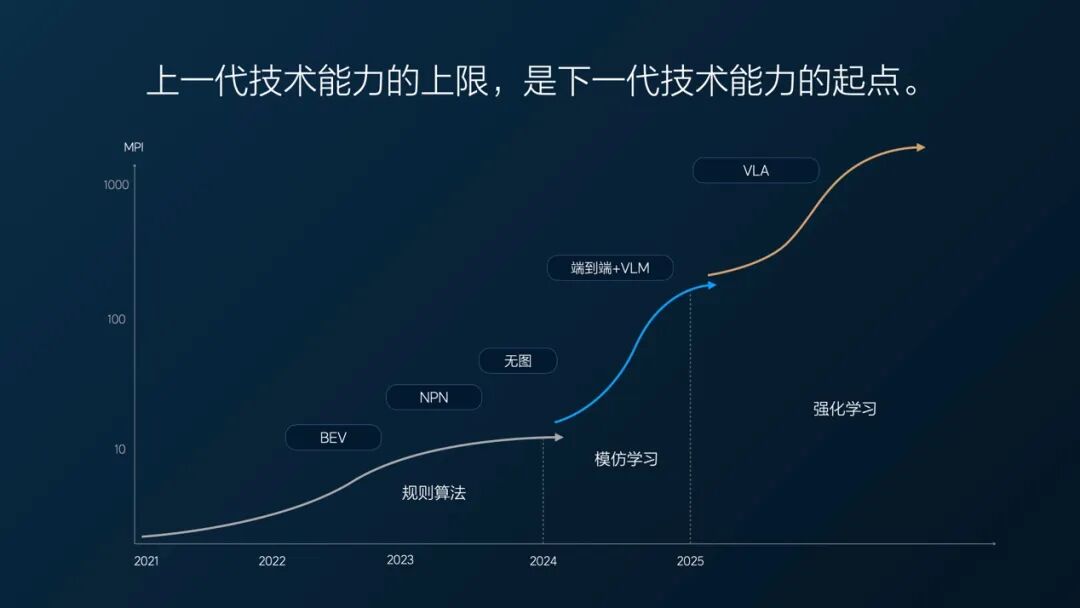
Core Insights - The development of intelligent driving is not a linear technological curve but a result of the interplay between various technical paradigms, engineering constraints, and real-world scenarios [1] - As the industry moves beyond the proof-of-concept stage, single technical terms can no longer explain the real differences in capabilities [2] - Factors such as computing power, data quality, system architecture, and engineering stability are determining the upper and lower limits of intelligent driving [3] Group 1: Evolution of Learning Techniques - Recent discussions in intelligent driving technology reveal a trend where various paths, such as end-to-end, VLA, and world models, converge on the concept of reinforcement learning [5] - Reinforcement learning is transitioning from a "technical option" to a "mandatory option" in the industry [7] - The emergence of products like AlphaGo and ChatGPT has highlighted the effectiveness of allowing AI to learn through trial and error as the fastest evolutionary method [8][9] Group 2: Learning Methodologies - Understanding reinforcement learning requires a grasp of imitation learning, which was previously favored in intelligent driving [11] - Imitation learning allows AI to learn from human driving data but has limitations, such as inheriting bad habits and struggling with unfamiliar situations [14][16] - Reinforcement learning, as demonstrated by AlphaGo, allows AI to explore new strategies through self-play, leading to superior performance beyond human intuition [17] Group 3: Reinforcement Learning Mechanisms - Reinforcement learning operates on a trial-and-error basis, where the model learns to drive well through a cycle of feedback [26] - The design of reward functions is crucial, as it translates driving performance into quantifiable scores [30] - Balancing conflicting objectives, such as safety versus efficiency, is essential in reward function design [32] Group 4: World Models and Advanced Learning - The integration of world models with reinforcement learning enhances the training environment, allowing AI to simulate real-world scenarios [42][49] - High-fidelity virtual environments enable AI to consider long-term consequences of actions, improving decision-making [50] - The coupling of world models and reinforcement learning creates a feedback loop that accelerates model iteration and performance [52] Group 5: Industry Trends and Future Directions - The importance of data is being redefined, with a shift towards the ability to model the world rather than just relying on raw data [56] - Companies are focusing on enhancing the "modeling capacity" of their systems, which is crucial for intelligent driving [60] - The evolution of intelligent driving systems is moving towards a stage where AI can independently understand environments and refine strategies, marking a significant advancement in the industry [62]