茶业

Search documents
实干的邛崃——我们身边的“十四五”丨消费提质升级,品牌效应持续释放
Sou Hu Cai Jing· 2026-01-09 04:19
Core Insights - The article highlights the significant progress made by Qionglai during the "14th Five-Year Plan" period, focusing on economic development, urban functionality enhancement, and rural revitalization [1][2] Group 1: Economic Growth - The average growth rate of the service sector's added value over the past five years is 7.1%, contributing 45.1% to GDP growth [2] - The total retail sales of consumer goods in 2024 are expected to increase by 40.0% compared to the end of the "13th Five-Year Plan" [2] - During the "14th Five-Year Plan," foreign trade imports and exports are projected to grow at an average annual rate of approximately 19% [2] Group 2: Consumption Upgrade - Qionglai has anchored its focus on consumption quality improvement, implementing a series of precise consumption promotion policies [2][17] - The introduction of first-store economy has significantly enhanced the commercial landscape, with 34 first stores in Qionglai, including national and regional brands [6] - New urban landmarks and commercial complexes are being developed, creating a comprehensive consumption network that connects urban centers, towns, and villages [6][14] Group 3: Brand Development - Qionglai's city consumption brand is gaining recognition through various themed IP activities, enhancing its visibility and attracting national tourists [18][19] - The "Four Seasons 'Lai' Fun" brand was launched, featuring seasonal activities that integrate local resources and characteristics [18] - The city aims to leverage its brand to stimulate consumption, with a target of generating 9.66 billion yuan in direct consumption through various promotional activities [18] Group 4: Open Economy - Qionglai's foreign trade has shown robust growth, with an average annual increase of 18.32% from 2021 to 2024, and a projected export value of 2.77 billion yuan in 2024, up 20.5% year-on-year [24] - The city is actively expanding its international market presence through policies and partnerships, aiming to enhance the competitiveness of local products [26] - Qionglai is becoming a hub for quality goods and a new high ground for open cooperation, with plans to further enrich consumer product offerings and improve the consumption environment [28]

透视八马茶业纳税“双冠”资本叙事:从销量第一到产业共生
Jin Tou Wang· 2026-01-09 02:36
Core Insights - The article highlights the significance of rural revitalization and county economic development as key national strategies during the transition between the 14th and 15th Five-Year Plans, emphasizing the role of leading enterprises in integrating with local economies for mutual growth [1] Group 1: Tax Contributions and Market Position - Eight Horse Tea has maintained its position as the top taxpayer in Anxi and Wuyishan for six consecutive years, reflecting its strong market performance and brand recognition [2] - According to a report by Frost & Sullivan, Eight Horse Tea ranks first in the Chinese oolong and black tea markets based on projected sales revenue for 2024, with its Tieguanyin sales leading the nation for over a decade [2] - The company's consistent tax contributions are a result of its commitment to quality, which has fostered long-term market trust and a sustainable business model [2] Group 2: Industry Ecosystem and Community Engagement - Eight Horse Tea's tax contributions are just a surface-level indication of its deeper connection with the production areas, where it has established a win-win ecosystem among the market, enterprise, and production regions [3] - Since 2019, Eight Horse has invested over 40 million yuan in high-profile tea competitions, providing platforms for tea farmers to showcase their skills and improve their income, thus enhancing the overall quality standards in the region [3] - The company’s investment in Wuyishan in 2020 not only created a stable supply chain but also facilitated the local tea industry’s transformation towards standardization and modernization [3] Group 3: Business Resilience and Strategic Framework - Eight Horse Tea demonstrates resilience through a triad of standardization, technological innovation, and brand development, which collectively support its business model [5] - The company has established a comprehensive standardization system that enhances product quality and consistency, transitioning from traditional craftsmanship to a controllable and replicable production process [6] - By leveraging technology, Eight Horse has developed a smart supply chain that enhances operational efficiency and adaptability to market fluctuations [6] Group 4: Internationalization and Cultural Branding - Eight Horse Tea's international strategy focuses on brand and cultural output, participating in significant diplomatic events and expanding its global presence through tea tasting events in 32 countries [7] - The company has received multiple accolades, including being ranked second globally and first in China in the World Tea Brand Evaluation List, indicating its strong international brand recognition [7] - The chairman of Eight Horse Tea emphasizes a dual strategy of deepening local roots while expanding internationally, aiming to transform Chinese tea from a raw material export to a cultural brand [7] Group 5: Long-term Value and Economic Impact - The achievements of Eight Horse Tea reflect a broader narrative of structural upgrades within traditional industries, showcasing the potential for innovation and value creation even in conventional sectors [9] - The company’s practices in supporting local economies and contributing to rural revitalization position it as a significant player in county-level economic development, offering sustainable growth potential for investors [9]
六年纳税双冠 八马茶业以“共生模式”重构茶业价值
Zheng Quan Ri Bao Wang· 2026-01-08 06:46
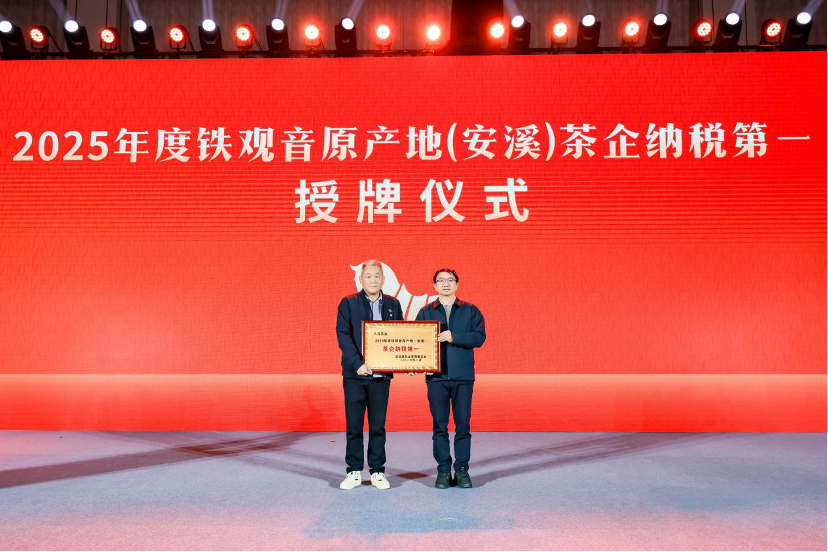
Core Insights - Eight Horse Tea Industry has achieved the "Double First" tax performance, ranking first in tax contributions among Anxi tea companies for 13 consecutive years and first among Wuyishan tea companies for 6 consecutive years, setting a record in the tea industry [1][6] - The company's success is attributed to a systematic strategy that not only drives commercial success but also empowers the production area and builds a sustainable industrial ecosystem [1][6] Tax Contribution and Market Position - According to a report by Frost & Sullivan, Eight Horse Tea ranks first in the Chinese Oolong and black tea markets by sales revenue in 2024, with its Tieguanyin sales leading the nation for over ten years, rock tea sales for five years, and black tea sales for four years [6] - The company's market position translates into revenue and tax contributions, creating a virtuous cycle of "leading sales—performance growth—tax contribution" [6] Business Strategy and Financial Stability - The chairman of Eight Horse Tea stated that being the top taxpayer is not a goal pursued by the company but a natural result of adhering to a "quality first" strategy, reflecting the core business logic of the company [6] - The continuous six-year tax leadership demonstrates the company's operational stability and sustainable profitability, especially in a competitive and volatile market [6] Systematic Mechanisms and Industry Upgrades - Since 2019, Eight Horse Tea has hosted high-profile tea king competitions in Anxi and Wuyishan, investing over 40 million yuan to create a platform for tea farmers to showcase skills and increase income, establishing a market-oriented incentive mechanism [7] - The company invested in a factory in Wuyishan in 2020, achieving a record of "landing, seeing results, and winning tax championship in the same year," which has built a stable and efficient supply chain [7] Key Pillars of Development - Standardization: Transitioning from "experience-based tea making" to "scientific tea making," Eight Horse Tea has established a comprehensive standard system covering planting, processing, storage, and sales [8] - Technological Empowerment: The company promotes the construction of a "smart tea garden + smart factory + smart supply chain" ecosystem, utilizing IoT, big data, and AI for digital control throughout the process [8] - Brand Deepening: With over 3,700 stores nationwide, the new generation of stores is positioned as "urban reception halls," extending tea sales into cultural experiences and social spaces [8] International Strategy and Brand Recognition - Eight Horse Tea has a clear international strategy focusing on "brand + culture" output, participating in significant diplomatic events and global tasting events across 32 countries and 86 cities [8] - The company ranks second globally and first in China in the World Tea Brand Evaluation List, and has topped the "2025 China Tea Enterprise Brand Survey TOP50" [8] Future Strategic Path - The chairman proposed a strategy of "rooting down and growing up," aiming to empower more tea production areas through the "China Tea Industry Collaborative Body" and deepen international layouts [8]
为何中国茶业跑不出一个“茅台”?
3 6 Ke· 2026-01-05 11:30
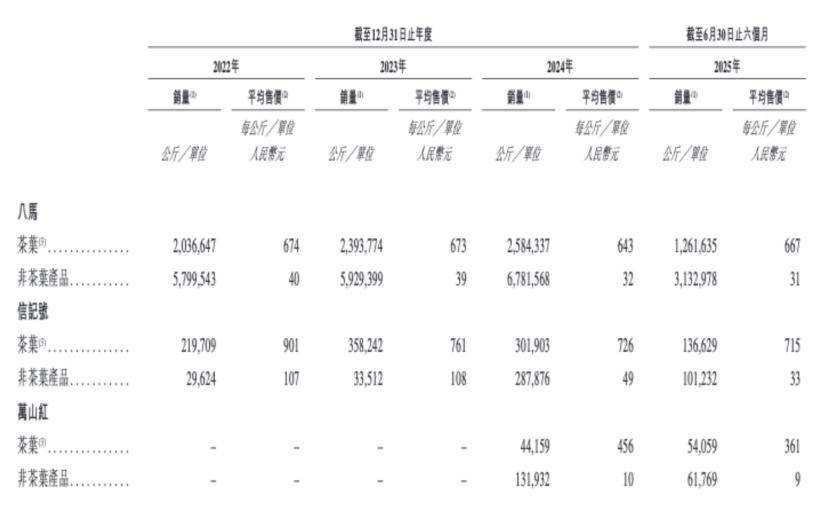
Core Insights - The decline of the "Old Deng Economy" is forcing the liquor industry to rethink consumption scenarios, while the tea industry faces a similar yet fundamentally different set of challenges [1][5] Industry Overview - The traditional consumption model in the tea industry is undergoing profound changes as the "Old Deng Economy" loses its appeal, leading to a decline in social scenarios reliant on personal connections [2] - New-style tea drinks have gained popularity among younger consumers, with brands like Mixue Ice Cream and Bawang Tea emerging, but traditional tea remains stagnant due to its strong agricultural attributes [2][4] Market Dynamics - The tea market is highly fragmented, with the top five companies in the high-end tea segment holding only 5.6% market share, and Baima Tea, as a leading player, capturing just 1.7% [4] - The lack of interest from young consumers in traditional tea and intense product homogenization raise questions about the sustainability of tea companies' profit models and growth [4] Pricing and Product Strategy - Baima Tea's pricing strategy reveals a wide range for its products, from hundreds to tens of thousands of yuan per kilogram, indicating the non-standardized nature of tea as an agricultural product [7] - Despite suggested retail prices, the average selling price of Baima's products is significantly lower, with discounts of up to 35% available to franchisees [7][9] Financial Performance - Baima Tea's gross margin for tea sales reached 58.5% in the first half of 2025, with margins varying significantly across sales channels, from 45% for franchise sales to 79% for direct sales [9][13] - The company's revenue heavily relies on franchise sales, with over 50% of total income generated from selling products to franchisees [12][13] Business Model and Expansion - The franchise model has become a mainstream choice for traditional tea companies to expand rapidly and capture market share, although it weakens brand control over end channels [12][13] - Baima Tea's marketing expenses reached 3.44 billion yuan by the end of 2024, accounting for 31% of its revenue, indicating a strong focus on brand and marketing efforts [13] Challenges and Industry Trends - The tea industry struggles with a lack of brand recognition despite having numerous products, leading to a fragmented market where high-end tea remains underrepresented [9][13] - The complexity of the tea production process and the high costs associated with owning tea plantations pose significant challenges for companies seeking to control the entire supply chain [14][17] Future Outlook - The tea industry's ability to transition successfully in a modern context will depend on defining a new "tea drinking era" rather than merely replicating the success of the liquor industry [17]
峨眉山A(000888)成立四川省峨眉雪芽茶业有限公司
Xin Lang Cai Jing· 2026-01-04 06:36
Core Insights - Sichuan Emei Xueya Tea Industry Co., Ltd. has been established with a registered capital of 10 million yuan, and its legal representative is Hu Di [1][2] Business Scope - The company’s business scope includes licensed projects such as tea product manufacturing, food production, and catering services that do not produce smoke, odor, or waste gas [1][2] - General projects include tea planting, initial processing of edible agricultural products, tea utensil sales, daily ceramic product sales, and sales of pre-packaged food [1][2] - The company is also involved in food import and export, sales of health food (pre-packaged), and various cultural and artistic exchange activities [1][2] Ownership Structure - The company is wholly owned by Emei Mountain A, as indicated by the equity penetration data from Tianyancha APP [1][2]

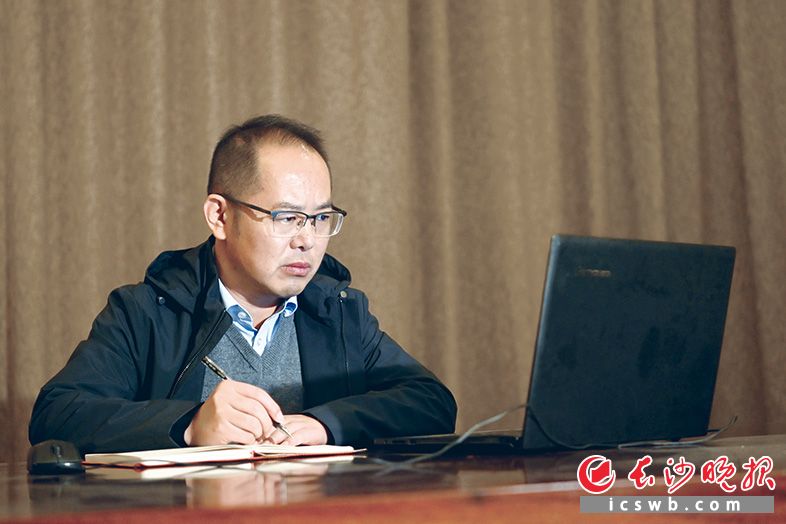
周宇:既要做好茶产业领航人 更要当好群众代言人|代表委员风采
Xin Lang Cai Jing· 2026-01-04 00:24
稿源:长沙晚报 2026-01-04 08:04 代表名片 周宇,长沙市人大代表、湖南金井茶业集团有限公司总经理 长沙晚报全媒体记者 匡春林 从放弃县城安稳岗位的大学毕业生,到执掌国家级农业产业化重点龙头企业的"茶掌门";从扎根车间的普通工 人,到乡村振兴带头人——周宇以扎实的行动履行代表职责,用实际成效回应选民期盼,在服务"三农"、联系 群众、推动乡村振兴的道路上留下了坚实足迹。 在周宇的推动下,金井茶业与湖南农业大学、中国工程院院士刘仲华团队深度合作,成立湖南省首家名优绿茶 技术创新中心暨刘仲华院士团队创新工作室,完成1个新品种试种、2个新产品开发;人才梯队建设卓有成效, 重点培养了2名长沙市B类高层次人才、23名长沙乡村工匠,以及100多名导游、茶艺师、制茶师等多元化人 才,为企业发展注入持久动力;通过"公司+合作社+集体经济+农户"模式,发展订单茶园10万亩,带动5万茶农 增收,同时以"家园共建、产业共链"等模式推进村企共建,为壮大村集体经济注入活力。 此外,作为长沙市青少年发展基金会副理事长,周宇每年筹资支持"希望小屋"工程、灾区救援等公益项目;多 年来,他带领公司累计捐赠近500万元钱物。 "既要 ...
贵州茶产业站稳全国第一方阵
Xin Lang Cai Jing· 2026-01-03 22:19
Group 1 - The core viewpoint of the articles highlights the transformation of Guizhou's tea industry from "scale expansion" to "value enhancement," aiming for a comprehensive output value target of 100 billion yuan [1][2] - During the 14th Five-Year Plan period, Guizhou will focus on developing a distinctive brand system based on its tea industry resources, maintaining a stable area of 7 million mu of tea gardens, and promoting ecological bases, standardized processing, and market branding [1] - Guizhou is implementing a green tea strategy, with the "Guizhou Green Tea" brand valued at 13.013 billion yuan, supported by 334 companies using geographical indications [1] Group 2 - Guizhou is leveraging the construction of Tongren as the "Matcha Capital of China" to develop the matcha industry, integrating it with food processing and daily chemical industries, and establishing the world's largest matcha refining workshop [2] - The matcha products from Guizhou are exported to 54 countries and regions, maintaining the highest market sales in China [2] - The changing consumer market is providing new opportunities for the tea industry, with Guizhou aiming to become a national new tea beverage supply chain center and fostering local new tea beverage brands [2]
当“新生代”碰上“老工厂” |“茶二代”的新茶经
Xin Lang Cai Jing· 2026-01-01 14:35
Core Insights - The article highlights the transition of China's private economy during the "14th Five-Year Plan" and the strategic planning for the "15th Five-Year Plan," emphasizing the need for institutional support to enhance the vitality of private enterprises [1] Group 1: Company Overview - Jiangsu Maoshan Tea Sea Co., Ltd. is led by Yin Juan, a second-generation tea entrepreneur, who has transformed the traditional tea industry by integrating technology and cultural tourism [3][5] - The company has shifted from traditional tea production to a comprehensive model that includes cultivation, deep processing, and cultural dissemination, aiming to create a unique tea tourism experience [9][11] Group 2: Innovation and Transformation - Yin Juan left a stable job in a state-owned enterprise to innovate within her father's established tea business, recognizing the limitations of traditional sales methods [5][7] - The company has adopted modern agricultural practices, including mechanization and IoT systems, to enhance efficiency and product quality, achieving organic certifications for its products [11][13] Group 3: Community Impact and Future Goals - The company has provided training and support to over 600 local farmers, creating more than 700 jobs, thereby contributing to rural revitalization [15] - Looking ahead, the company aims to elevate its operations from "having" to "good" under the guidance of rural revitalization policies, aspiring to become a benchmark for tea tourism integration in China [15][17]

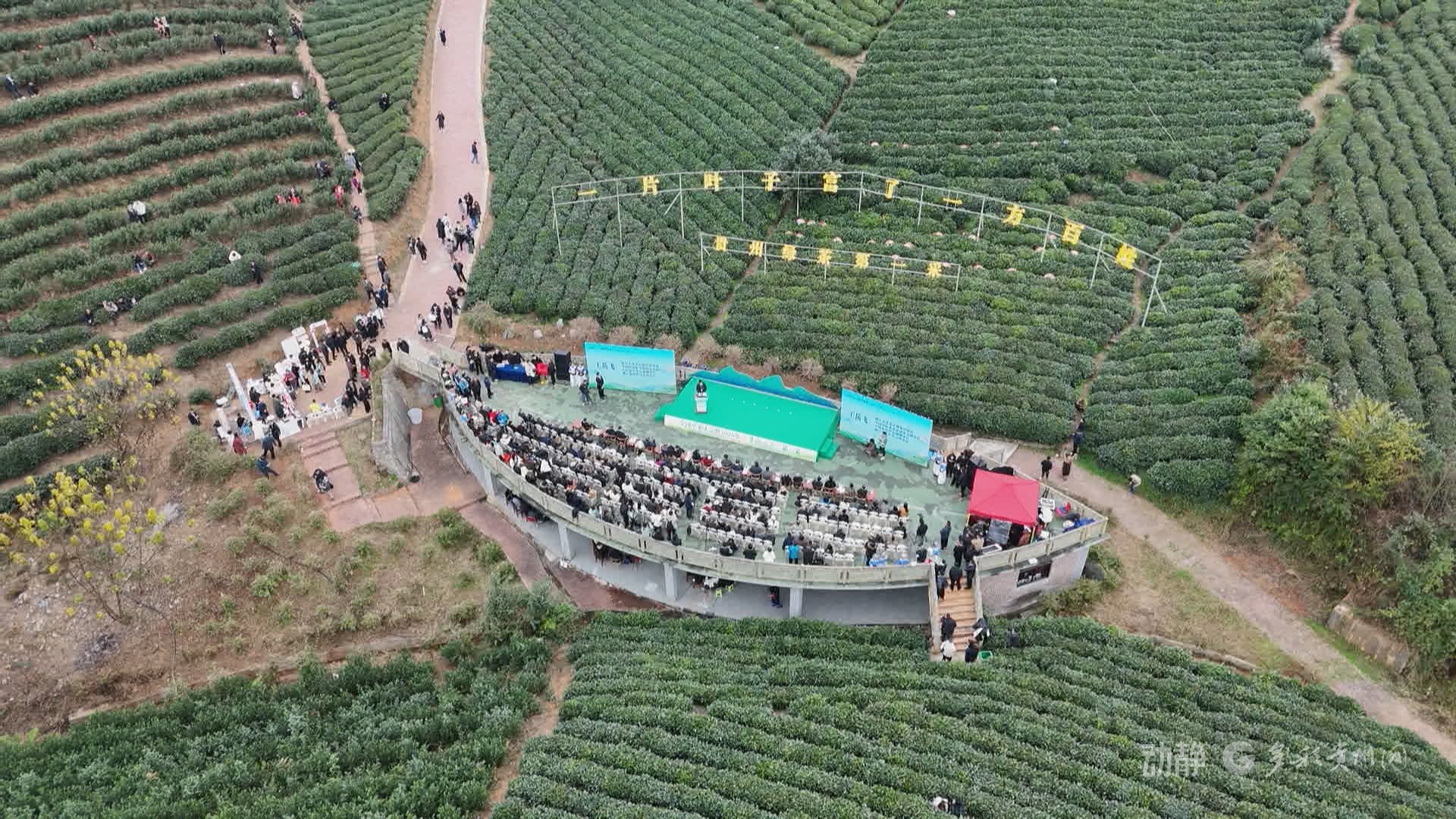
中国第一采·黔地早茶香丨全国早茶大会暨2026年“贵州绿茶”第一采活动拉开帷幕
Xin Lang Cai Jing· 2026-01-01 10:33
Core Viewpoint - The event marks the launch of the "Guizhou Green Tea" first picking activity, emphasizing the significance of early tea production in Guizhou and its potential for market growth and brand development [1][9]. Group 1: Event Overview - The national early tea conference and the first picking event for "Guizhou Green Tea" commenced in Puan County, Guizhou, with the theme "China's First Picking · Guizhou Early Tea Aroma" [1]. - The event featured multiple sub-venues in Anlong County and Shiqian County, showcasing the regional importance of tea production [1]. Group 2: Key Participants and Contributions - Notable attendees included Mu De Gui, former Deputy Director of the Provincial People's Congress, and Ye Xin, a prominent writer and tea culture advisor, who highlighted the cultural significance of Guizhou tea [3]. - Wang Yue Fei, Director of the Tea Research Institute at Zhejiang University, praised Guizhou tea for its quality and suggested promoting the brand among younger demographics, particularly university students [7]. Group 3: Industry Standards and Development - The Guizhou Tea Association introduced new group standards for "Guizhou Early Tea" and processing techniques, aiming to standardize production and enhance brand recognition [6]. - The event also included the appointment of tea industry development advisors and the release of the book "Tea Garden Puan" [6]. Group 4: Economic Impact and Market Recognition - The area suitable for early tea picking in the province exceeds 50,000 acres, with Puan County accounting for 30,000 acres, indicating significant agricultural investment [9]. - In 2025, the early tea transaction volume in Puan is projected to reach 380 million yuan, benefiting around 70,000 tea farmers [9]. - A total of 260 million yuan in contracts were signed during the event, reflecting strong market recognition for Guizhou early tea [9]. Group 5: Export Initiatives - The establishment of the "Puan Export Tea Base" aims to facilitate the export of tea from over 80,000 acres of compliant tea gardens, potentially lowering operational costs for businesses [12]. - The initiative is expected to enhance collaboration with more export companies, promoting Guizhou tea on a broader scale [12].
南珠高铁南玉段运营一周年 累计发送旅客275万人次
Xin Lang Cai Jing· 2025-12-31 00:19
Group 1 - The Nanzhu High-speed Railway Nanyu section has been operational for one year, sending a total of 2.75 million passengers, significantly enhancing the flow of people, logistics, information, and capital in the region, thus promoting high-quality development along the line [2] - The railway covers a distance of 193 kilometers with a design speed of 350 kilometers per hour, making Guangxi the first province in western China and among the few ethnic minority autonomous regions to achieve "high-speed rail connectivity between cities" [2] - The railway has optimized train schedules based on passenger flow, operating 20 trains daily to meet travel demands, thereby facilitating convenient travel for local residents [2] Group 2 - The opening of the high-speed railway has revitalized the development dynamics along the Nanyu section, enabling the return of talent, technology, and capital [3] - A local tea company has successfully addressed its talent shortage by attracting five senior tea artisans and marketing experts from Nanning, who commute via high-speed rail without relocating [3] - As of December, Yulin City has attracted 757 projects with a total investment of 138.144 billion yuan, compared to 526 projects and 103.174 billion yuan the previous year, showcasing the railway's role in facilitating talent and capital return [3]