Semiconductors

Search documents
存储周期“变形记”
投中网· 2026-03-30 01:32
Core Viewpoint - The article discusses the rapid appreciation of storage assets, particularly DRAM and NAND chips, which are expected to see price increases of 130% to 150% in the first half of the year, following a significant rise in the previous quarter [6][8]. Group 1: Current Market Dynamics - Storage has emerged as the most promising asset in the past six months, outperforming gold and oil [5]. - Major investment banks, including Wedbush and Nomura, have raised their price forecasts for storage chips, indicating a sustained upward trend [6]. - The prices of SD cards, memory sticks, and solid-state drives are experiencing daily fluctuations, with some products doubling in price over six months [7]. Group 2: Industry Sentiment and Future Outlook - There is a consensus that 2026 will be a significant year for storage, but concerns about the sustainability of the current market rally are growing [8][10]. - The market is divided between those who believe AI will fundamentally change the storage landscape and those who caution against cyclical downturns [9][10]. - The anticipated shortage of storage capacity is projected to end in 2028, raising questions about whether the industry will repeat past cycles of boom and bust [10][11]. Group 3: Historical Context and Lessons Learned - The article reflects on the challenges faced by storage manufacturers in 2023, including significant losses and the need for aggressive production cuts to stabilize prices [20][21]. - The three major players in the storage market—Samsung, SK Hynix, and Micron—have drastically reduced production capacity and capital expenditures to manage supply and demand [20][22]. - The previous cycle's overproduction led to severe price declines, prompting manufacturers to adopt a more cautious approach moving forward [20][28]. Group 4: Competitive Landscape and Strategic Shifts - The competitive dynamics in the storage industry are shifting, with major players focusing on high-end products that cater to AI applications, such as DDR5 and HBM [22][39]. - Chinese manufacturers like Changxin Storage are gaining traction, with expectations of significant growth and potential profitability by 2026 [46][47]. - The article highlights the strategic decisions of major firms, balancing the need for expansion against the risks of overextending in a volatile market [36][38]. Group 5: Future Projections and Market Reactions - The article anticipates that the expansion of storage capacity will be moderate, influenced by cautious investment strategies and changing market conditions [44][45]. - The ongoing debate about the sustainability of the current storage boom reflects broader concerns about AI's impact on demand and the potential for a return to oversupply [55][56]. - Recent technological advancements, such as Google's TurboQuant, have sparked renewed discussions about the future of storage demand, with differing opinions on their long-term implications [57][59].


铜缆,再被看好!
半导体行业观察· 2026-03-30 01:07
Core Viewpoint - The article discusses the ongoing relevance of copper cables in the data center infrastructure, particularly in the context of AI and high-performance computing, despite the rise of optical technologies like CPO (Co-Packaged Optics) [1][29]. Industry Shift - Broadcom's CEO Hock Tan indicated that customers may continue using Direct Attach Copper (DAC) cables even as they transition to 400G SerDes by 2028, highlighting the cost and power consumption advantages of copper over fiber [3]. - NVIDIA's CEO Jensen Huang acknowledged the importance of both copper and fiber, suggesting that the widespread adoption of optical solutions may be delayed until 2028 [4]. - Analysts from Bank of America noted that while optical technologies dominate in scale-out scenarios, significant adoption in scale-up applications is not expected until 2026 or 2027, extending the lifespan of copper cables [4]. Copper Cable Differentiation - Copper cables are not a uniform technology but a continuously evolving group, with DAC being the most basic form, offering low power consumption and cost advantages [6]. - Active Electrical Cables (AEC) have emerged to extend the effective transmission distance of copper cables, with capabilities of up to 7 meters for 100G speeds, significantly improving their utility in data centers [7][8]. AEC Market Dynamics - Credo Technology dominates the AEC market with an estimated 88% share, offering various AEC products tailored for different data center scenarios [10]. - The AEC market is projected to grow significantly, with estimates suggesting it could reach $1 billion by 2028, driven by the increasing complexity of GPU servers [11]. TE Connectivity's Role - TE Connectivity is redefining copper cable technology through innovative connector designs and active backplane solutions, emphasizing the importance of copper as a foundational technology rather than a temporary solution [13][14]. Optical Technology Developments - The LPO (Linear Pluggable Optics) technology aims to reduce power consumption by eliminating DSP chips, achieving significant efficiency improvements [16]. - NPO (Near-Package Optics) serves as a transitional technology between traditional optics and CPO, offering operational flexibility [17]. Copper Cable Evolution - The ongoing advancements in semiconductor process nodes are driving the evolution of copper cables, with companies like Credo moving towards smaller nodes to reduce costs and power consumption [22]. - Broadcom's Co-Packaged Copper solutions are designed to integrate closely with chip packaging, enhancing performance while maintaining cost advantages [22]. Scale-Up vs. Scale-Out - The distinction between scale-up (vertical expansion) and scale-out (horizontal expansion) is crucial, with copper cables being particularly suited for scale-up scenarios where low latency and high bandwidth density are essential [24]. - Marvell's perspective aligns with the idea that CPO will have limited deployment in scale-up scenarios, reinforcing the coexistence of copper and optical technologies [25]. New Industry Landscape - The shift towards AEC has redefined the value chain in the copper cable industry, with Retimer chip manufacturers becoming central to competitive dynamics [27]. - Major data center operators are now prioritizing reliability and signal integrity in their copper cable selections, indicating a shift from passive to intelligent network infrastructure [28].


六大芯片公司,集体涨价
半导体行业观察· 2026-03-30 01:07
Group 1: Price Increases in IC Design - The semiconductor industry is experiencing rising production costs, leading to price increases from major IC design companies such as Silan, Ailite, Lianying, Tianyu, Ruiding, and Duntai, with some products seeing price hikes of up to 20% [1] - Silan plans to raise the price of its driver ICs by 15% starting April 1, citing increased costs in wafer manufacturing and packaging due to rising prices of precious metals and labor [1] - Ailite also announced a price increase of 15% to 20% for its driver ICs, effective April 1, due to significant increases in raw material costs since Q3 of the previous year [1] Group 2: Market Reactions and Strategies - Lianying has not commented on the rumors of price increases for its timing control ICs, but acknowledged facing cost pressures and is exploring various strategies to improve gross margins, including reducing gold usage and adjusting product mixes [2] - Tianyu is expected to follow suit with price increases for timing control ICs, adjusting based on individual customer situations [2] - Ruiding is also considering price hikes for its timing control IC products, citing rising costs from upstream suppliers and ongoing negotiations with customers to share the increased costs [2] Group 3: Memory Market Dynamics - The memory market, particularly for DDR4, is showing strong price momentum, with contract prices expected to rise by 40% to 50% in Q2, reaching $22 to $25, and potentially hitting $30 in the second half of the year [6] - Factors supporting the continued strength in DDR4 prices include limited supply growth and strategic investments from major players like Nanya and Winbond, which are adapting their production capacities [6][7] - The introduction of Google's TurboQuant technology is expected to lower memory costs per task, potentially stimulating overall demand without suppressing the need for memory [5]
沐曦股份再添大动作!
是说芯语· 2026-03-30 00:52
Core Viewpoint - Muxi Co., Ltd. (沐曦股份) is strategically enhancing its capabilities in the high-performance GPU sector by establishing subsidiaries in Shanghai, focusing on a comprehensive strategy that integrates chip design, software development, and ecosystem building [1][5][6]. Group 1: Company Developments - On January 20, 2026, Muxi Digital (Shanghai) Technology Co., Ltd. was established with a registered capital of 100 million RMB, focusing on integrated circuit design and sales, marking a significant step in the company's hardware business in Shanghai [1]. - On March 19, 2026, Muxi New Intelligence Technology (Shanghai) Co., Ltd. was founded with a registered capital of 50 million RMB, extending the company's reach into AI software and algorithm development, thus enhancing its strategic depth [3][4]. - The establishment of Muxi New Intelligence is seen as a move to strengthen the synergy between foundational computing chips and upper-layer AI applications, transitioning towards an integrated solution of chips and algorithm optimization [4]. Group 2: Strategic Positioning - Muxi Co., Ltd. has been deeply involved in full-stack GPU product research and design since its inception in 2020, and its recent establishment of subsidiaries reflects a concentrated effort to build a national collaborative innovation network [5]. - The company aims to leverage Shanghai's advantages in the integrated circuit industry and AI development to solidify its hardware research foundation while capturing technological advancements in AI theory and algorithms [5][6]. - Muxi New Intelligence is expected to become a key base for innovation at the intersection of AI foundational theory and chip design, enhancing the company's core products and contributing to the evolution of domestic general-purpose computing capabilities [5][6].
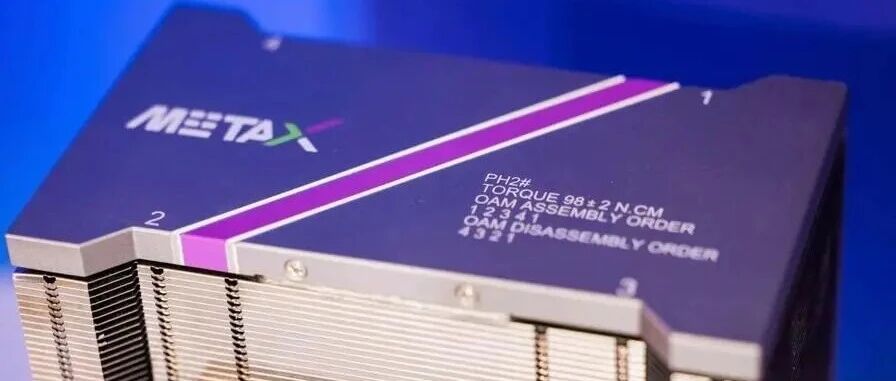
中金 | “十五五”规划《纲要》解读:产业自立,科技图强,AI硬件迎来黄金时代
中金点睛· 2026-03-30 00:26
Core Viewpoint - The "14th Five-Year Plan" emphasizes high-level technological self-reliance as the core engine for developing new productivity, with AI computing power expected to become the foundation for digital economy and intelligent development, particularly benefiting the domestic AI hardware industry during this period [1][6]. Demand Side - The demand for AI hardware in China is expected to grow rapidly due to the increasing capabilities of domestic AI models, the proliferation of Agent applications, and the expansion of model usage overseas, indicating a shift from training-driven to inference-driven demand [4][8]. - The domestic AI small models have reached a commercially viable level, with local enterprises poised to benefit from innovations in the next 3-5 years, supported by a large consumer base and local preferences for solutions [4][9]. - The token consumption in China has seen a significant increase, with daily average token calls projected to rise from 1 trillion in early 2024 to over 140 trillion by March 2026, indicating a transition from concept validation to substantial demand [12][16]. Supply Side - The domestic AI hardware supply chain is becoming more competitive, with advancements in AI chips and server clusters narrowing the gap with international leaders, supported by national planning and the "East Data West Computing" initiative [4][26]. - The complete AI end-side industry chain in China includes chips, modules, ODM, and applications, positioning the country as a core manufacturing base for AI hardware innovation [52]. - The software support system for domestic AI chips is improving, with collaborations between chip manufacturers and infrastructure service providers enhancing performance and usability [34][38]. Future Outlook - The "East Data West Computing" strategy aims to optimize the geographical distribution of computing resources, enhancing efficiency and sustainability in the digital infrastructure [47][48]. - The integration of AI into various sectors, such as smart homes and automotive, is expected to drive significant growth in the end-side AI hardware market, with predictions of AI penetration in smart homes reaching nearly 50% by 2025 [21][25].


中信证券:国内半导体产业将持续高景气,建议关注半导体设备头部平台型公司
Xin Lang Cai Jing· 2026-03-30 00:21
Group 1 - The core viewpoint of the report highlights three major trends in the Chinese semiconductor industry: the transition from single-point breakthroughs to a full industry chain rise, advancements from mature processes to advanced processes, and the expansion from domestic markets to global markets [1][2] - The report indicates that with the gradual breakthroughs in domestic semiconductor equipment, components, and materials, the dependence on overseas products is continuously decreasing, making local companies the core driving force for industry growth [1][2] - It is anticipated that leading domestic wafer fabs will continue to expand production, and the construction of advanced process production lines will accelerate, providing significant market space for domestic equipment and materials, further promoting the process of domestic substitution [1][2] Group 2 - In the long term, driven by demand in AI computing power, advanced storage, and new energy, the domestic semiconductor industry is expected to maintain high prosperity, with domestic substitution being the most certain main line [1][2] - Local companies, leveraging technological breakthroughs, cost advantages, and service capabilities, are likely to occupy a more important position in the global semiconductor industry landscape, ushering in long-term growth opportunities [1][2] - The report suggests paying attention to leading platform companies in the semiconductor equipment sector [1][2]

The Biggest Risk to Your Artificial Intelligence (AI) Stocks Isn't AI Itself. It's $100+ Oil.
The Motley Fool· 2026-03-30 00:15
Core Viewpoint - Nvidia is a leading player in the AI sector, but its stock has declined over 15% from its 52-week high due to rising oil prices impacting the broader AI ecosystem [1][11]. Group 1: AI Ecosystem and Infrastructure - The current focus in AI is on building the necessary infrastructure, such as data centers, to support widespread adoption of the technology [2][3]. - Investment in AI should also consider related sectors, including data center owners, electricity companies, and construction industries, as they form a crucial ecosystem around AI [3]. Group 2: Impact of Energy Costs - Rising oil and natural gas prices pose significant challenges for the AI ecosystem, as they can increase operating costs for data centers that run AI technologies [4][6]. - High energy prices can lead to increased costs in various stages of the AI infrastructure supply chain, from mining iron ore to transporting materials for data center construction [6]. Group 3: Economic Considerations - Higher energy prices could potentially lead to a recession, which may delay or cancel significant capital investment plans, including those for AI infrastructure [9]. - If economic conditions worsen, the cash flow into AI infrastructure could be severely impacted, affecting the long-term growth of the sector [9]. Group 4: Nvidia's Performance - Despite Nvidia's sales increasing by over 70% year over year, the stock has not responded positively due to the headwinds posed by high oil prices [12].
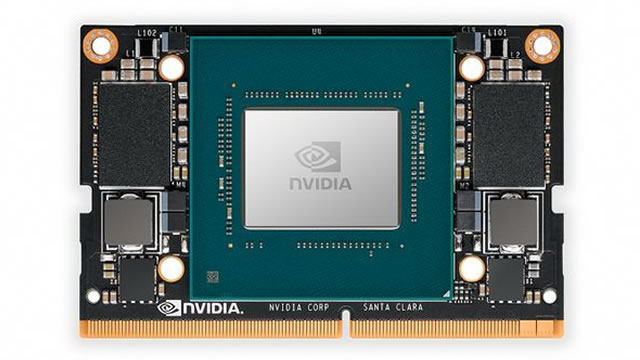
ARM Holdings CEO: We are projecting up to $15B revenue in 5 years
Youtube· 2026-03-30 00:00
Core Viewpoint - ARM has entered the AI chip market by designing and selling its own semiconductor, the ARM AGI CPU, marking a significant shift from its previous model of providing chip blueprints to other companies [1][2][3] Group 1: Financial Projections - ARM expects its new line of AI chips to generate over $15 billion in annual revenue within five years, a substantial increase from approximately $1 billion projected for fiscal 2028 [3][8] - The stock price of ARM saw an initial decline upon the announcement but rebounded by approximately 16.7%, reaching a session high of $163 [2][3] Group 2: Market Position and Strategy - The transition from chip royalties to direct chip sales positions ARM to compete in a crowded semiconductor market, particularly in the AI sector [4][5] - ARM's technology is reported to provide double the performance within the same power envelope compared to competitors, which is crucial as demand for CPUs surges with the rise of generative AI [12][13] Group 3: Partnerships and Customer Base - Meta is identified as ARM's lead partner for the new chip, with other notable customers including OpenAI, Cloudflare, and SAP already signed up for designs utilizing ARM technology [7][15][20] - ARM's CEO emphasized the importance of confidentiality in maintaining partnerships and the company's disciplined approach to handling sensitive information [28][29] Group 4: Future Outlook - The total addressable market (TAM) for ARM's new product is estimated at $100 billion, with the broader semiconductor market potential exceeding $1 trillion [23][22] - ARM's CEO indicated that the company is not stopping with the ARM AGI CPU and hinted at more developments to come in the future [21][22]

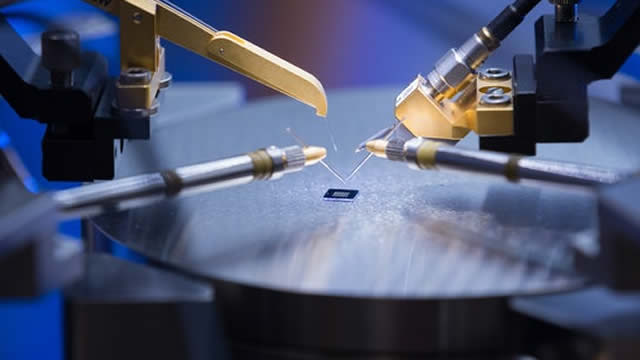
NVIDIA (NVDA) Backed Start-up Reflection AI To Raise $2.5 Billion
Yahoo Finance· 2026-03-29 23:16
Group 1 - NVIDIA Corporation (NASDAQ:NVDA) is highlighted as a promising stock to buy, particularly due to its involvement with Reflection AI, a start-up expected to raise $2.5 billion at a valuation of $25 billion [1][2] - Reflection AI, which collaborates closely with NVIDIA, focuses on building open-source AI models and aims to enhance its capabilities to compete against AI offerings from China [4] - Prior to the funding round, Reflection AI was valued at approximately $8 billion, indicating significant growth potential with the new funding [2][4] Group 2 - JPMorgan & Chase is expected to participate in the funding round for Reflection AI, indicating strong institutional interest in the start-up [2] - Earlier in 2024, Reflection AI successfully raised $2 billion, showcasing its ability to attract substantial investment [4] - NVIDIA is recognized as a fabless semiconductor company that designs and develops technologies for gaming, data centers, artificial intelligence, and autonomous systems [4]
跌落神坛后,日本半导体联手搞事情
汽车商业评论· 2026-03-29 23:04
Core Viewpoint - Toshiba, Mitsubishi Electric, and Rohm are negotiating to merge their power semiconductor businesses, aiming to create the world's second-largest power chip group amid increasing global competition in the semiconductor market [3][6]. Group 1: Industry Context - The Japanese government is actively promoting the enhancement of the country's influence in the global semiconductor market, particularly in the power semiconductor sector, which has traditionally been a strength for Japanese companies [3][6]. - The global demand for chips is expected to grow, but Japanese manufacturers are smaller in scale compared to their American and European counterparts, facing significant competition from Chinese manufacturers [6][10]. Group 2: Merger Details - Toshiba's subsidiary, Toshiba Electronic Components & Storage Devices Corporation (TDSC), has signed a memorandum of understanding with Mitsubishi Electric and Rohm to initiate discussions on the merger [3]. - If the merger is successful, the combined market share of the three companies could account for approximately 10% of the global power semiconductor market, positioning them as the second-largest player [6][10]. Group 3: Competitive Landscape - The merger discussions may also serve to counteract a proposal from Denso, a major Japanese automotive parts manufacturer, to acquire Rohm for 1.3 trillion yen (approximately 8.2 billion USD) [6][8]. - Rohm's special committee is evaluating Denso's proposal against the potential benefits of the merger with Toshiba and Mitsubishi Electric [8]. Group 4: Government Initiatives - The Japanese government has been advocating for the restructuring of domestic power semiconductor manufacturers since 2023, applying pressure through subsidies [8][15]. - Japan's semiconductor market share has declined significantly, from 51% in 1988 to less than 10% currently, prompting the government to invest heavily in new chip factories to reverse this trend [16][20]. Group 5: Future Plans - The Japanese government aims to increase domestic semiconductor sales to 40 trillion yen by 2040, with a focus on advanced semiconductor research and development [15][21]. - Major investments include a 120 billion yen project by Rapidus, a company supported by Toyota, Sony, and SoftBank, to produce cutting-edge 2-nanometer chips by 2027 [21].