
进出口贸易

Search documents
中智自贸协定助力实现车厘子、红酒“自由”,今年前11月湖北享惠进口智利商品近2亿
Sou Hu Cai Jing· 2025-12-15 11:07
Group 1 - The import of cherries from Chile to Hubei has benefited from a zero-tariff policy under the China-Chile Free Trade Agreement, resulting in a tax reduction of approximately 99,000 yuan [1][3] - In the period from January to November 2025, Hubei's zero-tariff imports from Chile reached 198 million yuan, marking a year-on-year increase of 150% [1] - The import duty on cherries is typically 10%, but the zero-tariff status has made them more accessible to consumers, reducing their perceived luxury status [3] Group 2 - Companies specializing in fresh produce imports, such as Hubei Ouheng Import and Export Co., have also benefited from the zero-tariff policy, expecting to save over 1 million yuan in tariffs for various products, including Atlantic salmon [3] - The China-Chile Free Trade Agreement has been in effect for 20 years, with an increasing coverage of zero-tariff products, including fresh produce and Chilean red wine, which has gained popularity in China [3] - Shenzhen Pinshanghui Wine Group has imported over 670,000 bottles of Chilean red wine this year, benefiting from a tariff reduction of 5.6 million yuan, with expectations for record-high import volumes [3]

联播一瞬丨“考试”完成!海南自贸港全岛封关运作准备就绪
Yang Shi Xin Wen Ke Hu Duan· 2025-12-14 12:19
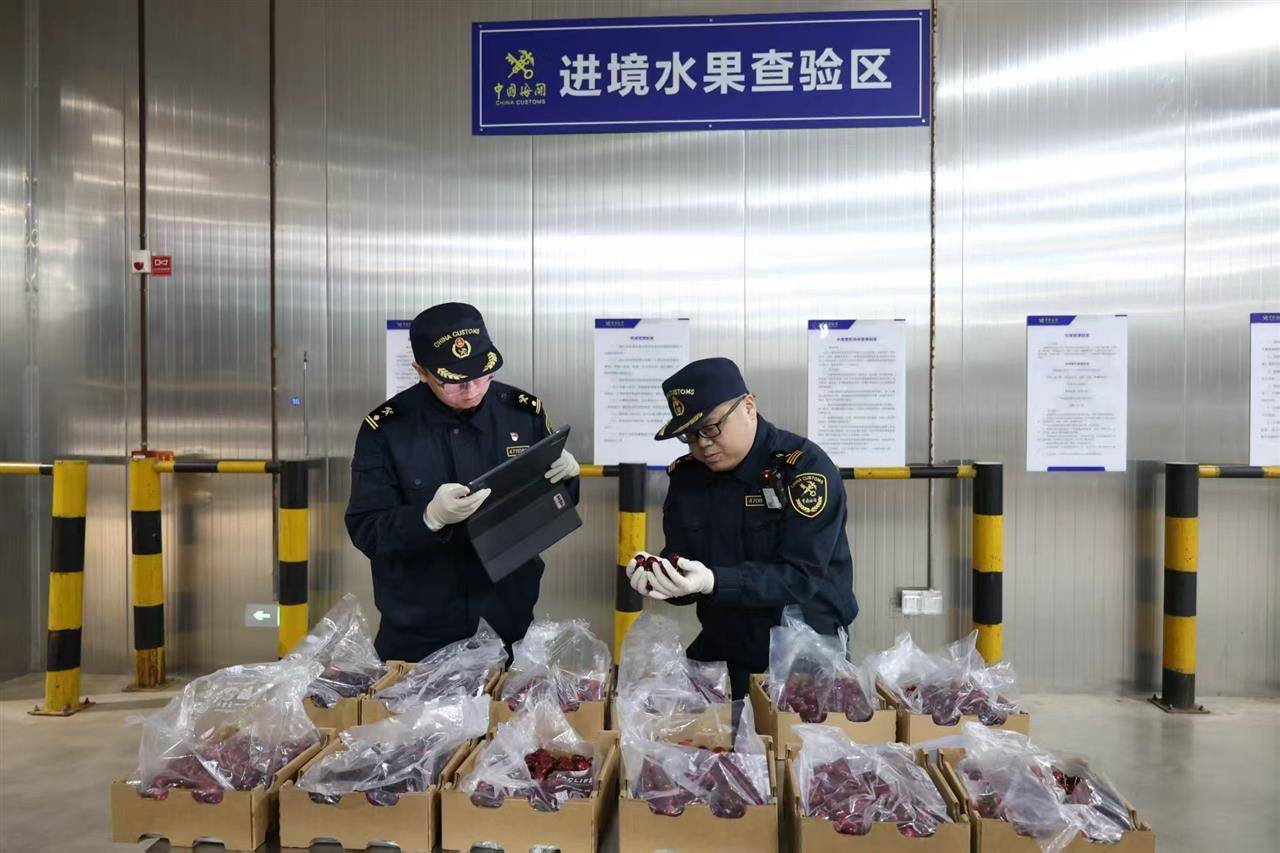
[ 责编:杨煜 ] 剪辑丨李超越 总台记者丨杨涛 钟华夏 叶帆 部分素材来源丨天骏Reddot-FPV 海南自贸港12月18日全岛封关运作,更多"零关税"商品将通过对外开放口岸进入海南岛,也有更 多商品将通过"二线口岸"监管后进入内地。封关后,预计80%的货车将通过新海港、南港"二线口岸"查 验后进入内地,目前,查验场已完成封关前最后一轮测评。封关运作在即,新机会,新机遇!观看视 频》》 监制丨冯旭宏 制片人丨李昕 姚勤 编导丨陈晨 张雨妍 张斌 ...
常州澳樽国际进出口贸易有限公司成立 注册资本100万人民币
Sou Hu Cai Jing· 2025-12-13 00:10
天眼查App显示,近日,常州澳樽国际进出口贸易有限公司成立,法定代表人为孙辉,注册资本100万 人民币,经营范围为一般项目:货物进出口;技术进出口;包装材料及制品销售;金属包装容器及材料 销售;食品用塑料包装容器工具制品销售;进出口代理;食品进出口;技术服务、技术开发、技术咨 询、技术交流、技术转让、技术推广(除依法须经批准的项目外,凭营业执照依法自主开展经营活 动)。 ...
前11月陕西外贸进出口总值超去年全年
Shan Xi Ri Bao· 2025-12-12 23:42
Group 1 - The total import and export value of Shaanxi reached 472.04 billion yuan from January to November, exceeding last year's total and showing a year-on-year growth of 13.7%, ranking sixth in the country, and surpassing the national growth rate of 10.1% [1] - Exports amounted to 326.7 billion yuan, with a year-on-year increase of 16.6%, while imports were 145.34 billion yuan, growing by 7.8%, resulting in a trade surplus of 181.36 billion yuan [1] - Processing trade, general trade, and bonded logistics all showed growth, with processing trade at 224.34 billion yuan (up 12.7%), general trade at 174.45 billion yuan (up 11.4%), and bonded logistics at 55.67 billion yuan (up 8.8%) [1] Group 2 - Foreign-invested enterprises saw a significant increase in import and export value, totaling 274.56 billion yuan, a year-on-year growth of 21.6%, accounting for 58.2% of the province's total [2] - Mechanical and electrical products exports grew rapidly, reaching 281.24 billion yuan, a 17.6% increase, making up 86.1% of the province's total exports [2] - Semiconductor manufacturing equipment imports surged, with a total of 7.51 billion yuan, reflecting a year-on-year growth of 176.4% [2]
奋战四季度 确保全年红丨进出口额超8400亿元,同比增长13.5% 今年前11个月河南外贸规模超去年全年
He Nan Ri Bao· 2025-12-12 23:12
Group 1 - The province's foreign trade achieved a breakthrough with a total import and export value of 840.24 billion yuan in the first 11 months, a year-on-year increase of 13.5%, surpassing last year's total and exceeding the national growth rate by 9.9 percentage points [1] - Exports reached 552.57 billion yuan, growing by 18%, while imports totaled 287.67 billion yuan, increasing by 5.8% [1] - The number of foreign trade enterprises with import and export performance increased to 14,400, a growth of 13.5%, with 1,031 enterprises having an import and export value exceeding 50 million yuan, up by 14.2% [1] Group 2 - The EU and ASEAN remain the province's top two trading partners, with import and export values of 112.89 billion yuan (up 17.5%) and 112.69 billion yuan (up 13%), respectively [2] - Exports of mechanical and electrical products accounted for nearly 70% of total exports, amounting to 365.29 billion yuan, a growth of 22.9% [2] - The province's imports of mechanical and electrical products reached 178.92 billion yuan, increasing by 9.6%, representing 62.2% of total imports [2] Group 3 - The province's five comprehensive bonded zones reported a total import and export value of 466.53 billion yuan, growing by 17.2%, accounting for 55.5% of the province's total import and export value [3] - The four bonded logistics centers achieved a combined import and export value of 6.76 billion yuan, with a growth rate of 50.6% [3] - The province's free trade pilot zone recorded an import and export value of 82.09 billion yuan, increasing by 6.4% [3] Group 4 - In the first 11 months, 12 provincial cities and the Jiyuan Demonstration Zone achieved positive growth in import and export [4]
前11月广西对东盟贸易保持稳定增长
Sou Hu Cai Jing· 2025-12-12 13:37
Core Insights - Guangxi's foreign trade import and export value reached 726.54 billion yuan in the first 11 months of 2025, showing a year-on-year growth of 9.5% [1] - ASEAN remains Guangxi's largest trading partner, with bilateral trade amounting to 384.22 billion yuan, an increase of 10%, accounting for 52.9% of Guangxi's total foreign trade [1] Trade Performance - Trade with ASEAN has shown stable growth, with Vietnam being the largest trading partner in the region, achieving an import and export value of 282.98 billion yuan, up by 7.1% [1] - Trade with Indonesia and Singapore has seen remarkable growth rates of 51.7% and 62.7%, respectively, driven by the rapid development of the cross-border e-commerce and new energy materials industries [1] Market Diversification - Guangxi's trade with Latin America, the Middle East, Africa, and the EU has also experienced rapid growth, with increases exceeding 20%, although ASEAN still dominates with over half of the trade share [1] Trade Methods - Various trade methods, including general trade, bonded logistics, and processing trade, have all contributed to the growth of foreign trade [1] - The import processing value of goods from border trade has increased by 32.7%, highlighting a significant development in regional trade [1] Export Composition - Mechanical and electrical products account for over 60% of Guangxi's total export value [1] - Key exports such as lithium batteries and flat panel display modules have maintained high growth rates, with lithium battery exports increasing by 70% [1]
今年前11个月,湖北省进出口突破7500亿元
Sou Hu Cai Jing· 2025-12-12 10:42
5个市州进出口值超300亿元,区域外贸发展均衡性提升。前11个月,湖北省有5个市州进出口值超过300亿元,较去年同期增加1个。武汉市进出口4108.4亿 元,增长13.4%,占54.8%。同期,除武汉外的其他市州合计增长27.3%,比重较去年同期提升2.8个百分点,对湖北省进出口增长贡献率达60%。其中,黄石 依托金属冶炼产业、宜昌依托化工产业、鄂州依托枢纽优势分别增长30.1%、12.9%、424.5%,进出口值分别位列各市州第二、三、四位。 极目新闻通讯员 武关宣 12月12日,武汉海关发布消息称,今年前11个月,湖北省进出口总值7502.3亿元人民币,同比增长19.3%。其中,出口5256.6亿元,同比增长22%;进口 2245.7亿元,同比增长13.3%。 今年前11个月,湖北省进出口主要特点如下: 民营企业占主导地位。前11个月,湖北省有进出口实绩的外贸企业突破10000家,较去年同期增加1087家。从企业性质看,民营企业超9400家,进出口 5267.8亿元,增长21.8%,占同期湖北省进出口总值的(下同)70.2%;国有企业、外商投资企业分别增长8.5%、19.8%,分别占15.3%、14.4% ...
扛不住美国压力,墨西哥对华加税50%,中国不再客气,回应组合拳
Sou Hu Cai Jing· 2025-12-12 07:18
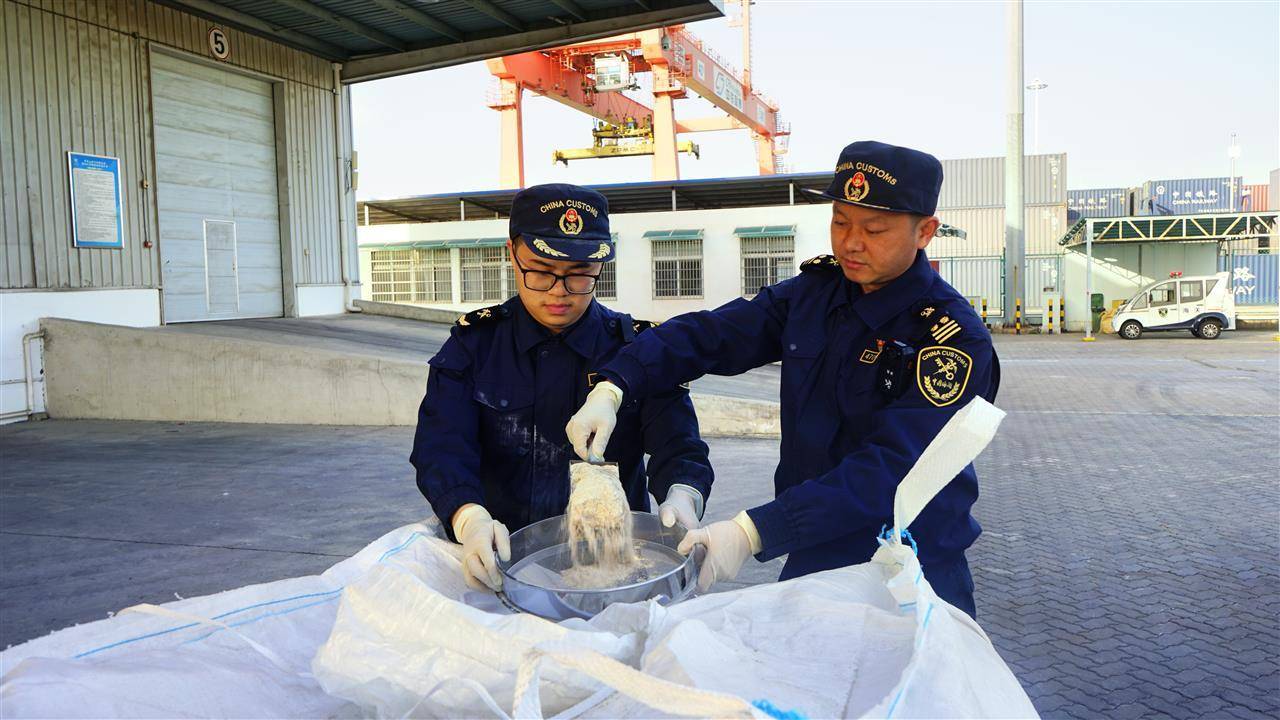
Group 1 - The Mexican Congress approved a bill proposed by President Sinbloom to impose tariffs of up to 50% on goods from several Asian countries, including China, India, and South Korea, primarily targeting high-value-added products [1][3] - The decision to impose tariffs was largely influenced by significant pressure from the Trump administration, which has increased military and economic threats towards Mexico [3] - The tariffs on goods from China, which is Mexico's second-largest trading partner with approximately $90 billion in imports annually, may harm China's interests while potentially increasing inflation and affecting public support for the Mexican government [5] Group 2 - In response to Mexico's tariff decision, China has initiated a series of countermeasures, including an investment barrier investigation into trade activities involving Mexico, which could impact nearly $20 billion of Mexican exports [7] - The ongoing trade conflict between the U.S. and China may lead to intensified indirect economic confrontations in regions like Latin America and Southeast Asia if strong countermeasures are not taken [9]
广州阿依托勒进出口有限公司成立 注册资本50万人民币
Sou Hu Cai Jing· 2025-12-12 06:06
Group 1 - Guangzhou Aiyituole Import and Export Co., Ltd. has been established with a registered capital of 500,000 RMB [1] - The company's business scope includes technology import and export, goods import and export, and sales of various products such as chemical products, textiles, metals, and packaging materials [1] - The company is also involved in supply chain management services, ordinary goods warehousing, and various technical services including consulting and development [1] Group 2 - The company offers a wide range of sales services including medical devices, office supplies, daily chemical products, and food-related products [1] - It engages in the retail of consumer electronics, computer hardware and software, and automotive parts [1] - The company is positioned to participate in the food industry through the sale of pre-packaged food and agricultural products [1]
河南博崧医疗器械有限公司成立 注册资本100万人民币
Sou Hu Cai Jing· 2025-12-12 03:22
Core Viewpoint - The establishment of Henan Boxun Medical Equipment Co., Ltd. indicates a growing interest in the medical device sector, with a registered capital of 1 million RMB and a diverse range of business activities [1] Company Overview - Henan Boxun Medical Equipment Co., Ltd. has been recently founded with a legal representative named Fang Bo [1] - The company has a registered capital of 1 million RMB [1] Business Scope - The company is involved in the sales of Class I and Class II medical devices, as well as medical research and experimental development [1] - Additional business activities include the sale of household goods, home appliances, daily necessities, clothing, sports equipment, communication devices, electronic products, aquatic products, and agricultural products [1] - The company also engages in the wholesale and retail of various items, including automotive parts and machinery [1] - It offers services related to conferences and exhibitions, as well as technology import and export [1] - The company is permitted to operate in the sale of Class III medical devices and food sales, subject to relevant approvals [1]