工业机器人

Search documents
机械设备行业周报:国产机器人产业链蓬勃发展 AI算力投资带动液冷需求
Xin Lang Cai Jing· 2025-11-23 06:32
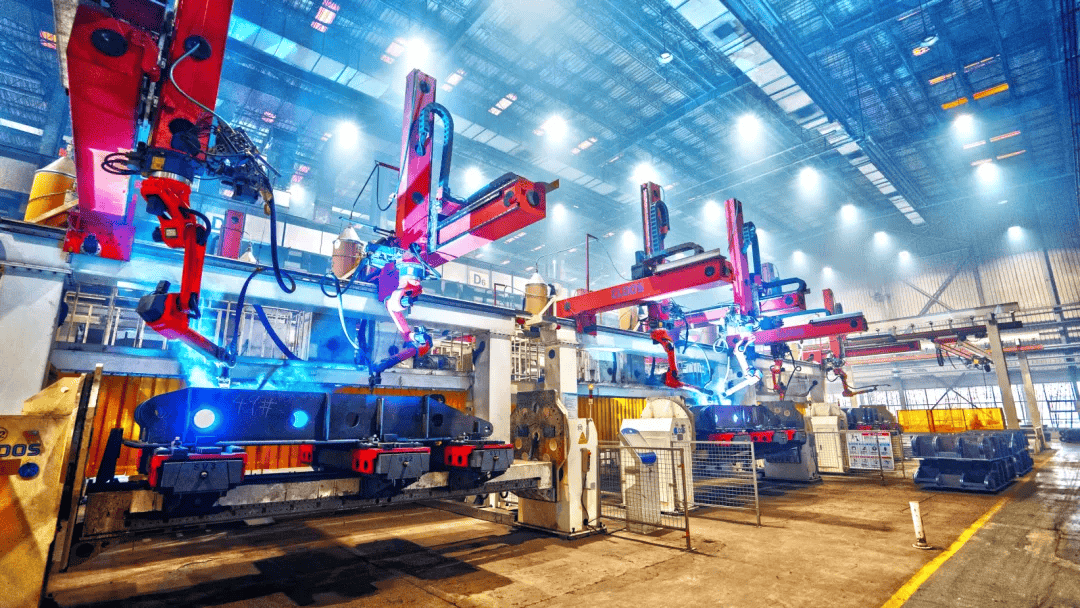
Group 1: Industrial Robotics Industry Dynamics - The production of industrial robots in China reached 595,000 units in the first three quarters of 2025, representing a year-on-year increase of 29.8%, surpassing the total production for the entire year of 2024 [1] - Domestic brands have regained market share over foreign brands in the industrial robot market during the first half of 2025, indicating a shift in market structure [1] - Exports of industrial robots increased by 54.9% in the first three quarters, reflecting the growing international influence of Chinese manufacturers [1] - The rise of domestic robot companies is attributed to breakthroughs in core component technologies and a deep understanding of the local market, enhancing cost efficiency and supply chain stability [1] - Leading domestic manufacturers have improved their service strategies, enabling rapid response to customer needs and offering personalized technical support [1] - Major companies are combining technology acquisition and independent innovation through acquisitions, such as Estun's acquisition of UK-based TRIO and Germany's CLOOS to strengthen its position in high-end motion control and welding robot markets [1] - Domestic robot companies excel in developing specialized solutions for specific industries, gaining competitive advantages through tailored machinery [1] Group 2: Cooling Equipment Industry Dynamics - Vitec Technology reported a net sales figure of $2.676 billion for Q3 2025, marking a 29% year-on-year increase [2] - Organic orders for Vitec Technology grew approximately 60% year-on-year in Q3 2025, with a 20% increase compared to Q2 2025 [2] - The company has seen a 21% year-on-year growth in organic orders over the past 12 months, driven by demand in the AI-driven infrastructure sector [2] - The order-to-shipment ratio for Q3 2025 was about 1.4, with an unfulfilled order backlog of $9.5 billion [2] - Due to a robust backlog, Vitec Technology has raised its guidance for key financial metrics for the fiscal year 2025, increasing the adjusted diluted earnings per share from $3.80 to $4.10 and adjusted operating profit from $1.99 billion to $2.06 billion [2] Group 3: Cooling Liquid Distribution Unit (CDU) Developments - Google open-sourced its design specifications for a 2MW cooling liquid distribution unit (CDU) at the OCP conference, aimed at enhancing thermal management and operational efficiency [3] - The open-source design allows more CDU manufacturers to develop, manufacture, and improve their products based on Google's specifications [3] - Google also shared installation and maintenance procedures to facilitate rapid deployment of the equipment [3] - Companies like Vitec Technology, Stulz, and Delta have released CDU products based on Google's Deschutes 5 specifications [3]

IPO一周资讯|AI与智能制造引领本周递表热潮
Sou Hu Cai Jing· 2025-11-21 10:04
Group 1: Recent IPOs - Zhongwei Co., a new energy materials company, officially listed on the Hong Kong Stock Exchange, raising approximately HKD 3.544 billion by offering about 104 million shares [1] - Jiansu, a supply chain management service provider, submitted an IPO application to the SEC for a Nasdaq listing, focusing on the plastic and chemical industries in China [2] - Defeng Technology, an independent AIoT provider, filed for an IPO on the Hong Kong Stock Exchange, specializing in energy and manufacturing sectors [3] - Kanop, an industrial robotics company, applied for an IPO on the Hong Kong Stock Exchange, ranking first among Chinese welding robot manufacturers [4] - NobiKan, an AI company, refiled for an IPO on the Hong Kong Stock Exchange after previous applications lapsed, focusing on AI and digital twin technologies [5] - Dongshan Precision, a PCB supplier for edge AI devices, submitted an IPO application to the Hong Kong Stock Exchange, aiming to become a leading supplier in the sector [6] - Mandi International, a consumer healthcare company, filed for an IPO on the Hong Kong Stock Exchange, leading the market in hair health products [7] - Lingyi Intelligent Manufacturing, an AI hardware platform, applied for an IPO on the Hong Kong Stock Exchange, ranking first in high-precision components for AI terminal devices [8] Group 2: Upcoming IPOs - Quantitative Platform is set to launch its IPO from November 19 to November 24, aiming to raise approximately HKD 131 million [9] - Haiwei Electronics plans to conduct its IPO from November 20 to November 25, targeting to raise around HKD 440 million [10] Group 3: Recent Hearings - Yujian Xiaomian, a modern Chinese noodle brand, passed the listing hearing on the Hong Kong Stock Exchange, operating 440 restaurants in mainland China and 11 in Hong Kong [11] - Jinyan High-tech, a kaolin company, also passed the listing hearing, focusing on the production of calcined kaolin products [12] - Naxin Micro, a provider of analog chips, passed the listing hearing, specializing in automotive electronics and consumer electronics [13] - Lemo, a smart massage service provider, passed the listing hearing, leading the market in smart massage services in mainland China [14] Group 4: Market Developments - The Singapore Exchange and Nasdaq announced a collaboration to simplify dual listings, aiming to launch a "Global Listing Board" by mid-2026 [15]
埃斯顿11月20日获融资买入1738.91万元,融资余额6.58亿元
Xin Lang Cai Jing· 2025-11-21 01:31
Core Viewpoint - Estun's stock experienced a decline of 1.22% on November 20, with a trading volume of 203 million yuan, indicating a low financing balance and a decrease in shareholder numbers [1][2]. Financing and Margin Trading - On November 20, Estun had a financing buy-in of 17.39 million yuan and a financing repayment of 15.70 million yuan, resulting in a net financing buy of 1.69 million yuan. The total financing and margin trading balance reached 662 million yuan [1]. - The current financing balance of 658 million yuan accounts for 3.47% of the circulating market value, which is below the 20th percentile level over the past year, indicating a low financing level [1]. - In terms of securities lending, Estun repaid 13,400 shares and sold 2,800 shares on November 20, with a selling amount of 61,200 yuan. The remaining securities lending volume is 150,200 shares, with a balance of 3.28 million yuan, also below the 50th percentile level over the past year [1]. Financial Performance - For the period from January to September 2025, Estun achieved an operating income of 3.804 billion yuan, representing a year-on-year growth of 12.97%. The net profit attributable to shareholders reached 29.0039 million yuan, showing a significant increase of 143.48% [2]. Shareholder Structure - As of September 30, 2025, Estun had 114,300 shareholders, a decrease of 7.92% from the previous period. The average number of circulating shares per person increased by 8.60% to 6,846 shares [2]. - The top ten circulating shareholders include Hong Kong Central Clearing Limited, which holds 25.6447 million shares, an increase of 6.4466 million shares from the previous period. Other notable shareholders include various ETFs focused on robotics, indicating growing institutional interest [3].

南京13家企业,拟赴港上市!
Sou Hu Cai Jing· 2025-11-21 00:57
Group 1 - Nanjing has seen a surge in companies applying for listings on the Hong Kong Stock Exchange, with 13 companies currently in the queue [2][8] - Notable companies that have successfully listed include Yaojie Ankang and Nanjing Weili Zhibo, both in the biopharmaceutical sector [2][11] - The industrial robot sector in Nanjing is thriving, with Estun Automation leading the market with a 10.5% share, contributing to a domestic robot market growth [4][6] Group 2 - Estun Automation plans to issue H-shares and has submitted its listing application to the Hong Kong Stock Exchange, marking a significant step in its global capital strategy [6][7] - Four-dimensional Intelligent Technology also submitted its prospectus on the same day as Estun, indicating a strong interest in the Hong Kong market [6][7] - The Nanjing Jiangbei New Area has been particularly active in fostering innovative pharmaceutical companies, with multiple firms successfully listing or applying for listings [9][13] Group 3 - The Jiangbei New Area has implemented supportive policies to assist companies in their overseas listing efforts, including a 1 billion yuan investment fund for companies planning to list abroad [15] - The collaboration between Nanjing's municipal financial office and the Hong Kong Stock Exchange has enhanced the capital market cooperation, leading to an increase in new listings [15]

全国首个!广东GDP突破14万亿元,经济大省的全球新坐标
Nan Fang Du Shi Bao· 2025-11-20 10:33
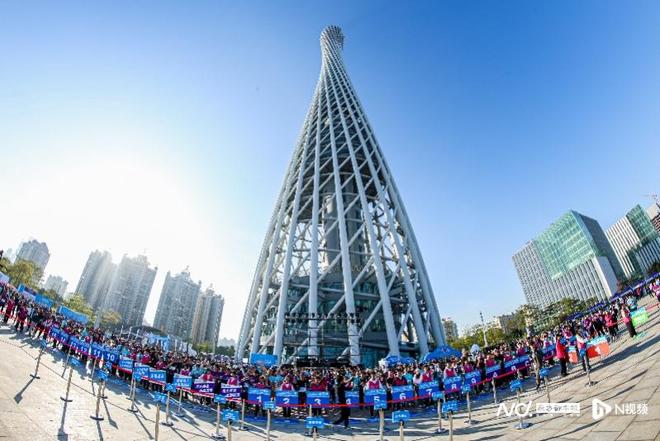
Core Insights - Guangdong has achieved a significant economic milestone by becoming the first province in China to surpass a GDP of 14 trillion yuan, reaching 141,633.81 billion yuan in 2024, marking a 3.5% increase from the previous year [4][6][14] - This achievement underscores Guangdong's status as China's leading economic province, contributing over 10.5% to the national economy, and reflects the resilience and growth of its industrial system [4][6][9] Economic Performance - Guangdong's GDP growth of 3.5% in 2024 positions it as a critical player in China's macroeconomic landscape, maintaining its top position for 36 consecutive years [4][6] - The province's economic contribution is significant, with a population of over 127 million providing a robust domestic market and human resource advantage [6][12] Global Standing - In a global context, Guangdong's economy surpasses that of countries like Australia, South Korea, and Spain, indicating its competitive stature on the world stage [9][11] - When compared to U.S. states, Guangdong ranks closely with California, Texas, and New York, highlighting its emergence as a formidable economic entity [9][11] Industrial Strength - Guangdong's economic foundation is built on its manufacturing prowess, with industrial revenue reaching 19.41 trillion yuan in 2024, the highest in the country [12][13] - The province hosts nine trillion-yuan industrial clusters and 77,000 high-tech enterprises, driving innovation and structural upgrades in various sectors [12][13] Future Outlook - The province is poised for continued growth, with predictions indicating a potential GDP increase of around 5% by 2025, aiming to surpass 15 trillion yuan [14] - Emerging industries such as artificial intelligence, digital economy, and advanced manufacturing are expected to play a crucial role in Guangdong's economic transformation towards higher quality development [12][14]

卡诺普:机器人赛道大热,焊接机器人龙头却卡在“钱关”?
Zhi Tong Cai Jing· 2025-11-20 02:58
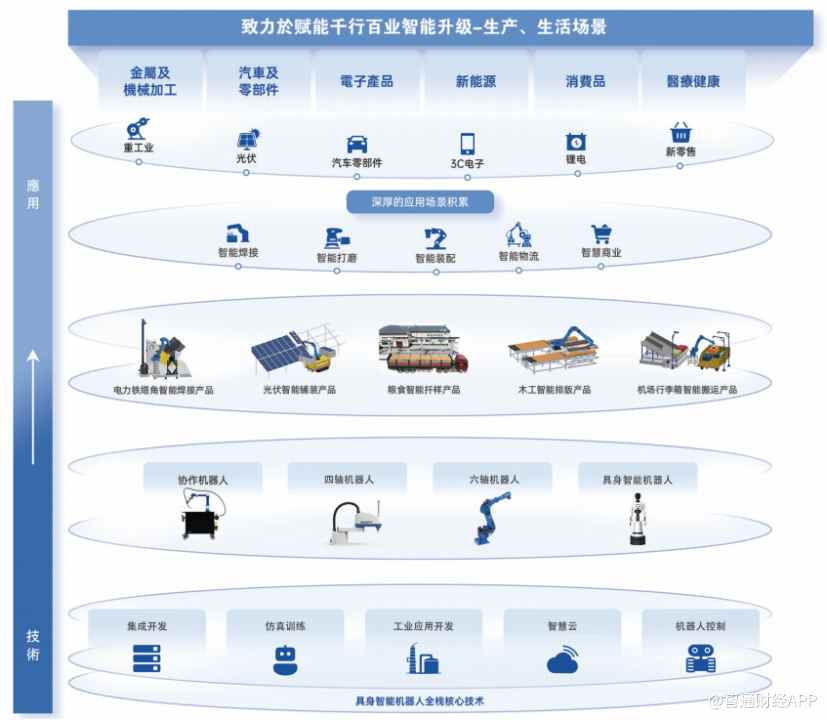
11月17日,成都卡诺普机器人技术股份有限公司(简称"卡诺普")正式向港交所主板递交上市申请,国泰君安融资有限公司为其独家保荐人。作为中国 工业机器人领域的中坚力量,这家深耕焊接机器人赛道的企业,凭借全栈自主核心技术与全球化布局,在国产替代浪潮中快速崛起。 国内最大的焊接机器人制造商 招股书显示,卡诺普成立于2012年,初期以工业机器人核心部件控制器为核心业务,2018年完成战略升级,推出工业机器人整机产品。公司成功构建了 主要涵盖工业机器人、协作机器人、具身智能机器人的三大类全自主研发产品矩阵。 卡诺普的机器人产品在金属及机械加工、汽车及零部件、电子产品、新能源、消费品及医疗健康等领域执行重复性、高精度的任务。例如切割、打磨、 精密加工、冲压、搬运与码垛、装配等。据弗若斯特沙利文资料,卡诺普在焊接机器人领域已建立领先优势,按2024年营收计算,公司在国内焊接机器 人制造商中排名第一;在国内金属及机械加工工业机器人领域收入规模位列第三。 全球化布局是卡诺普另一大业务亮点。据招股书,截至2024年,公司产品已出口至全球40个国家及地区,主要涵盖欧洲、东南亚、拉丁美洲、南亚及北 美地区。按当年收入计算,成为中国最 ...
新股前瞻|卡诺普:机器人赛道大热,焊接机器人龙头却卡在“钱关”?
智通财经网· 2025-11-20 02:53
11月17日,成都卡诺普机器人技术股份有限公司(简称"卡诺普")正式向港交所主板递交上市申请,国泰君安融资有限公司为其独家保荐人。作为中国 工业机器人领域的中坚力量,这家深耕焊接机器人赛道的企业,凭借全栈自主核心技术与全球化布局,在国产替代浪潮中快速崛起。 国内最大的焊接机器人制造商 卡诺普的机器人产品在金属及机械加工、汽车及零部件、电子产品、新能源、消费品及医疗健康等领域执行重复性、高精度的任务。例如切割、打磨、 精密加工、冲压、搬运与码垛、装配等。据弗若斯特沙利文资料,卡诺普在焊接机器人领域已建立领先优势,按2024年营收计算,公司在国内焊接机器 人制造商中排名第一;在国内金属及机械加工工业机器人领域收入规模位列第三。 业务结构上,工业机器人作为核心业务,2025年上半年贡献营收占比为86.7%,其中六轴焊接机器人和六轴多功能机器人的占比分别为55%和25.9%。协 作机器人与具身智能机器人,占营收比重分别为6.3%和4.3%。 | 〔表格 格載 | | --- | | 所 | | 不 | | र्स | | 度/期間 | | 按 | | 產品 | | - 44 | | 别到分 | | 下载 列 可我們於 ...
渤海证券研究所晨会纪要(2025.11.20)-20251120
BOHAI SECURITIES· 2025-11-20 01:58
Group 1: Financial Market Overview - The A-share market experienced a general adjustment with all major indices declining, with the STAR 50 index showing the largest drop of 2.13% [2] - As of November 18, the margin trading balance in the two markets was 24,948.32 billion yuan, a decrease of 25.67 billion yuan from the previous week [2] - The average daily number of investors participating in margin trading decreased by 3.91% to 437,462 [2] Group 2: Industry Insights - Machinery and Equipment - In October, the production of industrial robots in China increased by 17.90% year-on-year, with a monthly output of 57,900 units, and the cumulative output for the first ten months reached approximately 602,700 units, a year-on-year increase of 28.80% [8] - The construction machinery sector is expected to maintain growth due to favorable downstream demand driven by infrastructure projects and a reduction in tariff disturbances [7][8] - The mechanical equipment industry is rated as "optimistic," with a focus on domestic brands gaining market share [5][8] Group 3: Pharmaceutical and Biological Industry Performance - In Q3 2025, the pharmaceutical and biological industry saw a recovery in revenue and net profit, with a notable increase in gross and net profit margins [9] - The chemical pharmaceutical sector reported a revenue of 1237.44 billion yuan, with a net profit of 114.64 billion yuan, reflecting a significant improvement in profitability [9][10] - The medical device sector showed signs of recovery, with Q3 revenue reaching 604.49 billion yuan, although net profit decreased by 5.1% year-on-year [11]




卡诺普董事长李良军带一大波老同事组团冲IPO,妹夫辞任执董
Sou Hu Cai Jing· 2025-11-20 00:11
Core Viewpoint - Chengdu Kanop Robotics Technology Co., Ltd. (Kanop) has submitted its listing application to the Hong Kong Stock Exchange, with Guotai Junan Securities as its sole sponsor, indicating its intention to raise capital for further growth in the industrial robotics sector [1][2]. Company Overview - Kanop was established in 2012 and specializes in industrial robots, particularly six-axis and four-axis robots, used in various applications such as cutting, grinding, precision machining, stamping, handling, and assembly [2]. - According to a report by Frost & Sullivan, Kanop ranks first among all welding robot manufacturers in China and is projected to be the largest exporter of welding robots in China by 2024 [2]. Shareholding Structure - As of the latest feasible date, the controlling shareholders, including Li Liangjun and Zhu Lusheng, collectively hold 54.13% of the shares. Li and Zhu each directly own 16.41% of the company [3]. - The employee stock ownership platform, Changzhou Hongzhi, holds 7.81% of the shares, with Li and Zhu having approximately 1.13% and 73.21% ownership, respectively [3]. Management Team - The board consists of nine directors, including three executive directors: Li Liangjun (Chairman and General Manager), Zhu Lusheng (Executive Director and Deputy General Manager), and Gu Fei (Executive Director and R&D Deputy Director) [4][9]. - Li Liangjun, aged 45, has been with the company since its inception and has a background in electrical installation [4][6]. - Zhu Lusheng, aged 44, serves as the Deputy General Manager and R&D Technical Director, with a focus on mechanical and electrical integration [7]. - Gu Fei, aged 41, has a degree in automation and has been involved in R&D since the company's early days [8]. Employee Incentives - In December 2017, Kanop established Changzhou Hongzhi as an employee stock ownership platform to incentivize and reward core employees [2].

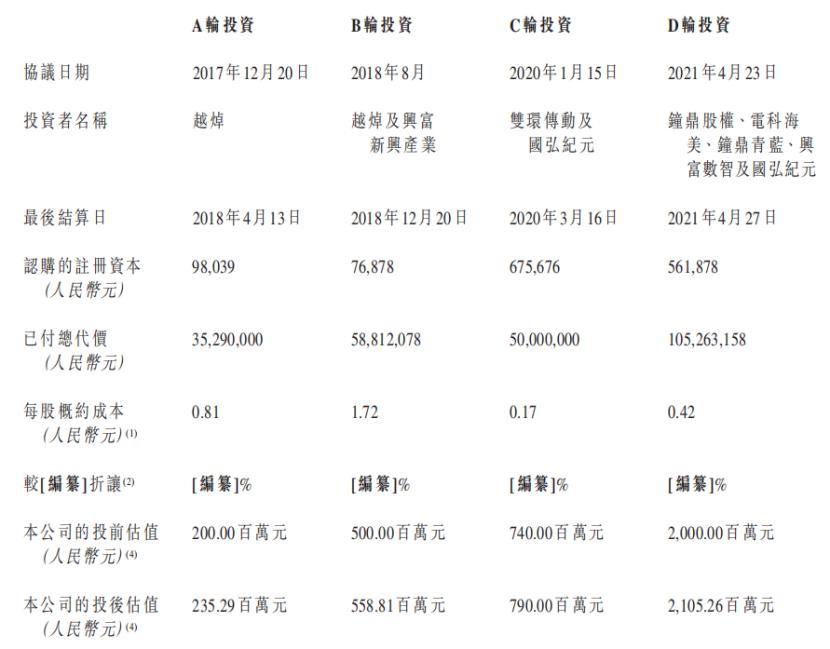
四川成都机器人公司冲击IPO,估值21亿,双环传动押注
3 6 Ke· 2025-11-20 00:03
Core Viewpoint - Multiple robotics companies have initiated public offerings this year, indicating a growing interest in the robotics sector, with Kanop Robotics being the latest to file for an IPO in Hong Kong [2][24]. Company Overview - Kanop Robotics, established in September 2012 and headquartered in Chengdu, Sichuan, focuses on the industrial robotics sector and aims to list on the Hong Kong Stock Exchange [2][4]. - The company has a diverse product portfolio, including over 70 models of industrial robots, with a strong emphasis on welding capabilities and applications in various industries such as automotive, electronics, and healthcare [4][10]. Financial Performance - The company's revenue has shown growth, with figures of RMB 197.44 million in 2022, RMB 222.37 million in 2023, and projected RMB 234.04 million in 2024, although net profits have declined significantly in 2023 and 2024 [9][11]. - The gross profit margins have improved, reaching 32.4% in the first half of 2025, attributed to a shift in product mix and increased sales volume [10][11]. Market Position - Kanop Robotics ranks first among Chinese welding robot manufacturers and third in the metal and machinery processing sector based on revenue [24][26]. - The Chinese industrial robotics market is projected to grow from RMB 315 billion in 2020 to RMB 467 billion in 2024, with a compound annual growth rate (CAGR) of 10.4% [22][24]. Product Offerings - The company’s product range includes six-axis and four-axis industrial robots, collaborative robots, and embodied intelligent robots, catering to various automation needs [4][5][8]. - Six-axis welding robots account for approximately 55% of the revenue, while multi-functional robots contribute about 25.9% [11][12]. Challenges - The company faces challenges such as increasing sales expenses and high accounts receivable, which have impacted its net profit and cash flow [10][16][27]. - As of mid-2025, Kanop Robotics reported significant accounts receivable and payable, indicating potential liquidity pressures [16][27].