
石油石化

Search documents
中国石化:2025年原油产量3970万吨 同比增0.2%
Zheng Quan Shi Bao Wang· 2026-01-23 08:53
人民财讯1月23日电,中国石化(600028)1月23日公布2025年生产经营业绩提示性数据,原油产量3970 万吨,同比增0.2%,;天然气产量412.53亿立方米,同比增4.02%。原油加工量2.50亿吨,同比降 0.78%。境内成品油总经销量1.78亿吨,同比降2.88%。以上数据未经审计,以年报披露为准。 ...

25Q4公募基金转债持仓分析:固收加锐不可当,延续增长
GUOTAI HAITONG SECURITIES· 2026-01-23 08:47
固收加锐不可当,延续增长 [Table_Authors] 刘玉(分析师) 25Q4 公募基金转债持仓分析 本报告导读: Q4 固收+规模延续增长态势,震荡市下小幅增配权益、明显增持金融债,在提升权 益暴露的同时控制波动。 投资要点: 债券研究 /[Table_Date] 2026.01.23 | | 021-38038263 | | --- | --- | | | liuyu6@gtht.com | | 登记编号 | S0880523050002 | | | 孙飞帆(研究助理) | | | 021-23185647 | | | sunfeifan@gtht.com | | 登记编号 | S0880125042242 | [Table_Report] 相关报告 带"负久期"特征的基金产品平均超额收益再测 算 2026.01.19 考虑政府债久期拉长与存款置换:大行 EVE 指标 空间再测算的四个要点 2026.01.15 长债供给放量,需要担忧资金收敛吗 2026.01.13 债券 ETF 持续缩量 2026.01.12 "负久期"、信用套息和地方债套保 2026.01.10 证 券 研 究 报 告 研 究 [ ...
中国石化:公布2025年生产经营业绩相关数据
Xin Lang Cai Jing· 2026-01-23 08:47
Core Viewpoint - Sinopec announced its preliminary operational performance data for 2025, highlighting mixed results in production and sales metrics [1] Production Data - Crude oil production reached 39.7 million tons, a year-on-year increase of 0.2%, with domestic production rising by 0.67% and overseas production declining by 4.17% [1] - Natural gas production was 41.253 billion cubic meters, reflecting a year-on-year increase of 4.02% [1] - Crude oil processing volume was 250 million tons, showing a year-on-year decrease of 0.78% [1] Product Output - Gasoline and diesel production decreased, while kerosene and chemical light oil production increased [1] - Ethylene, synthetic resin, and synthetic rubber production saw growth, whereas synthetic fiber production declined [1] Sales Data - Domestic refined oil total sales volume was 17.8 million tons, representing a year-on-year decrease of 2.88% [1]
诺安新动力灵活配置混合A:2025年第四季度利润499.71万元 净值增长率7.26%
Sou Hu Cai Jing· 2026-01-23 08:23
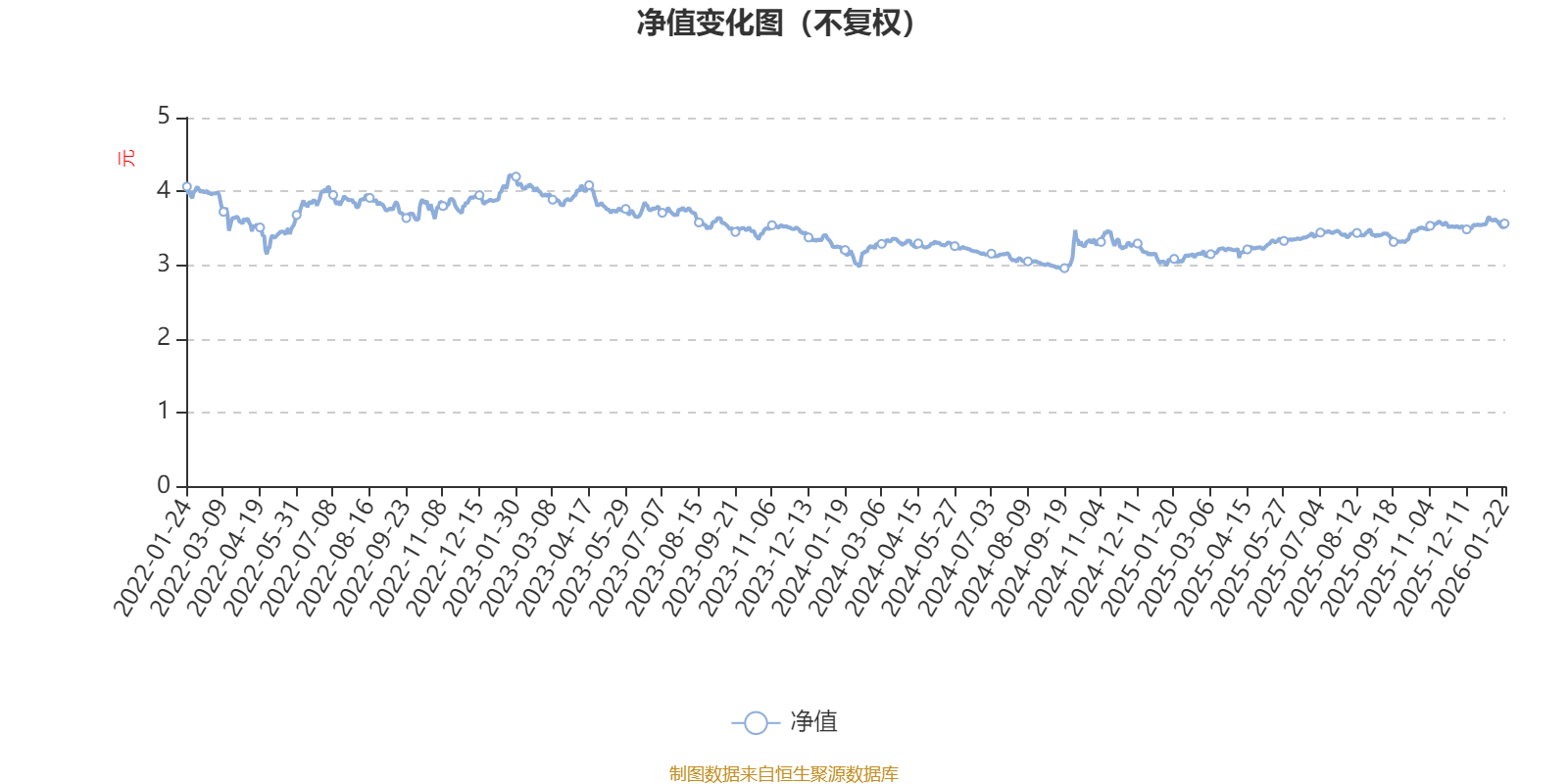
Core Viewpoint - The AI Fund Nuon New Power Flexible Allocation Mixed A (320018) reported a profit of 4.9971 million yuan for Q4 2025, with a weighted average profit per fund share of 0.2548 yuan. The fund's net value growth rate for the reporting period was 7.26%, and the fund size reached 65.8123 million yuan by the end of Q4 2025 [3][14]. Fund Performance - As of January 22, the unit net value of the fund was 3.565 yuan. The fund manager, Li Xiaojie, has managed four funds over the past year, all of which have yielded positive returns. The highest growth rate among these funds was 48.16% for Nuon Low Carbon Economy Stock A, while the lowest was 5.05% for Nuon Huili Mixed A [3]. - The fund's net value growth rates over various periods are as follows: 2.18% over the last three months (ranking 1015/1286), 2.83% over the last six months (ranking 1146/1286), 16.89% over the last year (ranking 980/1286), and -15.38% over the last three years (ranking 1190/1286) [3]. Investment Strategy - The fund's Q4 holdings were primarily in dividend-related assets such as banks, oil and petrochemicals, and non-bank financials. The fund reduced its allocation in the banking sector while increasing its positions in non-bank financials and oil and petrochemicals [3]. Risk Metrics - The fund's Sharpe ratio over the last three years was -0.0472, ranking 1192/1275 among comparable funds [8]. - The maximum drawdown over the last three years was 30.05%, with the largest single-quarter drawdown occurring in Q1 2022 at 17.43% [10]. Portfolio Composition - As of December 31, the fund's average stock position over the last three years was 74.15%, compared to the industry average of 72.57%. The fund reached a peak stock position of 79.28% at the end of 2021 and a low of 51.69% by the end of Q3 2022 [13]. - The top ten holdings of the fund as of Q4 2025 included China Ping An, China Pacific Insurance, China Petroleum, Oppein Home, China Shenhua, New China Life Insurance, Sinopec, Shaanxi Coal and Chemical Industry, Yili Group, and Jiangsu Bank [17].





【盘中播报】104只A股封板 电力设备行业涨幅最大
Zheng Quan Shi Bao Wang· 2026-01-23 06:28
| 申万行业 | 行业涨跌(%) | 成交额(亿元) | 比上日(%) | 领涨(跌)股 | 涨跌幅(%) | | --- | --- | --- | --- | --- | --- | | 电力设备 | 3.24 | 3025.94 | 31.05 | 连城数控 | 29.99 | | 有色金属 | 3.19 | 1839.51 | 20.44 | 银邦股份 | 13.97 | | 国防军工 | 2.33 | 1679.15 | 21.79 | 睿创微纳 | 20.00 | | 钢铁 | 2.13 | 160.66 | -8.87 | 酒钢宏兴 | 10.11 | | 传媒 | 2.00 | 906.86 | 26.86 | 流金科技 | 11.91 | | 计算机 | 1.49 | 1706.42 | 14.55 | *ST立方 | 17.39 | | 医药生物 | 1.31 | 1013.60 | 33.34 | 广生堂 | 20.00 | | 环保 | 1.30 | 191.00 | 25.78 | 雪浪环境 | 19.98 | | 纺织服饰 | 1.17 | 151.73 | 19.79 | 金一文 ...
主动基金2025年四季度在加仓顺周期、AI与非银金融,明显下调港股配置
Ge Long Hui· 2026-01-23 06:04
Core Insights - The public fund quarterly report for Q4 2025 shows that both active and passive funds performed well, but there is a clear divergence in fund flows, with active equity funds experiencing a decline in scale while passive funds saw significant growth [1] Group 1: Fund Performance and Trends - Active equity funds have seen a decrease in scale, while passive funds have experienced a notable increase in net subscriptions, indicating a shift in investor preference [1][7] - Despite a market recovery, institutional funds are maintaining a cautious approach, as evidenced by a reduction in overall fund positions [1] - The concentration of holdings in active equity funds has increased, suggesting a focus on a few high-certainty directions rather than diversified allocations [1] Group 2: Active Fund Investment Strategies - Active funds have concentrated their investments in three main areas: cyclical sectors, AI, and non-bank financials, with a focus on cyclical and small-cap growth styles [2] - The cyclical sector has seen systematic increases in allocations, particularly in metals, chemicals, oil and gas, steel, and building materials, driven by a re-evaluation of resource pricing amid supply constraints and new demand from AI and renewable energy [3] - The AI industry chain is a key focus, with active funds investing in computing power and electricity sectors, as demand for high-performance chips and related hardware surges [4] - Non-bank financials, especially the insurance sector, are gaining traction due to favorable interest rate environments and improved investment returns, making them a significant area for active fund allocation [5] Group 3: Passive Fund Investment Strategies - Passive funds are reflecting a direct response to index weights and investor preferences, with increased allocations in telecommunications, metals, and banking, while reducing exposure to electronics, power equipment, and pharmaceuticals [6][7] - The structure of passive fund allocations shows a shift towards larger-cap stocks, with a decrease in the proportion of investments in smaller-cap indices [7] - There is a growing recognition of cyclical and value attributes among passive funds, as evidenced by increased allocations to value indices and a reduction in growth-oriented indices [7] Group 4: Market Signals and Strategic Adjustments - Active funds have significantly reduced their exposure to Hong Kong stocks, with the total value of heavy holdings dropping from 19.26% to 16.23% of total holdings, indicating a strategic repositioning [8] - The overall market environment in Q4 2025 did not exhibit extreme conditions, yet fund flows have shown a clear trend: passive funds are returning while active funds are consolidating, with a focus on cyclical and value investments alongside AI growth [8]
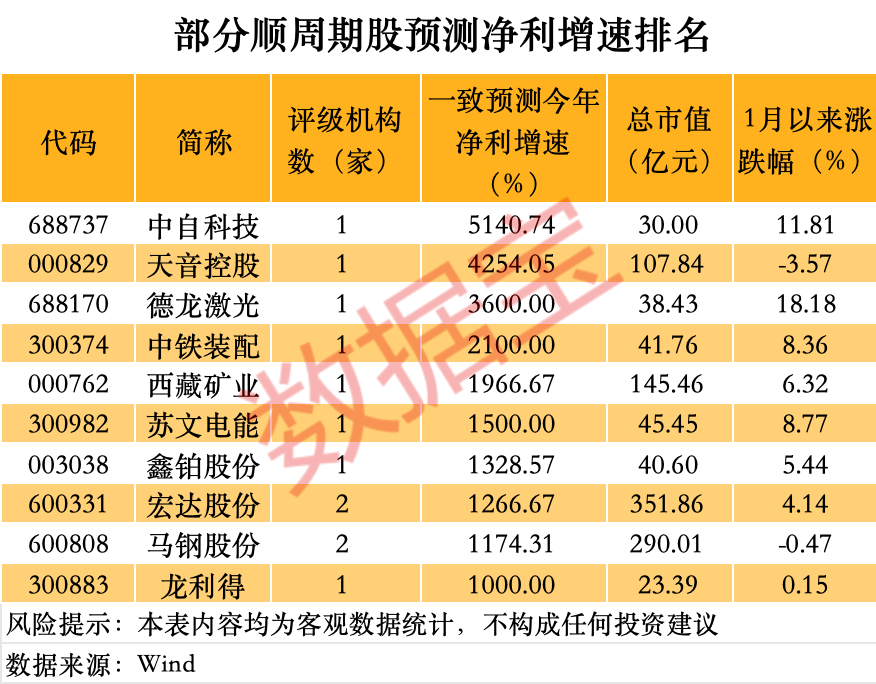
机构预测净利大增超10倍的周期股 10股上榜
Zheng Quan Shi Bao Wang· 2026-01-23 04:55
Group 1: Market Trends - The cyclical sectors, including basic chemicals, petroleum and petrochemicals, and building materials, have seen significant gains, with increases exceeding 3% as of January 20 [1] - On January 21, cyclical sectors continued to rise, with non-ferrous metals up over 1%, and steel, automotive, petroleum and petrochemicals, and basic chemicals all recording positive performance [1] - The National Development and Reform Commission's deputy director indicated a commitment to implement a policy "combination punch" to promote reasonable price recovery [1] Group 2: Investment Opportunities - According to institutional forecasts, 10 stocks in cyclical sectors are expected to see net profits increase tenfold by 2026, with Zhongzi Technology leading at a projected net profit growth of over 51 times this year [2] - Zhongzi Technology specializes in the research, production, and sales of new materials and renewable energy, and is one of the few major domestic manufacturers in the environmental catalyst field [2] - Tianyin Holdings is projected to have a net profit growth exceeding 42 times this year, benefiting from the AI replacement trend and national subsidies [3] - Delong Laser is expected to see a net profit growth of 36 times this year, focusing on high-end industrial precision laser processing equipment [4] Group 3: Company Performance - Zhongzi Technology has a total market value of 514.07 billion, with a 30% increase in January [3] - Tianyin Holdings has a total market value of 425.40 billion, with a decline of 3.57% in January [3] - Delong Laser has a total market value of 360 billion, with an 18.18% increase in January [4] - Ganfeng Lithium, a leading lithium producer, is projected to have a net profit growth of 551.85% this year, with a market value of 136.69 billion and an 8.09% increase in January [7]




“十五五”开局之年机构最看好化工产业,资金抢筹石化ETF(159731),份额规模齐创新高
Sou Hu Cai Jing· 2026-01-23 03:31
石化ETF(159731)及其联接基金(017855/017856)紧密跟踪中证石化产业指数,从申万一级行业分 布来看,基础化工行业占比为59.23%,石油石化行业占比为32.60%,随着供给侧坚持去产能和"反内 卷",同时坚持扩大内需,化工行业周期将加速反转。 截至10:46,石化ETF(159731)跌0.29%,持仓股中,东方盛虹、卫星化学、联泓新科等涨幅居前。从 资金净流入方面来看,石化ETF连续12个交易日获得资金净流入,合计"吸金"5.34亿元。石化ETF最新 份额达8.13亿份,最新规模8.32亿元,均创成立以来新高。 金融街证券首席经济学家张一表示,针对"2026年'十五五'开局之年最看好的产业"这一问题,最看好化 工产业。张一指出,首先化工产业是中国竞争格局最好的行业,既有中石化等央企主导,也有地方国资 和优秀民营企业参与,同时还有大量海外化工巨头向中国转移产能。其次,该产业是对"Know- How"(技术诀窍)要求最高的产业之一,经过二十多年的城镇化和工业化发展,中国化工产业在成本 和效率上已形成极强的国际竞争力。此外,当前化工产业估值相对合理,且可能正处在投资周期的底 部。 每日经济新闻 ...
2025年信用债发行情况回顾:乘势扩容续创新,高结构分化态势延续
Dong Fang Jin Cheng· 2026-01-23 01:10
Report Industry Investment Rating No information provided in the content. Core Views of the Report - In 2025, the credit bond issuance interest rate center further declined. After the launch of the science - technology board in the bond market in May, the issuance of science - innovation bonds significantly increased. The continuous growth of industrial bond issuance drove the overall credit bond issuance to reach a new historical high. The net financing of credit bonds increased significantly year - on - year, with only a net financing gap in March [2]. - The financing differentiation pattern between urban investment bonds and industrial bonds intensified in 2025. Urban investment bond issuance continued to shrink, while industrial bond issuance increased significantly driven by the surge in central enterprise bonds. From the perspective of issuer qualifications, high - grade bonds expanded, while medium - and low - grade bonds contracted [2]. - In 2025, the industrial bond issuance scale grew steadily. Most industries saw an increase in industrial bond issuance, and the issuance was concentrated in a few industries. The issuance was also concentrated among leading enterprises, and large central enterprises contributed significantly to net financing [2][4]. - In 2025, urban investment bond issuance remained in a contraction trend, and the net financing gap widened year - on - year. Most regions saw a decline in issuance and an expansion of the net financing gap. The net financing gap of AA - rated urban investment bonds narrowed due to the decrease in maturity volume, but the net financing of medium - and high - grade urban investment bonds in some regions turned negative [4]. Summary According to Related Catalogs 1. Credit Bond Issuance in 2025 1.1 Overall Credit Bond Issuance - In 2025, the credit environment was loose, and the bond market yield was low. With policy dividends, industrial bond issuance increased significantly, driving the continuous expansion of credit bond issuance and a substantial increase in net financing. The total credit bond issuance was 13.9 trillion yuan, a year - on - year increase of 1.7%. The net financing was 2.3 trillion yuan, an increase of 4924 billion yuan year - on - year [7]. - The monthly issuance rhythm showed a "low - front, stable - back" characteristic. Most months had a year - on - year increase in issuance, and only March had a significant net financing gap due to interest rate hikes [12]. 1.2 Issuance Interest Rate - In 2025, the average credit bond issuance interest rate fluctuated at a low level, and the center moved down. The average issuance interest rate was 2.15%, a year - on - year decrease of 35.96bps. The main reasons were the loose monetary policy and the narrowing of credit spreads [15][16]. - Throughout the year, the issuance interest rates of major - term and all - grade credit bonds showed two rounds of rising and then falling. The interest rate was affected by factors such as the tightening of the capital market, policy adjustments, and the stock - bond seesaw effect [22]. 1.3 Issuance Term - In 2025, the weighted - average issuance term of credit bonds was 3.43 years, a year - on - year decrease of 0.17 years. It showed an upward trend in the first half of the year and a downward trend in the second half, mainly due to the increase in financing costs and the significant shortening of the issuance term of central enterprises [23]. 1.4 Cancellation of Issuance - In 2025, the scale of cancelled credit bond issuance was 276.16 billion yuan, a year - on - year increase of 0.34%. The cancellation was mainly due to market interest rate fluctuations and the adjustment of the financing strategies of central and local state - owned enterprises [28]. 2. Credit Bond Financing Structure in 2025 2.1 Financing Performance of Different - Grade Issuers - In 2025, the credit bond market showed a differentiation trend of high - grade expansion and medium - and low - grade contraction. The issuance of AAA - rated, AA + - rated, and AA - rated credit bonds was 9.80 trillion, 2.95 trillion, and 1.10 trillion yuan respectively [35]. 2.2 Financing Performance of Different - Nature Issuers - The credit bond market continued the differentiation trend of shrinking urban investment bond issuance and increasing industrial bond issuance. In 2025, the issuance of urban investment, industrial local state - owned enterprises, central enterprises, and private enterprises was 3.27 trillion, 5.44 trillion, 4.56 trillion, and 0.68 trillion yuan respectively [38]. 2.3 Financing Performance of Different Bond Types - In 2025, the bond types with large issuance scales were medium - term notes, ultra - short - term financing bills, private placement bonds, and general corporate bonds. The issuance of general corporate bonds and private placement bonds increased by more than 10% year - on - year [45]. - Low - grade issuers had a significantly higher proportion of private placement bond issuance. AAA - rated credit bonds were mainly issued in public - offering varieties, while AA + - rated and AA - rated credit bonds had a high proportion of private placement bonds [48][49]. 3. Industrial Bond Issuance in 2025 3.1 By Industry - In 2025, industrial bond issuance showed the characteristics of growth in most industries, contraction in some industries, and high industry concentration. Four industries had issuance exceeding one trillion yuan, and the public utility industry contributed the most to the increase in issuance [50]. 3.2 From the Issuer Dimension - Industrial bond issuance was concentrated among leading enterprises, and central enterprises became the core force of bond financing. The top 100 issuers contributed 43.6% of the issuance scale, and large central enterprises had a significant increase in issuance and net financing [55]. 4. Urban Investment Bond Issuance in 2025 4.1 Regional Financing Performance - In 2025, most regions saw a contraction in urban investment bond issuance and an expansion of the net financing gap. Only a few regions had an increase in issuance or positive net financing [61]. 4.2 Grade - Based Financing Performance - In 2025, the net financing of medium - and high - grade urban investment bonds in many places turned negative, while the net financing gap of AA - rated urban investment bonds narrowed due to the decrease in maturity volume [62].
A股市场大势研判:A股市场窄幅整理
Dongguan Securities· 2026-01-23 01:10
Market Overview - The A-share market is experiencing narrow consolidation with the three major indices showing slight gains, specifically the Shanghai Composite Index up by 0.14%, the Shenzhen Component Index up by 0.50%, and the ChiNext Index up by 1.01% [2][4] - The total trading volume in the A-share market reached 2.69 trillion yuan, an increase of 91 billion yuan compared to the previous trading day, indicating a potential short-term consolidation phase after continuous volume increases [7] Sector Performance - The top-performing sectors include Construction Materials (up 4.09%), National Defense and Military Industry (up 3.23%), and Oil and Petrochemicals (up 3.07%) [3][4] - Conversely, the sectors with the poorest performance include Beauty and Personal Care (down 0.76%), Banking (down 0.43%), and Pharmaceutical and Biological (down 0.42%) [3][4] Concept Indices - Among concept indices, the Domestic Aircraft Carrier concept led with a gain of 3.82%, followed by Combustible Ice (up 3.57%) and Large Aircraft (up 3.04%) [3][4] - On the downside, sectors such as Sci-Tech New Stocks and Photoresists saw declines of 1.09% and 0.93%, respectively [3][4] Future Outlook - The report indicates that the A-share market is likely to continue receiving support from multiple favorable factors, including the "14th Five-Year" industrial guidance, overseas liquidity easing, and domestic policy support [7] - The upcoming economic stabilization policies are expected to drive market risk appetite higher, suggesting a potential upward trend as the spring market approaches [7] Government Initiatives - A significant government initiative includes the allocation of 93.6 billion yuan in ultra-long special treasury bonds to support equipment upgrades across various sectors, which is projected to stimulate total investment exceeding 460 billion yuan [6]