
资本市场

Search documents
《学习时报》刊登两篇资本市场可提振消费的文章|资本市场
清华金融评论· 2025-10-22 01:03
Core Viewpoint - The stability of the stock market is crucial for boosting consumer confidence and spending, which in turn supports the real economy and enhances economic circulation [4][7][10]. Group 1: Stock Market and Consumer Confidence - The stock market serves as a barometer for economic development, directly affecting household wealth and consumption confidence [5][6]. - As of October 10, the daily trading volume of the Shanghai and Shenzhen stock markets has repeatedly exceeded 2 trillion yuan, with major indices showing significant year-to-date increases: Shanghai Composite Index up 16.27%, Shenzhen Component Index up 28.24%, and ChiNext Index up 45.37% [5]. - The number of new A-share accounts surpassed 20 million by October 13, a year-on-year increase of over 50%, indicating a rise in household financial income [5][6]. Group 2: Mechanisms of Capital Market Impact on Consumption - The relationship between the capital market and consumption is characterized by a dual cycle of "asset appreciation—income growth—enhanced consumption capacity" and "financing support—supply optimization—strengthened consumption willingness" [10][11]. - The wealth effect and confidence effect from asset appreciation lead to increased consumer spending, while a downturn in the capital market can suppress consumption [11][14]. - The capital market can enhance consumption by providing financing to businesses, which in turn can improve product quality and create more job opportunities, thereby increasing consumer purchasing power [12][16]. Group 3: Policy Recommendations for Enhancing Market Stability - To stabilize the stock market, it is essential to improve institutional frameworks, optimize market mechanisms, strengthen investor protection, and enhance policy coordination [7][9]. - Strengthening investor protection through compensation funds and diversified rights protection channels can alleviate psychological burdens on consumers, encouraging them to spend more [9][20]. - Coordinated monetary and fiscal policies are necessary to ensure sufficient liquidity in the capital market and support consumer spending [9][20]. Group 4: Future Directions for Capital Market Development - The capital market should focus on diversifying financial products to meet varying consumer needs and enhance wealth accumulation [19][21]. - Encouraging long-term investments from stable funds like pension funds can help reduce market volatility and support sustainable growth [18][19]. - Developing consumer finance and supporting companies in the consumption sector through bond issuance can stimulate consumer spending and economic growth [20][21].


New Zealand eases climate-reporting rules to boost capital markets
Reuters· 2025-10-21 20:25
Core Point - New Zealand is set to ease climate-reporting rules and raise the thresholds for companies required to report on the impact of climate change on their business, aiming to stimulate capital markets [1] Group 1 - The changes in climate-reporting rules are intended to support the revival of capital markets [1] - The adjustments will specifically affect the size of companies that must comply with climate impact reporting [1]

安联2025-2027经济展望全解析:十大核心问题,看清未来五年全球经济走向
Sou Hu Cai Jing· 2025-10-21 08:42
Group 1 - The report outlines a global economy entering a phase of "mild stagflation" and "high uncertainty," with central banks struggling to balance weak growth, persistent inflation, and large fiscal deficits [2][3] - Trade war costs are primarily borne by exporters, with the U.S. consumers expected to feel the impact of tariffs, which could raise inflation by +0.6 percentage points by mid-2026 [3] - Global trade volume growth is projected to slow significantly from +2% in 2025 to +0.6% in 2026, indicating a challenging environment for international commerce [3] Group 2 - The report highlights the potential for long-term interest rates to rise due to high fiscal deficits, with the U.S. expected to see a GDP drag of approximately -0.3% from tariffs [3][4] - The European defense spending is anticipated to increase significantly in 2026-2027, with a proposed investment of €800 billion over four years, which could boost GDP growth by about +0.2 percentage points [4][5] - Companies are facing high financing costs, with a projected increase in global corporate bankruptcies by +6% in 2025 and +4% in 2026, peaking around 2027 [5] Group 3 - The report indicates that while there is no current bubble, the AI hype has been fully priced in, with U.S. stock valuations remaining high but supported by strong long-term earnings growth [5] - Emerging markets, excluding China, are in an expansion cycle, with growth expectations exceeding forecasts, although certain countries like Argentina and Brazil are highlighted as needing close monitoring [5] - The potential for a trade recession is assessed at a 45% probability, driven by U.S. tariff escalations impacting global growth and inflation [5]

吴晓求:我们找到了正确发展资本市场的道路,三项改革让市场有长期向好趋势的基础
Mei Ri Jing Ji Xin Wen· 2025-10-21 05:31
每经北京10月21日电(记者张宏)近日,中国资本市场研究院院长吴晓求在2025华夏ESG管理体系大会 上指出,要告别过去那种"到了3300点就跑"的短线思维,我们找到了正确发展资本市场的道路,这一年 来的三项改革让资本市场有长期向好趋势的基础。 一是从发行开始着力推动中国上市公司的结构转型,让高科技企业、科创型企业慢慢成为市场的主力 军。推动中国产业升级迭代,是中国资本市场最重要的战略任务。基于这一点,市场慢慢开始有预期 性、成长性,有可投资的价值。这是非常重要的资产端改革。 (文章来源:每日经济新闻) 二是改善市场流动性,即需求端改革。要让基于财富管理的大资金有序进入市场,必须改革约束大资金 进入市场的一系列规则。央行对资本市场的关注和金融监管总局对大资金限制性条款的改革,是改善市 场流动性的重要举措。 三是制度平台的改革,这是证监会的重点。第一,要确保市场透明度;第二,不能有歧视性条款;第 三,要对违规违法行为有严正威慑,对严重违规违法行为采取刑事处罚和民事赔偿并重的处罚机制。 ...
资本市场价值回归 ESG扮演关键角色
Sou Hu Cai Jing· 2025-10-20 17:22
资本市场的核心功能在于服务实体经济,引导资源优化配置,促进经济的健康发展。然而,长期以来部 分资本市场存在过度关注短期利润、忽视长期价值,甚至出现"脱实向虚"的现象。这种现象不仅扭曲了 企业的经营行为,也可能导致资源错配,阻碍经济的可持续发展。在全球经济迈入数字化、绿色化与可 持续发展的新时代背景下,资本市场正经历一场深刻的价值重塑。传统的以短期财务指标为导向的估值 模式,在面对日益复杂的宏观环境、地缘政治风险以及社会环境挑战时,显得力不从心。投资者和监管 机构的目光正逐渐转向更具前瞻性和可持续性的评估维度,而被称为"第二张财报"的ESG正以前所未有 的力量,成为驱动资本市场价值回归、实现高质量发展的关键工具。 首先,价值回归意味着资本市场从追求短期财务指标向关注公司内在价值的增长转变。企业的创新能 力、风险控制以及社会影响成为评价核心。这不仅提升了企业的信誉,也促进了全球经济的绿色、可持 续发展。德勤中国董事会主席蒋颖在2024年10月的演讲中指出,全球ESG投资资产预计在2025年达到53 万亿美元,占当时全球管理资产总额的1/3。这一预测与彭博产业研究2021年发布的统计数据存在一致 性,均指向ESG投 ...
聚焦全球资本市场发展新格局 吴晓求称生态链亟待重塑
Sou Hu Cai Jing· 2025-10-20 08:33
Group 1: Core Insights - The global capital market is essential for resource allocation, optimizing fund flows across regions and cycles, and providing direct financial support to the real economy [1] - The focus of China's capital market reform includes building a resilient, fair, and inclusive market, which is crucial for global economic recovery and sustainable growth [3][6] Group 2: Key Discussions - The importance of financial markets in China's modernization process is emphasized, highlighting the need for a system that incentivizes innovation and addresses originality issues [6] - The structural imbalance in financial globalization between developed and emerging markets poses significant external pressures on the latter [7] - The impact of the US-China trade conflict on international capital flows, with non-US funds reducing exposure to affected companies while US funds remain stable, is noted [10] - The fourth technological revolution is characterized by high valuations and hard technology, suggesting that China should optimize its institutional design to support hard tech enterprises [13] - The rise of digital investment, driven by tokenization and stablecoins, is reshaping investment logic and mechanisms [14] - The ongoing global tariff war is reshaping capital markets, with capital flowing from developed to emerging markets, and the potential for the renminbi to appreciate in the long term is discussed [17]
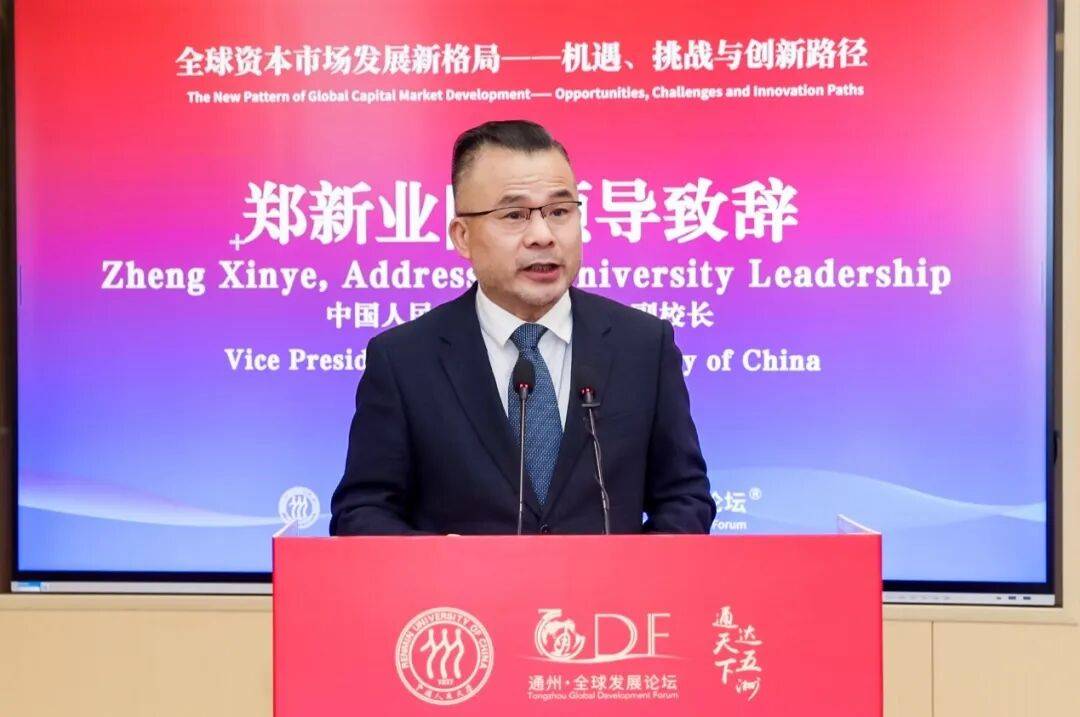
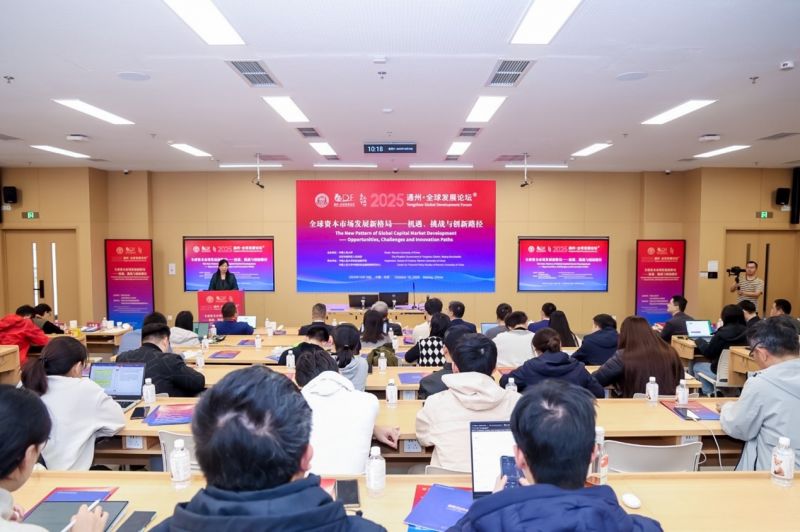
通州·全球发展论坛分论坛三隆重举行,专家热议全球资本市场发展新格局
Zhong Guo Fa Zhan Wang· 2025-10-20 05:33
Group 1 - The forum focuses on the new pattern of global capital market development, emphasizing opportunities, challenges, and innovative paths [2][22] - The strategic positioning of China's capital market has been elevated, shifting its core function from traditional financing to incentivizing social innovation and wealth management [5] - The need for systematic restructuring of the capital market ecosystem is highlighted, including reforms in the asset side, funding side, and regulatory framework to enhance market transparency and compliance [5] Group 2 - The global financial market is facing challenges of integration and segmentation, particularly due to the impact of the 2008 financial crisis and ongoing geopolitical tensions [7] - The imbalance in financial globalization levels between developed and emerging markets poses significant external pressures on the latter [7] - The importance of balancing openness and security in China's financial strategy is emphasized, advocating for high-quality openness and alignment with international regulatory standards [7] Group 3 - The impact of the US-China trade war on international capital flows is discussed, noting that US funds have shown resilience while non-US funds have reduced exposure to affected companies [12] - The valuation trends of technology companies during the Fourth Industrial Revolution are characterized by high valuations and the need for optimized institutional support for hard technology enterprises [14] - The emergence of digital assets is reshaping the capital market ecosystem, with a focus on the role of stablecoins and their implications for traditional finance [16][17]
全球资本市场格局裂变,中国如何出牌?
Jing Ji Guan Cha Bao· 2025-10-19 03:36
Group 1: Forum Overview - The "Tongzhou Global Development Forum (2025)" focused on the new patterns of global capital market development, addressing opportunities, challenges, and innovative paths [1] - The forum emphasized the importance of building a resilient, fair, and inclusive capital market for global economic recovery and sustainable growth [1] Group 2: Keynote Speeches - Wu Xiaoqiu highlighted the need for a strategic shift in China's capital market from traditional financing to mechanisms that encourage social innovation and wealth management [2] - He proposed reforms in the asset side, funding side, and regulatory side to enhance market transparency and increase the cost of violations [2] - Wu Weixing discussed the stagnation of global financial globalization post-2008 financial crisis, emphasizing the need for a balance between openness and security in China's financial strategy [3] - Liu Xiaolei noted the differentiated responses of international capital in the A-share market due to the US-China trade war, with American funds showing less aversion compared to non-American funds [4] - Zhang Xuejun pointed out the characteristics of high valuations and hard technology in the fourth technological revolution, advocating for a multi-tiered financial service system for hard tech companies [4] - Zhu Xiaoneng discussed the emergence of digital assets and their role in shaping a new ecosystem in capital markets, highlighting the differences between digital and online investments [4] - Summer emphasized the impact of global tariff wars on capital flows, suggesting that capital is moving from developed to emerging markets, and noted the potential for the renminbi to appreciate long-term [5]
上市公司治理准则升级!剑指“关键少数” 自2026年施行
2 1 Shi Ji Jing Ji Bao Dao· 2025-10-17 15:20
Core Viewpoint - The China Securities Regulatory Commission (CSRC) has revised the "Corporate Governance Guidelines for Listed Companies," which will take effect on January 1, 2026, aiming to enhance the governance of listed companies and protect the interests of minority shareholders [1] Group 1: Key Revisions - The new guidelines establish a comprehensive regulatory framework for directors and senior management, including strict qualification checks and enhanced disclosure requirements regarding conflicts of interest [2] - A balanced incentive and restraint mechanism is mandated, linking executive compensation to company performance and encouraging deferred payment and clawback mechanisms to align management interests with long-term company goals [3] - The guidelines impose stricter regulations on controlling shareholders and actual controllers, particularly regarding related party transactions and competition, to prevent detrimental impacts on listed companies [4] - The new rules ensure coherence with existing laws, enhancing the overall regulatory framework and clarifying responsibilities related to shareholder rights and board committee functions [5] Group 2: Implementation and Feedback - The CSRC solicited public opinions from July 25 to August 24, 2025, receiving 195 suggestions, which were largely supportive of the revisions, leading to the incorporation of several reasonable recommendations in the final draft [6] - The implementation date of January 1, 2026, provides listed companies ample time to adjust their internal systems in line with the new guidelines, facilitating a smooth transition [6] - The revisions are seen as a significant step towards improving the modern corporate governance system in China and promoting high-quality development in the capital market [6]
山东民营经济高质量发展典型案例:为民营经济注入“金融活水”
Zhong Guo Fa Zhan Wang· 2025-10-17 09:31
Core Viewpoint - The financial system in the province is focused on implementing national financial policies to support the high-quality development of private enterprises, emphasizing service quality and efficiency Group 1: Credit Resource Investment - Continuous increase in credit resources to support the growth of the private economy, with 59 financial institutions and over 2,200 financial partner teams serving 80,000 private enterprises, providing financing exceeding 400 billion yuan for 18,000 private enterprises [2] - Support for weak links by extending financial services to individual businesses, resulting in 276,000 private enterprises having loans by the end of November, an increase of 19,000 since the beginning of the year [3] - Implementation of "Financial Direct to Grassroots Acceleration" action to address issues like slow approvals and difficult renewals, facilitating 1,303 projects with financing of 307.687 billion yuan [4] Group 2: Capital Market Utilization - Utilizing domestic and foreign capital markets to promote the development of listed companies, with 5 new listed companies this year, bringing the total to 309, of which 62% are private enterprises [5] - Expanding direct financing channels through financial increment policies, with 16 private enterprises entering the investment project library of a newly established private equity fund of 50 billion yuan [6] - Strengthening the role of regional equity markets, with 160 new private enterprises listed this year, raising a total of 690.86 million yuan [7] Group 3: Addressing Financing Challenges - Improving mechanisms for risk prevention and resolution, ensuring early identification and management of risks for private enterprises [8] - Providing inclusive guarantees to solve collateral issues, benefiting 234,900 small and micro private enterprises and farmers [9] - Implementing no-repayment renewal policies for all small and medium enterprises, with new no-repayment loans amounting to 280.103 billion yuan, a year-on-year increase of 13.49% [10] - Utilizing digital finance to enhance credit information, providing data support to over 3.3 million private economic entities [11]
