
轻度滞胀

Search documents
深观察 | 会议纪要凸显美联储分歧“常态化” 12月降息难测
Sou Hu Cai Jing· 2025-11-20 00:42
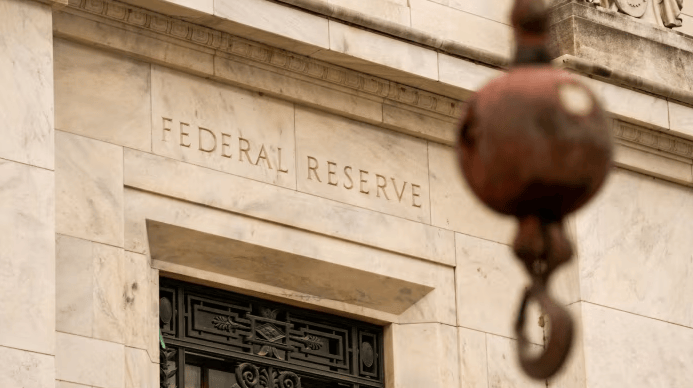
Core Viewpoint - The Federal Reserve's internal divisions regarding inflation and unemployment pose significant uncertainty for the December interest rate decision, as highlighted in the minutes from the October FOMC meeting [1][3]. Group 1: Internal Divisions - There is a notable split among Federal Reserve officials on the assessment of inflation threats, with some believing current inflation is near policy targets, while others emphasize persistent inflation above the 2% target [1][3]. - The October meeting saw a rare occurrence of dual dissent, with one member advocating for a 50 basis point cut and another insisting on maintaining current rates, marking the first such division since 2019 [1][3]. Group 2: Economic Indicators and Data Gaps - The government shutdown has resulted in significant data gaps, complicating the Fed's decision-making process for the December meeting, as key employment reports are delayed [5]. - The Labor Department announced that the October employment report would not be released, leading traders to abandon expectations for a December rate cut [5]. Group 3: Market Impact and Future Outlook - The widening divisions within the Fed have led to a sharp decline in market expectations for a December rate cut, with investors now leaning towards rates remaining unchanged [6]. - This situation could hinder consumer spending during the holiday season and limit businesses' access to lower borrowing costs for new investments [6]. - President Trump has expressed dissatisfaction with the Fed's direction, indicating potential political tensions regarding the Fed's independence [6].

缺乏关键数据,美联储被指“盲判”降息
Sou Hu Cai Jing· 2025-10-31 03:13
Group 1 - The Federal Reserve announced a 25 basis point cut in the federal funds rate, bringing it to a target range of 3.75% to 4%, marking the fifth rate cut since September 2024 [1][2] - This decision aims to prevent a further rise in unemployment, with the current rate being the lowest in nearly three years [1] - Market expectations for a third consecutive rate cut in December were tempered after Fed Chair Powell's comments, leading to a decline in stock prices, except for a slight increase in the Nasdaq [1] Group 2 - There are significant internal disagreements within the Federal Reserve regarding the extent of economic stimulus needed, highlighting a lack of consensus among the 19 policymakers [2] - The decision was made without a month of critical economic data, complicating the Fed's understanding of the economic situation [2] - Powell emphasized the uncertainty surrounding tariff-induced inflation, noting that while overall inflation has not significantly risen, the impact of tariffs may take time to fully affect consumer prices [3] Group 3 - The upcoming selection of the next Federal Reserve Chair is under scrutiny, with Treasury Secretary Mnuchin leading the process, and a shortlist of candidates has been narrowed down to five [4] - The new chair will face the challenge of navigating rising inflation and slowing growth amid conflicting views within the Fed regarding the impact of current government policies [5] - The confirmation of the new chair will require Senate approval, adding another layer of complexity to the transition [5]
美国政府停摆数周,央行内部分歧严重,美联储被指缺乏关键数据“盲判”降息
Huan Qiu Shi Bao· 2025-10-30 22:40
Core Viewpoint - The Federal Reserve has announced a 25 basis point cut in the federal funds rate, bringing it to a target range of 3.75% to 4%, marking the fifth rate cut since September 2024 and the second this year [1][2]. Group 1: Federal Reserve's Rate Decision - The recent rate cut aims to prevent a further rise in unemployment, with the current rate being the lowest in nearly three years [2]. - Market expectations for a third consecutive rate cut in December were adjusted following comments from Fed Chair Jerome Powell, leading to a decline in stock prices, except for a slight increase in the Nasdaq [2]. - There is a notable division among Fed policymakers regarding the extent of economic stimulus needed, with Powell acknowledging sharp disagreements on future rate paths [2][3]. Group 2: Economic Context and Inflation - The decision comes amid signs of "mild stagflation," characterized by high inflation and weak employment [2]. - Powell indicated that the impact of tariffs on inflation remains uncertain, with the latest consumer price index showing no significant rise in overall inflation despite new tariffs [3]. - Concerns have been raised about the Fed's ability to make informed decisions due to a lack of critical economic data, particularly with the government shutdown affecting data releases [3]. Group 3: Leadership Transition at the Federal Reserve - Attention is focused on the selection of the next Fed Chair, with Treasury Secretary Becerra leading the search, narrowing the list to five candidates [4]. - The current Chair Powell's term ends in May, and an announcement regarding his successor is expected as early as December [5]. - The new Chair will face challenges from the current administration's aggressive economic policies, which are contributing to rising inflation and slowing growth, amidst evident divisions within the Fed [5].
安联2025-2027经济展望全解析:十大核心问题,看清未来五年全球经济走向
Sou Hu Cai Jing· 2025-10-21 08:42
Group 1 - The report outlines a global economy entering a phase of "mild stagflation" and "high uncertainty," with central banks struggling to balance weak growth, persistent inflation, and large fiscal deficits [2][3] - Trade war costs are primarily borne by exporters, with the U.S. consumers expected to feel the impact of tariffs, which could raise inflation by +0.6 percentage points by mid-2026 [3] - Global trade volume growth is projected to slow significantly from +2% in 2025 to +0.6% in 2026, indicating a challenging environment for international commerce [3] Group 2 - The report highlights the potential for long-term interest rates to rise due to high fiscal deficits, with the U.S. expected to see a GDP drag of approximately -0.3% from tariffs [3][4] - The European defense spending is anticipated to increase significantly in 2026-2027, with a proposed investment of €800 billion over four years, which could boost GDP growth by about +0.2 percentage points [4][5] - Companies are facing high financing costs, with a projected increase in global corporate bankruptcies by +6% in 2025 and +4% in 2026, peaking around 2027 [5] Group 3 - The report indicates that while there is no current bubble, the AI hype has been fully priced in, with U.S. stock valuations remaining high but supported by strong long-term earnings growth [5] - Emerging markets, excluding China, are in an expansion cycle, with growth expectations exceeding forecasts, although certain countries like Argentina and Brazil are highlighted as needing close monitoring [5] - The potential for a trade recession is assessed at a 45% probability, driven by U.S. tariff escalations impacting global growth and inflation [5]

2025-2710经济展望全解析:十大核心问题,看清未来五年全球经济走向
Sou Hu Cai Jing· 2025-10-18 12:41
Core Insights - The report outlines a complex economic landscape characterized by slow growth, persistent inflation, and significant policy dilemmas, with key risks including geopolitical tensions and the impact of AI on markets [2][3] Global Economic Outlook - The global economy is entering a phase of "mild stagflation" with weak growth projected at +2.7% in 2025 and +2.5% in 2026, while inflation remains high at 3.9% and 3.5% respectively [2] - Global trade growth is expected to slow significantly from +2% in 2025 to +0.6% in 2026 [2] Regional Analysis - In the US and UK, inflation is expected to remain stubbornly high, with US inflation projected to exceed targets through 2027 [2] - The Eurozone is nearing the ECB's 2% inflation target, with expectations of stability [2] Consumer Behavior - High interest rates and prices are suppressing consumer confidence, leading to a forecast of weak consumption recovery [2] Interest Rate Projections - The Federal Reserve is expected to lower rates by only 75 basis points by mid-2026, with terminal rates between 3.25% and 3.50% [2] - The ECB has ended its rate hike cycle, while the Bank of England is anticipated to ease further, reducing rates to 3.0% by 2027 [2] Debt and Fiscal Challenges - Global corporate bankruptcies are projected to increase by 6% in 2025 and 4% in 2026, peaking around 2027 [4] - The report highlights a significant rise in long-term yields due to high fiscal deficits and substantial debt issuance [4] Market Dynamics - The report indicates that the US capital market continues to attract strong foreign investment despite pressures for de-dollarization [4] - The valuation of US equities remains high with a P/E ratio of 23x, but strong long-term earnings growth supports a sustainable PEG ratio of 1.4x [4] Emerging Markets - Emerging markets, excluding China, are in an expansion phase with growth exceeding expectations, although certain countries like Argentina and Brazil are flagged for potential risks [4] - China's growth is projected at +4.8% in 2025, slowing to +4.2% in 2026, facing challenges from weak domestic demand and real estate downturns [4]
美联储主席鲍威尔称美国经济面临“滞胀式”挑战 美股估值相对偏高
智通财经网· 2025-09-23 22:15
Economic Conditions - The U.S. economy is facing "stagflation-like" challenges with noticeable weakness in economic growth and the job market, while inflation remains high [1][2] - Recent data indicates a slowdown in economic growth, a slight increase in unemployment, and a cooling consumer spending environment, despite inflation levels exceeding the Federal Reserve's 2% target [1][2] Monetary Policy - The Federal Reserve recently implemented its first interest rate cut since 2025, lowering the federal funds rate by 25 basis points to a range of 4%-4.25%, described as a "risk management" operation [1][2] - The latest dot plot suggests three potential rate cuts in 2025, an increase from the previous forecast of two, although there is significant internal division among Fed officials regarding the pace of rate cuts [1][2] Labor Market and Immigration - The labor supply and demand in the U.S. are weakening, exacerbated by tightened immigration policies under the Trump administration, leading to increased job market challenges [2] - There are growing divisions within the Federal Reserve regarding the need for aggressive rate cuts to prevent falling behind economic conditions [2] Market Reactions - Following Powell's remarks, U.S. Treasury yields fell, with the 10-year yield dropping to 4.11%, while the stock market experienced declines, particularly in technology stocks [3][4] - Market expectations indicate a potential total rate cut of approximately 43 basis points by year-end, with some investors speculating on a possible 50 basis point cut in a future meeting [3][4] Financial Stability - Powell noted that while U.S. stock market valuations appear relatively high, there are currently no significant signs of increased financial stability risks [3] - Upcoming key economic data, including GDP and core PCE, may further influence market volatility and the Federal Reserve's policy direction [4]
闪评 | 年内首次降息 “抗通胀”与“保就业”美国陷入两难境地
Sou Hu Cai Jing· 2025-09-18 14:18
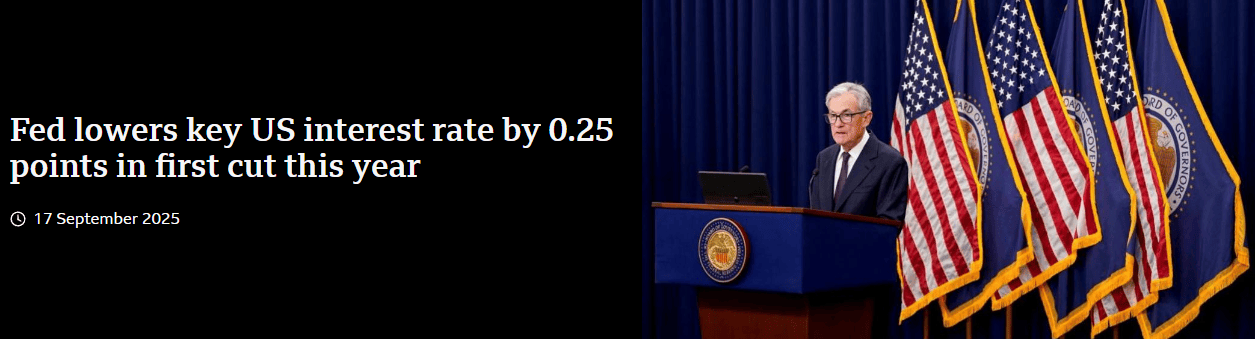
Group 1 - The Federal Reserve announced a 25 basis point cut in the federal funds rate target range to 4.00% to 4.25%, marking the first rate cut of 2025 and continuing a trend of cuts from 2024 [1] - The decision to cut rates is influenced by significant political pressure and concerns about the labor market, shifting the Fed's focus from "containing inflation" to "boosting employment" [1][5] - The internal division within the Federal Open Market Committee (FOMC) regarding future rate cuts is evident, with some members advocating for further cuts while others remain cautious [2][5] Group 2 - The Fed's rate cut is expected to lead to some capital outflow, prompting other countries to manage the impact on their financial markets [6] - The anticipated decline in the dollar index may alleviate some pressure on other foreign exchange markets, although the effect is limited due to the current higher target range [6] - The appointment of a close ally of President Trump to the FOMC raises concerns about the Fed's independence, as political pressures may influence its decision-making [7][10] Group 3 - Fed Chair Powell emphasized the commitment to maintaining the Fed's independence and reiterated the dual mandate of controlling inflation and stabilizing employment [10][12] - The relationship between the White House and the Fed is characterized by a "fight without breaking," indicating ongoing tensions but a level of compromise [12]
摩根士丹利邢自强:中美市场趋势及中国反通缩分析
Sou Hu Cai Jing· 2025-08-13 02:41
Group 1 - The core viewpoint highlights that global liquidity is driving a "bull market" in A-shares and overseas markets, unaffected by data and policy uncertainties [1] - Following domestic interest rate cuts, long-term rates are low and liquidity is ample, contributing to a liquidity-driven bull market [1] - There is a growing interest in China globally, with institutions and residents reallocating from fixed-income assets to equity or equity-related assets since July [1] Group 2 - The relationship between China and the U.S. is experiencing fluctuations, with a slight potential for tariff and trade barrier upgrades, but a return to the tense state of April is unlikely [1] - The U.S. economy is expected to soften in the second half of the year, with employment and consumption declining, leading to a potential mild stagflation in the coming months [1] - Major U.S. companies benefiting from AI are showing strong performance, and investor expectations are leaning towards significant future rate cuts by the Federal Reserve [1] Group 3 - Macro narratives regarding China are largely positive, emphasizing anti-involution, industrial innovation, and the resilience of entrepreneurs [1] - Macro deflationary pressures are expected to persist at least until the first half of next year, with GDP deflator indices showing -1% for the first half of this year and an estimated -0.9% for the second half [1] - The feasibility of achieving "anti-deflation" remains uncertain, involving factors such as PPI, core CPI, corporate profits, wage employment, and consumption ratios [1] Group 4 - Demand-side rebalancing and supply-side clearing are underway, with a phased investment of 138 billion in old-for-new initiatives and subsidies in social security and livelihood sectors [1] - The upcoming Fourth Plenary Session in late October may address three fundamental changes, including reducing redundant construction, tax and fiscal system reforms, and transforming local government performance assessments [1] - The current market is driven by improved liquidity and macro narratives, but the ultimate outcome will depend on the fundamentals, specifically the ability to break deflation and improve corporate profitability [1]
FSMOne:中国股市抵御关税能力强 2025年恒生指数目标24500点
智通财经网· 2025-06-05 10:58
Group 1 - FSMOne's assistant manager predicts that the impact of the trade war is manageable under macro policy responses, allowing the Chinese stock market to better withstand tariff shocks [1] - The target for the Hang Seng Index in 2025 is projected to be 24,500 points based on an 11x price-to-earnings ratio, while the MSCI China Index is expected to reach 69 based on a 10x target P/E ratio [1] - The demand and spending for cloud computing and data centers are expected to rise across various industries, driven by the surge in Chinese tech and AI stocks, leading to sustained profit growth for related companies [1] Group 2 - The U.S. inflation rate may return to a high level of around 4%, with price increases from tariffs expected to reflect in the third or fourth quarter of this year [2] - There is upward pressure on long-term bond yields, and investors are advised to consider ultra-short-term U.S. Treasury bonds or high-quality short to medium-term corporate bonds [2] - Preference is given to investment-grade bonds or companies that are more defensive under the tariff war, while caution is advised regarding cyclical industries and those heavily impacted by trade or geopolitical issues [2]