
债券

Search documents
深度|债市“低性价比”时代,“羊群效应”消失了
2 1 Shi Ji Jing Ji Bao Dao· 2026-01-11 23:17
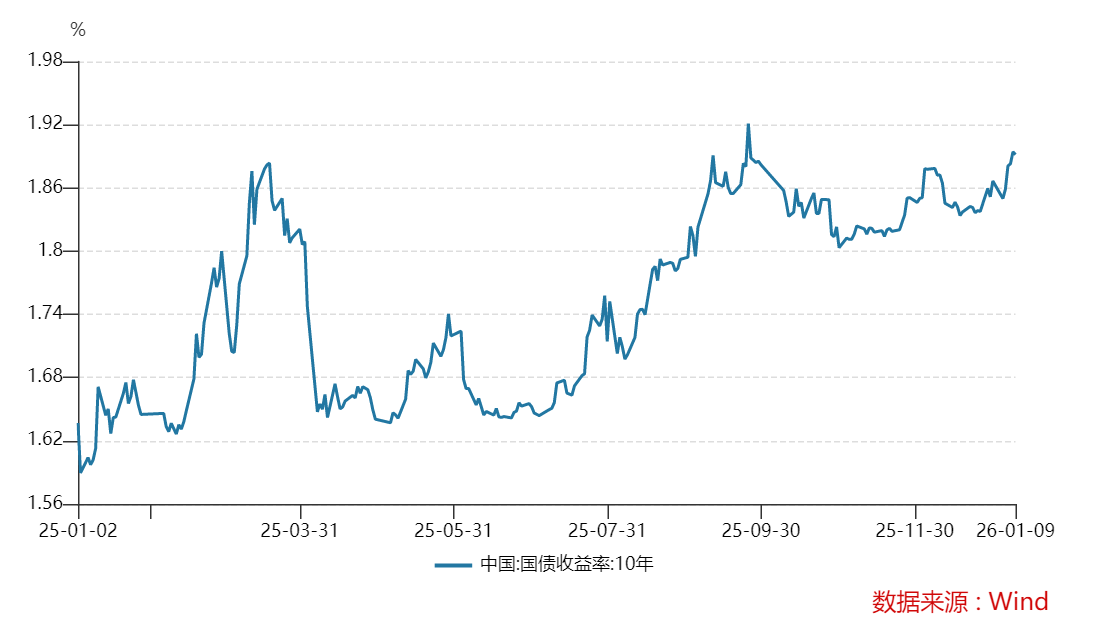
Core Insights - The bond market in 2025 faced significant challenges, characterized by high volatility and a complex interplay of factors affecting investment strategies [1][2][3] - The pressure on institutions to generate returns has intensified, leading to increased competition and operational difficulties in navigating the market [2][3] Market Dynamics - The bond market experienced a notable decline in interest rates, with the yield on 10-year government bonds decreasing by nearly 1 percentage point compared to the same period in 2024, resulting in a challenging investment environment [3][5] - The yield on 10-year government bonds fluctuated throughout the year, starting at 1.6% and reaching approximately 1.92% by September, reflecting economic recovery expectations and supply pressures [5][6] Institutional Behavior - Different types of institutions displayed varied investment behaviors by the end of 2025, with large commercial and policy banks showing strong buying activity, while other institutions like joint-stock banks and city commercial banks were net sellers [11][12] - The investment strategies of institutions have diverged, with some focusing on short-term trading for excess returns, while others are more cautious, aiming to reduce costs and losses [9][12] Future Outlook - As 2026 begins, the bond market is anticipated to open with a yield of around 1.85% on 10-year government bonds, with expectations for potential interest rate cuts in the first quarter [13][16] - The market is expected to remain volatile, with institutions adopting a cautious approach and preparing for potential adjustments based on monetary policy developments [15][16]

债市连续调整 私募机构:类固收产品有望在投资组合中迎来增长机遇
Zheng Quan Shi Bao Wang· 2026-01-11 23:16
Core Viewpoint - The A-share market is experiencing a strong start to the new year, while the bond market is undergoing continuous adjustments, with the 10-year government bond yield rising to around 1.90% [1] Group 1: Market Trends - The 10-year government bond yield has reached 1.90%, a level it touched twice last year before entering a downward trend [1] - There is market speculation on whether the current yield will replicate past trends, which has garnered attention [1] Group 2: Investment Strategies - Private equity institutions believe that the bond market's acceptance of recession narratives has significantly decreased [1] - The previous "lying win" investment strategy, which relied on declining interest rates and extended durations, is gradually becoming ineffective [1] - Fixed-income-like products are expected to see growth opportunities within investment portfolios [1]
我国金融风险整体收敛总体可控
Xin Lang Cai Jing· 2026-01-11 22:25
Core Insights - The People's Bank of China (PBOC) emphasizes maintaining financial stability while promoting development, effectively managing financial risks, and ensuring the overall health of the financial system [1] Policy Tools Effectiveness - The PBOC has implemented a dual-pillar framework of monetary and macro-prudential policies to stabilize financial markets, which are crucial for economic development [2] - The foreign exchange market has shown resilience against external shocks, with the RMB performing steadily among major global currencies [2] - In the bond market, the PBOC has conducted operations to enhance liquidity and has warned against systemic risks associated with declining long-term bond yields [2] - New capital market support tools have been introduced to bolster confidence in China's capital markets [3] Risk Management Progress - The PBOC's financial institution rating system categorizes banks into 11 levels based on risk, with 97.9% of rated banks falling within the safer categories [4] - There has been a significant reduction in high-risk small and medium-sized banks, with a focus on coordinated risk management at both central and local levels [4] Strengthening Support Systems - The financial system has enhanced risk management resources, including the collection of deposit insurance premiums and the establishment of a financial stability guarantee fund [5] - The deposit insurance system, which covers various banking institutions, has provided full protection for over 99% of depositors, exceeding international averages [6] - Future efforts will focus on improving the legal framework for deposit insurance and expanding the accumulation of the deposit insurance fund [6]
利率市场趋势定量跟踪20260109:利率价量择时观点看空-20260111
CMS· 2026-01-11 15:39
Quantitative Models and Construction Methods 1. Model Name: Multi-Cycle Timing Model for Domestic Interest Rates - **Model Construction Idea**: The model uses kernel regression algorithms to identify the support and resistance lines of interest rate trends. It evaluates the breakthrough patterns of interest rate movements across different investment cycles to generate timing signals[10][22][19] - **Model Construction Process**: - **Data Input**: Yield-to-Maturity (YTM) data for 5-year, 10-year, and 30-year government bonds[10][22] - **Cycle Definition**: - Long cycle: Monthly frequency - Medium cycle: Bi-weekly frequency - Short cycle: Weekly frequency[10][22] - **Signal Generation**: - A signal is generated when at least two out of three cycles show consistent directional breakthroughs (upward or downward) - For example, if two cycles show upward breakthroughs, the final signal is "bearish" for interest rates[10][22] - **Model Evaluation**: The model effectively captures multi-cycle resonance in interest rate trends and provides actionable timing signals[10][22] 2. Model Name: Multi-Cycle Timing Model for US Interest Rates - **Model Construction Idea**: The domestic multi-cycle timing model is applied to the US Treasury market to assess its effectiveness in a different market environment[19] - **Model Construction Process**: - **Data Input**: Yield-to-Maturity (YTM) data for 10-year US Treasury bonds[19] - **Cycle Definition**: - Long cycle: Monthly frequency - Medium cycle: Bi-weekly frequency - Short cycle: Weekly frequency[19] - **Signal Generation**: - A signal is generated when at least two out of three cycles show consistent directional breakthroughs - If no consistent breakthroughs are observed, the final signal is "neutral"[19] - **Model Evaluation**: The model demonstrates adaptability to the US market but currently shows no significant signals, indicating a "neutral" stance[19] --- Model Backtesting Results 1. Multi-Cycle Timing Model for Domestic Interest Rates - **5-Year YTM Model**: - Long-term annualized return: 5.46% - Maximum drawdown: 2.88% - Return-to-drawdown ratio: 1.9 - Short-term annualized return (since 2024): 2.04% - Maximum drawdown: 0.59% - Return-to-drawdown ratio: 3.47 - Long-term excess return: 1.06% - Short-term excess return: 0.74%[23][35] - **10-Year YTM Model**: - Long-term annualized return: 6.03% - Maximum drawdown: 2.74% - Return-to-drawdown ratio: 2.2 - Short-term annualized return (since 2024): 2.3% - Maximum drawdown: 0.58% - Return-to-drawdown ratio: 3.98 - Long-term excess return: 1.63% - Short-term excess return: 1.2%[26][35] - **30-Year YTM Model**: - Long-term annualized return: 7.28% - Maximum drawdown: 4.27% - Return-to-drawdown ratio: 1.7 - Short-term annualized return (since 2024): 2.44% - Maximum drawdown: 0.92% - Return-to-drawdown ratio: 2.66 - Long-term excess return: 2.39% - Short-term excess return: 2.29%[31][35] 2. Multi-Cycle Timing Model for US Interest Rates - **10-Year YTM Model**: - Current signal: Neutral - No significant breakthroughs observed in long, medium, or short cycles[19][21] --- Quantitative Factors and Construction Methods 1. Factor Name: Interest Rate Structure Indicators (Level, Term, Convexity) - **Factor Construction Idea**: Transform YTM data into structural indicators to analyze the interest rate market from a mean-reversion perspective[7] - **Factor Construction Process**: - **Level Structure**: - Formula: $ \text{Level} = \text{Average YTM across maturities} $ - Current value: 1.64% - Historical percentiles: 29% (3 years), 17% (5 years), 9% (10 years)[7] - **Term Structure**: - Formula: $ \text{Term} = \text{YTM (10-year)} - \text{YTM (1-year)} $ - Current value: 0.59% - Historical percentiles: 56% (3 years), 41% (5 years), 48% (10 years)[7] - **Convexity Structure**: - Formula: $ \text{Convexity} = \text{Second derivative of YTM curve} $ - Current value: 0.14% - Historical percentiles: 53% (3 years), 32% (5 years), 32% (10 years)[7] - **Factor Evaluation**: These indicators provide a comprehensive view of the interest rate market's structural dynamics and are useful for mean-reversion analysis[7] --- Factor Backtesting Results 1. Interest Rate Structure Indicators - **Level Structure**: Current value: 1.64%, historical percentiles: 29% (3 years), 17% (5 years), 9% (10 years)[7] - **Term Structure**: Current value: 0.59%, historical percentiles: 56% (3 years), 41% (5 years), 48% (10 years)[7] - **Convexity Structure**: Current value: 0.14%, historical percentiles: 53% (3 years), 32% (5 years), 32% (10 years)[7]
债市 | 逢高配置
Xin Lang Cai Jing· 2026-01-11 15:09
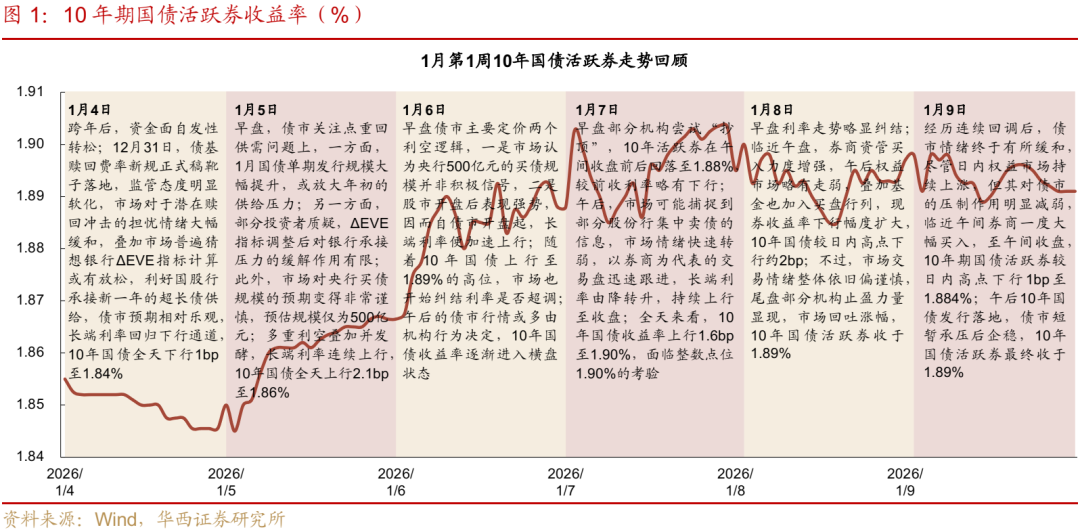
Group 1 - The bond market experienced significant volatility at the beginning of January, with a notable sell-off driven by emotional responses rather than fundamental changes [1][14] - The yield on the 10-year government bond rose to 1.89% and the 30-year bond to 2.30%, reflecting a general upward trend in yields across various maturities [5][9] - Institutional investors have reduced their duration risk, with the average duration of interest rate bond funds decreasing from 3.58 years to 3.37 years since the start of January, indicating a low-risk state in the bond market [15] Group 2 - In mid-January, market focus will likely center on three main themes: changes in the economic fundamentals, the supply and structure of government bonds, and the stability of funding [2][18] - Recent economic indicators, including a PMI of 50.1% and CPI and PPI figures, suggest a slight recovery in the economic fundamentals, although the bond market may view these changes as a rebound from previous lows [18] - The government bond issuance is expected to accelerate in the first quarter, with net financing projected to be around 4.1 trillion yuan, similar to the previous year [19] Group 3 - The funding environment is expected to be impacted by a significant tax payment period in January, with a funding gap estimated to exceed 2 trillion yuan, although historical trends suggest that funding rates typically return to lower levels post-tax period [3][22] - The market is also concerned about the upcoming maturity of a large volume of fixed deposits, which could influence the demand for alternative financial products [23] Group 4 - The bond market's current pricing appears to be high, with the 10-year government bond yield facing a resistance level at 1.90%, while the 30-year bond yield is estimated to have a reasonable cap around 2.30% [26] - Despite the ongoing volatility and concerns regarding inflation and stock market performance, the recommendation for trading accounts is to prioritize stability, while allocation accounts may consider locking in current yields [26]
海外宏观及大类资产周度报告-20260111
Guo Tai Jun An Qi Huo· 2026-01-11 13:37
Report Industry Investment Rating No relevant content provided. Core Views of the Report - Employment trend in the US is weakening but may be emerging from the worst period. The non - farm payroll increase in December was lower than expected, but the unemployment rate and wage growth were better than expected. Some employment indicators in December showed a rebound [11][13]. - The expected Q1环比 rebound in the US economy is being realized. The US economic surprise index has rebounded recently, and the retail sales data in January is expected to show growth [14][16]. - Inflation expectations have significantly rebounded. Attention should be paid to the CPI data reading. The release of December CPI data is affected by government shutdown, and the geopolitical situation in Iran has affected oil prices and inflation expectations [17][19]. - Attention should be paid to the tariff policy framework changes brought by the IEEPA ruling. If the US Supreme Court rules IEEPA unconstitutional, it may involve a $150 billion tariff refund and cause short - term tariff policy chaos [20][23]. - In FICC precious metals, the gold - silver ratio is returning. Gold has regained momentum, and silver should be wary of fluctuations. Geopolitical risks have increased the upward drive of gold, while the conditions for silver to continue to rise are becoming more demanding [24][26]. Summary by Relevant Catalogs 1. Fixed Income - **Overseas Fixed Income Weekly Performance** - Various US Treasury yields had different weekly changes. For example, the 3 - month US Treasury yield was 3.59% with a - 2.06bp change, and the 2 - year US Treasury yield was 3.53% with a 5.88bp change. Major developed country government bond yields also changed, such as the 10 - year German bond yield at 2.86% with a - 3.7bp change [41][42]. - **US Treasury Yield Curve and Credit Spread Tracking** - The US Treasury yield curve showed changes over 1 - month, 3 - month, and 6 - month periods, and the long - short spread of US Treasury yields was also tracked [49]. - **Relative Strength of Different - Rated Credit Bonds and Eurozone Bond Yields** - The relative strength of high - yield and Aaa - rated credit bonds was analyzed, along with the credit spreads between different - rated bonds [58][60]. - **US Treasury Issuance and Primary - Secondary Market Supply - Demand Indicators** - The issuance of US short - term Treasury bills, medium - and long - term Treasury bonds, and related subscription ratios were presented [71][73]. 2. Exchange Rate Market - **Global Major Exchange Rates Weekly Performance** - The US dollar index, euro, yen, and other major exchange rates had different weekly changes. For example, the US dollar index had a 0.72% change to 99.1330, and the euro had a - 0.70% change to 1.1637 [76][78]. - **Major Country Treasury Yield Spreads with US Treasuries** - The spreads between 10 - year US Treasuries and G7 countries' average yields, as well as the spreads between US and German 2 - year Treasury yields, were shown [79][80]. - **Evolution of China's Monetary Policy Framework** - China's "interest rate corridor" is formed with the 7 - day reverse repurchase in the inter - bank market as the "policy rate", SLF as the top, and the excess reserve ratio as the bottom. Traditional policy tools rely on MLF as the policy - guiding rate [88]. - **Monthly and High - Frequency Indicators of RMB Exchange Rate** - Monthly indicators include China's central bank gold and foreign exchange reserves, and high - frequency indicators include the spreads between Chinese and US 10 - year and 3 - month Treasury yields [93][101]. 3. Commodities - **Global Major Commodities Weekly Performance** - Various commodities such as Shanghai gold, Shanghai copper, and Brent crude oil had different weekly changes. For example, Shanghai gold had a 2.96% change, and Brent crude oil had a 4.09% change [119][121]. - **Commodity Ratios and Industry Chain Relative Strength** - Ratios such as the gold - silver ratio, gold - copper ratio, and their relationships with inflation expectations and US Treasury yield spreads were analyzed [123][124]. - **Commodity Price Mapping in Equity and Bond Markets** - The relative strength of commodities with global equity and bond indices, and the rolling correlation between upstream commodities and downstream equity cycle sectors were studied [131][134]. - **Macro Commodity High - Frequency Data** - Data such as OPEC+ crude oil production quotas, US energy department crude oil production, and global crude oil and copper inventories were presented [141][143]. 4. Overseas Equity - **Global Major Indices and US Stock Industry Weekly Performance** - Global major indices such as the S&P 500, Nasdaq Composite, and their weekly changes were reported. In the US stock market, different sectors of the S&P index also had different weekly performances [146][150]. - **Weekly US Stock Style Performance, Valuation, and Earnings Tracking** - Different US stock style sectors such as US large - cap growth and US small - cap value had different weekly changes. Valuations and earnings (EPS) of major indices were also analyzed [153][157]. - **Earnings Cycle Positioning - Quarterly EPS YoY Trends of Major Indices** - The quarterly EPS YoY trends of indices such as the S&P 500, Nasdaq, and Nikkei 225 were shown [164][165]. - **Volatility and Risk Sentiment Indicators** - Indicators such as the Chicago S&P Volatility VIX index, ICE Bond Volatility MOVE index, and CBOE option PUT/CALL ratio were presented [171][172]. 5. Cryptocurrency - **BTC, ETH, and Related Derivative Assets** - The relationships between Bitcoin, Ethereum, gold, and the US dollar, as well as the performance of major Bitcoin ETFs and their fund flows were studied [184][187]. 6. BOJ Post - YCC Era - **Yen Carry Trade System Market High - Frequency Data Tracking** - Data such as the net amount of Japanese investors' purchases of overseas bonds and stocks, USDJPY 1 - year exchange - rate hedging costs, and yen net positions of CFTC CME yen hedge funds and asset management institutions were presented [192][194]. 7. Macro Data Hologram and Fundamental High - Frequency Data - **Real - Time Economic Momentum** - Real - time GDP models, GDP components, and sector economic surprise indices of the US, as well as economic surprise indices of the US, Europe, and China were presented [202][206]. - **Financial Conditions** - The Federal Reserve's balance sheet and its weekly changes, G4 central banks' balance sheets as a percentage of GDP, and US and euro - area financial condition indices were analyzed [210][213]. - **Fiscal Policy** - US federal government fiscal expenditures and revenues, government debt issuance, and the government deficit as a percentage of GDP were studied [218][223]. - **Employment Market** - US employment market indicators such as non - farm payroll monthly increases, job vacancies, and weekly unemployment claims were tracked [227][228]. - **Inflation Indicators** - US inflation data was split, and trends of headline and core inflation, as well as inflation expectations, were analyzed [235][240]. - **Consumption Demand** - US consumption data such as retail sales, consumer confidence, personal income, and household debt were studied [244][259]. - **Cycle Positioning** - Industrial, manufacturing, and inventory cycle indicators, as well as US wholesale, retail, and manufacturing inventory and inventory - to - sales ratios were analyzed [267][277]. - **Credit Cycle** - US credit surveys, S&P index valuations, and high - yield corporate credit spreads were presented [280][282]. - **Transportation and Logistics** - Logistics data between China and the US, Asia and the US, Europe and the US, as well as aviation, supply - chain, and shipping data were studied [284][297]. - **Real Estate Market** - US real estate equity market, credit spreads, and commercial real estate data such as indices, loan amounts, and delinquency rates were presented [302][308]. - **Eurozone** - Eurozone macro - overview, cycle positioning, and relative strength data such as deficit rates, inflation, and economic surprise indices were analyzed [311][331].
【策略周报】沪指站上4100点,如何把握春季行情?
华宝财富魔方· 2026-01-11 13:37
Key Points Summary Important Events Review - On January 3, 2026, U.S. President Trump announced a military operation in Venezuela, capturing President Nicolás Maduro and his wife, claiming they would face criminal charges in New York, and stated that the U.S. would "temporarily run" Venezuela [2] - The People's Bank of China held a work meeting on January 5-6, 2026, emphasizing the continuation of a moderately loose monetary policy to enhance financial services for high-quality economic development [2] - The Ministry of Finance announced plans for the issuance of government bonds in the first quarter of 2026, with a total planned scale of approximately 1.54 trillion yuan, reflecting a proactive fiscal policy stance [2] - The China Securities Regulatory Commission revised the regulations on sales fees for public securities investment funds, reducing costs for investors and shortening the redemption fee exemption period for institutional investors from six months to one month [2] Weekly Market Review - The bond market performed poorly due to significant capital diversion to the stock market, which saw indices surpass 4100 points, and the central bank's bond purchases were lower than expected, with December 2025 purchases at only 50 billion yuan [5] - The central bank's work meeting in 2026 reiterated the commitment to a moderately loose monetary policy, indicating that while rate cuts are still possible, the extent and certainty are relatively low, which may weaken early-year rate cut expectations [6] - The A-share market experienced a significant rise, with the manufacturing PMI for December 2025 rebounding to 50.1, indicating a return to expansion and increasing market expectations for economic recovery [7]

债市专题研究:动量波动策略应对春季躁动
ZHESHANG SECURITIES· 2026-01-11 07:12
Group 1 - The core contradiction in the convertible bond market has shifted from long-term "valuation cost-effectiveness" to short-term "capital and sentiment game," with liquidity improvement being the main theme of the current market [1][2] - The recent spring rally has led to a strong performance in the convertible bond market, with the convertible bond small-cap index rising by 5.47%, outperforming the large-cap index which increased by 2.01% [1][10] - The healthcare (+6.03%), information technology (+5.61%), and energy (+4.58%) sectors have shown strong performance, while financials (+1.65%) and consumer staples (+2.60%) have lagged [1][10] Group 2 - The liquidity style has performed best in the past week, with strong convertible bonds yielding an average return of +4.57%, significantly higher than other styles [2][11] - The current market environment favors high liquidity securities, which attract new capital and create a positive feedback loop of liquidity premium leading to capital inflow [2][10] - Investors are advised to shift from a defensive strategy focused on "double low" value to a more aggressive trading mindset, capitalizing on market sentiment and capital flow [3][16] Group 3 - The report emphasizes the importance of momentum and volatility factors in capturing trending market conditions, suggesting that investors should select securities with strong trends and high price elasticity [15][16] - The trading strategy should leverage the T+0 trading mechanism of convertible bonds, allowing for flexible adjustments during sector rotations and maximizing trading gains from liquidity premiums [3][16] - The report highlights the need for investors to adapt their portfolio construction to align with market trends and ensure that the combination of securities reflects the prevailing market sentiment [3][16]
中资离岸债风控周报(1月5日至9日 ):一级市场发行复苏 二级市场全线上涨
Xin Hua Cai Jing· 2026-01-11 04:52

Primary Market - A total of 41 offshore bonds were issued this week (January 5-9, 2026), including 1 RMB bond, 29 USD bonds, 10 HKD bonds, and 1 EUR bond, with issuance sizes of 100 million RMB, 9.3675 billion USD, 17.475 billion HKD, and 2.5 billion EUR respectively [2] - In the offshore RMB bond market, the largest single issuance was 100 million RMB with a maximum coupon rate of 1.7%, all issued by the International Finance Corporation [2] - In the USD bond market, the largest single issuance was 3.5 billion USD by the Asian Development Bank, with the highest coupon rate of 6.25% issued by PCCW Limited [2] Secondary Market Overview - The yield on Chinese USD bonds rose across the board this week. As of January 9, the Markit iBoxx Chinese USD Bond Composite Index increased by 0.13% to 251.66; the investment-grade USD bond index rose by 0.1% to 244.63; and the high-yield USD bond index increased by 0.28% to 183.71 [3] - The real estate USD bond index rose by 0.58% to 179.72, while the city investment USD bond index fell by 0.12% to 154.4; the financial USD bond index increased by 0.15% to 291.69 [3] Benchmark Spread - As of January 9, the spread between the 10-year benchmark government bonds of China and the U.S. narrowed to 229.73 basis points, a decrease of 1.58 basis points from the end of 2025 [4] Rating Changes - On January 5, the credit rating of Wuxi Liangxi Urban Operation Service Group Co., Ltd. was withdrawn by China Chengxin International Credit Rating due to insufficient information [6] - On January 7, Zhengzhou Zhongrui Industrial Group Co., Ltd.'s credit rating was downgraded from AA+ to AA- by Dagong Global Credit Rating [6] Domestic News - The Shanghai Clearing House is promoting the quality and expansion of Yulan bonds and free trade offshore bonds, aiming to enhance cross-border connectivity and optimize the "swap + direct clearing" path [8] - Local government bond issuance for 2026 has commenced, with Shandong Province issuing 72.381 billion RMB in local bonds on January 5. The total planned issuance for the first quarter exceeds 2.1 trillion RMB, which is significantly higher than previous years [9] - The Panda bond market officially opened this week with an issuance of 7 billion RMB, including a 1.5 billion RMB Panda bond from Henkel Group, marking its first appearance in this market [10] Overseas News - The U.S. Congressional Budget Office (CBO) predicts that the Federal Reserve may implement a slight interest rate cut this year to address labor market downturn risks, with expected rates dropping to 3.4% by the fourth quarter [12] Offshore Debt Alerts - Huaxia Happiness Holdings Co., Ltd. is facing arbitration requests from Ping An Asset Management and Ping An Life Insurance for performance compensation and overdue payment totaling approximately 6.4 billion RMB [13] - China International Capital Corporation is convening a meeting to discuss not requiring early debt repayment or additional guarantees, indicating strong asset strength and repayment capability [14] - Minmetals Land plans to repurchase approximately 251 million USD of bonds and exercise early redemption rights, with settlement expected around January 15, 2026 [15]
天津市非金融企业债券融资突破340亿元 创近五年新高
Zheng Quan Shi Bao Wang· 2026-01-11 04:13
Group 1 - The core point of the article highlights that Tianjin's non-financial enterprises achieved a net financing of 34.015 billion yuan in the interbank bond market in 2025, marking the highest record in nearly five years [1] - This financing amount positions Tianjin eighth in the national ranking for non-financial enterprise bond financing [1] - The data indicates a significant increase in bond financing activity within the region, reflecting a positive trend in the local economy [1]