
纺织服装

Search documents
临平“移动衣橱”开进高校 从历史传承到产业升级的深度联动
Mei Ri Shang Bao· 2026-01-05 22:22
商报讯(通讯员徐笑飞陈加才记者毛雨希)最近,杭州市临平区民营企业协会联合临平区相关企业,在浙 江理工大学(下沙校区)举办以"传承非遗技艺、'淘衣临平'移动衣橱进校园"为主题的宣传展销活动,让 师生们一站式解锁文化体验与高性价比购物。 活动现场展示了省级非物质文化遗产——杭缎织造技艺,通过现场展示和互动体验,让师生们直观感受 传统文化的精髓,深入了解传统工艺的历史传承与现代创新。此外,临平区27家服装服饰企业携优质产 品亮相校园,展现传统文化与时尚产业创新对话。 作为临平区市场监管局与临平区民营企业协会首创的全新模式,"淘衣临平"以"3+10+100"为核心,致力 于打造一张电子导购地图,用一年时间,推出一个区域品牌,举办10场特色活动,挖掘100家优质企 业,助推临平成为世界级时尚产业高地。 此次"淘衣临平"移动衣橱活动以浙江理工大学为起点,作为区域品牌输出的尝试,不仅展现临平区服装 产业的实力,也为校企合作注入新的活力。接下来,临平区民营企业协会将继续携手临平区企业,以文 化传承与产业升级为核心使命,致力于构建高校与实体经济的创新对接平台,打通实习就业、创业创新 的全方位通道,为培养行业领军人才、推动纺织服 ...
浙江棒杰控股集团股份有限公司关于法院决定对公司启动预重整并指定临时管理人的公告
Shang Hai Zheng Quan Bao· 2026-01-05 18:26
Group 1 - The court has decided to initiate a pre-restructuring process for Zhejiang Bangjie Holdings Group Co., Ltd. and appointed temporary managers [2][6] - The pre-restructuring was requested by creditor Suzhou Huanshi Lake Zhuguang Enterprise Management Partnership due to the company's inability to repay debts and insufficient assets [2][6] - The company has acknowledged the pre-restructuring application and will cooperate with the process [6] Group 2 - The pre-restructuring does not guarantee that the court will formally accept the restructuring application, leaving significant uncertainty regarding the company's future [3][8] - If the court accepts the restructuring application, the Shenzhen Stock Exchange will implement delisting risk warnings for the company's stock [3][8] - As of September 30, 2025, the company's net assets attributable to shareholders were -607.32 million yuan, indicating potential delisting risks if the financial situation does not improve [10][11] Group 3 - The restructuring process aims to save the company by adjusting its assets and liabilities and restoring its profitability [4][11] - The company's main businesses include seamless clothing and photovoltaic sectors, with seamless clothing generating 620 million yuan in revenue for 2024, accounting for 56.06% of total revenue [11] - The company has established long-term relationships with international brands and large retailers in the seamless clothing sector, which may be impacted by the ongoing pre-restructuring [11] Group 4 - The pre-restructuring allows for early debt and operational management, including debt registration and asset investigation, which can facilitate communication with creditors and potential investors [7] - Successful pre-restructuring and restructuring could improve the company's financial and operational conditions, leading to sustainable development [7]

天虹国际集团(02678)1月5日斥资79.68万港元回购16.65万股
智通财经网· 2026-01-05 10:03
Core Viewpoint - Tianhong International Group (02678) announced a share buyback plan, indicating confidence in its stock value and future prospects [1] Group 1 - The company will repurchase 166,500 shares at a total cost of HKD 796,800 [1] - The buyback price per share ranges from HKD 4.74 to HKD 4.81 [1]
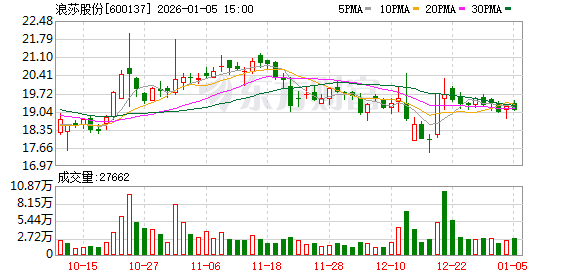
浪莎股份最新股东户数环比下降6.57% 筹码趋向集中
Zheng Quan Shi Bao Wang· 2026-01-05 09:57
Core Viewpoint - Langsha Co., Ltd. reported a decrease in the number of shareholders and a decline in stock price, despite a modest increase in revenue and a significant rise in net profit for the first three quarters of the fiscal year [2] Group 1: Shareholder and Stock Performance - As of December 31, the number of shareholders for Langsha Co., Ltd. was 12,800, a decrease of 900 from the previous period (December 20), representing a decline of 6.57% [2] - The closing price of Langsha Co., Ltd. was 19.09 yuan, down 0.73%, with a cumulative decline of 3.10% since the concentration of shares began, showing 3 days of increase and 6 days of decrease in stock price [2] Group 2: Financial Performance - For the first three quarters, Langsha Co., Ltd. achieved an operating revenue of 239 million yuan, reflecting a year-on-year growth of 1.08% [2] - The net profit for the same period was 19.6 million yuan, marking a year-on-year increase of 26.15% [2] - The basic earnings per share were 0.2020 yuan, with a weighted average return on equity of 3.65% [2]


“十四五”汕头走好“工业立市、产业强市”之路 内衣家居服产量占全国近一半
Nan Fang Ri Bao Wang Luo Ban· 2026-01-05 08:08
Group 1: Economic Achievements - Shantou's production of underwear and home textiles accounts for nearly half of the national output, with elastic fabric weaving and dyeing volumes ranking first in the country [1] - The city produces approximately 70% of the national output of plastic toys, leading in brand ownership, IP licensing, and patent authorization in the toy industry [1] - Over the "14th Five-Year Plan" period, Shantou has attracted over 600 quality enterprises, with total project investments exceeding 600 billion yuan [1] Group 2: Innovation and Infrastructure - Shantou is building an innovation support system focusing on innovation platforms, results transformation, and talent aggregation, with the establishment of Shantou Science City and various laboratories [2] - The city has invested 81 billion yuan in transportation infrastructure over the past five years, a 1.5 times increase compared to the "13th Five-Year Plan" period, achieving comprehensive coverage of expressways [2] - The Shantou-Shanwei high-speed railway has been fully operational, enabling a 90-minute connection to the Greater Bay Area [2] Group 3: Rural Development and Social Welfare - The "Hundred Counties, Thousand Towns, and Ten Thousand Villages High-Quality Development Project" has led to the establishment of 4 national agricultural industry strong towns and 52 agricultural leading enterprises [3] - Shantou has been recognized as a national civilized city, with nearly 80% of the general public budget spent on people's livelihoods, creating over 220,000 new urban jobs [3] - The "Shantou Call for Help" online service model has reached 36,000 users, demonstrating the city's commitment to public welfare and smart services [3]
“竞”四海 逐未来——四探“七虎”竞南通
Xin Hua Wang· 2026-01-05 02:43
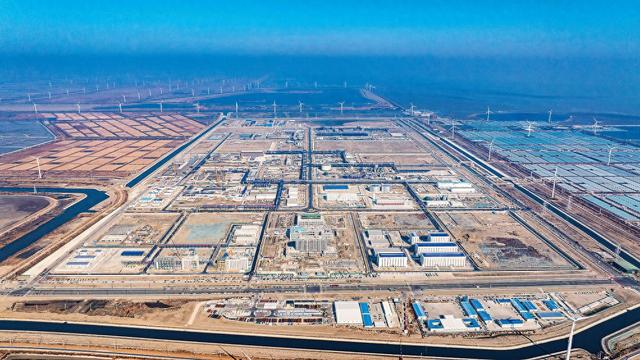
Core Viewpoint - The article highlights the significant growth and transformation of Nantong's economy, driven by strategic partnerships, industrial upgrades, and a focus on international trade, particularly in the context of the "Belt and Road" initiative and high-level openness in the Yangtze River Delta region [5][10][36]. Group 1: Economic Growth and Trade - Nantong's foreign trade import and export scale has increased significantly, surpassing 400 billion yuan for the first time, with a year-on-year growth of 15.9% in the first eleven months of 2025 [10][11]. - The city's export of shipbuilding and marine engineering equipment accounts for one-tenth and one-fourth of the national total, respectively, with a 104% year-on-year increase in marine engineering exports [10][11]. - The proportion of high-tech product exports has risen from 14.1% to 22.9%, while traditional labor-intensive products have decreased from 27.3% to 24.1% [11]. Group 2: Strategic Partnerships and Investments - Nantong signed a strategic cooperation framework agreement with JD Group to optimize logistics and enhance trade, which has led to successful overseas promotional events attracting over 50 Middle Eastern buyers [2][5]. - The establishment of Scania's production base in Rugao, with an investment of 20 billion euros, marks a significant foreign investment project aimed at meeting local market demands [13][14]. - The total investment of 500 billion yuan in the China National Petroleum Corporation's Blue Ocean New Materials project is indicative of the rapid industrial development in the region [6][34]. Group 3: Industrial Transformation and Upgrades - Nantong is transitioning from a logistics-focused port to an industry-driven port, enhancing its resilience against external shocks and establishing itself as a crucial part of the global supply chain [9][10]. - The region is witnessing a shift towards high-end manufacturing, with companies like YKK AP focusing on high-quality aluminum alloy products, leveraging local industrial advantages [16][14]. - The development of cross-border e-commerce and the establishment of specialized industrial parks are facilitating the growth of local enterprises and enhancing their competitiveness in international markets [19][28]. Group 4: Future Outlook and Challenges - The article emphasizes the need for companies to adapt to changing global economic conditions, highlighting the importance of innovation and market responsiveness in maintaining competitiveness [23][31]. - Nantong's government is actively supporting businesses through efficient service and infrastructure development, aiming to attract more foreign investment and enhance the local economy [35][36]. - The ongoing transformation of traditional industries and the embrace of new technologies are crucial for sustaining growth and navigating the complexities of international trade [20][24].
破解企业点线面体空战略下个十百千万亿业绩增长
Jing Ji Guan Cha Bao· 2026-01-05 02:28
Core Insights - The article discusses the growth logic of companies as they scale from millions to billions and beyond, emphasizing the importance of strategic development at each stage of growth [1][3][25]. Group 1: Growth Stages - Companies can achieve different levels of revenue growth: from millions to billions, and then to trillions, by following a structured growth strategy [1][3]. - The growth process is described as a logical progression, where companies must navigate through various stages: individual products, product lines, categories, platforms, and ecosystems [1][3][25]. Group 2: Case Studies - Weixing Kele successfully transitioned from zero to one hundred million by focusing on product innovation and channel penetration, particularly in the waterproof coating market [4][9]. - Shanyuan Technology leveraged a unique product, the "mining lamp black box," to achieve significant revenue growth by addressing safety concerns in mining operations [10][11]. - Mars Man, a latecomer in the integrated stove industry, rapidly grew its revenue by expanding product categories and enhancing channel strategies [13]. - Supor transitioned from a small cookware company to a leading brand by effectively utilizing distribution channels and expanding its product range [16][17]. - Anta transformed its business model by focusing on operational efficiency and strategic store management, leading to substantial revenue growth [19][20]. Group 3: Strategic Insights - The article emphasizes the importance of channel development as a critical factor for achieving initial revenue milestones [9][12]. - Companies must focus on product and brand positioning while ensuring that operational strategies are aligned with market needs [6][12]. - The transition from product-level growth to category-level growth requires a clear understanding of how to structure product lines effectively [15][18]. Group 4: Ecosystem Development - Companies like COFCO and China State Construction have successfully implemented ecosystem strategies to achieve trillion-level revenues by integrating various business units and enhancing brand visibility [25][26]. - The article highlights the necessity of creating a unified brand strategy that aligns with the overall business objectives to facilitate sustainable growth [25][26].




美邦服饰:提名创始人周成建掌舵参股公司,子公司或承担业绩差额补足义务
2 1 Shi Ji Jing Ji Bao Dao· 2026-01-05 01:53
公告显示,合资公司需在三个业绩评估期达成明确目标:2030年底前累计净利润5000万元,税收1亿 元;2031-2033年累计净利润3亿元,税收3亿元;2034-2035年累计净利润1.5亿元(若特定减资则调整为 1亿元),产品合格率均需超98%。业绩未实现部分,上海邦匀需在审计后30日内以现金或等价资产补 足,不足则转让股权抵偿;若达标超预期,可获超额部分50%的激励分红。 南方财经1月5日电,美邦服饰(002269)近日公告显示,公司全资子公司上海邦匀拟与贵纺集团、贵州 省农业基金共同出资10亿元设立合资公司(暂定名贵州美邦新能纺织服装科技有限公司),其中上海邦 匀出资1亿元,持股10%。 根据合资协议约定,上海邦匀有权提名合资公司总经理。公司已通过董事会审议,拟推荐创始人、现任 董事长兼总经理周成建出任总经理一职。若周成建最终获聘,上海邦匀将成为"业绩承诺方",需承担业 绩差额补足义务。 ...

行业景气度系列十:去库延续,需求仍待改善
Hua Tai Qi Huo· 2026-01-05 01:16
Report Industry Investment Rating - Not provided in the given content Core Viewpoints Manufacturing - Overall: In December, the manufacturing PMI's five - year percentile was at 57.6%, with a change of 37.3%. Four industries had their manufacturing PMI in the expansion range, 4 less than the previous month and 3 less than the same period last year [4]. - Supply: Slightly declined. The 3 - month average of the manufacturing PMI production index in December was 50.5, a 0.1 - percentage - point decrease from the previous month. Five industries showed month - on - month improvement, while 10 industries declined [4]. - Demand: Still needed improvement. The 3 - month average of the manufacturing PMI new orders in December was 49.6, a 0.4 - percentage - point increase from the previous month. Three industries showed month - on - month improvement, and 12 industries declined [4]. - Inventory: Continued destocking. The 3 - month average of the manufacturing PMI finished - goods inventory in December remained flat at 47.9. Five industries saw inventory increase, and 10 industries saw inventory decrease [4]. Non - Manufacturing - Overall: In December, the non - manufacturing PMI's five - year percentile was at 22.0%, with a change of 10.2%. Eleven industries had their non - manufacturing PMI in the expansion range, 5 more than the previous month and 1 more than the same period last year [5]. - Supply: Employment remained at a low level. The 3 - month average of the non - manufacturing PMI employee index in December was 45.5, a 0.4 - percentage - point increase from the previous month. Both the service and construction sectors increased by 0.4 percentage points [5]. - Demand: Still needed improvement. The 3 - month average of the non - manufacturing PMI new orders in December was 46.3, a 0.4 - percentage - point increase from the previous month. The service sector's new orders increased by 0.2 percentage points, and the construction sector's new orders increased by 1.7 percentage points [5]. - Inventory: Continued destocking. The 3 - month average of the non - manufacturing PMI inventory in December was 45.3, with no change from the previous month. The service sector's inventory remained unchanged, and the construction sector's inventory increased by 0.8 percentage points [5]. Summary by Directory Overview - Manufacturing PMI: In December, the manufacturing PMI's five - year percentile was at 57.6%, with a change of 37.3%. Four industries had their manufacturing PMI in the expansion range, 4 less than the previous month and 3 less than the same period last year [10]. - Non - Manufacturing PMI: In December, the non - manufacturing PMI's five - year percentile was at 22.0%, with a change of 10.2%. Eleven industries had their non - manufacturing PMI in the expansion range, 5 more than the previous month and 1 more than the same period last year [10]. Demand - Manufacturing: The 3 - month average of the manufacturing PMI new orders in December was 49.6, a 0.4 - percentage - point increase from the previous month. Three industries showed month - on - month improvement, and 12 industries declined. - Non - Manufacturing: The 3 - month average of the non - manufacturing PMI new orders in December was 46.3, a 0.4 - percentage - point increase from the previous month. The service sector's new orders increased by 0.2 percentage points, and the construction sector's new orders increased by 1.7 percentage points. Five industries showed month - on - month improvement, and 10 industries declined. Pay attention to the improvement in textiles and pharmaceuticals and the decline in petroleum [16]. Supply - Manufacturing: The 3 - month average of the manufacturing PMI production index in December was 50.5, a 0.1 - percentage - point decrease from the previous month. Five industries showed month - on - month improvement, and 10 industries declined. The manufacturing PMI employee index in December was 48.3, a 0.1 - percentage - point decrease from the previous month. Five industries showed month - on - month improvement, and 10 industries declined. - Non - Manufacturing: The 3 - month average of the non - manufacturing PMI employee index in December was 45.5, a 0.4 - percentage - point increase from the previous month. The service and construction sectors both increased by 0.4 percentage points. Eleven industries showed month - on - month improvement, and 3 industries declined. Pay attention to the decline in non - ferrous metals and农副食品 and the improvement in ferrous metals [25]. Price - Manufacturing: The 3 - month average of the manufacturing PMI ex - factory price index in December was 48.2, a 0.2 - percentage - point increase from the previous month. Seven industries saw their ex - factory prices improve, and 8 industries declined. In terms of profit, the profit trend in December increased by 0.4 percentage points, and the overall continued to converge. - Non - Manufacturing: The 3 - month average of the non - manufacturing charge price index in December was 48.3, a 0.2 - percentage - point increase from the previous month. The service sector increased by 0.3 percentage points, and the construction sector decreased by 0.2 percentage points. Eight industries showed month - on - month improvement, and 7 industries declined. In terms of profit, the profit in December remained unchanged. The service sector decreased by 0.1 percentage points, and the construction sector increased by 0.5 percentage points. Pay attention to the improvement in non - ferrous metals and the decline in petroleum [34]. Inventory - Manufacturing: The 3 - month average of the manufacturing PMI finished - goods inventory in December remained flat at 47.9. Five industries saw inventory increase, and 10 industries saw inventory decrease. The manufacturing PMI raw - material inventory in November decreased by 0.2 percentage points to 47.5. Seven industries saw inventory increase, and 8 industries saw inventory decrease. - Non - Manufacturing: The 3 - month average of the non - manufacturing PMI inventory in December was 45.3, with no change from the previous month. The service sector's inventory remained unchanged, and the construction sector's inventory increased by 0.8 percentage points. Five industries saw inventory increase, and 10 industries saw inventory decrease. Pay attention to the destocking of non - metallic products and the increase in construction inventory [42]. Main Manufacturing Industry PMI Charts - The report provides data on the PMI of various manufacturing industries, including general equipment, special equipment, automobiles, computers, motors, pharmaceuticals,农副食品, textiles, non - ferrous metals, petroleum, chemicals, ferrous metals, non - metallic products, metal products, and chemical fiber and rubber products, showing values, month - on - month changes, three - year averages, and year - on - year changes [53][54][57][58][59][66][67][68].
贵州省人民政府办公厅印发《贵州省扩大民间投资三年行动方案》
Xin Lang Cai Jing· 2026-01-04 14:56
Core Viewpoint - The Guizhou Provincial Government has issued a three-year action plan to expand private investment, aiming to enhance confidence and stimulate high-quality development in the province's private investment sector [1]. Group 1: Work Objectives - The plan aims to optimize the environment for private investment, expand market access, eliminate investment barriers, and enhance project construction and policy support [2]. - By 2027, the growth rate of private investment is expected to exceed the overall fixed asset investment growth rate, with private investment accounting for approximately 42% of total fixed asset investment [2]. Group 2: Key Tasks - Strengthening industrial private investment by focusing on six major industrial clusters and three characteristic industries, while supporting private enterprises in participating in significant state-owned manufacturing projects [3]. - Expanding private investment in characteristic advantageous industries, including textiles, pharmaceuticals, and agriculture, while promoting tourism projects [3]. - Stabilizing private investment in real estate by facilitating financing mechanisms and supporting private real estate enterprises in various financing methods [3]. - Encouraging private investment in infrastructure projects with reasonable equity participation and supporting renewable energy projects [3]. - Promoting private enterprises' involvement in the "Digital Guizhou" initiative and encouraging investment in digital infrastructure [3][4]. Group 3: Policy Measures - Cleaning up market access barriers and ensuring compliance with bidding regulations to facilitate private enterprise participation [4]. - Implementing a new mechanism for government and social capital cooperation (PPP) to clarify private capital participation requirements [4]. - Increasing procurement shares for small and medium-sized enterprises in government projects [4]. - Enhancing investment service efficiency by streamlining project approval processes [4]. - Promoting key private investment projects and providing financial support for eligible projects [5].