
运动服饰

Search documents
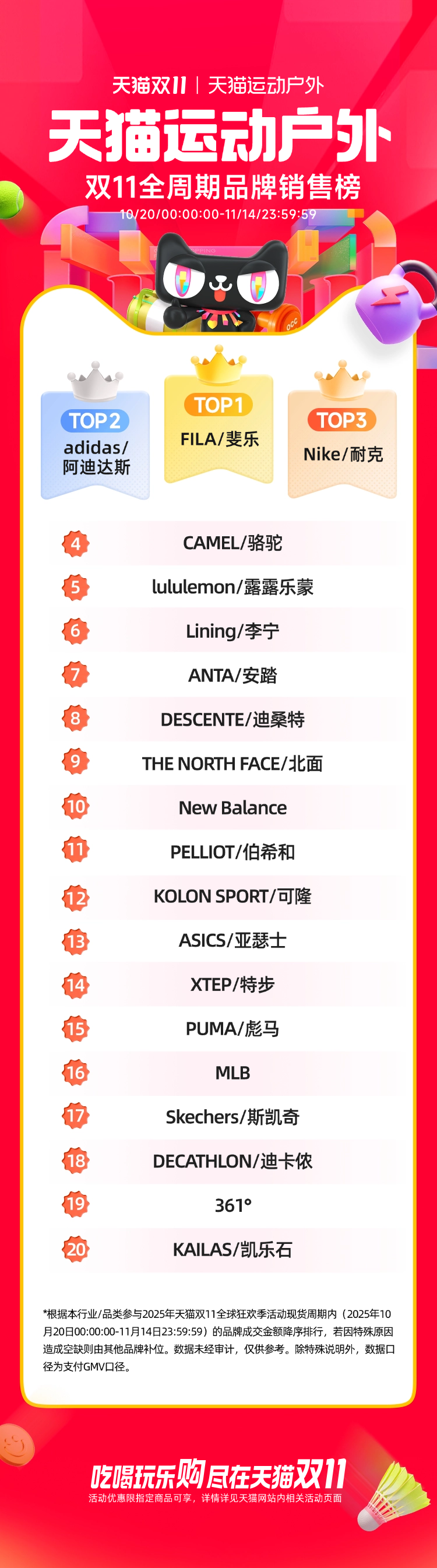
FILA把耐克“赶下”王座
2 1 Shi Ji Jing Ji Bao Dao· 2025-11-19 23:10
Core Insights - The sports market is undergoing significant reshuffling, with FILA ranking first in the Tmall Double Eleven sales, followed by Adidas and Nike, marking Nike's first drop from the top position in years [1] - The competitive landscape is intensifying, with domestic brands like FILA, Li Ning, and Anta gaining ground against established international brands [8] Group 1: Market Performance - FILA has shown strong performance in the sales rankings, with multiple products entering the top sales categories during the Double Eleven event [1] - Nike's revenue in the Greater China region has been declining, with a reported drop of 10% to $1.512 billion (approximately 10.775 billion RMB) for the latest fiscal quarter [7] - Despite the decline, Nike remains the largest sports brand in China, although its market share has decreased from 18.1% to 16.2% [7] Group 2: Strategic Adjustments - FILA has implemented a "ONE FILA" strategy under new CEO Jiang Yan, focusing on resource consolidation and increased investment in tennis and golf [3] - Nike is also recognizing the importance of localized operations, appointing local executives and establishing a creative center in Shanghai to enhance its market presence [4] - The competitive pressure is forcing both international and domestic brands to adapt their strategies to maintain market relevance [8] Group 3: Consumer Behavior and Market Trends - The decline in Nike's sales is attributed to a shift in consumer shopping behavior, with longer purchasing cycles and increased discounting in the local market [7] - Domestic brands are increasingly closing the product gap with international competitors, emphasizing the need for effective marketing strategies [8] - The overall market environment is challenging, with some domestic brands like Peak reporting significant losses in their direct sales segments [8]

1天办结6800余万元 渤海银行供应链金融跑出小微服务“加速度”
Zhong Zheng Wang· 2025-11-19 10:19
Group 1 - The core point of the article highlights that Bohai Bank's Fuzhou branch successfully facilitated financing for 21 upstream suppliers of a well-known sports brand through a supply chain finance model, with a total investment exceeding 68 million yuan in just one day [1] - The service not only alleviates financial pressure for small and medium-sized enterprises but also enhances the stability and competitiveness of the entire supply chain by leveraging the credit of core enterprises [1] - Bohai Bank has focused on addressing the financing challenges faced by small and micro enterprises in the supply chain, positioning supply chain finance as a key driver for inclusive financial development [1] Group 2 - The bank's online business process allows upstream suppliers to complete financing applications and related operations without offline efforts, achieving the fastest "same-day completion" from application to fund disbursement [2] - Utilizing big data risk control models and cross-verification of transaction data, the bank enhances the efficiency of the approval process [2] - Currently, Bohai Bank's customer acquisition ratio through core enterprises is as high as 1:10, with over 90% of new inclusive customers being driven by this model [2]
科技筑链连万企 普惠深耕汇千司 渤海银行供应链产品赋能普惠金融大文章
Zhong Jin Zai Xian· 2025-11-19 06:10
Core Insights - Bohai Bank's Fuzhou branch has successfully utilized supply chain finance to provide rapid financing solutions for a well-known sports brand's upstream suppliers, completing 24 transactions totaling over 68 million yuan in just one day, showcasing efficiency in serving small and micro enterprises [1] - The bank's approach leverages the credit of core enterprises to enhance the financing capabilities of upstream suppliers, effectively addressing the challenges of traditional financing methods that rely heavily on collateral [1][2] - Bohai Bank is committed to digital transformation, enhancing the efficiency and customer experience of its inclusive finance services through a fully online process, allowing suppliers to complete financing applications and receive funds without the need for offline interactions [2] Business Strategy - As a rising force among state-owned financial institutions, Bohai Bank focuses on the development strategy of "doing true, doing small, doing well," emphasizing the importance of core enterprise supply chains and ecosystem scenarios [3] - The bank aims to strengthen technological empowerment and promote digital inclusive finance, thereby increasing service efficiency and expanding the coverage and accessibility of inclusive financial services [3] - The bank's efforts have resulted in a high customer acquisition ratio of 1:10 through core enterprises, with over 90% of new inclusive customers being driven by this model [2]
中泰证券:25Q3海外运动品牌表现向好 上游制造有望回暖
智通财经网· 2025-11-19 05:50
分渠道看,Adidas、VF、UA和ON渠道之间表现较为均衡,而Nike、Deckers、Puma渠道间分化较为明 显,其中Nike、Deckers经销渠道实现正增,而直营渠道仍有下滑;Puma直营渠道同比增长,经销渠道 下滑较多,主要系主动对分销体系进行调整所致。分地区看,Nike区域分化最为明显,北美/大中华/欧 洲同比分别+4%/-10%/+1%,欧美区域开始修复,但大中华承压明显。 智通财经APP获悉,中泰证券发布研报称,美国关税对各海外运动品牌均造成了不同程度的压力,品牌 方主要通过与供应链进行部分成本分摊、部分产品提价等方式进行应对。从25Q3表现来看,毛利率同 比降幅较多的是Nike、Puma、UA,判断除关税因素外还受到促销去库带来的压力。盈利能力环比与同 比均实现大幅增长,Adidas、Asics、Deckers毛利率也呈现出改善态势。下游运动品牌25Q3表现普遍符 合或好于预期,中游制造订单有望逐步恢复,贸易环境不确定增强的背景下,看好头部制造商与客户合 作粘性提升。 中泰证券主要观点如下: 海外运动品牌:整体表现向好,Nike改革初见成效 收入端看,品牌之间仍有分化,但整体呈现出修复态势 ...

机制之争:双十一,FILA把耐克“赶下”王座
2 1 Shi Ji Jing Ji Bao Dao· 2025-11-18 12:42
Core Insights - The sports market is undergoing significant reshuffling, with FILA ranking first in Tmall's Double Eleven sales, followed by Adidas and Nike, marking Nike's first drop from the top position in years [1][4][10] Brand Performance - In the 2023 Double Eleven sales, the top three brands were Nike, FILA, and Anta, while in 2024, the rankings shifted to Nike, FILA, and Adidas, indicating a competitive landscape [1][10] - FILA's sales strategy includes a "customer service integration" project, enhancing the customer experience from pre-purchase to post-sale [4][5] - Nike's revenue in Greater China has been declining, with a 10% drop to $1.512 billion (approximately 10.775 billion RMB) for the latest fiscal quarter [10][11] Market Dynamics - The competition is intensifying, with domestic brands like Anta and Li Ning gaining market share, while overseas brands face declining premium pricing [10][11] - Nike's market share in China decreased from 18.1% to 16.2%, while Anta's increased from 9.8% to 10.5% [10][11] - The overall market is under pressure, with reports of losses in domestic sales for brands like Peak and Li Ning [11][12] Strategic Adjustments - FILA is focusing on strategic investments in tennis and golf, with significant sales growth in these categories during the Double Eleven period [6][13] - Nike is recognizing the importance of localized operations, appointing local executives and establishing creative centers in China to enhance market engagement [7][10] - The need for Nike to adapt its strategies in China is critical, especially after its drop to third place in sales rankings [14]



机制之争:双十一,FILA把耐克“赶下”王座丨小贺说
2 1 Shi Ji Jing Ji Bao Dao· 2025-11-18 12:36
Core Insights - The sports market is undergoing significant reshuffling, with FILA ranking first in the Tmall Double Eleven sales, marking Nike's first drop from the top position in recent years [1] - FILA's operational strategies and flexible mechanisms have contributed to its success, while Nike is facing challenges in maintaining its market position [4][6] Group 1: Market Performance - In the 2023 Double Eleven sales, FILA ranked first, followed by Adidas and Nike, which is a notable shift in market dynamics [1] - Nike's revenue in the Greater China region has been declining, with a reported drop of 10% to $1.512 billion (approximately 10.775 billion RMB) for the latest fiscal quarter ending August 31, 2025 [8] - Despite the decline, Nike remains the largest sports brand in China, with a market share of 16.2%, although it has decreased from 18.1% [8] Group 2: Company Strategies - FILA has implemented a "customer service integration" project to enhance its operational efficiency, allowing for a seamless customer experience from pre-purchase inquiries to post-sale support [2] - The new CEO of FILA, Jiang Yan, has introduced the "ONE FILA" strategy, focusing on resource consolidation and strategic investments in tennis and golf [4] - Nike is also recognizing the importance of localized operations, appointing Dong Wei as the new CEO for Greater China, indicating a shift towards empowering local leadership [5] Group 3: Competitive Landscape - The rise of domestic brands is evident, with local companies like Anta and Li Ning gaining market share, while overseas brands face declining premium pricing [9] - The overall market environment in China is challenging, with reports of losses in domestic sales for brands like Peak and Li Ning [10] - FILA's strategy of leveraging its parent company Anta's resources has allowed it to create a closed-loop system, enhancing its competitive edge [10]
斯凯奇200余家门店上线 “双11”后运动品牌加速入驻美团闪购
Zheng Quan Shi Bao Wang· 2025-11-18 11:59
Core Insights - The sportswear industry is experiencing a trend of "collective brand layout in instant retail" with brands like Skechers partnering with Meituan Flash Purchase to enhance their instant retail strategies [1][2] - The recent "Double 11" shopping festival showcased significant growth in instant retail, particularly in sportswear and home textiles, indicating a new growth point for the industry [1][2] Group 1: Industry Trends - Sportswear brands are increasingly adopting instant retail as a strategic component of their omnichannel operations, aligning with the high functionality and scene-specific characteristics of their products [2] - The collaboration between Skechers and Meituan Flash Purchase aims to cater to specific consumer needs such as commuting, business travel, and urgent sportswear requirements [2] Group 2: Performance Metrics - During the "Double 11" period, Meituan Flash Purchase reported record highs in transaction volume, number of orders, and average consumer spending, with over 800 brands and 400 categories seeing sales double year-on-year [1] - Skechers has expanded its delivery radius to 25 kilometers and introduced pre-order features during non-business hours to address urgent consumer needs [2] Group 3: Service Enhancements - Skechers' partnership with Meituan Flash Purchase ensures that all stores are brand-owned, providing official after-sales services to enhance customer satisfaction [2] - Meituan Flash Purchase is also working with leading brands to offer free return shipping services, addressing the high demand for returns in the apparel category [2]

2026年纺织服装行业投资策略:整固蓄势,挖掘新消费,看好全球制造
Shenwan Hongyuan Securities· 2025-11-18 01:48
Investment Strategy Overview - The report emphasizes the stabilization of global tariff negotiations, which does not alter the core competitiveness of global manufacturing, and highlights optimism towards two major industrial chains and a price increase cycle [3][4]. Industry Performance Review - As of November 14, 2025, the SW textile and apparel index has increased by 16.9%, ranking 17th in relative performance across the market. The manufacturing sector shows higher certainty compared to brands still in recovery [4][8]. - Domestic demand is at a low point in 2025 but is expected to recover in 2026-2027, focusing on the characteristics of young consumer groups to explore high-growth areas in new consumption [4][21]. New Consumption Trends - High-performance outdoor apparel is identified as a growth area with low penetration and high potential, with the market size projected to reach 102.7 billion yuan in 2024, growing by 17% year-on-year [4][33]. - Discount retail is highlighted as a scarce high-growth area within the consumption sector, with rapid expansion in urban outlets and hard discount specialty stores [4][46]. - The personal care and cleaning market, particularly wet wipes, is noted for its rapid growth and increasing necessity among young consumers, with a market size in China expected to reach 100 billion yuan [4][62]. - The sleep economy is emerging as a significant market, with explosive growth in household textile products, driven by young consumers' acceptance [4][20]. - The report discusses Nike's innovation cycle, which is expected to benefit from inventory replenishment and product innovation, similar to Adidas's recovery cycle [4][20]. - The Australian wool price increase cycle is anticipated due to supply contraction and demand highlights, with potential market space comparable to previous high points in 2011 and 2018 [4][20]. - The healthcare material upgrade cycle presents broad replacement opportunities for overseas non-woven fabrics [4][20]. Global Manufacturing Insights - The report notes that the resolution of tariff variables is expected to lead to a new growth phase for leading companies [4][27]. - The textile industry has undergone a pressure test for external demand, with recent tariff negotiations expected to boost export chain expectations for 2026 [4][26]. Investment Recommendations - The report suggests focusing on high-growth new consumption areas and the competitive strength of global manufacturing as key investment strategies [4][27].




那个带飞安德玛的库里,要单飞了
3 6 Ke· 2025-11-17 23:35
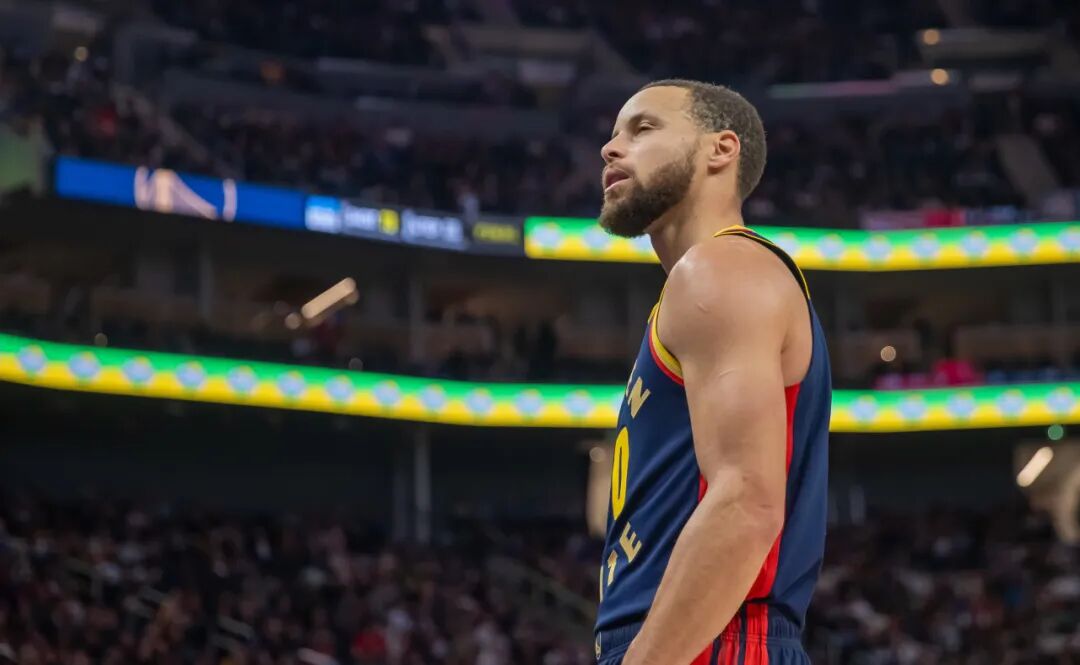
Core Insights - The partnership between Under Armour and Stephen Curry, which began in 2013, is officially ending, with Curry retaining full ownership of the Curry brand and the ability to seek new retail partners [2][3][12] - Under Armour is undergoing a significant restructuring phase, with sales declining for eight consecutive quarters, prompting a reevaluation of its business strategy [3][20] - The basketball shoe market is facing challenges, with a reported 5% decline in sales for 2024 and an 8% drop projected for the following year, indicating a shift in consumer preferences towards running shoes [10][11] Under Armour and Curry Brand - Under Armour's decision to separate from Curry comes at a critical time as the company aims to reposition itself as a high-end brand amidst declining sales in apparel and footwear [3][8] - The Curry brand was launched in 2020, and its first global store opened in Chengdu, China, which saw significant sales growth during promotional events [2][7] - Despite the separation, Under Armour stated that the split would not have a major financial impact, projecting basketball revenue between $100 million and $120 million for fiscal year 2026 [8] Market Dynamics - The basketball shoe segment is struggling, with traditional brands like Nike and Adidas dominating the market, making it difficult for independent brands to compete effectively [14] - The rise of running shoes has overshadowed basketball footwear, with brands like On and Hoka gaining popularity by appealing to a broader consumer base [11][12] - The overall revenue for Under Armour has declined, with a reported 5% drop in revenue for the second quarter of fiscal year 2026, primarily due to poor performance in the North American market [22][23] Future Prospects for Curry Brand - Curry's future brand strategy may involve partnerships with established companies that have existing research and supply chains, rather than attempting to operate independently [14][15] - The success of the Curry brand will depend on Curry's ability to leverage his on-court legacy and connect with younger consumers [16] - The basketball culture's evolving landscape will require brands to establish emotional connections with consumers beyond just selling shoes [11][12]

可选消费W46周度趋势解析:A/H高股息和中高端消费回升带动子板块关注度提升-20251117
Haitong Securities International· 2025-11-17 07:49
Investment Rating - The report assigns an "Outperform" rating to multiple companies in the discretionary sector, including Nike, Midea Group, JD Group, Haier Smart Home, Gree Electric, Anta Sports, and others [1]. Core Insights - The report highlights a recovery in mid-to-high-end consumption and increased focus on high-dividend A/H stocks, which has driven attention to sub-sectors within discretionary consumption [1][4]. - Various sub-sectors have shown different performance trends, with overseas sportswear leading the gains, followed by luxury goods and domestic sportswear [4][12]. Performance Review by Sub-Sector - **Weekly Performance**: Overseas sportswear increased by 6.8%, luxury goods by 5.2%, and domestic sportswear by 3.8%. In contrast, the pet sector saw a decline of 5.8% [4][12]. - **Monthly Performance**: The gambling sector led with an 8.4% increase, while domestic cosmetics experienced a significant decline of 14.3% [12]. - **Year-to-Date Performance**: The gold and jewelry sector outperformed with a 137.2% increase, while overseas sportswear saw a decline of 21.5% [12]. Sub-Sector Analysis - **Overseas Sportswear**: Notable gains driven by strong Q3 FY25 earnings, particularly in EMEA and Asia-Pacific regions, alleviating market concerns [6][15]. - **Luxury Goods**: Companies like Samsonite and Burberry reported better-than-expected earnings, boosting market confidence [6][15]. - **Domestic Sportswear**: OEM companies confirmed growth expectations for 2026 orders, contributing to positive stock performance [6][15]. - **Gold and Jewelry**: The sector benefited from rising international gold prices and favorable tax regulations in Hong Kong and Macau [8][15]. - **Pet Sector**: Experienced a decline post Double Eleven sales, with increased competition among brands [15]. Valuation Analysis - The report indicates that most sub-sectors are trading below their historical five-year average P/E ratios, suggesting potential undervaluation [9][16]. - **Projected P/E Ratios for 2025**: - Overseas sportswear: 29.1x (55% of historical average) - Domestic sportswear: 14.8x (78% of historical average) - Gold and jewelry: 23.8x (45% of historical average) - Luxury goods: 27.0x (49% of historical average) [9][16].