银行业

Search documents
人民银行:决定将远期售汇业务的外汇风险准备金率下调为0
Bei Jing Shang Bao· 2026-02-27 03:41
北京商报讯(记者 刘四红)2月27日,人民银行发布消息称,为促进外汇市场发展,支持企业管理好汇 率风险,中国人民银行决定自2026年3月2日起,将远期售汇业务的外汇风险准备金率从20%下调至0。 下一步,中国人民银行将继续引导金融机构优化对企业汇率避险服务,保持人民币汇率在合理均衡水平 上的基本稳定。 ...
20%→0!人民币持续升值,央行出手,什么信号?
Guan Cha Zhe Wang· 2026-02-27 03:36
Core Viewpoint - The People's Bank of China (PBOC) announced a reduction in the foreign exchange risk reserve ratio for forward foreign exchange sales from 20% to 0% effective March 2, 2026, aiming to stabilize the RMB exchange rate and enhance risk management for enterprises [1][2]. Group 1 - The adjustment serves as a counter-cyclical measure to stabilize market expectations, transitioning from emergency interventions to normalized management, allowing market mechanisms to play a more significant role [2]. - The reduction in the reserve ratio will lower the hedging costs for foreign trade enterprises, encouraging more small and medium-sized enterprises to engage in rational hedging against exchange rate fluctuations [2]. - The removal of the reserve requirement will release substantial liquidity, enabling banks to optimize resource allocation and enhance the activity of foreign exchange derivatives trading [2].
从20%降至0!央行最新动作!时隔3年再次调整
Ge Long Hui· 2026-02-27 03:15
Core Viewpoint - The People's Bank of China (PBOC) announced a reduction of the foreign exchange risk reserve ratio for forward foreign exchange sales from 20% to 0% effective March 2, 2026, in response to the appreciation of the Renminbi against the US dollar, aiming to stabilize the currency and support enterprises in managing foreign exchange risks [1][2]. Group 1: Policy Intent and Mechanism - The decision to lower the reserve ratio during a period of Renminbi appreciation is a typical example of "counter-cyclical adjustment" [3]. - The action aims to prevent a one-sided expectation in the market where participants believe the Renminbi will continue to strengthen, leading to increased selling of US dollars for Renminbi [5]. - By reducing the reserve ratio, the PBOC intends to lower the cost of purchasing US dollars, thereby encouraging enterprises to engage in foreign exchange hedging [7]. Group 2: Market Signals and Implications - The reduction in the reserve ratio signals a shift in policy, indicating that the PBOC believes the current pace of Renminbi appreciation may be excessive [7]. - Lowering the cost of buying US dollars will likely increase demand for dollars, as enterprises that were previously hesitant may now opt to lock in exchange rates [7]. - The PBOC aims to prevent excessive capital inflows that could disrupt the domestic financial market by managing the Renminbi's appreciation [7]. - This policy change reflects a desire for the exchange rate to exhibit "two-way fluctuations" within a reasonable range, rather than a continuous upward trend [7].

宜春袁州首笔“标准贷”发放
Xin Lang Cai Jing· 2026-02-27 02:55
(来源:中国市场监管报) 转自:中国市场监管报 本报讯 近日,一则银行融资到账的通知出现在江西汉尧富锂科技有限公司的滚动屏幕上,中国工商银 行袁州支行995万元授信资金注入该企业账户。这笔贷款无须房产抵押,不依赖固定资产担保,其核心 依据是企业多年积累的标准化建设成果。这是江西省宜春市袁州区发放的首笔"标准贷",标志着袁州区 在探索以"标准要素"为核心的新型融资模式上迈出关键一步。 据了解,"标准贷"是一种新型融资模式,旨在破解科技创新型轻资产企业的融资难题。它将企业制定的 各类技术标准、管理标准转化为信用资产,企业可凭借标准"软实力"申请"无抵押、低利率、快审批"的 信贷支持。 在袁州区市场监管局的帮扶引导下,江西汉尧富锂科技有限公司长期专注于标准化建设,累计参与制定 6项行业标准、9项团体标准,主导制定2项企业标准,其中《富锂锰基 正极材料》企业标准获得省级标 准项目奖。以上成果成为此次银行授信的关键评估依据。 贷款落地背后,源于该局市场监管干部提供的多轮扎实服务。他们主动摸排区内标准化优势企业,建立 重点培育名录库,将该公司列为首批对接对象。市场监管干部走进企业车间,了解生产经营中的资金需 求。针对银行 ...

下调至0!央行调整远期售汇业务外汇风险准备金率
Sou Hu Cai Jing· 2026-02-27 02:53
Group 1 - The central bank announced a reduction of the foreign exchange risk reserve ratio for forward foreign exchange sales from 20% to 0% starting March 2, 2026, to promote the development of the foreign exchange market and support enterprises in managing exchange rate risks [1] - This adjustment is seen as a rational exit from previous measures, promoting a return to a neutral foreign exchange policy [1] - The reduction is expected to lower the forward purchase costs for enterprises and enhance their willingness to engage in foreign exchange hedging, thereby supporting better management of exchange rate risks through foreign exchange derivatives [1] Group 2 - In 2025, the hedging ratio for enterprises rose to 30%, and the proportion of trade settled in RMB also increased to nearly 30%, indicating that 60% of enterprises are less affected by exchange rate risks in foreign trade exports [1] - Experts suggest that the complex external environment and geopolitical conflicts may increase volatility in the global foreign exchange market, leading to uncertainties in the RMB exchange rate [2] - The central bank plans to continue guiding financial institutions to optimize exchange rate hedging services for enterprises, aiming to maintain the RMB exchange rate at a reasonable and balanced level [2]
推进人民币国际化,央行发文支持人民币跨境同业融资业务
Sou Hu Cai Jing· 2026-02-27 02:46
Core Viewpoint - The People's Bank of China (PBOC) has issued a notice to support cross-border interbank financing in RMB, which is expected to enhance the internationalization of the RMB and support the development of the offshore RMB market [1][4]. Group 1: Policy Announcement - The PBOC's notice allows domestic banks to engage in RMB cross-border interbank financing with foreign institutions, which includes various forms of financing such as account financing and bond repurchase [1][2]. - This initiative is seen as a significant step towards increasing the openness of capital accounts and meeting the growing demand for RMB liquidity in offshore markets [1][2]. Group 2: Market Impact - The RMB has become the largest currency for China's foreign payments and the second-largest trade financing currency globally, with cross-border payment amounts projected to reach 70.6 trillion yuan by 2025 [2]. - There is a growing willingness among foreign entities to hold and use RMB, indicating a strong demand for RMB liquidity in offshore markets [2]. Group 3: Operational Flexibility - The notice enhances operational transparency and allows domestic banks to flexibly manage their business structures within a net lending limit, which is expected to increase banks' willingness to expand their RMB cross-border financing activities [3]. - The new framework aims to provide a stable channel for RMB liquidity to offshore markets, thereby balancing supply and demand for RMB [3]. Group 4: Risk Management - The notice promotes a risk-neutral approach among financial institutions by linking the net lending limit to the banks' tier-one capital, which helps in managing risks while allowing for business growth [3]. - A counter-cyclical adjustment mechanism has been introduced to stabilize and orderly provide RMB liquidity to foreign markets, ensuring that risks remain controllable [3][4]. Group 5: Future Adjustments - The PBOC has indicated that it will consider various factors, including the development of the offshore RMB market and cross-border capital flow trends, to adjust parameters as necessary [4]. - The integration of RMB cross-border interbank financing into a unified management framework is seen as an optimization of existing business management, signaling support for RMB outflows in response to market demand [4].
债市早报:资金面整体转松;债市继续承压
Sou Hu Cai Jing· 2026-02-27 02:40
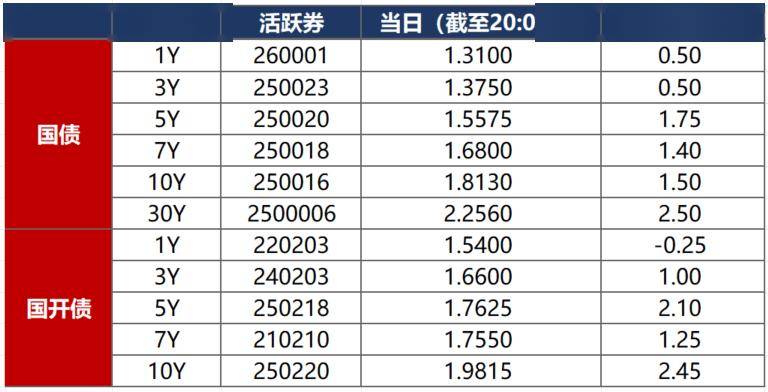
Group 1: Domestic News - The People's Bank of China (PBOC) issued a notice on February 26 to support domestic banks in conducting RMB cross-border interbank financing, linking the net financing balance to capital levels and funding strength [2] - The notice aims to promote a risk-neutral approach among banks and is effective immediately [2] Group 2: Currency and Exchange Rates - The RMB appreciated rapidly against the USD from February 25 to 26, with onshore and offshore RMB breaking through 6.87 and 6.84 respectively, reaching a high of 6.82665 on February 26, the highest since April 2023 [3] - Experts suggest that the RMB's exchange rate is influenced by multiple factors, including the China-US interest rate differential and domestic economic recovery [3] Group 3: International News - Federal Reserve Governor Stephen Milan reiterated the need for a 100 basis point rate cut by 2026, citing excessive regulation distorting credit structures [4] - Milan expressed caution regarding the labor market despite recent improvements, emphasizing the need for early rate cuts to mitigate potential risks [4] Group 4: Bond Market Dynamics - On February 26, the bond market continued to face pressure, with the yield on the 10-year government bond rising by 1.50 basis points to 1.8130% [8] - The market sentiment was weak due to the implementation of the "Shanghai Seven Measures" [8] Group 5: Credit Bonds - On February 26, two industrial bonds saw significant price deviations, with "H2 Vanke 02" rising over 26% and "H2 Vanke 04" increasing over 33% [10] - Gree Electric announced plans for its largest shareholder to reduce holdings by up to 110 million shares to repay bank loans [12] Group 6: Convertible Bonds - The convertible bond market saw a collective decline on February 26, with major indices falling by 1.03% to 1.12% [15] - The trading volume in the convertible bond market decreased by 61.53 billion to 734.08 billion [15] - Notable individual bond movements included a new listing, Aiwei Convertible Bond, hitting the daily limit up by 57.3% [15]
央行发文支持和规范人民币跨境同业融资业务
Xin Hua Wang· 2026-02-27 02:36
Group 1 - The core viewpoint of the articles is that the People's Bank of China (PBOC) has issued a notification to enhance the openness of capital projects, develop the offshore RMB market, and improve macro-prudential management of cross-border capital flows [1][2] Group 2 - RMB cross-border interbank financing is an important channel for domestic banks to provide RMB liquidity to the offshore market and promote the use of RMB across borders [2] - The PBOC's notification covers various types of RMB cross-border interbank financing and links the net financing outflow balance of banking institutions to their capital levels and funding strength, promoting reasonable business operations [2] - The notification sets macro-prudential management parameters that will be adjusted counter-cyclically based on market conditions, considering market demand and the operational status of banking institutions [2] - The PBOC will adjust parameters as needed, taking into account the development of the offshore RMB market, cross-border capital flow conditions, and the business situation of banks [2] - The management logic of the notification is consistent with previous measures related to overseas loans and financing, serving as an effective supplement to comprehensive macro-prudential management of cross-border financing [2] - The PBOC plans to steadily implement the notification to ensure that cross-border interbank financing effectively supports the real economy and promotes the healthy development of the offshore RMB market [2]
稳定人民币汇率!央行将远期售汇业务外汇风险准备金率下调为0
Xin Lang Cai Jing· 2026-02-27 02:25
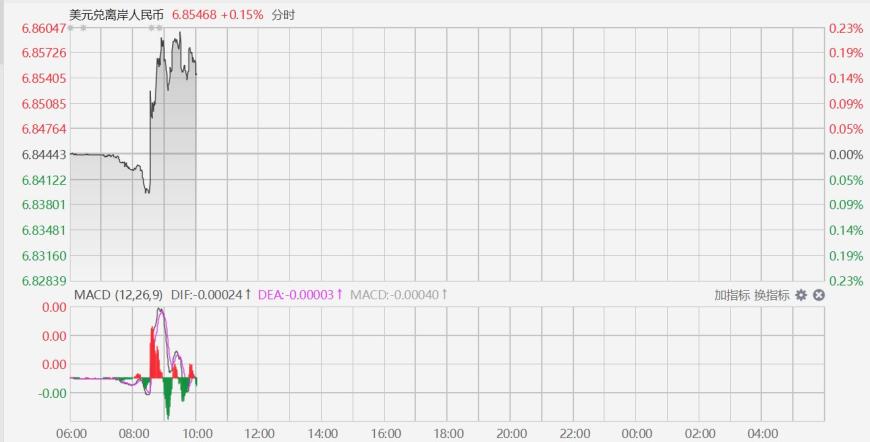
Core Viewpoint - The People's Bank of China (PBOC) announced a reduction of the foreign exchange risk reserve ratio for forward foreign exchange sales from 20% to 0% effective March 2, 2026, to support enterprises in managing exchange rate risks and to stabilize the RMB exchange rate [1][6]. Group 1: Policy Changes - The PBOC's decision to lower the foreign exchange risk reserve ratio is a response to market conditions, aimed at adjusting market supply and demand while stabilizing exchange rate expectations [1][6]. - The reduction in the reserve ratio is expected to encourage enterprises with actual demand to hedge against exchange rate risks at lower costs [1][7]. Group 2: Market Impact - The RMB faced strong appreciation pressure, with the onshore and offshore RMB against the USD both surpassing the 6.84 mark, reaching the highest level since April 2023 [2][7]. - Since the end of December 2025, the RMB has continued its appreciation trend, with the midpoint exchange rate appreciating by over 300 basis points in February alone, and both onshore and offshore RMB appreciating by more than 2% this year [2][7]. Group 3: Economic Context - The strengthening of the RMB is attributed to the stabilization of China-U.S. trade relations since November 2025 and a weaker USD, which has led to a general appreciation of non-USD currencies, including the RMB [8]. - Short-term forecasts suggest that the RMB will remain strong due to expected continued growth in exports and high market sentiment, with limited chances for a significant rebound in the USD index [8]. Group 4: Future Considerations - If the RMB continues to appreciate rapidly, other macro-prudential tools may be employed, such as adjusting the macro-prudential parameters for cross-border financing and increasing the foreign exchange deposit reserve ratio [4][8].
欧洲央行连续第三年亏损
Huan Qiu Wang· 2026-02-27 02:25
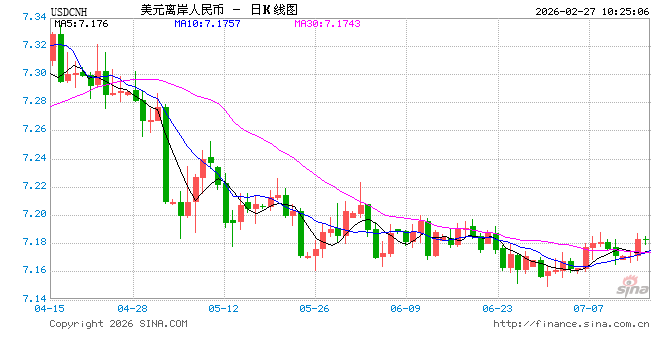
Core Viewpoint - The European Central Bank (ECB) has reported a loss for the third consecutive year, marking the worst financial record since its establishment, primarily due to the ongoing impacts of crisis-era policies [1][5]. Financial Performance - The ECB announced a loss of €1.3 billion (approximately $1.5 billion) for 2025, a significant reduction from the historical high loss of €7.9 billion in 2024 [2][6]. - The ECB anticipates a return to profitability in 2026 or 2027, contingent on key interest rates, exchange rate trends, and the scale and structure of its balance sheet [2][6]. - The primary cause of the losses is the current interest expenses exceeding the interest income from bonds purchased during a low-interest environment [2][6]. Monetary Policy and Strategy - The ECB reiterated that the losses do not affect its operational effectiveness, although some policymakers have called for more cautious future asset purchase plans [2][6]. - There are concerns that continued losses may necessitate government capital injections, potentially impacting the independence of the central bank [2][6]. - The ECB has retained all policy tools, including quantitative easing, but future operations may be more cautious due to financial risks and asset bubbles [2][6]. Financial Arrangements - The ECB plans to retain the funding gap in its balance sheet for 2025 to offset future profits, and it will not distribute profits to member central banks this year [2][6]. Market Impact - The financial situation of the ECB is influenced by fluctuations in the global gold and foreign exchange markets, with the value of its gold holdings increasing by 46% to nearly €60 billion due to rising gold prices [3][7]. - The ECB has seen a decline in its reserves of USD, JPY, and CNY, primarily due to the depreciation of the USD and JPY [3][7]. - In the first quarter of 2025, the ECB sold USD assets, generating a profit of €909 million, which was fully reinvested into JPY assets [3][7].