稀土

Search documents
北方稀土2025年预盈超21.76亿 稀土精矿价格连涨六季累增60%
Chang Jiang Shang Bao· 2026-01-20 00:05
Core Viewpoint - The rare earth market is experiencing high demand and prices, significantly boosting the performance of the industry leader, Northern Rare Earth (600111.SH) [1][4]. Financial Performance - Northern Rare Earth expects a net profit attributable to shareholders of 2.176 billion to 2.356 billion yuan for 2025, representing a year-on-year increase of 116.67% to 134.60% [2]. - The company anticipates a non-net profit of 1.96 billion to 2.14 billion yuan, with a growth of 117.46% to 137.43% [2]. - For the first three quarters of 2025, the company projects revenues of 9.287 billion yuan, 9.579 billion yuan, and 11.43 billion yuan, with year-on-year growth rates of 61.19%, 32.52%, and 33.32% respectively [2]. - The net profit for the first three quarters is expected to be 431 million yuan, 501 million yuan, and 610 million yuan, with staggering growth rates of 727.3%, 7622.51%, and 69.48% respectively [2]. Market Dynamics - The company has raised the trading price of rare earth concentrates for six consecutive quarters, with the price set at 26,834 yuan per ton (excluding tax) for the first quarter of 2026, marking a cumulative increase of over 60% [1][4]. - The price of rare earth concentrates fell from 31,030 yuan per ton in Q2 2023 to 16,741 yuan per ton in Q1 2024, but has since entered a recovery phase [4]. Strategic Initiatives - Northern Rare Earth is focusing on multi-dimensional benchmarking to drive cost reduction across all processes, achieving significant cost savings [3]. - The company is advancing key project constructions and transitioning towards high-end, intelligent, and green operations [5]. - The company has successfully entered the CSI A50 Index and returned to the SSE 50 Index, maintaining its position as the market leader in the rare earth industry [5].

北极发现千万吨稀土矿,美国储量仅够塞牙缝,中国地位到底有多稳
Sou Hu Cai Jing· 2026-01-19 18:14
Core Viewpoint - Russia has announced the discovery of a significant rare earth mineral deposit under the Arctic ice, estimated to exceed 10 million tons, which could potentially reshape the global strategic resource landscape [1][3]. Group 1: Russia's Discovery and Efforts - The rare earth deposit is not only vast but also of high quality, particularly rich in neodymium and dysprosium, which are crucial for military and high-tech applications [5]. - Russia has invested heavily in geological exploration over the past two years, improving drilling technology and utilizing satellite spectral analysis to make this discovery [5]. - The discovery boosts Russia's confidence in establishing large processing facilities in the Arctic, aiming to leverage rare earths as a new diplomatic tool post-2030 [7]. Group 2: Challenges Faced by Russia - Building factories in the permafrost presents significant challenges, with foundation costs being five times higher than in normal regions, and operational difficulties during polar nights [7]. - It may take Russia five to ten years to convert the discovered rare earths into usable products, indicating a long timeline before any economic benefits are realized [7]. Group 3: United States' Position - The U.S. has approximately 1.8 million tons of rare earth reserves, significantly less than Russia's new find, leading to concerns about its strategic resource security [9]. - Historically, the U.S. was a leader in the rare earth industry but has since lost its competitive edge due to environmental regulations and rising labor costs, resulting in a reliance on imports [9][11]. - The U.S. faces multiple challenges in rebuilding its rare earth supply chain, including high compliance costs, a lack of skilled labor, and dependency on foreign processing [11]. Group 4: China's Dominance in Rare Earths - China produces about 70% of the world's rare earths and is the largest processing nation, making it a critical player in the global supply chain [13]. - The complexity of separating and purifying rare earths gives China a significant technological advantage, creating a barrier for other countries to replicate its success [13]. - Recent adjustments in China's export management of key rare earth materials have caused international supply chain disruptions, highlighting its influence in the market [13]. Group 5: Future Outlook - With its comprehensive industrial chain and strategic reserves, China is expected to maintain a dominant position in the global rare earth competition [15].

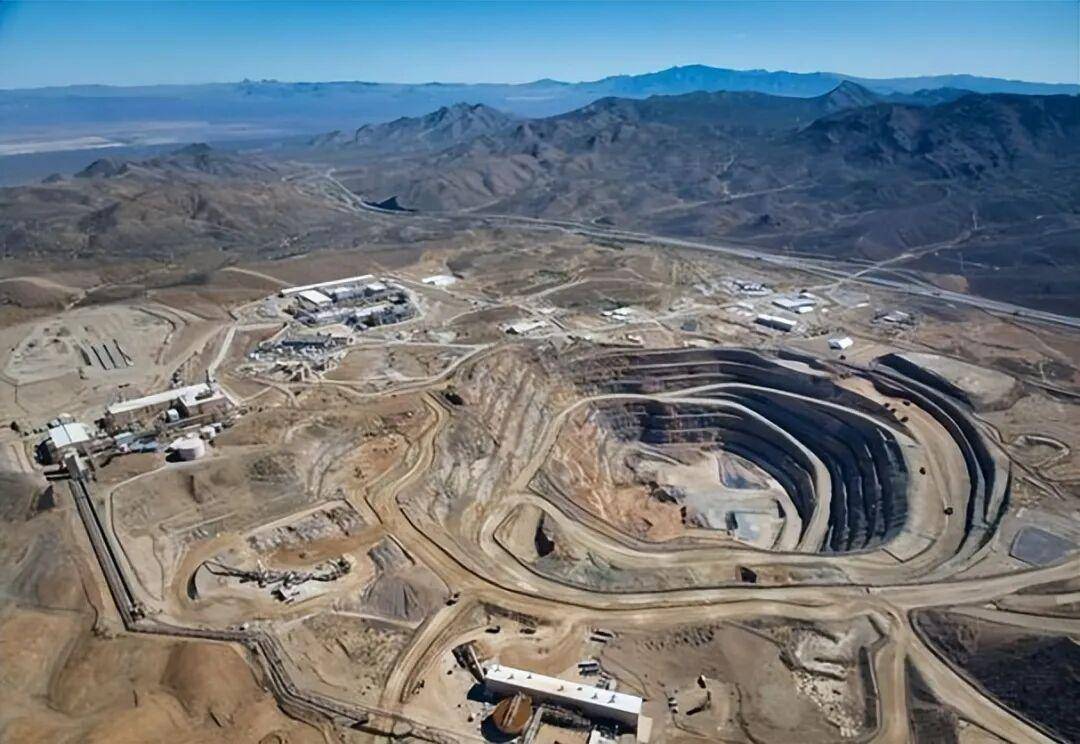
半年内去中国化能成吗,稀土供应为何卡在加工环节,对手下一步会怎么走
Sou Hu Cai Jing· 2026-01-19 18:10
Core Insights - Rare earth materials are becoming a strategic focus in the global energy transition, essential for industries like renewable energy, semiconductors, and aerospace, with supply imbalances potentially crippling entire supply chains [1] - The U.S. aims to eliminate China's role in critical mineral supply chains within six months, but this timeline appears more political than practical due to China's dominance in refining and processing rare earths [3][4] - The urgency of the situation is compounded by upcoming U.S. midterm elections, creating pressure for visible achievements, yet any aggressive trade actions could harm domestic manufacturing and consumers [7] Industry Dynamics - China's refining capabilities account for nearly 90% of the global market, making it difficult for other countries to quickly establish competitive processing facilities [3][4] - Australia, despite having significant rare earth exports, primarily sends its raw materials to China for processing, highlighting the interconnectedness of global supply chains [6] - European companies are deeply integrated with China in battery materials, complicating efforts to decouple from Chinese supply [6] Strategic Responses - China is employing a differentiated strategy, applying pressure where necessary while maintaining cooperation in other areas, such as limiting graphite exports and managing supply to Japan and the EU [7][9] - The competition for rare earths is not just about resources but also about controlling the rules of the game, with long-term implications for international relations and market dynamics [9][11] - The ongoing struggle emphasizes the importance of patience and long-term planning in securing a central position in future resource landscapes [13]

特朗普向全球发出通牒:180天内必须对中国动手,谁不帮忙就加税
Sou Hu Cai Jing· 2026-01-19 17:11
不演了!特朗普彻底发狂了!准备跟中国再次叫板的他,给所有盟友下了一道"死命令"!180天为时限,全球最后通牒,必须要针对中国下手,不 然就给你加关税! 早在之前打贸易战的时候,特朗普就想对中国下手了。然而贸易战打了个天昏地暗,最终还是草草收场,就是因为中国限制稀土出口后,美国突 然发现,自己竟然接不住这一招。而就在不久前,中方也出台新政策,限制包括稀土的两用物项的对日出口,直接打的日本叫苦不迭。可以说, 这些世界大国,几乎没有一个不依赖中国的稀土出口的。 而特朗普最近刚收拾完委内瑞拉,便开始盘算着对付中国。你看他又控制委内瑞拉,紧接着又要打伊朗,就是为了在石油资源上限制中国,给中 国找麻烦。然而,一旦他做的太过火,中国又会使出稀土限制这一绝招,到时候,美国又是两眼一抹黑,没有任何抵抗的手段。 要知道,根据2024年的信息显示,美国有足足12种关键矿物完全依赖进口获得,还有29种矿物的净进口依赖度超过了50%大关。而这一次,特朗普 下达的这个"最后通牒",就是直接指向稀土贸易这一点。哪怕违背经济规律,特朗普也要逼迫他的"小弟们",必须在180天内解决美国依赖中国稀 土供应链的问题。不管是不想干还是没做到,都要挨 ...
国泰海通|金属新材料:波动不改上行趋势
国泰海通证券研究· 2026-01-19 14:03
Group 1 - The core viewpoint emphasizes the importance of macroeconomic factors, such as monetary policy, macro expectations, geopolitical dynamics, and supply disruptions, in influencing metal price trends, despite a balanced supply-demand situation [1] Group 2 - Precious metals prices are experiencing fluctuations, with a slight increase attributed to positive U.S. employment data. Central bank gold purchases and rising gold ETF holdings are expected to support gold prices through 2026 [2] - Silver's rental rates in London have decreased, but U.S. silver inventories are declining rapidly [2] Group 3 - Copper prices are under short-term pressure due to macro sentiment adjustments and revised demand forecasts from Nvidia, but tight supply and ongoing demand from AI and power grid investments are expected to support prices. The State Grid's projected fixed asset investment of 4 trillion yuan during the 14th Five-Year Plan represents a 40% increase from the previous plan [3] Group 4 - Aluminum prices are experiencing high volatility due to mixed macro signals. Domestic new electrolytic aluminum projects are ramping up production, while demand is weakening ahead of the Spring Festival, leading to inventory increases [3] - Tin prices are expected to fluctuate as market sentiment cools following significant price movements and adjustments in trading regulations [3] Group 5 - Lithium carbonate inventories have begun to decrease, with demand showing signs of strength. The expected reduction in export tax rebates for battery products may lead to front-loaded demand [4] - The cobalt sector is facing high prices due to tight raw material supplies, while companies are extending their reach into downstream electric new energy sectors to enhance competitive advantages [4] Group 6 - Rare earth prices are recovering due to policy support and pre-holiday inventory demand, indicating strong investment value in rare earths as strategic resources [5]

北方稀土:公司有向欧盟成员国出口的业务
Zheng Quan Ri Bao· 2026-01-19 12:39
Group 1 - The company, Northern Rare Earth, has confirmed its export business to EU member countries, primarily focusing on lanthanum and cerium products [2] - The sales method employed by the company is direct export [2]
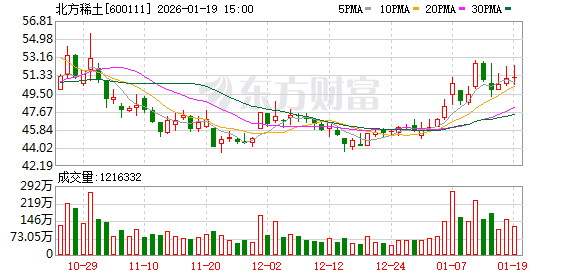
北方稀土(600111):25年业绩预增点评:25年稀土行业景气度攀升,公司业绩斐然绽放
Western Securities· 2026-01-19 10:47
Investment Rating - The report maintains an "Overweight" rating for the company [6][11]. Core Views - The company is expected to achieve a net profit attributable to shareholders of 2.176 to 2.356 billion yuan in 2025, representing a year-on-year increase of 116.67% to 134.60%. The non-recurring net profit is projected to be between 1.96 to 2.14 billion yuan, with a year-on-year increase of 117.46% to 137.43% [1][6]. - In Q4 2025, the company anticipates a net profit of 635 to 815 million yuan, which is a year-on-year increase of 6.01% to 36.06% and a quarter-on-quarter increase of 4.10% to 33.61%. This growth is primarily driven by a significant rise in rare earth prices [1][6]. - The overall market demand for rare earths is stable, and the company is actively promoting innovation, talent development, industrial upgrades, and management reforms, which have laid a solid foundation for substantial profit growth [2][6]. Financial Summary - The company’s earnings per share (EPS) for 2025 is projected to be 0.62 yuan, with price-to-earnings (P/E) ratios of 81.7, 56.8, and 44.5 for the years 2025, 2026, and 2027 respectively [2][4]. - Revenue is expected to grow from 32.966 billion yuan in 2024 to 40.852 billion yuan in 2025, reflecting a growth rate of 23.9% [4][10]. - The net profit attributable to shareholders is forecasted to increase significantly from 1.004 billion yuan in 2024 to 2.259 billion yuan in 2025, indicating a growth rate of 125% [4][10].
特朗普勒索日本及其他盟友:180天造不出稀土,就等着被加税吧!
Sou Hu Cai Jing· 2026-01-19 09:11
Group 1 - The core point of the article highlights the political maneuvering by the U.S. under President Trump to pressure allied nations into reducing their reliance on Chinese rare earths, threatening tariffs and quotas if they do not comply within 180 days [1][4][5] - Japan emerged as a prominent player during the meeting, showcasing its efforts to diversify its rare earth supply sources, yet it faced backlash from the U.S. for not aligning quickly enough with American demands [3][4] - The article emphasizes the critical role of rare earths in modern industries, including electric vehicles and advanced military technology, underscoring the urgency of the U.S. strategy to secure alternative supply chains [4][5][10] Group 2 - China currently dominates global rare earth production and refining capabilities, which is a source of anxiety for the U.S. as it struggles to establish its own supply chain [5][10] - The U.S. strategy of pressuring allies to reduce dependence on China may backfire, leading to a loss of trust among allies and potential instability in global rare earth prices [10][11] - The article argues that the U.S. approach lacks a coherent strategy and instead relies on coercive tactics, which may ultimately jeopardize the long-term stability of its alliances and supply chains [11]

中信证券:预计2026年起全球稀土供需缺口或持续扩大
Zhong Guo Qi Che Bao Wang· 2026-01-19 08:40
Core Insights - The strategic importance of global rare earth resources continues to rise, marking the entry of the rare earth industry into a new era of high-quality development [1] Supply Side - Supply constraints are expected to strengthen due to quota regulations and control policies, leading to a rigid supply logic [1] Demand Side - Emerging sectors such as electric vehicles, humanoid robots, and the low-altitude economy are anticipated to become core drivers of long-term high-speed growth in demand [1] Future Outlook - It is projected that starting from 2026, the global supply-demand gap for rare earths may continue to widen, with prices expected to remain stable or increase [1] - The profitability of the industry chain is likely to continue improving, reinforcing the strategic allocation value of the rare earth industry chain [1]

特朗普通告全球围堵中国,180天内必须答复,盟友不配合就加税!
Sou Hu Cai Jing· 2026-01-19 08:17
这180天的时间既不短,也不长。恰逢美国中期选举的前夕,特朗普不仅面临国内制造业的压力,还需要在选民面前展现出一个强硬的形象。这一宣布表面 上是针对贸易的决策,实际上更像是美国在全球战略布局中的重要筹码。特朗普并不指望在180天内彻底解决所有问题,但至少要展现出某种进展和积极的 信号。为了迎接这一挑战,澳大利亚政府已经批准12亿澳元,用于建立国家战略矿产储备,重点放在锑、镓、稀土等材料上。同时,澳大利亚还将承接美国 的产业链转移,逐步形成一场全球范围内的稀土围堵战。 在地面上的布局和政策调整中,美国也在加大内部供给的力度。两党国会成员提议设立250亿美元的专项基金,用于支持国内稀土企业的生产,建设战略储 备,并稳定价格。这些措施,正是针对中国在稀土价格和技术上的优势而制定的直接回应。特朗普并不打算单靠行政命令解决问题,而是从财政、立法、联 盟等多个方面入手,构建一个全新的稀土供应链体系。不同于过去的全球化合作模式,这一次美国显然要主导的是一个新的全球秩序。这一政策框架下,出 现了Pax Silica(硅谷和平)跨国供应链安全倡议,意图建立一个可靠的高科技材料生态系统,核心目标便是通过产业投资、联合标准、技术互 ...