
生物制造

Search documents
在新时代新征程续写经济快速发展和社会长期稳定两大奇迹新篇章——中共中央举行新闻发布会解读党的二十届四中全会精神
Xin Hua Wang· 2025-10-24 10:20
Core Points - The key outcome of the 20th Central Committee's Fourth Plenary Session is the approval of the "Suggestions on Formulating the 15th Five-Year Plan for National Economic and Social Development" [3][4] - The "15th Five-Year Plan" is crucial for advancing China's modernization and addressing complex external challenges [3][5] Summary by Sections General Overview - The "Suggestions" document consists of 15 parts and 61 articles, divided into three main sections: general overview, specific strategies, and tasks for strengthening centralized leadership [4] - The document is considered a significant programmatic document in the party's history, with clear development goals and practical measures [4] Economic and Social Development Goals - The main goals for the "15th Five-Year Plan" include achieving high-quality development, enhancing technological self-reliance, deepening reforms, improving social civilization, and ensuring national security [7][8] - Emphasis is placed on addressing agricultural modernization as a priority for achieving overall modernization [7] Modern Industrial System - The plan prioritizes building a modern industrial system and strengthening the foundation of the real economy, with a focus on upgrading traditional industries and fostering emerging sectors [8] - It is estimated that the market space will increase by approximately 10 trillion yuan over the next five years [8] Technological Innovation - The plan outlines strategies for enhancing technological self-reliance, including original innovation, integration of technology and industry, and fostering a talent development system [10][11] - It aims to leverage new technologies such as artificial intelligence and quantum technology to drive economic growth [10] Open Economy - The plan emphasizes expanding foreign trade and investment, enhancing cooperation in the Belt and Road Initiative, and creating a favorable environment for foreign investment [12][13] - It aims to make the Chinese market a global innovation application platform [13] Health and Population Development - The plan includes strategies for improving public health, enhancing healthcare services, and promoting a supportive environment for childbirth and aging populations [14] - It aims to ensure equitable access to healthcare and improve the overall health of the population [14] Political Leadership - The plan stresses the importance of centralized leadership and a clean political environment to ensure the successful implementation of modernization efforts [15][16] - It calls for a robust mechanism for decision-making and accountability within the party [15]
中等收入群体倍增!中央这场“十五五”发布会释放八大政策信号
2 1 Shi Ji Jing Ji Bao Dao· 2025-10-24 10:09
Core Viewpoint - The article discusses the key signals and goals outlined in the "15th Five-Year Plan" (2021-2025) of China, emphasizing the importance of high-quality development, technological self-reliance, and the expansion of domestic demand as part of China's modernization strategy. Economic Growth and Quality - Economic growth is expected to remain within a reasonable range, with a noticeable increase in the resident consumption rate [3] - The focus is on achieving significant results in high-quality development, with an emphasis on optimizing economic structure, technological advancement, and efficiency improvement [4] Industry Development - The plan aims to create a modern industrial system, prioritizing the enhancement of traditional industries and the cultivation of emerging industries [5][6] - The traditional industries, which account for approximately 80% of manufacturing value-added, will be optimized, while new strategic industries like renewable energy and aerospace will be developed [5][6] Domestic Demand Expansion - The strategy emphasizes the importance of expanding domestic demand, with a goal to double the middle-income group over the next decade [7][8] - The retail sales of consumer goods are projected to exceed 50 trillion yuan by 2025, indicating a robust consumer market [7] Technological Innovation - The plan highlights the need for significant breakthroughs in key technologies, particularly in artificial intelligence and semiconductor industries [9][10] - A comprehensive approach to enhance the national innovation system and support high-tech enterprises is outlined [9] High-Level Opening Up - The strategy includes expanding high-level opening up, focusing on trade innovation and enhancing the investment environment [11][12] - The emphasis is on balancing GDP and GNI, recognizing the importance of national income in assessing economic health [13] Population and Health Development - The plan advocates for policies to support population quality development, including improved maternity support and healthcare services [14][15] - The goal is to increase the average life expectancy from 79 to around 80 years by 2024 through enhanced health services [15] Macroeconomic Governance - The strategy aims to improve macroeconomic governance efficiency, addressing issues like low-price competition and overdue payments to businesses [16][17] - A focus on coordinated economic policies and effective communication with market participants is emphasized [17] Green Transition - The plan aims for a comprehensive green transition, with expectations for the green low-carbon industry to potentially double in size over the next five years [18][19][20] - Specific measures include the establishment of carbon emission control systems and the promotion of clean energy sources [19][20]

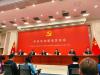
“未来10年将再造一个中国高技术产业”
FOFWEEKLY· 2025-10-24 10:01
Group 1 - The core viewpoint of the article emphasizes the importance of fostering new and emerging industries as part of China's economic strategy, with a target for the "three new" economy's contribution to GDP exceeding 18% by 2024 [1] - The article outlines the strategic focus on developing new pillar industries, including new energy, new materials, aerospace, and low-altitude economy, which are expected to create several trillion-yuan markets [1] - It highlights the forward-looking layout of future industries such as quantum technology, biomanufacturing, hydrogen energy, nuclear fusion, brain-computer interfaces, embodied intelligence, and sixth-generation mobile communication, which are anticipated to become new economic growth points over the next decade [1]

直击现场 | 破解资金与产业衔接难题,沪上首支生物制造基金落地
Sou Hu Cai Jing· 2025-10-24 09:33
导语 既是对国家"未来产业"发展战略的积极响应,也是破解行业发展瓶颈的创新实践。 (图:道彤投资牵头举办"生衍万物|生物制造产业价值伙伴大会"现场) 自2022年以来,生物制造已成为党中央、国务院高度重视的重点发展领域。《"十四五"生物经济发展规 划》《国家生物技术发展战略》等政策相继出台,2025年政府工作报告更将"生物制造"与量子科技、具 身智能、6G并列定义为"未来产业",其在推动经济循环升级与科技自主创新中的关键地位进一步凸 显。然而,行业普遍面临研发周期长、投入强度大、上下游衔接不足等现实挑战,大量前沿技术成果难 以快速转化为实际应用。此次上海在基金与协同平台上的双重布局,正是瞄准这一痛点的针对性突破。 大会主办方道彤投资创始管理合伙人孙琦在致辞中表示,生物制造不仅是生命科学的延伸,更是人 类"制造体系"的重构。它将以更绿色、更智能、更可持续的方式,重塑产业链与能源结构,成为继农业 文明、工业文明之后的"新工时代"。 上海国投先导基金总经理温治在主旨演讲中指出,"真正的产业资本,不是资金的供给者,而是创新体 系的'放大器'与'产业生态的赋能者'。道彤十年来始终坚守定力,在不同周期中坚持布局生命科学领 ...
康码生物郭敏:拟落子海南自贸港,布局高端生物制造与绿色农业赛道
Sou Hu Cai Jing· 2025-10-24 08:45
Group 1 - The core viewpoint is that Kangma Bio plans to leverage the policies of Hainan Free Trade Port to actively engage in high-end biomanufacturing and green agriculture, aiming for an industrial upgrade with the concept of "Made in Hainan, Used in ASEAN, Sold Globally" [1][4] - Kangma Bio, established in 2015, integrates D2P cell-free protein synthesis technology, AI protein sequence algorithms, and biopharmaceutical R&D, with its core technology enabling the synthesis of active proteins like antibody drugs in just three hours, significantly faster than traditional methods [4][5] - The company has built the world's largest cell-free protein synthesis raw material factory in Shanghai and has a commercial matrix covering over 30 products domestically and internationally [4] Group 2 - Hainan's unique geographical advantages and tropical climate align well with Kangma's development direction, focusing on high-end manufacturing and tropical characteristic efficient agriculture [5] - Kangma's protein nutrient solution has achieved breakthroughs in agriculture, aiming to enhance production, improve soil quality, and address challenges such as soil acidification and salinization [5] - The company plans to establish a production base in Hainan with a capacity of over 100,000 tons, targeting a 10% increase in staple crop yields and a 15% increase in tropical cash crop yields [5] Group 3 - Kangma Bio is particularly attentive to tax and trade facilitation policies related to exports in Hainan Free Trade Port, which will enhance its competitive edge as a hub connecting ASEAN countries [5] - The company aims to utilize the logistics advantages of Yangpu Port to efficiently export its protein nutrient solutions to countries and regions involved in the Belt and Road Initiative, tapping into a market exceeding 300 billion yuan for fertilizer alternatives in ASEAN [5] - The "Listing Companies Hainan Tour" event aims to facilitate deeper communication with Hainan provincial leaders and promote Kangma's integration into the high-end manufacturing and global free trade port construction processes [6]

“十五五”规划的高技术产业如何刷新生活?AI模拟游戏抢先看
2 1 Shi Ji Jing Ji Bao Dao· 2025-10-24 08:14
Core Insights - The 20th Central Committee's Fourth Plenary Session approved the "Suggestions on Formulating the 15th Five-Year Plan for National Economic and Social Development," emphasizing the development of emerging pillar industries [1] - The plan aims to accelerate the growth of strategic emerging industry clusters such as new energy, new materials, aerospace, and low-altitude economy, potentially creating several trillion-yuan markets [1] - The suggestions also highlight the need for forward-looking layouts in future industries, promoting quantum technology, biomanufacturing, hydrogen energy, nuclear fusion energy, brain-computer interfaces, embodied intelligence, and sixth-generation mobile communication as new economic growth points [1] - These industries are expected to gain momentum, potentially recreating a high-tech industry landscape in China over the next decade [1] Industry Development - The focus on strategic emerging industries indicates a significant shift towards high-tech sectors, which are anticipated to drive economic growth [1] - The emphasis on innovation and technology suggests a transformative impact on future lifestyles, with AI simulations being used to envision these changes [1]
郑栅洁:优化提升传统产业 未来5年可增约10万亿元市场空间
Zhong Guo Xin Wen Wang· 2025-10-24 07:22
Core Insights - The Chinese government aims to optimize and enhance traditional industries, estimating an additional market space of approximately 10 trillion RMB over the next five years [1][2] Group 1: Traditional Industry Enhancement - The strategy emphasizes the importance of building a modern industrial system, with a focus on solidifying and expanding the foundation of the real economy [1] - Key tasks include upgrading traditional industries such as chemicals, machinery, and shipbuilding to improve their global competitiveness [1] - The initiative is expected to accelerate qualitative improvements and reasonable quantitative growth in traditional industries, releasing significant development momentum and benefits for people's livelihoods [1] Group 2: Emerging and Future Industries - The plan includes fostering new pillar industries and accelerating the development of strategic emerging industry clusters such as new energy, new materials, aerospace, and low-altitude economy [2] - It aims to lay the groundwork for future industries, promoting advancements in quantum technology, biomanufacturing, hydrogen energy, nuclear fusion, brain-computer interfaces, embodied intelligence, and sixth-generation mobile communications [2] - These emerging sectors are projected to generate a market scale equivalent to recreating China's high-tech industry over the next decade, injecting continuous new momentum into the economy [2] Group 3: Service Industry and Infrastructure Development - The strategy promotes high-quality and efficient development of the service industry, aiming to enhance the integration of modern services with advanced manufacturing and modern agriculture [2] - It includes actions to expand and improve service capabilities, which will help reshape the economic ecosystem and better meet the needs of the population [2] - The plan also focuses on constructing a modern infrastructure system, emphasizing coordinated planning and the construction of new-type infrastructure to enhance connectivity and safety [2]
策略解读:对比历史看四中全会公报:五年一次产业变迁
Guoxin Securities· 2025-10-24 06:20
Core Insights - The report emphasizes the importance of high-quality development, technological self-reliance, and deepening reforms as key goals for the 14th Five-Year Plan period [3][4][5][6] - It highlights the transition from traditional industries to strategic emerging industries, focusing on innovation-driven growth and intelligent manufacturing [5][6][7] - The future outlook suggests that technological self-reliance will be the main theme for the next five years, with significant growth expected in new strategic industries [7][8] Summary by Sections 12th Five-Year Plan - The core focus was on optimizing industrial structure and enhancing foundational capabilities, with key areas including modern agriculture, manufacturing upgrades, and strategic emerging industries [4] - The report notes that the growth sector's market share was only 14.5% at the beginning of the 12th Five-Year Plan, while traditional industries saw significant value increases due to urbanization and industrialization [4] 13th Five-Year Plan - The emphasis shifted to innovation-driven development and intelligent manufacturing, with a clear directive to implement the "Made in China 2025" initiative [5] - The report indicates that the market share of consumption rose to 25.47%, with a notable 78% increase in the consumption index net value during this period [5] 14th Five-Year Plan - The focus is on modernizing the industrial chain and ensuring technological self-sufficiency, with a push for new generation information technology and green industries [6] - The report highlights that the consumer sector's market share decreased to 23.94%, while the growth sector's share increased to 21.50%, indicating a shift in market dynamics [6] Future Outlook - The report anticipates that by 2024, the contribution of the "three new" economies to GDP will exceed 18%, with emerging industries like new energy and materials expected to drive significant market growth [7][8] - It identifies sectors with strong global competitiveness, such as general computing equipment and electronic chemicals, as key areas for investment during the 15th Five-Year Plan [12]
权威解读四中全会精神,要点汇总
21世纪经济报道· 2025-10-24 06:06
Core Viewpoint - The article discusses the key outcomes of the Fourth Plenary Session of the 20th Central Committee of the Communist Party of China, particularly focusing on the approval of the "Suggestions on Formulating the 15th Five-Year Plan for National Economic and Social Development" which outlines strategic tasks and major initiatives for the upcoming five years [3][7][9]. Summary by Sections General Overview - The "Suggestions" consist of 15 parts and 61 articles, divided into three main sections: general principles, specific strategies, and concluding remarks [3][9]. - The first section highlights significant achievements during the "14th Five-Year" period and the importance of the upcoming "15th Five-Year" period for economic and social development [9]. Strategic Tasks - The "Suggestions" emphasize building a modern industrial system and strengthening the foundation of the real economy, focusing on intelligent, green, and integrated development [4][20]. - Key tasks include upgrading traditional industries, nurturing emerging industries, and promoting high-quality development in the service sector [4][22]. Economic and Social Development Goals - The main goals for the "15th Five-Year" period include achieving significant results in high-quality development, enhancing self-reliance in technology, and improving social civilization levels [16]. - The plan aims to ensure that by 2035, China will have fundamentally achieved socialist modernization, with the "15th Five-Year" period being crucial for laying the groundwork [17]. Agricultural Modernization - Agricultural modernization is identified as a critical area needing priority attention, with a focus on addressing rural issues and promoting urban-rural integration [18]. Infrastructure Development - The "Suggestions" call for the construction of a modern infrastructure system, enhancing connectivity and efficiency across various sectors [23]. Domestic Market Strengthening - The article highlights the importance of a strong domestic market as a strategic foundation for modernization, with efforts to eliminate market barriers and enhance regulatory frameworks [25][26]. Technological Innovation - Emphasis is placed on strengthening original innovation and tackling key core technologies, with a focus on strategic sectors such as integrated circuits and high-end equipment [29]. Open Economy - The "Suggestions" advocate for expanding autonomous openness, enhancing market access, and fostering international trade relationships [32][33]. Population Development - The plan includes initiatives to promote a family-friendly society, improve elderly care, and enhance the quality of life for the aging population [35][37]. Anti-Corruption Measures - The article concludes with a commitment to maintaining a robust anti-corruption stance, ensuring strict oversight of power and governance [39].
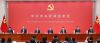
权威发声!解读党的二十届四中全会精神
Zhong Guo Zheng Quan Bao· 2025-10-24 04:51
Economic Outlook - China's economic foundation is stable, with multiple advantages, strong resilience, and significant potential, indicating that the long-term positive support conditions and basic trends remain unchanged [2][5] - The "14th Five-Year Plan" has achieved significant development milestones, and the "15th Five-Year Plan" is crucial for solidifying foundations and comprehensive efforts [3][4] Strategic Development - The government aims to cultivate and expand emerging and future industries, focusing on strategic emerging industry clusters such as new energy, new materials, aerospace, and low-altitude economy [2][7] - Key areas for technological breakthroughs include integrated circuits, industrial mother machines, and high-end instruments, with a goal of achieving decisive breakthroughs in core technologies [2][9] Domestic Demand Expansion - The plan emphasizes the importance of expanding domestic demand, with initiatives to boost consumption and investment, and to implement major projects that enhance market access and participation [8] - A unified market system is proposed to eliminate local protectionism and market segmentation, thereby maximizing the benefits of China's large-scale market [8] Technological Innovation - The integration of technological innovation and industrial innovation is a priority, with a focus on original innovation and breakthroughs in key technologies [9][10] - The government plans to enhance the role of enterprises in technological innovation and support the development of high-tech enterprises and small and medium-sized technology firms [10] Social Development Goals - The "15th Five-Year Plan" outlines seven main goals, including significant improvements in high-quality development, technological self-reliance, social reform, cultural confidence, and environmental sustainability [6] - The plan aims to enhance the quality of life for citizens, improve public services, and strengthen national security [6] Market Openness - The government is committed to expanding market access and enhancing the business environment, particularly in the service sector, to align with international high-standard trade rules [11] - Efforts will be made to balance imports and exports, ensuring that both industrial transformation and the needs of citizens are met [11] Social Welfare Initiatives - The plan includes measures to create a family-friendly society, optimize childbirth support policies, and improve basic elderly care services [13] - There is a focus on developing integrated services for childcare and elderly care, as well as promoting the economic participation of older adults [13]