芯片制造

Search documents
英伟达2026财年三季度营收和净利润大增
Xin Hua She· 2025-11-20 02:25
英伟达预计,2026财年第四季度该公司营收将达到650亿美元左右。英伟达首席执行官黄仁勋表示,人 工智能生态系统正在全球快速扩张,公司已经进入人工智能的良性循环。(完) 财报显示,该公司2026财年第三季度营收创新高,达到570亿美元,同比增长62%,环比增长22%;净 利润约为319亿美元,同比增长65%,环比增长21%。 当季,英伟达数据中心营收创新高,达512亿美元,同比增长66%,环比增长25%。 新华社旧金山11月19日电(记者吴晓凌)美国芯片制造商英伟达19日发布的财报显示,该公司2026财年 第三季度(截至2025年10月26日)营收和净利润同比和环比均大幅增长。 ...

如何看待云厂商的GPU折旧质疑
2025-11-20 02:16
Summary of Key Points from Conference Call Industry Overview - The conference call primarily discusses the cloud computing industry, focusing on GPU depreciation policies and their financial implications for major cloud service providers such as Amazon, Meta, Microsoft, and Google [1][2][4]. Core Insights and Arguments - **Depreciation Impact on Profit**: Amazon's depreciation adjustments in 2024 added approximately $600-700 million in quarterly profits, but a subsequent adjustment in 2025 is expected to reduce net profits by $100-300 million, highlighting the significant impact of depreciation policies on financial performance [1][2]. - **Future Profit Growth**: A projected change in accounting standards in 2025 is anticipated to result in a net profit increase of about 5.6%, with cumulative net profit additions of $300-500 billion from 2023 to 2028, totaling $1.46 trillion [1][4]. - **GPU Rental Market Dynamics**: Despite a decline in rental prices for older GPUs like the H100 and A100 (down 25% and 30% respectively since September 2024), there remains a strong market for these older models, with some being rented at 95% of their original price [1][3][11]. - **Product Iteration Speed**: NVIDIA has accelerated its product release cycle from every 2-3 years to annually, with new chips like the Blackwell offering significantly improved performance and cost efficiency, which is expected to drive faster market updates [1][7]. - **GPU Lifespan Concerns**: High utilization rates in data centers are shortening GPU lifespans to 1-3 years, raising concerns about equipment wear and tear as demand and supply dynamics shift [1][10]. Additional Important Insights - **Differing Depreciation Policies**: Major cloud providers have adjusted their GPU depreciation periods, with Amazon changing its policy from 6 years in 2024 to 4 years in 2025, while others like Microsoft and Google have extended theirs to 6 years [2]. - **Market Trends in GPU Pricing**: The rental and second-hand market for GPUs is experiencing rapid depreciation, with significant price drops observed since 2019, indicating a need for companies to adapt to changing market conditions [3][11]. - **Emerging Cloud Providers**: New cloud service providers like NeoCloud are facing more volatile pricing and higher operational costs compared to larger firms, which may impact their competitiveness and financial stability [14][15][17]. - **Financial Implications for New Providers**: Companies like Corwave adjusting their depreciation periods are expected to see substantial savings in depreciation costs, significantly affecting their operating and net profits [18]. Conclusion - The conference call highlights the critical role of GPU depreciation policies in shaping the financial landscape of the cloud computing industry, with implications for both established and emerging players. The rapid pace of technological advancement and market dynamics necessitate ongoing adjustments in strategy to maintain competitiveness and profitability [1][19].
大芯片封装,三分天下
3 6 Ke· 2025-11-20 01:42
Core Insights - The rapid development of AI chips is driving the demand for high-performance computing (HPC) components such as GPUs, AI ASICs, and HBM, with advanced packaging technologies like 2.5D/3D becoming crucial in the semiconductor industry [1][3] - Intel's advanced packaging technology EMIB is being evaluated by major tech companies like Apple and Qualcomm, indicating a potential shift in the competitive landscape as these companies consider alternatives to TSMC [1][11] - The advanced packaging market is projected to grow significantly, with revenues expected to exceed $12 billion by Q2 2025 and reach approximately $45 billion by 2024, growing at a compound annual growth rate (CAGR) of 9.4% to around $80 billion by 2030 [3] Advanced Packaging Landscape - TSMC, Intel, and Samsung have established a competitive "three-horse race" in the advanced packaging sector, each playing different roles in the supply chain [3][20] - TSMC's CoWoS technology has become the de facto standard for high-bandwidth packaging, but it faces capacity constraints primarily due to Nvidia's significant demand [7][8] - Intel's EMIB technology offers flexibility and cost advantages, making it suitable for custom ASICs and AI inference chips, positioning it as a viable alternative to TSMC's offerings [11][15] Market Dynamics - The demand for advanced packaging is driven by the strong growth in AI and HPC sectors, with TSMC planning to expand its CoWoS capacity by over 20% by the end of 2026 [8][24] - Samsung's advanced packaging technologies, I-Cube and X-Cube, are designed to leverage its HBM supply chain, aiming to enhance its influence in the AI chip market [20][23] - The competition in AI chip manufacturing is no longer limited to packaging technologies but encompasses computational architecture, supply chain security, capital expenditure, and ecosystem integration [24]


实现更广领域更深层次更高质量互利共赢刘小涛参加企业家太湖论坛有关活动
Xin Hua Ri Bao· 2025-11-19 23:25
Core Insights - The 2025 Industry Chain Supply Chain International Cooperation Exchange Conference and Entrepreneurs Taihu Forum was held in Wuxi, focusing on enhancing international cooperation and collaboration mechanisms with global enterprises to strengthen emerging and characteristic industries [1] Group 1: Industry Collaboration - The forum introduced industry chain docking activities, aiming to build bridges for supply and demand in key areas [1] - The provincial governor emphasized the importance of deepening cooperation with multinational companies and ensuring a high-quality development environment for various enterprises [1] Group 2: Biopharmaceutical Sector - Pfizer's global senior vice president highlighted the strong collaboration with China's pharmaceutical innovation and the significant role of Jiangsu in the biopharmaceutical industry [2] - Jiangsu aims to advance the open innovation of the entire biopharmaceutical industry chain and create a top-tier business environment for marketization, rule of law, and internationalization [2] - Pfizer plans to increase its investment in Jiangsu and collaborate with local enterprises and research teams to enhance research and development efforts [2]

Stocks Settle Higher Before Nvidia Earnings
Yahoo Finance· 2025-11-19 21:33
Economic Indicators - The US trade deficit in August decreased to -$59.6 billion from -$78.2 billion in July, which was better than the expected -$60.4 billion [1] - US MBA mortgage applications fell by -5.2% for the week ending November 14, with the purchase mortgage sub-index down -2.3% and the refinancing sub-index down -7.3% [1] - The average 30-year fixed mortgage rate increased by +3 basis points to 6.37% from 6.34% in the previous week [1] Federal Reserve and Interest Rates - The minutes from the October 28-29 FOMC meeting indicated a hawkish stance, with many officials suggesting it may be appropriate to keep interest rates steady through 2025 [2] - The likelihood of a Fed rate cut at the next FOMC meeting on December 9-10 dropped to 30% from 70% the previous week [3][6] - The cancellation of the October employment report by the Bureau of Labor Statistics has reduced the chances of a Fed rate cut [3][8] Stock Market Performance - US stock indexes experienced a recovery, with the S&P 500 Index closing up by +0.38%, the Dow Jones up by +0.10%, and the Nasdaq 100 up by +0.56% [5] - Nvidia's stock rose more than +2% ahead of its earnings report, which is seen as a critical indicator for tech stock valuations [5] - Semiconductor stocks showed strength, with Broadcom, Lam Research, and Applied Materials all closing up more than +4% [11] Corporate Earnings - Q3 earnings for S&P 500 companies rose by +14.6%, significantly exceeding expectations of +7.2% year-over-year, with 82% of reporting companies surpassing forecasts [6] - La-Z-Boy Inc reported Q2 sales of $522.5 million, exceeding the consensus estimate of $517.7 million, leading to a stock increase of more than +20% [15] - Dycom Industries announced an acquisition for $1.95 billion, resulting in a stock increase of more than +10% [15] International Markets - Overseas stock markets showed mixed results, with the Euro Stoxx 50 up +0.13% and Japan's Nikkei Stock 225 down -0.34% [7]
黄仁勋:当CEO意味着要终身奉献
财富FORTUNE· 2025-11-19 13:05
Core Insights - Huang Renxun, CEO of Nvidia, emphasizes the honor and lifelong dedication required to lead a chip manufacturing company, highlighting the importance of service to the company and its employees [2][4] - Nvidia, co-founded by Huang in 1993, has grown to a market capitalization exceeding $4.6 trillion over the past two decades [2] - Huang attributes his work ethic and success to his parents' struggles and aspirations for a better life in America, instilling in him the belief that success must be earned [5] Leadership Philosophy - Huang's motto for success is straightforward: "Don't get bored, and don't get fired," reflecting the competitive nature of the tech industry [3] - He acknowledges that being a CEO involves significant personal sacrifice and is more about serving others than merely leading [4] - Strategic decision-making is framed as a commitment to both what to pursue and what to forgo, emphasizing the importance of dedication and resilience [4] Personal Background - Huang's upbringing in a family that valued hard work and perseverance shaped his approach to leadership and business [5] - His educational journey through Oregon State University and Stanford University further reinforced his belief in his potential for success, influenced by his mother's encouragement [5]

KVB外汇:市场在普遍抛售中等待英伟达财报
Sou Hu Cai Jing· 2025-11-19 09:57
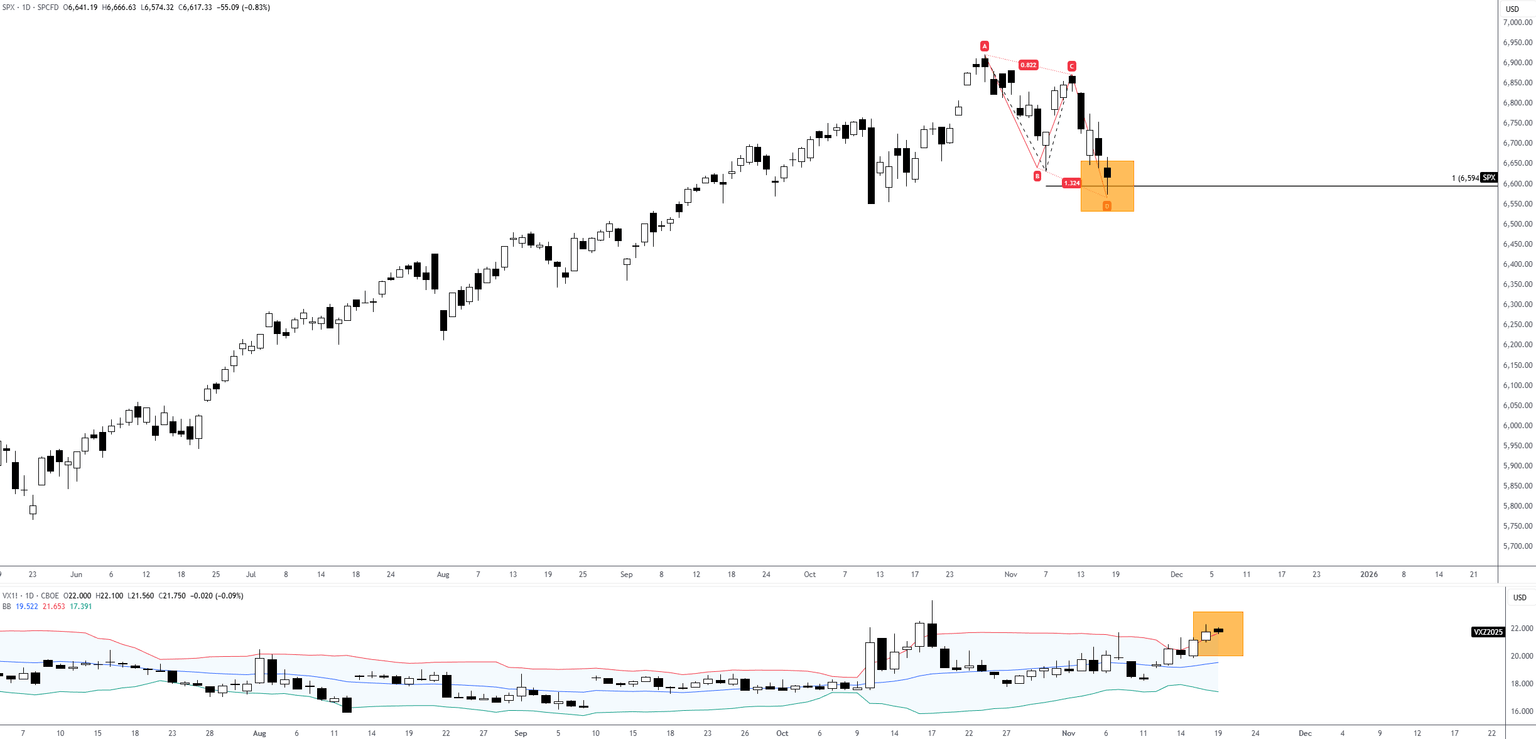
周二,欧美股市再度收跌,全球股市市值蒸发逾1.5万亿美元,投资者正等待英伟达(NVDA)至关重要的财报发布。 标普500指数下跌0.8%至6617点,道指下跌1.1%至46091点——两者均连续第四个交易日下跌——纳斯达克100指数也下跌1.2%至24503点。各板块表现分化 明显。可选消费品和科技股领跌,分别下跌1.9%和1.6%,而能源和医疗保健板块表现坚挺,分别上涨0.8%和0.6%。VIX恐慌指数近期触及22点,凸显市场 在英伟达今日公布财报前夕的焦虑情绪,期权市场暗示该股可能出现惊人的7.0%波动幅度! 请密切关注此技术形态——KVB外汇将持续追踪该信号,其历史验证显示有效性极高。如下图所示,VIX已收于布林带上轨(设定为2个标准差)上方,而 标普500指数日线近期形成AB=CD回调形态,目标位指向6,594点。此类技术共振往往预示着逢低买入良机。 通胀数据公布后,英镑出现短暂抛售,但跌幅有限且未引发市场关注。英国国债将于上午8点开盘,届时将揭示更多关于央行降息预期的信息。此前市场普 遍预期央行将于下月降息25个基点,将基准利率从4.00%下调至3.75%(概率约80%)。 鉴于经济增长停滞、就业数 ...
Ultima Markets金价预测:黄金/美元在美联储会议纪要和非农就业数据公布前重新突破关键的 4,075 美元阻力位
Sou Hu Cai Jing· 2025-11-19 09:06
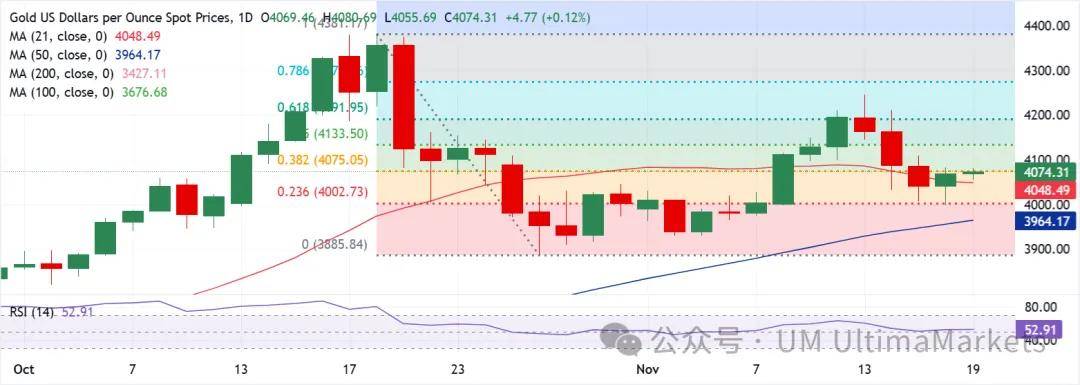
·周二金价重新回到21日均线;日线RSI回升至看涨区间。 周三早盘,金价在4100美元下方盘整,买家在之前的强劲反弹后稍作喘息,并在当天稍晚将公布的美国联邦储备委员会(Fed)10月货币政策会议纪要前 保持谨慎。 周四关键的9月非农就业人数(NFP)报告也在交易者的关注之中。 金价等待美联储下一步的线索 今日Ultima Markets为您带来了 2025年11月19日的黄金深入分析 ·金价反弹保持在4100美元下方,卖方在周三早盘回归。 ·美元在风险恢复中位于周高点,FOMC会议纪要前夕。 周三金价强势反弹,结束了连续三天的下跌,全球市场的抛售重新激发了对传统价值储存的避险需求。 对科技行业因人工智能驱动的高估值的担忧,加上美国就业数据不佳,引发了金融市场的避险潮。 周二劳工部发布的数据表明,9月中旬至10月中旬,美国失业救济人数激增。同时,ADP的报告显示,私营企业在截至11月1日的四周内平均每周失去2500 个工作岗位。 金价技术分析:日线图 在日线图上,黄金/美元交易于4074.30美元。21日、50日、100日和200日简单移动平均线(SMA)均在上升。21日均线在价格附近趋于平坦,而金价保持 在所 ...
产业锐评:英特尔,何时东山再起
新财富· 2025-11-19 08:05
Core Viewpoint - Intel, once a chip giant, is struggling in the foundry business, with projected revenue of only $100 million in 2025, despite significant capital expenditures on advanced processes like 18A [2][5][6] Group 1: Market Overview - The global foundry market is rapidly growing, expected to reach $170 billion by 2025, with a broader market size approaching $300 billion, reflecting over 10% year-on-year growth [5][6] - TSMC dominates the market with over 60% share, while other players like SMIC, Samsung, UMC, and GlobalFoundries occupy the remaining market [5][6] Group 2: Intel's Challenges in Foundry - Intel's transition from an IDM model to a foundry service faces significant hurdles, including trust and ecosystem challenges, as TSMC has established a reliable and stable process [7][11] - The company's past IDM model, while effective in a controlled technology iteration environment, has proven inflexible in the fast-paced mobile and AI markets, leading to missed opportunities [9][10] Group 3: Technological Developments - Intel's "Four Nodes in Four Years" plan aims to recover its process lead by launching five new manufacturing technologies from 2021 to 2025, with 18A being a critical step [6][10] - The 18A process, equivalent to 1.8nm, is currently in risk production and is expected to support future generations of client and server products [10][12] Group 4: Future Prospects - The success of Intel's 18A and subsequent 14A nodes is crucial for its return to the foundry market, with potential revenue exceeding $5 billion if it secures major clients like NVIDIA and Broadcom [14][15] - The upcoming years (2025-2027) will be pivotal for Intel to validate its 18A process in the market, with 2027 marking a critical point for its foundry business [14][15][16]
马斯克嫌三星台积电太慢,将为特斯拉自建芯片工厂;我国首个采用冷却塔的“华龙一号”核电站正式开建丨智能制造日报
创业邦· 2025-11-19 03:45
Group 1: Nuclear Power Developments - China General Nuclear Power Group (CGN) has launched a new generation of intelligent industrial control system products (iNICS), which includes 20 products across four categories, integrating digital twin and artificial intelligence technologies to enhance nuclear power control systems [2] - The first concrete pour for the "Hualong One" nuclear power plant, which utilizes cooling towers, has been completed, marking the start of construction for the Shandong Zhaoyuan nuclear power base, with a total planned capacity of approximately 7.2 million kilowatts [3] Group 2: Aerospace and Robotics - The C919 aircraft made its debut at the Dubai Airshow, showcasing China's self-developed commercial aircraft in the Middle East for the first time [3] - The global cumulative shipment of humanoid robots by Accelerated Evolution has surpassed 700 units, with over 50% of sales in overseas markets, and the company anticipates a significant increase in production capacity next year [4]