
高端装备

Search documents
擘画新蓝图 开启新征程 “十五五”规划建议系统部署未来五年高质量发展路径
Jin Rong Shi Bao· 2025-10-30 00:44
Core Viewpoint - The "15th Five-Year Plan" emphasizes high-quality development, technological self-reliance, green transformation, and institutional openness, indicating a shift in China's development logic from "responding to uncertainty" to "shaping new certainties" [1][2]. Group 1: Future Development Goals - The plan identifies that China's development is characterized by both strategic opportunities and risks, with a focus on maintaining economic growth within a reasonable range and synchronizing income growth with economic growth [2][3]. - Key goals include steady economic growth, improvement in total factor productivity, and expansion of the middle-income group [2]. Group 2: Modern Industrial System - The plan stresses the importance of a modern industrial system centered on advanced manufacturing, highlighting the need for a resilient and competitive industrial framework amid global competition [4]. - Emphasis is placed on the role of the real economy, with advanced manufacturing and smart infrastructure being pivotal for future growth [4]. Group 3: Technological Self-Reliance - The plan calls for accelerating high-level technological self-reliance, enhancing the national innovation system, and fostering a robust environment for independent innovation [5][6]. - It advocates for deep integration of technological and industrial innovation, promoting efficient conversion of research outcomes into productive forces [6]. Group 4: Domestic Market and Investment - The plan aims to build a strong domestic market, emphasizing the need to increase disposable income and stimulate consumer confidence [7]. - It highlights the importance of optimizing government investment structures and activating private investment to align with national strategic directions [7]. Group 5: Institutional Openness - The plan outlines a strategy for gradually expanding institutional openness, maintaining a multilateral trade system, and enhancing international cooperation [8]. - It focuses on optimizing trade structures, particularly in goods, services, and digital trade, while creating a favorable environment for foreign investment [8].
2025金融街论坛|黄奇帆:生产性服务业是民营企业发展新赛道
Bei Jing Shang Bao· 2025-10-29 15:41
Core Insights - China's manufacturing industry has achieved "five leading and five parallel" sectors, with automotive, shipbuilding, power equipment, high-speed rail equipment, and new energy equipment leading globally, while new materials, biomedicine, high-end equipment, aerospace, and artificial intelligence are on par with developed countries [1] Group 1: Manufacturing Sector - The global share of China's manufacturing industry has reached 32% [1] - The leading sectors are automotive, shipbuilding, power equipment, high-speed rail equipment, and new energy equipment [1] - The parallel sectors include new materials, biomedicine, high-end equipment, aerospace, and artificial intelligence [1] Group 2: Service Industry - The productive service industry encompasses ten categories: R&D, logistics, inspection and testing, finance, green low-carbon, digitalization, trade, intellectual property, professional consulting, and human resources [1] - This sector is identified as a growth driver for GDP, unicorn cultivation, service trade enhancement, and total factor productivity [1] - There is a call for private enterprises to expand into the productive service industry to alleviate manufacturing competition, create job opportunities for graduates, and revitalize office resources [1]

510亿元!央企战略性新兴产业基金启航
Zheng Quan Shi Bao Wang· 2025-10-29 13:25
Core Viewpoint - The establishment of the Central Enterprise Strategic Emerging Industry Development Fund (referred to as "Central Enterprise Fund") aims to empower new productive forces and support the development of strategic emerging industries by optimizing the capital chain to better serve the industrial and innovation chains [1][2] Group 1: Fund Overview - The Central Enterprise Fund has raised an initial capital of 51 billion yuan, with contributions from 14 central enterprises including China Mobile, Sinopec, CNOOC, and China National Petroleum [1] - The fund is managed by China Guoxin, which is responsible for its fundraising and operational management [1] Group 2: Government and Corporate Support - The Vice Mayor of Beijing emphasized the importance of innovation and collaboration to support the fund's development in the city, aligning with the spirit of the 20th National Congress [2] - The General Manager of Sinopec highlighted the fund as a beneficial exploration for creating long-term, patient, and strategic capital, aiming to build a strategic innovation ecosystem that integrates technology innovation, capital operation, and industrial empowerment [2] Group 3: Focus Areas - The fund will primarily support strategic emerging industries such as artificial intelligence, high-end equipment, quantum technology, as well as future industries like future energy, future information, and future manufacturing [2]
央企战略性新兴产业发展专项基金启动 首期规模达510亿元
Yang Shi Xin Wen Ke Hu Duan· 2025-10-29 09:54
Core Points - The Central Enterprise Strategic Emerging Industry Development Special Fund has been launched in Beijing, initiated by the State-owned Assets Supervision and Administration Commission (SASAC) [1] - The fund has an initial scale of 51 billion yuan, with China Reform Holdings Corporation Limited contributing approximately 15 billion yuan [1] - The investment period for the fund is set for 5 years, with a management and exit period of 8 years, extendable by 2 years, totaling a maximum of 15 years [1] Industry Focus - The fund aims to support state-owned enterprises (SOEs) in addressing industrial weaknesses and enhancing core competitiveness [1] - Key areas of investment include artificial intelligence, aerospace, high-end equipment, quantum technology, future energy, future information, and future manufacturing [1] - The fund is aligned with national strategic needs, focusing on strengthening and supplementing industrial chains to promote the development of emerging industries [1]

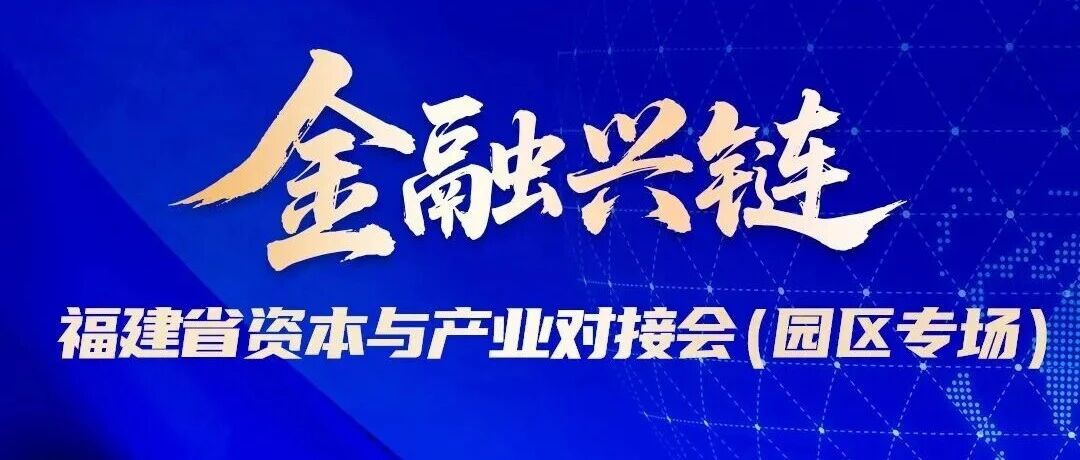
管理超二万亿元投资机构齐聚福州,所为何来?
母基金研究中心· 2025-10-29 08:18
Group 1 - The article highlights Fujian's strategic focus on seven key areas: new generation information technology, high-end equipment, new materials, new energy, biotechnology and new medicine, energy conservation and environmental protection, and marine high-tech industries, aiming to strengthen emerging industries and enhance innovation capabilities [2] - Since the release of the "Action Plan for Promoting the High-Quality Development of Government-Directed Funds" in November 2024, Fujian has introduced several significant policies to support the development of specialized small and medium-sized enterprises, with a goal to establish a fund pool of 300 billion yuan for functional funds and 1 trillion yuan for industrial funds within five years [2] - As of mid-2025, the management scale of government-directed funds in Fujian has exceeded 1.4 trillion yuan, with active establishment of new funds and selection of fund managers occurring regularly throughout the year [2] Group 2 - A capital and industry matchmaking conference is scheduled to be held in Fuzhou on October 30, aimed at empowering new productivity and facilitating the deep integration of technological and industrial innovation [3] - The conference will feature project roadshows, capital and enterprise matchmaking discussions, and will attract over a hundred representatives from mother funds and direct investment fund institutions, collectively managing over 2 trillion yuan, including eight national-level mother funds [3] - The event aims to leverage financial capital to support the high-quality development of the real economy and strengthen the industrial chain [3]
“十五五”规划展望系列-前瞻布局新质生产力主题投资
Sou Hu Cai Jing· 2025-10-29 03:40
Core Insights - The "14th Five-Year Plan" is set to launch, focusing on a strategic blueprint for China's development over the next five years and beyond, emphasizing the importance of new quality productivity as a core national strategy [1] - New quality productivity encompasses not only technological innovation but also a systemic leap in production methods, industrial structure, and growth dynamics, driven by technological advancements [1] - The report identifies three main areas for new quality productivity: strategic emerging industries, traditional industry upgrades through digital technologies, and the digital economy [1] Group 1: New Quality Productivity - New quality productivity is characterized by high-tech, high-efficiency, and high-quality advancements, significantly enhancing total factor productivity to address challenges like aging population and global tech competition [1] - Key sectors include strategic emerging industries such as new generation information technology, renewable energy, biotechnology, and advanced equipment, along with future industries in manufacturing, information, energy, space, health, and materials [1] - Cutting-edge fields like humanoid robots, quantum computing, 6G, brain-computer interfaces, commercial aerospace, low-altitude economy, and deep-sea technology are expected to create trillion-level market opportunities [1] Group 2: Capital Market Response - The capital market has already recognized opportunities, with the new quality productivity theme index showing a cumulative increase of 92.23% from September 2024 to September 2025, outperforming the broader market [2] - Sub-sectors such as cloud computing, computing power, artificial intelligence, and integrated circuits have shown particularly strong performance, with institutions favoring sectors like electronics, pharmaceuticals, and power equipment [2] - Ongoing reforms in the capital market, including the support for new quality productivity enterprises through various financial mechanisms, are expected to create a virtuous cycle of technology, industry, and finance [2]

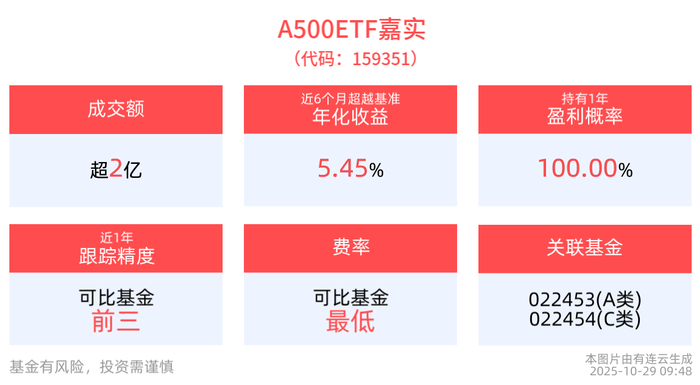
A500ETF嘉实(159351)红盘蓄势,西部超导领涨成分股,机构:看好科技成长板块引领四季度行情
Xin Lang Cai Jing· 2025-10-29 02:19
Core Insights - The A500 index has shown a positive trend with a 0.55% increase, driven by significant gains in constituent stocks such as Western Superconducting (up 11.37%) and Sanhua Group (up 10.99%) [1][3] - The A500 ETF managed by Harvest has seen a trading turnover of 2.42% and a total transaction volume of 283 million yuan, with its latest scale reaching 11.67 billion yuan [3] - The A500 ETF has achieved a net value increase of 22.78% over the past year, with notable monthly returns and a consistent upward trend [3][4] Market Trends - Analysts are optimistic about the technology growth sector leading the market in the fourth quarter, focusing on "hard technology" areas such as semiconductors, AI computing power, and high-end equipment [4] - There is a recommendation to pay attention to sectors benefiting from policy support and domestic demand recovery, particularly those with historically low valuations [4] - Defensive sectors with high dividends and low valuations, such as banking and utilities, are also highlighted as providing stable cash flow and potential for valuation recovery [4] Key Stocks - The top ten weighted stocks in the A500 index include Ningde Times, Kweichow Moutai, and China Ping An, collectively accounting for 19% of the index [4][6] - Notable stock performances include Ningde Times with a 2.19% increase and China Ping An with a 2.20% increase, while Kweichow Moutai experienced a slight decline of 0.33% [6]





扬帆向海启新程——解析高质量发展的南通实践
Zhong Guo Zheng Quan Bao· 2025-10-29 00:18
Core Insights - Nantong is transforming from a "transportation terminal" to a "regional hub," leveraging its strategic location and infrastructure improvements to drive economic growth [1][2][3] Transportation Development - The construction of the Hai-Tai Yangtze River Tunnel, a 39.07 km underwater highway tunnel, is set to significantly reduce commuting time across the Yangtze River, enhancing connectivity between Nantong and Shanghai [2][3] - Nantong's transportation infrastructure has rapidly evolved since the opening of the Su-Tong Bridge in 2008, which reduced crossing time from over an hour to just a few minutes [2][3] Economic Growth and Industrial Development - Nantong's GDP is projected to rank 18th among China's trillion-yuan cities by mid-2025, marking it as a notable economic contender [1] - The city is focusing on developing a modern industrial system centered around advanced manufacturing, with six major industrial clusters expected to exceed 1.2 trillion yuan in output by 2024 [10][18] Marine Economy - Nantong is prioritizing marine economic development, aiming for a marine economy output of 260.6 billion yuan in 2024, which will account for a quarter of Jiangsu's total marine economy [7][9] - The establishment of the Marine Development Bureau and the implementation of the "12 policies for marine development" are part of Nantong's strategy to build a modern marine industry system [7][9] Innovation and Technology - Nantong is enhancing its industrial capabilities through innovation, with over 50% of local enterprises collaborating with firms in Shanghai and Suzhou, attracting more than 450 large-scale manufacturing enterprises in the past three years [5][15] - The city is fostering a robust innovation ecosystem by partnering with universities and research institutions, leading to the establishment of numerous collaborative innovation platforms [15][16] Financial Support for Innovation - Nantong has developed a comprehensive financial support system, with a government investment fund cluster totaling 120 billion yuan, aimed at nurturing strategic emerging industries [16][17] - The city is implementing a "拨投股结合" model to address financing challenges for early-stage tech projects, facilitating their growth and development [16][17] Future Industry Focus - Nantong is strategically positioning itself in six future-oriented sectors: aerospace, marine, energy, materials, communication, and health, with a focus on high-tech manufacturing and emerging industries [11][12]
常州高新区23家企业跻身国家级“小巨人”,专精特新锻造制造业高质量发展主力军
Yang Zi Wan Bao Wang· 2025-10-28 11:04
Core Insights - Jiangsu Province's Ministry of Industry and Information Technology has announced the seventh batch of "specialized, refined, distinctive, and innovative" (referred to as "specialized and new") small giant enterprises, with 23 companies from Changzhou High-tech Zone successfully selected, covering sectors such as new energy, high-end equipment, and biomedicine [1][3] - The total number of national-level specialized and new small giant enterprises in the region has reached 82, indicating a robust support system for the upgrade of small and medium-sized enterprises (SMEs) towards specialization and refinement, contributing to high-quality regional economic development [1][3] Group 1 - The increasing emphasis on nurturing SMEs by the national government has led to a growing recognition among these enterprises that developing "specialized and new" is crucial for the transformation and upgrading of the manufacturing industry [3] - "Specialized and new" serves not only as a recognition standard but also as a development strategy guiding enterprises towards greater specialization, refinement, distinctiveness, and innovation, positioning them as leaders in industry quality and efficiency [3] - Changzhou High-tech Zone has accelerated the establishment of a nurturing system for specialized and new SMEs, developing selection standards and enhancing collaborative innovation ecosystems to elevate the digital capabilities of these enterprises [3] Group 2 - The region currently boasts 8 manufacturing champions, 82 national-level specialized and new small giant enterprises, 390 provincial-level specialized and new SMEs, and 493 municipal-level specialized and new SMEs [3] - Changzhou High-tech Zone aims to strengthen both industrial development and enterprise cultivation, enhancing policy guidance, nurturing, innovation support, and resource integration to accelerate the growth and capability enhancement of quality enterprises [3] - The focus is on channeling resources such as talent, technology, and finance towards specialized and new enterprises to provide strong support for sustained high-quality economic development in the region [3]
章俊:下一个五年经济增长逻辑既重创新,也重安全
Zhong Guo Xin Wen Wang· 2025-10-28 04:56
Group 1 - The core viewpoint of the article emphasizes that the economic growth logic for the next five years will focus on both innovation and security, as outlined in the recent policy blueprint from the 20th Central Committee [1][2] - The document highlights seven major goals and twelve strategic tasks for the "14th Five-Year Plan" period, with a strong emphasis on building a modern industrial system and enhancing national security [1][3] - The shift in focus from "supplementing and strengthening the supply chain" to "system restructuring" indicates a strategic elevation of industrial chain security [2][3] Group 2 - The article discusses the importance of technological innovation and industrial integration as key directions for achieving breakthroughs and fostering new productive forces during the "14th Five-Year Plan" [3][4] - It notes that the policy aims to enhance domestic demand as a long-term strategy, transitioning from merely facilitating domestic circulation to strengthening it [4] - The emphasis on creating a strong domestic market and improving income distribution reflects a shift towards a dual-driven supply and demand model, aiming for structural upgrades in the economy [4]