
支付

Search documents
中国人民银行支付结算司负责人:将继续完善人民币跨境支付体系
Jin Rong Shi Bao· 2025-10-19 02:24
Core Insights - The People's Bank of China has reported significant improvements in the payment convenience for foreign personnel in China, with a diversified payment service system that includes bank cards, mobile payments, and cash [1] - Foreign visitors' awareness and acceptance of mobile payments in China are increasing, with "scan to pay" becoming a primary payment method [1] - By the first half of 2025, active users of mobile payments among inbound personnel are expected to exceed 10 million, with transaction volume and amount increasing by 162% and 149% year-on-year, respectively [1] Payment System Development - A multi-faceted payment service system has been established, allowing for the parallel development and mutual supplementation of various payment methods [1] - The People's Bank of China plans to continue enhancing the cross-border payment system for the renminbi and deepen cooperation in the cross-border payment sector [1] Regulatory and Service Optimization - The central bank emphasizes the importance of maintaining robust payment infrastructure and strict regulation within the payment industry [1] - Ongoing efforts will be made to optimize payment services to better support the construction of a financially strong nation and contribute to China's modernization [1]
抢滩万亿跨境支付市场
21世纪经济报道· 2025-10-18 15:07
Core Insights - The cross-border payment sector is experiencing rapid growth, with foreign institutions acquiring domestic licensed entities to gain access to China's payment licenses [1][14] - The global cross-border payment market is projected to reach $320 billion by 2030, with a compound annual growth rate (CAGR) of 7.1% [1][5] - China's cross-border e-commerce imports and exports are expected to grow by 10.8% in 2024, reaching 2.63 trillion yuan, providing new opportunities for payment institutions [1][4] Market Dynamics - The competitive landscape in China's payment market is intensifying, prompting established payment institutions to explore overseas markets [1][5] - The cross-border payment market is supported by a significant market potential, with the global market size reaching approximately $212.55 billion in 2024 [5][4] - The growth of cross-border e-commerce is a key driver for the expansion of cross-border payment services, with a CAGR of about 15% from 2020 to 2024 [4][5] Strategic Moves by Companies - Companies like Lakala and others are actively pursuing internationalization strategies, including issuing H-shares and expanding their cross-border payment services [6][7] - New players in the cross-border payment space are focusing on emerging markets, with some achieving profitability within two years of operation [8][10] - Established companies are also enhancing their cross-border payment capabilities, with significant investments in technology and service offerings [7][10] Regulatory Environment - The tightening of regulations in the domestic payment industry is pushing companies to acquire licensed entities to ensure compliance and enhance service capabilities [12][14] - Recent regulatory changes require foreign non-bank institutions to establish local entities to provide cross-border payment services, making acquisitions of licensed firms a strategic necessity [12][14] Future Opportunities - The B2B cross-border trade payment, import e-commerce, and localized payment solutions are identified as key growth areas with significant potential [8][10] - The demand for cross-border payment services is expected to continue growing, driven by the increasing globalization of businesses and the need for efficient payment solutions [12][14]




年内11张牌照注销 支付行业整合出清持续
Zhong Guo Jing Ying Bao· 2025-10-18 13:08
Core Insights - The non-bank payment industry in China is undergoing significant consolidation, with 9 non-bank payment institutions undergoing major changes this year, including increased shareholding by major stakeholders in some companies [1] - The industry is entering a deep reshuffling phase characterized by compliance and consolidation, with new regulations raising the minimum registered capital for non-bank payment institutions to RMB 100 million [2] - The trend indicates a shift from scale competition to quality competition, with payment licenses concentrating among entities with ecosystems, scenarios, and compliance capabilities [2] Industry Developments - A total of 271 third-party payment companies have received payment licenses since the central bank began issuing them, with only 164 currently holding valid licenses as of October 2025 [2] - Recent actions by payment institutions, such as capital increases and executive changes, reflect their proactive approach to regulatory compliance and market adaptation [3] Capital Flow and Market Trends - The cross-border payment sector is experiencing rapid growth, contrasting with the contraction of the traditional card payment market [4] - Companies like Lianlian Digital and PayPal are actively acquiring overseas payment licenses, indicating a strategic push towards international markets [4][5] - Lianlian Digital reported a revenue of RMB 1.315 billion for 2024, a 27.9% increase year-on-year, with a gross profit of RMB 683 million and a gross margin of 51.9% [4] Strategic Focus - Payment institutions are advised to view compliance as a lifeline and invest in technology for risk control, data security, and fraud prevention [4] - There is a growing emphasis on deepening service scenarios and enhancing technological capabilities to provide innovative and high-quality payment products and services [5]
掌上新书Vol123 | “多面”区块链:是学术利器,还是过载的喧嚣?
Sou Hu Cai Jing· 2025-10-18 08:58
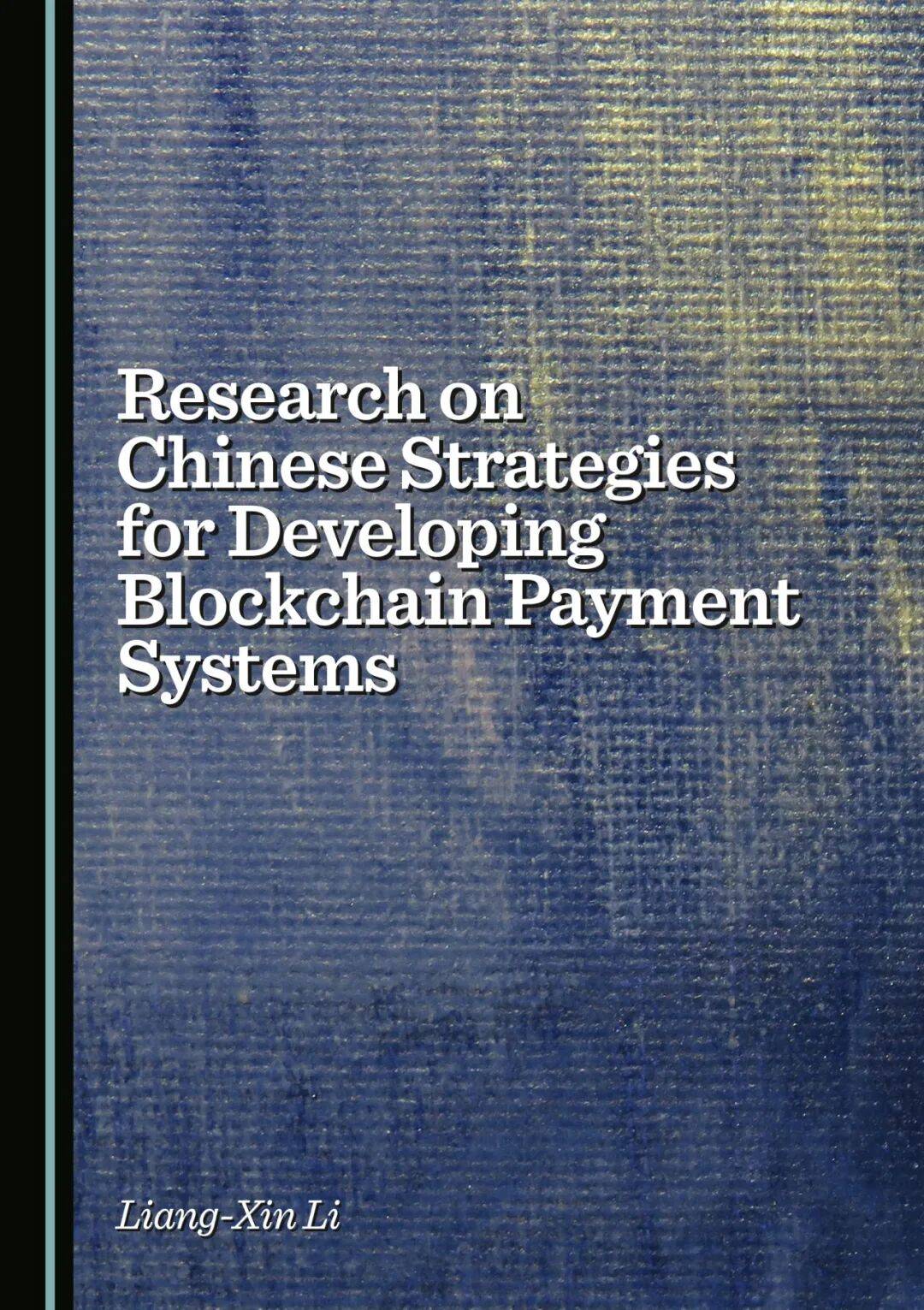
Core Insights - Blockchain technology has transcended the financial sector, impacting areas such as law, management, supply chain, and public governance, promising a new paradigm of trust through decentralized consensus [1] - The proliferation of blockchain-related projects has led to a conceptual and value confusion, challenging scholars to discern genuine academic value amidst the noise [1] - A systematic understanding of the technology's essence is essential for identifying worthwhile academic directions in blockchain research [1] Group 1: Academic Resources - "Research on Chinese Strategies for Developing Blockchain Payment Systems" focuses on China's strategic development of blockchain payment systems, providing a theoretical framework based on three major economic theories: the "trilemma theory," "free currency theory," and "transaction cost theory" [2][5] - "International Handbook of Blockchain Law" offers an in-depth analysis of blockchain technology principles, regulatory policies, smart contracts, data privacy, capital markets, and crypto-assets, serving as a crucial reference for legal practitioners and scholars [2][7] - "Convergence of Blockchain, Internet of Everything, and Federated Learning for Security" explores the integration of blockchain with IoE and federated learning to enhance digital ecosystem security, emphasizing its importance in modern digital environments [2][10] Group 2: Practical Guides - "Blockchain Technology for the Engineering and Service Sectors" serves as a guide for leveraging blockchain technology to drive cross-industry innovation and efficiency, discussing current challenges and future prospects [2][12] - "Hands-On Blockchain for Python Developers" is a practical guide for Python developers, detailing how to build decentralized applications using Python and related frameworks, covering essential topics like smart contracts and secure content storage [2][15]
原银监会主席尚福林:技术浪潮下金融边界演变值得持续探究
Guo Ji Jin Rong Bao· 2025-10-18 08:49
Core Insights - The 2025 Shanghai Suhewan Conference highlighted the importance of technology and finance in China's economic development, with the "new economy" contributing 18% to GDP and the financial sector accounting for 8% [1] Group 1: Technological Impact on Finance - The financial industry is expected to undergo digitalization, intelligence, and scenario-based trends, leading to a more diverse range of financial activities and blurred boundaries between financial services and products [3][4] - A new wave of technological revolution is anticipated to create new financial business models, expanding the scope of financial services, as seen in historical shifts from metal currency to paper money and the rise of cross-border financial services [3][4] - The integration of technologies such as AI, big data, and cloud computing is reshaping the financial service landscape, necessitating collaboration between financial institutions and external tech companies [4] Group 2: Changing Consumer Behavior - Public financial consumption behaviors are increasingly characterized by online, platform-based, and scenario-driven interactions, leading to a complex interplay between financial and non-financial services [4][5] - The accumulation of high-frequency data from daily activities allows for precise analysis of customer financial needs, enabling a seamless transition from data processing to financial service provision [5] Group 3: Regulatory Recommendations - To address the challenges posed by technological advancements in finance, it is recommended to apply equal regulatory standards across similar financial activities and to maintain a focus on risk management [5]

美股反弹道指收复46000,热门中概股分化,黄金尾盘跳水
第一财经· 2025-10-18 00:45
Core Viewpoint - The article discusses the stabilization of the U.S. stock market, driven by President Trump's moderate comments on tariffs and strong quarterly earnings from major banks, alleviating credit risk concerns [3][4][5]. Market Overview - U.S. stock indices showed positive performance, with the Dow Jones up 238.37 points (0.52%) to 46,190.61, the Nasdaq up 0.52% to 22,679.97, and the S&P 500 up 0.53% to 6,664.01. All three indices recorded weekly gains, with the Dow up 1.6%, Nasdaq up 2.1%, and S&P 500 up 1.7% [3]. - The Chicago Board Options Exchange Volatility Index (VIX) decreased by 6.1% to 23.74 points, indicating reduced market volatility [3]. Earnings Reports - Major banks, including JPMorgan Chase, reported strong earnings, setting an optimistic tone for the third-quarter earnings season. Analysts now expect S&P 500 companies' earnings to grow by 9.3%, up from the previous estimate of 8.8% [5]. - American Express shares rose by 7.3% due to increased credit card user spending and an upward revision of its annual earnings forecast [7]. Sector Performance - Regional bank stocks rebounded after a significant drop, with the S&P Composite 1500 Regional Bank Index rising by 1.5% after a nearly 6% decline. The S&P 500 Financial Sector Index increased by 0.8% [6]. - Concerns about credit quality were downplayed, with analysts suggesting that issues are limited to specific cases rather than systemic problems [6]. Commodity Prices - WTI crude oil near-month contract rose by 0.14% to $57.54 per barrel, while Brent crude oil increased by 0.38% to $61.29 per barrel. However, both contracts experienced weekly declines of 2.31% and 2.30%, respectively [8]. - International gold prices saw a slight decline, with COMEX gold futures dropping by 2.11% to $4,189.80 per ounce, although it achieved a nine-week consecutive gain with a weekly increase of 5.38% [9].

美股反弹道指收复46000,热门中概股分化,黄金尾盘跳水
Di Yi Cai Jing· 2025-10-18 00:32
Market Overview - The three major U.S. stock indices rebounded, with the Nasdaq rising over 0.5% [2] - Concerns about credit risk eased as regional banks reported quarterly earnings, leading to a 1.5% increase in the S&P Composite 1500 Regional Bank Index after a nearly 6% drop [4] - The S&P 500 companies are expected to see a 9.3% increase in earnings for Q3, up from an earlier estimate of 8.8% [3] Individual Stocks - Oracle Corporation experienced a 6.9% drop, marking its largest decline since January, despite projecting revenues of $225 billion by FY2030, which exceeded UBS's expectation of $188 billion [4] - American Express saw a 7.3% increase in stock price, driven by growth in credit card user spending and an upward revision of its annual earnings forecast [5] Bond Market - U.S. Treasury yields rose, with the 10-year yield increasing by 2.1 basis points to 4.00% and the 2-year yield rising by 2.9 basis points to 3.46% [3] Commodity Market - WTI crude oil near-month contract rose by 0.14% to $57.54 per barrel, while Brent crude oil increased by 0.38% to $61.29 per barrel [6] - International gold prices fell, with COMEX gold futures for October delivery dropping by 2.11% to $4189.80 per ounce, although it achieved a nine-week consecutive gain [7]
抢滩万亿跨境支付市场
2 1 Shi Ji Jing Ji Bao Dao· 2025-10-17 12:38
Core Insights - The cross-border payment sector is experiencing rapid growth, with foreign institutions like Payoneer and Sunrate acquiring domestic licensed entities to gain access to China's payment licenses [1][10] - The global cross-border payment market is projected to reach $320 billion by 2030, with a compound annual growth rate (CAGR) of 7.1% from $212.55 billion in 2024 [1][3] - China's cross-border e-commerce imports and exports are expected to grow by 10.8% in 2024, reaching 2.63 trillion yuan, highlighting the resilience of foreign trade and the growth opportunities for payment institutions [2][3] Industry Trends - The competitive landscape in China's payment market is intensifying, prompting established payment institutions to expand into overseas markets, while new entrants like LianLian and PingPong leverage their first-mover advantages in cross-border payments [1][3] - The demand for cross-border payment services is driven by the expansion of global e-commerce, with a CAGR of 17% in the cross-border e-commerce sector [3][6] - The Chinese payment industry is transitioning from a phase of rapid expansion to stable development, with increasing market concentration as smaller players consolidate or exit the market [3][5] Company Developments - Companies like Lakala and Newland are signaling their commitment to cross-border payment services through strategic initiatives and resource allocation [5][7] - Notable foreign payment brands are entering the Chinese market through acquisitions of local licensed institutions, enhancing their compliance and service capabilities [9][10] - Startups in the cross-border payment space are focusing on emerging markets, with some achieving profitability within two years by partnering with licensed domestic payment institutions [6][8] Regulatory Environment - The tightening of regulations in China necessitates that foreign non-bank institutions establish local entities to provide cross-border payment services, making the acquisition of licensed institutions a strategic priority [9][11] - The recent regulatory changes emphasize the importance of compliance and local operations for foreign payment providers seeking to enter the Chinese market [9][11]
拉卡拉向港交所递交上市申请
Xin Lang Cai Jing· 2025-10-17 12:20
Core Viewpoint - Lakala Payment Co., Ltd. has submitted an IPO application to the Hong Kong Stock Exchange, marking a significant step in its growth strategy [1] Group 1: Company Information - Lakala is seeking to go public with the exclusive sponsorship of CITIC Securities International [1] - The submission of the IPO application is part of a broader trend, with a record 276 companies having submitted IPO materials to the Hong Kong Stock Exchange as of October 17, 2025 [1]
拉卡拉支付股份有限公司递表港交所
Ge Long Hui· 2025-10-17 12:11
Group 1 - Lakala Payment Co., Ltd. has submitted an IPO application to the Hong Kong Stock Exchange, with CITIC Securities International as the exclusive sponsor [1] - As of October 17, 2025, a total of 276 companies have submitted IPO materials to the Hong Kong Stock Exchange, marking a historical high [1]