工业互联网

Search documents
5月规上工业增加值同比增长5.8%,工业互联ETF(159778)成分股北方华创领涨
Xin Lang Cai Jing· 2025-06-19 06:59
Group 1 - The China Securities Industrial Internet Theme Index (931495) decreased by 0.91% as of June 19, 2025, with mixed performance among constituent stocks [1] - Notable gainers included Northern Huachuang (002371) up 1.84%, China Software (600536) up 1.22%, and Qiming Star (002439) up 1.00%, while Newland (000997) led the decline [1] - In May, the national industrial added value for large-scale enterprises grew by 5.8% year-on-year, with the equipment manufacturing sector seeing a 9% increase, contributing 54.3% to industrial production [1] Group 2 - The trend indicates that foreign industrial software giants are acquiring AI companies, significantly enhancing the intelligence level of domestic industrial software products [2] - The national government is accelerating the deployment of AI + industrial software initiatives, supporting pilot development of AI + CAE and AI + EDC products [2] - As of May 30, 2025, the top ten weighted stocks in the China Securities Industrial Internet Theme Index accounted for 47.11% of the index, including BYD (002594) and Northern Huachuang (002371) [2]

以“人”破局 “善”“数”驱动 浙商银行激活科技创新澎湃动能
Jin Rong Shi Bao· 2025-06-18 03:12
Group 1: Company Overview - Zhejiang Fubao Intelligent Technology Co., Ltd. focuses on the development of robots for medical and elderly care, becoming a leader in this niche market [1][3] - The company has developed products like "Dabao" and "Xiaobao," which assist in rural healthcare and home medical care, respectively [3][4] - Fubao Intelligent has seen a significant increase in market share in the domestic elderly care service robot sector and has received international orders from countries like the Netherlands and Germany [3] Group 2: Financial Support and Innovation - Zheshang Bank has been instrumental in providing financial support to technology companies, offering a "companion-style" service that includes funding and ecosystem support [2][4] - The bank has served over 32,000 technology enterprises with a financing balance exceeding 400 billion yuan [1] - Fubao Intelligent received a 10 million yuan loan from Zheshang Bank to alleviate production funding pressures during a period of rapid growth [4] Group 3: Industry Trends and Challenges - The robotics industry is experiencing a development boom, with various products emerging in the market [3] - The aging population presents a significant challenge that Fubao Intelligent aims to address through its innovative solutions [3][5] - The bank's approach to financing has evolved to focus on the value of patents and future potential rather than traditional collateral [4][10] Group 4: Technology and Talent Focus - Zheshang Bank's "Talent Bank" service evaluates companies based on their talent and technological capabilities, moving away from traditional financial metrics [7][10] - The bank has provided significant credit lines to companies like Jiangfeng Electronics, supporting their growth in the semiconductor industry [7][8] - The focus on human capital and innovation is seen as essential for the success of technology-driven enterprises [5][7]

特稿 | 章俊:资本市场如何赋能新质生产力
Di Yi Cai Jing· 2025-06-18 01:33
Core Viewpoint - The development of new productive forces is a strategic choice for China's economy amid global changes, emphasizing the need for technological innovation and capital market support to enhance national competitiveness and drive high-quality economic growth [2][4]. Group 1: Global Context and Challenges - The world is undergoing a deep technological revolution and industrial transformation, with intensified geopolitical risks and adjustments in the international monetary system [2][3]. - Geopolitical conflicts, such as the ongoing Russia-Ukraine war, are impacting global energy security and commodity prices, leading to increased cross-border investment risks [3]. - The U.S. dollar's dominance is being questioned, with its share in global foreign exchange reserves projected to drop to 57.8% by the end of 2024, indicating a shift towards a multipolar currency system [3]. Group 2: Domestic Economic Transformation - China's urbanization rate has surpassed 67%, and the real estate market is facing a fundamental reversal in supply-demand dynamics, with land transfer revenue expected to decline by 16% in 2024 [4]. - The traditional "land finance" model is unsustainable, revealing risks such as repeated construction and local government debt [4]. - New productive forces, driven by technological innovation and data as key production factors, are crucial for breaking through the current economic transformation [4]. Group 3: Role of Capital Markets - Capital markets are essential for nurturing new productive forces, facilitating resource allocation, and supporting technological innovation [5][8]. - The Chinese government has prioritized the development of capital markets, implementing policies to enhance their functionality and efficiency [5][6]. - The capital market's ability to support technology enterprises throughout their lifecycle is being strengthened, with various initiatives aimed at improving access to financing [6][7]. Group 4: Challenges in Capital Market Empowerment - Supply-side challenges include insufficient patient capital and limited exit channels for equity investments, which hinder investment in high-risk tech startups [9][10]. - Demand-side issues involve mismatches between investment preferences and the financing needs of early-stage companies, as well as inadequate mechanisms for transitioning between different market segments [11][12]. - Mechanism-related challenges include information asymmetry and the need for a restructured valuation system that accurately reflects the potential of new productive forces [13][14]. Group 5: Recommendations for Strengthening Capital Market Support - To cultivate patient capital, innovative long-term assessment mechanisms should be established, focusing on aligning investments with strategic technological advancements [15][17]. - Diversifying exit pathways and enhancing institutional investor participation in the secondary market can optimize capital allocation and support new productive forces [16][18]. - A comprehensive governance framework should be developed to improve risk assessment models and enhance collaboration among market participants [19][20].


国资委:引导国企基金“投早投小投硬” 国企改革深化提升行动重点改革任务平均完成率已超过80%
Zheng Quan Shi Bao· 2025-06-17 17:59
Group 1 - The State-owned Assets Supervision and Administration Commission (SASAC) emphasizes the need for deepening reforms in state-owned enterprises (SOEs) to enhance technological and industrial innovation, with a focus on early-stage investments [1] - As of the end of Q1, the average completion rate of key reform tasks among central and local SOEs has exceeded 80% [1] - SASAC has established 97 original technology sources in central enterprises, with many local enterprises also setting up similar sources [1] Group 2 - SASAC calls for the application of digital technologies such as artificial intelligence, industrial internet, and 5G to upgrade traditional industries, particularly in underdeveloped regions [2] - The focus is on enhancing the resilience and safety of key industrial chains, positioning SOEs as a backbone for stabilizing the economy [2] - SASAC encourages the creation and opening of high-value application scenarios to accelerate the transformation of technologies into productive forces [2]
山东济南:诚信纳税赋能“独角兽”加速快跑
Zhong Guo Jin Rong Xin Xi Wang· 2025-06-17 08:23
Core Viewpoint - Integrity in tax payment is fundamental for corporate development and optimizing the business environment, as demonstrated by the case of Inspur Cloud, which has successfully transformed tax credit into development momentum [1][2]. Group 1: Company Overview - Inspur Cloud, located in Jinan High-tech Zone, is the only newly recognized unicorn enterprise in Shandong Province for 2024 and the eighth unicorn in Jinan City [1]. - The company focuses on 24 key industries and has developed over 200 platform solutions, aiding more than 1.3 million enterprises in digital transformation [1]. Group 2: Tax Credit Impact - Inspur Cloud achieved a transformation in tax credit rating from B to A in 2023, marking a shift in focus from production and sales to integrity in operations [1][2]. - The company has benefited from various tax incentives, amounting to over 5 million yuan in 2024, enhancing its innovative capacity [2]. Group 3: Financing Advantages - With an A-level tax credit, the company enjoys streamlined bank loan approval processes, reduced approval times, and more favorable loan rates, which lowers financing costs and provides sufficient cash flow for development [2]. Group 4: Industry Development - The Jinan High-tech Zone is home to 8 unicorn enterprises, with 6 of them (75%) actively operating in the area, serving as a strong engine for new economic development and new momentum cultivation [2]. - The local tax authority has established a key enterprise tax credit management ledger to assist companies in enhancing their tax credit ratings and fostering innovation [3].
强化科技创新支撑,加快传统产业转型发展(调查研究 凝聚共识)
Ren Min Ri Bao· 2025-06-15 21:52
Core Insights - The article emphasizes the importance of technological innovation as a key driver for the transformation and upgrading of traditional industries, as highlighted in the decisions made during the 20th Central Committee's third plenary session [1] Group 1: Technological Innovation and Industry Transformation - The research team conducted field studies in Shandong and Henan provinces to gather insights on how to enhance technological innovation to support the transformation of traditional industries [2] - Companies like Kaos Chuangzhi IoT Technology Co. and Shandong Shuangxing Group are implementing innovative practices, such as industrial internet applications and the establishment of multiple R&D centers, to drive their transformation [2][3] - The research team noted significant advancements in production efficiency at companies like Henan Shuanghe Huali Pharmaceutical Co., where automation has dramatically increased output rates [2] Group 2: Challenges and Bottlenecks - The research identified several bottlenecks in the application of technological innovations, including issues related to talent attraction and the efficient transformation of outdated production capacities [4] - Companies like Goer Group have faced challenges in carbon emission management and have called for increased government support in financial and tax policies [4][5] - The research team documented various obstacles faced by research institutions in applying scientific achievements, which need to be addressed to facilitate innovation [3][4] Group 3: Policy Recommendations and Future Directions - The research team suggested enhancing the role of enterprises in technological innovation by improving their decision-making power and resource allocation capabilities [6] - Recommendations include optimizing fiscal policies to expand support for traditional industries and encouraging financial institutions to develop innovative financial products to support industry transformation [6] - The report highlights the need for a strategic focus on high-end product development and original innovation capabilities to elevate the value chain position of traditional industries [6]
规模超1.5万亿 我国工业互联网加速全产业链智能化变革
Zhong Guo Chan Ye Jing Ji Xin Xi Wang· 2025-06-13 00:05
Core Insights - The core industry scale of China's industrial internet has exceeded 1.5 trillion yuan, driving economic growth of nearly 3.5 trillion yuan, with coverage across 49 major economic categories and 41 industrial categories [1][2] - The development of industrial internet in China has made significant progress over the past decade, with a focus on digital transformation and the integration of advanced technologies such as AI and 5G [3][4] Infrastructure Development - China has built over 1.85 million industrial 5G projects, achieving full coverage across 41 industrial categories, and has constructed more than 4.39 million 5G base stations [2][4] - The number of registered identifiers has surpassed 670 billion, with over 240 influential platforms and connections to more than 100 million industrial devices [2][4] Economic Impact - The industrial digital economy's share of the overall digital economy has increased from 17.3% in 2017 to 23.3% in 2023, indicating a significant rise in industrial digitalization [3] - The efficiency of digital technology in enhancing industrial productivity has outpaced that of the service sector, with a 1.17-fold increase from 2017 to 2023 [3] Technological Integration - The integration of 5G, AI, and blockchain technologies with the industrial internet has led to the emergence of new application scenarios such as intelligent contracts and smart decomposition [2][4] - The development of a robust industrial internet security monitoring system has reduced the successful attack rate from 30.5% in early 2020 to 12.5% in 2023 [4] Future Trends - The next decade will see AI fully integrated into the industrial internet, leading to a transformation in manufacturing modes characterized by self-organization and self-optimization [5][7] - New industrial network technologies, including 5G/5G-A/6G and Time-Sensitive Networking (TSN), will reshape the digital infrastructure of industries [6][7] Industry Applications - Leading companies are expanding application boundaries through technological innovation, with AI becoming a critical variable in the deep development of the industrial internet [8][9] - Companies like XCMG Hancloud and Caos IoT are leveraging AI and industrial internet platforms to provide comprehensive digital transformation solutions across various industries [9][10] Strategic Goals - The Ministry of Industry and Information Technology (MIIT) aims to leverage AI to promote the integrated development of industrial internet and artificial intelligence, focusing on building high-quality industrial data sets and specialized models [11]
工业互联网产业联盟:工业互联网应用案例集(2023-2024年)
Sou Hu Cai Jing· 2025-06-12 13:35
Core Viewpoint - The report titled "Industrial Internet Application Case Collection (2023-2024)" showcases various industry practices utilizing industrial internet technologies for digital transformation, highlighting its significant role in enhancing production efficiency, optimizing management models, and promoting industrial upgrades [1][2]. Group 1: Manufacturing Industry Applications - Multiple cases demonstrate the deep integration of industrial internet with technologies like 5G and big data, such as Anhui 168 Aerospace's implementation of a 5G+ industrial internet platform, which established a digital production system covering the entire business process, achieving real-time data collection and analysis, thus improving production efficiency and product quality [1][21]. - The Microgrid Youlian 5G fully connected demonstration factory achieved a 40% increase in production efficiency and a 99.5% accuracy rate in quality inspection through the empowerment of 5G technology [1][2]. Group 2: Process Industry Innovations - The smart chemical park management platform adopts a "Park OS + Industrial APP" model, integrating data from safety, environmental protection, and other scenarios for comprehensive management of park elements [2]. - The application of the Langkun Suchang industrial internet platform in power plant operation optimization combines intelligent algorithms with mechanism models to achieve early warning of equipment failures, enhancing operational safety and economic efficiency [1][2]. Group 3: Special Field Management - The Guang'an Minghong hazardous waste IoT supervision system enables the full lifecycle tracking of hazardous waste, enhancing regulatory capabilities [2]. - The Beibu Gulf Port Qinzhou automated container terminal's smart security project integrates AR and intelligent recognition technologies to establish a comprehensive security system [2]. Group 4: Emerging Technology Applications - Wofeng Technology assists Schneider Electric in building a knowledge graph to enhance technical service efficiency [2]. - The industrial internet applications targeting the semiconductor packaging and testing industry address the challenges of industry know-how and technology integration [2]. - The lightweight flexible smart factory based on Tianyi Intelligent Manufacturing provides a replicable model for digital transformation for small and medium-sized enterprises [2]. Group 5: Overall Industry Trends - These cases indicate that the industrial internet is evolving from single scenario optimization to collaborative synergy across the entire industry chain, driving various sectors towards intelligent and green transformation, injecting new momentum into the high-quality development of the real economy [2].

中国技术持续助力共建“一带一路”国家产业发展
Huan Qiu Shi Bao· 2025-06-12 07:52
Group 1 - The second "Belt and Road" Technology Exchange Conference was held in Chengdu, Sichuan, focusing on building a technology innovation community among participating countries [2][3] - Chinese technology is increasingly becoming a driving force for industrial upgrades in "Belt and Road" countries, enhancing local industry development [2] - Collaboration between Chinese high-tech enterprises and local companies in Belarus is taking place in fields such as new energy, machinery, big data, artificial intelligence, and industrial internet [2] Group 2 - Qingdao Jicheng Electronics Co., Ltd. plans to localize water meter production in Saudi Arabia, significantly improving water resource management efficiency [2][3] - The conference announced the establishment of the Chengdu-Chongqing "Belt and Road" International Technology Transfer Center, aiming to create over 100 international cooperation projects within three years [5] - The "Double Thousand" plan aims to implement 1,000 technology exchange cooperation projects and support 1,000 young scientists' exchanges by 2030 [5] Group 3 - The focus of international cooperation is shifting from traditional product trade to the output of key intermediates, production capacity, supply chains, and standard management [5] - This transformation is expected to enhance international cooperation efficiency and lower collaboration barriers, aiding in the cultivation of localized brands in "Belt and Road" countries [5]
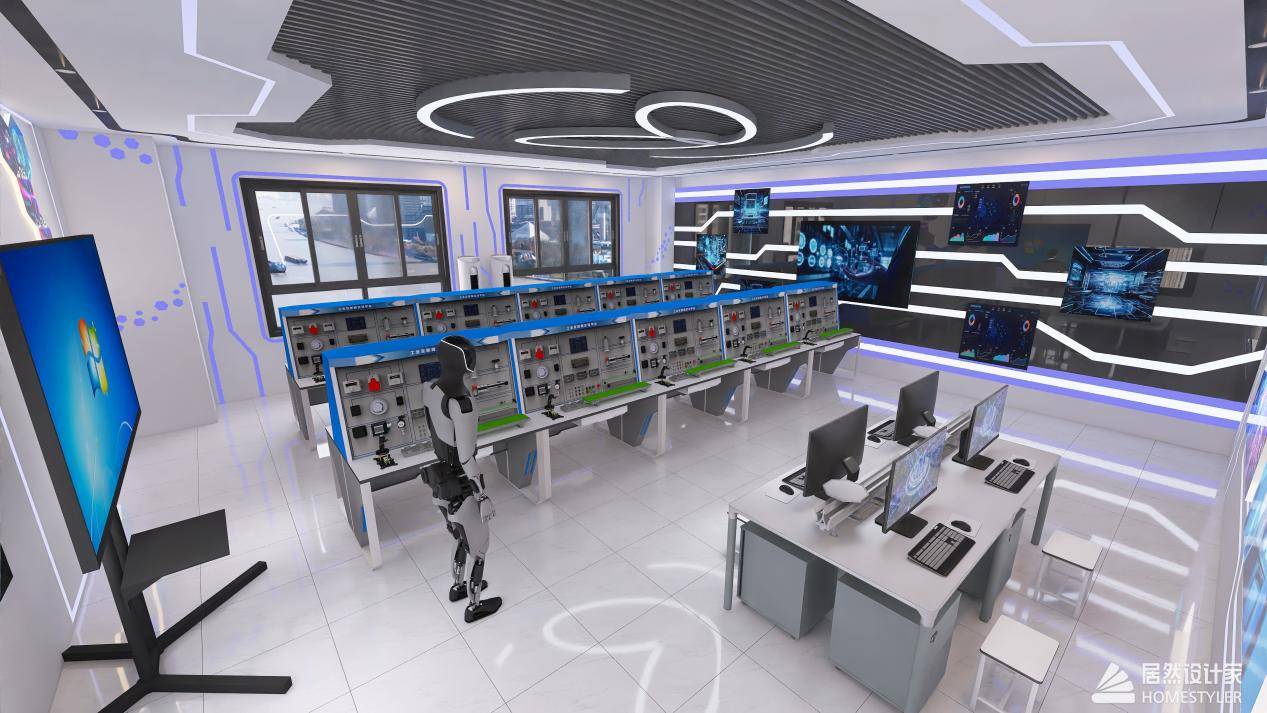
职业院校工业互联网标识解析与应用实训室建设方案(2025版新标准)
Sou Hu Cai Jing· 2025-06-09 03:16
Group 1: Current Status of Industrial Internet - The global industrial internet market is projected to reach $1.2 trillion by 2024 and grow to $1.8 trillion by 2027, with a compound annual growth rate (CAGR) exceeding 15% [1] - In China, the industrial internet industry has surpassed 1.5 trillion yuan, with over 80 million connected industrial devices and more than 150 industrial internet platforms [1] - Industrial internet optimizes production processes, enhances efficiency, reduces costs, and improves product quality, becoming a key support for high-quality development in manufacturing [1] Group 2: Importance of Identification and Resolution System - The identification and resolution system is a core foundational technology of the industrial internet, providing unique identifiers for devices, products, and processes [2] - China has registered over 30 billion identifiers, with an average of over 10 million resolutions per day, addressing information silos and enhancing data sharing across the supply chain [2] - The system supports lifecycle traceability in industries like automotive manufacturing, improving production efficiency and quality management [2] Group 3: Policy Support and Technical Standards - The Chinese government has introduced policies to support the rapid development of the identification and resolution system, including the "Identification and Resolution System 'Integration' Action Plan (2024-2026)" [3] - Local governments are increasing investments in the construction of the identification and resolution system, promoting related technology research and application [3] - China is actively following international standards while developing its own standards, such as the Handle system and OID, to enhance the identification and resolution system [4][5] Group 4: Talent Development Needs - The demand for talent in the industrial internet sector is expected to reach a shortage of approximately 12 million in the next five years [6] - Vocational colleges play a crucial role in training high-quality technical talent but face challenges in keeping up with industry developments and practical training [6] - Establishing training labs for identification and resolution applications can enhance students' practical skills and meet the industry's urgent need for skilled professionals [6] Group 5: Curriculum Development - Basic courses aim to provide a solid theoretical foundation, covering topics such as industrial internet overview, computer network fundamentals, database principles, and programming languages [11][12] - Core professional courses focus on key technologies and application development in the identification and resolution system, including system architecture, coding rules, and practical operations [12][13] - Practical projects and case studies are essential for combining theoretical knowledge with hands-on experience, enhancing students' understanding and application skills [14][15] Group 6: Teacher Professional Development - Enhancing teacher capabilities is vital for the quality of education in the industrial internet field, with measures including professional training and participation in industry projects [16] - Hiring industry experts as part-time instructors can bring real-world experience and insights into the classroom, improving students' industry readiness [17] - Establishing partnerships with enterprises for collaborative projects can provide practical experience and foster innovation in teaching [17]