工业机器人

Search documents
广东东莞:“制造美学”扮靓城市产业
Ke Ji Ri Bao· 2025-10-30 05:34
Group 1 - The 138th China Import and Export Fair (Canton Fair) is held in Guangzhou from October 15 to November 4, showcasing Dongguan's image as a "City of Manufacturing Aesthetics" for the first time [1] - Dongguan has 220,000 industrial enterprises, with 14,000 above-scale industrial companies, highlighting its manufacturing strength [1] - The "City of Manufacturing Aesthetics" image aims to enhance the city's industrial identity and increase its recognition and influence [2] Group 2 - Dongjing Electric Co., Ltd. showcases innovative products like hair dryers and curling irons, utilizing advanced technologies to improve user experience and reduce noise [2] - Dongjing Electric's export revenue has seen rapid growth, with a target of 300 million yuan and an annual growth rate of 20% to 50% [2] - The fair features over 400 Dongguan enterprises, emphasizing high-tech and specialized companies, with an increased proportion of quality exhibitors [3] Group 3 - Dongguan organized a "Manufacturing Aesthetics" tour during the fair, allowing participants to explore leading companies like Marco Polo Holdings and Guangdong Tosida Technology [4] - Marco Polo Holdings has differentiated its products through aesthetic and cultural elements, transitioning from a simple manufacturer to a leading enterprise in the industry [4] - The integration of design, craftsmanship, and cultural expression is becoming a trend among Dongguan companies, enhancing their market competitiveness [5] Group 4 - Dongguan's manufacturing sector is moving towards high-end value chains, with a focus on the "Manufacturing Aesthetics" concept [6] - The Dongguan Municipal Bureau of Commerce indicates that the fair's outcomes are just the beginning, with plans to continue promoting the "Manufacturing Aesthetics" concept for global market recognition [6]
大江洪流姜昧军:把握未来十年投资主线,布局产业链优势核心领域
Sou Hu Cai Jing· 2025-10-30 04:45
Core Insights - The future ten years present significant investment opportunities for the Chinese economy, driven by advantages in the industrial chain, technological innovation, and infrastructure upgrades [1][2] - China's economic transition from factor-driven to innovation-driven growth is crucial for industrial structure upgrades, leading to a self-reinforcing development phase [1] - The capital market is expected to experience a prosperous development period, becoming a true barometer of the economy, with increased reliance from technology innovation enterprises [2] Investment Opportunities - Focus on strategic emerging industries such as new energy, new materials, high-end equipment, and low-altitude economy [3] - Attention to cutting-edge technology fields including quantum technology, biomanufacturing, hydrogen energy, brain-computer interfaces, embodied intelligence, and sixth-generation mobile communication [3] - Identify small and medium enterprises within the industrial chain ecosystem that can collaborate with leading companies and possess global perspectives and technological barriers [3]
瑞鹄模具20251029
2025-10-30 01:56
Summary of 瑞鹄模具 Conference Call Company Overview - **Company**: 瑞鹄模具 - **Industry**: Automotive Parts and Equipment Manufacturing Key Financial Metrics - **Q3 Revenue**: 730 million RMB, up 72% YoY [2][3] - **Gross Margin**: 25.8%, up 1.5 percentage points YoY [2][3] - **Net Profit**: 355 million RMB, up 40.5% YoY [2][3] - **Operating Cash Flow**: 306 million RMB, showing improvement YoY [2][3] Business Segments Automotive Parts - **Aluminum Die Casting Revenue**: Approximately 400 million RMB [2][5] - **Welding Parts Revenue**: Approximately 320 million RMB [2][5] - **Production Capacity**: - Die casting capacity: 450,000 to 500,000 units/year [5] - Structural parts capacity: 200,000 to 250,000 units/year [5] - Welding parts Phase I has been launched, Phase II expected to produce 60 million units/year [2][5] - **Key Clients**: Focus on Chery, with ongoing development of BYD and others [5] Industrial Robots - **Sales Volume**: 800 units in the first three quarters, expected to reach 1,100-1,300 units for the year [2][6] - **Revenue from Robots**: 85 million RMB in the first three quarters, projected 120-130 million RMB for the year [2][6] - **Future Plans**: Establish a smart equipment company focusing on industrial robots and standardized products [2][7] Profitability Insights - **Welding Parts Gross Margin**: Approximately 10% [6] - **Integrated Die Casting Gross Margin**: Approximately 9% [6] - **Overall Gross Margin**: Approximately 9.5% [6] - **Future Margin Expectations**: Anticipated improvement in margins as Phase II of welding parts ramps up [6] Market Outlook - **Q4 Expectations**: Parts business expected to reach capacity saturation with growth rates of 50%-70% [4][9] - **2026 Projections**: Equipment business expected to grow by double digits, parts business by 20%-30% [4][9] - **Order Backlog**: Total orders amounting to 4.57 billion RMB, an increase from Q2 [4][11] Strategic Initiatives - **Capital Expenditure Plans**: Focus on increasing capacity for integrated die casting and welding parts [17][18] - **Future Strategic Focus**: Emphasis on equipment business, additive manufacturing, micro-robots, and smart equipment [19] - **Cost Control Measures**: Plans to enhance self-manufacturing rates and collaborate with universities for intelligent design [12][20] Competitive Advantages - **High Self-Manufacturing Rate**: Contributes to maintaining gross margins [12] - **Quality of Orders**: Focus on high-quality order acquisition [12] Export and International Business - **Export Proportion**: Overseas orders account for approximately 37%-40% of total orders [14] New Product Development - **New Models**: Windcloud A9L and EHV, with EHV expected to start small batch supply by December [10][11] Conclusion 瑞鹄模具 demonstrates strong growth in revenue and profitability, with a strategic focus on expanding production capacity and enhancing product offerings in both automotive parts and industrial robotics. The company is well-positioned to capitalize on market opportunities while maintaining a focus on cost control and quality.
关注PCB设备、工程机械、叉车等板块投资机会 | 投研报告
Zhong Guo Neng Yuan Wang· 2025-10-30 01:34
Core Insights - The mechanical equipment industry experienced a 5.3% increase from October 20 to October 24, 2025, ranking 4th among 31 primary industries [2][3] - Sub-sectors such as specialized equipment (+6.1%), general equipment (+5.97%), and automation equipment (+5.69%) showed strong performance, indicating a positive trend in the industry [2][3] Industry Performance - The overall mechanical equipment sector recorded an increase, with specialized and general equipment performing particularly well [2][3] - The engineering machinery import and export trade in September reached $5.505 billion, a year-on-year increase of 29.1%, with exports contributing significantly to this growth [3] Market Trends - The upcoming Asia International Logistics Technology and Transportation Systems Exhibition will focus on smart equipment upgrades and low-carbon technologies, which are expected to positively impact the forklift sector [4] - The forklift industry is seeing significant sales growth, driven by a low base effect from the previous year, and is expected to maintain this growth trajectory [4] Investment Opportunities - Recommendations include focusing on companies with strong performance support, such as XCMG Machinery and SANY Heavy Industry in the engineering machinery sector [3] - In the semiconductor equipment sector, domestic companies are expected to benefit from increased demand due to local production expansion plans [5] - The industrial robot sector saw a 28.3% increase in production in September, indicating potential investment opportunities as the industry may be on the verge of recovery [5]
向上向新向优向好 武汉前三季度活力升腾
Chang Jiang Ri Bao· 2025-10-30 00:48
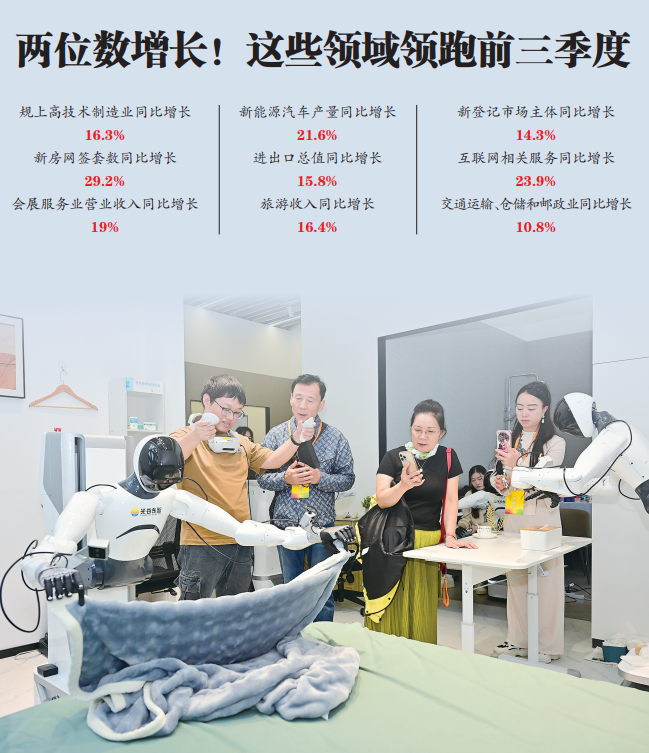
Economic Growth - Wuhan's GDP growth rates for the first quarter, first half, and first three quarters of the year are 5.4%, 5.5%, and 5.6% respectively, maintaining a leading position among sub-provincial cities [1] - The city's economic growth has been steady for five consecutive quarters, with no significant fluctuations [4] Industrial Performance - The production of industrial robots in Wuhan surged by 70.4% in the first three quarters [3][5] - High-tech manufacturing value added increased by 16.3%, contributing over 60% to industrial growth [5] - The total fixed asset investment in Wuhan reached 6,656.38 billion yuan, with a growth rate of 2%, ranking first among sub-provincial cities [5] Business Environment - The number of newly registered businesses in Wuhan increased by 14.3% in the first three quarters, with over 250,000 new enterprises, a growth of 37.23% [6][7] - The city attracted 884 investment projects, with nearly half in the industrial sector, indicating a strong investment climate [7] Consumer and Living Standards - The per capita disposable income for residents in Wuhan reached 46,107 yuan, a year-on-year increase of 4.8% [8] - The consumer price index (CPI) in Wuhan rose by 0.3%, indicating overall price stability [8] Innovation and Development - Wuhan is focusing on becoming a national hub for technological innovation, with significant investments in high-tech sectors [5][9] - The city has seen the emergence of new enterprises, with four new companies listed and nine recognized as top AI technology firms [5]

上海明确“AI+制造”发展路线图
Ke Ji Ri Bao· 2025-10-29 23:41
Group 1: Policy and Implementation - Shanghai plans to accelerate the development of "AI + manufacturing" over three years, aiming to implement smart applications in 3,000 manufacturing enterprises, create 10 industry benchmark models, and establish around 10 "AI + manufacturing" demonstration factories [3][4] - The implementation plan encourages the development of specialized small models tailored to specific industrial scenarios, enhancing the efficiency of both large and small models in practical applications [5][6] - The plan focuses on ten key industries, including electronics, automotive, and high-end equipment, with differentiated strategies for each sector to promote AI integration [5][6] Group 2: Industry Growth and Achievements - Shanghai's AI industry has surpassed 270 billion yuan in scale, with a growth rate exceeding 30% in the first half of the year [3] - The establishment of the National Humanoid Robot Innovation Center in Shanghai marks a significant advancement in the AI and manufacturing sectors [3] - Companies like Yikaida Technology and Shanghai General Welding Machine Co., Ltd. are actively integrating AI into their manufacturing processes, showcasing the trend of AI empowering the manufacturing industry [4][5] Group 3: Robotics and Automation - The plan emphasizes the deployment of industrial robots in high-risk and repetitive work scenarios, aiming to enhance production efficiency and safety [7] - Companies such as Shanghai ZaiKe Intelligent Technology Co., Ltd. are leveraging AI to improve the capabilities of industrial robots, thereby transforming production processes and management models [7] - New products like the RuiKe MR73A and MR73B from Zhongke Xinsong Co., Ltd. demonstrate advancements in robot mobility and environmental adaptability, enhancing their application in complex industrial settings [8][9]
【环时深度】APEC为何首次将“应对人口结构变化”设为全面议题?
Huan Qiu Shi Bao· 2025-10-29 23:25
Core Viewpoint - The APEC meeting in South Korea will address the significant demographic changes in the Asia-Pacific region, with a focus on transforming demographic challenges into economic opportunities through regional cooperation [1][2]. Demographic Changes - The proportion of individuals aged 60 and above in the Asia-Pacific region is projected to rise from 15.1% in 2024 to approximately 25% by 2050, indicating a significant demographic shift [3]. - South Korea is expected to enter a "super-aged society" by 2024, with over 20.2% of its population aged 65 and older, while its total fertility rate is projected to drop to between 0.72 and 0.75, marking a historical low [2][3]. Economic Implications - The demographic transition presents both challenges and opportunities for economic restructuring, necessitating reforms to foster new growth drivers and sustainable prosperity [3][4]. - Industries such as traditional manufacturing may face pressure to relocate to regions with younger populations, while sectors related to healthcare, elder care, and technology are anticipated to experience significant growth [4][10]. Policy Responses - Various countries are implementing policies to address declining birth rates, with South Korea reporting a 7.4% increase in births in the first half of the year, attributed to government support measures [6]. - Spain has also seen a positive trend in birth rates due to family support policies, including extended parental leave and enhanced childcare services [7]. Regional Cooperation - The integration of artificial intelligence and demographic change discussions at the APEC meeting highlights the need for collaborative solutions to labor shortages and the creation of new economic opportunities [9]. - The diversity in demographic challenges across Asia-Pacific countries can be leveraged for mutual benefits through labor mobility, capital collaboration, and technology exchange [10].
南京这家企业,拟赴港上市!
Nan Jing Ri Bao· 2025-10-29 23:22
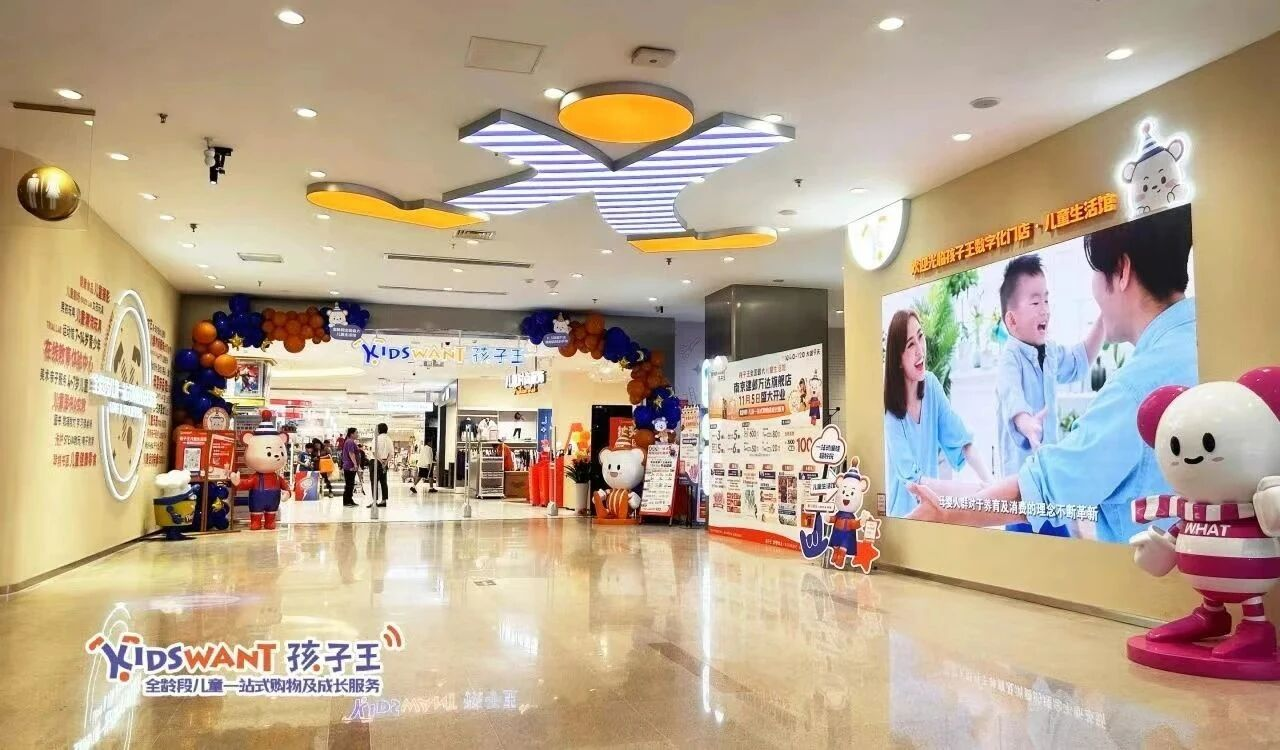
Core Viewpoint - The company, Kidswant, plans to issue H-shares and apply for listing on the Hong Kong Stock Exchange, advancing its "A+H" dual financing strategy to enhance internationalization and overseas business development [1][3]. Company Overview - Founded in 2009 and headquartered in Jiangning District, Kidswant is an innovative parent-child service provider that operates a membership-centric model combining products, services, and social interaction [3]. - As of now, Kidswant has over 7,000 certified parenting consultants and serves more than 87 million parent-child families through various channels [3]. - The company was listed on the Shenzhen Stock Exchange's ChiNext board on October 14, 2021, marking its entry into the capital market [3]. - As of October 28, 2025, Kidswant's total market capitalization is approximately 13.724 billion yuan [3]. Financial Performance - For the first nine months of 2025, Kidswant reported a revenue of 7.349 billion yuan, representing a year-on-year growth of 8.1% [3]. - The net profit attributable to shareholders for the same period was 209 million yuan, showing a significant year-on-year increase of 59.29% [3]. Industry Context - The "A+H" dual financing strategy allows companies to expand their financing channels and attract international investors, thereby accelerating global development [4]. - In 2023, four new companies were added to the domestic and overseas listing landscape in Nanjing, maintaining the same number as the previous year [4]. - The financial sector in Nanjing achieved a value-added of 116.7 billion yuan in the first half of 2023, with a year-on-year growth of 7.3% [4]. - The total securities trading volume in Nanjing reached 33.16 trillion yuan in the same period, reflecting a year-on-year increase of 38.3% [4].

埃斯顿:公司研发投入持续多年保持占销售收入的10%左右
Zheng Quan Ri Bao Zhi Sheng· 2025-10-29 09:12
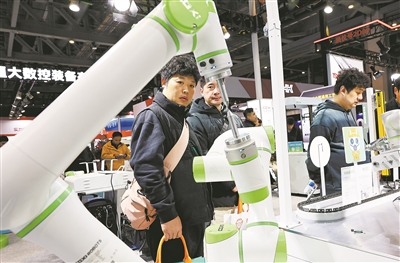
Core Insights - The company aims to transition from "following to surpassing" in its strategic objectives, maintaining R&D investment at around 10% of sales revenue for several years [1] - According to MIR Industrial data, the company's industrial robot shipments surpassed foreign brands for the first time in the first half of this year, achieving the top position in the Chinese industrial robot market with a market share of 10.5% [1]

青春华章丨江苏南京:孩子王拟赴港上市
Nan Jing Ri Bao· 2025-10-29 01:01
Group 1 - The core point of the article is that Kid King plans to issue H-shares and apply for listing on the Hong Kong Stock Exchange, advancing its "A+H" dual financing strategy to enhance internationalization and overseas business layout [1][3] - Kid King, founded in 2009 and headquartered in Jiangning District, has developed a data-driven, user relationship-based model, becoming a well-known brand in China's maternal and child retail industry, serving over 87 million parent-child families [3] - As of October 28, 2025, Kid King's total market capitalization is approximately 13.724 billion yuan, with a reported revenue of 7.349 billion yuan for the first nine months of 2025, representing an 8.1% year-on-year increase, and a net profit of 209 million yuan, reflecting a 59.29% year-on-year growth [3] Group 2 - The "A+H" strategy refers to companies being listed on both A-share and Hong Kong markets, which has become increasingly popular among listed companies in Nanjing to expand overseas business [4] - The dual financing platform not only broadens financing channels for companies but also attracts international investors, accelerating global development and enhancing competitiveness and brand influence [4] - In 2023, Nanjing added four new listed companies, maintaining the same number as the entire previous year, contributing to a financial industry value added of 116.7 billion yuan, a 7.3% year-on-year increase [4]