卫星互联网

Search documents
未知机构:中金军工商业航天信科移动更新点评市场部分投资者传言1-20260203
未知机构· 2026-02-03 02:20
Summary of Conference Call Notes Company and Industry Involved - The focus is on **信科移动 (Xinke Mobile)** and the **satellite internet industry** in China, particularly in relation to competitors like **华为 (Huawei)** and **中兴 (ZTE)** Core Points and Arguments 1. **Market Concerns**: There are rumors among investors that: - Chinese satellite internet may not achieve commercialization - Xinke Mobile's second-generation satellite payload is inferior to those of Huawei and ZTE - As a result, Xinke Mobile's stock dropped by 8.4% in early trading [1] 2. **Starlink's Validation**: - Starlink has demonstrated the commercial and strategic value of global communication infrastructure - Xinke Mobile, leveraging China's manufacturing advantages, is expected to be economically competitive with Starlink once satellite and rocket capabilities are established [1][2] 3. **User Preferences**: - Overseas users are seeking alternatives to US-based services for reasons of economic viability and information security [1] 4. **Competitive Landscape**: - Xinke Mobile's main competitor in the domestic satellite internet and 6G industrialization process is Huawei - Xinke Mobile is a key player in developing communication protocols for the satellite network, holding a significant position in the global 5G NTN standards [1] 5. **Progress and Partnerships**: - Xinke Mobile has completed payload in-orbit verification, leading ahead of competitors like Huawei and ZTE [2] - The second-generation system involves numerous suppliers, with the final market share dependent on technology, cost, and efficiency [2] 6. **Feasibility and Future Plans**: - The second-generation system has completed feasibility studies, with Xinke Group planning approximately 30,000 satellite launches [2] - The system will adopt a 5G NTN framework, which is expected to unify standards for 6G and global satellite internet [2] Other Important but Overlooked Content - There is a concern among end-users and some satellite manufacturers regarding the collaborative culture of certain companies, which may affect partnerships and market dynamics [2]

上海:积极支持智能网联新能源汽车、海洋经济、低空经济、航空航天、卫星互联网等产业发展
Jin Rong Jie· 2026-02-03 02:08
上海市第十六届人大四次会议2月3日上午在世博中心开幕。上海市市长龚正作《政府工作报告》。报告 表示,今年要深化国际经济中心建设。聚焦建设现代化产业体系,持续巩固壮大实体经济根基,在石 化、 钢铁等行业持续开展数智技术、绿色技术改造和产线升级,在 集成电路、 生物医药、 人工智能等 领域加快实施一批重大产业项目,积极支持智能网联 新能源汽车、 海洋经济、 低空经济、航空航天、 卫星互联网等产业发展,培育特色数字产业集群,大力推动服务业扩能提质、集聚发展。 ...
上海市长划重点:这些产业,全力支持
Di Yi Cai Jing· 2026-02-03 02:07
Group 1 - The report emphasizes the need to deepen the construction of an international economic center in Shanghai [1] - Focus will be on building a modern industrial system and strengthening the foundation of the real economy, particularly in industries like petrochemicals and steel through digital and green technology upgrades [1] - Major industrial projects will be accelerated in fields such as integrated circuits, biomedicine, and artificial intelligence [1] Group 2 - Active support will be provided for the development of industries such as smart connected new energy vehicles, marine economy, low-altitude economy, aerospace, and satellite internet [1] - There will be efforts to cultivate distinctive digital industry clusters and promote the expansion and quality improvement of the service sector [1]
2.2盘前速览 | SpaceX百万卫星计划震撼,光通信与AI应用引领节前轮动
Sou Hu Cai Jing· 2026-02-02 01:09
美联储提名:特朗普提名前理事凯文·沃什担任下任美联储主席,市场解读此举强化2026年降息预期。 地缘动态:围绕格陵兰岛的谈判据称进展顺利;美乌俄三边会谈、伊朗谈判架构均在推进中。 国内经济:卖方指出1月PMI放缓略超季节性,原材料价格上涨形成抑制。 相关ETF: 国债政金债ETF(场内:511580)、有色矿业ETF招商(场内:159690,场外:026477) 【卫星互联网】 SpaceX激进计划:向FCC申请部署最多100万颗卫星用于AI推理与数据中心,被解读为对近地轨道资源 的极限挤压。 商业进展:路透披露SpaceX财务状况,并称其可能与XAI商讨合并。 【宏观与政策】 应用热潮:腾讯"元宝"下载量剧增,并推出社交新玩法,重现红包盛况;人类无发言权的AI社交平台 Moltbook受关注。 巨头动态:黄仁勋透露英伟达将参与OpenAI下一轮融资,并看好台积电产能及存储需求;谷歌推出世 界模型原型Project Genie。 硬件与需求:网传谷歌新方案因HBM短缺探讨独立DRAM内存机柜;卖方强调2026年为CPO突破关键 年,LightCounting大幅上调远期出货预测。 基础设施:变压器工厂满产,订 ...

顶层设计指引,未来产业前景广阔
Guotou Securities· 2026-02-01 12:36
Investment Rating - The report maintains an investment rating of "Outperform the Market - A" [5] Core Insights - The future industry is expected to become a new economic growth point, with significant potential in quantum technology, embodied intelligence, and 6G technology. The report emphasizes the need for strategic planning and government support due to the long cultivation cycle and high market risks associated with future industries [1][11] - Quantum technology is highlighted as the leading sector within future industries, with four key areas expected to drive disruptive innovation: quantum computing, quantum communication, quantum measurement, and post-quantum cryptography [2][12] - Embodied intelligence is identified as a crucial application of artificial intelligence, facilitating the development of humanoid robots and advancing the robotics industry [2][12] - The second phase of 6G technology trials has been initiated in China, with over 300 key technologies developed, focusing on integrating satellite internet as a foundational infrastructure for 6G [3][13] Summary by Sections Industry Investment Rating - The report assigns an "Outperform the Market - A" rating, indicating an expected investment return exceeding the CSI 300 Index by 10% or more over the next six months [5][24] Future Industry Overview - The future industry encompasses a wide range of sectors, including information technology, bio-manufacturing, energy, and high-end equipment manufacturing, with substantial investment value due to its broad development space [1][11] Quantum Technology - Quantum computing is poised to solve complex problems beyond the capabilities of traditional computers, with potential breakthroughs in drug discovery and materials science. Quantum communication aims to enhance secure information transmission, while quantum measurement will improve precision in various fields [2][12] Embodied Intelligence - Embodied intelligence enhances AI's ability to interact with environments, leading to measurable and verifiable applications. Humanoid robots are expected to be key carriers of these algorithms, paving the way for general artificial intelligence [2][12] 6G Technology - The report notes that the first phase of 6G technology trials has been completed, with the second phase now underway, focusing on creating an integrated network that includes satellite internet as a critical infrastructure component [3][13]
特写:河北两会上的“雄安团”
Xin Lang Cai Jing· 2026-01-29 13:37
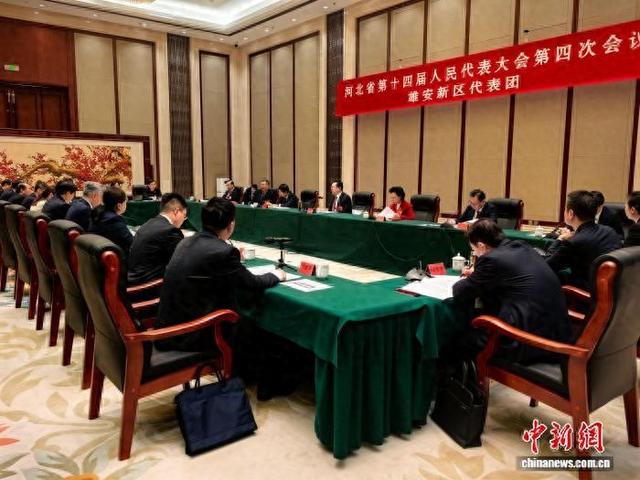
Group 1 - The core focus of the news is on the ongoing development and significance of the Xiong'an New Area, highlighted during the Hebei Provincial People's Congress sessions, showcasing its transformation and future potential [1][6]. - The Xiong'an New Area delegation consists of 17 representatives from the three counties of Xiong County, Rongcheng, and Anxin, including minority and female representatives, indicating a diverse representation [1][5]. - The Xiong'an Xuanwu Hospital, the first tertiary hospital in the area, has opened 38 departments since its establishment in October 2023, aiming to optimize medical resources and serve the non-capital functions of Beijing [5]. Group 2 - The hospital's outpatient visits are projected to reach 378,000 by 2025, doubling from 2024, while inpatient admissions are expected to exceed 10,000, marking a 273% increase from the previous year [5]. - The development of Xiong'an is characterized by a significant transformation from a "piece of land" to a "modern city," with improvements in ecological environment, agricultural modernization, and the growth of quality industries benefiting local residents [6]. - The Hebei government report emphasizes that during the 14th Five-Year Plan period, Xiong'an has made substantial progress in the coordinated development of the Beijing-Tianjin-Hebei region, with key projects relocating and a comprehensive highway network being established [6].

“未来之城”的快与慢(总书记的关切·落地的回响)
Ren Min Ri Bao· 2026-01-29 07:51
Core Viewpoint - The development of Xiong'an New Area emphasizes a balanced approach between rapid growth and sustainable urban planning, as highlighted by President Xi Jinping's directives for policy refinement to benefit relocated units and personnel [1]. Group 1: Rapid Development - The Xiong'an Innovation Center is accelerating research and development, with the "Xiong'an No. 1" satellite expected to launch in the first half of 2026, showcasing the rapid pace of technological advancement [2]. - Xiong'an Miaoxin Biotechnology Co., established in August 2023, plans to open clinics and has already attracted top scientists, leading to significant project approvals and a revenue target exceeding 23 million yuan by 2025 [3]. - The China National Chemical Corporation's headquarters in Xiong'an is set to house nearly 1,000 employees by October 2025, contributing to industrial and talent aggregation, with an annual investment of 200 billion yuan since the 14th Five-Year Plan [4]. Group 2: Sustainable Living - The Xiong'an Library, with a collection of 1.5 million volumes and advanced reading services, reflects the cultural enrichment efforts in the area, promoting a slower, more thoughtful lifestyle amidst rapid development [6]. - The ecological design of Xiong'an includes over 740,000 acres of green space, integrating nature with urban life, allowing residents to enjoy both work and leisure seamlessly [7]. - The relocation of families to Xiong'an, such as that of a biotechnology company manager, illustrates the community's commitment to providing quality housing and public services, fostering a sense of belonging among residents [8].
中国团队引领太空算力:首次太空在轨部署通用大模型,发2800颗卫星服务数亿硅基智能体
3 6 Ke· 2026-01-28 06:39
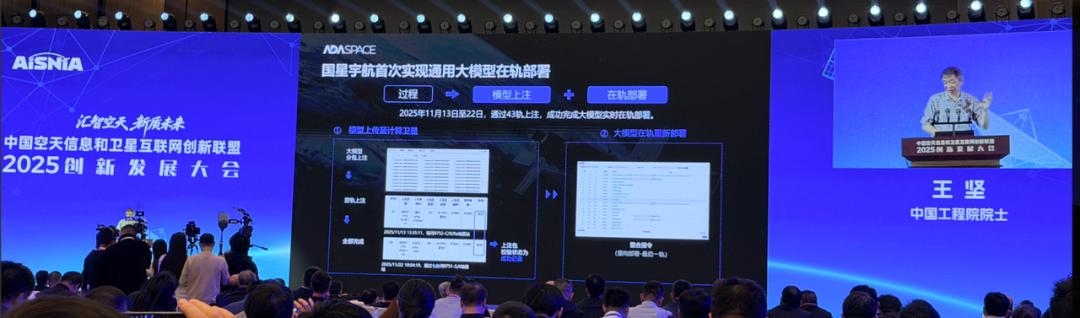
Core Insights - The global competition in AI is shifting focus to space computing power, with both the US and China making significant advancements in this area [1][2][8] Group 1: Developments in Space Computing Power - Starcloud, backed by Nvidia, has successfully run a large model in space using Nvidia H100, marking a significant technical validation [3][5] - Guoxing Aerospace plans to launch 2,800 satellites, with 2,400 dedicated to inference computing power reaching a total of 100,000 P-level, and 400 for training with a capacity of 1 million P-level [2][8] - Guoxing Aerospace has already completed key technology validations with its first group of space computing centers launched last year, and aims for commercial deployment by 2030 [2][8] Group 2: Differences in Approaches - Starcloud's approach involves deploying large models on the ground before sending them to space, while Guoxing Aerospace can deploy general large models in orbit and update them online as needed [5][6] - The difference in methodologies is likened to single-player versus online gaming, highlighting the advanced capabilities of Guoxing Aerospace [6] Group 3: Advantages of Space Computing Power - Space computing power can significantly reduce costs and energy consumption compared to traditional data centers, which are projected to consume 1 trillion kWh by 2026 [8][10] - The ability to provide real-time services from space can enhance the performance of silicon-based intelligent systems, such as Robotaxis and drones, by reducing latency [8][10] - Space computing power can also democratize AI access, providing infrastructure to remote areas lacking computational resources [10] Group 4: Technical Challenges and Innovations - The rapid evolution of AI computing chips poses challenges for maintaining up-to-date hardware in space, necessitating a hardware replacement mechanism [12][13] - Unique challenges in the space environment, such as heat management and protection against high-energy particles, require innovative solutions to ensure the reliability of space computing systems [14][15]
发展蓝图绘就 新的征程开启
Bei Jing Wan Bao· 2026-01-27 07:11
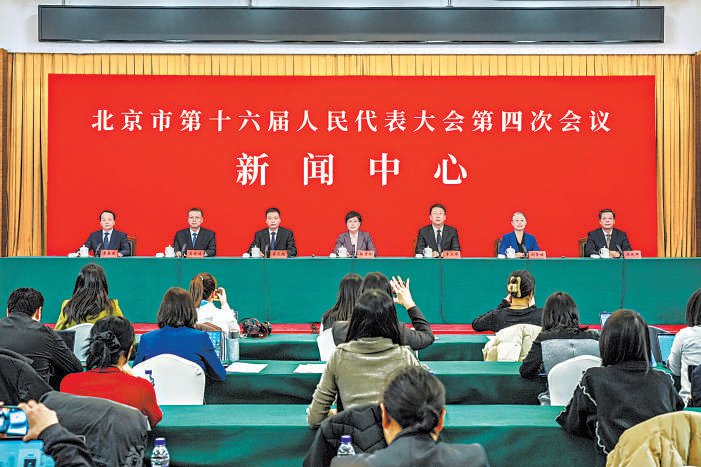
Group 1: Core Development Goals - The "14th Five-Year" period has seen significant progress in cultural initiatives, enhancing public cultural services for citizens [3] - The "15th Five-Year" plan aims to establish Beijing as a historical and cultural city, focusing on the protection and management of cultural heritage [4][5] - The plan emphasizes the integration of culture, commerce, tourism, and sports to create a comprehensive consumption experience [3] Group 2: Economic and Infrastructure Development - The fixed asset investment target for this year is set to exceed 1 trillion yuan, with a focus on strategic projects and infrastructure improvements [6][7] - Major projects include the implementation of significant industrial and infrastructure initiatives to enhance modern capabilities and public services [7] - The plan includes the establishment of a talent allocation mechanism to support core technology development and innovation [8][9] Group 3: Environmental and Health Initiatives - The "15th Five-Year" period will focus on achieving advanced carbon efficiency levels and improving ecological environments [10][11] - Measures will be taken to enhance the healthcare system, including the establishment of a tiered medical service system and improved access to healthcare resources [13] - The plan aims to promote green and low-carbon transitions in economic and social development [11] Group 4: Housing and Urban Development - The plan includes initiatives for urban renewal, such as the renovation of old elevators and the construction of accessible community spaces [12] - Housing policies will be improved to ensure better living conditions for new citizens and young people, with a focus on rental housing [12] - The goal is to transition from "housing for all" to "housing for livability," enhancing urban living quality [12]
A股收评:成交额3.28万亿元!三大指数集体下跌,贵金属、生物疫苗股逆市大涨
Ge Long Hui· 2026-01-26 07:11
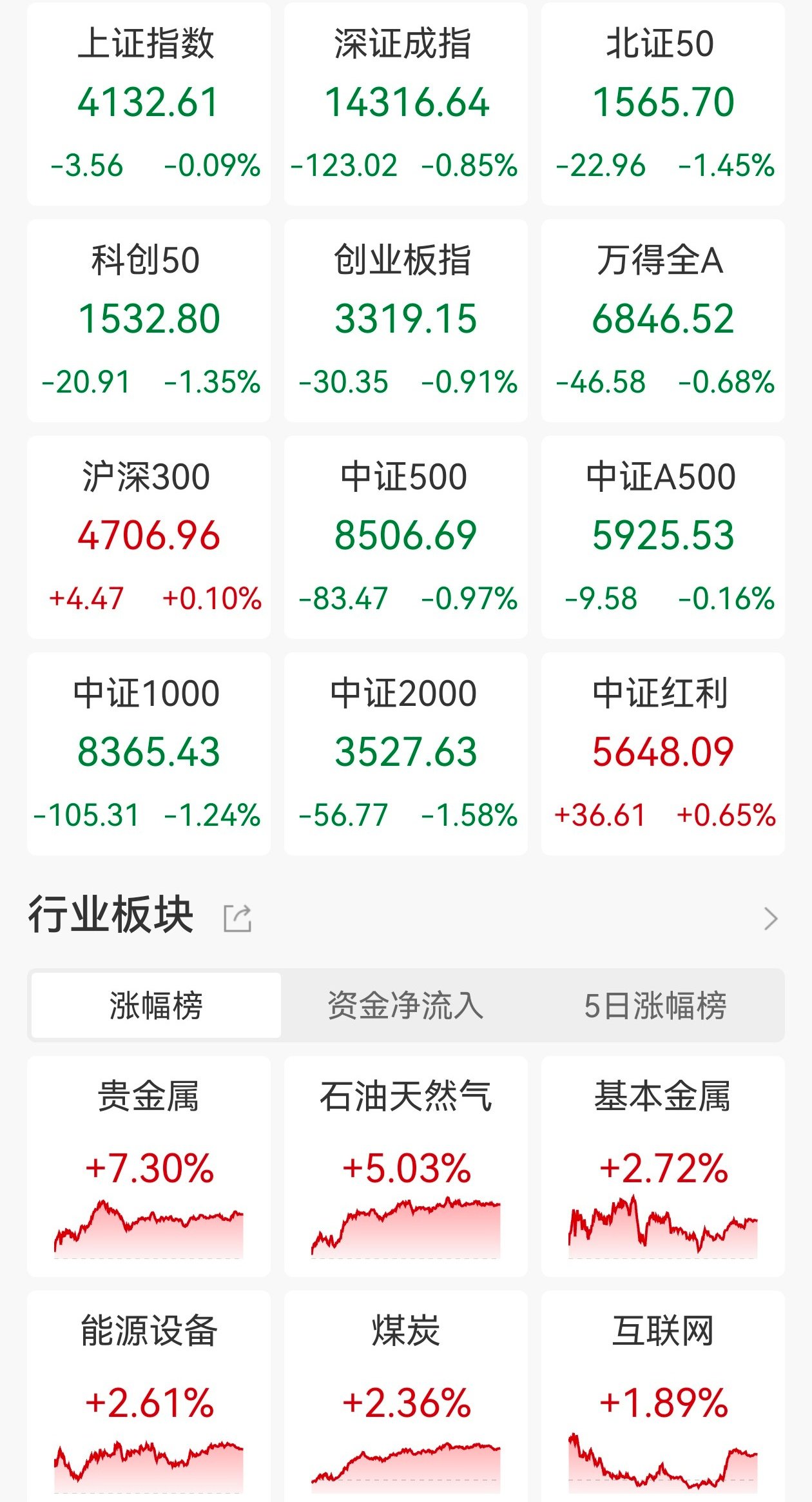
Market Overview - The three major A-share indices collectively declined, with the Shanghai Composite Index down 0.09% to 4132 points, the Shenzhen Component Index down 0.85%, and the ChiNext Index down 0.91% [1] - The total market turnover reached 3.28 trillion yuan, an increase of 162.5 billion yuan compared to the previous trading day, with over 3700 stocks declining [1] Sector Performance - Precious metals and gold concepts surged, with multiple stocks such as Xiaocheng Technology, Western Gold, and Hunan Silver hitting the daily limit [1] - The outbreak of the Nipah virus in India led to a rise in the biopharmaceutical sector, with stocks like Cap Bio also hitting the daily limit [1] - The non-ferrous metals sector saw gains, with stocks like Xingye Silver and Tin also reaching the daily limit [1] - The oil, insurance, and influenza sectors performed well, showing significant gains [1] - Conversely, the commercial aerospace and satellite internet sectors experienced a sharp decline, with stocks like China Satellite and Aerospace Development hitting the daily limit [1] - The 6G concept sector fell, with Yaguang Technology dropping over 13% [1] - The military industry sector also declined, with stocks like Chaojie Co. falling over 10% [1] - Sectors such as LiDAR, AI chips, and humanoid robots faced significant losses [1] Fund Inflow and Performance - The top sectors by net fund inflow included oil and gas (+7.30%), precious metals (+5.03%), and basic materials (+2.72%) [2] - Other sectors showing positive performance included coal (+2.61%), energy equipment (+2.36%), and the internet sector (+1.89%) [2]