家具

Search documents
坚定信心 勇毅前行 为全市经济社会发展作出新的更大贡献
Xin Lang Cai Jing· 2026-02-07 08:28
Core Viewpoint - The article emphasizes the importance of tailored strategies for enterprises to promote transformation, focusing on smart manufacturing, green upgrades, and emerging strategic industries, while also aiming for a strong start in the first quarter of the year [1] Group 1: Industry Transformation and Investment - The initiative "One Enterprise, One Policy" aims to drive the transformation of large-scale enterprises and guide investments towards intelligent manufacturing and green modifications [1] - There is a strong push to develop industries that favor air transport and to create a high-speed rail economic zone, integrating into the future city of Xiong'an [1] Group 2: Economic Development and Innovation - The plan includes accelerating the incubation and industrialization of technological achievements in Bazhou [1] - The furniture industry is targeted for transformation and upgrading, with plans to establish a small home appliance industrial park and expedite the development of the Bazhou billiards industry cluster [1] Group 3: Reform and Open Market - The article highlights the need for deep reforms and expanded openness, including the reform of development zone systems and optimizing market resource allocation [1] - There is a focus on developing cross-border trade and supporting private enterprises to create a first-class business environment [1] Group 4: Urban and Rural Development - The implementation of urban renewal actions and comprehensive improvements in rural living environments are emphasized to enhance the quality of urban and rural areas [1] Group 5: Social Welfare and Stability - Continuous implementation of livelihood projects and addressing urgent public concerns are prioritized to ensure social stability and safety [1]
市场监管服务经济高质量发展有新举措
Xin Lang Cai Jing· 2026-02-05 22:20
Group 1 - The core viewpoint of the articles emphasizes the importance of optimizing the consumer environment in China as a key strategy to boost consumption and economic development [1][2][3] - The State Administration for Market Regulation (SAMR) has launched a three-year action plan to enhance the consumer environment, which has already shown preliminary results [1] - In 2025, SAMR received 26.46 million complaints and reports, recovering economic losses of 4.35 billion yuan for consumers, and recalled 8.236 million consumer goods [1] Group 2 - SAMR plans to establish "reassuring consumption" zones and develop related standards and policies to create trustworthy markets and scenic areas for consumers [2] - The focus will be on enhancing traditional industries and promoting high-quality service sector development, addressing new consumer demands for safety, quality, and sustainability [2] - In 2025, SAMR will conduct special actions to rectify the abuse of power and limit competition, with a significant increase in the number of cases investigated and resolved [3] Group 3 - The SAMR is responsible for antitrust reviews of mergers and acquisitions, balancing support for resource consolidation with the prevention of monopolies [4] - In 2025, SAMR reviewed 706 merger cases, a 9.8% increase year-on-year, with 83% of cases concluded within 30 days [4] - The agency aims to enhance the efficiency and quality of merger reviews while ensuring market competition and protecting supply chain security [4]
2026年,钱从哪挣?
创业家· 2026-02-05 10:21
Core Viewpoint - The article discusses the importance of exploring international markets for Chinese companies in response to domestic demand shortages and increasing competition, emphasizing the need for a comprehensive approach to overseas expansion that includes the entire value chain [2][5][6]. Group 1: Value Chain Expansion - The concept of "going overseas" has evolved from merely exporting products to relocating the entire value chain, including branding, research and development, and business models to foreign markets [8][11]. - An example is Miniso, which engages with its millions of private domain users to understand their preferences and directly opens stores overseas to enhance brand recognition [12][13]. Group 2: Collaborating with Industry Leaders - Many industry leaders are beginning to expand internationally, but successful overseas operations require integrating complex supply chain systems and collaborating with local partners [14][15]. - Tesla's Shanghai Gigafactory exemplifies this, as it operates efficiently due to the support of numerous upstream and downstream suppliers within a 300-kilometer radius [18][20]. Group 3: Leveraging Unique Advantages - Companies are finding success in international markets by leveraging their unique advantages, such as cost efficiency and product innovation [23][25]. - For instance, a factory owner in Yiwu has opened a store on a cross-border platform, where products can sell for double the domestic price [26]. Group 4: Building Long-Term Trust - Establishing long-term trust with customers is crucial, as demonstrated by the story of Pang Donglai, who prioritizes employee welfare and customer service, leading to a loyal customer base [31][34]. - This trust allows businesses to better understand customer feedback and improve their offerings [35][36]. Group 5: Meeting Evolving Consumer Needs - The article highlights a shift in consumer behavior, where individuals are willing to pay for enhanced experiences, indicating a growing demand for services that cater to these desires [39][46]. - Businesses must create scenarios that fulfill these needs, as traditional mass-market opportunities diminish [43][44].


顾家家居(603816):内贸零售转型+外贸全球一体化效果逐步显现
Xin Lang Cai Jing· 2026-02-05 08:29
Group 1: Domestic Market Transformation - The domestic furniture industry is transitioning from an incremental market to a stock market, with operational growth potential through retail transformation and refined operations [1] - There is a significant increase in demand for functional and intelligent furniture, presenting structural growth opportunities [1] - The company is enhancing internal operational efficiency through lean production and cost improvement while increasing investment in product technology innovation to maintain stable gross margins [1] Group 2: Policy Impact on Consumption - The "old-for-new" national subsidy policy, effective from 2024, has significantly stimulated furniture consumption [2] - Since Q2 2025, the impact of the subsidy policy on terminal retail has gradually weakened, returning to normal levels [2] - The company plans to increase technological innovation in functionality and intelligence to meet diverse consumer demands for high-quality products [2] Group 3: International Trade and Market Expansion - The U.S. market is a key area for the company's overseas business, with changes in U.S. tariff policies presenting both opportunities and challenges [3] - The company is expanding production capacity in Vietnam and Mexico to mitigate the impact of tariffs and enhance production efficiency [3] - The company has a global presence in over 120 countries, with a focus on direct exports and self-owned brands in the EU market [3] Group 4: Retail and Global Strategy Progress - The company has achieved phase results in its retail transformation, with consistent growth in retail sales despite market pressures [4] - The global deepening strategy is progressing steadily, with increased localization of personnel and the establishment of integrated local value chains [4] - Foreign trade revenue has shown steady growth, maintaining double-digit growth from 2024 to H1 2025 [4] Group 5: Financial Projections - The company maintains its profit forecast, expecting net profits of 1.87 billion, 2.08 billion, and 2.33 billion yuan for the years 2025 to 2027, corresponding to P/E ratios of 15X, 14X, and 12X respectively [5]

家居消费再获政策力挺,2026年有哪些机会值得把握?
Sou Hu Cai Jing· 2026-02-05 04:44
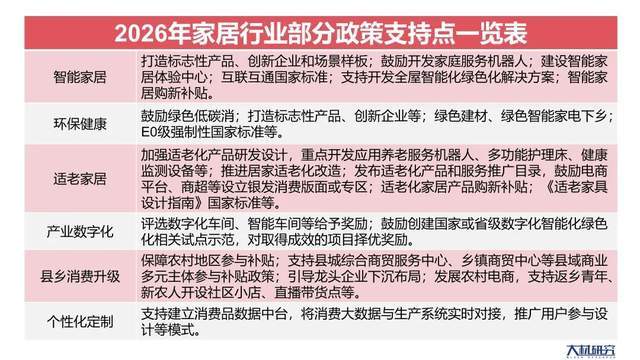
Core Viewpoint - The home furnishing industry is set to benefit from a series of supportive policies aimed at promoting consumption, particularly in the areas of smart home technology, green materials, and elderly care products, with significant financial backing from the government [1][4][5]. Policy Support Overview - The government plans to inject 500 billion yuan in special bonds to support the "Two New" initiatives in 2025, which will stimulate the home furnishing market [1]. - Retail sales of furniture are projected to reach 209.2 billion yuan in 2025, marking a 14.6% year-on-year increase [1]. - The home appliance replacement program has seen over 12.84 million units replaced in 2025, with kitchen and bathroom renovations exceeding 120 million items [1]. Key Focus Areas for 2026 - Smart Home: Development of flagship products, innovation in enterprises, and establishment of smart home experience centers are prioritized [2][3]. - Environmental Health: Promotion of green low-carbon consumption and the introduction of mandatory national standards for E0-level materials [4][9]. - Elderly Care: Emphasis on the development of elderly-friendly products and services, including home modifications and the introduction of elderly care robots [2][15]. - Digital Transformation: Support for digital workshops and smart manufacturing initiatives to enhance production efficiency [3][18]. - Rural Consumption Upgrade: Policies to facilitate rural participation in subsidy programs and support local commerce [2][18]. Market Opportunities - The shift towards E0-level materials will benefit companies that have already adapted to higher environmental standards, pushing the industry towards greener practices [9]. - The smart home sector is experiencing growth due to technological advancements and increased consumer acceptance, with a focus on products like smart beds and cleaning robots [11][12]. - The elderly care market is gaining traction, with numerous brands launching products tailored for elderly needs at the upcoming China International Furniture Fair [16][18]. Industry Trends - The 2026 China International Furniture Fair will align with government policies, showcasing innovations in smart home technology, green health, and digital solutions [8][19]. - Local policies are emerging to enhance the home furnishing ecosystem, including initiatives to promote smart home integration and support for renovation projects [7][18]. - The overall market is expected to see a convergence of policy support, digital transformation, and consumer demand, creating a favorable environment for growth [19].
2026年中信里昂证券FS指数
2026-02-05 02:21
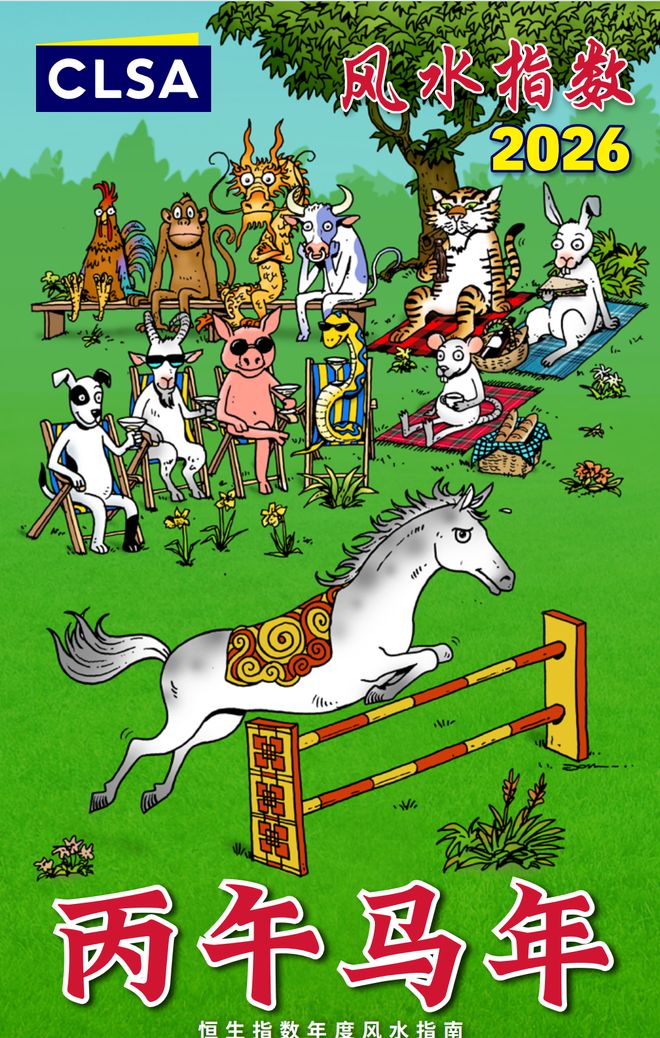
Summary of Key Points from the Conference Call Industry or Company Involved - The conference call focuses on the **2026 Feng Shui Index** and its implications for various industries, particularly the **real estate sector** and the **Hang Seng Index (HSI)**. Core Insights and Arguments - The **2025 market performance** was characterized by volatility, with the Hang Seng Index experiencing unexpected declines and subsequent rebounds, ultimately surpassing initial predictions [4][5]. - The **2026 Feng Shui Index** suggests a positive outlook for the year, with expectations of a strong market performance akin to a galloping horse, indicating a year of opportunities and potential surprises [8][12]. - The **real estate sector** is forecasted to face challenges, as it lacks direct auspicious influences in the current year's predictions. However, specific directions (East and Southeast) are noted to have favorable prospects, while the North and South may encounter disruptions [11][59]. - The **HSI**, categorized as an Earth element, is expected to benefit from the fire energy of the year, leading to a brighter outlook despite previous caution [11][12]. Other Important but Possibly Overlooked Content - The **Feng Shui Index** integrates traditional Chinese metaphysics, including the Five Elements theory, to predict market trends and sector performances [39][46]. - The **Wood element** is expected to thrive in 2026, positively impacting industries related to agriculture, furniture, and pharmaceuticals, while the **Fire element** is anticipated to boost sectors like energy production and communications [42][46]. - The **Water element** is predicted to be weak, potentially hindering the shipping and trade industries, as well as sectors related to small goods and aquaculture [56]. - The **real estate sector** is expected to struggle, but construction materials like sand and cement may see growth, particularly towards the end of the year [49]. This summary encapsulates the essential insights from the conference call, highlighting the anticipated trends and challenges across various sectors as influenced by the Feng Shui Index for 2026.
郭文海尹念红与市两会企业家代表、委员座谈:凝聚政企同心拼经济强大动力 以愚公移山之志攻坚克难争先进位
Xin Lang Cai Jing· 2026-02-04 17:28
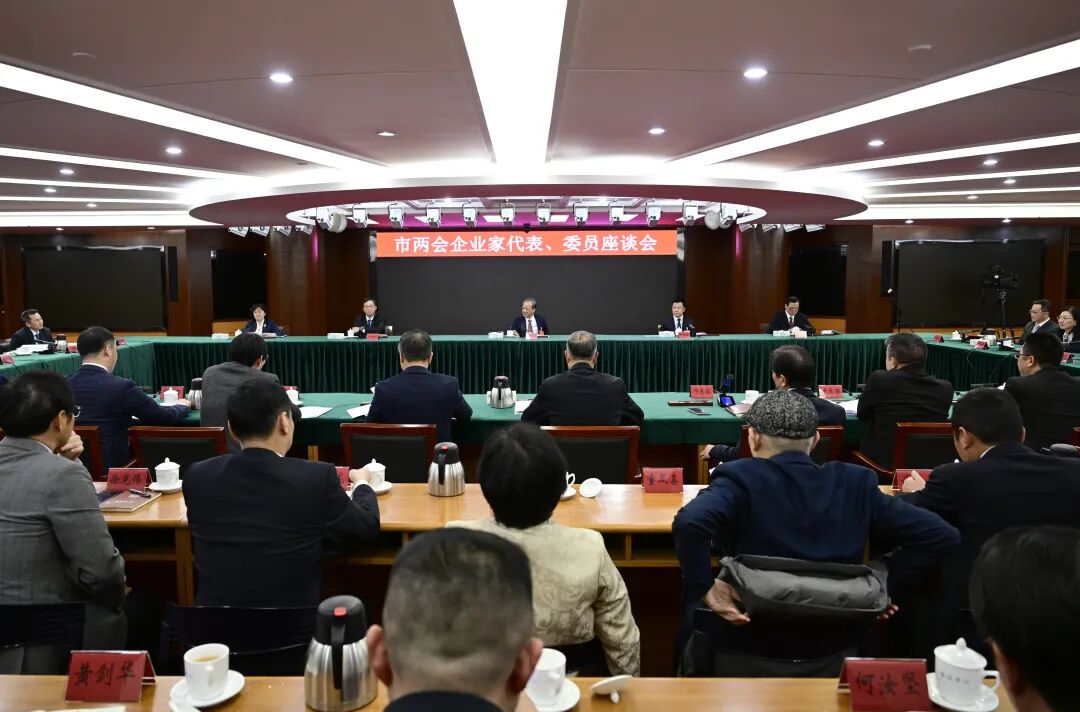
Core Viewpoint - The meeting emphasized the importance of collaboration between government and enterprises to drive economic growth and ensure a strong start to the "14th Five-Year Plan" period [1][6]. Group 1: Government Support and Initiatives - The city government is committed to supporting traditional manufacturing industries, which are considered the foundation of the local economy, by promoting digital and intelligent transformation policies [5]. - The government encourages enterprises to leverage the "industrial transformation" policy to optimize and upgrade their operations, with a focus on sectors like lighting, furniture, home appliances, clothing, and hardware [5]. - The city plans to continue hosting promotional events, such as "Guangdong Goods Going Global," to enhance the visibility of local products and facilitate market expansion [5]. Group 2: Business Engagement and Feedback - Business leaders expressed their appreciation for the favorable business environment and efficient government workforce, sharing successful examples of collaboration between government and enterprises [3]. - Entrepreneurs are encouraged to submit leads for investment opportunities that align with their supply chains to assist in the city's high-quality development [3]. - The government is tasked with actively addressing business concerns and ensuring that all suggestions are acknowledged and acted upon [3][6]. Group 3: Future Goals and Economic Development - The city aims to create a first-class business environment that fosters innovation and growth, with a focus on overcoming challenges and achieving significant results in key areas such as industrial transformation and environmental management [6]. - The leadership calls for a collective effort from entrepreneurs and government to achieve the economic and social development goals set for the year, emphasizing the need for proactive market exploration and collaboration [6].
中信里昂风水指数2026:港股马年“进两步,退一步”,高位会在11月-12月初出现
Xin Lang Cai Jing· 2026-02-04 09:58
Core Viewpoint - The annual Feng Shui guide by Citic Securities indicates a positive outlook for the Hang Seng Index in the Year of the Fire Horse, suggesting a stable upward trend despite potential initial declines in early 2024 [1]. Market Outlook - The Hang Seng Index is expected to experience stable growth, having shown positive performance in three out of the last four Horse years [1]. - A forecasted initial decline is anticipated at the beginning of the year, with a gradual recovery expected after April [1]. - The second half of the year is predicted to exhibit a "two steps forward, one step back" pattern, with peak performance expected between November and early December, followed by a slight softening before a year-end rebound [1]. Sector Analysis - Industries associated with Wood, such as furniture, herbal products, and pharmaceuticals, are expected to thrive in the Year of the Horse [1]. - Fire-related sectors, including telecommunications and energy, are also anticipated to benefit from favorable conditions [1]. - The financial products sector, categorized under Metal, is recommended for focused attention throughout the year [1]. - The real estate sector, associated with Earth, is expected to struggle to gain momentum [1]. - The Water element is predicted to be the weakest, leading to stagnation in the shipping industry and challenges for the tourism sector [1].
去年规上轻工业增加值增长5.3%
Ren Min Ri Bao· 2026-02-03 22:55
Core Insights - The overall economic operation of China's light industry is expected to remain stable in 2025, with a year-on-year growth of 5.3% in the added value of large-scale light industry [1] - Light industry accounts for 13% of national industrial assets, contributing to 16.5% of national industrial revenue and 18.8% of profits [1] Group 1: Industry Growth - The added value growth rate of the electric vehicle, battery, and plastic furniture manufacturing sectors is projected to exceed 20% [1] - The agricultural and sideline food processing industry and food manufacturing industry are expected to see year-on-year growth rates of 5.6% and 5.3%, respectively [1] - Among 90 major light industrial products, 35 products are expected to see an increase in output, with electric bicycle output growing by 21.6% and solar cell output increasing by 7.6% [1] Group 2: Consumer Demand - Domestic consumption demand is continuously being released due to a series of policies aimed at expanding domestic demand and promoting consumption [1] - The retail sales of 11 categories of light industry goods are projected to reach 86,719 billion yuan, reflecting a year-on-year growth of 7.8% [1] - Retail sales of household appliances and audio-visual equipment are expected to grow by 11%, furniture retail sales by 14.6%, and cultural and office supplies retail sales by 17.3% [1]
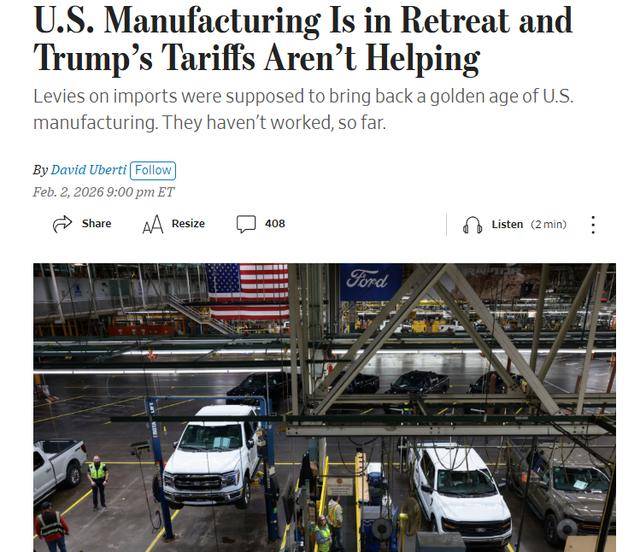
美国制造业“黄金时代”未现,反而持续走弱
Sou Hu Cai Jing· 2026-02-03 12:37
Core Viewpoint - The article highlights that despite the U.S. government's commitment to revitalize manufacturing through tariffs and industrial policies, the manufacturing sector continues to weaken, failing to achieve the promised "golden age of American manufacturing" [1] Group 1: Employment and Manufacturing Activity - U.S. manufacturing jobs have decreased for eight consecutive months since the announcement of the "liberation day" tariff policy, with over 200,000 jobs lost in 2023, marking the lowest employment level since the end of the COVID-19 pandemic [4] - The manufacturing index from the Institute for Supply Management (ISM) has remained in contraction territory for 26 months, indicating persistent weakness in manufacturing activity [4] - Analysts believe that the brief uptick in new orders and production data in January 2023 is insufficient to reverse the overall downward trend in the manufacturing sector [4] Group 2: Investment and Policy Uncertainty - The uncertainty surrounding the "stop-and-go" tariff policies is dampening investment willingness among businesses, with recent threats from the U.S. President to impose new tariffs on Europe, Canada, and South Korea exacerbating the risk of policy changes [5] - Business executives describe the past year as a "wasted investment period" due to the unpredictability of tariff policies [5] Group 3: Industry-Specific Challenges - Insteel Industries, a wire products company, reports that it has not benefited from the tariff policies, facing domestic raw material shortages due to increased steel tariffs, which have risen to 50% [6] - A manufacturer operating 23 factories globally notes that tariffs have raised the costs of steel and aluminum, limiting the ability to invest in new areas such as data centers and electrical equipment [8] - The CEO of Skyline, a furniture manufacturer, points out that high interest rates and weak consumer demand are also negatively impacting manufacturing demand, with tariffs on wood and textiles from Vietnam increasing costs and destabilizing supply chains [8]