农业种植

Search documents
巴西积极推广再生农业
人民网-国际频道 原创稿· 2025-09-26 05:39
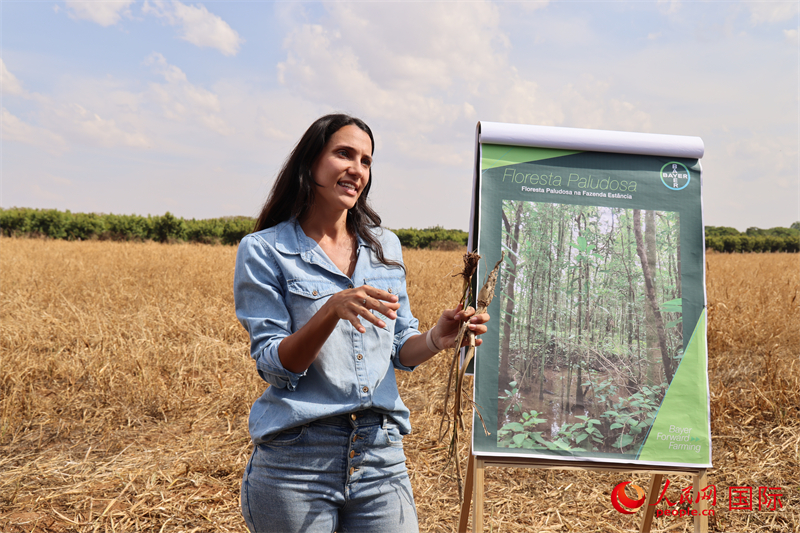
Core Viewpoint - The article highlights the benefits and advancements of regenerative agriculture in Brazil, particularly at the Estância Farm, showcasing its role in sustainable farming practices and carbon footprint reduction [2][5][8]. Group 1: Regenerative Agriculture Practices - The Estância Farm, covering 1,100 hectares, has implemented regenerative agriculture management practices, enhancing production stability and land resilience [2][4]. - The farm participates in Bayer's global regenerative agriculture program, promoting core principles and advanced technologies [2][4]. - The farm employs cover crops, which are not harvested but integrated into the soil to improve soil quality and nutrient cycling [2][4]. Group 2: Production and Yield - Over the past five years, the farm's soybean yield has remained stable at approximately 4,000 kilograms per hectare, exceeding the regional average by about 25% [4]. - Despite challenges from extreme weather conditions, the farm's production has remained relatively stable, demonstrating the resilience provided by regenerative agriculture [4]. Group 3: Carbon Footprint and Sustainability - In the 2024/2025 harvest season, the average carbon footprint for soybeans produced at the farm is 616.4 kilograms of CO2 equivalent per ton, which is 60% lower than the national average of 1,526 kilograms [5]. - The carbon footprint for corn is 751.7 kilograms of CO2 equivalent per ton, 46% lower than the national average [5]. - Bayer's carbon business development coordinator emphasizes the use of a carbon emissions calculation tool to encourage farmers to adopt practices that further reduce carbon emissions [6]. Group 4: Market Opportunities - The farm currently exports 95% of its soybean production to China, indicating a significant market opportunity driven by China's demand for green and sustainable agriculture [6]. - The upcoming 30th UN Climate Change Conference in Brazil is expected to elevate discussions on sustainable development and environmental protection, creating new opportunities for regenerative agriculture [8]. Group 5: Adoption and Standards - Brazilian farmers have shown a high acceptance of sustainable agricultural practices, with an average adoption of 9.8 regenerative agriculture methods, surpassing the global average of 6.6 [9]. - A report from the Brazilian Sustainable Development Business Council indicates that Brazilian agricultural operators are beginning to implement regenerative agriculture, achieving significant results across various production chain segments [10].

农业种植概念股活跃,众兴菌业涨停
Xin Lang Cai Jing· 2025-09-26 05:29
Group 1 - Agricultural planting concept stocks are active, with Zhongxing Junye hitting the daily limit [1] - Qiu Le Seed Industry, Guangyu Group, Hualv Biological, Shennong Seed Industry, Kangnong Seed Industry, and Wancheng Group also saw increases [1]


记者在浙江、广东、贵州等地探访—— 经理人如何盘活农村集体经济(人民眼·乡村全面振兴)
Ren Min Ri Bao· 2025-09-25 22:14
Core Insights - The article discusses the role of rural collective economic managers in revitalizing rural economies in China, highlighting their impact on agricultural production and community development [1][2][3] Group 1: Role of Rural Collective Economic Managers - Rural collective economic managers are tasked with developing and managing economic activities in rural areas, focusing on resource allocation and operational management [1][2] - The introduction of this role has led to significant improvements in rural economies, as seen in the case of Shimen Village, where the collective income reached 1.46 million yuan last year [1][2][3] Group 2: Case Studies of Successful Implementation - Zhao Yingwu, a rural collective economic manager, successfully revitalized Shimen Village's economy by focusing on pepper cultivation, resulting in a profit of 80,000 yuan despite initial challenges [3][4] - In contrast, Liu Song in Yuhang District, Zhejiang, enhanced the village's economic performance by integrating cultural and tourism activities, leading to a collective income increase to 6.09 million yuan by 2024 [5][6][7] Group 3: Recruitment and Training of Managers - Various recruitment strategies are employed across regions, including social recruitment, local selection, and state-owned enterprise assignments, to attract talent to rural areas [12][14] - Training programs are being established to cultivate managerial skills among rural economic managers, with initiatives like the "Rural CEO" training plan in Zhejiang and Guangdong [16][17] Group 4: Challenges and Solutions - Despite progress, challenges remain in attracting and retaining talent in rural areas, particularly in western regions where resources are limited [12][13] - Innovative solutions, such as policy support and mentorship programs, are being implemented to assist rural managers in overcoming operational challenges [18][19][20]
经理人如何盘活农村集体经济(人民眼·乡村全面振兴)
Ren Min Ri Bao· 2025-09-25 22:12
Core Insights - The article discusses the role of rural collective economic managers in revitalizing rural economies in China, highlighting successful case studies from different regions [8][10][12]. Group 1: Role of Rural Collective Economic Managers - Rural collective economic managers are essential for developing new rural collective economies, focusing on resource management and operational activities [8][9]. - The position has gained recognition as a new profession, with the government actively recruiting individuals with relevant skills to enhance rural economic development [8][12]. Group 2: Case Studies - Zhao Yingwu, a rural collective economic manager in Guizhou, successfully transformed his village's economy by focusing on chili pepper cultivation, achieving a collective income of 1.46 million yuan last year [10][11]. - Liu Song, another manager in Zhejiang, improved his village's economic performance from 730,000 yuan in 2019 to 6.09 million yuan in 2024 through agricultural and tourism integration [12][14]. Group 3: Recruitment and Training - Various recruitment strategies are employed, including social recruitment, local selection, and state-owned enterprise assignments, to attract talent to rural areas [18][20]. - Training programs are being implemented to cultivate managerial skills among rural economic managers, with initiatives like the "Rural CEO" training plan in Zhejiang and Guangdong [22][23]. Group 4: Challenges and Solutions - Despite progress, challenges remain in attracting and retaining talent in rural areas, particularly in western regions where resources are limited [18][19]. - Local governments are implementing supportive policies and mentorship programs to assist rural economic managers in overcoming operational challenges [24][25].

中国积极参与国际农业合作
Ren Min Ri Bao· 2025-09-25 22:04
Group 1 - The core viewpoint highlights China's active participation in international agricultural cooperation, significantly contributing to agricultural transformation and sustainable rural development in global southern countries [1] Group 2 - In Mauritania, over 80% of the land is covered by desert, and the introduction of new forage varieties by Chinese experts has revitalized local livestock farming [1] - In Suriname's Saramacca region, Chinese agricultural technology has transformed traditional extensive farming practices, leading to income growth of over 60% for some farmers [1] - In a small town in northeastern Brazil, Apodi, Chinese agricultural machinery and technology have increased local lettuce production efficiency by 6 to 7 times [1]
粤暖天山写新篇:广东在教育等多领域支援建设美丽新疆的努力
Nan Fang Du Shi Bao· 2025-09-25 07:27
Group 1: Education - The establishment of Guangzhou New City Experimental School in Xinjiang aims to become a leading educational institution in the region, supported by Guangdong's aid and managed by Guangzhou Concord School [3][4] - The school utilizes AI technology for classroom management and provides a creative education matrix covering robotics, artificial intelligence, and drone modeling [3] - Xinjiang's nine-year compulsory education consolidation rate is projected to reach over 99% by 2024, exceeding the national average [3] Group 2: Industry - The employment scale in Xinjiang has expanded, with total employment increasing from 12.46 million in 2012 to 13.91 million in 2024 [7] - The average disposable income for urban residents in 2024 is projected to be 42,820 yuan, while rural residents' income is expected to be 19,427 yuan, reflecting significant growth since 2012 [7] - Guangdong enterprises are actively involved in local agriculture, such as chili pepper cultivation, with an estimated 13,000 acres planted and a profit of 2,800 yuan per acre expected in 2024 [8] Group 3: Logistics - The establishment of a 5G smart logistics port in Kashgar has significantly reduced delivery times for e-commerce, achieving same-day delivery in several areas [8][9] - The logistics port aims to become a distribution center not only for southern Xinjiang but also for Central and South Asia [9] Group 4: Healthcare - Xinjiang's healthcare system has improved, with over 19,000 medical institutions and a healthcare workforce of 314,600 by 2024 [10] - Guangdong's medical aid has focused on building a sustainable healthcare workforce in Xinjiang through training and mentorship programs [13] - The introduction of a digital immunization platform and various health initiatives has enhanced local healthcare capabilities [12][13]
国信期货牵头2025年郑商所烟台市苹果“保险+期货”收入险项目正式启动
Qi Huo Ri Bao· 2025-09-25 07:10
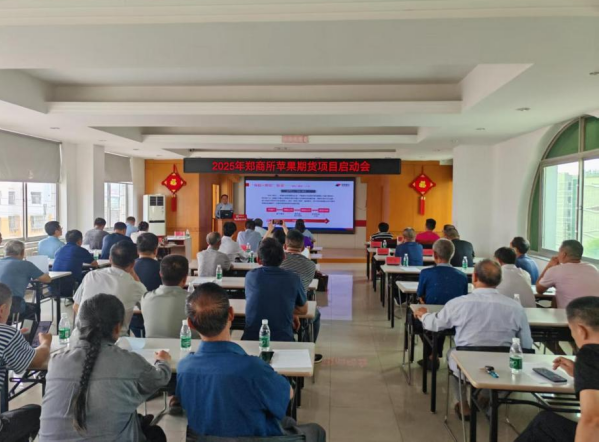
Core Viewpoint - The launch of the "Insurance + Futures" income insurance project for Yantai apples marks a new phase in utilizing financial tools to address market and natural risks in the apple industry [1][3]. Group 1: Project Overview - The project was initiated by Guoxin Futures and underwritten by PICC Yantai, with participation from over 50 representatives from local agricultural departments, financial institutions, and growers [1]. - The income insurance introduced this year provides dual protection against price fluctuations and yield losses due to disasters, enhancing the financial security of apple growers [3]. Group 2: Financial Impact - In 2024, the project provided approximately 330 million yuan in price risk protection, covering an area of 23,000 acres, with total compensation reaching 12.44 million yuan, effectively filling the income gap for farmers [3]. - Guoxin Futures has implemented over 150 "Insurance + Futures" projects across more than 20 provinces since 2017, with a total project amount exceeding 5 billion yuan, benefiting over 100,000 farmers [5]. Group 3: Innovation and Future Development - The project represents an upgrade from traditional price insurance to income insurance, addressing both price volatility and yield loss, thus supporting the high-quality development of the apple industry [5][6]. - Guoxin Futures is continuously innovating the "Insurance + Futures" model, exploring combinations with weather indices, contract farming, and basis purchasing to enhance agricultural risk management [5][6]. Group 4: Stakeholder Engagement - Representatives from various futures companies shared market analysis and operational experiences, emphasizing the project's positive impact on regional agricultural resilience and farmer income [6]. - Growers expressed their recognition of the "Insurance + Futures" model in effectively reducing operational risks and provided suggestions for optimization [6].
新疆,是个好地方!
Yang Shi Xin Wen Ke Hu Duan· 2025-09-24 12:58
Group 1 - Xinjiang is the largest provincial-level administrative region in China, featuring diverse landscapes and rich cultural heritage [1][4][8] - The region has 28 branch line airports, making it comparable in distance from Kashgar to Hami to the distance from Beijing to Guangdong [4] - Xinjiang's geography includes the Tianshan Mountains, Altai Mountains, and Kunlun Mountains, with significant basins like the Junggar Basin and Tarim Basin [8][11] Group 2 - Xinjiang is home to numerous natural wonders, including high-altitude lakes and vast grasslands, contributing to its reputation as a tourist destination [17][29][36] - The region's unique climate allows for the cultivation of various fruits, with notable products including grapes from Turpan and melons from Hami [110][111][114] Group 3 - Xinjiang has a rich cultural scene, with traditional markets (Bazaars) showcasing local crafts and foods, reflecting the region's diverse ethnic heritage [70][72][74] - The region is known for its vibrant music and dance culture, with performances that highlight the unique traditions of its ethnic groups [96][98] Group 4 - Xinjiang is a significant player in the renewable energy sector, with wind energy resources accounting for about one-fifth of the national total [117] - The region has developed a comprehensive wind power industry, leading in the production of wind turbines and solar energy technologies [118][121] Group 5 - Modern agricultural practices are being implemented across Xinjiang, with advancements in technology leading to increased yields in various crops [121][125] - The region's diverse agricultural products and unique industries, such as the development of seabuckthorn and chickpeas, are contributing to local economic growth [125][128]

“全球第一经济大省”来了!GDP超4万亿美元,超过全球190个国家
Sou Hu Cai Jing· 2025-09-24 09:16
Group 1: Economic Performance - In 2024, California's GDP reached $4.1 trillion, surpassing Japan's GDP of $4.02 trillion, making California the fourth-largest economy globally [3][4] - California's GDP accounts for 14% of the total U.S. GDP, which is $29.18 trillion in 2024 [4] - California outperformed other major economies, including Brazil ($2.1 trillion), South Korea ($1.8 trillion), and Australia ($1.7 trillion) [4] Group 2: Economic Drivers - California's economic success is attributed to three main sectors: technology, diversified industries, and manufacturing [6][14] - The technology sector, particularly Silicon Valley, is a significant contributor, with Apple generating $391 billion in revenue, accounting for 9.6% of California's GDP [6][8] - The agricultural sector is also vital, with California producing 85% of the world's almonds and 71% of pistachios, contributing significantly to exports [10][12] Group 3: Comparison with Guangdong - Guangdong's GDP in 2024 is approximately $2 trillion, half of California's, but it has shown significant growth potential [20][22] - Guangdong is transitioning from a "world factory" to a "smart manufacturing center," with over 70,000 high-tech enterprises [22] - The economic relationship between California and Guangdong is complementary, with California focusing on R&D and Guangdong on manufacturing [29]

海南农民别样形式“晒”丰收
Zhong Guo Xin Wen Wang· 2025-09-24 02:30
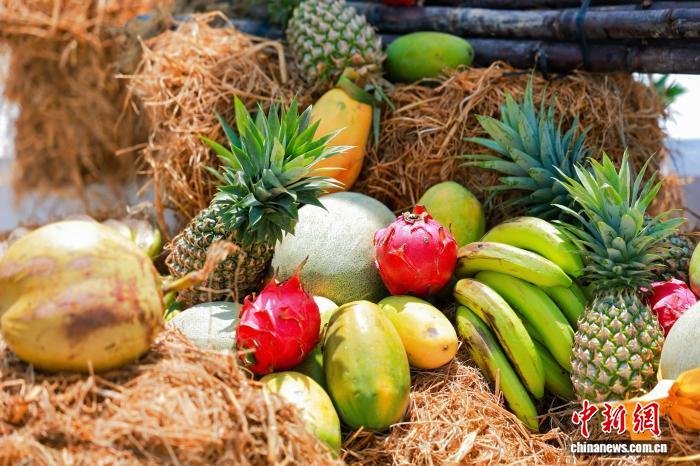
Core Points - The 2025 China Farmers' Harvest Festival celebration in Hainan featured unique activities such as showcasing local specialties, participating in fun sports events, and singing harvest songs to celebrate agricultural achievements and share joy [1][2]. Group 1: Event Highlights - The main venue in Danzhou showcased a variety of activities, including a display of Hainan's intangible cultural heritage and an exhibition of the "Party Building + Industry Chain" interactive model, highlighting innovative practices in Hainan's tropical efficient agriculture [2]. - The fun sports event included local-themed competitions such as "catching Danzhou chicken," "Haitou sweet potato obstacle relay," and "competing for Danzhou dried fish," emphasizing teamwork and local culture [5]. - The harvest song event featured performances that celebrated local culture, including a mix of lion dance, calligraphy, and product displays, culminating in a performance by the national-level intangible cultural heritage group, showcasing the vibrant spirit of Hainan's farmers [7].