
家电

Search documents
帮主早观察:从黄金到卡奥斯,市场在焦虑什么?又在寻找什么?
Sou Hu Cai Jing· 2026-02-11 00:22
Group 1 - The core message of the article highlights a shift in market sentiment, where investors are increasingly anxious about long-term uncertainties and are seeking new investment narratives amidst traditional growth challenges [3][5] - Gold prices have been experiencing significant volatility, with traditional drivers like real interest rates weakening, while global debt and geopolitical risks are becoming more central to price movements [3][4] - The IPO of Haier's industrial internet platform, Kaos, represents a self-revolution for traditional manufacturing giants, as they seek to tell a new story about digital economy and platform ecosystems to reshape their valuations and competitiveness [4][5] Group 2 - The simultaneous investment of 10 billion by prominent investors in Jianghuai Automobile's collaboration with Huawei on high-end smart electric vehicles indicates a strong consensus among capital regarding disruptive industry trends [4][5] - The market's enthusiasm for "commercial aerospace" is exemplified by the nearly 600% surge in shares of Electric Power Blue Sky on its first trading day, reflecting a willingness to pay a premium for hard tech with high barriers and clear growth paths [4][5] - The current market landscape shows a dual approach: a defensive strategy using assets like gold to hedge against long-term uncertainties, and an offensive strategy investing in sectors like smart electric vehicles, commercial aerospace, industrial internet, and AI computing [5][6] Group 3 - Traditional giants like Haier and Jianghuai, which are willing to undergo significant transformations or cross-industry collaborations, may present substantial mid-term investment opportunities [6] - Understanding national strategic directions, such as commercial aerospace and nuclear power, is crucial for investors, as capital trends align closely with national strategies [6] - The article emphasizes the importance of recognizing underlying market fears and desires to make informed investment decisions, rather than being swayed by surface-level market noise [6]


“苏州智能家电网”建设同步启动
Su Zhou Ri Bao· 2026-02-10 23:41
昨天(2月10日),苏州市家用电器协会成立,标志着全市家电产业发展步入协同创新、聚势共赢 的新阶段。 "苏州智能家电网"建设同步启动。该平台致力于打造连接政府、企业、媒体与消费者的行业枢纽, 通过发布行业权威资讯、解读最新产业政策、展示"AI+制造"应用案例,构建高效的产业信息流通与品 牌传播生态,进一步提升苏州家电产业整体影响力与市场认知度。 协会相关负责人表示,协会将紧密围绕全市产业发展战略,引领会员企业深耕主航道,持续强化创 新驱动与生态共建,共同提升"苏州智造"在家电领域的整体竞争力与影响力。 家电协会的成立,旨在积极响应市委、市政府"抢抓人工智能重大机遇,因地制宜发展新质生产 力"的战略号召,搭建贯通政企、链接产需、融合创新的产业协同之桥。 现场,市家用电器协会与苏州家居装饰产业商会进行友好合作单位签约,双方将共同探索"智能家 居与整体家装"一体化发展新模式,提升行业整体服务水平和创新能力。 ...
环球圆桌对话:日本“滑向二流国家”根源在哪
Xin Lang Cai Jing· 2026-02-10 23:13
Economic Decline - Japan's ruling party expresses concern over the potential loss of its economic status, warning that it may slide into a "second-tier nation" status as its nominal GDP has been surpassed by Germany and is projected to be overtaken by India, potentially dropping Japan to the fifth-largest economy in the world [1][2] - The economic model has failed to adapt to modern times, with Japan's post-war "corporate capitalism" system becoming increasingly outdated and unable to integrate into the globalized economy driven by IT advancements [1][3] Macroeconomic Policy Failures - Continuous macroeconomic policy missteps have contributed to Japan's prolonged economic decline, including the aftermath of the 1985 Plaza Accord which led to a significant appreciation of the yen and subsequent asset bubble burst due to abrupt monetary tightening [2] - The government's fiscal policies have been misaligned, with ineffective public works spending in the 1990s exacerbating government debt, while structural reforms have lagged, leading to a liquidity trap and increased pressure on financial institutions [2][4] Innovation and Competitiveness - Japan's innovation capacity has weakened, with a notable decline in the emergence of groundbreaking technologies and competitive entities, as evidenced by its drop in global competitiveness rankings from first place in the late 1980s to 35th by 2025 [3] - The automotive industry, once a pillar of Japan's economy, is now falling behind in the electric and smart vehicle sectors, while Japan's position in AI and digitalization continues to lag, ranking only 9th in a global AI competitiveness index [3] Investment Trends - Japan faces long-term investment shortages due to demographic challenges, with an aging population and declining birth rates leading to a shrinking domestic market [4] - Japanese companies have significantly increased foreign investments, growing from $23.4 billion in 1996 to an estimated $202.5 billion in 2024, while domestic investments remain low at around $16 billion, less than one-tenth of foreign investments [4] Political Landscape - Japan's aspirations to become a "political power" have faced setbacks, with historical issues and challenges to the post-war international order hindering its progress [5][6] - The current government under Prime Minister Kishi is criticized for avoiding core issues in political discourse, focusing instead on populist sentiments, which may lead to further economic and social liabilities [9][10] Economic Policy and Debt - The government's economic strategy, dubbed "Sanae Economics," mirrors "Abenomics" but is criticized for being overly aggressive without addressing underlying economic issues, potentially leading to increased national debt, which currently stands at 260% of GDP [11] - The focus on short-term political gains through economic promises may exacerbate Japan's economic challenges rather than provide sustainable solutions [11][12]
新浪财经资讯AI速递:昨夜今晨财经热点一览 丨2026年2月11日
Xin Lang Cai Jing· 2026-02-10 23:13
2026年初国际金价经历剧烈波动,创历史新高后大幅回调。分析指出,金价驱动因素权重发生结构性变 化,实际利率影响减弱,而全球债务高企、地缘政治风险及对国际货币体系的重估成为核心驱动力。同 时,全球央行持续战略性增持黄金,为金价提供长期支撑。市场呈现"强美元"与"强黄金"并存的新动态 平衡,黄金正从传统避险资产向对冲长期不确定性的战略资产转变。 164亿,中国家电大王要IPO 金融市场瞬息万变,投资与经济政策深刻影响全球。我们为您带来昨夜今晨的财经新闻,涵盖股市动 态、经济数据、企业财务和政策更新,帮助您全面把握金融世界。 黄金价格波动,有何深意? 海尔旗下工业互联网平台卡奥斯(估值164亿)正式递表赴港IPO,同时海尔新能源启动上市辅导,海 尔系上市公司数量或将增至10家。这标志着海尔在周云杰掌舵下,正从传统家电制造商向跨产业平台型 集团加速转型。卡奥斯虽被视作工业互联网标杆,但其高关联交易占比和盈利模式仍受市场质疑。此次 IPO被视为海尔对未来的关键押注,旨在构建"数字经济+绿能"的生态协同,以应对家电主业增长压 力,重塑长期竞争力。 年轻人勇闯"3元香港游"低价团,边壮胆子边"担心回不来" 春节前夕,二手 ...
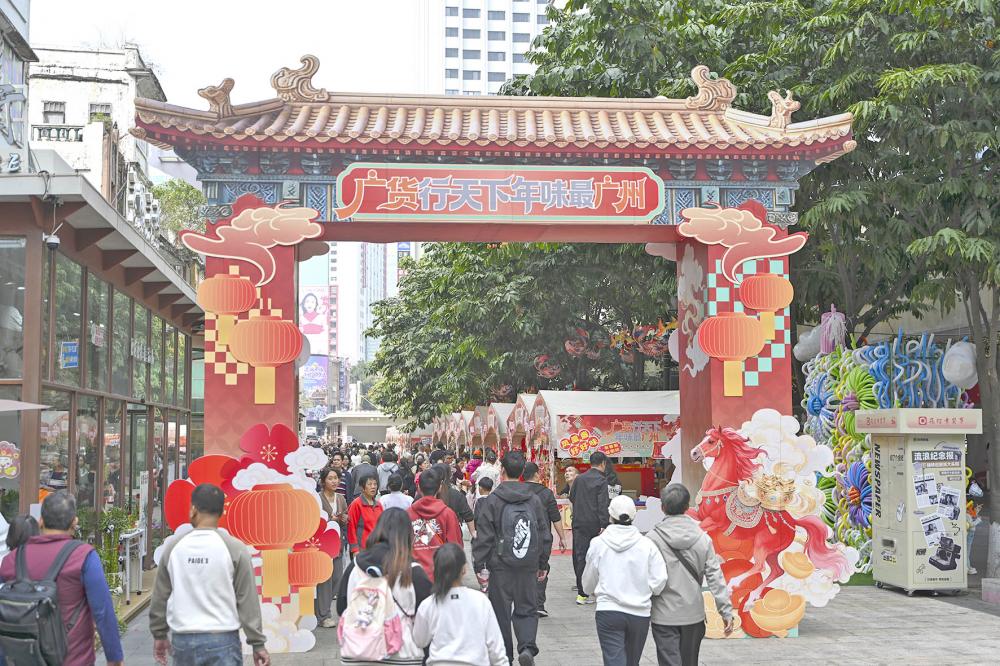
从“产品出海”到“文化出海” 双轮驱动“广货”全球启新程
2 1 Shi Ji Jing Ji Bao Dao· 2026-02-10 23:11
Core Viewpoint - The "Guanghuo" initiative represents Guangdong's commitment to high-quality development and industrial upgrading, facilitating a comprehensive global outreach that transcends traditional foreign trade practices [1][2]. Group 1: Overview of "Guanghuo" Initiative - The "Guanghuo" initiative has evolved into a significant platform for Guangdong's global trade, linking local industrial clusters with over 200 countries and regions [1]. - Guangdong has maintained its position as China's largest foreign trade province for over 30 years, accounting for approximately one-quarter of the national total [2]. Group 2: Industrial Foundation - The industrial advantages of "Guanghuo" are particularly evident in the consumer electronics and home appliance sectors, with Shenzhen being a global innovation hub [4]. - Major companies like Midea and Galanz are expanding their global presence, with Midea's high-end appliances ranking among the world's best and Galanz products being exported to over 190 countries [4]. Group 3: Challenges and Opportunities - Despite its achievements, "Guanghuo" faces challenges such as a lack of core technology and global brand recognition, with many SMEs relying on OEM models [4][5]. - The transition from low-end manufacturing to high-end creation is crucial for "Guanghuo" to enhance its global competitiveness [6]. Group 4: Policy and Support - Guangdong's government is implementing supportive policies, including export tax rebates and R&D subsidies, to alleviate financial and logistical pressures on enterprises [5][10]. - The Canton Fair serves as a national-level platform, facilitating connections with global buyers and enhancing the outreach of "Guanghuo" products [5]. Group 5: Cultural Empowerment - Cultural elements are being integrated into the "Guanghuo" initiative, enhancing the global appeal of products through cultural storytelling and branding [7][8]. - Companies are leveraging local cultural heritage to create unique brand identities, such as the promotion of Guangdong lychee as the "Eastern Love Fruit" [8]. Group 6: Strategic Collaboration - The dual-driven strategy of industrial foundation and cultural empowerment is essential for overcoming the "big but not strong" dilemma faced by "Guanghuo" [9][10]. - Successful examples from companies like Xiaopeng and DJI illustrate the effectiveness of this collaborative approach in enhancing brand and cultural outreach [9]. Group 7: Future Outlook - The 2026 "Guanghuo" Spring Action marks a new beginning for transforming "Guanghuo" into a global brand, emphasizing the importance of quality and innovation [11]. - By adhering to the dual-driven strategy and focusing on cultural confidence, "Guanghuo" aims to create more world-class national brands and contribute to the high-quality development of Chinese manufacturing [11].
【海外策略】恒生科技:战略配置区间已至,逆势布局正当时——港股策略观点更新(付天姿/张宇生)
光大证券研究· 2026-02-10 23:07
Core Viewpoint - The Hong Kong stock market is currently in a phase of volatility and correction, with the Hang Seng Technology Index experiencing significant declines, indicating a potential investment opportunity as the market shows signs of bottoming out [4][5]. Group 1: Market Overview - The Hang Seng Technology Index has dropped from a peak of around 6000 points in mid-January to 5346.2 points as of February 6, marking a weekly decline of 6.51%, the largest weekly drop recently [4]. - The overall Hang Seng Index fell by 3.02% to 26559.95 points, while the Hang Seng China Enterprises Index decreased by 3.07% to 9031.38 points, indicating a synchronized pullback across major indices [4]. - The decline in the technology sector is attributed to profit-taking pressures rather than fundamental deterioration, suggesting a potential for recovery as the market stabilizes [4]. Group 2: Capital Flow and Market Behavior - Southbound capital has shown a "buy the dip" strategy, with a net inflow of 560.7 billion HKD in the week of February 6, the highest weekly net inflow in three months, reflecting strong confidence in the technology sector [5][6]. - The inflow into technology-focused ETFs has been significant, with major funds like Huatai-PB Hang Seng Technology ETF and Huaxia Hang Seng Internet Technology ETF seeing net inflows of 38.84 billion HKD and 27.28 billion HKD respectively, indicating a shift towards quality core assets [5]. - Overall, net inflows from various capital sources exceeded 400 billion HKD, providing strong internal support against selling pressures, which suggests that the downward momentum in the market is weakening [6].

中国已发布大宗消费品及服务消费国标210余项
Ren Min Ri Bao· 2026-02-10 22:54
Group 1 - The National Market Supervision Administration (NMSA) has initiated a three-year action plan to optimize the consumption environment, achieving significant progress with over 210 national standards for major consumer goods and service consumption released [1] - The NMSA emphasizes the importance of enhancing domestic consumption as a key driver for economic growth, aligning with the central economic work conference's focus on strengthening the domestic market [1] - The NMSA has established 19.325 million charging infrastructure units and 30,000 commercial logistics distribution points in rural areas, contributing to the development of a "15-minute convenient living circle" with 8,132 locations [1] Group 2 - The NMSA has launched the "Iron Fist" action to address consumer pain points, focusing on quality safety issues in children's toys, illegal modifications of electric bicycles, and trademark infringements in e-commerce, resulting in 72,000 cases being investigated [2] - A total of 823.6 million consumer products have been recalled, including 1.398 million power banks, to reduce consumer risks [2] - The NMSA has initiated a "cross-region return and exchange" initiative, with 214,000 offline stores participating, and improved consumer rights protection through revised complaint handling procedures [2]
从年货市场看消费新意与活力(每周经济评论)
Ren Min Ri Bao· 2026-02-10 22:37
Group 1 - The core viewpoint of the articles highlights the vibrant and evolving nature of the Chinese New Year goods market, showcasing a strong demand and supply dynamic that supports consumption upgrades and cultural integration [1][4] - The integration of online and offline channels is a prominent feature of the New Year goods market upgrade, with initiatives like the "2026 National Online New Year Goods Festival" enhancing consumer experience through cultural elements and digital engagement [1][2] - The government is actively supporting consumption through policies such as the 625 billion yuan special bonds for consumer goods exchange programs, which aim to stimulate demand in high-quality sectors like energy-efficient appliances and new energy vehicles [2][4] Group 2 - There is a noticeable shift in consumer preferences towards high-quality products, with increased demand for energy-efficient appliances and organic products, reflecting a growing health consciousness among consumers [3][4] - Service consumption is becoming increasingly popular during the New Year, with experiences such as travel and cinema gaining traction, indicating a transition from basic needs to quality experiences [2][3] - The market conditions for consumption in 2026 are robust, with a projected retail sales total exceeding 50 trillion yuan by 2025, and consumption contributing 52% to economic growth, highlighting significant untapped potential [4]
有“烟火气”,更有“新潮范”
Xin Lang Cai Jing· 2026-02-10 20:03
Core Viewpoint - The implementation of the "old-for-new" policy in Shaanxi Province has significantly boosted consumer spending and upgraded living standards, with a notable increase in sales of new energy vehicles and home appliances [1][2][3]. Group 1: New Energy Vehicles - In Shaanxi, the sales of new energy vehicles have surged, with retail sales increasing by 34.8% year-on-year as of November 2025 [1]. - The "old-for-new" policy allows consumers to receive substantial subsidies when trading in old vehicles, exemplified by a consumer saving over 20,000 yuan when purchasing a new model [1]. Group 2: Home Appliances - The "old-for-new" initiative has expanded beyond traditional appliances, now including over 30 types of modern electronics such as vacuum robots and coffee machines, with higher subsidies for energy-efficient models [2]. - Consumers are benefiting from additional government subsidies and services like free installation, enhancing the overall purchasing experience [2]. Group 3: Broader Consumer Impact - From January 1 to December 24, 2025, Shaanxi's "old-for-new" program facilitated the exchange of 8.1954 million items, leading to a total subsidy expenditure of 7.635 billion yuan and generating 68.072 billion yuan in consumption [3]. - The initiative has not only improved consumer quality of life but also stimulated the overall market, contributing to a vibrant economic environment [3]. Group 4: Cultural and Tourism Consumption - The cultural and tourism sectors in Shaanxi are experiencing a revival, with events and attractions drawing significant crowds, as evidenced by a tourist spending 5,000 yuan during a three-day visit [3]. - The introduction of "ticket root" programs has transformed traditional tickets into vouchers for food and experiences, enhancing consumer engagement and driving additional spending [4][5]. Group 5: Economic Growth - The combination of the "old-for-new" policy, innovative consumer experiences, and the "ticket root" economy has collectively stimulated the local economy, generating 1.91 billion yuan in comprehensive consumption revenue during events like the Baoji Marathon [5]. - These initiatives are attracting visitors and enhancing the economic vitality of the region, showcasing a blend of traditional and modern consumer culture [5].
金融工程日报:沪指迎6连阳,AI应用表现强势-20260210
Guoxin Securities· 2026-02-10 13:52
- The report does not contain any quantitative models or factors for analysis[1][2][3][4][5][6][7][8][9][10][11][12][13][14][15][16][17][18][19][20][21][22][23][24][25][26][27][28][29][30][31][32][33][34][35][36][37][38][39][40][41][42]


