饮料

Search documents
2026年的首款新品,元气森林怎么就盯上了“遇冷”的凉茶赛道?
Xin Lang Cai Jing· 2026-01-15 00:54
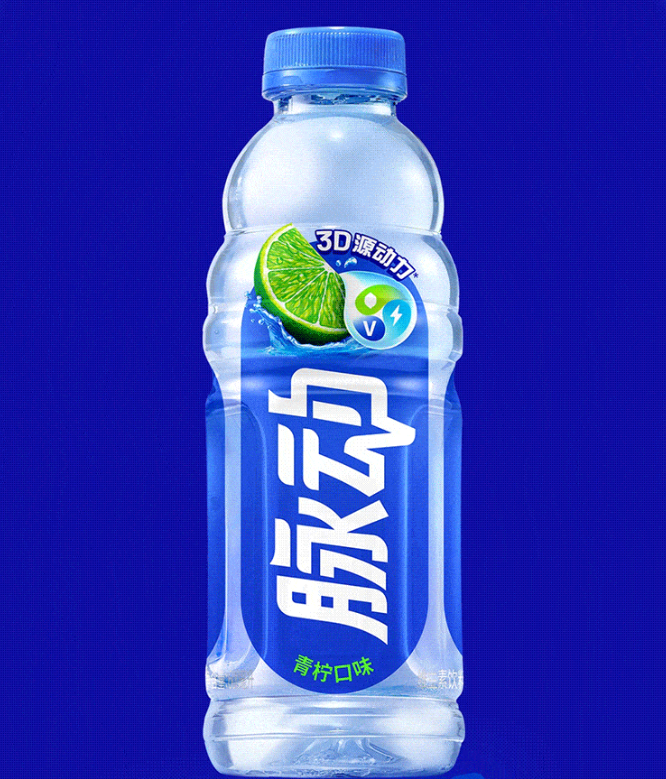
Core Viewpoint - Beverage brands are actively launching new products and collaborations in the new year, with a focus on health-conscious offerings to meet evolving consumer demands [1][3]. Group 1: Product Launches and Innovations - Pulse has upgraded its formula and launched a new product called "3D Source Power" to address health needs [1]. - Uni-President has moved two 1L juice products from Sam's Club to e-commerce, targeting dining and leisure occasions [3]. - The brand "Good Self" under Yuanqi Forest has introduced a new "Cool Tea" product, raising questions about its strategy in the declining herbal tea market [3][12]. Group 2: Product Details and Market Positioning - The "Good Self Cool Tea" product features a new design and emphasizes herbal health, using ingredients like chrysanthemum, egg flower, and mint, with a low-sugar formula priced around 4.4 yuan per bottle [6][10]. - "Good Self" is a relatively new sub-brand of Yuanqi Forest, focusing on traditional health concepts and achieving over 100 million yuan in sales within four months of its launch [10]. - The introduction of Cool Tea may signal a shift towards more specialized and professional health beverages in the market [10]. Group 3: Market Challenges and Trends - The herbal tea market in China has been declining since 2015, with major brands like Wanglaoji experiencing significant revenue drops [12][13]. - Traditional herbal tea brands face challenges in adapting to modern consumer preferences for low-sugar options, leading to a disconnect between traditional positioning and current market demands [12][13]. - Yuanqi Forest's approach to Cool Tea focuses on personal and leisure consumption scenarios, differentiating itself from traditional marketing strategies [15]. Group 4: Future Outlook - The herbal tea market is expected to see a split, with traditional brands seeking growth in international markets while innovative brands like Yuanqi Forest explore new segments [16][18]. - Future consumer focus in the herbal tea market will likely shift towards ingredient transparency, flavor innovation, and diverse consumption scenarios [18][19].

传一加手机CEO刘作虎在台湾遭通缉;携程回应“被立案调查”;字节正研发新一代豆包AI耳机,由歌尔股份代工;“死了么”APP征名丨邦早报
创业邦· 2026-01-15 00:26
Group 1 - Ctrip is under investigation by the State Administration for Market Regulation for alleged monopolistic behavior and will cooperate with regulatory requirements while maintaining normal business operations [3] - OnePlus founder Liu Zuohu is wanted in Taiwan for allegedly establishing a subsidiary without permission and illegally recruiting over 70 engineers, involving more than $70 million in funds [6] - Chasing Technology's founder Yu Hao announced the launch of a product to compete with Ctrip, aiming to reduce its market dominance [9] Group 2 - Baoneng Group's chairman Yao Zhenhua filed a complaint regarding the bankruptcy restructuring of Qoros Auto, alleging illegal operations leading to undervaluation of assets [10] - ByteDance is developing a new generation of AI headphones, which will be manufactured by GoerTek, with no plans for an IPO of the new headphones [12] - Baidu is considering upgrading its Hong Kong listing to a primary listing to increase exposure to mainland investors and prepare for potential unfavorable U.S. policies [12] Group 3 - Guangzhou Chali Group is addressing employee salary delays due to strategic missteps in its bottled tea business, while its core tea bag business remains operational [13] - Meta is discussing plans to double the annual production capacity of AI smart glasses to 20 million units by the end of the year [18] - Netflix is considering modifying acquisition terms for Warner Bros. Discovery, discussing an all-cash purchase of its film and streaming business [18] Group 4 - IDC forecasts that China's smartphone market will see a shipment of approximately 285 million units in 2025, with Huawei leading the market share [22] - The global in-app purchase revenue for short drama applications is expected to exceed $2.8 billion in 2025, marking a 116% year-on-year increase [22][23] - China's automotive production and sales are projected to reach historical highs in 2025, with over 34 million units produced and sold, driven by new energy vehicles [25]

财信证券晨会纪要-20260115
Caixin Securities· 2026-01-14 23:37
Group 1: Market Overview - The overall market experienced a pullback after a previous surge, with total market turnover approaching 4 trillion yuan [5][10] - The A-share market showed mixed performance, with the Shanghai Composite Index down 0.31% at 4126.09 points, while the ChiNext Index rose 0.82% to 3349.14 points [7][10] - The AI application sector continued to perform strongly, while the blue-chip sector lagged behind [10] Group 2: Industry Dynamics - The global MiniLED backlight market is projected to reach nearly 14.3 billion USD in 2025, with China contributing approximately 60% of this market [6][25] - The short drama app in-app purchase revenue is expected to exceed 2.8 billion USD in 2025, showing a year-on-year growth of 116% [31] - The railway passenger data for December 2025 showed steady growth, with a year-on-year increase of 8.5% in passenger volume [33] Group 3: Company Updates - Dongpeng Beverage (605499.SH) anticipates a revenue increase of 31-33% in 2025, with net profit expected to grow by 30-38% [35] - Huazheng New Materials (603186.SH) is projected to turn a profit in 2025, with net profit estimated between 260 million and 310 million yuan [37] - Woge Optoelectronics (603773.SH) expects revenue growth of 8.07%-21.58% in 2025, but anticipates a net loss [39]
多家A股公司,预计盈利翻倍,2只“大牛股”业绩大幅下滑
Zheng Quan Shi Bao· 2026-01-14 23:20
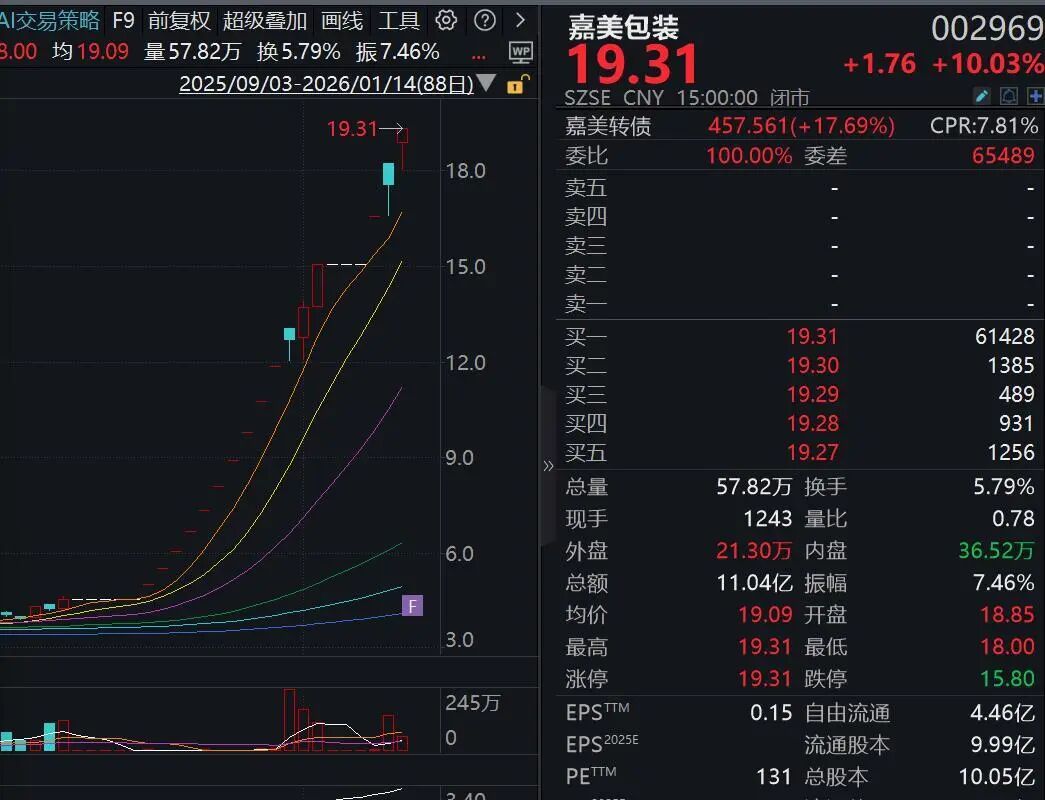
Group 1: Earnings Forecasts - Over 40 A-share companies disclosed their earnings forecasts or reports for 2025 on January 14, including popular stocks like Jiamei Packaging and Haige Communication [1] - Jin Haitong is expected to have the highest growth, forecasting a net profit of 160 million to 210 million yuan, representing a year-on-year increase of 103.87% to 167.58% [3] - Yonghe Co. anticipates a net profit of 530 million to 630 million yuan, with a year-on-year growth of 110.87% to 150.66% [3] - Shengnong Development expects a net profit of 1.37 billion to 1.43 billion yuan, reflecting a year-on-year increase of 89.16% to 97.44% [4] Group 2: Companies with Declining Earnings - Jiamei Packaging forecasts a net profit of 85.437 million to 104 million yuan for 2025, a decline of 43.02% to 53.38% year-on-year [6] - The decline in Jiamei Packaging's earnings is attributed to the beverage industry's "small year" in 2025, with fewer days in the Spring Festival peak season and lower-than-expected demand for beverage gift consumption [6] - Haige Communication is expected to report a net loss for 2025 due to industry client adjustments and increased investment in innovative businesses [8]


可口可乐设立首席数字官
Bei Jing Shang Bao· 2026-01-14 13:16
Core Viewpoint - Coca-Cola Company announced a series of leadership changes, effective March 31, 2026, with Henrique Braun set to replace James Quincey as CEO, while Quincey will continue as Executive Chairman [1] Group 1: Leadership Changes - Henrique Braun, the current Executive Vice President and Chief Operating Officer, will become the new CEO [1] - James Quincey will remain with the company as Executive Chairman after stepping down as CEO [1] - A new position of Chief Digital Officer will be established, with Sedef Salingan Sahin, the current President of Eurasia and Middle East, appointed to this role, reporting directly to Braun [1]

新股消息 | 东鹏饮料通过港交所聆讯 在中国功能饮料市场连续4年排名第一
Zhi Tong Cai Jing· 2026-01-14 13:01
Core Viewpoint - Dongpeng Beverage Group Co., Ltd. is set to list on the Hong Kong Stock Exchange, with Huatai International, Morgan Stanley, and UBS serving as joint sponsors. The company is recognized as the leading functional beverage enterprise in China, with significant growth in market share and revenue [1][2]. Company Overview - Dongpeng Beverage is the largest functional beverage company in China, ranking first in market share for four consecutive years since 2021, with a market share increase from 15.0% in 2021 to 26.3% in 2024 [2]. - The company is projected to be the second-largest functional beverage company in China by retail revenue in 2024, holding a market share of 23% [2]. Sales Network - The company has established a comprehensive sales network covering over 4.3 million retail outlets across nearly all prefecture-level cities in China as of September 30, 2025 [3]. - Dongpeng Beverage collaborates closely with its sales team and distribution partners to enhance product visibility and penetration rates [3]. Financial Performance - Revenue figures for Dongpeng Beverage are as follows: approximately 8.5 billion RMB in 2022, 11.26 billion RMB in 2023, and projected 15.83 billion RMB in 2024 [6][7]. - The gross profit for the same periods is reported as 3.53 billion RMB (41.6% margin) in 2022, 4.76 billion RMB (42.3% margin) in 2023, and 6.98 billion RMB (44.1% margin) in 2024 [7]. Industry Insights - The retail value of China's soft drink industry is expected to reach approximately 1.3 trillion RMB in 2024, making it the second-largest soft drink market globally [4]. - The functional beverage sector is the fastest-growing segment, with a compound annual growth rate (CAGR) of 8.3% from 2019 to 2024, significantly outpacing the overall soft drink market growth of 4.7% during the same period [4]. - The energy drink market in China is projected to reach 180.7 billion RMB by 2029, with a CAGR of 10.3% from 2025 to 2029 [5][6]. - The sports drink market is expected to grow to 997 billion RMB by 2029, with a CAGR of 12.2% from 2025 to 2029 [6].

东鹏饮料通过港交所聆讯 在中国功能饮料市场连续4年排名第一
Zhi Tong Cai Jing· 2026-01-14 13:00
Core Viewpoint - Dongpeng Beverage is set to list on the Hong Kong Stock Exchange, with Huatai International, Morgan Stanley, and UBS serving as joint sponsors. The company is recognized as the leading functional beverage enterprise in China, with significant growth in market share and revenue [1][3]. Company Overview - Dongpeng Beverage is the number one functional beverage company in China, with a market share that has grown from 15.0% in 2021 to an estimated 26.3% in 2024 [3]. - The company has established a comprehensive sales network covering over 4.3 million retail outlets across nearly all prefecture-level cities in China by September 30, 2025 [3]. Financial Performance - Revenue figures for Dongpeng Beverage are as follows: approximately 8.5 billion RMB in 2022, 11.26 billion RMB in 2023, and projected 15.83 billion RMB in 2024 [6]. - The gross profit margin for the company has shown an upward trend, with gross profit margins of 41.6% in 2022, 42.3% in 2023, and projected 44.1% in 2024 [7]. Market Trends - The retail value of China's soft drink industry is expected to reach approximately 1.3 trillion RMB in 2024, with functional beverages being the fastest-growing segment, projected to grow at a compound annual growth rate (CAGR) of 8.3% from 2019 to 2024 [4]. - The energy drink sector in China is anticipated to reach a market size of 180.7 billion RMB by 2029, with a CAGR of 10.3% from 2025 to 2029 [5][6]. - The sports drink market is also expected to grow significantly, reaching 997 billion RMB by 2029, with a CAGR of 12.2% from 2025 to 2029 [6].
新股消息 | 东鹏饮料(605499.SH)通过港交所聆讯 在中国功能饮料市场连续4年排名第一
智通财经网· 2026-01-14 12:58
Core Viewpoint - Dongpeng Beverage Group Co., Ltd. is set to list on the Hong Kong Stock Exchange, with Huatai International, Morgan Stanley, and UBS serving as joint sponsors [1]. Company Overview - Dongpeng Beverage is the leading functional beverage company in China, ranking first in market share for four consecutive years since 2021, with a market share increase from 15.0% in 2021 to 26.3% in 2024 [3]. - The company has established a comprehensive sales network covering over 4.3 million retail outlets across nearly all prefecture-level cities in China by September 30, 2025 [3]. Financial Performance - Revenue figures for Dongpeng Beverage are as follows: approximately 8.5 billion RMB in 2022, 11.26 billion RMB in 2023, and projected 15.83 billion RMB in 2024 [6]. - The gross profit for energy drinks is expected to rise from 3.49 billion RMB in 2022 to 6.33 billion RMB in 2024, with gross margins increasing from 42.5% to 47.5% [4]. - The total comprehensive income for the company is projected to be around 14.26 billion RMB in 2022, increasing to 33.64 billion RMB in 2024 [6]. Industry Insights - The retail value of China's soft drink market is expected to reach approximately 1.3 trillion RMB in 2024, making it the second-largest soft drink market globally [4]. - The functional beverage sector is the fastest-growing segment, with a compound annual growth rate (CAGR) of 8.3% from 2019 to 2024, significantly outpacing the overall soft drink market growth of 4.7% during the same period [4]. - The energy drink market in China is projected to reach 180.7 billion RMB by 2029, with a CAGR of 10.3% from 2025 to 2029 [5][6]. - The sports drink market is expected to grow to 997 billion RMB by 2029, with a CAGR of 12.2% from 2025 to 2029 [6].
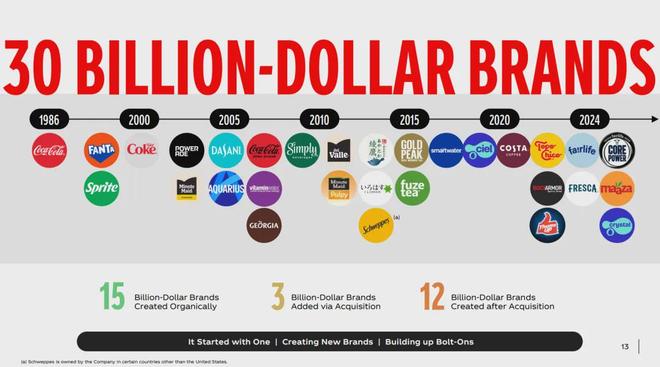
因出价未达预期 可口可乐叫停出售Costa咖啡计划
Xi Niu Cai Jing· 2026-01-14 11:36
Core Viewpoint - The divestment plan for Costa by Coca-Cola has been temporarily shelved due to potential buyers' bids falling short of expectations, leading to the termination of negotiations with remaining bidders as of December 2025 [2][3] Group 1: Divestment Plan - Coca-Cola initiated the search for buyers for Costa in August 2025 to optimize its brand portfolio and reallocate funds [2] - The negotiations attracted interest from several private equity firms, including TDR Capital, KKR, and the backers of Luckin Coffee, but ultimately failed due to pricing issues [2] - Coca-Cola aimed to complete the sale for approximately £2 billion, which is nearly half of the £3.9 billion acquisition price in 2018 [2] Group 2: Business Challenges - The acquisition of Costa in 2018 was intended to strengthen Coca-Cola's position in the hot beverage market, creating a comprehensive coffee platform across various consumption scenarios [2] - The business faced multiple challenges post-acquisition, including the impact of the global pandemic, soaring costs of raw materials like coffee beans, and intensified market competition [2] Group 3: Future Considerations - The suspension of the sale plan may necessitate Coca-Cola to reassess the value of the Costa business [3] - Industry insiders suggest that Coca-Cola's management will need to balance between unfavorable sale prices and the pursuit of new growth opportunities in the ongoing operation of Costa [3]
瑞幸没能“喝上”,可口可乐叫停COSTA咖啡出售计划
Xin Lang Cai Jing· 2026-01-14 11:21
Core Viewpoint - Coca-Cola has decided to abandon the sale of Costa Coffee due to bidders' offers not meeting expectations, marking a significant setback for the company [1][3]. Group 1: Sale Abandonment - Coca-Cola has terminated negotiations with remaining bidders for Costa Coffee as of December 2025, halting the auction process that had been ongoing for several months [3]. - Potential bidders included TDR Capital and Bain Capital, with discussions reportedly stalling over price disagreements [3][5]. - Coca-Cola's asking price for Costa Coffee was approximately £2 billion (around ¥18.7 billion), which is about half of the £3.9 billion it paid for the brand in 2018 [3][4]. Group 2: Financial Performance - Costa Coffee's revenue for 2024 was reported at £1.2 billion (approximately ¥11.2 billion), but the company experienced a significant operating loss of £13.5 million (around ¥1.25 billion), attributed to weak foot traffic and competition from lower-priced rivals [4]. - The company also recorded an impairment loss of £48.6 million (approximately ¥455 million) related to its operations in China, citing weaker-than-expected coffee demand in Shanghai [4]. Group 3: Future Considerations - There is speculation that Coca-Cola may revisit the sale of Costa Coffee in the medium term despite the current abandonment of the sale [3]. - The new CEO, Henrique Braun, will be responsible for determining the future strategy for Costa Coffee, with an emphasis on creating value for consumers [7][9]. - Coca-Cola has indicated that it will retain control over Costa Coffee's ready-to-drink products, which have shown strong sales growth in specific regions [5].