
农产品贸易

Search documents
饲料养殖产业日报-20250725
Chang Jiang Qi Huo· 2025-07-25 01:39
1. Report Industry Investment Rating No information provided in the content. 2. Core Views of the Report - The pig market is currently under pressure due to strong supply and weak demand in the short - term, with a near - weak and far - strong trend in the futures market. Egg prices may rise in the short - term but are limited by supply pressure, and the supply pressure may ease in the fourth quarter. The short - term trend of edible oils is high - level oscillation with upward potential after a correction, with palm oil expected to be the strongest, followed by soybean oil, and rapeseed oil being relatively weak. The short - term trend of soybean meal is range - bound, and it is expected to strengthen in the medium - to - long - term. The short - term trend of corn is a tug - of - war between supply and demand, and it is expected to rise in the medium - to - long - term, but the upside is limited [1][2][6][7]. 3. Summary by Related Catalogs Pig - On July 25, the spot prices of pigs in Liaoning, Henan, and Guangdong decreased, while that in Sichuan remained stable. In the short - term, supply is strong and demand is weak, and the pig price will be adjusted slightly. In the medium - to - long - term, the supply will gradually increase in the second half of the year. The futures market shows a near - weak and far - strong trend. It is recommended to go short on 09 and 11 contracts when they rebound under pressure and wait and see on the 01 contract, and also consider the strategy of shorting 09, 11 and longing 01 [1]. Egg - On July 25, the egg prices in Shandong Dezhou and Beijing remained stable. In the short - term, the egg price has an upward drive but is limited by supply. In the medium - term, the supply will increase in the future. In the long - term, the supply may decrease. It is recommended to take a short position on the 09 contract and wait for a long - position opportunity on the 12 and 01 contracts [2]. Edible Oils Palm Oil - On July 24, the Malaysian palm oil futures price rose. Although the export decreased and the production increased from July 1 - 20, multiple factors support the short - term strong - side oscillation of Malaysian palm oil. In China, the supply of palm oil will be abundant in August. It is recommended to focus on the 4400 pressure level of the 10 - contract [4]. Soybean Oil - In the short - term, the U.S. soybean may have limited decline and will be range - bound. In China, the soybean oil inventory is expected to accumulate in the short - term, but the long - term supply is uncertain. The 11 - contract has support at 1000 - 1020 [5]. Rapeseed Oil - The Canadian rapeseed futures price will continue to oscillate in the short - term. In China, the supply of rapeseed oil will tighten, and the possibility of importing Australian rapeseed has increased. It is recommended to focus on the July 25 - 26 Canadian supply - demand report [6]. Soybean Meal - On July 24, the U.S. soybean futures price rose. In the short - term, the U.S. soybean will be range - bound, and the domestic soybean meal spot price increase is limited, while the futures price is relatively strong. In the medium - to - long - term, the cost will rise, and the price is expected to strengthen. It is recommended to go long on the M2509 contract at low levels and consider the M2511 and M2601 contracts at low levels [7]. Corn - On July 24, the corn purchase prices in Jinzhou Port and Shandong Weifang Xingmao rose. In the short - term, the supply - demand tug - of - war is intensifying, and the price range is limited. In the medium - to - long - term, the supply - demand relationship will tighten, and the price will rise, but the upside is limited. It is recommended to be cautious about going long on the 09 contract and consider the 9 - 1 reverse spread [7]. Today's Futures Market Overview - The report provides the closing prices, price changes, and other information of various futures and spot varieties on the previous trading day and the day before the previous trading day, including CBOT soybeans, soybean meal, corn, etc. [8]
上半年云南对RCEP国家出口额达663.6亿元 同比增长7.2%
Sou Hu Cai Jing· 2025-07-24 12:54
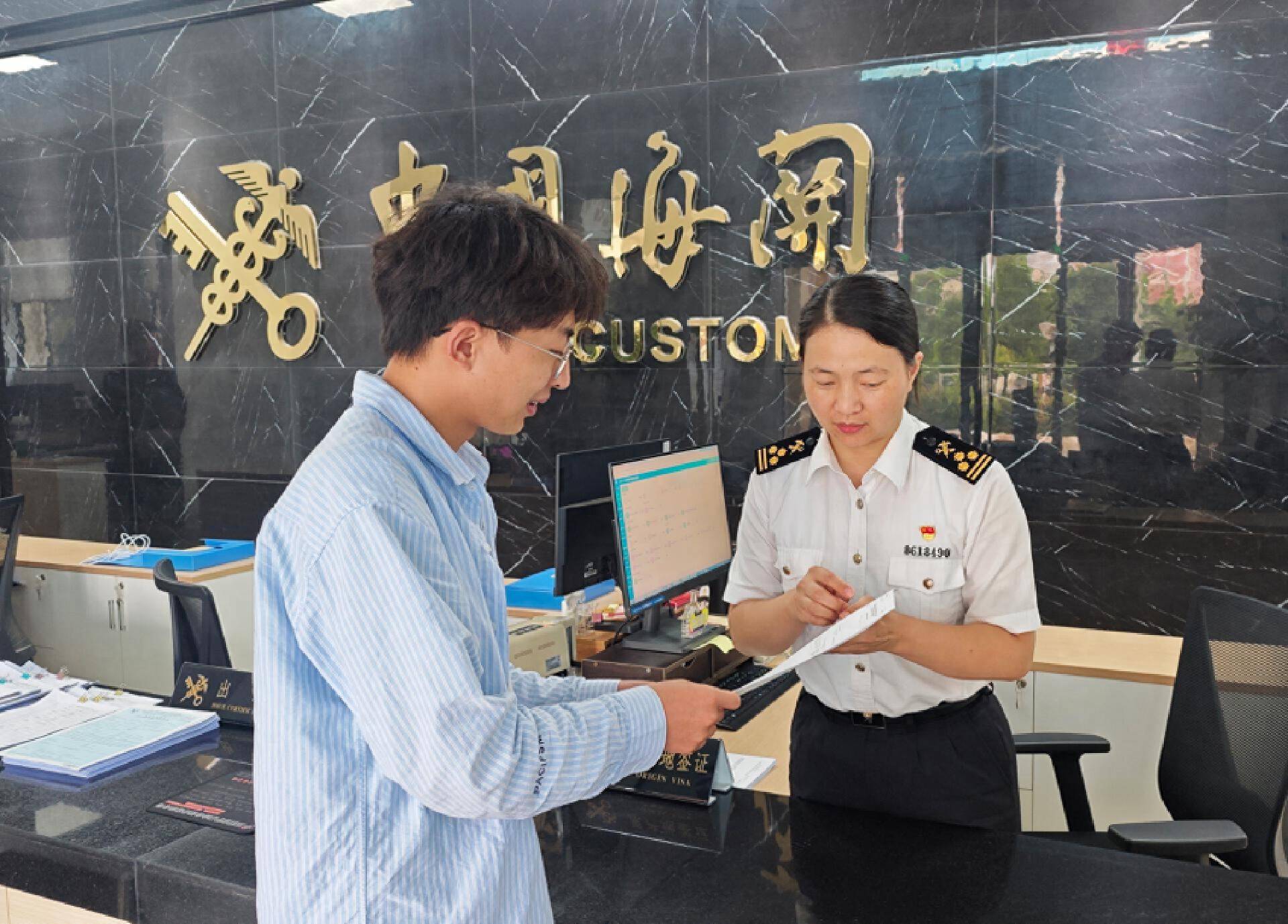
Group 1 - The core viewpoint of the article highlights the significant growth in the issuance of preferential certificates of origin by Kunming Customs for goods exported to RCEP member countries, with a total of 52,600 certificates issued in the first half of the year, valued at 9.191 billion yuan, representing year-on-year increases of 5% and 11% respectively [1][4] - The agricultural products account for 64% of the total export value, allowing for a tariff reduction of approximately 1.47 million yuan in the importing countries [1][4] - The RCEP policy has enabled local products from Yunnan, such as "Yunhua," "Yunguo," and "Yuncai," to enter markets in Vietnam, Thailand, and Singapore at lower costs and faster speeds, creating a "golden pathway" for local enterprises [3][4] Group 2 - Kunming Customs has implemented measures to enhance the international competitiveness of enterprises, including surveys and direct engagement to understand the application of origin certificates and address any issues faced by businesses [4] - The customs authority has optimized the certificate issuance process through technology, such as the "intelligent document review" system, enabling 24/7 processing of certificates and promoting self-service options for businesses [4] - The total export value from Yunnan to RCEP countries reached 66.36 billion yuan in the first half of the year, reflecting a year-on-year growth of 7.2%, indicating the accelerating flow of benefits from the free trade agreement [4]

零关税“畅通道”等政策举措叠加 非洲农食产品加速入湘
Zhong Guo Xin Wen Wang· 2025-07-22 16:42
Core Insights - China has implemented a 100% zero-tariff policy for 33 African countries, facilitating the import of high-quality agricultural products from Africa, particularly into Hunan province [1][2] - Hunan's trade with Africa has shown significant growth, with total imports and exports reaching 289.9 billion RMB in the first half of the year, marking a 7.6% year-on-year increase [1] - The introduction of the "Pre-Assessment System for African Food Imports" by Changsha Customs aims to streamline the import process for African agricultural products, enhancing trade efficiency [2] Trade Growth - Hunan's imports of agricultural products from Africa amounted to 1.6 billion RMB, with notable increases in seafood (127%), sesame (62.2%), coffee (197.8%), and dried chili (499.4%) [1] - The total trade volume with Africa reached 837.9 billion RMB, covering nearly all African countries and regions [1] New Import Initiatives - In 2024, Hunan will see the first imports of Kenyan dried sea cucumbers, Madagascan lamb, and Ugandan wild bass, along with the first trade of African fresh flowers [1] - The zero-tariff policy for least developed countries, including 33 African nations, will take effect on December 1, 2024, further boosting trade [2] Efficiency Improvements - The new pre-assessment system for food imports from Africa is designed to enhance the efficiency of the customs approval process for African products, benefiting Hunan's free trade zone enterprises [2]
一亩田董事长赴泰国考察 即将美股上市
Zheng Quan Shi Bao Wang· 2025-07-22 06:01
Group 1 - The chairman of Yimuyuan Group, Deng Jinhong, led a delegation to Thailand to explore strategic cooperation in agricultural product trade and marketing, particularly focusing on durian production and international order planting cooperation [1] - Thailand has become a major exporter of agricultural products to China, with products like rice, mangosteen, longan, and durian seeing increased market access, especially after the RCEP agreement [1] - Yimuyuan is a leading B2B digital service platform for agricultural products in China, facilitating trade between ASEAN countries and China, with a growing trade volume in recent years [1] Group 2 - The delegation visited KAF Group's super durian factory and the world's first fully automated durian sorting line, highlighting KAF's significant market presence with annual sales in the billions and over 5,000 member farms [2] - KAF Group is collaborating with major channels like JD Supermarket and Yum China, and is developing new cross-border payment settlement services to enhance trade efficiency [2] - Yimuyuan has filed for an IPO in the US, aiming to become the first Chinese agricultural internet company to list on a global capital market, with the Thailand visit being part of its pre-IPO activities [2]
8月1日之前,美国连印度都谈不拢了?
Hua Er Jie Jian Wen· 2025-07-22 02:36
Group 1 - The core issue in US-India trade negotiations remains agricultural market access, with both sides unable to reach an agreement as the deadline approaches [1] - The US negotiating team is scheduled to visit India in late August, indicating the complexity of the negotiations [1] - Indian officials emphasize that agriculture and dairy products are red lines in the trade talks, with no compromises that could weaken domestic agriculture [1] Group 2 - India is seeking better trade terms in textiles, footwear, specific auto parts, and shrimp, rejecting suboptimal solutions [1] - The US is demanding concessions from India on corn and soybeans, which conflict with India's current ban on genetically modified imports [1] - Concerns over the lack of transparency in trade agreements signed by Trump, particularly with Vietnam and Bangladesh, are complicating negotiations with India [2] Group 3 - Trump has indicated that a trade agreement with India could be finalized soon, but significant differences remain unresolved [2] - The announcement of new tariffs to be imposed on over 150 countries may impact the broader trade landscape and negotiations with India [2]
开放合作 互利共赢 和合共生(人民观点)
Ren Min Ri Bao· 2025-07-21 22:12
Group 1 - The third China International Supply Chain Promotion Expo was held in Beijing, with over 6,000 cooperation agreements signed and more than 210,000 attendees, reflecting a 5% increase from the previous year [1] - The expo aims to enhance connections among upstream, midstream, and downstream enterprises, promoting collaboration between large and small businesses, and facilitating international cooperation in supply chains [1][2] - The China International Import Expo has been held for seven sessions since 2018, attracting over 180 countries and regions, with a total intended transaction amount exceeding $500 billion, serving as a platform for high-level opening up [1][2] Group 2 - China is committed to maintaining a stable and open global supply chain, emphasizing the importance of multilateral trade systems and international cooperation [2][7] - Companies like COFCO and Cargill are leveraging these expos to strengthen their connections with global agricultural trade and enhance cooperation with upstream and downstream enterprises [2] - The "chain master enterprise + supporting cluster" cooperation model proposed at the expo aims to promote the digital, intelligent, and green transformation of global supply chains [6] Group 3 - China has signed 23 free trade agreements with 30 countries and regions, providing zero-tariff treatment for 100% of products from least developed countries with which it has diplomatic relations [3] - The country is recognized as a leading force in promoting trade and investment liberalization and facilitation globally [4] - China's manufacturing sector continues to lead globally, with over 200 major industrial products holding the highest production volume worldwide, reinforcing its role in the global supply chain [6] Group 4 - Various agricultural projects and industrial parks initiated by China are helping improve local development and living conditions in countries across Asia, Africa, and Latin America [9] - China is actively reducing foreign investment restrictions and expanding visa-free access to enhance international cooperation and tourism [10] - The commitment to building a community with a shared future for mankind emphasizes mutual respect, equality, and win-win cooperation [10]
内外兼修提升农业供应链韧性效率
Jing Ji Ri Bao· 2025-07-21 22:07
Group 1 - The core viewpoint emphasizes the need for a resilient agricultural trade system and an efficient domestic industry system to elevate the agricultural industry chain and value chain to higher levels globally [1][3] - The third China International Supply Chain Promotion Expo showcased new products and services across the agricultural supply chain, highlighting the importance of international cooperation and competition in agriculture [1][2] - The agricultural supply chain is increasingly interconnected globally, with a focus on collaboration among various stakeholders, including enterprises of different sizes and sectors [1][2] Group 2 - Trade is identified as a crucial pathway for ensuring supply chain security, with the need for a smooth global agricultural trade chain to enhance global food security [2] - China's agricultural trade is significant, being the world's largest importer and the fifth-largest exporter of agricultural products, contributing to improved production efficiency in major exporting countries [2][3] - The current situation of China's agricultural industry chain shows a disparity where developed countries dominate the high-end market while developing countries occupy the low-end, necessitating a focus on cost, efficiency, safety, and resilience [3] Group 3 - The strategy for enhancing the agricultural trade system includes promoting international cooperation based on multilateralism and ensuring the safety and resilience of agricultural supply chains [3] - The domestic agricultural industry faces challenges such as short supply chains and low added value, indicating a need for modernization and integration across different agricultural sectors [3] - The integration of primary, secondary, and tertiary industries in rural areas is essential for enhancing collaboration among farmers, enterprises, and research institutions [3]
中美贸易额下降20.8%,美国大豆堆积如山,中国开始进口巴西大豆
Sou Hu Cai Jing· 2025-07-21 09:25
Group 1 - The core viewpoint indicates that the U.S. has limited leverage in trade negotiations with China, primarily relying on high-end chips, while China has found alternatives for most products previously imported from the U.S., particularly in agricultural products [1] - In the first half of 2025, Sino-U.S. trade showed a significant decline, with total trade value dropping to 2.08 trillion yuan, a year-on-year decrease of 9.3%, including a 9.9% drop in exports from China to the U.S. and a 7.7% drop in imports from the U.S. [1] - The second quarter saw a sharp decline in bilateral trade, with a drop of 20.8% due to the U.S.'s "reciprocal tariff" policy, heavily impacting agricultural trade [1] Group 2 - In June 2025, there were signs of recovery in Sino-U.S. trade, with import and export values rising from less than 300 billion yuan in May to over 350 billion yuan, indicating a narrowing year-on-year decline [1] - China's imports of soybeans from Brazil reached 10.62 million tons in June 2025, a year-on-year increase of 9.2%, accounting for 86.6% of total soybean imports for that month, while imports from the U.S. were only 1.58 million tons, despite a 21% increase [4] - The U.S. Department of Agriculture reported a 37% decline in soybean exports to China compared to 2018, while Brazil's exports to China increased by 21% during the same period [4] Group 3 - The price advantage of Brazilian soybeans, which are $200 cheaper per ton than U.S. soybeans, is reshaping the global food trade landscape, while U.S. farmers face a survival crisis [6] - A quarter of U.S. farmers are on the brink of bankruptcy due to unsold soybeans, prompting the U.S. Department of Agriculture to initiate an emergency inventory program [5] - The trade war initiated by the Trump administration led to a significant shift in China's sourcing strategies, with a rapid pivot towards Brazilian soybeans and a decrease in rare earth exports from the U.S. [8]
特朗普一句话,在印度伤口撒了盐,莫迪该知道:中国和美国不一样
Sou Hu Cai Jing· 2025-07-21 07:12
Group 1 - Trump's aggressive tariff policy has caused dissatisfaction among traditional allies like Japan and Canada, and has led to India expressing discontent during negotiations, despite not being directly targeted by tariffs [1][3] - The U.S. aims to penetrate the large Indian market, particularly in agricultural products, but India's initial resistance has softened due to negotiations, indicating a potential acceptance of lower tariffs [5][9] - Trump's comments regarding the India-Pakistan military conflict have added pressure on India, suggesting U.S. awareness of India's military situation and a desire to maintain control over its ally [7][11] Group 2 - India's recent diplomatic moves indicate a shift towards diversifying its foreign relations, potentially strengthening ties with China and Russia, which concerns the U.S. [9][15] - The current geopolitical landscape presents India with critical choices regarding its economic interests and strategic partnerships, particularly in the context of U.S.-China rivalry [13][15] - The U.S. may escalate its aggressive tactics if India does not respond favorably to trade negotiations, highlighting the delicate balance India must maintain in its foreign policy [11][13]

美经销商:90%番茄都来自墨西哥 美国政府关税政策不现实
news flash· 2025-07-19 02:24
Core Viewpoint - The U.S. government's imposition of approximately 17% tariffs on fresh tomatoes from Mexico is deemed unrealistic by a major agricultural distributor in New York City, as 90% of their tomatoes are sourced from Mexico, raising concerns about their business outlook [1]. Industry Summary - The U.S. government announced tariffs on Mexican tomatoes, effectively ending a prior trade agreement [1]. - A significant portion of the tomato supply in the U.S. is reliant on imports from Mexico, with 90% of tomatoes sourced by the distributor coming from this country [1]. - The new tariff policy has created uncertainty regarding the future business prospects for distributors who heavily depend on Mexican tomatoes [1].