
零售业

Search documents
收入水平增长,就业逐步平衡,居民消费保持稳定,支撑俄罗斯经济
Sou Hu Cai Jing· 2025-11-24 00:42
Economic Overview - The Russian economy showed a complex but overall balanced development in Q3, with GDP growth slowing down but domestic consumption remaining stable. September's GDP grew by 0.9% year-on-year, surpassing August's 0.4%, while overall Q3 growth was only 0.6% [1][3] Consumer Spending and Income - Retail, catering, and paid services sectors saw a revenue increase of 2.5% year-on-year in September, slightly down from 3% in August. Food consumption declined, but service and non-food goods consumption continued to grow. Analysts believe that rising household income is the main driver of economic vitality [3][4] - Real disposable income for residents grew by 8.5% in Q3 and 9.2% from January to September, significantly exceeding the annual forecast of 3.8%. This increase in income creates favorable conditions for active consumption [3][4] Income Structure and Inflation - The structure of income has changed, with wage income now accounting for 40.9% of total household income, a 2% increase over the past year. This indicates a stable core income source for residents, supporting consumption even as wage growth slows [3][4] - The annualized inflation rate at the end of Q3 was approximately 4.9%, lower than expected, which helped maintain real income growth above predicted levels and increased residents' confidence in financial stability [3][4] Delayed Demand and Consumer Sentiment - Accumulated delayed demand is significant, as residents have been saving for large purchases like cars and appliances. The implementation of vehicle scrappage tax policies has further incentivized vehicle purchases, positively impacting consumer spending [4] - The consumer sentiment index shows an increase in the proportion of respondents willing to spend idle funds on high-value items, rising by 2.1 percentage points to 26.6% [4] Labor Market Trends - The unemployment rate in September was 2.2%, slightly up from 2.1% in August, indicating a cooling labor market. However, high consumer activity and disposable income growth are stabilizing consumption [5][6] - The labor market has shown signs of stabilization, with the number of job vacancies per job seeker decreasing from 5 to 2.3 over the past year, reflecting a natural adjustment after rapid expansion earlier in the year [6]


山寨山姆与县城中产:一场关于“平替”的消费社会学样本
Sou Hu Cai Jing· 2025-11-23 22:19
Core Insights - The emergence of "knockoff" stores in China's county markets reflects a unique consumer behavior where shoppers seek quality products at lower costs, bypassing traditional membership fees associated with major retail brands like Sam's Club [2][6] Group 1: "Alternative Economy" in County Markets - These knockoff stores effectively capture the middle-class consumer's desire for quality living at reduced costs, allowing access to similar product assortments without the annual fee of 260 yuan [2] - The selection strategy of these stores includes popular items from various retail giants, indicating a consumer preference for quality over brand loyalty [2] Group 2: Supply Chain Innovation - The sourcing methods of these stores demonstrate the resilience of China's supply chain, creating a new product combination model that transcends traditional retail boundaries [4] - The ability to integrate popular products from different retail systems showcases the advanced state of China's manufacturing and logistics networks [5] Group 3: Reflection of Consumer Stratification - The "knockoff Sam's" phenomenon highlights the deep stratification within China's consumer market, where urban consumers prioritize brand recognition while county consumers focus on practicality and cost-effectiveness [6] - County middle-class consumers use their purchasing behavior to affirm their social identity, seeking products that align with urban standards to feel contemporary [6] Group 4: Innovation vs. Regulation - The rise of these stores raises important discussions about the balance between innovation and regulation, as they fulfill unmet market needs while also posing challenges related to intellectual property and business norms [7] - The existence of these stores serves as a supplement to traditional retail systems, promoting equality in consumption [7] Group 5: Future of County Consumption - The growth of "knockoff Sam's" indicates significant potential in the county consumption market, which is expected to evolve towards more standardized and quality-focused retail environments [8] - Future county retail may feature a mix of national brand stores and localized innovative models, emphasizing the need to cater to the unique demands of this large market [8] - The phenomenon serves as a microcosm of the complexities and diversities within China's consumer market, highlighting both opportunities and challenges for the retail industry [8]

工业延续增长 消费持续回暖
Xin Hua Ri Bao· 2025-11-23 22:02
Economic Overview - The overall economic operation in the province has been stable and progressing steadily in the first ten months of the year, with key sectors such as industry, consumption, and services showing positive developments [1][2]. Industrial Performance - The industrial economy has maintained a robust growth trend, with the industrial added value of large-scale enterprises increasing by 6.8% year-on-year from January to October. In October alone, the growth rate was 5.8%, with high-end manufacturing sectors like equipment manufacturing, high-tech manufacturing, and digital core product manufacturing growing by 8.0%, 11.7%, and 9.4% respectively, outpacing the overall growth [1]. Consumption Market - The consumption market has shown signs of recovery, with the total retail sales of social consumer goods reaching 38,816.8 billion yuan, a year-on-year increase of 4.0% from January to October. In October, retail sales of household appliances and audio-visual equipment rose by 7.4%, while sales of computers and related products surged by 48%, indicating strong demand for upgraded and digital products [2]. Service Sector - The service sector has maintained a stable development trend, with revenue from large-scale service industries increasing by 7.2% year-on-year from January to September. Notable growth was observed in resident services, rental and business services, and water, environment, and public facility management, with respective increases of 14.2%, 12.7%, and 9.7% [2]. Fixed Asset Investment - Fixed asset investment in the province has decreased by 8.7% year-on-year from January to October, but the investment structure has been optimized. Significant growth was noted in infrastructure investments, particularly in the electricity and heat production and supply industry, which grew by 22.9%, and in loading, unloading, and warehousing, which increased by 27.2% [3].
【宏观】迟来的非农,犹豫的降息——2025年9月美国非农数据点评(赵格格/周欣平)
光大证券研究· 2025-11-22 00:07
Core Viewpoint - The U.S. non-farm employment data for September 2025 exceeded expectations, indicating a robust job market. The non-farm employment increased by 119,000, surpassing the forecast of 50,000. The service sector added 87,000 jobs, while the goods-producing sector rebounded with an increase of 10,000 jobs after a previous decline [5][6]. Employment Data Summary - The September non-farm employment figures showed a significant increase, with the service sector contributing 87,000 jobs and the goods-producing sector recovering to add 10,000 jobs. This is a notable improvement from previous figures [5][6]. - The construction industry saw an increase of 19,000 jobs, attributed to a decline in mortgage rates following the Federal Reserve's decision to restart rate cuts [6]. Labor Market Dynamics - The labor force participation rate rose to 62.4%, up from 62.3%, indicating a recovery in employment willingness among the youth. However, the unemployment rate increased to 4.4% due to a rise in the number of unemployed individuals by 219,000 [8]. - The data revealed a mixed picture of unemployment, with temporary unemployment decreasing by 53,000, while permanent unemployment increased by 98,000, suggesting ongoing layoffs in certain sectors [8]. Federal Reserve Implications - Given the stronger-than-expected non-farm data and the postponement of employment data for October and November, the Federal Reserve may adopt a cautious approach regarding interest rate cuts, potentially delaying any rate reductions until after the December meeting [5][8]. - Market expectations for a rate cut in December 2025 stand at 39.1%, with further cuts anticipated in January, April, and July 2026, with probabilities of 50.2%, 35.7%, and 31.9% respectively [8].

宣亚国际:公司担保余额为2800万元
Mei Ri Jing Ji Xin Wen· 2025-11-21 11:56
Company Overview - Xuan Ya International (SZ 300612) announced a total guarantee amount of 148 million yuan, including counter-guarantees, which accounts for 30.86% of the company's latest audited net assets [1] - The company's guarantee balance is 28 million yuan, representing 5.84% of the latest audited net assets [1] - As of the report date, Xuan Ya International has a market capitalization of 3.7 billion yuan [1] Revenue Composition - For the year 2024, the revenue composition of Xuan Ya International is as follows: - Automotive sector accounts for 89.26% - Internet and information technology accounts for 8.89% - Retail sector accounts for 0.84% - Manufacturing sector accounts for 0.45% - Financial sector accounts for 0.22% [1]

宣亚国际:11月21日召开董事会会议
Mei Ri Jing Ji Xin Wen· 2025-11-21 11:41
Group 1 - The core viewpoint of the article highlights the announcement by Xuan Ya International regarding the convening of its fifth board meeting to discuss the election of an independent director [1] - For the fiscal year 2024, the revenue composition of Xuan Ya International is as follows: Automotive accounts for 89.26%, Internet and Information Technology for 8.89%, Retail for 0.84%, Manufacturing for 0.45%, and Finance for 0.22% [1] - As of the report date, the market capitalization of Xuan Ya International is 3.7 billion yuan [1]
【环球财经】英国10月份社会零售环比下跌1.1%
Xin Hua Cai Jing· 2025-11-21 11:16
Core Viewpoint - The latest data indicates that the strength in UK social retail is not sustainable, with a significant decline in October [1] Group 1: Retail Performance - In October, UK social retail experienced a month-on-month decline of 1.1%, following a revised growth of 0.7% in September, which exceeded market expectations [1] - Over the three months leading up to October, UK social retail saw a month-on-month growth of 1.1% [1] Group 2: Consumer Behavior - The decline in retail for October is partly attributed to the upcoming "Black Friday" promotions, which led some consumers to postpone purchases [1] - More significantly, the drop in October retail figures is linked to negative consumer sentiment regarding the macro economy and personal finances, as indicated by a survey from the British Retail Consortium showing a substantial decrease in consumer confidence [1] Group 3: Economic Context - Prior data from the UK National Statistics Office indicated that economic growth had already entered a contraction phase in September, making sustained growth in social retail unlikely [1]
美国多行业裁员创新高:近110万,政府科技居前
Sou Hu Cai Jing· 2025-11-21 07:17
Core Insights - As of October 2025, U.S. employers have laid off nearly 1.1 million workers this year, marking a 65% increase compared to the same period last year, the highest level since 2020 [1] Industry Summary - The government, technology, warehousing, and retail sectors have seen the highest number of layoffs, while the aerospace, apparel, and transportation industries have experienced significant declines in layoffs [1] - Layoffs in the government sector surged to over 307,000, more than eight times the number from the same period in 2024, primarily due to layoffs related to the Department of Government Efficiency (DOGE), leading to widespread employee attrition [1] - The technology sector announced layoffs exceeding 141,000, continuing a trend of adjustments due to restructuring, automation, and a slowdown in hiring [1]
A股异动丨文峰股份跌逾4% 副总经理秦国芬被立案调查并实施留置措施
Ge Long Hui A P P· 2025-11-21 06:19
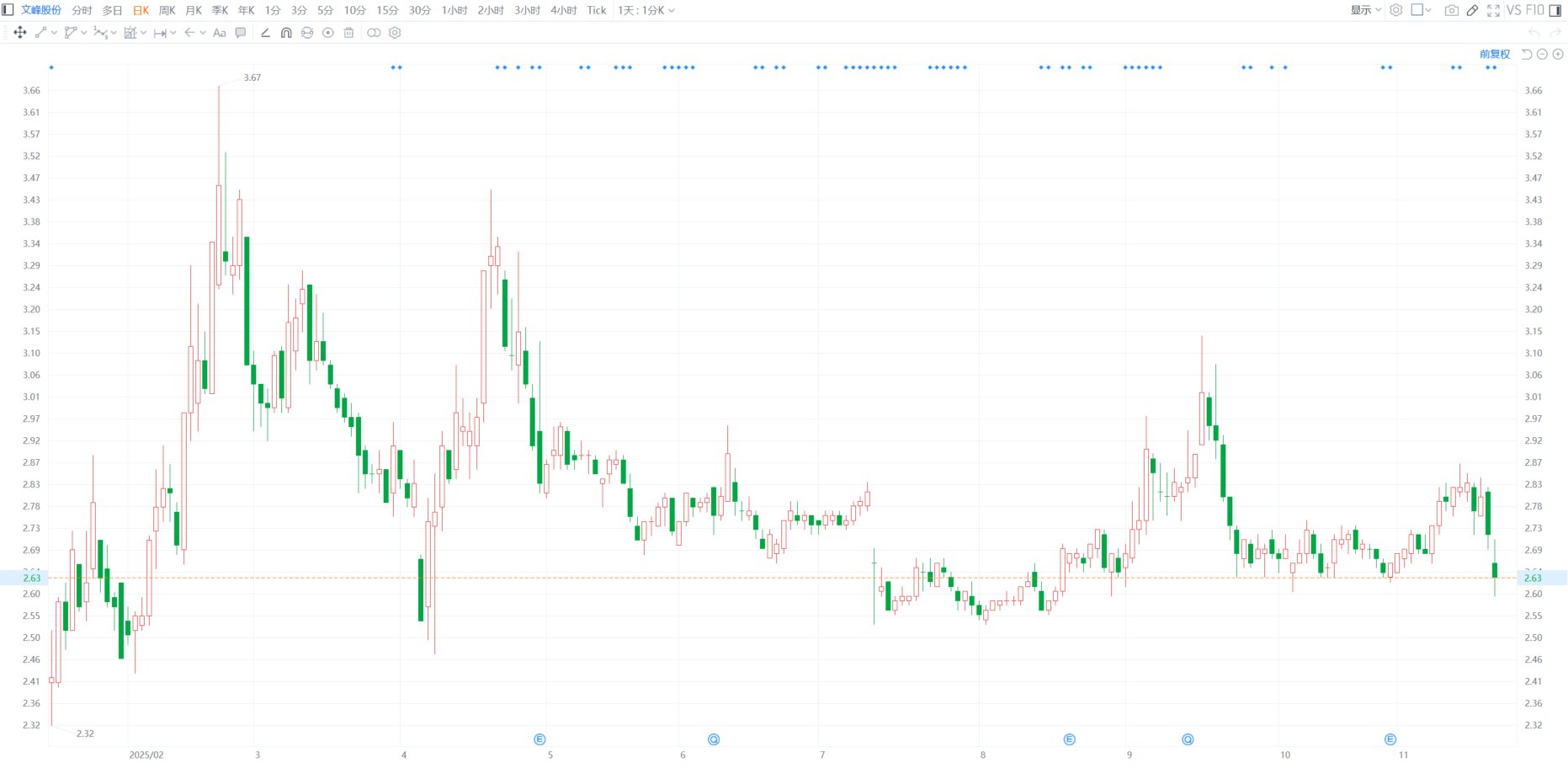
文峰股份(601010.SH)现跌4.41%报2.6元,暂成交1.2亿元,最新市值48亿元。文峰股份公告,公司于近日收到启东市监察委员会《留置通知书》和《立案通 知书》,公司副总经理秦国芬女士被立案调查并实施留置措施。本次立案调查系针对秦国芬女士的个人事项,与公司无关,不会对公司的日常运营造成重大 影响,公司各项生产经营活动正常有序进行。(格隆汇) ...

美国9月非农远超预期,12月降息前景不明
Dong Zheng Qi Huo· 2025-11-21 05:44
1. Report Industry Investment Rating - The rating for the US dollar is "oscillating" [2] 2. Core View of the Report - The US September non - farm payrolls far exceeded expectations, and the prospect of a December interest rate cut is unclear. The employment market has not significantly deteriorated, and the urgency for a rate cut is not strong. The December interest rate meeting is more likely to result in no rate cut and a dovish stance on the future rate - cut path [3][4][37] 3. Summary by Relevant Catalogs 3.1 US September Non - farm Payrolls and Interest Rate Outlook - **Employment Data**: The US added 119,000 non - farm jobs in September, far exceeding the market expectation of 50,000. The unemployment rate rose to 4.4%, higher than expected, and the labor participation rate slightly rebounded to 62.4%. Hourly wage growth was 0.2% month - on - month and 3.8% year - on - year, with the month - on - month rate down from the previous value [3][10] - **Industry Breakdown**: New jobs mainly came from education and healthcare (59,000), leisure and hospitality (47,000), construction (19,000), and retail (14,000). Sectors such as transportation and warehousing, professional and business services, manufacturing, and the federal government continued to lay off workers [3] - **Interest Rate Meeting Outlook**: As the last employment report before the December interest rate meeting, the data's lag reduces its reference value. Market expectations for a rate cut have slightly increased [4][37] 3.2 Investment Recommendations - With a cumulative 50bp rate cut in 2025 and no further acceleration of the economic slowdown, most Fed officials prefer to pause the rate - cut rhythm. Precious metals will continue to consolidate, US Treasury yields will oscillate at recent highs, the US dollar index will oscillate with a slight upward bias, and high - valuation pressure on US stocks will be prominent, with short - term volatility remaining high [5][42]