
建筑业

Search documents
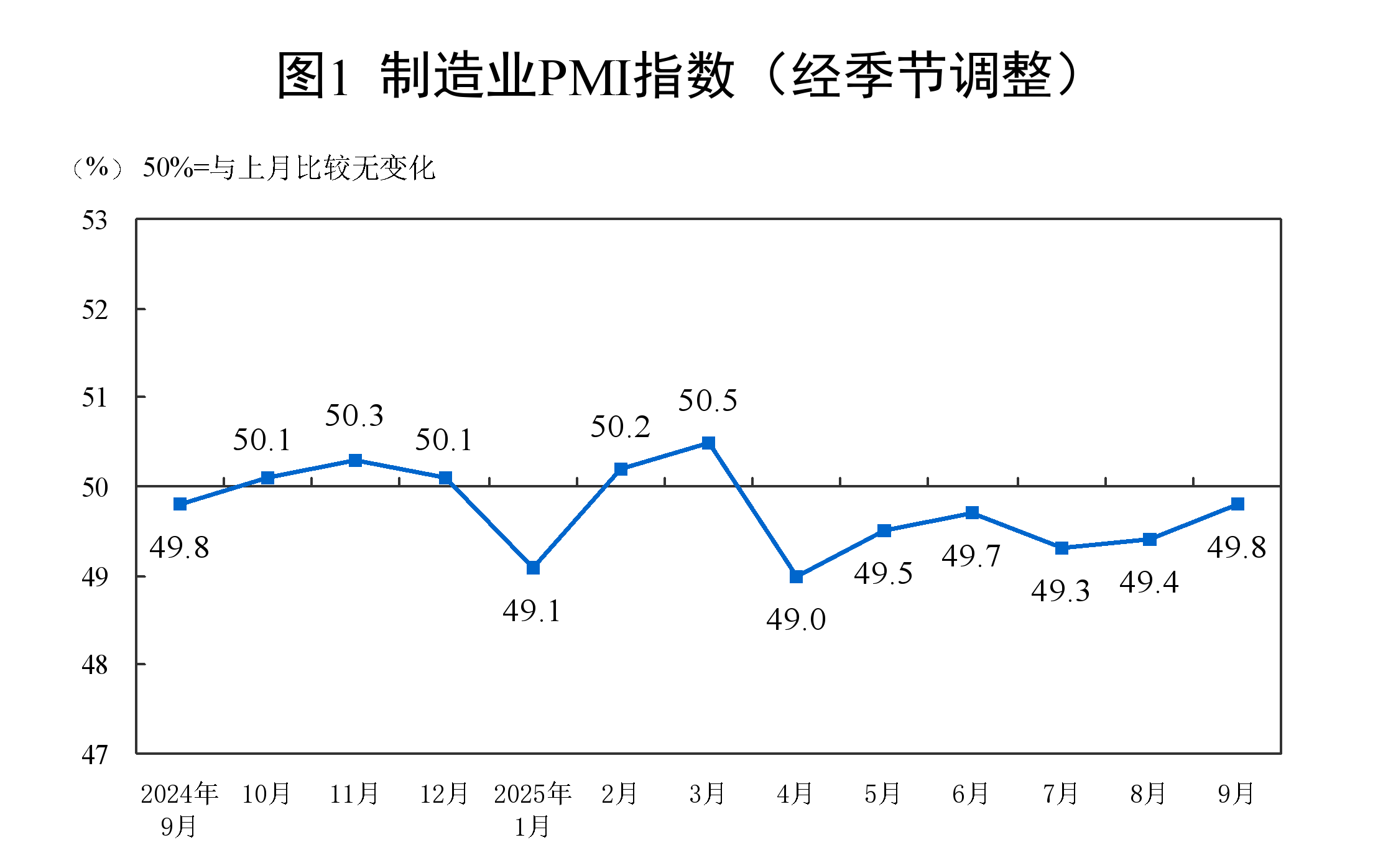
国家统计局:9月制造业生产活动加快,PMI升至49.8%,景气水平继续改善
Guo Jia Tong Ji Ju· 2025-09-30 01:37
Group 1: Manufacturing PMI Insights - The manufacturing purchasing managers' index (PMI) rose to 49.8% in September, an increase of 0.4 percentage points from the previous month, indicating continued improvement in economic conditions [2][3] - The production index reached 51.9%, up 1.1 percentage points, marking a six-month high, while the new orders index increased to 49.7%, suggesting a slight improvement in market demand [3] - Key industries such as food and beverage, automotive, and aerospace showed production and new orders indices above 54.0%, indicating robust activity, while sectors like wood processing and non-metallic mineral products remained below the critical threshold [3][4] Group 2: Non-Manufacturing PMI Insights - The non-manufacturing business activity index stood at 50.0%, down 0.3 percentage points, indicating stability in overall business volume [5] - The service sector maintained expansion with a business activity index of 50.1%, while industries like postal and financial services reported indices above 60.0%, reflecting strong growth [5] - The construction sector saw a slight recovery with a business activity index of 49.3%, and the business activity expectation index rose to 52.4%, indicating improved confidence among construction firms [5] Group 3: Composite PMI Insights - The composite PMI output index increased to 50.6%, up 0.1 percentage points, suggesting a continued acceleration in production and business activities across sectors [6] - The manufacturing production index and non-manufacturing business activity index contributed to the composite PMI, standing at 51.9% and 50.0% respectively [6]
2025年9月中国采购经理指数运行情况
Guo Jia Tong Ji Ju· 2025-09-30 01:30
Group 1: Manufacturing PMI Overview - In September, the Manufacturing Purchasing Managers' Index (PMI) was 49.8%, an increase of 0.4 percentage points from the previous month, indicating continued improvement in manufacturing sentiment [1] - The PMI for large enterprises was 51.0%, up 0.2 percentage points, while medium-sized enterprises saw a PMI of 48.8%, down 0.1 percentage points, and small enterprises had a PMI of 48.2%, up 1.6 percentage points [4] - The production index was 51.9%, up 1.1 percentage points, indicating accelerated production expansion, while the new orders index was 49.7%, up 0.2 percentage points, suggesting improved market demand [4] Group 2: Manufacturing PMI Components - The raw material inventory index was 48.5%, up 0.5 percentage points, indicating a continued narrowing of the decline in raw material inventory levels [4] - The employment index was 48.5%, up 0.6 percentage points, reflecting improved employment sentiment in manufacturing [4] - The supplier delivery time index was 50.8%, up 0.3 percentage points, indicating faster delivery times from suppliers [4] Group 3: Non-Manufacturing PMI Overview - In September, the Non-Manufacturing Business Activity Index was 50.0%, a decrease of 0.3 percentage points from the previous month, indicating overall stability in non-manufacturing business volume [8] - The construction industry business activity index was 49.3%, up 0.2 percentage points, while the service industry index was 50.1%, down 0.4 percentage points [10] Group 4: Non-Manufacturing PMI Components - The new orders index for non-manufacturing was 46.0%, down 0.6 percentage points, indicating a decline in market demand [14] - The input prices index was 49.0%, down 1.3 percentage points, suggesting a decrease in the overall level of input prices for non-manufacturing enterprises [14] - The employment index for non-manufacturing was 45.0%, down 0.6 percentage points, indicating a decline in employment sentiment [16] Group 5: Composite PMI Overview - The Composite PMI Output Index was 50.6%, an increase of 0.1 percentage points from the previous month, indicating continued acceleration in overall production and business activities [19]

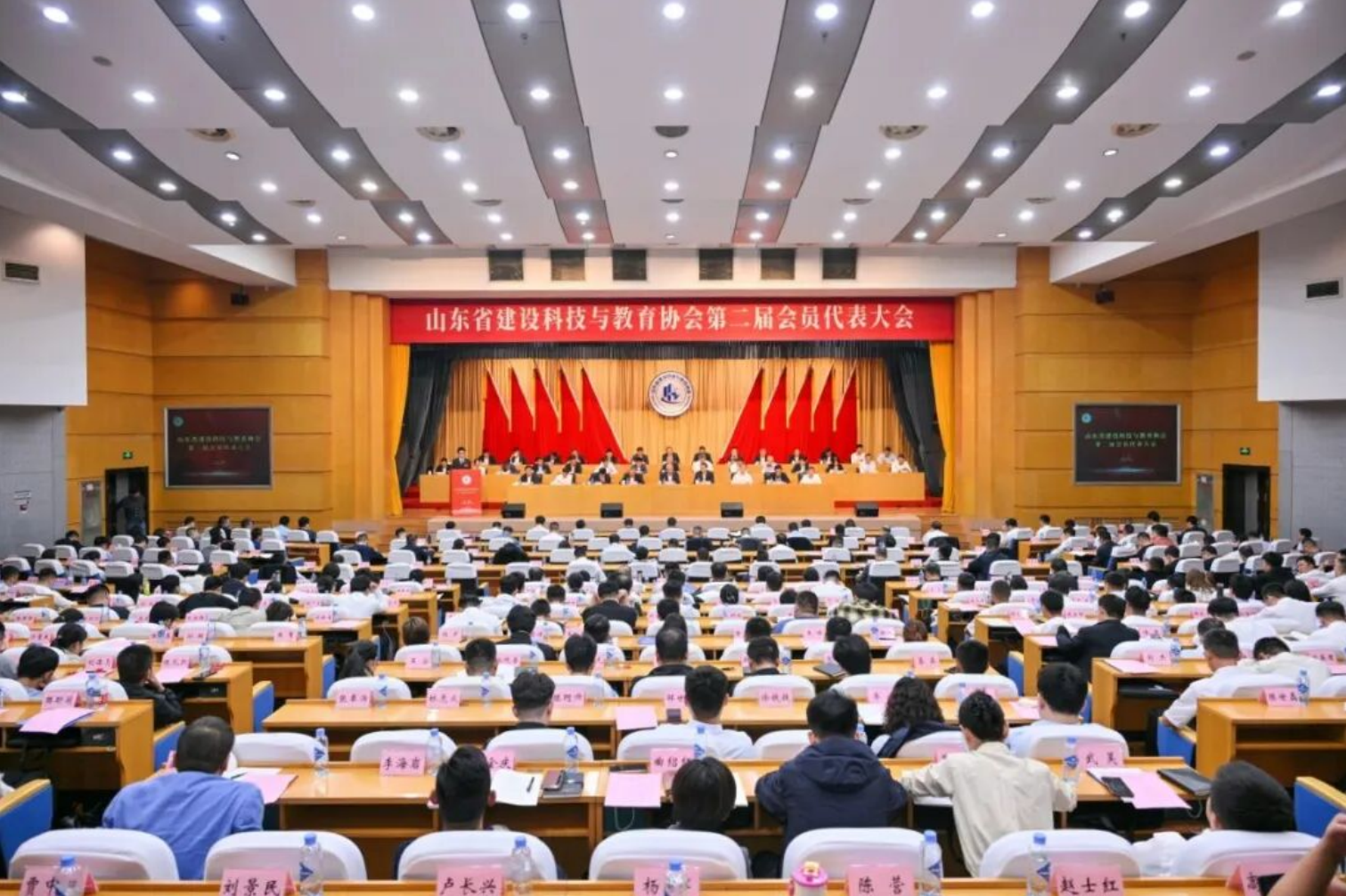
山东省建设科技与教育协会第二届会员代表大会在济南召开
Qi Lu Wan Bao· 2025-09-28 06:30
Core Points - The Shandong Provincial Construction Science and Education Association held its second member representative conference in Jinan, emphasizing its role in serving the government and leading the industry [1][3][4] - The new council aims to enhance political guidance, focus on technological innovation, and improve service capabilities to support the province's construction industry [4][5][8] Group 1: Association's Role and Objectives - The association has been recognized as a 5A social organization, playing a significant role in government service, industry leadership, and talent aggregation [3] - The new council is expected to align with national and provincial strategic needs, focusing on intelligent construction and digital building [4][5] Group 2: Leadership and Governance - The conference elected a new council, with Wang Chongjie re-elected as president, who committed to enhancing professional service capabilities and governance levels [8] - The association aims to build a new talent cultivation system and promote a collaborative ecosystem between education and industry [6] Group 3: Strategic Focus Areas - Emphasis on technological innovation as a core driver for high-quality development in the construction sector, particularly in green and low-carbon initiatives [5][6] - The association plans to strengthen its role in promoting energy efficiency and talent development within the construction industry [5][6]
中信建投:建筑行业上半年营收利润规模下降,现金流改善
智通财经网· 2025-09-27 06:37
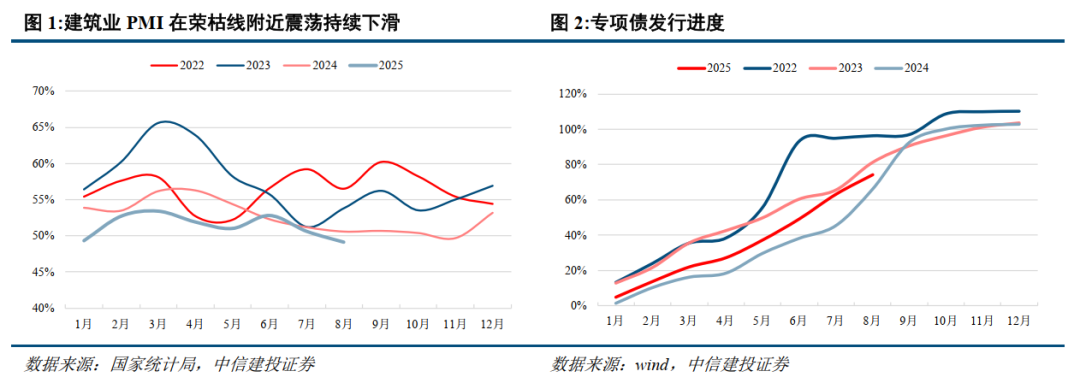
Core Viewpoint - The construction industry experienced a decline in revenue and profit in the first half of the year, but improvements in cash flow and impairment losses were noted due to debt reduction policies. The industry is seeing increased concentration, with energy and overseas projects maintaining high growth rates. High-quality infrastructure companies are expected to benefit from improved market sentiment and balance sheet recovery, while some construction firms focusing on new productivity will achieve both performance and valuation enhancements [1][11][36]. Revenue and Profit Summary - The overall revenue of the construction industry reached 39,711 billion yuan, a year-on-year decrease of 5.9%, with a decline rate narrowing by 2.8 percentage points compared to the same period last year [1][11]. - The net profit attributable to shareholders was 911 billion yuan, down 6.9% year-on-year, with the decline rate also narrowing by 2.8 percentage points compared to the previous year [1][11]. - In the first and second quarters, the revenue growth rates were -6.3% and -5.6%, respectively, while net profit growth rates were -8.4% and -5.2%, indicating a slight improvement in the second quarter [11]. Cash Flow and Impairment Summary - The industry benefited from debt reduction policies, resulting in a cash outflow reduction of 205 billion yuan compared to the same period last year, and impairment provisions were 264 billion yuan, down 46 billion yuan year-on-year [11][36]. Investment and Market Conditions - Infrastructure investment growth has slowed, with the construction industry PMI hovering around 50% due to the ongoing downturn in the real estate sector and reduced fiscal spending since the second quarter. From January to August, infrastructure investment grew by 5.42%, with narrow infrastructure investment growth at 2.0%, both being the lowest levels of the year [1][36]. - The planned issuance of 4.4 trillion yuan in special bonds this year, an increase of 500 billion yuan from last year, has seen a 79.3% progress rate by mid-September, although the increased use of these bonds has led to some diversion of funds from infrastructure projects [1]. Industry Concentration and Overseas Growth - The construction industry signed new contracts worth 13.9 trillion yuan, a year-on-year decrease of 6.5%, with the market share of the eight major state-owned enterprises rising to 55.2%, an increase of 3.6 percentage points from the previous year [23]. - Overseas business maintained high growth, achieving a total revenue of 345.5 billion yuan, a year-on-year increase of 8.1%, accounting for 8.7% of the total industry revenue, up 1.1 percentage points from the previous year [23].

“专项债+专项贷款”协同发力,地方清欠提速!
Sou Hu Cai Jing· 2025-09-27 04:34
Core Viewpoint - The issuance of special new bonds aimed at repaying local government debts to enterprises has exceeded 1.2 trillion yuan this year, surpassing market expectations, indicating a significant acceleration in the "debt repayment" efforts through fiscal and financial tools since the third quarter [1][2][3] Group 1: Special New Bonds - As of September 21, local governments have issued over 1.2 trillion yuan in special new bonds, including 800 billion yuan for supplementing local government financial resources and bonds specifically for repaying debts owed to enterprises [2] - Various provinces, such as Fujian, Shaanxi, and Hunan, have announced plans to issue special bonds to address outstanding payments to enterprises, with some provinces exceeding 100 billion yuan in announced bond issuance for debt repayment [2][3] - The issuance of "debt repayment" special bonds allows local governments to convert hidden debts into explicit government liabilities, thus standardizing debt management and alleviating short-term repayment pressures [3] Group 2: Special Loans - In addition to bond issuance, several national banks are providing special loans to support local debt repayment efforts, with a focus on government agencies, state-owned enterprises, and local financing platforms [4][5] - These special loans are primarily aimed at addressing the cash flow pressures faced by small and medium-sized enterprises, with banks assessing loan applications based on the repayment capabilities of the borrowing entities [5][6] - The implementation of these loans is still in the exploratory phase, with various financial institutions working to establish market-oriented and legal frameworks for supporting debt repayment [7] Group 3: Acceleration of Debt Repayment Efforts - The use of special bonds and loans has led to a rapid acceleration in local debt repayment efforts, with multiple provinces holding meetings to expedite the repayment of outstanding debts to enterprises [8] - By mid-September, the issuance of special new bonds for debt repayment had already surpassed 230 billion yuan for the month, indicating a growing recognition of the need for urgent financial support [8] - The Ministry of Finance has signaled a proactive approach for the next year, emphasizing the early use of debt repayment quotas and the potential for increased bond issuance to facilitate local government debt repayment [9]
1-8月阿塞拜疆GDP同比增长1%
Shang Wu Bu Wang Zhan· 2025-09-27 03:23
Core Insights - Azerbaijan's GDP reached 830.4 billion manats (approximately 488.5 billion USD) in the first eight months of 2025, reflecting a year-on-year growth of 1% [1] - The oil and gas sector experienced a decline in output by 2.1%, while the non-oil sector saw an increase in output by 2.6% [1] Sector Contributions to GDP - The industrial sector accounted for 34.9% of GDP [1] - Trade and automotive repair contributed 10.3% to GDP [1] - Transportation and storage represented 7.1% of GDP [1] - Agriculture, forestry, and fishing made up 6.3% of GDP [1] - Construction also accounted for 6.3% of GDP [1] - The tourism, accommodation, and catering sector contributed 2.8% to GDP [1] - Information and communication sector represented 1.8% of GDP [1] - Other industries collectively accounted for 20.7% of GDP [1]
1-7月阿塞拜疆人均名义月工资为645美元
Shang Wu Bu Wang Zhan· 2025-09-27 03:23
Employment Overview - As of August 1, 2025, Azerbaijan has a total employment of 1.768 million people, with 858,000 in the public sector and 910,000 in the private sector [1] - The largest employment sectors are trade and automotive repair (18.9%), education (18.1%), and industry (13.8%) [1] Salary Insights - The average nominal monthly salary from January to July was 1,098.1 manats (approximately 645 USD), reflecting a year-on-year increase of 9.5% [1] - The highest-paying sectors include mining, finance and insurance, information and communication, technology, and logistics [1]
泰达股份:9月26日召开董事会会议
Mei Ri Jing Ji Xin Wen· 2025-09-26 12:08
Group 1 - The company, Teda Co., Ltd. (SZ 000652), held a temporary board meeting on September 26, 2025, to discuss the authorization for its subsidiary, Teda Environmental Protection, to participate in an overseas comprehensive waste management facility project bid [1] - For the first half of 2025, Teda Co., Ltd.'s revenue composition was as follows: wholesale industry accounted for 89.05%, environmental management for 9.89%, construction for 0.44%, textile and apparel for 0.37%, and real estate for 0.26% [1] - As of the report date, Teda Co., Ltd. had a market capitalization of 6.1 billion yuan [1]

智利各大行会预计2026年智利经济增长率在2%至2.5%间
Shang Wu Bu Wang Zhan· 2025-09-25 17:47
Economic Growth Outlook - Chilean banks have a conservative outlook for economic growth in 2026, predicting GDP growth rates between 2% and 2.5% [1] - The main challenge for 2026 is the recovery of employment, with high informal employment rates and significant disparities in participation among specific groups [1] Industrial Performance - The president of the Chilean Manufacturing Association (SOFOFA) believes industrial performance in 2026 may be uneven due to a lack of clear rules, legal certainty, and investment incentives [1] - The construction industry is expected to recover, but the real estate sector lags behind infrastructure projects driven by large private mining and energy initiatives [1] Employment and Unemployment - The president of the Chilean Banking and Financial Institutions Association (ABIF) forecasts an unemployment rate of 8.7% for 2026, with bank performance similar to 2025 [1] - Total bank loans are expected to grow only by 2%-3%, constrained by low investment and a weak labor market affecting consumer loans [1] Retail and Wholesale Trade - The president of the National Chamber of Commerce, Services, and Tourism (CNC) anticipates retail sales growth of 4.5% to 5.5% in 2025, with limited expansion in 2026 [1] - Wholesale trade may benefit from investment dynamics and inventory replenishment, while retail growth could slow down [1] Mining Sector - The president of the National Mining Association (SONAMI) expects copper production to stagnate at around 5.4 million tons per year, with economic contributions from operational continuity rather than physical expansion [1] - Challenges include declining ore grades, increased mining depth, capacity limitations, and regulatory delays [1] Agricultural Sector - The president of the National Agricultural Association (SNA) notes that agricultural growth has been 3.5 times that of the overall economy in the past two years [1] - Cherry production will remain crucial for the 2025-2026 season, with challenges in optimizing irrigation infrastructure and improving rural security [1]
德权威机构预测2025年德国经济将微增0.2%
Zhong Guo Xin Wen Wang· 2025-09-25 12:15
Core Insights - The German economy is projected to grow by only 0.2% in 2025, with subsequent growth rates of 1.3% in 2026 and 1.4% in 2027, following two consecutive years of recession in 2023 and 2024 [1][2] - The report emphasizes the need for comprehensive structural reforms by the federal government to enhance economic competitiveness, as underlying structural weaknesses persist despite anticipated recovery [1] - Key factors affecting long-term economic growth include high energy and labor costs, a shortage of skilled labor, and the impact of high U.S. tariffs on German exports [1] Economic Sector Analysis - The service sector is expected to experience robust growth in the coming two years, particularly in the public sector, while the recovery in manufacturing (including mining and construction) is anticipated to be more moderate [1]