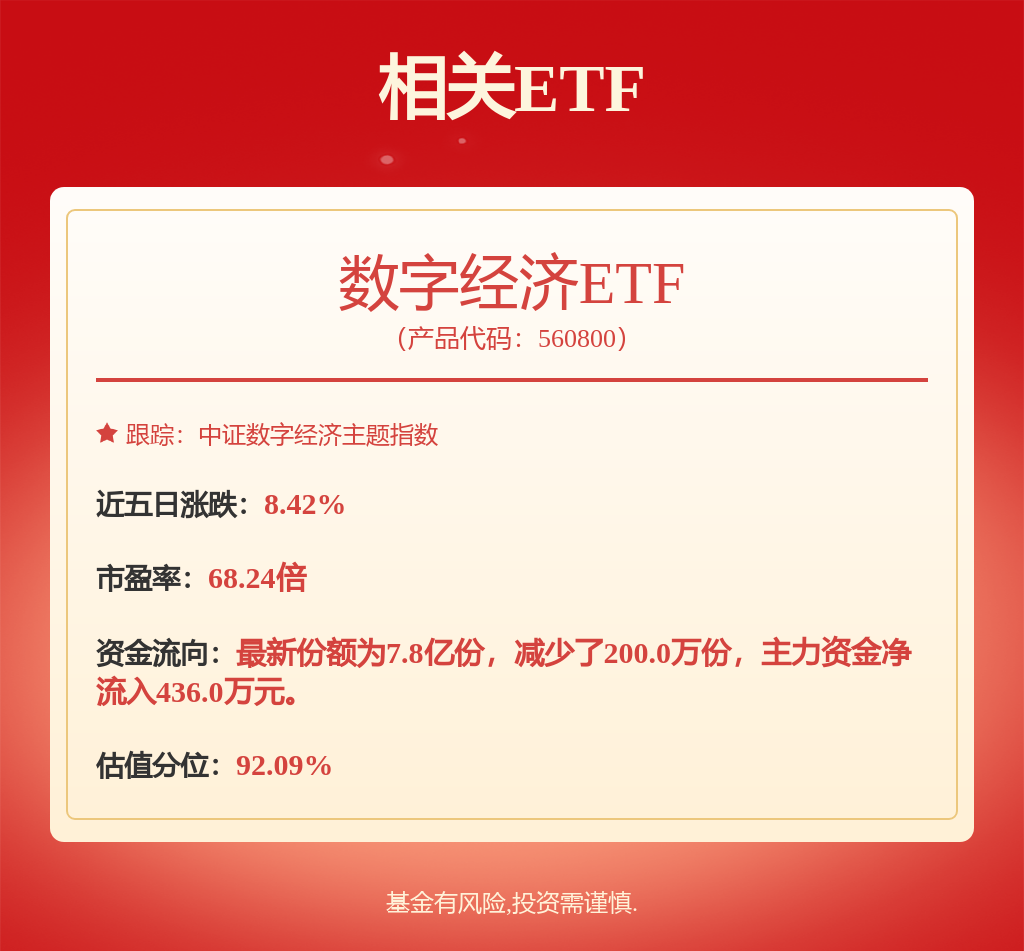
数字经济

Search documents
服贸会|北京发布140个招商项目,涉新一代信息技术、医药健康等领域
Zhong Guo Jing Ying Bao· 2025-09-12 16:45
Group 1: Investment Opportunities in Beijing - Beijing has released 140 investment cooperation projects, focusing on new generation information technology and healthcare sectors [1] - Key projects include the Changping Life Valley International Precision Medicine Industrial Park and Huairou Science City Industrial Transformation Demonstration Zone [1] - Various districts in Beijing, including Chaoyang, Fengtai, and Changping, have introduced 20 "Artificial Intelligence+" application scenarios to facilitate technology transfer [1] Group 2: Green Finance Initiatives - The Tongzhou District is actively promoting green finance, with the financial sector contributing approximately 10% to the district's GDP [2] - The Beijing Green Exchange has facilitated carbon emissions trading, with a cumulative transaction volume of 1.1 million tons [2] - Over 470 financial enterprises have been established in the district, including six specialized green finance institutions [2][3] Group 3: Economic Growth in Chaoyang District - Chaoyang District aims for a GDP of 923 billion yuan by 2024, accounting for nearly one-fifth of the city's total [4] - The district's GDP reached 462 billion yuan in the first half of this year, with a year-on-year growth of 5.1% [4] - The information service and technology service sectors contribute 23.7% to the district's GDP, with over 30% contribution to growth [4] Group 4: Policies and Support in Haidian District - Haidian District plans to release a series of policies aimed at funding and talent support for enterprises [5] - The district's GDP is projected to reach 1.29 trillion yuan in 2024, contributing 26.5% to the city's economy [5] - Haidian is focusing on building a modern industrial system centered around artificial intelligence and strategic emerging industries [5][6] Group 5: Digital Economy Development in Shijingshan District - Shijingshan District aims to establish a future digital space innovation experimental zone within three years [7] - The district's GDP is projected to reach 131.29 billion yuan in 2024, with a digital economy value added accounting for 57.4% of the total GDP [7] - By 2027, the district aims to become a hub for digital economy innovation, targeting a digital economy scale exceeding 220 billion yuan [7]
未来十年超半数人口或将集中在这几个城市群,房价走势令人担忧
Sou Hu Cai Jing· 2025-09-12 15:42
Core Insights - By 2025, China's urbanization rate is projected to reach 65.7%, a significant increase of 5.3 percentage points since 2020, reflecting a massive population shift towards major cities [1] - The Chinese government aims to cultivate five world-class city clusters, which contribute 56.8% of the national GDP and attract 43.5% of the population, despite occupying only 10.2% of the country's land area [1] Group 1: Population Movement Trends - In 2024, over 12 million people migrated to the five major city clusters, with the Guangdong-Hong Kong-Macau Greater Bay Area leading with a net inflow of 3.8 million [2] - The Greater Bay Area's resident population reached 86 million by mid-2025, increasing by 11 million over five years, with 42.3% of new residents being highly educated [4] - The Yangtze River Delta city cluster is characterized by a "1 5 9" urban structure, with Shanghai at its core, indicating a deepening integration and collaboration among cities [6] Group 2: Economic and Industrial Dynamics - The Chengdu-Chongqing city cluster is experiencing rapid growth, with both cities' GDP growth rates exceeding 7% in the first half of 2025, benefiting from improved transportation links [6] - The Central Yangtze River city cluster, centered around Wuhan, has seen a 30% reduction in cross-province commuting times, with high-tech industries contributing 25.7% to its GDP [6][9] Group 3: Real Estate Market Observations - Despite a nationwide downturn in the real estate market, core cities within the five city clusters have shown resilience, with new residential prices rising over 3% in the first half of 2025, and Shenzhen experiencing a 5.7% increase [9] - The disparity in housing prices is widening, with core cities' price increases being 2.3 times that of surrounding areas, indicating a strong correlation between population influx and real estate demand [9] Group 4: Policy Responses and Future Outlook - The government is implementing measures to manage real estate markets, including increasing land supply in major cities and promoting balanced urban development [11] - Experts suggest enhancing transportation integration within urban clusters and accelerating the development of affordable housing to address population concentration challenges [11] - The ongoing population migration is seen as both an opportunity for economic growth and a challenge for equitable resource distribution, necessitating strategic planning [11]


“两区”建设以来西城累计纳入市级项目945个
Zhong Guo Xin Wen Wang· 2025-09-12 02:31
Core Insights - The "Two Zones" initiative in Beijing has significantly contributed to the high-quality economic development of the Xicheng District, with a total of 945 projects amounting to 768.23 billion yuan over five years [1][3]. Financial Sector Development - Xicheng has focused on financial openness, with 208 projects in the financial sector totaling 620.96 billion yuan, accounting for 80.83% of the district's total project value [1][3]. - Notable projects include the establishment of the Beijing Stock Exchange and the Beijing Financial Court, enhancing the role of the national financial management center [1]. Technological Advancements - The district has positioned itself as a national-level financial technology demonstration zone, providing 350,000 square meters of quality industrial space to support the concentrated development of the fintech industry [3]. - Xicheng hosts 9 national key laboratories and 14 Beijing key laboratories, fostering a diverse ecosystem of research institutions and high-tech enterprises [3]. Digital Economy Growth - Over the past five years, Xicheng has made strides in digital infrastructure, leading the city in 5G base station density and establishing a digital infrastructure resource management service hub [3]. - The digital economy's added value is projected to exceed 240 billion yuan in 2024, with over 2,600 core digital economy enterprises and 718 large-scale data companies generating over 200 billion yuan in revenue [3]. Future Initiatives - Xicheng plans to enhance innovation capabilities and leverage city-level policies to create replicable and scalable innovation case studies [4]. - The district aims to deepen financial openness and attract more international financial organizations to improve the internationalization of financial services [4]. - There is a focus on optimizing the business environment and upgrading service mechanisms to support enterprises throughout their lifecycle [4].
去中东:亲临新基建浪潮,勘探万亿消费新蓝海
吴晓波频道· 2025-09-12 00:31
Core Insights - The article highlights the successful entry of Chinese brands into the Middle Eastern market, particularly through localized strategies and innovative payment solutions, exemplified by Hibobi's rapid rise in Saudi Arabia [2][12] - The trade volume between China and the Middle East is projected to exceed $407.4 billion in 2024, with new energy products and digital devices seeing a 28% year-on-year growth, significantly outpacing traditional goods [2][6] Market Overview - The Middle Eastern market is characterized by strong demand for infrastructure and opportunities for digital transformation, supported by substantial capital and recognition of Chinese industrial capabilities [4][6] - Saudi Arabia's Vision 2030 has already achieved eight of its targets ahead of schedule, and the UAE's non-oil economy now accounts for 75.5% of its GDP, indicating a robust diversification of the economy [6][8] Policy Environment - Dubai's DMCC Free Trade Zone has been recognized as the "Best Free Trade Zone in the World" for nine consecutive years, offering incentives such as 100% foreign ownership and 50-year tax exemptions [7][8] - Similar policy benefits are present across the region, with Saudi Arabia simplifying approval processes to attract over 500 multinational companies to establish regional headquarters [8][9] Consumer Behavior - The e-commerce market in Saudi Arabia has surpassed $10 billion, with over 60% of the population preferring online shopping [10] - Young consumers in the region are heavily engaged on platforms like Snapchat and TikTok, influencing marketing strategies for businesses [11][12] Industry Opportunities - The renewable energy sector is gaining traction, with significant investments from sovereign wealth funds aimed at achieving ambitious renewable energy targets by 2030 [13][14] - The manufacturing sector is also ripe for investment, with local production becoming a key policy focus, particularly in automotive parts, building materials, and consumer goods assembly [15] Strategic Insights - Dubai serves as a critical logistics and financial hub, enhancing cross-border trade efficiency, while Saudi Arabia presents vast growth potential with a population exceeding 36 million and a strong focus on infrastructure projects [17][20] - Major infrastructure projects in Saudi Arabia, valued at $1.1 trillion, are underway, with Chinese companies actively participating in significant contracts [20][22] Cultural Considerations - Understanding local culture is essential for successful business operations in the Middle East, as cultural nuances significantly impact commercial interactions [36][37]
西城区正修订新一轮科技产业政策
Bei Jing Qing Nian Bao· 2025-09-11 17:58
Group 1: Overall Achievements of "Two Zones" Construction - As of mid-2025, Xicheng District has incorporated 945 projects into the municipal "Two Zones" construction, with a total investment of 768.23 billion yuan [1] - The financial sector has seen significant contributions, with 208 projects amounting to 620.96 billion yuan, accounting for 80.83% of the total project investment in the district [1] - The financial industry in the region has experienced an average annual growth of 6.9% in value added, while the asset scale of financial institutions has grown by 6.0% annually [1] Group 2: Digital Infrastructure and Economy - Xicheng District is leading in digital infrastructure, with the highest average density of 5G base stations in the city and advanced deployment of 5G-A networks in key areas [2] - The digital economy's value added is projected to exceed 240 billion yuan in 2024, with over 2,600 core digital economy enterprises and 718 large-scale data companies generating over 200 billion yuan in revenue [2] - The district has launched the "Qianxing Chuhai" international public procurement platform, covering over 160 countries and regions, and collecting more than 300,000 overseas bidding information [2] Group 3: Innovation and Technology Policy - Xicheng District is revising its technology industry policy to support scientific innovation and project outcome transformation, with financial support up to 25 million yuan for individual clauses [3] - The district aims to enhance its research and development capabilities and promote industrial upgrades through five major actions focused on data infrastructure and application scenarios [3] - The goal is to establish a national-level data industry cluster and advance the construction of "China Data Street" [3]
*ST广道龙虎榜:营业部净卖出310.88万元
Zheng Quan Shi Bao Wang· 2025-09-11 13:25
Group 1 - The stock *ST Guangdao (839680) increased by 4.50% with a turnover rate of 49.31% and a trading volume of 262 million yuan, showing a volatility of 29.94% [1] - The stock was listed on the trading board due to its turnover rate reaching 49.31%, with a net selling amount of 3.1088 million yuan from brokerage seats [2] - In the past six months, the stock has appeared on the trading board 26 times, with an average price increase of 1.84% the day after being listed and an average decline of 1.56% over the following five days [3] Group 2 - The top five brokerage seats accounted for a total transaction amount of 44.8799 million yuan, with a buying amount of 20.8856 million yuan and a selling amount of 23.9943 million yuan, resulting in a net selling of 3.1088 million yuan [2] - The largest buying brokerage was Dongfang Caifu Securities, with a buying amount of 3.9394 million yuan, while the largest selling brokerage was also Dongfang Caifu Securities, with a selling amount of 5.1678 million yuan [3]
北京西城“两区”建设五年成果显著,项目总金额超7682亿元
Bei Jing Shang Bao· 2025-09-11 11:12
Core Insights - The "Two Zones" construction in Xicheng District, Beijing, has achieved significant results over the past five years, with a total of 945 projects amounting to 768.23 billion yuan, creating an open development pattern centered around the Financial Street [2][3] Institutional Innovation and Financial Openness - Xicheng District has focused on institutional innovation, resulting in several replicable practices, including the "green finance development system" and "data cross-border security management mechanism" recognized at the national level [2] - The district has implemented a "government + enterprise dual management service model," with four cases selected as innovative practices at the municipal level [2] Cross-Border Trade Facilitation - A "buy and return" pilot program was established in the Financial Street, integrating 265 tax refund stores and opening four "buy and return" stores, creating a new service model [3] - The financial sector has seen 208 projects under the "Two Zones" initiative, totaling 620.96 billion yuan, accounting for 80.83% of the district's total [3] Development of a Globally Competitive Fintech Zone - Xicheng District is advancing the construction of a national-level fintech demonstration zone, adding 350,000 square meters of quality industrial space [4] - The district hosts nine national key laboratories and 14 municipal key laboratories, with key enterprises in the park achieving revenues exceeding 200 billion yuan in the first half of the year [4] Digital Empowerment and Data Factor Market Construction - Xicheng District leads in digital infrastructure, with the highest density of 5G base stations in the city, and is enhancing smart city efficiency [5] - The digital economy's added value is expected to exceed 240 billion yuan in 2024, with over 2,600 core enterprises and 718 large-scale enterprises [5]
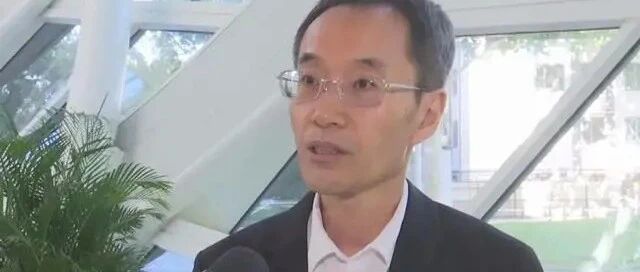
“凤凰之星”评委薛军谈中国企业出海:不仅需“走出去”,还需“走进去”
凤凰网财经· 2025-09-11 05:31
Group 1 - The "2025 Phoenix Star Listed Company Selection" aims to highlight the core competitiveness and influence of Chinese listed companies, supporting the healthy development of mainland and Hong Kong stock markets [1] - The selection process includes a first round of expert reviews on August 28, followed by public voting, with results to be announced on September 23 [1] - Nine awards are set to cover key areas such as innovation, shareholder returns, social responsibility, growth potential, brand influence, and globalization [1] Group 2 - Professor Xue Jun emphasizes the significance of Chinese companies going global, noting that outward direct investment reflects a company's development capability, especially when export trade faces bottlenecks [3] - The focus has shifted from the quantity of overseas investments to the quality of returns and local operations management [3] - The evaluation of overseas investment profitability shows a steady increase over the past 20 years, with China's outward direct investment only accounting for 16.63% of GDP, indicating substantial growth potential compared to developed countries [4] Group 3 - Different types of companies should adopt differentiated strategies for going global, with manufacturing firms needing to address competition and trade barriers, while service industries should focus on regulatory flexibility [6] - The challenges faced by companies include geopolitical risks, stringent security reviews, and increasing competition in overseas markets, necessitating a focus on local operations [7] - The opportunities for Chinese companies include enhanced regional cooperation amid globalization challenges, advantages in green transition, and strong demand in emerging markets [7] Group 4 - The collaboration between academia and industry is crucial in the AI era, with universities needing to cultivate versatile talents and create detailed databases to support companies in their global ventures [8] - The selection event is supported by various institutions, including the China Listed Companies Association and academic institutions, with results to be revealed at the "Phoenix Bay Area Financial Forum 2025" [8]
第十届“一带一路”高峰论坛在香港开幕!首日促成33份协议
Nan Fang Du Shi Bao· 2025-09-10 15:10
Core Points - The 10th "Belt and Road" Forum opened in Hong Kong with over 90 officials and business leaders participating to explore new cooperation opportunities [1][2] - A total of 33 cooperation memorandums and agreements were signed on the first day, covering infrastructure, finance, and technology across various countries [2] - Hong Kong's trade with "Belt and Road" countries exceeded $276 billion last year, marking an 80% increase since 2013 [2] - Hong Kong has signed free trade agreements with 14 "Belt and Road" countries and investment agreements with about 20 [2] - The Northern Metropolis area in Hong Kong is being promoted as a future technology innovation center [2][3] Industry Insights - The forum serves as a crucial platform for dialogue and cooperation among stakeholders from "Belt and Road" countries, especially in the context of global economic instability [4] - Discussions focused on the latest policies and development opportunities related to the "Belt and Road" initiative, with participation from senior officials from Malaysia, Qatar, Uzbekistan, Kazakhstan, and Saudi Arabia [4] - The forum included project and trade matching sessions aimed at translating the "Belt and Road" initiative into actual economic cooperation [5] - A new "ASEAN Zone" was established at the forum to highlight recent projects from the 10 ASEAN member countries [5] - The report by Ernst & Young emphasized Hong Kong's evolving role from participant to key promoter and value adder in the "Belt and Road" initiative [6][7]
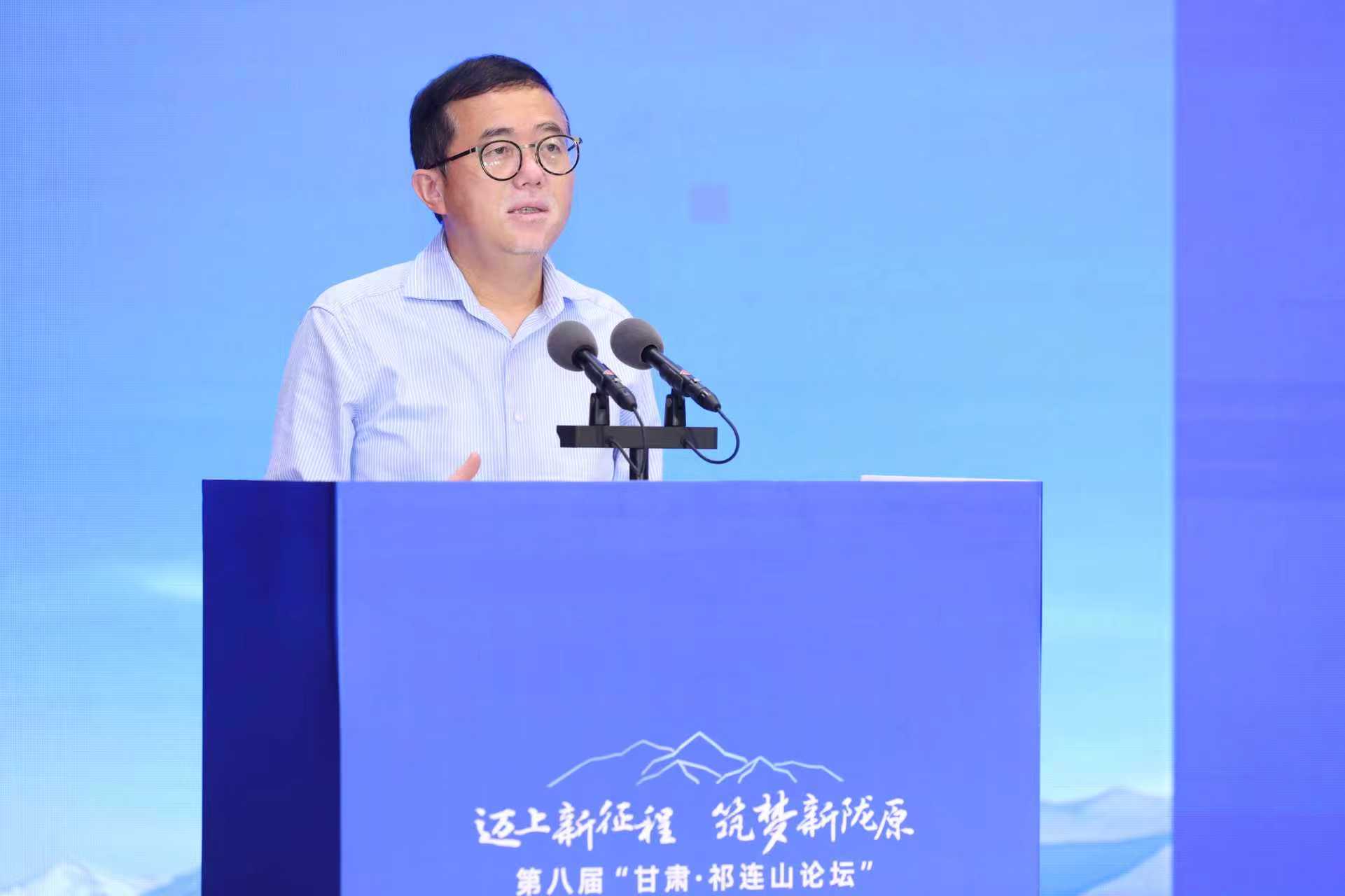
国是金融改革研究院刘胜军:用好资本市场有利于解决创新企业融资和激励问题
Xin Hua Cai Jing· 2025-09-10 14:52
Core Viewpoint - The forum emphasized the importance of financial support for high-quality development of industrial chains, particularly for small and medium-sized enterprises (SMEs) [1][4]. Group 1: Financial Support for Industries - Financial services need to be improved to better support the real economy, especially SMEs, through systemic and mechanistic changes [1][4]. - Capital markets should be leveraged to address financing and incentive issues for innovative enterprises [1][5]. - The development of industrial clusters is crucial for national competitive advantage, with Gansu forming 12 provincial advanced manufacturing clusters [3][4]. Group 2: Challenges in Financing - Despite numerous policies, the financing difficulties for SMEs and private enterprises remain unresolved due to high indirect financing ratios and slow elimination of "zombie" enterprises [4][6]. - Financial institutions need to enhance their risk assessment capabilities using data resources to better serve the real economy [5][6]. Group 3: Recommendations for Improvement - Promote market-oriented private equity and venture capital with a risk appetite to attract innovative talent, especially in artificial intelligence [5][6]. - Establish high-quality data platforms to convert data into credit assessment resources for financial institutions [5][6]. - Encourage financial institutions to provide financing services based on accounts receivable, inventory, and orders for SMEs [6].