房地产

Search documents
港股收评:马年首个交易日收跌!AI应用、机器人、本地地产、石油股逆势上涨
Ge Long Hui· 2026-02-20 08:32
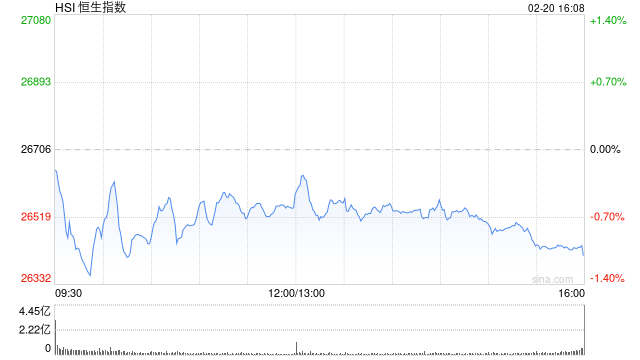
恒指成分股中,中石油、恒基地产涨超3%,美的集团、石药集团、中海油、李宁、恒隆地产涨超2%。 | 代码 | 名称 | | | 112年1 | 涨幅% | 年初至今涨幅% | | --- | --- | --- | --- | --- | --- | --- | | HSTECH | 恒生科技指数 | | | 5211.50 | -2.91 | -5.52 | | HSI | 恒生指数 | 1 | | 26413.35 | -1.10 | 3.05 | | HSCEI | 恒生国企指数 | 2 | | 8959.56 | -1.22 | 0.51 | | 代码 | 名称 | | | 涨跌幅 ^ | 年初至今涨跌 | 总市值 | | 06618 | 京东健康 | | (0) | -6.27% | 2.43% | 1824.47亿 | | 09888 | 百度集团-SW | | | -6.25% | -1.90% | 3547.72 Z | | 01347 | 华虹半导体 | | | -5.76% | 26.72% | 1635.98亿 | | 00268 | 金蝶国际 | | | -5.65% | -20.77% ...



港股收评:恒生指数跌1.1% 科指跌2.9% 科网股普跌 商业航天、电力板块拉升 部分本地地产股走强
Xin Lang Cai Jing· 2026-02-20 08:24
Market Overview - The Hong Kong stock market indices experienced a collective decline, with the Hang Seng Index falling by 1.1% to 26,413.35 points, the Hang Seng Tech Index down by 0.9%, and the National Enterprises Index decreasing by 1.55% [1][8] - Technology stocks saw widespread losses, with Baidu dropping over 6%, Alibaba nearly 5%, and Tencent over 2% [1][8] Sector Performance - Despite the overall market downturn, large model and robotics concept stocks surged, with Zhihui rising nearly 43%, MINIMAX increasing over 14%, and both companies' market capitalizations surpassing HKD 300 billion [1][8] - Other notable gains included Yujian up over 21%, Shoucheng Holdings nearly 12%, Sanhua Intelligent Control over 5%, and UBTECH close to 5% [1][8] Real Estate Sector - Some local real estate stocks showed strength, with Hysan Development and Swire Properties B rising over 3%, and Crown Property Trust and Hang Lung Properties increasing over 2% [2][9] - Analysts from Goldman Sachs have upgraded their forecast for Hong Kong property prices from a 5% increase to a 12% increase for the year, citing favorable government visa and immigration policies, a 20% rise in rents over the past three years, and lower mortgage rates encouraging residents to consider buying instead of renting [2][9] Robotics and AI Sector - The robotics sector saw significant growth, with Yujian rising over 19%. The recent CCTV Spring Festival Gala showcased various humanoid robot startups, contributing to heightened interest in the sector [3][10] - Douyin e-commerce reported a staggering 1680% year-on-year increase in GMV for robot products from February 16 to 18, with order volume up 655% [5][12] - AI application stocks also performed well, with Zhihui increasing over 19% following the announcement of a "computing power partner" recruitment plan aimed at optimizing their GLM-5 model [6][14]
亿万富翁对冲基金经理做空美股做多全球 美资产回报率全球20市排末位 估值较全球其他资产高40%
Jin Rong Jie· 2026-02-19 21:06
Core Viewpoint - Rob Citrone, founder of Discovery Capital and billionaire hedge fund manager, publicly outlines his investment strategy: "shorting the U.S. market and going long on global markets" [1] Group 1: U.S. Market Performance - Over the past year, U.S. asset returns, when measured in dollars, have been the weakest among 20 global markets, lagging emerging markets by approximately 30 percentage points [1] - The U.S. ranks last (20th) among these 20 markets, indicating a significant performance gap [1] Group 2: Reasons for U.S. Market Underperformance - Global investors are significantly over-allocated to U.S. assets, with U.S. institutions averaging about 80% of their funds invested domestically, suggesting a potential shift of capital towards other markets [1] - U.S. asset valuations are considered high, trading at about 40% above global asset prices [1] - The U.S. market faces uncertainties regarding the development of artificial intelligence (AI) businesses, with unclear monetization plans and concerns over high AI investment expenditures, leading to selling pressure in sectors like software, real estate, and trucking [1] Group 3: Emerging Market Opportunities - Citrone expresses a favorable outlook on emerging market investment opportunities, specifically highlighting Mexico as a top choice due to its deep integration with the U.S. economy, strong leadership, and competitive local companies that possess significant competitive advantages through monopolistic or oligopolistic positions [1] - Other countries such as Argentina and Brazil are also noted as having attractive investment potential [1] Group 4: Shift in Investor Focus - Since the implementation of tariff policies by Trump, there has been a growing trend of investors shifting their focus to other markets [1] - Institutions like Goldman Sachs and Lazard indicate that the U.S.'s dominant position in the global market may continue to weaken [1]
难怪高市嚣张!GDP跌出世界前三也不慌,原来日本资产遍布全球
Sou Hu Cai Jing· 2026-02-19 18:47
Group 1 - The core viewpoint of the article is that despite perceptions of Japan's economic stagnation and aging population, global capital is increasingly attracted to Japan due to the undervaluation and quality of its assets, driven by a combination of currency depreciation and proactive government policies to invite foreign investment [1][3][5] - Japan's net overseas assets have reached a historical high of 533 trillion yen by the end of 2024, indicating that Japan has significant financial resources, but much of it is invested abroad rather than domestically [5] - The depreciation of the yen has made Japanese companies and assets cheaper for foreign investors, allowing them to acquire high-quality assets at lower prices, which is perceived as an opportunity rather than a sign of weakness [7][9] Group 2 - Three key changes expected around 2026 are driving foreign capital interest in Japan: a shift in monetary policy away from negative interest rates, a stabilization of the yen, and a push for corporate reform in Japan [9][11] - The Tokyo Stock Exchange has implemented regulations requiring underperforming companies to present improvement plans, which is prompting Japanese firms to innovate and seek foreign investment, creating new opportunities for capital [13][14] - Foreign capital is particularly interested in Japan's core assets that are difficult to replicate, such as essential technologies in semiconductor materials, as well as industries related to aging populations, including healthcare robots and medical devices [16][18] Group 3 - Prime urban land and infrastructure in major Japanese cities like Tokyo and Osaka are becoming increasingly valuable due to population density, despite an overall decline in Japan's population [20] - The article emphasizes the importance of maintaining currency stability for national wealth, contrasting Japan's situation with the stability of the Chinese yuan, which provides a safety net for ordinary citizens [22][24] - The global capital movement towards Japan serves as a reminder of the necessity for countries to strengthen their own technological capabilities and maintain control over their wealth to navigate the complexities of global investment [24]

利率、房价双双回落仍难提振需求 美国1月二手房签约销售持续下滑
智通财经网· 2026-02-19 16:02
Core Viewpoint - The recovery momentum in the U.S. housing market remains insufficient, with January data showing a continued decline in existing home sales despite lower mortgage rates and slowing price increases [1][2]. Group 1: Existing Home Sales Data - The index measuring existing home sales contracts fell by 0.8% month-over-month in January, following a revised significant drop of 7.4% in December, which was below market expectations [1]. - The actual transaction volume in January saw a year-over-year decline of over 8%, indicating weak demand despite lower mortgage rates and stable home prices [2]. Group 2: Economic Insights - NAR Chief Economist Lawrence Yun noted that improved affordability conditions have not yet translated into increased buying activity, suggesting that the current affordability improvements are insufficient to stimulate buyer interest [1]. - Analysts express concern that the weak January data is not a positive sign for the U.S. real estate sector, which is in need of a boost during the upcoming spring selling season [1]. Group 3: Regional Performance - In the South, the largest existing home market, contract sales fell by 4.5% month-over-month to the lowest level in a year, while the Northeast also experienced declines, and the Midwest and West regions recorded slight increases [2]. Group 4: Future Outlook - The continued weakness in January data may indicate that existing home sales will face pressure in the coming months, as contract signings are typically seen as a leading indicator of transaction volume [2].
官方出手收房!2026楼市新政落地,今明两年该不该买房卖房?
Sou Hu Cai Jing· 2026-02-19 12:02
Core Viewpoint - The real estate market is transitioning from "rescue" to "stabilization," with government and state-owned enterprises initiating second-hand housing acquisition plans to convert old and new properties into affordable rental housing or talent apartments, signaling a solid policy foundation and gradually restoring market confidence [1] Policy Core: Unblocking Circulation, Stabilizing Expectations - The new policy's core logic is "old for new, acquisition as a safety net," addressing homeowners' difficulties in selling old properties while converting acquired housing into affordable housing to alleviate rental pressure for new citizens and young people [3] - Specific measures include the acquisition of small and medium-sized old houses in districts like Shanghai's Pudong and Jing'an, the use of "purchase vouchers" in Hangzhou to offset new home payments, and a 1% subsidy for state-owned enterprises acquiring existing homes in Chongqing, effectively unblocking the housing exchange chain [3] - For ordinary homebuyers, policy benefits manifest in reduced costs, with the personal sales tax on homes sold within two years decreasing from 5% to 3%, and those sold after two years being exempt; the average monthly payment for first-time homebuyers is reduced by over 60 yuan due to lower public housing loan rates [3] Market Status: Increasing Divergence, Rational Return - The current real estate market shows a divergence pattern where core cities remain stable while suburban areas face pressure; first-tier cities like Beijing, Shanghai, Guangzhou, and Shenzhen maintain resilient prices due to population inflow and industrial clustering [4] - Strong second-tier cities like Hangzhou and Chengdu benefit from talent policies, while third and fourth-tier cities still need to rely on price reductions to increase sales volume due to inventory and population outflow [4] - The policy emphasizes "city-specific measures," indicating that high-quality properties in core locations will have stronger value retention, while remote areas may face long-term adjustment risks [4] Future Trends: From "Housing for All" to "Quality Living" - The Ministry of Housing is promoting the sale of existing homes and strictly controlling pre-sale funds to fundamentally reduce the risk of unfinished projects; many regions are piloting "equal rights for renting and purchasing," accelerating the coverage of affordable rental housing for new citizens [8] - The future real estate market will focus more on living quality rather than speculative investments [8] Conclusion - The 2026 real estate market is characterized by reduced anxiety and panic, replaced by rationality and hope; under the backdrop of policy support and market divergence, buying and selling should be approached with prudence and adaptability [9] - For ordinary individuals, housing is no longer a wealth code but a harbor for family, with a healthier and more stable real estate market expected to return to the essence of life [9]
马年投资锦囊|融通基金李进:三大驱动因素持续发力,科技创新、刺激内需两大方向有望受到青睐
Sou Hu Cai Jing· 2026-02-19 08:40
Core Viewpoint - The Chinese economy is entering a new development stage in 2026, with A-shares showing signs of a "spring rally" driven by three main factors: policy direction, liquidity environment, and industry trends [1][2]. Group 1: Market Dynamics - The current market is characterized by a neutral to slightly hot sentiment, with growth sectors still having low valuations [2]. - The upward trend in the stock market is expected to continue, supported by favorable policies, a loose liquidity environment, and ongoing industry trends [2]. - Key macroeconomic observations include the importance of policy guidance and liquidity trends, which are crucial for stock market valuations [2]. Group 2: Policy and Liquidity - Both domestic and international policies are supportive of the stock market, which is seen as a vital tool for boosting consumption and restoring consumer confidence [2]. - The Federal Reserve is expected to lower interest rates to around 3% in 2026, while domestic liquidity remains ample with potential for rate cuts and reserve requirement reductions [2]. Group 3: Industry Trends - Two main industry directions benefiting from policy support are technological innovation and stimulating domestic demand [3]. - The AI sector is highlighted as a core area of competition, with significant investments expected to drive demand across the computing power supply chain, including GPUs and storage [3][4]. - The development rhythm in the industry shows a clear pattern of "hardware leading, applications following," with AI applications entering a rapid growth phase [4]. Group 4: Investment Opportunities - Investment opportunities in the AI sector are primarily focused on computing power, with a need to monitor downstream demand growth and capital expenditure trends [5]. - Specific segments within the computing power direction, such as raw materials and chips, are expected to have significant performance potential [5]. - The second key area for stimulating domestic demand includes opportunities in consumer sectors, particularly in the real estate market, where signs of recovery are emerging [6]. Group 5: Pharmaceutical Sector - The outlook for the consumer and innovative pharmaceutical sectors is cautiously optimistic, with valuations having adjusted and entering a more favorable investment zone [6]. - Investors are encouraged to seek innovative pharmaceutical companies with global competitiveness, especially those with strong product offerings and positive sales trends [6].
北大教授姚洋:不是老百姓没钱买房,是房价没跌到位不敢买
Sou Hu Cai Jing· 2026-02-18 10:17
Group 1 - The core argument presented by Professor Yao Yang is that the speed of housing price adjustments is too slow, leading to hesitation among the public regarding home purchases. He believes the fundamental issue is not a lack of funds among ordinary citizens, but rather that housing prices have not fallen to acceptable levels [1][3][5] - The continuous rise in housing prices has diminished the enthusiasm of the public for home buying, resulting in a market activity level that is far below expectations. Despite various government policies aimed at controlling prices, the root problems remain unaddressed, leading to a persistent supply-demand imbalance [5][12][14] - The soaring housing prices have contributed to social inequality, making home ownership increasingly unattainable for middle and low-income families. This situation has forced many families to rent long-term or face homelessness, causing significant distress [9][10][12] Group 2 - Professor Yao Yang challenges traditional economic theories by suggesting that the fluctuations in housing prices are the primary factor influencing buyers' decisions, rather than just their economic conditions. He posits that a decline in prices could stimulate market activity by changing buyer expectations [18][21][23] - The profitability of real estate investments has diminished as housing prices have surged, leading many investors to withdraw from the market. This has created a situation where even those needing housing are overwhelmed by high prices, resulting in increased pressure on families [26][28][30] - Government measures to control the housing market, such as increasing down payment ratios and tightening loan conditions, have had limited effectiveness and have not fundamentally resolved the supply-demand issues. The market is transitioning from a phase of prosperity to one of deep adjustment, presenting future challenges [30][32][35]


高人预测:不出意外,2026年中国楼市或迎来3大变化,很现实!
Sou Hu Cai Jing· 2026-02-18 08:27
Core Viewpoint - The real estate market in 2026 is expected to experience three significant changes that will impact ordinary people's finances, emphasizing a cautious approach rather than speculation [2]. Group 1: Market Trends - The real estate market is still in a "bottoming" phase in 2026, with prices not expected to rebound significantly but rather stabilize in terms of transaction volume and reduced price declines [4][7]. - There is a distinction between "bottoming" and "finding the bottom," with the former indicating a prolonged period of price stagnation rather than immediate recovery [5][6]. Group 2: Foreclosure Market Insights - The number of foreclosed properties is increasing, with 10.5 million properties listed for auction in January 2026, a 3.6% year-on-year increase, and a total of 1.6 million properties sold at an average price of 5204 yuan per square meter, down 2.7% year-on-year [8]. - The residential foreclosure market is particularly concerning, with a 17.2% increase in the number of residential foreclosures but a corresponding 17.2% drop in average prices, indicating a growing number of properties being seized and sold at lower prices [8][9]. Group 3: Price Projections - Housing prices are expected to continue declining, with predictions of a 10% drop in 2026 and an additional 5% in 2027, as rental yields struggle to exceed mortgage rates [11][12]. - The rental market must see a significant increase in rental prices or a substantial decrease in property prices to make investments viable, which is unlikely given current economic conditions [12]. Group 4: Investment Strategy Recommendations - Investors are advised to abandon speculative buying and focus on their financial capabilities, as the current market favors buyers rather than sellers [13]. - The importance of cash flow is emphasized over property ownership, as unstable income and job security are more critical than holding onto real estate assets [14].

男子北京买房贷款350W感叹:要不是老婆是公务员,还真不敢买
Sou Hu Cai Jing· 2026-02-18 01:06
Group 1 - The process of buying a house is a significant step for most individuals, often driven by life events such as marriage and the arrival of children, particularly in major cities where purchasing a second home poses considerable challenges [1] - The financial burden associated with homeownership is substantial, especially when it involves taking out a mortgage, which can amplify stress levels for families [1][4] - A case study highlights an individual in the internet industry who, despite a stable income of approximately 45K per month, faces significant pressure from a 2 million yuan mortgage, emphasizing the importance of stable income sources, such as a spouse's government job, in managing financial obligations [4][3] Group 2 - Concerns are raised by online commentators regarding the high pressure of mortgage repayments, particularly in the context of job security in the internet sector, which is perceived as less stable than before [5][7] - The decision to purchase a home should not only consider immediate needs but also future risks, including job stability and educational expenses for children, indicating a need for comprehensive financial planning [7]