纺织

Search documents
如何认识最新的出口数据和出口形势|宏观经济
清华金融评论· 2025-10-19 08:50
Core Viewpoint - The article emphasizes that China's export growth is entering a new phase in 2024-2025, with an overall high growth rate expected, driven by various factors including fiscal expansion in developed economies and increased global demand for new industrial products [2][5][6]. Export Growth Analysis - In September, China's exports increased by 8.3% year-on-year, maintaining a high level, with a month-on-month growth of 2.1%, consistent with seasonal averages [3][5]. - The third quarter saw a year-on-year export growth of 6.6%, aligning with expectations, despite a seasonal low of 1.0% month-on-month [5]. - For the fourth quarter, a simple calculation suggests a year-on-year growth of 3.6% if the month-on-month growth aligns with the seasonal average [5]. Historical Context - From 2000 to 2011, China's export growth averaged 21.8%, significantly outpacing global export growth of 11.0% [6]. - The period from 2012 to 2019 saw a decline in China's export growth, averaging only 3.7%, while global export growth was around 0.7% [7]. - The years 2020 to 2023 experienced high volatility in exports, with China’s growth fluctuating in response to global supply chain disruptions [7]. Future Projections - In 2024, global exports are projected to grow by 2.3%, while China's exports are expected to grow by 5.8% [8]. - The article predicts that in 2024-2025, China's export growth will exceed global growth by more than double, driven by factors such as fiscal policies in developed countries and increased demand for high-tech products [6]. Regional Export Dynamics - Exports to ASEAN and Africa have shown significant growth, with cumulative year-on-year increases of 14.7% and 28.3% respectively in the first nine months of the year [10]. - Exports to Africa have been particularly strong, with a year-on-year growth of 56.4% in September [10]. Product Export Performance - High-end product exports are experiencing substantial growth, with exports of integrated circuits increasing by 32.7% and general machinery by 24.9% [11]. - In contrast, labor-intensive products like textiles and clothing have seen a decline in exports, with a combined year-on-year decrease of 5.8% [11]. Import Trends - In September, imports grew by 7.4% year-on-year, with significant increases in iron ore, copper, and integrated circuits [12]. - The acceleration in imports may be linked to policy-driven financial tools and project initiations, indicating potential improvements in investment for the fourth quarter [12].


证监会四天点名3家退市公司,信号很大
2 1 Shi Ji Jing Ji Bao Dao· 2025-10-17 23:47
Core Viewpoint - The recent actions against three delisted companies signal a clear trend in regulatory enforcement, emphasizing that delisting does not equate to immunity from accountability [2][3]. Group 1: Regulatory Actions - Three delisted companies, China Zhongqi, Jiangsu Sunshine, and Futong Information, were recently named by regulatory authorities for ongoing issues despite their delisted status [1][3]. - Jiangsu Sunshine received an administrative penalty notice for non-operational fund occupation and information disclosure violations, resulting in a total fine of 3.3 million yuan [1][5]. - China Zhongqi and Futong Information are under investigation for suspected information disclosure violations, with investigations still ongoing [1][6]. Group 2: Specific Violations - Jiangsu Sunshine's violations include the occupation of funds related to land transfer payments and overdue receivables from its controlling shareholder's subsidiary, totaling 2.61 billion yuan [4][5]. - Futong Information faced issues such as delayed information disclosure regarding significant lawsuits and financial discrepancies in its reports, with a 98% variance in its profit forecast compared to audited results [6][8]. Group 3: Broader Implications - The trend of regulatory scrutiny post-delisting is not isolated, as several other companies have faced similar consequences, reinforcing the principle that delisting does not end regulatory oversight [7][8]. - Since the implementation of stricter delisting regulations, the number of companies forcibly delisted has reached 178, more than double the total before the reforms [7][8]. - The regulatory framework is evolving towards a comprehensive accountability system, integrating administrative, civil, and criminal penalties for serious violations, which will continue to apply even after a company is delisted [8][9].
四天罚三家,退市公司的“紧箍咒”越念越紧
2 1 Shi Ji Jing Ji Bao Dao· 2025-10-17 12:17
Core Viewpoint - The recent actions taken against three delisted companies highlight a new regulatory trend in the Chinese capital market, emphasizing that delisting does not equate to immunity from accountability [2][3]. Group 1: Regulatory Actions - Three delisted companies, China Zhongqi, Jiangsu Sunshine, and Futong Information, were recently named by regulatory authorities for various violations, reinforcing the message that "delisting does not exempt from responsibility" [1][3]. - Jiangsu Sunshine received a notice of administrative penalty for non-operational fund occupation and information disclosure violations, resulting in a total fine of 3.3 million yuan [1][5]. - China Zhongqi and Futong Information are under investigation for suspected information disclosure violations, with investigations ongoing [1][6]. Group 2: Specific Violations - Jiangsu Sunshine's violations include the occupation of funds related to land transfer payments and overdue accounts receivable from its controlling shareholder's subsidiary, totaling 2.61 billion yuan [4][5]. - Futong Information faced issues such as delayed information disclosure regarding significant lawsuits and financial discrepancies in its reports, with a 98% variance in its profit forecast compared to audited results [6][9]. - The regulatory scrutiny extends beyond the companies to include key individuals such as actual controllers and financial executives, indicating a comprehensive accountability approach [8]. Group 3: Broader Context - Since the implementation of stricter delisting regulations, the number of companies forcibly delisted has reached 178 from 2021 to September 2025, more than double the total before the reform [7]. - The regulatory framework is evolving towards a "three-punishment linkage" system, combining administrative, civil, and criminal penalties for serious violations, which continues even after a company is delisted [8][9]. - Approximately 8 companies facing delisting risks due to fund occupation have completed substantial rectifications, recovering a total of 8 billion yuan [7].
退市不是“安全区”!四天罚三家,退市公司的“紧箍咒”越念越紧
2 1 Shi Ji Jing Ji Bao Dao· 2025-10-17 12:07
Core Viewpoint - The recent actions by regulatory authorities against three delisted companies highlight a new trend in the capital market governance, emphasizing that delisting does not equate to exemption from accountability [2][4]. Group 1: Regulatory Actions - Three delisted companies, China Zhongqi, Jiangsu Sunshine, and Futong Information, were recently named by regulatory bodies for ongoing issues despite their delisted status [4][9]. - Jiangsu Sunshine received an administrative penalty notice for non-operational fund occupation and information disclosure violations, resulting in a total fine of 3.3 million yuan [6][7]. - China Zhongqi and Futong Information are under investigation for suspected information disclosure violations, with investigations still ongoing [4][10]. Group 2: Specific Violations - Jiangsu Sunshine's violations include the occupation of funds related to land transfer payments and overdue accounts receivable from its controlling shareholder's subsidiary, totaling 2.61 billion yuan [5][6]. - Futong Information faced issues such as delayed information disclosure regarding significant lawsuits and frozen bank accounts, as well as discrepancies in financial reporting [8][9]. Group 3: Broader Implications - The trend of holding delisted companies accountable is not isolated, as several other companies have faced similar scrutiny post-delisting, reinforcing the principle that "delisting does not mean safe landing" [9][10]. - Since the implementation of stricter delisting regulations, the number of companies forcibly delisted has reached 178, significantly increasing the pace of market exit [9][10]. - The regulatory framework is evolving towards a comprehensive accountability system that includes administrative, civil, and criminal penalties, indicating a shift towards more rigorous enforcement [10][11].
青海发布首张3H高原认证证书
Xin Hua Wang· 2025-10-17 11:56
Core Viewpoint - The Qinghai Provincial Market Supervision Administration has introduced the first voluntary certification based on the extreme environment of the Tibetan Plateau, focusing on the quality performance of textile products in harsh conditions [1] Group 1: Certification Overview - The 3H (High altitude, High UV radiation, Harsh cold) certification is a quality certification system designed for products in extreme environments, applicable across various sectors including equipment manufacturing, low-altitude economy, industrial consumer goods, agricultural products, and services [1] - The certification categorizes altitude levels into 2000m, 3000m, 4000m, and above, with differentiated technical standards for industries such as automotive, photovoltaic, home appliances, textiles, and low-altitude equipment [1] Group 2: Industry Implications - The certification emphasizes the assessment of specific product features, such as the charging and discharging efficiency of battery systems in electric vehicles under low temperature and low pressure conditions, and the color fastness and mechanical performance retention of outdoor textiles after extensive UV exposure [1] - Data from inspections and research indicate that certain home appliances, automobiles, and electronic consumer goods exhibit varying degrees of environmental adaptability deficiencies in the Tibetan Plateau, highlighting the significance of the 3H certification system in enhancing the manufacturing standards in China [1]
承“三中止”政策智慧,解当下个人房贷困局——以过渡性保障措施守护民生与市场预期
Xin Lang Cai Jing· 2025-10-17 11:46
Core Viewpoint - The article suggests adapting the "Three Suspensions" policy from the late 1990s to address the current personal mortgage crisis, emphasizing the need for measures to protect residents' housing, reduce debt burdens, and safeguard credit ratings, alongside supportive initiatives like a financial stability fund and employment assistance [1][2][3]. Historical Context - The "Three Suspensions" policy was a systematic approach to protect enterprises during a crisis, focusing on debt protection, asset protection, and personnel protection, which allowed companies to restructure and survive [3][4][5]. Current Challenges - The personal mortgage crisis has escalated into a systemic issue, with over 600,000 properties auctioned in 2023, primarily affecting individual homeowners, leading to a cycle of loss and debt [2][6]. - 45% of families facing mortgage defaults cite job loss as the primary reason, while 60% have savings below 50,000 yuan, indicating a lack of financial resilience [2][6][7]. Proposed Solutions - The article advocates for a differentiated auction suspension mechanism to protect essential housing for families in distress, allowing for a grace period before forced sales [8]. - It also recommends a temporary freeze on loan interest for families experiencing sudden financial hardships, along with interest rate reductions for those transitioning to new employment sectors [9]. - A differentiated credit protection mechanism is proposed to prevent negative credit impacts for families affected by systemic issues rather than personal failures [9]. Supportive Framework - A collaborative support system is suggested, including the establishment of a financial stability fund to provide emergency loans and rental subsidies for affected families [10]. - Employment assistance programs are recommended to help unemployed individuals regain financial stability through targeted training and incentives for businesses to hire affected workers [11]. - The plan includes increasing the supply of affordable housing to ensure that families who lose their homes have access to secure living conditions [12].
【“十四五”高质量发展答卷】拔节生长 中国制造锻造更强筋骨
Yang Shi Wang· 2025-10-16 11:56
Group 1 - The core viewpoint is that during the "14th Five-Year Plan" period, Chinese manufacturing is transitioning from "scale first" to "quality breakthrough," reshaping the global industrial development landscape [1] - Over 1 million advanced screens, including foldable and curved screens, are produced daily in China, supported by over 18,000 patents [1] - The "14th Five-Year Plan" emphasizes the implementation of a strong manufacturing strategy, promoting high-end, intelligent, and green manufacturing [1] Group 2 - China's manufacturing sector has seen an increase in value added by 8 trillion yuan over the past five years, equivalent to the economic output of a medium-sized country, contributing over 30% to global manufacturing growth [2] - In Shenzhen's Huaqiangbei, a significant shift has occurred from basic components to higher value-added products like drones and smartwatches, with per capita spending doubling [2] - The number of "lighthouse factories" in China has increased sixfold in the past five years, leading the world in automated manufacturing capabilities [1]
云南鎏川消防设备有限公司成立 注册资本100万人民币
Sou Hu Cai Jing· 2025-10-16 09:52
Core Insights - Yunnan Liuchuan Fire Equipment Co., Ltd. has been established with a registered capital of 1 million RMB and is represented by Luo Wei [1] Company Overview - The company operates in various sectors including manufacturing of safety and fire metal products, household textiles, industrial textiles, diving and salvage equipment, metal processing machinery, and tools [1] - It also engages in the sales of fire-fighting equipment, security devices, electronic products, building materials, mechanical and electrical equipment, communication devices, lighting fixtures, special equipment, and various retail items including clothing and medical devices [1] - The company is involved in technical services, development, consulting, and information system integration, as well as software development and computer system services [1]
棉系数据日报-20251016
Guo Mao Qi Huo· 2025-10-16 05:44
Group 1: Report Industry Investment Rating - No relevant content provided Group 2: Report's Core View - Xinjiang region's new - cotton harvest expectation is fulfilled. The purchase price of seed cotton first declined and then increased during the festival, generally showing a stable - with - increase trend. Cotton farmers mainly sell at a reasonable price. The downstream textile industry's "Golden September and Silver October" traditional peak season did not meet expectations, and yarn mills' procurement is mainly for rigid demand. The outer - market US cotton is running weakly, and short - term cotton may continue to be under pressure, but the downside space may be limited. Be cautious about chasing short positions in case of sharp drops [3] Group 3: Summary According to Related Catalog Cotton Futures and Spot Price Changes - On October 15, compared with October 14, domestic cotton futures CF01 rose 5 points to 13270 with a 0.04% increase; CF05 rose 10 points to 13330 with a 0.08% increase; CF01 - 05 decreased 5 points to - 60. In domestic cotton spot, the price in Xinjiang decreased 85 points to 14513 with a - 0.58% change; in Henan, it decreased 113 points to 14755 with a - 0.76% change; in Shandong, it decreased 82 points to 14676 with a - 0.56% change. Xinjiang - main continuous basis decreased 90 points to 1243 [3] Yarn Futures and Spot Price Changes - Domestic棉纱 futures CY rose 35 points to 19325 on October 15 compared with October 14, with a 0.18% increase. The domestic棉纱 spot C32S price index remained unchanged at 20440 with a 0.00% change [3] Outer - market Cotton Price Changes - CT (USD/ lb) remained at 63 with a 0.00% change; the arrival price decreased 0.1 to 73.30 with a - 0.14% change; the US cotton spot 1% quota pick - up price decreased 18 to 12833 with a - 0.14% change; the sliding - duty pick - up price decreased 6 to 13872 with a - 0.04% change [3] Spread Data Changes - The yarn - cotton spread (futures) increased 30; the yarn - cotton spread (spot) increased 12; the domestic - foreign spread (spot) decreased 64 [3] Market Situation in Different Regions - In Xinjiang, the new - cotton harvest expectation is fulfilled. The purchase price of seed cotton first declined and then increased during the festival, generally showing a stable - with - increase trend. Cotton farmers mainly sell at a reasonable price. The purchase price of machine - picked cotton in northern Xinjiang is between 6 - 6.15 yuan/kg, and in southern Xinjiang, it is between 6 - 6.25 yuan/kg. The one - price sales quotation of ginning factories is between 14000 - 14500 yuan/ton. The downstream textile industry's "Golden September and Silver October" traditional peak season did not meet expectations, and yarn mills' procurement is mainly for rigid demand [3] Outer - market Situation - The outer - market US cotton is running weakly. Due to the US government shutdown, the release of US cotton - related data is suspended, the recession concern deepens, and there is no news about the Sino - US tariff negotiation, which drags down the US cotton price [3]
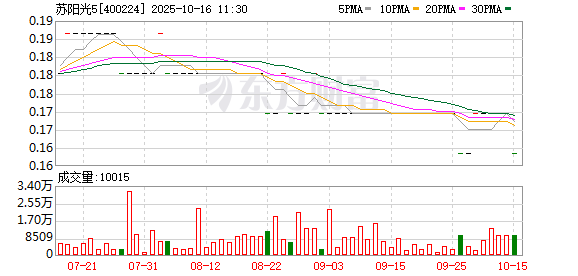
退市公司 再遭处罚
Shang Hai Zheng Quan Bao· 2025-10-16 04:53
Core Viewpoint - Jiangsu Sunshine Co., Ltd. has received an administrative penalty notice from the Jiangsu Securities Regulatory Bureau due to violations in information disclosure, which has led to the company's delisting from the stock exchange [2][5][9]. Summary by Sections Basic Information - The administrative penalty notice was issued by the China Securities Regulatory Commission Jiangsu Regulatory Bureau, dated October 14, 2025, and effective from October 11, 2025 [5]. - The company and its key executives, including the chairman and general manager, are implicated in the violations [5]. Violations - The company failed to disclose significant events related to a land use rights transaction worth 170 million yuan, which constituted a related party transaction [5][6]. - The company did not timely disclose that the controlling shareholder, Sunshine Group, failed to complete the transfer of land use rights and did not return the transfer payment [6][7]. Penalties - Jiangsu Sunshine is facing a warning and a fine of 2 million yuan, while individual executives face fines ranging from 200,000 to 500,000 yuan [7]. - The company anticipates that the penalties will not have a significant adverse impact on its operations, although cash flow may be affected [7]. Company Background - Jiangsu Sunshine was listed in 1999 and initially focused on woolen fabric production but has since diversified into the solar energy sector [7]. - The company has faced continuous losses since 2023, leading to risk warnings and eventual delisting [8]. Legal Issues - The company is currently involved in multiple lawsuits, with recent announcements indicating six new cases related to contract disputes, totaling approximately 7.08 million yuan [9]. - Ongoing litigation has significantly impacted the company's bidding and sales activities, with potential risks of asset freezing or auction [9].