食品饮料

Search documents
好想你:公司始终高度重视市值管理工作
Zheng Quan Ri Bao Zhi Sheng· 2026-02-11 09:12
Core Viewpoint - The company emphasizes the importance of market value management and acknowledges that recent stock price fluctuations are influenced by multiple complex factors including macroeconomic conditions, industry trends, and market sentiment [1] Group 1: Company Strategy - The company maintains a commitment to high quality, high value, and excellent service as part of its operational philosophy to reward consumers [1] - The company urges investors to view market fluctuations rationally and focuses on enhancing intrinsic value [1] Group 2: Future Outlook - The company plans to continue delivering solid performance to reward investors in the future [1]

不囤肉、找特产 肉品年货迎来新需求
Xin Jing Bao· 2026-02-11 08:44
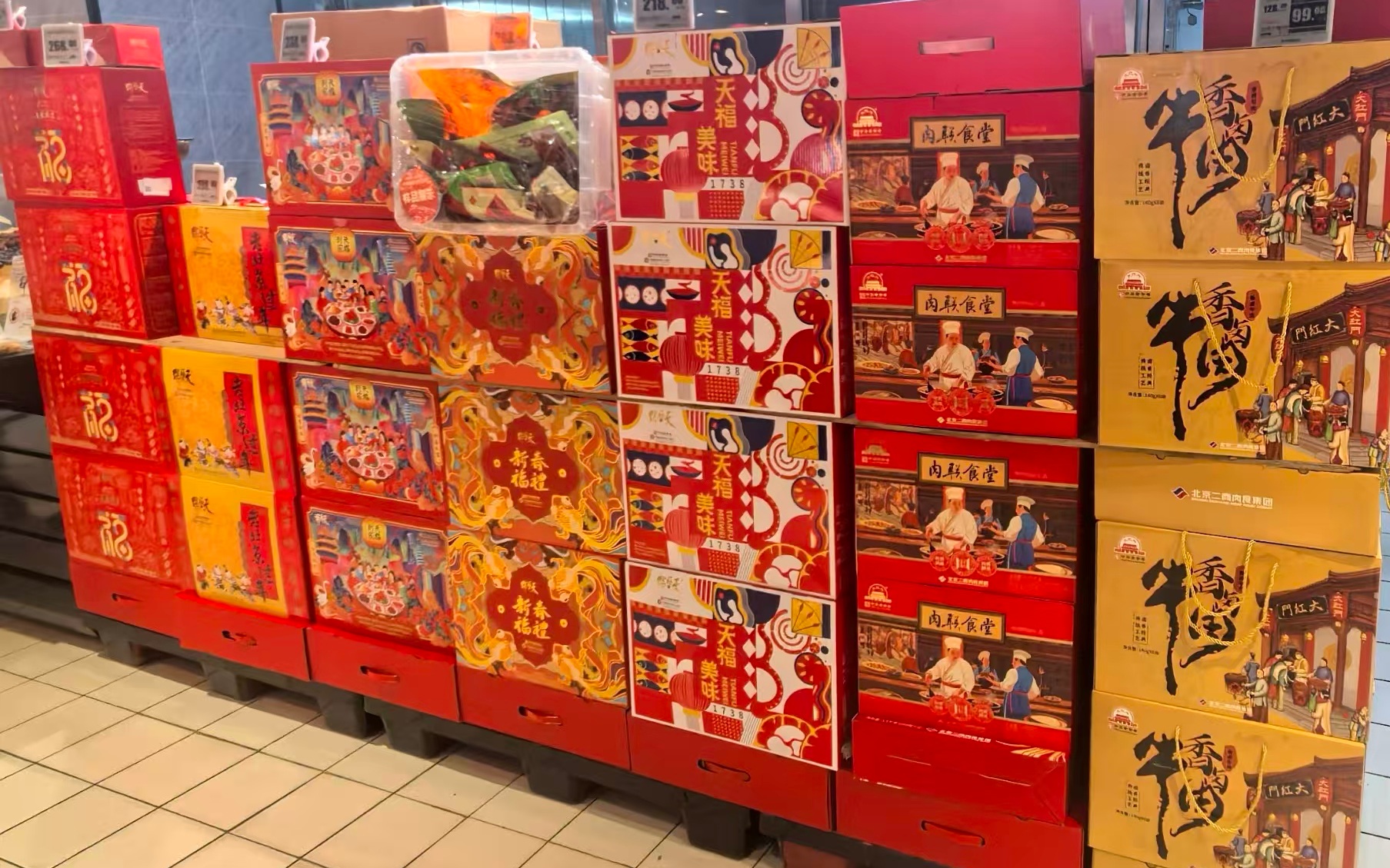
Core Insights - The meat product market for the upcoming Spring Festival is undergoing significant changes, with a shift towards regional specialties and a focus on fresh consumption rather than bulk buying, particularly among the younger generation [1][2][3] Group 1: Consumer Behavior - The younger generation, particularly those born after 2000, is moving away from bulk purchasing of meat products, opting instead for fresh, immediate consumption [2][3] - Consumers are reassessing the "preparation cost" associated with the Spring Festival, leading to a preference for purchasing only what is needed for the short holiday period [2][3] - The trend of not stockpiling is supported by stable supply channels, allowing consumers to buy quality meat products as needed [3] Group 2: Supply Chain and Retail Strategies - Tyson Foods has prepared for the traditional sales peak before the Spring Festival by doubling its inventory across the country, particularly in East China [3] - Retailers like Shouheng Group and Wumart have activated supply assurance systems and promotional activities to ensure a steady supply of goods during the holiday [3][4] - Wumart's promotional activities, such as "Crazy 4:30," cater to consumer needs for fresh ingredients and holiday supplies, enhancing convenience and efficiency [4] Group 3: Product Trends and Preferences - There is a growing consumer interest in regional specialties and traceability in food products, with a focus on freshness and quality control [5][6] - The demand for unique and high-quality regional products is driving brands to collaborate with suppliers that have verified quality standards [6][7] - Meat snack gift boxes are increasingly emphasizing auspicious themes, with packaging designed to convey good fortune, reflecting a shift in consumer preferences towards meaningful gifting [8][9] Group 4: Market Competition and Brand Strategy - The competition in the meat product market has shifted from price wars to value-driven strategies, where brands need to establish flavor differentiation and cultural resonance [9] - Brands are focusing on emotional communication through product design and marketing narratives to enhance customer loyalty and repeat purchase intentions [9]
不囤肉、找特产 肉品年货迎来新需求丨年货新趋势
Bei Ke Cai Jing· 2026-02-11 08:42
Core Insights - The meat product market for the upcoming Spring Festival is undergoing significant changes, with a shift towards regional specialties and a focus on fresh consumption rather than bulk buying, particularly among the younger generation [1][5][19] Group 1: Consumer Behavior - Younger consumers, particularly those born after 2000, are moving away from bulk purchasing of meat products, opting instead for fresh purchases as needed, reflecting a more rational consumption approach [5][6] - The trend of not stockpiling is supported by stable supply channels, with companies like Tyson Foods preparing for the peak sales period by doubling inventory levels [6][9] - Consumers are increasingly evaluating the "preparation costs" associated with stockpiling, leading to a preference for fresh purchases during the short holiday period [5][10] Group 2: Market Trends - The demand for regional specialties and traceability in food products is rising, with consumers showing interest in the origin and quality of meat products [9][12] - The packaging of meat snacks is increasingly emphasizing auspicious themes, with "wealth" becoming a popular concept in product design, reflecting cultural significance [13][19] - Sales of meat gift boxes featuring "wealth" themes have surged, with transaction volumes increasing by 90% year-on-year, indicating a shift in consumer preferences towards products that convey good fortune [19][20] Group 3: Company Strategies - Companies like Shouheng Group and Wumart have activated supply assurance systems and promotional activities well in advance of the festival to ensure stable prices and abundant supplies [7][8] - Brands are focusing on creating unique product offerings that resonate with cultural values, moving from price competition to value competition, enhancing brand loyalty and consumer engagement [20]

食品饮料行业2月月报:行情显著升高,关注节日标的-20260211
Zhongyuan Securities· 2026-02-11 08:42
Investment Rating - The industry investment rating is "in line with the market," indicating that the industry index is expected to fluctuate between -10% and +10% relative to the CSI 300 index over the next six months [115]. Core Insights - The food and beverage sector experienced a slight increase of 0.55% in January 2026, with a total trading volume of 32.16 billion shares, reflecting a decrease in trading activity compared to December 2025 [7][8]. - Key sub-sectors related to the Spring Festival, such as prepared foods, snacks, and alcoholic beverages, saw price increases, while previously strong sectors like soft drinks, dairy, condiments, and meat products experienced declines [9][13]. - The investment in the food and beverage manufacturing industry continued to show high growth levels in early 2025, but the growth rate has been declining since the second half of 2025 [33][36]. - The report recommends focusing on investment opportunities in prepared foods, soft drinks, health products, baking, yeast, and snacks, with a suggested stock portfolio including companies like Baoli Food, Lihigh Food, and Xianle Health [110][112]. Summary by Sections 1. Market Performance - In January 2026, the food and beverage sector's performance ranked sixth from the bottom among 31 primary industries, indicating a weak overall market trend [13][22]. - The sector's trading volume decreased significantly, with a drop of 74.24 billion shares compared to the previous month [8]. 2. Valuation - As of January 31, 2026, the food and beverage sector's valuation stood at 19.33 times earnings, which is relatively low compared to historical levels [18][22]. - The valuation of the liquor sector was 17.76 times, also at a historical low, while other segments like snacks and condiments had significantly higher valuations [18]. 3. Individual Stock Performance - In January 2026, 64.84% of individual stocks in the sector saw price increases, with notable performances in prepared foods and snacks [25][26]. - Specific stocks such as Qianwei Yangchun and Haoxiangni showed substantial gains, while traditional liquor brands experienced mixed results [31][32]. 4. Investment Trends - The food and beverage manufacturing sector's fixed asset investment grew by 22.9% year-on-year in 2024, but showed signs of slowing down in the latter half of 2025 [33][36]. - The production of key products like fresh meat and edible oil maintained growth, while categories like wine and dairy continued to see declines [38][39]. 5. Import and Price Trends - In 2025, imports of corn and wheat saw significant declines, while imports of high-end dairy products and nuts increased [54][56]. - Prices for raw milk are stabilizing, while prices for oils and vegetables are showing upward trends [81][82].
2025年度消费新潜力白皮书!6大赛道洞察消费市场新趋势!
Sou Hu Cai Jing· 2026-02-11 08:08
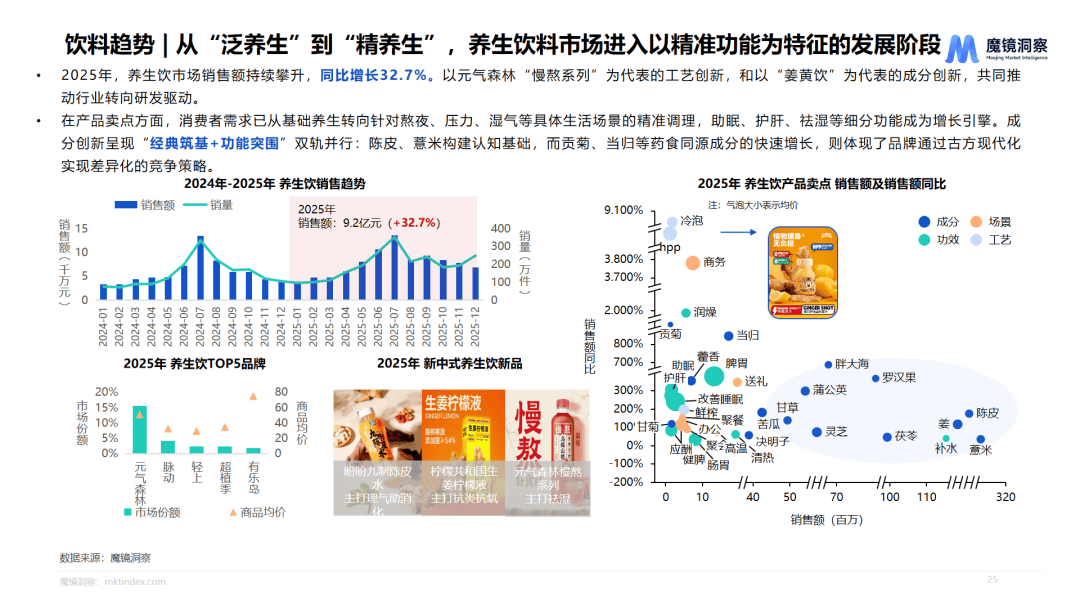
Core Insights - The Chinese consumer market in 2025 is characterized by "structural growth," with a shift from basic needs to precise health demands and personalized expressions [1][2] - Key trends include health, functionality, personalization, and intelligence, with consumers moving from "passive selection" to "active definition" of their needs [1] Group 1: Food and Beverage Sector - The food and beverage industry in China reached a market size of 593.67 billion yuan in 2025, with a sales growth of 7.8% and a volume increase of 6.3% [3] - Health-driven consumption is reshaping the industry, with premium products like fresh cakes and plant-based drinks gaining popularity [3] - The beverage market is transitioning from basic sugar reduction to targeted functionality and natural ingredients [3][6] Group 2: Health Sector - The health market achieved a sales figure of 304.38 billion yuan in 2025, growing by 15.8% year-on-year [10] - The largest segment, health supplements, saw sales of 124.48 billion yuan, with a growth rate of 19.9% [10] - The demand for products enhancing immunity is leading the market, with significant growth in categories addressing anemia and sleep management [10][14][17] Group 3: Home Appliances - The home appliance market reached a sales figure of 766.35 billion yuan in 2025, with an 18.1% year-on-year growth [20] - Major appliances dominate the market, while kitchen and lifestyle appliances show strong growth, with central air conditioning leading at a 52.1% increase [20] - The smart lock market is experiencing rapid growth, driven by consumer demand for safety features [25] Group 4: Beauty and Skincare - The beauty and skincare market reached 454.18 billion yuan in 2025, with a 9.7% increase in sales [29] - Anti-aging products are in high demand, with sales of 129.83 billion yuan, reflecting a growing focus on skincare across all age groups [29] - The beauty market is shifting towards health-oriented and high-quality products, moving away from basic offerings [32] Group 5: 3C Digital Products - The 3C digital market surpassed 1.1 trillion yuan in sales, with an 18.5% increase year-on-year [36] - The mobile power market is rapidly evolving, with certified products seeing explosive growth due to regulatory changes [36] - AI toys are experiencing significant market growth, with sales reaching 740 million yuan, reflecting a shift in consumer preferences [39] Group 6: Maternal and Infant Products - The maternal and infant market grew to 223.78 billion yuan in 2025, with a 12.6% increase [45] - The infant formula market is the largest segment, achieving sales of 50.93 billion yuan, with a growth rate of 18.1% [46] - There is a notable increase in demand for maternal nutrition products, particularly among pregnant women [46][49][52] Conclusion - The growth opportunities in 2025 are clear, focusing on the evolution of traditional demands and the deepening of consumer experiences [53] - Brands must transition from merely providing products to creating meaningful experiences that resonate with consumers' lifestyles [53][56]
政策赋能 实操引路——黄山市5G工厂专题调研培训圆满落幕
Sou Hu Cai Jing· 2026-02-11 07:07
Group 1 - The core viewpoint of the articles emphasizes the importance of leveraging the "5G + Industrial Internet" for large-scale development, aligning with national initiatives and local manufacturing upgrades [1][3] - A training session was held with over 30 participants, including representatives from local industrial departments, key enterprises, and telecom operators, focusing on the implementation of 5G factory projects [1][2] - Experts conducted on-site visits to companies like Nongfu Spring and Changhui Automobile to observe smart production lines and digital control systems enabled by 5G technology [1][2] Group 2 - The training covered national policies such as the "5G All-Connected Factory Construction Guide" and the "512 Project Upgrade Plan," providing insights into the policy background, core requirements, and development trends for 5G factories [2][3] - Detailed explanations were provided regarding application processes, including eligibility criteria, project standards, required materials, and online submission procedures, aimed at helping enterprises effectively access policy benefits [2][3] - The city’s Industrial and Information Technology Bureau plans to continue policy promotion and support services to integrate more enterprises into the 5G factory cultivation system, driving the high-end and intelligent transformation of regional manufacturing [4]

新年大吉,“红”运当头!节前轮动加速,如何跨市场构建一个攻守有道的红利组合?
Sou Hu Cai Jing· 2026-02-11 06:54
Core Viewpoint - The article emphasizes the importance of dividend strategies as a stable investment approach amidst market volatility, highlighting the "Dividend Triad" as a key framework for long-term investment planning [1]. Group 1: Dividend Strategies - The "Dividend Triad" represents a diversified investment strategy focusing on high-quality assets that provide stable growth and cash flow [1][17]. - The article suggests that dividends serve as a "ballast" in turbulent markets, allowing investors to concentrate on quality assets and pursue steady growth [1]. Group 2: Index Performance - The CSI Dividend Quality Index is characterized as an "offensive" dividend index that emphasizes dividend yield while also considering quality factors like ROE and earnings stability [3]. - The CSI Dividend Quality Index has shown superior performance compared to mainstream dividend and broad-based indices, with an annualized return of 17.97% since inception [4][10]. - The CSI Dividend All-Return Index has increased by 76.35% since its base period, with an annualized return exceeding 10%, outperforming both the CSI 300 and CSI 500 indices [11]. Group 3: Sector Distribution - The top sectors represented in the CSI Dividend Quality Index include Food & Beverage (13.8%), Pharmaceutical & Biological (10.1%), and Media (6.4%) [3]. - The index excludes banking stocks, focusing instead on sectors like non-ferrous metals, food and beverage, and pharmaceuticals, which are seen as "value growth" representatives [3]. Group 4: Comparison with Other Indices - The Hang Seng High Dividend Low Volatility Index offers a higher dividend yield (6.83%) and lower valuation (P/E of 7.46) compared to the CSI Dividend Index (5.07% yield, P/E of 8.55) [14][13]. - Since early 2020, the Hang Seng High Dividend Low Volatility Index has achieved a cumulative increase of 65.48% with an annualized return of 9.31%, indicating a favorable risk-return profile [12][13].

蜜雪冰城入股鲜啤福鹿家,后者拥有精酿鲜啤生产工厂
Qi Cha Cha· 2026-02-11 06:36
Core Insights - The article reports that Mixue Group has acquired a 51% stake in Fulu Family (Zhengzhou) Enterprise Management Co., Ltd., which operates a craft beer production facility [1] Company Overview - Fulu Family was established in 2018 and is involved in various business activities including food sales, alcoholic beverage operations, telecommunications services, and tobacco retail [1] - The registered capital of Fulu Family has increased to approximately 13.53 million RMB following the investment from Mixue Group [1] Industry Context - The investment by Mixue Group into Fulu Family indicates a strategic move into the craft beer sector, which is gaining popularity and could present growth opportunities in the beverage market [1]
ETF盘中资讯|白酒春节动销超预期!吃喝板块震荡盘整,估值仍处历史低位!能否上车?
Sou Hu Cai Jing· 2026-02-11 06:20
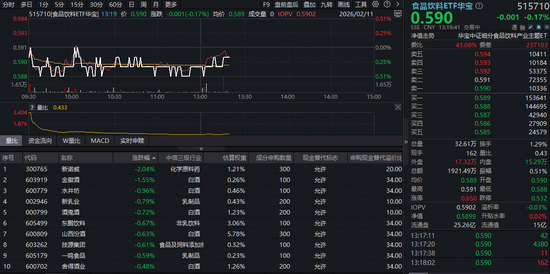
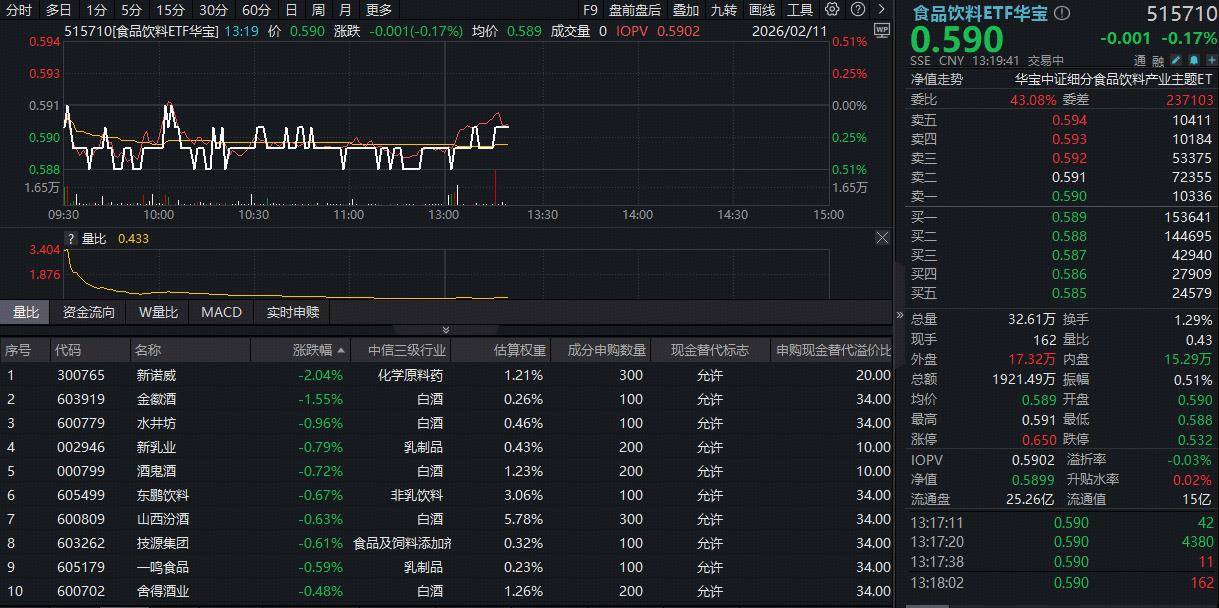
Core Viewpoint - The food and beverage sector is experiencing a pullback, with the Huabao Food and Beverage ETF (515710) showing a slight decline of 0.17% as of the latest update, influenced by significant drops in key stocks like XinNuoWei and JinHuiJiu [1][3]. Group 1: Market Performance - The Huabao Food and Beverage ETF (515710) is currently trading at 0.590, reflecting a decrease of 0.001, or -0.17% [2]. - Major stocks within the sector, such as XinNuoWei, JinHuiJiu, and ShuiJingFang, have seen declines exceeding 2% and 1%, respectively, contributing to the overall negative performance of the sector [1][2]. Group 2: Industry Insights - A recent survey indicates that the demand for liquor has increased in the month leading up to the Spring Festival, with overall sales performance of major liquor distributors exceeding expectations, despite a reported decline in shipment volumes of 10%-20% [1]. - The food and beverage sector's valuation is at a historical low, with the price-to-earnings ratio of the underlying index for the Huabao ETF at 20.59, placing it in the 9.2% percentile over the past decade, suggesting a favorable long-term investment opportunity [3]. Group 3: Future Outlook - Looking ahead, improvements in supply and demand dynamics across various sub-sectors are anticipated by 2026, with a clearer recovery in the Consumer Price Index (CPI) expected, which may benefit traditional consumption sectors [3]. - The Huabao Food and Beverage ETF is positioned to track key high-end and mid-range liquor stocks, with approximately 60% of its portfolio allocated to leading liquor brands and nearly 40% to other beverage and dairy segments [3].
白酒春节动销超预期!吃喝板块震荡盘整,估值仍处历史低位!能否上车?
Xin Lang Cai Jing· 2026-02-11 05:36
Group 1 - The food and beverage sector experienced a pullback on February 11, with the Huabao Food and Beverage ETF (515710) showing a slight decline of 0.17% [1][6] - Major stocks within the sector, such as Xin Nuo Wei and Jin Hui Jiu, saw significant drops of over 2% and 1% respectively, contributing to the overall negative performance of the sector [1][6] - A survey indicated that demand for liquor increased in the month leading up to the Spring Festival, with some distributors reporting stable or even growing sales compared to the previous year, suggesting a potential recovery in the market [1][6] Group 2 - The valuation of the food and beverage sector is currently at a historical low, with the price-to-earnings ratio of the underlying index for the Huabao Food and Beverage ETF at 20.59, which is in the 9.2% percentile of the last decade, indicating a favorable long-term investment opportunity [3][8] - Looking ahead, there is an expectation for improved supply-demand dynamics across various sub-sectors by 2026, with a clearer recovery in the Consumer Price Index (CPI) and a rotation in new consumption trends [4][9] - The Huabao Food and Beverage ETF is primarily invested in leading high-end and mid-range liquor stocks, with approximately 60% of its portfolio allocated to these sectors, while also including beverage, dairy, seasoning, and beer stocks [4][10]