
餐饮服务

Search documents
石家庄一面馆被曝存在食品原材料问题 官方通报:停业整顿
Yang Shi Wang· 2025-12-02 06:48
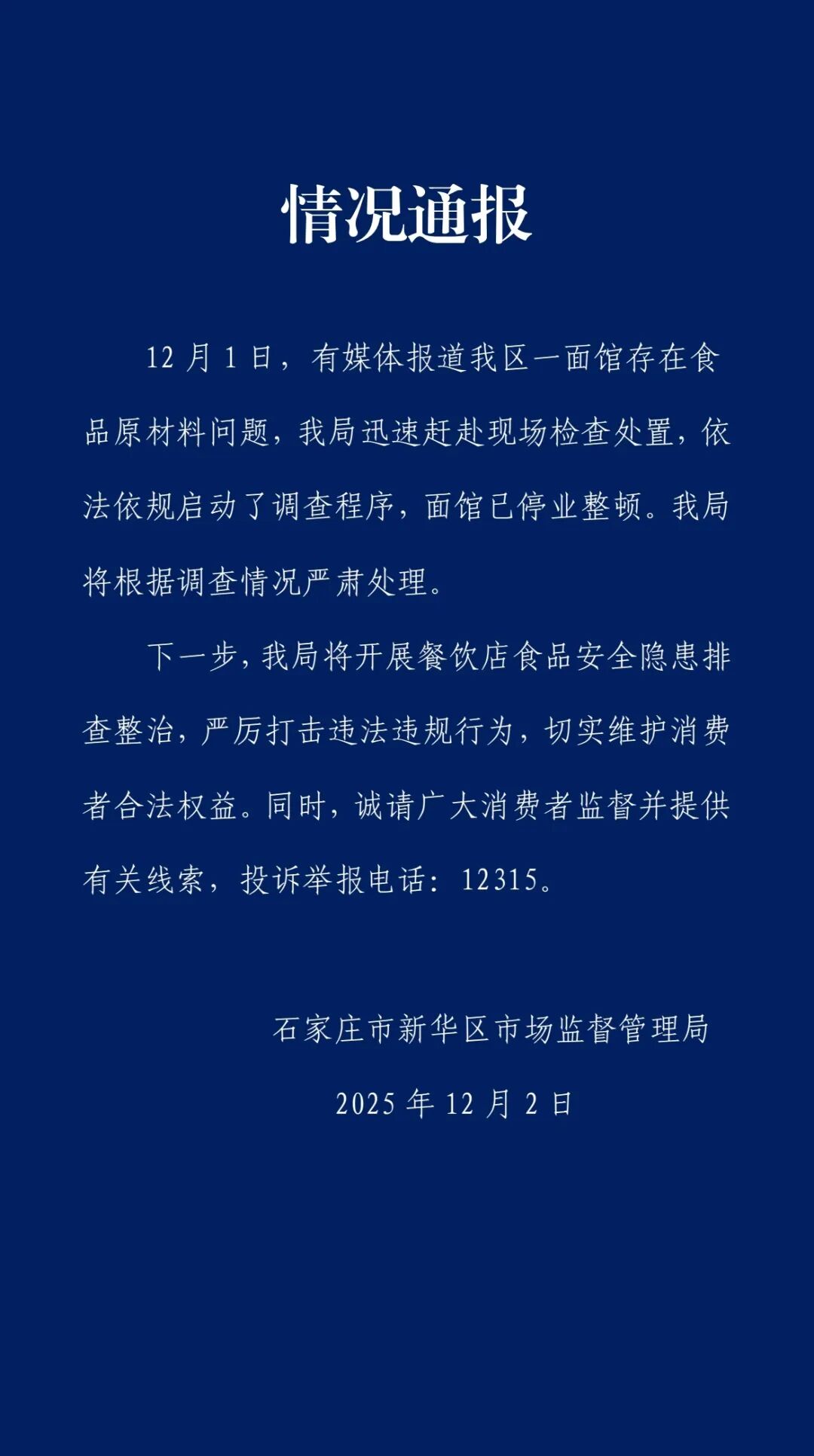
央视网消息:12月2日,石家庄市新华区市场监督管理局发布情况通报。12月1日,有媒体报道新华区一面馆存在食品原材料问题,该局迅速赶赴现场检查 处置,依法依规启动了调查程序,面馆已停业整顿。该局将根据调查情况严肃处理。 下一步,该局将开展餐饮店食品安全隐患排查整治,严厉打击违法违规行为,切实维护消费者合法权益。同时,诚请广大消费者监督并提供有关线索,投 诉举报电话:12315。 2025年12月2日 ...

西贝升级“阳光厨房” 每家门店6个摄像头“直播”后厨
Xin Jing Bao· 2025-12-02 05:54
Core Viewpoint - The company Xibei is implementing enhanced food safety measures across all its stores by adopting the "Sunshine Kitchen" policy, which includes live streaming the kitchen operations to ensure transparency and customer oversight [1] Group 1: Food Safety Measures - Starting December 1, all Xibei stores will upgrade their food safety measures by fully implementing the "Sunshine Kitchen" policy [1] - Each store will be equipped with six cameras to live stream the kitchen operations, allowing continuous public supervision [1] - The founder of Xibei, Jia Guolong, announced a "food safety top priority strategy" requiring all stores to adopt the "Sunshine Kitchen" [1] Group 2: Background and Implementation - The "Sunshine Kitchen" initiative was piloted in regions like Zhejiang and Guangdong in 2013, aiming to enhance food safety transparency and promote social governance [1] - This policy is not a nationwide mandatory food safety standard; it was categorized into open transparent and video monitoring types by the Shenzhen Food and Drug Administration in 2015 [1] Group 3: Additional Measures - In addition to the "Sunshine Kitchen," each store will appoint a "Food Safety Officer" who must pass an internal food safety assessment [1] - Employees will also serve as "Food Safety Guardians," categorized into three star levels based on assessment standards, with the highest level earning a bonus of 300 yuan per month [1] - The headquarters has mandated a change in the practice of pre-setting tableware, requiring that utensils be placed only after customers are seated [1]
从下跌到冲涨停!“广德三件套”火到A股
Zhong Guo Zheng Quan Bao· 2025-12-02 04:55
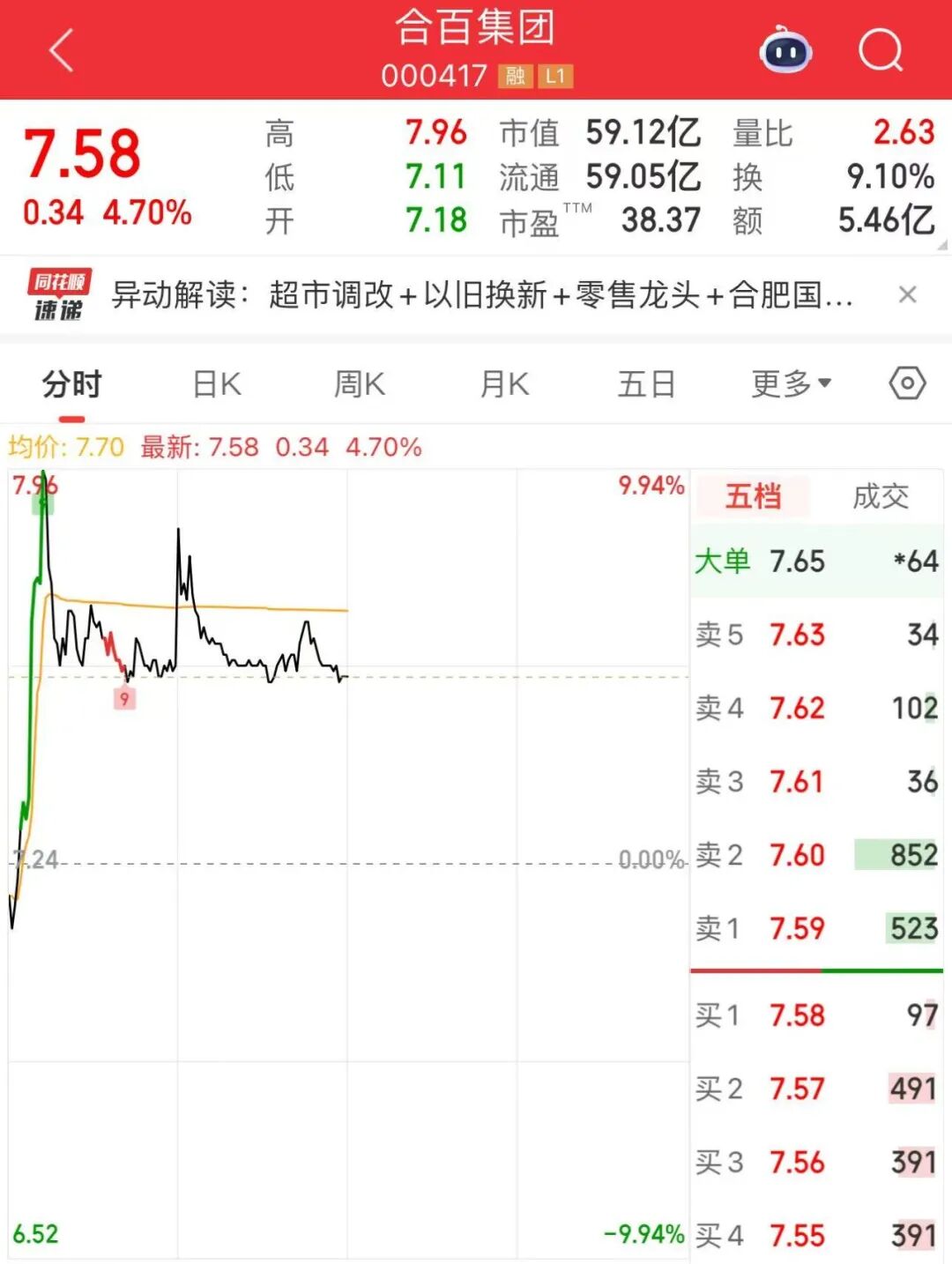
Group 1: Food and Beverage Sector - The "Guangde Three-piece Set" consisting of Guangde stew pot, Kawangka milk tea, and Zhanji peach crisp has gained significant popularity online, leading to long queues at stores and increased sales [4][5] - Stocks related to the "Guangde Three-piece Set," such as Tongqinglou, Hebai Group, and Hengxin Life, have seen notable price increases, with Tongqinglou hitting the daily limit [4] - Kawangka milk tea reportedly sells over 5,000 cups daily, prompting the company to temporarily close other locations to manage demand [4] Group 2: Commercial Aerospace Sector - The commercial aerospace sector has shown active performance, with stocks like Zhaobiao Co., Yaguang Technology, and Aerospace Development experiencing significant gains [6] - The establishment of a dedicated Commercial Aerospace Department by the National Space Administration indicates a push for high-quality development in the commercial aerospace industry [8][9] - A recent action plan outlines 22 key measures to promote the high-quality and safe development of the commercial aerospace sector, including support for new technologies and investment mechanisms [9]


西贝升级“阳光厨房”,每家门店6个摄像头“直播”后厨
Bei Ke Cai Jing· 2025-12-02 03:36
Core Points - Xibei has announced the implementation of the "Sunshine Kitchen" policy across all its stores, which includes live streaming of kitchen operations through six cameras in each location to enhance food safety transparency and allow customer supervision [1] - The founder of Xibei, Jia Guolong, has emphasized a "food safety top priority strategy," mandating that all stores comply with the "Sunshine Kitchen" initiative [1] - The "Sunshine Kitchen" concept, which began trials in 2013 in regions like Zhejiang and Guangdong, aims to improve food safety transparency and promote social governance [1] - Each Xibei store will appoint a "Food Safety Officer" who must pass an internal food safety assessment, and employees will also be designated as "Food Safety Guardians" with a tiered reward system based on performance [1] - The company has revised its practice regarding the placement of tableware, now requiring that utensils be set only after customers are seated, using freshly sanitized items [2]
全链条抽检守护“舌尖安全”
Jing Ji Ri Bao· 2025-12-02 02:02
Core Insights - Food safety inspections are crucial for identifying issues and mitigating risks in the food supply chain, with a total of 5.7 million batches inspected and a non-compliance rate of 2.74% as of mid-November this year [1] Group 1: Inspection Coverage and Effectiveness - The food safety inspection system has expanded its reach from production to consumption, covering various sales channels and food types, resulting in a nearly 50% decrease in the number of companies with multiple non-compliance cases since 2020 [2] - The inspection has encompassed 39 categories of food and 2066 testing indicators, ensuring comprehensive coverage of daily consumer food [2] Group 2: Collaborative Regulatory Efforts - Multiple government departments, including the Market Supervision Administration and the Ministry of Agriculture, have collaborated to enhance inspection efforts, leading to over 60,000 batches of non-compliant food identified this year [3] Group 3: Targeted Risk Focus - Inspections are strategically focused on vulnerable groups and high-risk areas, such as infant formula and school food services, with 100% coverage of infant formula production enterprises and bi-weekly inspections of school canteens [4] Group 4: Agricultural Product Monitoring - The Ministry of Agriculture conducts quarterly risk monitoring of key agricultural products, ensuring comprehensive coverage across various production and distribution points [5] Group 5: Technological Advancements in Inspections - The regulatory body has developed 106 supplementary testing methods to address food adulteration issues, significantly enhancing detection capabilities [7] - A total of 1725 national standards have been established to support the inspection process, ensuring that regulations are based on solid benchmarks [7]
截至11月中旬,完成抽检570万批次——全链条抽检守护“舌尖安全”
Xin Hua Wang· 2025-12-01 23:41
Core Insights - Food safety inspections are crucial for identifying issues and mitigating risks in the food supply chain, with a total of 5.7 million batches inspected and a non-compliance rate of 2.74% as of mid-November 2023 [1] Group 1: Inspection Coverage and Effectiveness - The food safety inspection system has expanded its reach from production to consumption, covering various sales channels and food types, resulting in a nearly 50% decrease in the number of non-compliant enterprises since 2020, with a 57.47% year-on-year decline in the first three quarters of 2023 [2] - Inspections now encompass 39 categories of food, including fruits, vegetables, and processed products, with 2,066 testing indicators to ensure accurate and reliable results [2] Group 2: Collaborative Regulatory Efforts - Multiple government departments, including the Market Regulation Administration and the Ministry of Agriculture, are collaborating to enhance inspection efforts, particularly for bulk food and school canteen products, leading to over 60,000 batches of non-compliant food identified this year [3] Group 3: Targeted Risk Focus - Inspections are strategically focused on high-risk areas, such as infant formula and school food services, with 100% coverage of production enterprises for infant formula and bi-weekly inspections of school canteens [4] - The inspection strategy also targets previously high non-compliance food categories and responds to public complaints and concerns [4] Group 4: Quality Control and Monitoring - The Ministry of Agriculture conducts quarterly risk monitoring in key regions and products, ensuring comprehensive coverage of production bases and markets, with adjustments made based on social concerns and actual production practices [5] Group 5: Technological Advancements in Inspections - The regulatory body is addressing challenges in food safety inspections by developing 106 supplementary testing methods to detect adulteration in various food categories, significantly enhancing detection capabilities [7] - A total of 1,725 national standards have been established to support the inspection process, ensuring that regulations are based on solid guidelines [7]
制止餐饮浪费 守护“舌尖文明”
Sou Hu Cai Jing· 2025-12-01 23:30
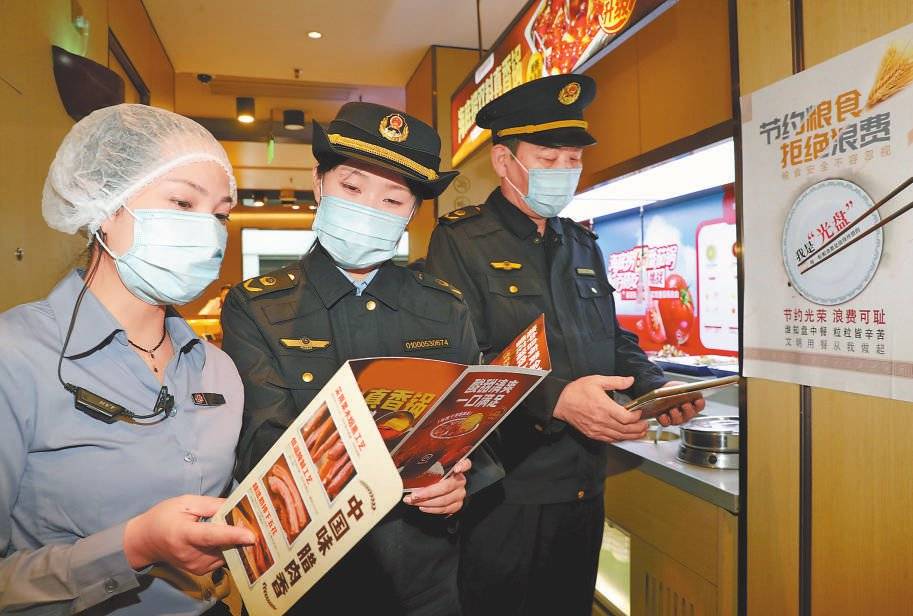
Group 1 - The core viewpoint of the article emphasizes the importance of combating food waste in the restaurant industry, highlighting efforts by the Fengtai District Market Supervision Administration in Beijing to promote a culture of saving and opposing waste [3] - The enforcement actions include checking whether operators actively remind consumers to prevent food waste and whether there are practices that induce excessive ordering [3] - The initiative includes distributing anti-food waste promotional materials to encourage operators to become advocates and practitioners of the "Clean Plate Campaign" [3]
截至11月中旬 完成抽检570万批次——全链条抽检守护“舌尖安全”
Jing Ji Ri Bao· 2025-12-01 22:17
Core Insights - Food safety inspections are crucial for identifying issues and mitigating risks in the food supply chain, with a total of 5.7026 million batches inspected and a non-compliance rate of 2.74% as of mid-November this year [1] - The number of non-compliant enterprises has significantly decreased, with a nearly 50% reduction expected in 2024 compared to 2020, and a 57.47% decrease in the first three quarters of this year [2] - The regulatory framework has expanded to cover all aspects of food production and sales, including traditional and online platforms, ensuring comprehensive oversight [2][3] Inspection Coverage - Inspections now encompass 39 categories of food, including various agricultural products and processed foods, achieving near-total coverage of daily consumer food items [2] - The inspection process includes 2,066 indicators related to pesticides, veterinary drugs, microorganisms, and food additives, ensuring reliable and precise results [2] Collaborative Efforts - The State Administration for Market Regulation collaborates with multiple departments to enhance inspection efforts for key products, resulting in over 60,000 batches of non-compliant food identified this year [3] Targeted Risk Focus - Inspections are strategically focused on vulnerable groups and high-risk areas, such as infant formula and school canteen food, with 100% coverage of production enterprises for infant formula [4] - Specific attention is given to problematic food categories and previous high non-compliance rates, with increased inspection frequency for these items [4] Agricultural Monitoring - The Ministry of Agriculture conducts quarterly risk monitoring in key regions, ensuring comprehensive coverage of production bases and markets for various agricultural products [5] Technological Advancements - The regulatory body is addressing challenges in food safety inspections through technological innovations, including the development of 106 supplementary testing methods for detecting adulteration [7] - A total of 67 rapid testing methods have been introduced to enhance efficiency in identifying issues in key locations like markets and school canteens [7] Standardization and Innovation - A robust standard system has been established, with 1,725 national standards published to support inspection and regulation processes [7] - The "reveal and take charge" model has been adopted to leverage societal research capabilities for breakthroughs in detection technology [8]
扬州这2家餐饮店被省市场局通报
Yang Zi Wan Bao Wang· 2025-12-01 06:17
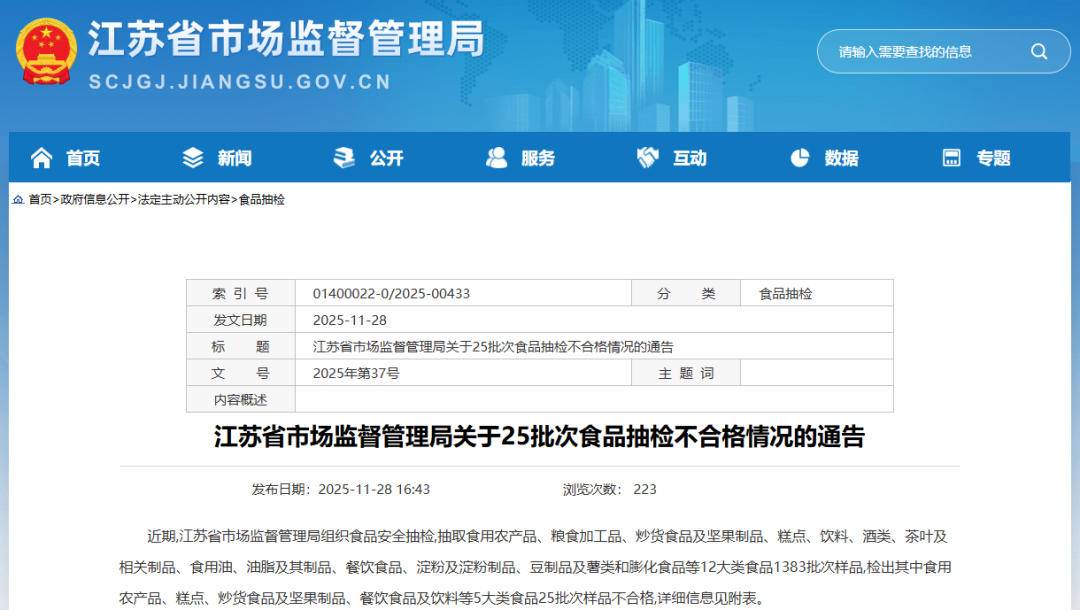
近期,江苏省市场监督管理局组织食品安全抽检,抽取食用农产品、粮食加工品、炒货食品及坚果制品、糕点、饮料、酒类、茶叶及相关制品、食用油、 油脂及其制品、餐饮食品、淀粉及淀粉制品、豆制品及薯类和膨化食品等12大类食品1383批次样品,检出其中食用农产品、糕点、炒货食品及坚果制品、 餐饮食品及饮料等5大类食品25批次样品不合格。 江苏省市场监督管理局还同时公布了不合格项目的相关知识 恩诺沙星 恩诺沙星属第三代喹诺酮类药物,是一类人工合成的广谱抗菌药,用于治疗动物的皮肤感染、呼吸道感染等,是动物专属用药。恩诺沙星超标的原因,可 能是在动物养殖过程中为快速控制疫病,违规加大用药量或不遵守休药期规定,致使产品上市销售时的药物残留量超标。 阴离子合成洗涤剂(以十二烷基苯磺酸钠计) 阴离子合成洗涤剂,即我们日常生活中经常用到的洗衣粉、洗洁精、洗衣液、肥皂等洗涤剂的主要成分,其主要成分十二烷基磺酸钠,是一种低毒物质, 在消毒企业中广泛使用。餐(饮)具中检出阴离子合成洗涤剂,可能是部分单位使用的洗涤剂不合格或使用量过大,未经足够量清水冲洗或餐具漂洗池内清 洗用水重复使用或餐具数量多,造成交叉污染,进而残存在餐(饮)具中。 扬子晚 ...
广西首个鱼生全链条管理规范发布
Guang Xi Ri Bao· 2025-12-01 03:09
Core Viewpoint - The article discusses the official release of the "Comprehensive Management Standards for Fish Sashimi in Hengxian County," which aims to establish a modern management standard system covering the entire supply chain from aquaculture to dining services in Guangxi [1] Group 1: Standard Overview - The standard includes six aspects: aquaculture, transportation, processing, dining services, supply management, and evaluation and recognition [1] - It is the first group standard for the entire fish sashimi supply chain in Guangxi [1] Group 2: Risk Management - The standard implements a closed-loop governance system for fish sashimi in Hengxian County, requiring aquaculture units to conduct risk prevention from the source [1] - Measures include controlling water environment to effectively cut off the transmission routes of parasites [1] Group 3: Inspection and Certification - Before market release, fish must undergo mandatory inspections, with a requirement to provide a qualified inspection report [1] - Inspection items include drug residue testing and key indicators such as liver fluke larvae [1] Group 4: Cultural Integration - The standard incorporates elements of intangible cultural heritage and traditional Chinese medicine dietary theory [1] - Skills such as knife techniques and plating art are included in the evaluable assessment system [1]