
债券

Search documents
中方大抛美债,鲁比奥态度大变,48小时2次警告日本,石破茂反水
Sou Hu Cai Jing· 2025-12-27 06:50
最近,美债市场发生了一些大的波动。中国已经连续几个月减持美债,这一举动对美国来说是个不小的打击。根据2024年10月美国财政部的数据显示,中国 减持了119亿美元美债,使得持有的美债总额降至7601亿美元,达到了自2009年以来的最低点。作为全球第二大经济体,中国的这一行为,实际上是在提醒 外界美元信用的风险。回顾过去几年,中国的美债持有量从最高时的约1.3万亿美元一路下降,现在已经降到不到8000亿美元。这背后的原因有几个。一方 面,美国的债务已经超过38万亿美元,利息支出占据了财政预算的大部分,债务滚动的做法越发频繁。另一方面,美国频繁使用金融手段作为武器,通过冻 结他国资产和实施制裁,导致其他国家开始担心继续持有美债的风险。加拿大也跟随其后,在10月减持了567亿美元美债,用这些资金来应对美国的关税威 胁。这一连串的动作,暴露了盟友间的信用危机,也让其他国家开始怀疑美债的安全性。 在美债抛售的背后,信用危机越来越显现。日本原本是美国美债的最大海外持有国,理应帮助美国维稳。然而,2024年10月,日本也减持了206亿美元美 债,使得其持仓量降至1.1万亿美元。英国则减持了184亿美元,将持仓降至7460亿 ...


预见2026 | 拥抱债市定价新常态 在震荡博弈中把握分化与机遇
Xin Hua Cai Jing· 2025-12-27 01:48
Core Viewpoint - The bond market in China for 2025 is characterized by a "volatile" main line amidst complex internal and external environments, with a typical "top-down" fluctuation pattern observed throughout the year [1] Group 1: Market Dynamics - The 10-year government bond yield fluctuated within a range of approximately 30 basis points, failing to establish a single trend direction [1] - Key variables such as "tariff disturbances," "anti-involution policies," and "central bank bond purchase operations" have segmented the market rhythm [1][2] - The interaction between policy expectations and market dynamics has become increasingly intricate, with frequent shifts testing investors' ability to interpret policy intentions [2] Group 2: Performance of Different Maturities - The performance of various maturities throughout the year reflects the ongoing tug-of-war between bullish and bearish forces, with different dominant logics at each stage [3] - Early-year positive data pushed the yield curve into a "bear flattening," while spring tariff shocks triggered a brief bull market [3] Group 3: Credit Market Evolution - The credit bond market is evolving from a simplistic "identity label" approach to a deeper examination of companies' cash flow and debt repayment capabilities [4] - The pricing logic of credit bonds is shifting towards a focus on the issuer's operational cash flow and debt service capacity, indicating a new normal in credit assessment [4] Group 4: Future Outlook - The bond market is expected to play a dual role in enhancing its infrastructure and understanding new interest rate trends in a complex macroeconomic landscape [5][6] - A "moderately loose" monetary policy is anticipated to continue, with a more flexible and efficient operational focus, leading to potential downward pressure on short-term bond yields [6] Group 5: Investment Strategy - In the face of increasing differentiation and competition, it is recommended to build a stable investment portfolio with high-grade assets in the short to medium term while capturing trading opportunities in long-term rate bonds [7] - The bond market's ongoing volatility is seen as a catalyst for eliminating outdated paradigms and fostering new insights, emphasizing the importance of returning to value fundamentals [7]
老司机的2025年度总结:收益率43%
集思录· 2025-12-26 14:05
Core Insights - The article reflects on the investment journey of the year, highlighting a strategic focus on convertible bonds and commodity futures, which yielded significant returns [1][2]. Group 1: Investment Strategies - The initial investment strategy was conservative, focusing on high-priced low-premium convertible bonds and commodity futures, leading to over 50% returns early in the year [1]. - The strategy evolved to include a shift to low-priced convertible bonds as the market premium rates increased, ensuring steady gains without losses [1]. - The article emphasizes a flexible approach to trading, adjusting positions based on market movements, particularly in response to significant index fluctuations [1][4]. Group 2: Performance Metrics - The overall annual return was reported at 43%, with a more aggressive small account yielding 81.87% [2]. - The profit distribution across different investment categories was as follows: convertible bonds 51.55%, index options 26.69%, stocks 4.24%, commodity futures 15.12%, and QFII 1.68% [3]. Group 3: Future Outlook - The outlook for 2026 anticipates a slow bull market with potential for short-term volatility, suggesting a balanced portfolio of 50% index futures, 50% convertible bonds, and 30% commodity futures [3][4]. - The article stresses the importance of adapting strategies based on market conditions, including decisive actions on stop-loss triggers and opportunities for additional investments [4].

年终盘点之海外债市:2025年“逻辑颠覆”,AI泡沫与供给狂潮正让2026年变得空前复杂?
智通财经网· 2025-12-26 12:18
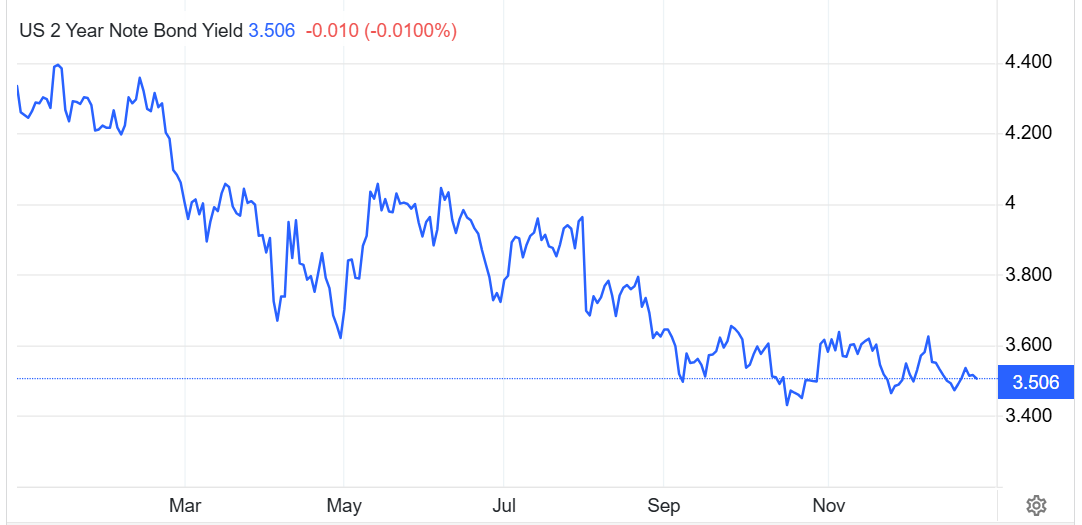
Group 1: US Bond Market Trends - The US bond market is expected to experience significant volatility in 2025, influenced by factors such as Trump's return to power, inflation pressures, and the impact of AI on market dynamics [1][8][9] - The 10-year US Treasury yield saw dramatic fluctuations, dropping to 3.8% in early April before rising to 4.6% after Trump's tariff announcements, and then stabilizing around 4.2% later in the year [1][9][11] - The 30-year US Treasury bond has shown remarkable stability, with yields remaining unchanged around 4.8% throughout 2025, despite various macroeconomic challenges [11][12] Group 2: European and Japanese Bond Markets - European bond markets are facing rising yields due to political instability and increasing debt issuance, particularly in Germany and France, where yields have reached new highs [2][14] - Japan's bond market is experiencing a surge in yields driven by the Bank of Japan's interest rate hikes and substantial fiscal stimulus, leading to a significant increase in long-term bond yields [15][17] Group 3: Corporate Bond Market Dynamics - The corporate bond market, particularly for high-rated tech companies like Oracle and Meta, has seen increased volatility, with yields rising above junk bond levels due to heavy borrowing for AI infrastructure [3][21] - Asset-backed securities (ABS) and high-yield corporate bonds have outperformed high-rated corporate bonds since November, attracting global investors seeking safer options amid market turmoil [3][35] Group 4: Future Predictions for 2026 - Predictions for 2026 suggest a shift in bond market dynamics, with long-term US Treasuries expected to outperform short-term bonds due to anticipated inflation stabilization and a potential dovish stance from the Federal Reserve [27][31] - High-yield bonds and ABS are projected to gain favor in 2026, benefiting from a macroeconomic environment characterized by soft landings and moderate interest rate cuts [33][35]
用美元发债,却为人民币铺路?中国的这招“借壳生蛋”,绝了!
Sou Hu Cai Jing· 2025-12-26 11:22
Group 1 - The core idea of the article revolves around China's recent issuance of dollar-denominated sovereign bonds, which has attracted significant global interest, indicating a strategic move towards the internationalization of the Renminbi [1][4][10] - The issuance of these bonds is not merely a financial transaction but serves as a "temperature gauge" to assess global capital's willingness to invest in Chinese sovereign debt, ultimately aiming to establish a transparent yield curve for China's sovereign bonds [6][8] - The strategy includes leveraging foreign currency bonds to create a dynamic and transparent yield curve, which will facilitate future bond issuances in offshore Renminbi, thereby enhancing the currency's status as a financial asset [8][10] Group 2 - The initiative is supported by global capital, indicating a shift in the international monetary order, with China positioning itself as a viable alternative to the dollar [10][14] - The establishment of the "Golden Corridor" project in Hong Kong allows global funds to exchange physical gold for Renminbi, further solidifying the currency's credibility and stability [10][12] - The integration of gold with the Renminbi aims to provide a hedge against risks associated with the dollar, potentially attracting capital looking to diversify away from the dollar [12][14] Group 3 - China's approach to internationalization involves a systematic strategy that includes offshore sovereign bonds, the Golden Corridor, and the construction of an offshore Renminbi system to enhance payment and clearing capabilities [19][21] - The focus is on creating a self-sustaining financial ecosystem that allows China to dictate its own yield curve and stabilize its currency without relying on external factors [25] - The overarching goal is to establish the Renminbi as a central player in global resource allocation, moving away from a reliance on exports to a more integrated financial and manufacturing strategy [21][23]
中国抛售118亿美债,更狠的是加拿大,一个月就甩卖567亿美债
Sou Hu Cai Jing· 2025-12-26 07:12
Core Insights - The U.S. Treasury's international capital flow report indicates significant changes in foreign holdings of U.S. Treasury bonds, with China and Canada reducing their holdings substantially while Japan and the UK increased theirs [1][3]. Group 1: Changes in Foreign Holdings - China reduced its U.S. Treasury holdings by $11.9 billion, bringing its total to $760.1 billion, the lowest since 2009 [1]. - Canada sold off $56.7 billion in U.S. Treasuries, leaving its holdings at $419.1 billion, which is over 10% of its total [1]. - In contrast, Japan increased its holdings by $10.7 billion to $1.2 trillion, and the UK added $13.2 billion to reach $877.9 billion [1]. Group 2: Trends in U.S. National Debt - The total U.S. national debt surpassed $38 trillion, with interest payments reaching $1.1265 trillion, accounting for 23% of federal revenue [5]. - The national debt is projected to exceed $38.4 trillion by December 2025, with annual debt increases nearing $4 trillion [7]. Group 3: Geopolitical and Economic Implications - China's reduction in U.S. Treasury holdings is part of a strategy to diversify foreign exchange reserves amid geopolitical instability and potential financial sanctions [3]. - Canada's significant sell-off reflects dissatisfaction with U.S. policies and a desire to mitigate risks associated with dollar-denominated assets [3]. - Japan's increase in holdings is driven by a weak yen and a lack of confidence in domestic investments, while the UK's strategy is influenced by economic pressures post-Brexit [3]. Group 4: Market Reactions and Future Outlook - The overall foreign ownership of U.S. Treasuries rose to $9.24 trillion, a 6.3% increase from the previous year, despite significant sell-offs by key allies [1][9]. - The shift in foreign investment strategies indicates a reevaluation of the long-term value of the U.S. dollar and reflects changing global economic dynamics [9].

ESG行业洞察 | 2026年ESG展望:债券发行规模有望连续第三年突破2万亿美元
彭博Bloomberg· 2025-12-26 06:04
Core Viewpoint - The global sustainable bond issuance is expected to exceed $2 trillion for the third consecutive year by 2026, driven by sovereign nations, supranational organizations, and government agencies [3][4]. Group 1: Sustainable Bond Issuance - The issuance of green bonds and social responsibility bonds is projected to remain dominant, supported by strong demand from impact investors [4]. - As of October this year, green bond issuance has increased by 3% year-on-year, with growth expected to be in the low to mid-single digits by 2026 [4]. - The largest single issuer, Gilead, continues to provide mortgage financing support for underserved communities, while supranational organizations are increasingly certifying bonds as social responsibility bonds [4]. Group 2: Bond Returns and Risks - As of October this year, the returns on global green, social, and sustainable corporate bonds exceeded 11%, higher than the mid-single-digit returns expected for 2025 [6]. - Sustainable bond spreads are narrower than investment-grade bonds, nearing historical lows, with potential risks if economic data remains weak and inflation stays moderate [6]. - The refinancing risk is limited, with an expected net supply of nearly $1 trillion in new sustainable bonds by 2026, despite a peak in debt maturity expected in 2028 [8]. Group 3: Thematic Sustainable Investments - Thematic fixed-income products are anticipated to continue expanding, driven by strong investor demand for targeted solutions addressing environmental and social issues [11]. - Specialized ESG products like blue bonds and debt-for-nature swaps are expected to contribute to growth, with $184 billion issued year-to-date, including 361 transactions related to ocean themes [11][13]. - Recent agreements, such as Indonesia's debt-for-nature deal, highlight the active nature of such transactions, although U.S. policy shifts may weaken support for these initiatives [11].

加息周期叠加财政扩张 日本削减2026年国债发行 着力“减长增短”
Zhi Tong Cai Jing· 2025-12-26 03:17
Core Viewpoint - Japan plans to reduce government bond sales in the fiscal year 2026, focusing on cutting long-term debt while maintaining short-term bond issuance [2][3] Group 1: Government Bond Issuance - The total amount of government bonds to be issued in fiscal year 2026 is set at 168.5 trillion yen (approximately 1.1 trillion USD), a reduction of 3.8 trillion yen from the previous fiscal year's initial plan [2] - The combined sales of 20-year, 30-year, and 40-year bonds will decrease by 7.2 trillion yen to 17.4 trillion yen, marking the lowest issuance level since 2009 for ultra-long-term bonds [2] - The issuance of 10-year bonds will remain unchanged, while sales of 2-year and 5-year bonds will increase [2] Group 2: Economic Context and Fiscal Policy - Japan's government approved a supplementary budget for fiscal year 2025 amounting to 18.3 trillion yen, the largest since the pandemic, aimed at addressing rising prices and promoting economic growth [3] - The general account budget for fiscal year 2026 is approximately 122.3092 trillion yen, exceeding the previous year's budget of about 115 trillion yen, setting a new historical record [3] - Concerns about fiscal sustainability are rising as Japan continues to implement expansionary fiscal policies amid high debt levels and the Bank of Japan's interest rate hikes [3] Group 3: Market Reactions and Bond Yields - The yield on Japan's 10-year government bonds is reported at 2.034%, with yields on 20-year, 30-year, and 2-year bonds showing slight fluctuations, indicating market sensitivity to fiscal policies and interest rate expectations [2][4] - The demand for 2-year bonds has weakened, with a bid-to-cover ratio of 3.26, lower than previous auctions, reflecting investor concerns over inflation and potential aggressive rate hikes by the Bank of Japan [4] - The International Monetary Fund (IMF) projects that Japan's government debt will reach 229.6% of GDP by 2025, the highest among developed countries [3]
日本下一财年超长债发行量拟降至17年低点 因财政忧虑重击债市
Ge Long Hui· 2025-12-26 03:05
Core Viewpoint - The Japanese government plans to issue the least amount of ultra-long-term government bonds in 17 years, reflecting sensitivity to rising bond yields [1] Group 1: Bond Issuance - The Ministry of Finance will reduce the issuance of ultra-long-term government bonds by nearly 20% compared to the previous fiscal year, down to approximately 17.4 trillion yen (about 111.6 billion USD) [1] - The total amount of Japanese government bonds to be issued in the next fiscal year, including ultra-long-term bonds, will be 180.7 trillion yen, a decrease of nearly 5% from the current fiscal year's total, which includes additional budgets [1] Group 2: Market Expectations - There are market expectations that Prime Minister Suga's expansionary fiscal policy will exacerbate Japan's already heavy debt burden, leading to further increases in Japanese government bond yields [1] Group 3: Short-term Bonds - The Ministry of Finance has not increased the issuance of 10-year government bonds but has raised the combined issuance of 2-year and 5-year government bonds by 2.4 trillion yen [1]
低利率,破局——2026年债市展望
2025-12-26 02:12
Summary of Conference Call on Bond Market Outlook for 2026 Industry Overview - The conference call discusses the bond market outlook for 2026, highlighting the challenges and strategies for investors in a low-interest-rate environment. The overall sentiment indicates a cautious approach due to systemic issues in financing and market dynamics. Key Points and Arguments Market Performance and Trends - The bond market in 2025 performed below expectations, with a loose funding environment but continued market volatility, indicating a mismatch between financial expansion and real economy financing [1][2] - Credit bonds are expected to see a reduction in asset scarcity in 2025, with high-yield new bonds being scarce and credit spreads narrowing [1][3] - The recommendation is to focus on municipal bonds with maturities of three years or less, particularly in liquid regions, to achieve higher yields [1][10] Investment Strategies - The investment strategy is shifting from capital gains to prioritizing coupon income due to changing investor expectations in a low-interest-rate environment [2][8] - Caution is advised as the bond market is likely to experience sideways movement with limited investment opportunities, emphasizing the importance of stable net asset growth [6][8] - Financial institutions are moving towards long-term, low-volatility assets, such as local government bonds and short-term credit bonds, rather than relying on capital gains from the bond market [5] Interest Rate Outlook - The likelihood of significant interest rate declines is low unless the central bank takes measures to manage debt supply, which is uncertain [4] - The consensus is that the funding environment will not tighten significantly in 2026, as the central bank has no need to actively tighten monetary policy [9] Credit Bonds and Convertible Bonds - The credit bond market is expected to remain stable, with a focus on short-term municipal bonds due to anticipated resolution of municipal debt issues by 2027 [10] - The convertible bond market is likely to remain in a state of supply-demand imbalance, with opportunities for investors to engage in strategies like strong redemption or adjustment clauses [11] New Financial Products - Innovative products such as credit bond ETFs and multi-strategy fixed-income products are highlighted as areas of potential growth, alongside themes like green finance and technology finance [7] Operational Recommendations - For interest rate bonds, a defensive trading strategy is recommended, focusing on quick entry and exit based on market expectations [13] - The overall strategy should transition from high elasticity to stable net asset growth, with attention to the evolving landscape of fixed-income products and credit innovations [12][13] Additional Important Insights - The enthusiasm of banks for bond investments has decreased, indicating limitations in their capacity to allocate bonds effectively [3] - The changing macroeconomic environment and financing structure have created challenges for banks, impacting their ability to participate actively in the bond market [3][5] This summary encapsulates the critical insights and recommendations from the conference call regarding the bond market outlook for 2026, emphasizing the need for cautious and strategic investment approaches in a challenging economic landscape.