
光伏设备

Search documents
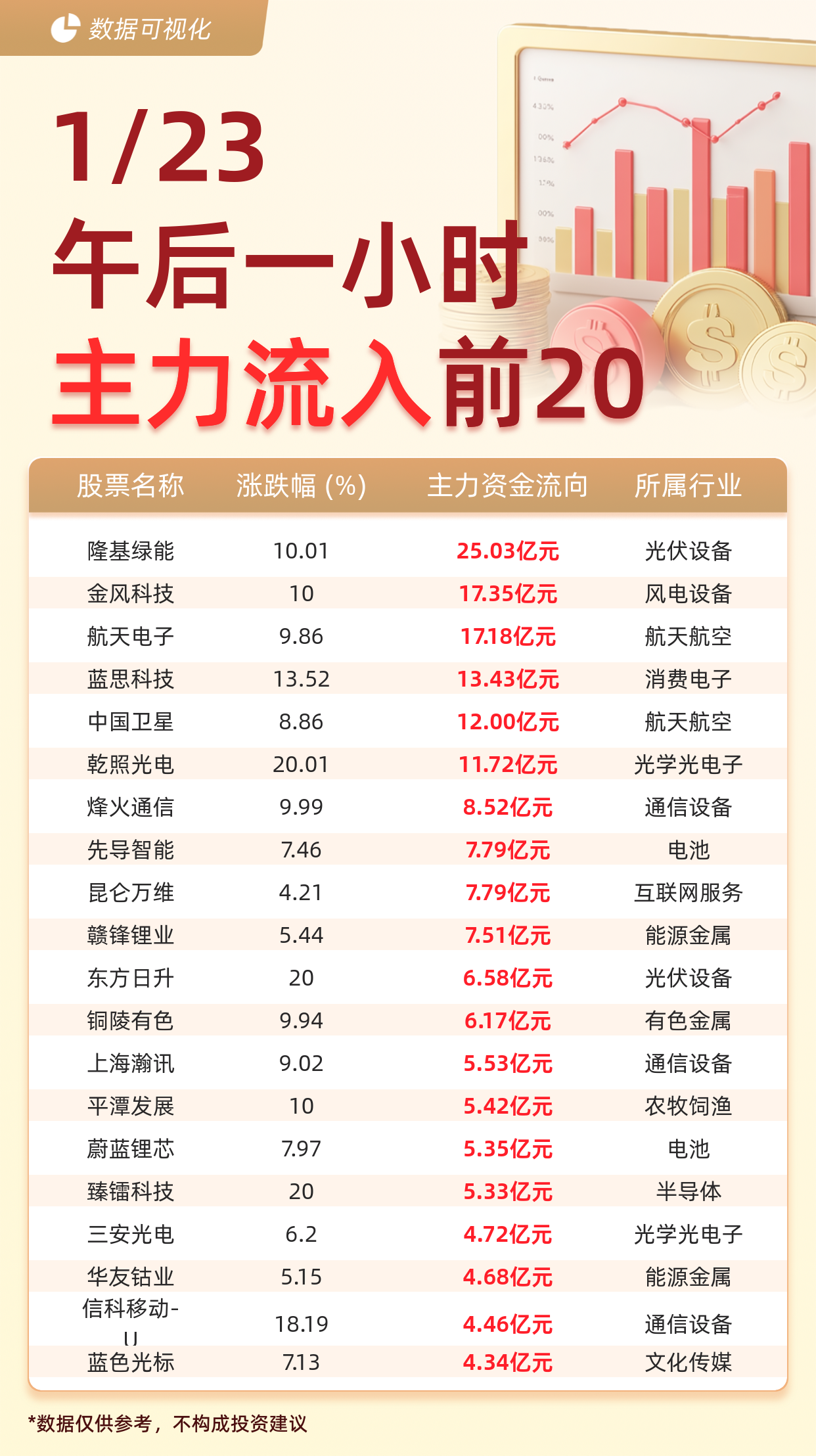
主力资金流入前20:隆基绿能流入25.03亿元、金风科技流入17.35亿元
Jin Rong Jie· 2026-01-23 06:32
Core Insights - The main focus of the news is on the significant inflow of capital into specific stocks, highlighting the top 20 stocks with the highest capital inflow as of January 23, with notable performances in various sectors such as photovoltaic equipment, wind power, and aerospace [1][2][3] Group 1: Capital Inflow Data - Longi Green Energy leads with a capital inflow of 2.503 billion yuan and a price increase of 10.01% [2] - Goldwind Technology follows with 1.735 billion yuan and a price increase of 10% [2] - Aerospace Electronic has a capital inflow of 1.718 billion yuan with a price increase of 9.86% [2] - Lens Technology shows a strong performance with a capital inflow of 1.343 billion yuan and a price increase of 13.52% [2] - China Satellite has a capital inflow of 1.200 billion yuan and a price increase of 8.86% [2] Group 2: Sector Performance - The photovoltaic equipment sector is represented by Longi Green Energy and Oriental Sunrise, with inflows of 2.503 billion yuan and 658 million yuan respectively [2][3] - The wind power equipment sector is highlighted by Goldwind Technology with an inflow of 1.735 billion yuan [2] - The aerospace sector includes Aerospace Electronic and China Satellite, with inflows of 1.718 billion yuan and 1.200 billion yuan respectively [2] - The optical and semiconductor sectors are represented by Qian Zhao Optoelectronics and Zhen Lei Technology, with inflows of 1.172 billion yuan and 533 million yuan respectively [2][3]






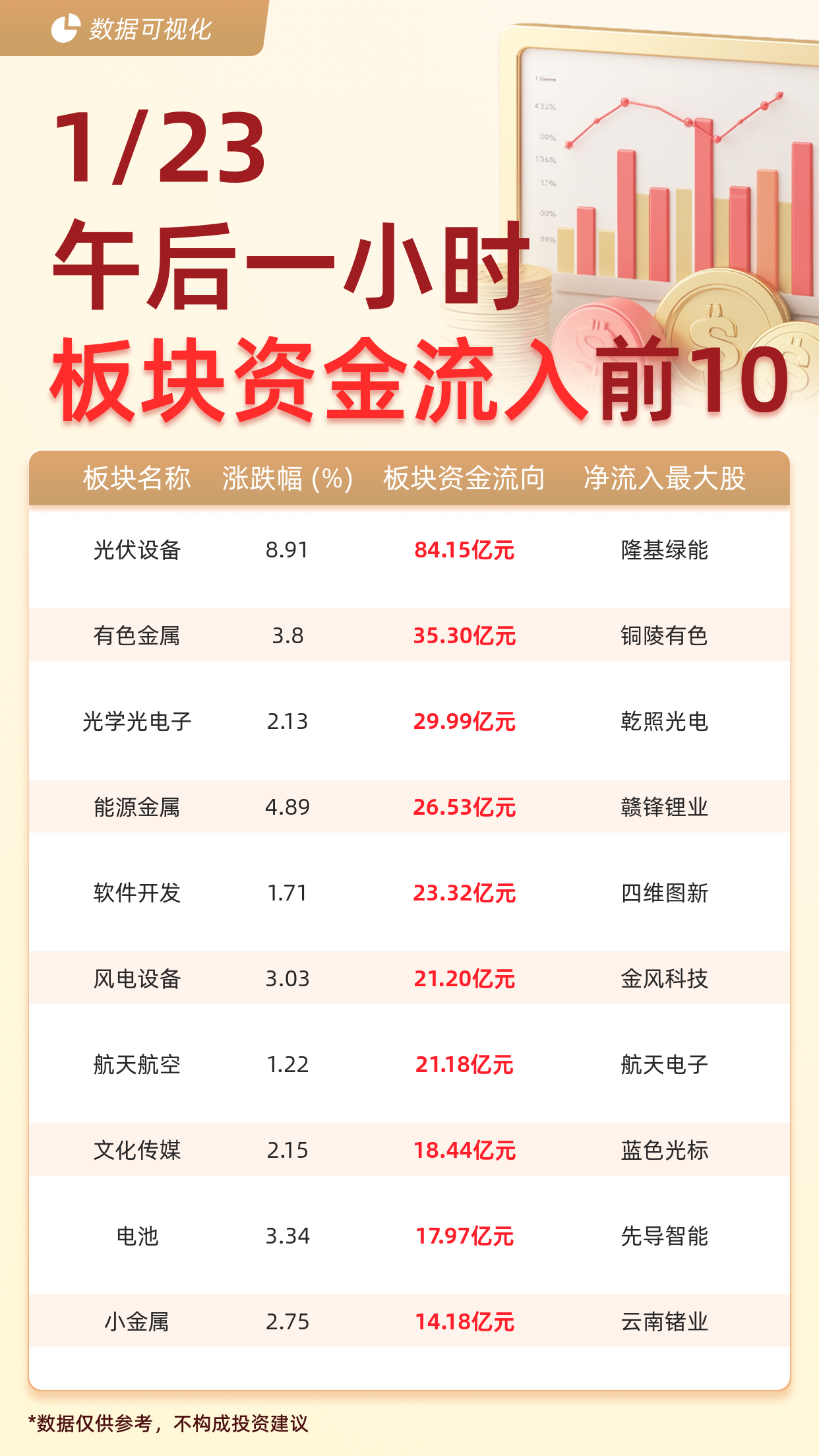
主力板块资金流入前10:光伏设备流入84.15亿元、有色金属流入35.30亿元
Jin Rong Jie· 2026-01-23 06:32
Group 1 - The main market experienced a net outflow of 14.505 billion yuan in principal funds as of January 23 [1] - The top ten sectors with inflows of principal funds include: Photovoltaic Equipment (8.415 billion yuan), Non-ferrous Metals (3.530 billion yuan), Optical and Optoelectronic (2.999 billion yuan), Energy Metals (2.653 billion yuan), Software Development (2.332 billion yuan), Wind Power Equipment (2.120 billion yuan), Aerospace (2.118 billion yuan), Cultural Media (1.844 billion yuan), Batteries (1.797 billion yuan), and Minor Metals (1.418 billion yuan) [1] Group 2 - Non-ferrous Metals sector saw an inflow of 3.530 billion yuan, with Tongling Nonferrous Metals as a notable company [2] - The Optical and Optoelectronic sector had an inflow of 2.999 billion yuan, with Qianzhao Optoelectronics being a key player [2] - The Energy Metals sector attracted 2.653 billion yuan, with Ganfeng Lithium as a significant company [2] - The Software Development sector received 2.332 billion yuan, with Siwei Map as a prominent company [2] - The Wind Power Equipment sector had an inflow of 2.120 billion yuan, with Goldwind Technology as a major company [3] - The Aerospace sector saw 2.118 billion yuan inflow, with Aerospace Electronics being a key company [3] - The Cultural Media sector attracted 1.844 billion yuan, with BlueFocus Communication Group as a notable company [3] - The Battery sector received 1.797 billion yuan, with XianDai Intelligent as a significant player [3] - The Minor Metals sector had an inflow of 1.418 billion yuan, with Yunnan Mingye as a key company [3]


科创新能源ETF(588830)涨超8.2%,固态电池在太空领域具备发展潜力
Xin Lang Cai Jing· 2026-01-23 06:28
Group 1: Solid-State Battery Development in Space - Solid-state batteries have significant potential in the space sector, with global agencies accelerating their development and validation, aiming for practical application by 2028 [1] - NASA initiated its solid-state battery project, SABERS, in 2021, utilizing a sulfide-based all-solid-state system with an energy density of 500-550 Wh/kg and a discharge rate of 10C, capable of operating in temperatures ranging from -80℃ to +80℃ [1] - The solid-state battery sent to the ISS in 2022 completed over 500 cycles with only a 5% capacity degradation, exceeding expectations [1] - The natural adaptability of solid-state batteries to extreme conditions in space, such as vacuum, temperature variations, and high radiation, makes them a safer and more efficient option compared to liquid batteries [1] - The potential market for solid-state batteries in space applications is substantial, with estimates suggesting a market size exceeding 500 billion for 1 million satellites, alongside applications in computing power storage, deep space exploration, and lunar bases [1] Group 2: Performance of New Energy Indices and ETFs - As of January 23, 2026, the Shanghai Stock Exchange Sci-Tech Innovation Board New Energy Index (000692) surged by 7.66%, with significant gains from constituent stocks such as Laplace (+20.01%), JinkoSolar (+20.00%), and Aotwei (+20.00%) [2] - The New Energy ETF (588830) closely tracks the performance of the New Energy Index and reported an increase of 8.27%, marking its third consecutive rise [2] - The top ten weighted stocks in the New Energy Index as of December 31, 2025, include JinkoSolar, Atlass, and Trina Solar, collectively accounting for 46.84% of the index [2] - The primary sectors represented in the index are photovoltaic equipment (45.83%), batteries (42.46%), and wind power equipment (5.73%) [2]
“十五五”新型电力系统建设全面铺开,新能源ETF(159875)聚焦产业链龙头
Xin Lang Cai Jing· 2026-01-23 05:45
Group 1 - The photovoltaic equipment sector is leading the market, with the China Securities New Energy Index rising by 4.03% as of January 23, 2026, with stocks like Laplace, Maiwei, and Jiejia Weichuang hitting the daily limit [1] - The "14th Five-Year Plan" for the new power system construction is fully underway, with energy storage being highlighted as a key strategic resource, supported by significant investments from State Grid and Southern Power Grid [1] - By 2025, China's total electricity consumption is projected to reach 10.37 trillion kilowatt-hours, marking a 5.0% year-on-year increase, with substantial growth in sectors such as electric vehicle services and information transmission [1] Group 2 - As of December 31, 2025, the top ten weighted stocks in the China Securities New Energy Index include CATL, Sungrow, and Longi Green Energy, collectively accounting for 43.23% of the index [2] - The New Energy ETF (159875) closely tracks the China Securities New Energy Index, providing a convenient tool for investing in leading companies in the new energy sector [2]
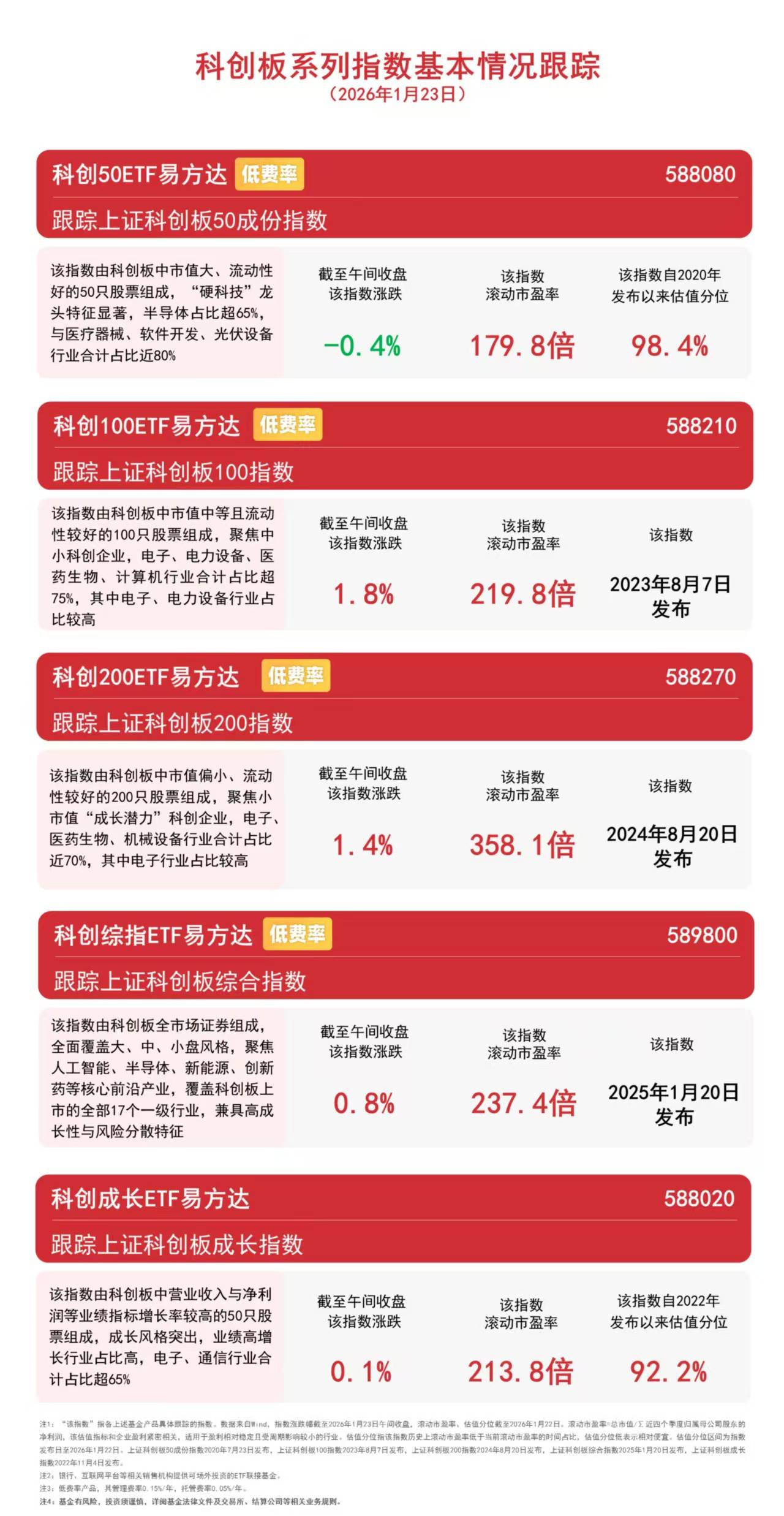
科创板系列指数震荡分化,关注科创200ETF易方达(588270)、科创50ETF易方达(588080)等投资机会
Sou Hu Cai Jing· 2026-01-23 05:10
Group 1 - The core focus of the news is on the performance and characteristics of various ETFs tracking the STAR Market indices, highlighting their composition and sector allocations [2][3][4]. - The STAR 50 ETF consists of 50 large-cap stocks with a significant focus on "hard technology," particularly in the semiconductor sector, which accounts for over 65% of the index [2]. - The STAR 100 ETF is composed of 100 mid-cap stocks, with over 75% of its composition in the electronics, power equipment, and pharmaceutical sectors, indicating a strong emphasis on small and medium-sized innovative enterprises [3]. - The STAR 200 ETF includes 200 smaller-cap stocks, with nearly 70% of its composition in electronics, pharmaceuticals, and machinery sectors, showcasing a focus on growth potential in smaller companies [4]. Group 2 - The STAR 50 ETF has a rolling P/E ratio of 179.8 times, while the STAR 100 ETF has a rolling P/E ratio of 219.8 times, and the STAR 200 ETF has a rolling P/E ratio of 358.1 times, indicating varying valuations across these indices [2][3][4]. - The STAR 50 ETF experienced a slight decline of 0.4%, while the STAR 100 ETF increased by 1.8%, and the STAR 200 ETF rose by 1.4%, reflecting different market dynamics among these ETFs [2][3][4].
两大太空主题,批量涨停
Shang Hai Zheng Quan Bao· 2026-01-23 04:54
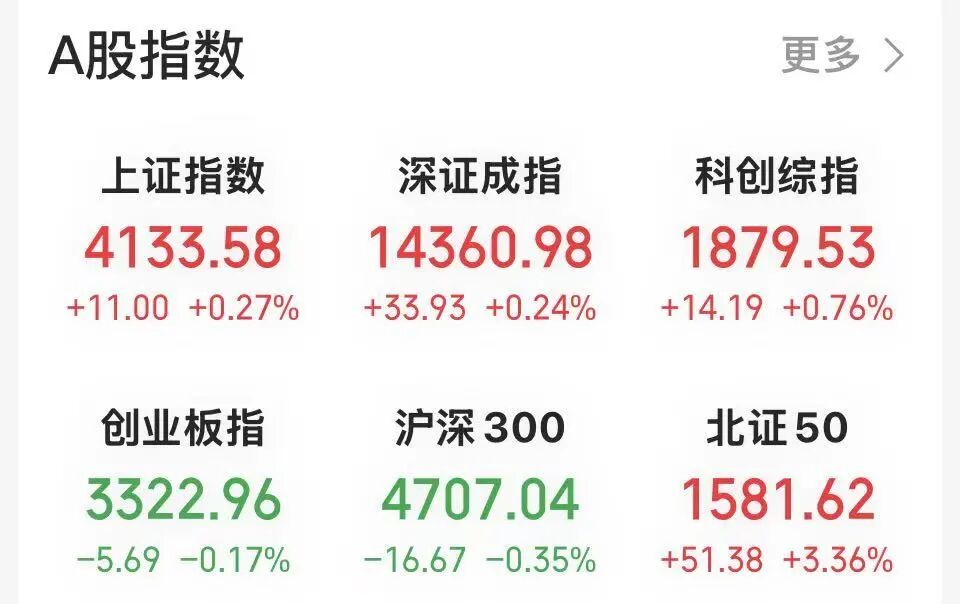
Market Overview - A-shares continued to experience sideways fluctuations, with strong performance in non-ferrous metals and new energy sectors, while technology themes like semiconductors showed adjustments, leading to a divergence in major stock indices [1] - As of the midday break, the Shanghai Composite Index was at 4133.58 points, up 0.27%, the Shenzhen Component Index rose 0.24%, the ChiNext Index fell 0.17%, and the Sci-Tech Innovation Index increased by 0.76% [1] Space Photovoltaics Sector - The space photovoltaic concept significantly heated up, with the Shenwan Photovoltaic Equipment Index soaring by 6.89%, and several stocks such as Maiwei Co., Jiejia Weichuang, and Dongfang Risheng hitting the daily limit of 20% [4] - The space photovoltaic energy refers to utilizing solar photovoltaic technology to obtain and supply energy in outer environments like space or the moon, with the ability to wirelessly transmit electricity to the ground [6] - Traditional fossil energy faces high storage risks and supply difficulties in space, while nuclear energy has complex technology and strict safety controls, making photovoltaic technology a more suitable option for extreme space environments [6][7] Commercial Aerospace Sector - The commercial aerospace concept has seen a resurgence, with stocks like Feiwo Technology and Zhenlei Technology hitting their daily limit of 20%, with some stocks reaching historical highs [13] - Blue Arrow Aerospace's IPO status has changed to "inquired," marking a significant step towards becoming the first commercial rocket company listed on the Sci-Tech Innovation Board [15] - SpaceX is accelerating its layout, planning to launch its second-generation Starlink satellite system by 2027, with the U.S. Federal Communications Commission approving its application to deploy an additional 7,500 satellites [15]
2026存储产值达5516亿美元!科创50ETF(588000)回调0.67%,光伏股强势领涨
Mei Ri Jing Ji Xin Wen· 2026-01-23 04:48
1月23日,A股三大指数高开,科创50ETF(588000)早盘冲高后震荡回落,回调0.67%。盘面上, 光伏概念股反复走强,国博电子大涨13.43%,天合光能上涨10.45%,晶科能源上涨9.74%,阿特斯上涨 6.86%;截至发文,科创50ETF(588000)成交额达19.41亿元。 每日经济新闻 (责任编辑:张晓波 ) 【免责声明】本文仅代表作者本人观点,与和讯网无关。和讯网站对文中陈述、观点判断保持中立,不对所包含内容 的准确性、可靠性或完整性提供任何明示或暗示的保证。请读者仅作参考,并请自行承担全部责任。邮箱: news_center@staff.hexun.com 展望后市,招商证券指出,存储价格上涨,AI需求驱动供需再平衡。截至2026年1月19日,全球存 储产业(以SSD/NAND Flash为主,兼顾DRAM)正处在一轮明显的涨价上行期。与过去"消费旺季—补 库存"式的短周期波动不同,本轮更像结构性紧缺:上游报价强势回归,下游被迫在提价、改配置、锁 单和备货之间重新取舍。 科创50ETF(588000)追踪科创50指数,指数持仓电子行业69.39%,计算机行业4.88%,合计 74.27% ...
002865,一分钟涨停!
中国基金报· 2026-01-23 04:30
Core Viewpoint - The article highlights the strong performance of the photovoltaic sector and the rise of various engineering machinery stocks, indicating a positive market trend in these industries [2][5][10]. Market Overview - On January 23, the A-share market opened higher, with the Shanghai Composite Index up by 0.27%, the Shenzhen Component Index up by 0.40%, and the ChiNext Index up by 0.44% [3][4]. - The total trading volume reached 759.3 billion, with a predicted increase of 89 billion to 2.81 trillion [4]. Sector Performance - The photovoltaic sector showed significant gains, with leading stocks such as Junda Co. achieving a two-day consecutive rise, and companies like Aotwei, Jiejia Weichuang, and Trina Solar rising over 10% [10][12]. - Other sectors that performed well included engineering machinery, precious metals, and power generation equipment, while insurance, coal, and electronic components experienced fluctuations [5][14]. Notable Stocks - Key stocks in the photovoltaic sector included: - Maiwei Co. with a 20% increase [15] - Aotwei with a 17.82% rise [15] - Jiejia Weichuang with a 17.01% increase [15] - Trina Solar with an 11.74% rise [15] - In the engineering machinery sector, stocks like Junda Co. and Aotwei also saw significant gains, indicating strong investor interest [14][15]. Future Outlook - The report from Shenwan Hongyuan indicates that China has submitted applications for over 200,000 satellite constellations, marking a new phase in commercial space deployment, which is expected to drive long-term demand for space photovoltaics [12].


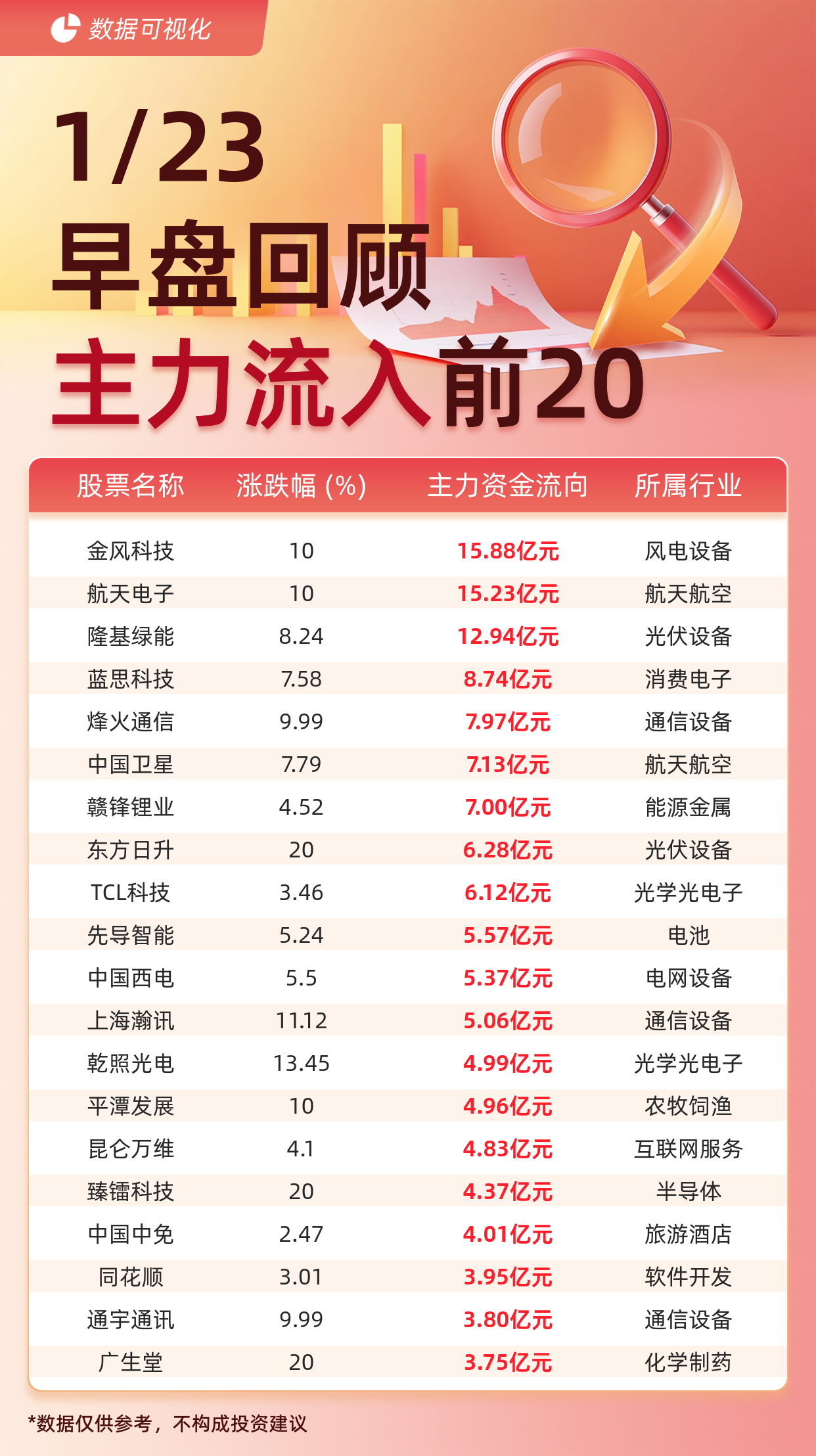
主力资金流入前20:金风科技流入15.88亿元、航天电子流入15.23亿元
Jin Rong Jie· 2026-01-23 04:27
Group 1 - The top 20 stocks with significant capital inflow include Jin Feng Technology (1.588 billion), Aerospace Electronics (1.523 billion), and Longi Green Energy (1.294 billion) [1] - Jin Feng Technology and Aerospace Electronics both experienced a price increase of 10% [2] - Longi Green Energy saw an 8.24% increase in stock price, while Dongfang Risen had the highest increase at 20% [2][3] Group 2 - The sectors represented among the top inflow stocks include wind power equipment, aerospace, photovoltaic equipment, and communication equipment [2][3] - Notable capital inflows also occurred in companies like TCL Technology (0.612 billion) and Ganfeng Lithium (0.700 billion), indicating strong investor interest in energy and technology sectors [1][2] - The data reflects a diverse range of industries, highlighting potential investment opportunities across various sectors [1][3]


午评:北证50指数半日涨超3%,商业航天、太空光伏方向全线大涨
Xin Lang Cai Jing· 2026-01-23 04:09
Market Overview - The three major A-share indices showed mixed performance in the morning session, with the Shanghai Composite Index up by 0.27%, the Shenzhen Component Index up by 0.24%, and the ChiNext Index down by 0.17% [1] - The North Stock 50 Index saw a significant increase of 3.36% [1] - The total trading volume across the three markets reached 1.9136 trillion yuan, an increase of 123.9 billion yuan compared to the previous day [1] - Over 3,500 stocks in the market experienced gains [1] Sector Performance - The sectors that performed well included photovoltaic equipment, precious metals, commercial aerospace, pharmaceutical retail, AI applications, horse racing, and battery industries [1] - Conversely, the sectors that faced declines included insurance, coal mining and processing, semiconductors, banking, and shale gas [1] Notable Stocks and Events - The commercial aerospace and space photovoltaic sectors saw collective gains, with stocks like Jili Suojun achieving three consecutive trading limit ups, and Zhongchao Holdings, Junda Co., and Western Materials achieving two consecutive limit ups [1] - Elon Musk's support for space photovoltaics and the disclosure of key production capacity plans contributed to the surge in these sectors [1] - The retail pharmacy sector benefited from policy support for mergers and reorganizations, leading to strong performances from stocks like Renmin Tongtai and Yifeng Pharmacy, both of which hit trading limits [1] - International gold prices approached 5,000 USD, resulting in a significant rise in gold stocks, while silver and non-ferrous metals recorded four consecutive trading limit ups [1] Market Dynamics - There were notable movements in AI applications, battery, and chemical sectors during the trading session [1] - However, some computing hardware stocks experienced pullbacks, with stocks like Xinyisheng dropping over 6%, and Tianfu Communication, Zhongji Xuchuang, and Industrial Fulian also declining [1] - The trading volume of several broad-based ETFs increased, putting pressure on the three major indices [1]