
教育培训

Search documents
构建线上线下联动学习闭环 新东方举办第二届中国儿童阅读素养论坛
Zheng Quan Ri Bao Wang· 2025-10-20 07:43
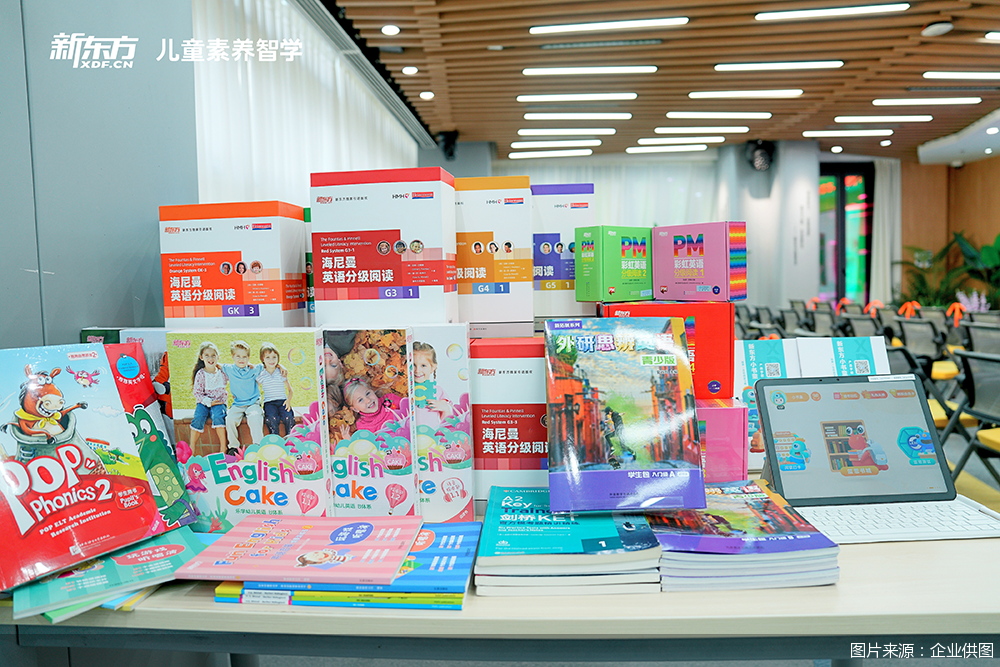
Core Insights - New Oriental Education Technology Group successfully held the second China Children's Reading Literacy Forum, introducing its bilingual reading system designed to provide a clear reading path for youth and support their overall development [1] Group 1: Reading System Development - The bilingual reading system is based on a scientific progressive design and a blended learning model that combines online and offline resources [1] - New Oriental has invested in creating a reading platform online and establishing reading spaces offline to help children develop good reading habits [1] Group 2: Learning Platform and User Engagement - The New Oriental Xiaoshutong APP is a key tool for implementing the reading system, creating a learning loop that connects online and offline experiences [1] - The platform has introduced over 3,000 authentic original books and employs a five-step learning method to facilitate efficient independent reading [1] - By the end of the 2025 fiscal year, students using the Xiaoshutong APP are expected to have read 8.3 million picture books, with total reading volume on the platform reaching nearly 80 million books [1] Group 3: Content Resource Development - New Oriental is gradually building a systematic reading material matrix through both imported and self-developed resources, with the Heinemann graded reading series from Houghton Mifflin Harcourt Group being a core resource [2]


新东方举办第二届中国儿童阅读素养论坛
Bei Jing Shang Bao· 2025-10-20 06:04
Core Viewpoint - New Oriental Education is focusing on developing a bilingual reading system to cultivate lifelong reading habits among children, addressing challenges such as maintaining interest and unclear progression paths in English reading [1][2] Group 1: Bilingual Reading System - The bilingual reading system is designed with a scientific progressive structure, combining online and offline learning modes to provide a clear reading path for youth [1] - The reading system is divided into 9 progressive stages from S1 to L6, covering children aged 3 to 12, aligning with their cognitive development and language ability growth [1] - The early stages emphasize nursery rhymes and listening/speaking training, while later stages introduce phonics and simple chapter books, culminating in a focus on scientific literature and academic reading skills [1] Group 2: Implementation and Impact - New Oriental is leveraging the "Little Bookworm" app to create an effective online-offline learning loop, featuring over 3,000 original books [2] - The app employs a five-step learning method: "Guided Learning - Vocabulary Learning - Listening - Reading Along - Practice," to help children establish efficient independent reading paths [2] - By the end of the 2025 fiscal year, students using the app are expected to have read 8.3 million picture books, with a total reading volume of nearly 80 million books on the platform [2]

警惕“招转培”“无证中介”,北京发布侵害就业权益典型案例
Xin Jing Bao· 2025-10-20 06:03
Core Viewpoint - Beijing's Human Resources and Social Security Bureau, in collaboration with various government departments, has initiated a special action to clean up and regulate the human resources market, exposing multiple violations of labor rights and urging workers to be vigilant against employment traps [1] Group 1: Violations and Cases - A Beijing human resources company conducted unauthorized recruitment activities without a license, resulting in a fine of 10,000 yuan and the confiscation of illegal earnings of 9,501 yuan [2] - A labor dispatch company continued operations after its license expired, leading to a penalty of three times its illegal earnings, totaling 279,647.6 yuan [3] - A technology company misrepresented its recruitment process by charging for training services, resulting in fines of 10,000 yuan and 19,000 yuan for two involved entities [4] - An enterprise management consulting company illegally organized training without proper accreditation, leading to a penalty of double its illegal earnings of 980,011 yuan [6] Group 2: Warnings and Recommendations - Job seekers are advised to verify the legitimacy of recruitment agencies by checking for a human resources service license [2] - Engaging in unauthorized labor dispatch activities can severely disrupt market order and complicate workers' rights protection [3] - The "recruitment-to-training" scam preys on job seekers' anxieties and desires for high salaries, and any mention of fees should be met with refusal [4] - Illegal training institutions often lure students with promises of guaranteed success and low prices, posing risks to both financial and personal safety [6]
从奥数题海到变质校园餐,当代小学生投胎指南
Hu Xiu· 2025-10-20 04:07
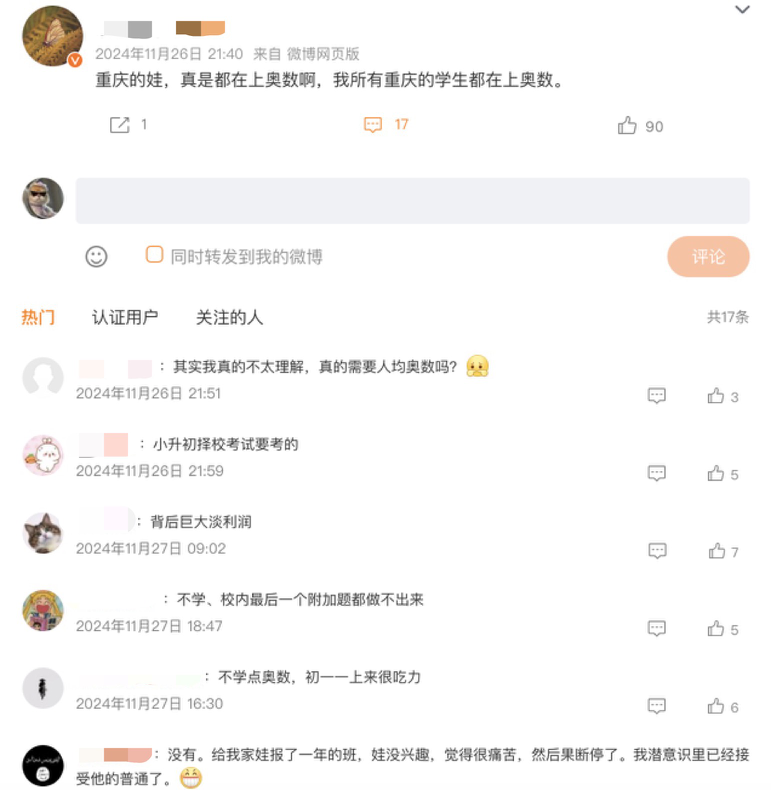
Core Viewpoint - The article discusses the disparities in educational experiences and resources among children from different regions in China, highlighting the intense competition and societal pressures faced by students in various locales. Group 1: Regional Educational Disparities - Children in different regions of China experience vastly different educational environments, with significant disparities in resources and societal expectations [3][4][28] - The concept of "ideal" families varies by region, with parents in places like Chongqing and Jiangsu placing immense pressure on their children to excel academically [2][29] Group 2: Chongqing's Math Competition - In Chongqing, the emphasis on mathematics, particularly Olympiad math, is pervasive, with parents viewing it as essential for their children's success [5][10] - The competition in math leads to a culture where children's progress in Olympiad math becomes a social currency among parents [7][11] - The number of students in Chongqing's Olympiad training has surged, surpassing major cities like Beijing and Shanghai, indicating a growing focus on competitive mathematics [11][12] Group 3: Shanghai's English Education - Shanghai children are exposed to an internationalized education from a young age, with English proficiency being a key focus [14][16] - Despite their advanced language skills, many Shanghai students face challenges with inadequate school meals, highlighting a disparity between educational aspirations and basic needs [18][19][27] Group 4: Jiangsu and Zhejiang's Academic Pressure - In Jiangsu and Zhejiang, high competition for university placements leads to a culture of intense academic pressure, with many students striving for high scores to secure spots in prestigious institutions [29][45] - The educational environment in places like Nantong is characterized by a collective effort from families and schools to ensure student success, creating a system of communal academic pressure [30][36] Group 5: Northeast China's Tutoring Culture - In Northeast China, families invest heavily in tutoring, with a significant portion of their income directed towards supplementary education [48][50] - The culture of gift-giving to teachers is prevalent, reflecting a societal norm where parents seek to ensure their children receive favorable treatment in educational settings [53][57] Group 6: Overall Educational Landscape - The article concludes that while the internet presents a simplified view of regional advantages, the reality is a complex landscape of educational inequities and pressures faced by children across China [58][59] - The ideal childhood experience may exist in regions like Shenzhen, where educational opportunities are more equitably distributed, allowing children to thrive in a supportive environment [60][61][62]
拒绝预付式消费的霸王条款
Jing Ji Ri Bao· 2025-10-20 00:06
Core Points - The rise of short drama training institutions is accompanied by issues related to refund policies and "unreasonable clauses" in contracts [1] - A recent court case in Beijing ruled against an arbitration clause deemed as an "unreasonable clause," reinforcing consumer rights [1] - The Supreme Court's recent interpretation of laws regarding prepaid consumption disputes aims to clarify rights and protect consumers [1][2] Group 1: Legal Context - The court identified the arbitration clause in a training contract as invalid, which significantly reduces the cost burden on consumers seeking refunds [1] - The new judicial interpretation from the Supreme Court invalidates unreasonable clauses that increase consumer costs, such as non-refund policies and restrictions on service transfers [1] Group 2: Consumer Rights and Responsibilities - Consumers are advised to carefully review contract terms, especially regarding duration, fees, refund conditions, and dispute resolution methods [2] - Consumers have the right to terminate prepaid contracts if disputes arise within the contract period, allowing them to mitigate losses [2] Group 3: Business Practices and Consumer Protection - Some platforms are introducing services that guarantee compensation if a business fails to fulfill its obligations, enhancing consumer confidence [3] - There is a call for stricter penalties against businesses that engage in fraudulent practices, such as taking prepaid funds and failing to provide services [3] - The enforcement of the Supreme Court's interpretation is expected to improve the business environment by discouraging dishonest practices and promoting consumer trust [3]
名为“先学后付” 实为“先学后债”(百姓关注)
Ren Min Ri Bao· 2025-10-19 22:30
Core Viewpoint - The article highlights the deceptive practices of training institutions that lure students with promises of "learn first, pay later" schemes, which often result in financial burdens rather than educational benefits [1][2][3]. Group 1: Deceptive Practices - Many training institutions advertise courses with claims of earning potential while studying, but these claims are often false, leading students to incur debts without receiving promised income [1][2]. - Students report that the quality of courses is poor, with many being pre-recorded sessions lacking real-time interaction with instructors, which diminishes the learning experience [2][3]. Group 2: Contractual Issues - When students attempt to withdraw from courses, they are often faced with high penalties and fees, such as being required to pay 10% of the total course fee despite minimal attendance [2][3]. - Training institutions often employ vague terms in contracts that place excessive responsibility on students while limiting their rights, which may render such clauses legally invalid [3][4]. Group 3: Financial Misrepresentation - Some institutions misrepresent payment structures, disguising loans as "learn first, pay later" arrangements, leading students to unknowingly incur significant debt [3][4]. - There is a lack of transparency regarding the financial agreements, with students often unaware that they are signing financial loan contracts [4]. Group 4: Challenges in Consumer Protection - Consumers face significant challenges in seeking redress, including information asymmetry, difficulty in providing evidence of misleading practices, and complex legal processes [4]. - The article suggests that regulatory gaps exist in the oversight of educational financial services, calling for stricter scrutiny and enforcement to protect consumers [4].
教育消费覆盖全生命周期有望催生服务消费新蓝海
Zheng Quan Shi Bao· 2025-10-19 21:47
Core Insights - The article highlights a significant trend in the education consumption sector, with a projected 5.7% increase in consumer spending on education by 2025, as reported by McKinsey [1] - The Chinese government is promoting a diversified education and training market through new policies aimed at enhancing service consumption and encouraging vocational training [1][2] Education Consumption Trends - Education consumption is becoming a lifelong process, covering various stages from early childhood to elderly education, and includes services like childcare and international study [3] - The shift towards lifelong education is expected to address skill shortages and meet the demands of an aging society, contributing to the development of a learning-oriented society [3] Regulatory Developments - Recent policies aim to standardize the non-academic training sector, which has faced regulatory ambiguities, by establishing clear licensing conditions for training institutions [4] - The new regulations are expected to provide legitimacy to compliant institutions, facilitating their market operations and reducing compliance costs [4][5] Market Opportunities - The education sector is entering a new phase of full lifecycle consumption, creating unprecedented opportunities for growth in service consumption [5] - There is a rising demand for adult vocational education, driven by rapid industrial upgrades and technological changes, leading to a dual focus on skill acquisition and educational enhancement [6]
教育消费覆盖全生命周期 有望催生服务消费新蓝海
Zheng Quan Shi Bao· 2025-10-19 17:38
Core Insights - The education consumption sector is experiencing significant growth, with a projected increase of 5.7% in consumer spending by 2025, according to a McKinsey report [1] - The Chinese government is promoting a diversified education and training market through new policies aimed at enhancing service consumption and encouraging vocational training [1][3] Group 1: Education Consumption Trends - Education consumption is becoming a new trend, with young people engaging in various forms of "night learning" such as arts and technical training [1][2] - The inclusion of education in service consumption covers a wide range of areas, including non-academic training, vocational education, childcare services, and elderly education, creating a comprehensive consumption chain [3] Group 2: Policy Impact on Education Sector - Recent policies aim to standardize the development of non-academic education and training, providing clear licensing conditions for institutions [4][5] - The new regulations are expected to eliminate uncertainties in the non-academic training sector, allowing compliant institutions to gain institutional support and market legitimacy [4][5] Group 3: Market Opportunities and Challenges - The shift towards lifelong education is anticipated to attract more social capital into the education sector, enhancing market-driven operations [3] - The demand for adult vocational education is rapidly increasing, driven by the need for skill enhancement and adaptability in a competitive job market [6]

积极看好低位消费股布局机会
2025-10-19 15:58
Summary of Key Points from Conference Call Records Industry or Company Involved - **Education Sector**: Action Education (EMBA training) - **Hospitality Sector**: Shoulv Hotel - **Retail Sector**: Small Commodity City, Yonghui Supermarket - **Beauty Sector**: Proya, Winona - **Jewelry Sector**: Laopuhuangjin, Zhou Daxing - **Food and Beverage Sector**: Mixue Group Core Insights and Arguments Education Sector - Action Education's performance improved in Q3 after a challenging Q2 due to US-China trade tensions, with expected annual revenue exceeding 300 million and a valuation of 15-16 times earnings, alongside a dividend yield over 6% [1][2] - The company's "Hundred Schools Plan" is anticipated to contribute over 10% to revenue growth next year [1] Hospitality Sector - Shoulv Hotel showed continuous improvement in data, with a target of 2.6 million rooms and an expected annual performance of 900 million, valued at 17-18 times earnings this year and 16 times next year [1][2] Retail Sector - Small Commodity City exceeded expectations with Q3 net profit over 1.7 billion, raising annual profit forecasts to 4.7-4.8 billion, with a valuation of 16-17 times [1][4] - Yonghui Supermarket is stabilizing daily sales after store adjustments, with expectations of reduced losses or profitability next year, supported by self-owned product growth [1][4] Beauty Sector - The beauty sector is benefiting from the Double Eleven shopping festival, with Proya and Winona showing strong sales performance. Proya's valuation is expected to be no more than 20 times in 2025 and 16-17 times in 2026 [1][5][6] Jewelry Sector - Laopuhuangjin is experiencing significant growth, with a projected annual increase of at least 50% and a valuation of under 30 times, expected to grow at least 30% next year with a valuation around 20 times [1][9] - The brand is expanding its presence in overseas markets, with plans to enter Japan by 2026 [10] Food and Beverage Sector - Mixue Group's same-store sales decreased by 7% month-on-month but increased by 6% year-on-year, with expectations of growth as external factors stabilize [11][12] Other Important but Possibly Overlooked Content - The overall consumer sector is currently underperforming, but there are still quality low-priced stocks worth considering [2] - The beauty sector's performance during the Double Eleven festival indicates strong consumer interest, particularly in leading brands [5] - Laopuhuangjin's competitive advantages include strong brand recognition in lower-tier cities and effective management of store openings and closures [7][9] - Yonghui Supermarket's adjustments and self-owned product development are crucial for its recovery and future growth [4][8]


海外消费周报:海外医药:关注2025ESMO港股医药临床数据更新-20251017
Shenwan Hongyuan Securities· 2025-10-17 12:41
Investment Rating - The report maintains an "Overweight" rating for the overseas pharmaceutical industry, indicating a positive outlook for the sector [1]. Core Insights - The report highlights key clinical data updates from the 2025 ESMO conference, focusing on several companies including Innovent Biologics, CanSino Biologics, and Kelun-Biotech, which are conducting pivotal clinical trials for various cancer treatments [1][7]. - Notable advancements include the registration studies for IBI363 by Innovent Biologics and the approval of a third indication for TROP2 ADC by Kelun-Biotech, showcasing the ongoing innovation in the sector [8][9]. - The report emphasizes the strong performance of companies like BMS and Pfizer, with BMS acquiring Orbital Therapeutics for $1.5 billion and Pfizer reporting positive results from its HER2 inhibitor trial [9][10]. Summary by Sections 1. Overseas Pharmaceuticals - The Hang Seng Healthcare Index fell by 5.01%, underperforming the Hang Seng Index by 1.78 percentage points [6]. - Key events include multiple clinical trials presented at the 2025 ESMO, such as Innovent's study on the combination of sintilimab and lenvatinib for advanced renal cell carcinoma [7]. - The report suggests continued monitoring of innovative drugs and clinical progress from companies like BeiGene, Innovent, and CanSino [11]. 2. Company Updates - BMS announced a $1.5 billion acquisition of Orbital Therapeutics, which includes the OTX-201 therapy [9]. - Strong performance reported by Johnson & Johnson with Q3 2025 revenue of $23.993 billion, a 6.8% year-over-year increase [9]. - Pfizer's TUKYSA trial for HER2+ metastatic breast cancer yielded positive top-line results, indicating a successful phase in their drug development [10]. 3. Market Trends - The report notes a significant increase in inbound tourism to Macau during the National Day holiday, with a total of approximately 1.14 million visitors, marking a 1.9% year-over-year growth [13]. - The average daily visitor count reached a record high of 143,000, reflecting a recovery in the tourism sector [13].