茶饮

Search documents
再现豪门联姻!霸王茶姬创始人将与“最美光二代”高海纯结婚!接近天合人士:属实
Bei Jing Shang Bao· 2025-11-20 08:15
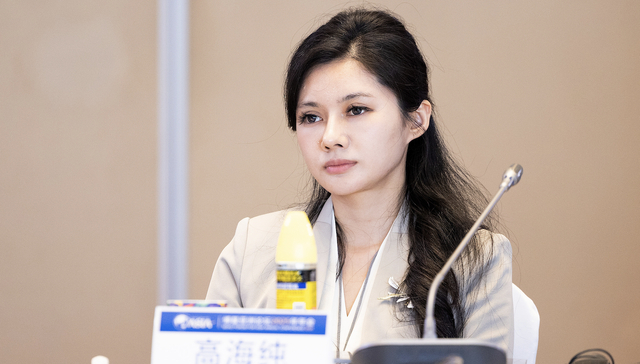
11月20日,一张霸王茶姬创始人张俊杰与天合光能联席董事长高海纯的结婚请柬在坊间传开。当日,北京商报记者从接近天合光能内部人士处获悉,该结婚 请柬属实。 据结婚请柬内容,天合光能创始人高纪凡和吴春艳发出婚礼邀请,新郎系张俊杰,新娘系高海纯,2025年12月15日为婚宴日期。 获得颇高关注度的背后,系一场横跨茶饮与光伏两大领域的豪门联姻。 据了解,高海纯系高纪凡和吴春艳之女,1993年出生,今年刚刚出任天合光能联席董事长一职,由于样貌出众,被市场称为"最美光二代"。 资料显示,高海纯毕业于美国布朗大学,本科学历。2017年6月起历任天合光能战略投资部副总经理、天合富家能源股份有限公司董事长。2024年6月起担任 天合光能董事。2024年12月起担任天合光能解决方案事业群总裁。 针对高海纯担任公司联席董事长一事,天合光能方面今年在接受北京商报记者采访时曾表示,高海纯将兼任公司解决方案事业群总裁,致力于领导公司由光 伏产品制造商向光储智慧能源全面解决方案服务商转型,引领光储融合新场景的发展。同时,高海纯担任公司联席董事长后,将协助董事长开展董事会日常 工作,确保董事会各项工作的规范性和战略指引作用。 张俊杰同样出生 ...


霸王茶姬创始人将和“光伏二代”结婚,两家公司市值合计超600亿元
Xin Lang Cai Jing· 2025-11-20 08:11
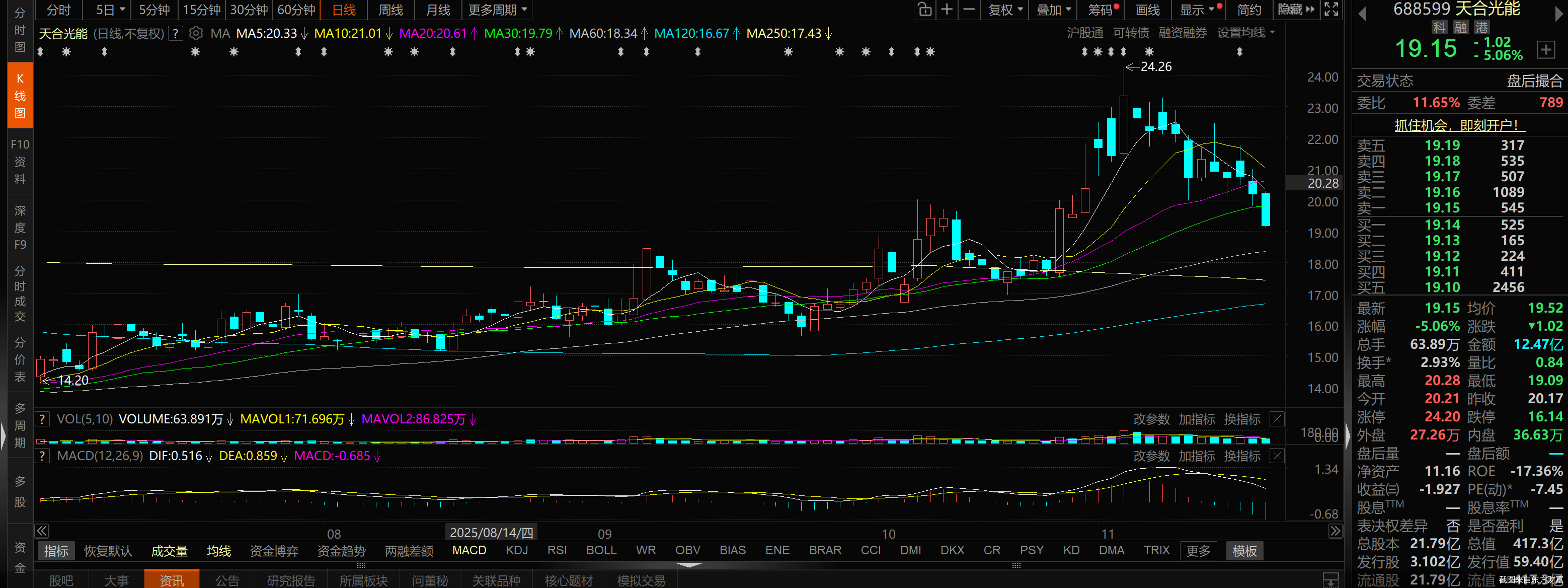
Group 1: Company Overview - Trina Solar, founded by Gao Jifan, is a leading figure in the photovoltaic industry and has recently faced financial challenges, reporting a net loss of 4.201 billion yuan in the first three quarters of the year [5] - Gao Haichun, daughter of Gao Jifan, has held various significant positions within Trina Solar, including Co-Chairperson and Co-President of Trina Wealth, with an annual salary exceeding 3 million yuan [5] - The company reported a total revenue of 49.97 billion yuan for the first three quarters, with a third-quarter revenue of 18.914 billion yuan [5] Group 2: Market Performance - Trina Solar's stock price has decreased by 4.76%, currently at 19.21 yuan per share, with a market capitalization of 41.866 billion yuan [8] - Bawang Tea Ji, founded by Zhang Junjie, has shown significant growth, achieving a total GMV of 10.8 billion yuan in 2023 and a second-quarter GMV of 8.1031 billion yuan, reflecting a year-on-year increase of 15.5% [6] - Bawang Tea Ji's net income for the second quarter reached 3.3319 billion yuan, with an adjusted net profit margin of 18.9% [6]
光伏茶饮联姻!“最美光二代”高海纯即将大婚,新郎是霸王茶姬创始人
Xin Lang Cai Jing· 2025-11-20 08:03
Group 1 - The wedding invitation circulating in the photovoltaic industry features Gao Jifan and Wu Chunyan, with the groom Zhang Junjie, founder of Bawang Chaji, and the bride Gao Haichun, daughter of Gao Jifan [1] - Gao Jifan founded Trina Solar in 1997 and has led the company through three industry cycles, while Gao Haichun, known as a "second-generation" leader, has taken on significant responsibilities within the company [2][4] - Trina Solar is diversifying its business, with over one-third of its revenue now coming from solutions rather than photovoltaic manufacturing, aiming to increase this to over 50% in the next two to three years [4] Group 2 - Bawang Chaji, founded by Zhang Junjie in 2017, has expanded its store network to 7,038 globally, with significant growth in overseas markets, particularly in Malaysia and Singapore [4][6] - For Q2 2025, Bawang Chaji reported a total net income of 3.3319 billion RMB, a year-on-year increase of 10.2%, with a global GMV of 8.1031 billion RMB, up 15.5% [6] - The combined market capitalization of Trina Solar and Bawang Chaji exceeds 600 billion RMB, with Trina Solar valued at approximately 41.7 billion RMB and Bawang Chaji at about 26.1 billion USD (approximately 185.7 billion RMB) [6]

霸王茶姬90后创始人张俊杰将与“最美光二代”高海纯结婚女方为天合光能董事长
Xin Lang Cai Jing· 2025-11-20 07:39
Group 1 - The wedding invitation of Zhang Junjie, founder of Bawang Chajiji, and Gao Haichun, daughter of Gao Jifan and Wu Chunyan, founders of Trina Solar, has been confirmed as authentic [1][2] - Gao Haichun, born in 1993, is recognized as a prominent figure in the solar industry, holding various positions at Trina Solar, including Vice General Manager of Strategic Investment and Chairman of Trina Fucheng Energy [2] - As of November 20, Trina Solar's stock price is 19.59 CNY per share, with a total market capitalization of approximately 42.69 billion CNY, while Bawang Chajiji's stock price is 14.22 USD per share, with a total market capitalization of about 2.61 billion USD, equivalent to approximately 185.74 billion CNY [2] Group 2 - The combined market capitalization of Trina Solar and Bawang Chajiji is approximately 61.3 billion CNY [2] - Both companies have not responded to inquiries regarding the wedding invitation as of the time of reporting [2]
霸王茶姬创始人张俊杰迎娶天合光能千金
Sou Hu Cai Jing· 2025-11-20 06:27
Group 1 - The wedding invitation of Zhang Junjie, founder of BaWang Tea, and Gao Haichun, daughter of Gao Jifan, founder of Trina Solar, has circulated on social media, with the wedding date set for December 15, 2025 [1] - Zhang Junjie, born in 1993, founded BaWang Tea in 2017 and was listed on the Hurun Entrepreneur List in November 2025 with a net worth of 13.5 billion [4] - Gao Haichun became a board member of Trina Solar in June 2024 and has been assisting her father, Gao Jifan, with daily board operations, later becoming the president of the Solutions Business Group in December 2024 [6]

霸王茶姬“90后”创始人张俊杰与“最美光二代”高海纯结婚 两家公司市值约613亿元
Mei Ri Jing Ji Xin Wen· 2025-11-20 06:24
每经AI快讯,11月20日,有知情人士向红星资本局确认,霸王茶姬(CHA.US)的创始人张俊杰将与天 合光能的高海纯结婚。 截至发稿,天合光能的股价报19.59元/股,总市值约426.9亿元;霸王茶姬股价为14.22美元/股,总市值 约26.10亿美元,约合人民币185.74亿元。以此计算,两家上市公司的市值总计约613亿元。 高海纯是高纪凡和吴春艳的女儿,"创一代"高纪凡是光伏行业的领军人物。高海纯生于1993年,毕业于 美国布朗大学,被誉为"最美光(伏)二代""光伏女神"。 ...
西部证券晨会纪要-20251120
Western Securities· 2025-11-20 02:33
Group 1 - The report highlights the recovery of free cash flow in the manufacturing sector due to the "anti-involution" policy and the Federal Reserve's interest rate cuts, leading to a 37.2% increase in the free cash flow investment portfolio this year, with an excess return of 8.6% [1][7][10] - The report identifies specific industries where free cash flow (FCFF) is actively or passively improving, emphasizing the importance of EBIT and CAPEX in this recovery [7][10] - The analysis indicates that sectors such as resources, consumption, and light asset technology experience significant excess returns when free cash flow improves, while heavy asset technology and pre-involution manufacturing sectors show excess returns despite deteriorating cash flow [8][9] Group 2 - The advanced manufacturing sector is characterized by high differentiation among sub-sectors, with automotive valuations currently at relatively low levels, suggesting potential investment opportunities [2][14] - The report recommends focusing on funds tracking indices related to new productivity in areas such as new energy, power equipment, military industry, and automotive sectors, listing specific ETFs for investment [2][15] - Historical performance of the advanced manufacturing index shows a 120.56% increase since 2019, with power equipment performing the best among sub-sectors [14] Group 3 - The vehicle power supply industry is projected to grow significantly, with an expected market size of 64.8 billion yuan by 2027, driven by the rise of new energy vehicles and the increasing penetration of 800V systems [17][18] - Leading manufacturers in the vehicle power supply sector are well-positioned to expand into the AIDC server power supply market, with recommendations to focus on companies like Weimais and Fute Technology [17][19] - The competitive landscape is dominated by top-tier manufacturers with strong cost advantages and customer loyalty, indicating a trend of "the strong getting stronger" in this industry [19] Group 4 - The banking sector has seen a cumulative increase of 10.80% since early 2025, with significant performance variations among banks, driven by macroeconomic conditions and regulatory changes [22][24] - Historical analysis reveals that the banking sector's performance is closely tied to economic stability and liquidity conditions, with past bull markets often linked to favorable economic indicators [24][25] - The report emphasizes the importance of bank fundamentals, such as profitability and asset quality, in supporting stock performance, particularly during earnings disclosure periods [24][25]
市场如何看待咖啡茶饮行业
2025-11-20 02:16
Summary of Conference Call on Coffee and Tea Beverage Industry Company and Industry Overview - The conference call primarily discusses the performance and outlook of **Pop Mart** and **Luckin Coffee**, as well as the **tea beverage industry** represented by **Guming** [1][13][15]. Key Points on Pop Mart - **Performance Concerns**: Pop Mart's performance is influenced by the popularity of its IP, Labubu. There are concerns about its ability to continuously create popular IPs, with expectations of a peak and potential decline in 2025 [1][2]. - **Market Sentiment**: Bulls view Pop Mart as a successful IP operation platform with significant overseas market potential, while bears question its IP incubation capabilities and express concerns over reliance on single IPs and weak high-frequency data [1][3][4]. - **Sales Growth**: Fourth-quarter sales are expected to show limited growth compared to the third quarter, attributed to a focus on regular products rather than new hits [5]. - **US Market Dynamics**: High-frequency data fluctuations in the US market are linked to supply issues and operational strategy adjustments, with Halloween sales impacted by capacity constraints [6]. - **IP Lifecycle**: Despite concerns about Labubu's lifecycle, strong operational strategies can extend its viability, as demonstrated by the success of other IPs like Molly [7][8]. - **Future Developments**: Pop Mart plans to launch a new version of Labubu and engage in proactive operations, such as a 10th-anniversary exhibition, to maintain brand vitality [9][10]. - **Sales Structure**: Labubu accounted for approximately 30% of total sales in the first half of the year, with other established IPs like Molly contributing significantly. Emerging IPs like Cry Baby and Star People are also growing rapidly, indicating a diversified IP matrix [11]. - **Category Growth Potential**: The plush category is expected to become the largest, with projected sales reaching 10 billion. The global market potential for plush products could reach 30 billion, with other categories also showing growth potential [12]. Key Points on Guming - **Market Position**: Guming is viewed as a mid-priced tea brand with potential, but bears express concerns about its lack of uniqueness and potential performance decline post-subsidy [13][14][17]. - **Operational Strengths**: Bulls highlight Guming's operational capabilities, supply chain advantages, and digital membership operations, which are expected to mitigate impacts from subsidy reductions [14]. - **Expansion Plans**: Guming plans to expand into new markets, including Shandong and Shanghai, which are expected to contribute significantly to growth [16]. Key Points on Luckin Coffee - **Recent Performance**: Luckin Coffee reported a 14.4% quarter-over-quarter same-store sales growth in Q3 2025, driven by subsidies and seasonal demand [18]. - **Profitability Challenges**: Despite a 2.5 percentage point increase in gross margin, rising delivery costs are pressuring profitability. The company faces potential negative same-store sales growth starting in 2026 due to high base effects [18]. - **Long-term Outlook**: The Chinese ready-to-drink coffee market is still expanding, and Luckin's efficient supply chain and strong digital operations are expected to support continued growth [18].

古茗卖爆糖水,茶饮下半场的赚钱信号是它?
3 6 Ke· 2025-11-20 00:43
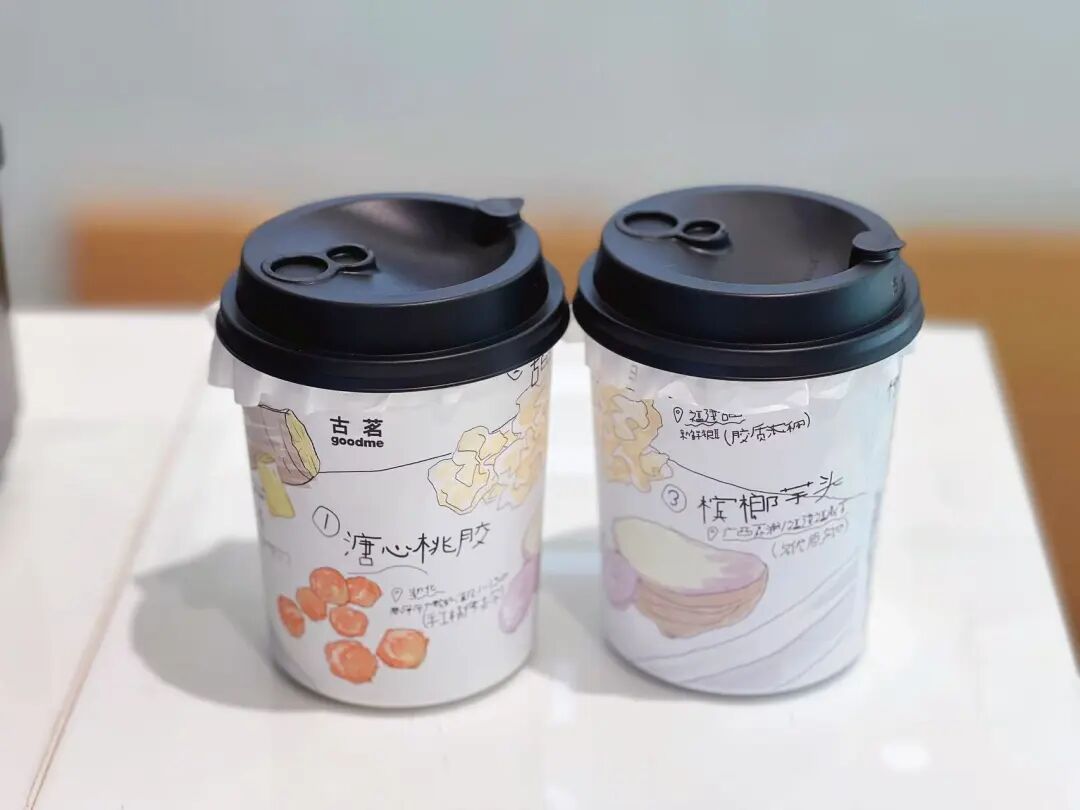
Core Insights - Guming's new slow-cooked dessert series has become a top seller, leading to widespread consumer interest and product shortages across multiple stores [1][4][6] - The introduction of these products marks a significant exploration into the dessert category for Guming, which aims to establish its unique brand identity within this segment [7][15] Group 1: Product Launch and Consumer Response - Guming launched two new products: Peach Gum Tapioca Milk and Taro Mochi Milk, priced at 16 yuan and 18 yuan respectively, which quickly sold out in many locations [1][3] - The new offerings have generated a DIY trend among consumers, with social media filled with positive reviews highlighting the rich ingredients and flavors [1][6] - The packaging of the new products features information about the origin and preparation of ingredients, enhancing consumer engagement [3] Group 2: Industry Trends and Competitor Actions - Other tea brands, such as Cha Bai Dao and CoCo, are also entering the dessert market, indicating a growing trend among tea shops to diversify their offerings [7][11] - Brands like Ji Dong Shao Xian Cao have reported significant sales increases after transitioning to a "tea + dessert" model, with some stores seeing revenue growth exceeding 200% [7][9] - The dessert category is becoming a second growth curve for beverage shops, as evidenced by the popularity of solid desserts like Mango Pomelo Sago [15][19] Group 3: Market Dynamics and Consumer Behavior - The overlap in consumer demographics between tea and dessert products allows tea shops to leverage existing customer bases without extensive marketing efforts [15] - The core ingredients for tea and dessert products are often similar, which helps reduce inventory pressure and enhances ingredient utilization [15][17] - The boundaries between tea and dessert offerings are blurring, as both types of establishments increasingly incorporate each other's products to enhance competitiveness and consumer experience [19]
外卖大战三个月,瑞幸不是赢家
36氪· 2025-11-20 00:15
Core Viewpoint - Luckin Coffee's Q3 2025 financial report highlights a significant revenue increase driven by the delivery battle, but also reveals a decline in net profit due to rising delivery costs and pressure on profit margins [5][6][10]. Financial Performance - Luckin Coffee reported Q3 2025 revenue of 15.29 billion yuan, a year-on-year increase of 50.2%, while net profit was 1.28 billion yuan, a decrease of 1.9% [5]. - The company added over 3,000 new stores in the quarter, bringing the total to 29,214 globally [5]. Delivery Battle Impact - The delivery battle has stimulated sales, contributing to the highest revenue growth in the past seven quarters, but has also led to a significant drop in net profit margin, which fell from 13.7% in Q3 2021 to 8.4% in Q3 2025 [5][6]. - Delivery costs surged by 211.4% to 2.89 billion yuan, increasing its share of revenue from 9.1% to 18.9% [5]. Strategic Focus - CEO Guo Jinyi emphasized that delivery is a temporary supplement to the core business model, which relies on in-store pickup [6]. - The company plans to prioritize store growth and market share expansion, with a target of adding 6,092 new stores in 2024 [8][9]. Cost Structure and Profitability - Luckin's cost structure has improved, with raw material costs decreasing from 38.7% to 36.2% of revenue, and other operational costs also declining [9]. - However, the company faces ongoing pressure from high international coffee bean prices, which may impact profit margins in the future [9][10]. Market Positioning - The competitive landscape in the coffee market is intensifying, with Luckin aiming to establish itself as a comprehensive player by leveraging its scale and efficiency [10][11]. - The shift in consumer ordering habits due to the delivery battle is a concern, as it may affect the stability of in-store sales [7].