
丝绸

Search documents
(经济观察)“制造+服务”推动“中国制造”升级向新
Zhong Guo Xin Wen Wang· 2025-09-27 04:08
Group 1 - The core strength of Chinese manufacturing is being revitalized by "soft services," leading to a shift from product sales to solution-oriented offerings [1][2] - Wan Shi Li Group has implemented an AI factory project, enabling personalized customization across various silk products, achieving a rapid turnaround time of 2 hours for custom orders during the Hangzhou Asian Games [1] - The introduction of the "super factory" model by Wan Shi Li allows small and medium-sized silk enterprises to access AI design platforms and equipment rental services, enhancing overall design efficiency by 40% [1] Group 2 - Transfar Group has evolved from a small family workshop to a diversified global industrial group, focusing on functional chemicals, new materials, and crop protection [2] - The establishment of the "Hai Gui Town · Transfar Science City" in collaboration with the Hangzhou Xiaoshan government aims to provide comprehensive operational solutions for overseas scientists and entrepreneurs, attracting over 150 biotechnology core enterprises [2] - The rise of service-oriented manufacturing signifies a transition where companies focus on enhancing customer experience rather than merely selling products, driving the entire industry chain towards higher value [2][3] Group 3 - In the electric vehicle sector, companies are expanding their offerings beyond vehicle sales to include services like charging network operations and smart driving upgrades, which enhances technological integration and innovation [2] - The low-altitude economy is witnessing drone companies moving beyond equipment sales to provide scenario-based services such as agricultural protection and logistics, creating new employment opportunities [3] - The Chinese Ministry of Industry and Information Technology has initiated guidelines for establishing a service-oriented manufacturing standard system, indicating a governmental push towards integrating advanced manufacturing with modern service industries [3]
(活力中国调研行)强技术、拓市场 中小民企身段灵活忙“出海”
Sou Hu Cai Jing· 2025-09-20 04:57
Group 1 - The core viewpoint emphasizes that Chinese small and medium-sized enterprises (SMEs) are increasingly focusing on enhancing their technological advantages and unique characteristics to succeed in international markets, especially in the context of global economic challenges and trade uncertainties [1][2][4] - Jiangnan, General Manager of Jiangsu Roman Roland Group, highlights that the key to successful international expansion is continuous investment in research and development, with a specific mention of a fabric made from 97% bio-based materials that has gained popularity among overseas clients [1] - Wu Changming, General Manager of Wujiang Minsk Trading Co., reports a significant increase in export volume, with a year-on-year growth of over 190% from January to July, attributed to the company's technological and cost advantages [1] Group 2 - The company "Longquan Xili," which specializes in mid-to-high-end silk products, has successfully expanded into the Middle Eastern market, with Saudi Arabia accounting for about one-quarter of its export share due to high demand for silk products [2] - Yancheng Zhongheng Pet Products Co., Ltd. has enhanced its competitiveness in overseas markets by obtaining 79 effective patents and has expanded its development path through overseas investments, achieving over $12 million in sales from a pet food company in Cambodia [2] - Local governments in China have been increasing support for SMEs engaged in foreign trade, implementing various services to address export challenges, such as the "City Procurement" platform that streamlines the export process for small businesses [4] Group 3 - The latest data from the National Bureau of Statistics indicates that in the first eight months of this year, the import and export volume of private enterprises in China grew by 7.4%, accounting for 57.1% of the total import and export volume, an increase of 2.1 percentage points compared to the same period last year [4]

加强品牌建设 “桂字号”河池桑蚕茧丝绸产销对接暨产业招商推介活动在京举行
Ren Min Wang· 2025-09-19 03:02
Core Viewpoint - The event in Beijing focused on promoting the high-quality development of the Hechi silk industry, emphasizing the integration of traditional culture and modern industry practices [1][4]. Industry Development - Hechi is recognized as the "New Silk Capital of China," with a development pattern highlighting its significance in the global silk industry [4]. - The local government is committed to building a comprehensive data space for the silk industry, enhancing the entire supply chain from mulberry cultivation to silk trade [4]. - The silk industry in Hechi aims to achieve a trillion-yuan industrial cluster, enhancing brand recognition and market connections [7]. Production and Quality - In 2024, Hechi is projected to have a mulberry plantation area of 963,200 acres and a silkworm cocoon output of 218,500 tons, accounting for 45% of Guangxi's production, 28% of China's, and 25% globally [7]. - The quality control of silkworm cocoons has been emphasized, with a stable quality rate of over 90% [4]. Cultural Integration - The event showcased the integration of non-material cultural heritage, such as Zhuang brocade and Nandan Yao silk, into the silk industry, promoting innovation and cultural exchange [4][8]. - The collaboration between traditional crafts like Zhuang brocade and modern design is encouraged to attract younger audiences [8]. Support and Collaboration - The event was organized by various governmental bodies and industry associations, indicating strong institutional support for the silk industry [9]. - The China Silk Association aims to facilitate cooperation between Hechi silk enterprises and other silk businesses across the country [7].
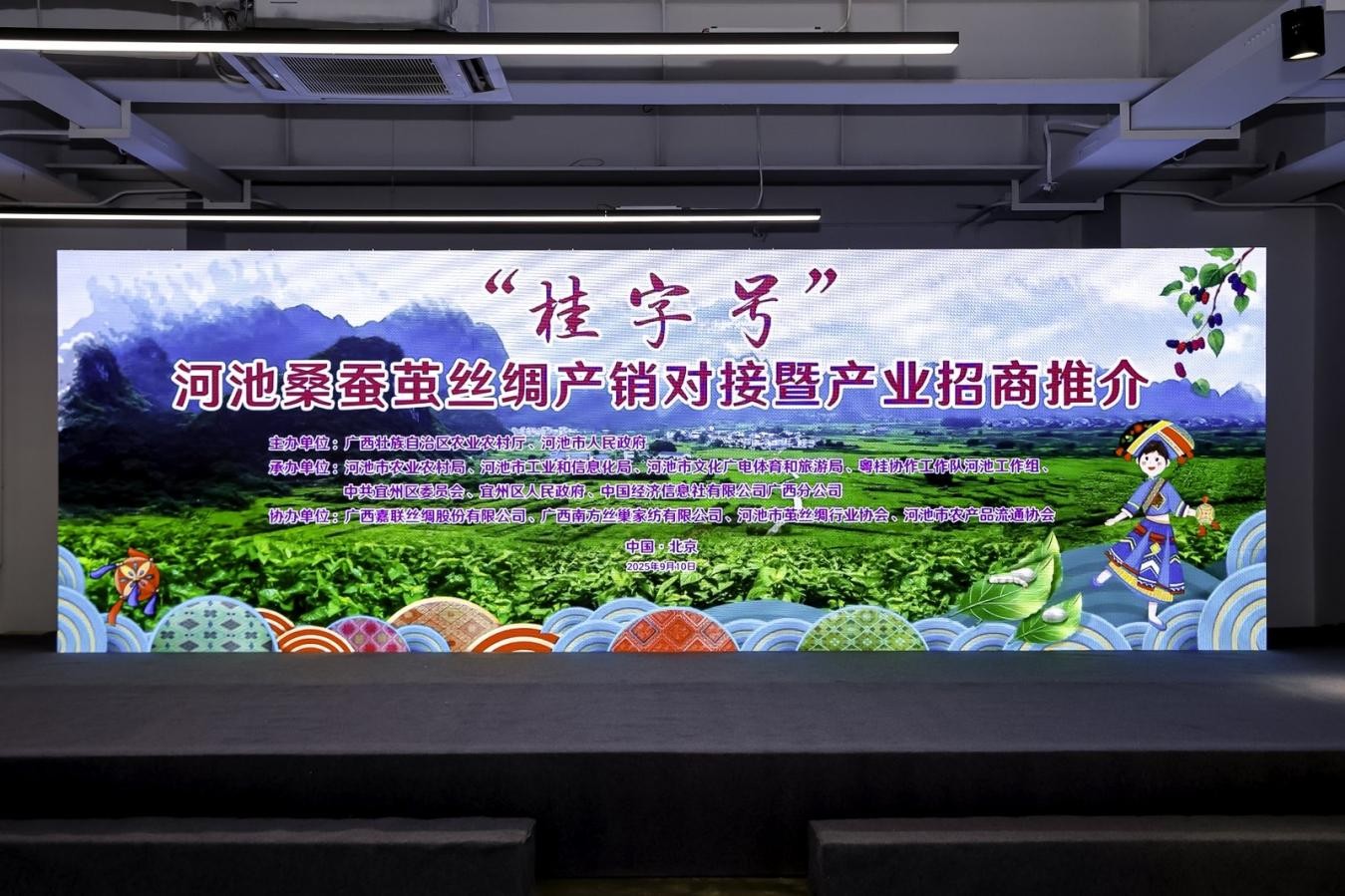
“桂字号”河池蚕桑茧丝绸产销对接暨产业招商推介活动在京举行
Zhong Guo Jin Rong Xin Xi Wang· 2025-09-16 03:12
Core Insights - The event held on September 10 aimed to enhance the brand development of the Hechi silk industry, promote product consumption, and foster industrial investment cooperation [1] - The "Xinhua·Hechi Sericulture Industry Development Index" was released, showcasing significant achievements in the silk industry [2] Industry Overview - By 2024, Hechi's mulberry garden area is expected to reach 963,200 acres, with silkworm cocoon production accounting for 45% of Guangxi, 28% of China, and 25% globally [1] - Hechi has maintained the highest raw silk production in China for 15 consecutive years, with an annual capacity of over 1 million silk quilts and more than 30 large-scale enterprises [1] - The comprehensive output value of the sericulture industry in Hechi is nearly 20 billion yuan [1] Development Plans - In 2022, Hechi issued the "Hechi City Silk Industry Chain Development Plan (2021-2025)" with a target of 50 billion yuan in total industry chain output value by 2025 [2] - The "Three-Year Action Implementation Plan for High-Quality Development of the Sericulture Industry (2023-2025)" was introduced in 2024, focusing on seven key areas with 32 measures [2] - Since 2020, Hechi has invested 1.023 billion yuan in agricultural funds and provided 2.239 billion yuan in "cocoon and silk loans" [2] Technological Advancements - Advanced technologies such as small silkworm co-cultivation and grid cocoon farming have been promoted in the region [2] - All silk reeling enterprises in Hechi have achieved full automation, and the first full silk Zhuang brocade production line in Guangxi has been established [2] - Hechi is building a trusted data space for the silk industry and a China-ASEAN silk trading center to enhance data support across the entire industry chain [2] Economic Impact - In 2024, the output value of Hechi's silk processing industry is projected to reach 4.617 billion yuan, a year-on-year increase of 10.46%, accounting for 35.52% of the region [3] - The production of white blank silk is expected to reach 4.84 million meters, with a year-on-year growth of 19.2% [3] - The comprehensive utilization output value of sericulture resources exceeds 1 billion yuan, with the highest development capability in Guangxi [3] Brand Development - Hechi has achieved significant brand development, with "Yizhou Silkworm" and "Nandan Yao Silkworm Flat Silk" receiving geographical indication registration [3] - Five trademarks have been recognized as "Famous Trademarks of Guangxi," and four products have been awarded national ecological origin protection status [3] - The cumulative value of regional public brands, enterprise brands, and product brands in Hechi exceeds 10 billion yuan [3] Internationalization Efforts - Hechi's silk products, including high-grade raw silk and silk masks, are exported to over ten countries and regions, including Japan and Italy [3] - The "Southern Silk Nest × Lü Yue" fashion show showcased Hechi's silk on the international fashion stage, promoting the region's silk industry [4] - The first full silk Zhuang brocade jacquard production line in Guangxi is set to commence production in December 2024, enhancing the region's cultural and fashion integration [4]
(经济观察)浙江民企连年霸榜500强:“阳光雨露”与“种子成长”
Zhong Guo Xin Wen Wang· 2025-09-11 06:42
Core Insights - Zhejiang province has 107 companies listed in the "2025 China Top 500 Private Enterprises" ranking, maintaining its position as the leader for 27 consecutive years [1] - The success of Zhejiang's private economy is attributed to the resilience of its "seeds" (enterprises) and favorable "environmental conditions" [1][3] - The textile industry, exemplified by Wan Shi Li Group, showcases innovation within traditional sectors, producing popular products that appeal to younger consumers [1][2] Group 1: Economic Performance - In the first seven months of this year, the added value of private industrial enterprises in Zhejiang increased by 7.6%, outpacing the overall industrial growth by 0.3 percentage points [3] - Private enterprises accounted for 81.9% of the province's total import and export value, contributing to a 6.1 percentage point increase in overall export growth [3] Group 2: Innovation and Technology - Wan Shi Li Group is integrating advanced technology into its silk production, including a waterless dyeing process that addresses pollution and energy consumption issues in the textile industry [2] - The company is positioning silk as a high-tech material, moving beyond traditional applications to incorporate artificial intelligence [2] Group 3: Government Support and Environment - The Zhejiang provincial government emphasizes continuous improvement of the business environment, with initiatives like the "32 Measures for Promoting High-Quality Development of the Private Economy" [4] - The establishment of platforms like "Zhejiang Business Online" aids enterprises in understanding policies and accessing benefits [4]
聚焦新质生产力 喜看浙江民营企业的突围与担当
Sou Hu Cai Jing· 2025-09-10 11:22
Core Viewpoint - Zhejiang's private economy is a hallmark of its development, showcasing a blend of traditional culture and modern technology, with significant contributions from various leading companies in sectors like digital solutions, silk production, and robotics [1][24]. Group 1: Private Economy and Government Support - The government in Zhejiang acts as a partner to private enterprises, fostering a conducive environment for innovation and growth [2]. - Policies have been implemented to support the health of the private economy, including the establishment of three key lists for major projects and mechanisms to address investment issues [4][5]. Group 2: Company Innovations and Achievements - Xinhua San Group has developed a comprehensive computing service platform, becoming a benchmark for Zhejiang's computing infrastructure and industry empowerment [4]. - Wan Shili Group has integrated AI technology into silk production, significantly enhancing efficiency and product offerings, while also promoting cultural heritage [12][20]. - Yun Shen Chu Technology has captured 85% of the domestic market for power inspection robots, showcasing its leadership in robotics [14]. - Xian Na Optoelectronics is pioneering third-generation photovoltaic technology with perovskite solar panels, achieving a conversion efficiency of 18% [16][28]. Group 3: Cultural and Historical Significance - The legacy of Zhejiang's silk industry is deeply rooted in its history, with modern enterprises like Wan Shili continuing to honor and innovate within this tradition [17][20]. - The entrepreneurial spirit in Zhejiang is characterized by resilience and a commitment to cultural values, as seen in the stories of founders and their journeys [18][21]. Group 4: Contribution to National Strategies - Zhejiang's private enterprises play a crucial role in supporting national strategies, including participation in major events and initiatives that highlight Chinese culture and innovation [24][28]. - The focus on green transformation is evident, with companies like Wan Shili and Xian Na Optoelectronics leading efforts in sustainable practices and technologies [25][26]. Group 5: Future Outlook - The ongoing development of the private economy in Zhejiang is expected to continue, with a strong emphasis on innovation and high-quality growth, positioning it as a vital player in China's modernization efforts [29][30].

杭州到底算一线还是二线呢?很多人都在讨论这个问题吧!其实这事儿挺有意思的
Sou Hu Cai Jing· 2025-09-10 11:22
Core Insights - Hangzhou is recognized as a new first-tier city, distinct from traditional first-tier cities, due to its economic vitality, technological innovation, and livable environment [1][2] - The city boasts a rich cultural heritage, with historical significance dating back to the Southern Song Dynasty, and is known for its traditional customs and festivals [1][2] - The real estate market in Hangzhou has seen steady price increases, attracting numerous investors and homebuyers, while local specialties like Longjing tea have gained national acclaim [1] Cultural Integration - Hangzhou uniquely blends traditional culture with modern life, featuring ancient temples and gardens alongside contemporary skyscrapers, creating a harmonious urban landscape [2] - The city's spirit is characterized by its open and inclusive attitude, maintaining a balance between traditional customs and modern technological advancements [2] Health and Lifestyle - Health is emphasized in Hangzhou, where residents enjoy a balanced diet and engage in outdoor activities, supported by ample parks and green spaces [4] - The city promotes a healthy lifestyle through various fitness activities like yoga and Tai Chi, alongside a combination of modern healthcare facilities and traditional Chinese medicine [4] - Overall, health is viewed not just as a physical state but as a lifestyle attitude, deeply integrated into the city's identity [4]
(活力中国调研行)昔日张澜救国厂 “丝绸源点”绣新章
Zhong Guo Xin Wen Wang· 2025-09-05 12:32
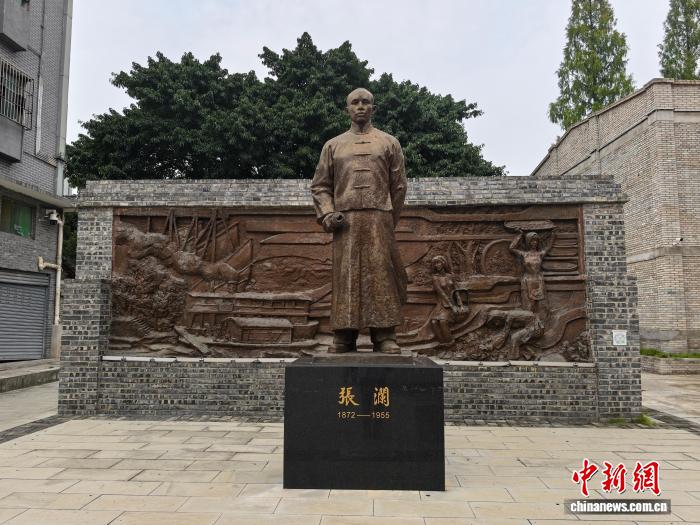
Core Viewpoint - The article highlights the historical significance and modern transformation of the Liuhe Silk Factory in Nanchong, Sichuan, emphasizing its role in the silk industry and cultural heritage, as well as its ongoing efforts to attract tourism and educate the younger generation about silk culture [1][4][9]. Group 1: Historical Significance - Liuhe Silk Factory, once the largest silk enterprise in Asia, has a history of over a century and is now part of the Liuhe Silk Cultural Park, which spans approximately 30,000 square meters [1][4]. - The park features a historical building called "Liuhe Courtyard," established in the 1920s, which has been renovated into a cultural museum [1][3]. - Zhang Lan, the founder of the factory, is commemorated with a statue, and his contributions to the silk industry and education are highlighted [3][4]. Group 2: Cultural and Economic Impact - The region of Nanchong has been recognized as a "Silk Capital" and "Silk Origin Point" due to its historical significance in silk production [4][6]. - The Liuhe Silk Factory has adapted to modern times by transforming old factory buildings into exhibition spaces and cafes, while also promoting traditional crafts like tie-dye and embroidery [6][7]. - In 2024, the Liuhe Silk Cultural Park is expected to receive 1.203 million visitors, generating a total tourism revenue of 1.36 billion RMB, with the Liuhe Group contributing 70 million RMB [7][9]. Group 3: Future Development - The Liuhe Silk Factory plans to develop a cultural industry park centered around Zhang Lan's legacy and the factory's history, aiming to engage more young people both domestically and internationally [9].
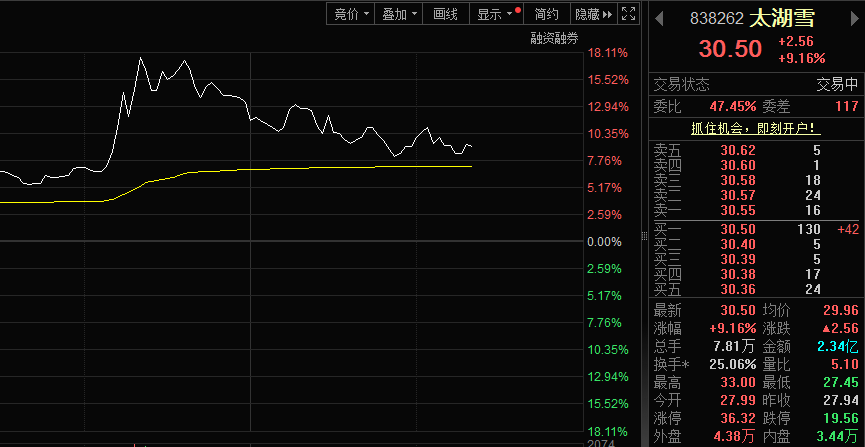
半年报表现良好叠加新增长点的形成,太湖雪股价大涨
Zheng Quan Zhi Xing· 2025-09-04 06:48
Group 1 - The company's total operating revenue reached 281 million, an increase of 42.33 million compared to the same period last year, marking a 17.75% year-on-year growth [1] - The net profit attributable to the parent company was 18.98 million, an increase of 7.80 million compared to the same period last year, representing a 69.77% year-on-year increase [1] - The company has been the top-selling brand in the silk quilt segment for six consecutive years from 2019 to 2024, with the silk quilt business accounting for 55% of total revenue in 2024 [1] Group 2 - The company is focusing on the development of silk accessories, which have a cultural and creative attribute, achieving a 19% year-on-year revenue growth and a gross margin of 62% in 2024, indicating potential as a new growth driver [1] - The company is transitioning from a "silk quilt manufacturer" to a "leading brand in new domestic silk products" [1] - On September 4, the company's stock price surged over 9%, with an intraday increase exceeding 15% [2]
杭州万事利丝绸文化股份有限公司2025年半年度报告摘要
Shang Hai Zheng Quan Bao· 2025-08-28 22:27
Group 1 - The company has approved a profit distribution plan, which includes a cash dividend of 0.5 yuan per 10 shares based on a total of 232,534,411 shares, with no bonus shares issued [3] - There have been no changes in the controlling shareholder or actual controller during the reporting period [5][6] - The company does not have any preferred shareholders or related holdings during the reporting period [7] Group 2 - All directors attended the board meeting to review the report [2] - The company does not require retrospective adjustments or restatements of previous accounting data [4] - There are no changes in the number of shareholders or their holdings that affect the company's operations [4]
