旅游

Search documents
2026年1-2月经济数据点评:投资为何意外转正?
Guolian Minsheng Securities· 2026-03-16 08:33
Economic Overview - In January-February 2026, the industrial added value increased by 6.3% year-on-year, slightly above the historical average of 6.0% since 2015[6] - The total retail sales of consumer goods reached 86,079 billion yuan, with a year-on-year growth of 2.8%[6] - Fixed asset investment (excluding rural households) was 52,721 billion yuan, showing a year-on-year increase of 1.8%[6] Investment Insights - Investment unexpectedly turned positive, rebounding from negative growth in the previous year, marking a significant highlight in the early economic data[6] - High-tech manufacturing showed remarkable performance, significantly outpacing overall industrial growth, indicating early success in cultivating new productive forces[3] Infrastructure and Fiscal Policy - Infrastructure investment saw a recovery, with public utilities, transportation, and water conservancy sectors all turning from negative to positive growth[3] - Fiscal spending accelerated, with a reduction of 350 billion yuan in February's fiscal deposits, indicating faster disbursement of funds[3] Manufacturing Sector - Manufacturing investment recorded a year-on-year growth of 3.1% in January-February, marking a strong rebound from the negative growth experienced since April 2025[4] - The leading sectors in manufacturing investment were primarily in mid-to-lower stream industries, such as transportation equipment and electrical machinery[4] Consumer Trends - The Spring Festival effect boosted retail sales, with restaurant and service retail sales growing by 4.8% and 5.6% year-on-year, respectively[4] - Consumption related to "trade-in" policies improved, although there was significant internal structural differentiation, particularly in the automotive sector, which continued to experience negative growth[5][7]
消费行业深度报告:消费温和复苏“十五五”延续大力提振消费
Yin He Zheng Quan· 2026-03-16 07:52
Investment Rating - The report indicates a positive outlook on the consumption industry, emphasizing the importance of policies aimed at boosting consumer spending during the "14th Five-Year Plan" period [1][10]. Core Insights - The "14th Five-Year Plan" continues to prioritize consumer spending, focusing on systematic arrangements rather than short-term subsidies, which aligns with market expectations. The plan aims to enhance consumer capacity, improve willingness to spend, and adapt to diverse consumer needs [1]. - Significant policy measures to stimulate consumption are set to take effect from July 2024, with a notable allocation of 150 billion yuan for consumer goods replacement programs, which began showing positive results in September 2024 [2]. - The report highlights a structural recovery in consumption, particularly during the 2026 Spring Festival, with increased travel and spending, despite a decline in per capita daily spending [4][5]. Summary by Sections 1. Consumption Recovery Signals - The 2026 Spring Festival saw a record 5.96 billion domestic trips, with total tourism spending reaching 803.48 billion yuan, marking a 19% increase from the previous year [11][12]. - The average daily tourism spending during the 2026 Spring Festival was 150 yuan per person, reflecting an 11.3% decrease year-on-year, indicating a trend of declining per capita spending despite increased overall consumption [13]. 2. Policy Measures and Economic Impact - The report outlines a comprehensive plan to boost consumption, including eight key areas with 30 specific tasks, initiated by the central government in March 2025 [2]. - The government has implemented various measures to stimulate consumption, including a collaborative "New Spring Shopping" campaign involving multiple departments, which successfully increased consumer engagement during the holiday season [2]. 3. Structural Changes in Consumption - The report notes a shift in consumer behavior towards "self-indulgent" spending during the Spring Festival, driven by changes in family structures and increased car ownership, leading to a rise in travel and leisure spending [7]. - The consumption landscape is evolving, with a notable increase in chain brands in lower-tier cities, reflecting a convergence of consumption patterns between urban and rural areas [7]. 4. Urban Consumption Trends - Major cities are showing signs of recovery, with a gradual increase in permanent resident populations and retail sales growth projected to improve in 2025 [8][9]. - The report highlights that Hong Kong's retail sector has been recovering since May 2025, presenting investment opportunities in local retail stocks [9]. 5. Price Trends and Market Dynamics - The report indicates a reversal in service consumption prices due to increased demand, contrasting with the cost-driven price increases seen in goods [38]. - The average ticket price for domestic flights during the 2026 Spring Festival rose by 7.1% compared to 2025, reflecting a recovery in travel demand and higher occupancy rates [41].



【华创策略】十五五专栏看行业配置线索
Huachuang Securities· 2026-03-16 07:45
Core Conclusions - The report highlights the dual emphasis on "technology" and "international" in the latest five-year plan, indicating a strengthened focus on technological self-reliance and open cooperation, while also prioritizing the enhancement of development efficiency and solidifying industrial foundations [3] - The analysis of policy intensity reveals an increase in the focus on "new quality productivity," "strong domestic economy," "cultural construction," "population development," "green development," and "safe China," reflecting a heightened concern for sustainable development and social stability [6][11] - The report identifies over 100 specific industry allocation clues under 15 major themes, with a focus on sectors such as innovative pharmaceuticals, deep-sea technology, the inaugural economy, catering and tourism, Hainan Free Trade Port, urban village renovation, vocational education, and cybersecurity, which show favorable valuation and profit matching [3] Frequency Statistics of Keywords in Previous Five-Year Plans - The report utilizes keyword frequency analysis to show that "development" and "construction" remain dominant themes across five-year plans, with "technology" and "international" entering the top twenty for the first time in the latest plan, indicating a shift towards practical guidance focused on enhancing development efficiency [4] - The report provides a detailed frequency count of keywords across different five-year plans, showing the evolution of policy focus over time [4] Chapter Arrangement and Length Statistics of Previous Five-Year Plans - The report analyzes the chapter arrangement and length of previous five-year plans, noting that the latest plan has improved rankings in chapters related to modern industrial systems, digital China, and foreign openness, with significant increases in chapter length for themes such as foreign openness and cultural construction [5] - The report highlights the percentage increase in chapter length for various themes, indicating a shift in policy focus and priorities [5] Policy Intensity Analysis - The report assesses the policy intensity of various themes, noting that "new quality productivity" and "strong domestic economy" have seen increases in both intensity and chapter length, reflecting a more proactive policy stance [6] - The report also indicates that "cultural construction" and "population development" have increased in policy intensity and length, emphasizing the importance of investing in human capital [11] - The report highlights the increased focus on "green development" and "safe China," indicating a strategic direction towards sustainable development and social stability [25]
国内各大模型厂商布局Agent项目,争夺下一代应用入口
HUAXI Securities· 2026-03-16 05:41
Group 1 - Major domestic AI model manufacturers are launching Agent projects to compete for the next generation of application entry points, with various products introduced by companies like Zhiyuan AI, Tencent, MiniMax, Huawei, Xiaomi, Alibaba, ByteDance, and Kimi [1][9][10][11][12][13][15][16] - Zhiyuan AI's AutoClaw, launched on March 10, is the first local version of OpenClaw, featuring over 50 mainstream skills and integration with messaging tools [9][10] - Tencent's WorkBuddy, released on March 9, is a full-scenario AI agent that is deeply compatible with OpenClaw skills and allows remote operation without cloud deployment [10] - MiniMax's MaxClaw, launched on February 26, is a cloud-based AI assistant that supports mobile platforms and various expert skills [10] - Huawei's Xiaoyi Claw, currently in beta, is based on the HarmonyOS and supports document editing and email replies with multiple personality options [11] - Xiaomi's miclaw is in limited testing and integrates deeply with MIUI for a seamless experience across its ecosystem [12] - Alibaba's CoPaw, launched on February 14 and open-sourced on February 28, supports both local and cloud deployment and allows for secondary development [13][14] - ByteDance's ArkClaw and Coze, launched on March 9, provide a SaaS version that integrates with the Feishu ecosystem and offers a community for developers [15] - Kimi's KimiClaw, launched on February 16, is a cloud-based AI agent service with a vast skill library and personal cloud storage [16] Group 2 - The investment recommendation emphasizes the "AI+" logic catalyzing valuation optimization in Hong Kong stocks, with a focus on internet, technology, and emerging consumer sectors [2] - Beneficiaries in the internet and technology sector include Alibaba-W, Tencent Holdings, Kuaishou-W, and Meituan-W, which are embracing AI and increasing capital expenditures [2] - In the domestic consumption sector, companies like Maogeping, Mixue Group, Laopu Gold, Pop Mart, Tongcheng Travel, Ctrip Group-S, and Xiaocaiyuan are highlighted as having strong growth potential [2] Group 3 - The Hong Kong stock market saw the Hang Seng Index decline by 1.13%, while the Hang Seng Technology Index rose by 0.62% and the Chinese Enterprises Index increased by 0.50% [18][19] - The energy sector was the best-performing industry this week, with a gain of 6.25%, while the financial sector experienced the largest decline at 4.36% [19] - Among the top gainers in the Hong Kong Stock Connect, companies like Kexin Pharmaceutical-B and China Xuyang Group saw significant increases, while companies like Haotian International Investment faced substantial declines [22]




商贸零售行业周报:海南离岛免税延续稳增,安克若羽臣持续推新
GOLDEN SUN SECURITIES· 2026-03-16 00:24
Investment Rating - The report maintains an "Increase" rating for the industry [6]. Core Insights - The report emphasizes the resilience of the travel chain and anticipates that service consumption will stabilize before goods consumption. It highlights the strong performance of the "tourism + duty-free" consumption model in Hainan, with a notable increase in duty-free shopping [4][3]. - The report suggests a focus on specific sectors within consumer goods, particularly those with strong brand momentum, while also recommending a selection of companies with improving fundamentals despite low market expectations [4]. Summary by Sections Industry Dynamics - In February, Hainan's duty-free shopping per capita consumption reached a 39-month high, with total duty-free shopping amounting to 10.59 billion yuan, a year-on-year increase of 25.9%. The number of shoppers was 1.279 million, up 16.6% [3]. - Anker Innovations launched several new products, including the world's first consumer-grade textured UV printer, which had previously raised $46.76 million on Kickstarter [2]. Company Developments - Anker Innovations introduced multiple new products in Q1 2026, including headphones and a portable charger, alongside the launch of the eufyMake E1 printer [2]. - The report highlights the expected performance of various companies, such as a projected revenue of 21.44 billion yuan for Miniso in 2025, reflecting a growth of approximately 26% [19]. Investment Recommendations - The report recommends focusing on the travel chain, particularly hotels and scenic spots, as well as the duty-free sector. It suggests selecting companies with strong cyclical attributes and good valuation in the gold and jewelry sector [4]. - Specific companies recommended include: Xiaogoods City, Sumida, Huazhu Group, ShouLiu Hotel, Jinjiang Hotel, and China Duty Free Group, among others [4].
【早报】“3·15”晚会起底“漂白的鸡爪”等行业乱象;贵州茅台董秘接受调查
财联社· 2026-03-15 23:14
Industry News - The State Administration for Market Regulation has initiated emergency measures in response to the "3·15" gala, which exposed illegal activities such as "bleached chicken feet" and "height-increasing marketing tricks" [5][6] - The China Securities Regulatory Commission (CSRC) has emphasized the need to crack down on financial fraud, market manipulation, insider trading, and false statements [6] - The CSRC has also announced the establishment of a negative list management mechanism for local financial subsidies [2] - The Ministry of Commerce has announced anti-dumping duties on imported halogenated butyl rubber from Japan and Canada starting March 14, 2026 [4] Company News - Guizhou Moutai announced that its vice president, Jiang Yan, has been placed under investigation by the Zunyi Municipal Supervisory Committee [9] - XW Communications plans to raise no more than 6 billion yuan for commercial satellite communication devices and components [10] - Shuangliang Energy's controlling shareholder, Shuangliang Group, is under investigation by the CSRC for suspected violations of information disclosure [11] - Jingwei Huikai plans to divest its electronic information segment, which is expected to constitute a major asset restructuring [11] - Chuangyuan Co., Ltd. announced that its chairman, Chen Gang, has been placed under investigation, with director Hua Tian authorized to act in his stead [12] - Dongwu Securities plans to acquire 83.77% of Donghai Securities, with shares set to resume trading on March 16 [13] - ST Bosen is planning a change of control, leading to a suspension of trading starting March 16 [14] - Jingtou Development intends to transfer real estate development-related assets and liabilities to its controlling shareholder, which is expected to constitute a major asset restructuring [15]



【十大券商一周策略】短期A股仍以震荡为主,当下重视“HALOPLUS”策略
券商中国· 2026-03-15 14:24
Group 1 - The article discusses the impact of geopolitical conflicts, particularly in the Middle East, on global supply chains and the A-share market, highlighting the limited space for valuation recovery and the importance of corporate profit margins for the continuation of the bull market [2] - It emphasizes that the ongoing geopolitical tensions and rising global costs necessitate a focus on undervalued sectors and pricing power, particularly in China's advantageous manufacturing sectors such as chemicals, non-ferrous metals, power equipment, and new energy [2] - The article suggests that the rise of AI and supply chain disruptions are enhancing the pricing power of China's manufacturing industry, indicating a shift in investment focus towards sectors that can benefit from price increases [2] Group 2 - The article highlights that the Chinese market is characterized by lower risk premiums and a more diverse growth logic, which can serve as a counter to global stagflation risks [3] - It suggests that the stability of the Chinese market is a key advantage, with a focus on sectors such as large financial institutions, cyclical value stocks, and technology manufacturing [3] - The article indicates that the impact of rising oil prices on midstream industries will benefit resource commodities while manufacturing will face cost transmission challenges [3] Group 3 - The article notes that the A-share market is currently experiencing a phase of low visibility in macro and micro conditions, suggesting that investors should reduce positions and remain flexible in their strategies [5] - It recommends focusing on sectors such as the power chain and essential consumer goods for alpha generation, while also considering undervalued upstream hardware in the computing chain [5] - The article points out that the upcoming earnings season will be crucial for validating expectations in high-performing sectors like power grid equipment and chemicals [5] Group 4 - The article discusses the potential for oil price increases to shift market dynamics towards supply security and strategic resources, with a focus on the implications for inflation and monetary policy [6] - It suggests that the ongoing geopolitical tensions may lead to a long-term rise in oil prices, impacting global inflation and delaying the Federal Reserve's rate cuts [6] - The article recommends monitoring sectors that are likely to benefit from sustained price increases, such as power equipment, chemicals, and precious metals [6] Group 5 - The article indicates that the ongoing geopolitical situation may create strategic opportunities for China, particularly in energy security and the transition to new energy sources [7] - It highlights the potential for China to emerge as a global leader in energy transition, leveraging its dual energy base of coal and new energy [7] - The article suggests a dual investment strategy focusing on both physical assets related to energy security and sectors benefiting from electrification and AI-driven growth [7] Group 6 - The article argues that the current market dynamics are influenced by the ongoing geopolitical tensions, with a focus on the adaptability of the economy amidst concerns of stagflation [8] - It emphasizes the importance of structural opportunities in sectors such as tourism, pharmaceuticals, and consumer goods, which may benefit from changing consumer behaviors [8] - The article suggests that stocks representing China's resources and manufacturing capabilities are well-positioned for investment amidst global uncertainties [8] Group 7 - The article discusses the potential for the A-share market to become more self-reliant as geopolitical tensions evolve, with a focus on sectors that can benefit from rising oil prices [9] - It suggests that the market's core pricing dynamics are shifting from intensity to negotiation, indicating a need for investors to adapt their strategies accordingly [9] - The article recommends identifying sectors that can maintain independent growth despite rising oil prices, as well as those that can benefit from price increases [9] Group 8 - The article highlights the challenges posed by the ongoing military conflicts and their impact on global asset pricing, suggesting that the A-share market will continue to experience high volatility [10] - It emphasizes the need for a balanced investment approach that considers both resource commodities and technology-driven sectors [10] - The article suggests that the current market environment requires careful management of investment strategies to navigate the complexities of the geopolitical landscape [10] Group 9 - The article discusses the historical context of oil price shocks and their impact on inflation and global asset pricing, suggesting that the current situation may lead to similar outcomes [11] - It recommends a "HALOPLUS" strategy that combines defensive investments in high cash flow sectors with offensive investments in low-crowding growth areas [11] - The article emphasizes the importance of focusing on sectors with low sensitivity to interest rates and strong growth potential amidst macroeconomic volatility [11] Group 10 - The article suggests that the current geopolitical tensions may catalyze a shift in global energy strategies towards new energy technologies, positioning China as a leading player in this transition [12] - It indicates that the A-share market may experience short-term volatility but remains on a path towards structural growth in the medium term [12] - The article highlights the need for a diversified investment approach that focuses on both technology and cyclical sectors, as well as the potential for performance in the energy and chemical sectors [12]
段永平、葛卫东、裘国根等投资界大佬,冲进全球富豪榜!
私募排排网· 2026-03-15 03:06
Core Insights - The 2026 Hurun Global Rich List highlights the growing influence of Chinese private equity investors, reflecting the maturation of China's capital markets and the redefinition of the asset management industry [2] Group 1: Wealth Rankings - Shen Nanpeng of Sequoia China ranks 785th with a wealth of 40 billion RMB [3] - Ge Weidong of Chaos Investment ranks 871st with a wealth of 35.5 billion RMB [10] - Zhang Lei of Hillhouse Capital ranks 1013th with a wealth of 26.5 billion RMB [7] - Duan Yongping of H&H International ranks 2207th with a wealth of 14.5 billion RMB [12] - Qiu Guogen and Luo Yifu of Chongyang Investment rank 3635th with a wealth of 7.5 billion RMB [4] Group 2: Investment Strategies and Achievements - Qiu Guogen and Luo Yifu have successfully managed Chongyang Investment, with a significant focus on long-term investments, exemplified by their 6 billion RMB investment in Xinhecheng, yielding over 1 billion RMB in profits over eight years [5][6] - Zhang Lei's Hillhouse Capital has grown to manage over 500 billion USD, with notable investments in companies like JD.com and Blue Moon, emphasizing the importance of logistics and supply chain in competitive advantage [8][9] - Ge Weidong's investment strategies in futures have led to significant profits, including a notable gain during the cotton futures market in 2010 and the "copper futures battle" in 2014, showcasing his market acumen [11] - Duan Yongping's investment philosophy emphasizes value investing, with a focus on companies like Apple and Tencent, and he has a significant presence in the U.S. stock market with a portfolio valued at approximately 17.49 billion USD [12][13][14] Group 3: Notable Investments and Market Impact - Shen Nanpeng's Sequoia China has invested in over 1500 companies, with more than 160 having gone public, reflecting a broad investment strategy across various sectors [15][16] - The investment landscape is increasingly characterized by a focus on technology and consumer sectors, with major players like Hillhouse and Sequoia leading the charge in identifying high-potential opportunities [15][16]



搜索热度增五倍 美团旅行联合上海乐高乐园上线黑金黑钻会员专属权益
Huan Qiu Wang· 2026-03-14 02:59
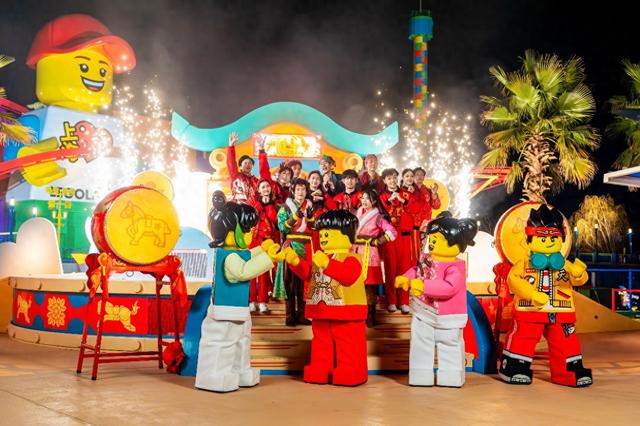
Core Insights - The Shanghai LEGO Resort has become a popular destination for family visitors, especially during the upcoming spring break, with search interest on Meituan Travel increasing nearly fivefold in the past week [1] - Meituan Travel has launched exclusive benefits for its Black Gold and Black Diamond members, including discounted ticket packages and fast-track access to popular attractions, aimed at enhancing the visitor experience [1][5] Group 1: Visitor Trends - The Shanghai LEGO Resort has a high repeat visitor rate, with 40% of guests being return customers since its opening [1] - During the recent Spring Festival, over 80% of visitors to the LEGO Resort were family groups, leading to a 30% increase in hotel bookings in the area [2] - The resort attracts visitors from cities within a two-hour high-speed train radius, including Hangzhou, Suzhou, and even Beijing, indicating its appeal as a cross-province family travel destination [4][5] Group 2: Membership Insights - The Black Gold and Black Diamond members of Meituan Travel have shown significant growth in ticket purchases, with a monthly increase of 54% since January 2026 [5] - These high-tier members tend to spend more, with average annual expenditures exceeding 10,000 yuan for Black Gold members and over 30,000 yuan for Black Diamond members, reflecting a strong willingness to pay for quality experiences [5] - Meituan Travel aims to enhance the experience for high-tier members through exclusive offerings, indicating a strategic focus on premium customer segments [5]

国泰海通|策略:科技景气中枢上移,原油有色价格分化
国泰海通证券研究· 2026-03-12 14:03
Group 1: Economic Overview - The economic performance shows a divergence, with rising oil and chemical prices while gold and copper prices are under pressure due to geopolitical tensions in the Middle East [1][2] - The AI sector is experiencing an upward shift in its economic center, with an increase in semiconductor sales growth rates [1][2] - The real estate cycle is showing signs of marginal weakness, while tourism and export sectors remain strong [1][2] Group 2: Upstream Resources - Oil prices have surged due to escalating geopolitical tensions in the Middle East, with Brent crude oil futures increasing by 27.9% as of March 6 [3] - The chemical price index rose by 11.9%, while the oil transportation index (BDTI) and refined oil transportation index (BCTI) increased by 54.1% and 75.7%, respectively [3] - In contrast, gold and copper prices fell by 1.7% and 2.8%, respectively, while aluminum prices rose by 9.7% due to supply constraints and increased demand for minor metals driven by AI capital expenditures [3] Group 3: Technology and Manufacturing - The global semiconductor sales reached $82.54 billion and $22.82 billion in China in January 2026, with year-on-year growth rates of 46.1% and 47.0%, respectively [4] - The average prices for DRAM DDR3, DDR4, and DDR5 showed mixed trends, with DDR3 increasing by 8.0% and DDR4 decreasing by 3.1% [4] - The construction demand in the real estate sector has shown a marginal decline, reflecting a potential slowdown in fiscal fund disbursement [4] Group 4: Downstream Consumption - The transaction area for commercial housing in 30 major cities decreased by 7.6% year-on-year compared to the Lunar New Year in 2025, indicating a marginal decline in real estate market activity [5] - High-end liquor demand continues to decline, with prices for premium brands like Moutai dropping by 4.9% [5] - The tourism sector remains robust, with Shanghai Disneyland's crowd levels increasing by 69.7% compared to the same period last year, and service consumption prices rising significantly [5] Group 5: Transportation and Logistics - Passenger transport volume in ten major cities increased by 2.9% year-on-year, indicating strong post-holiday travel activity [6] - National road and rail freight volumes decreased by 9.3% and 0.3%, respectively, while express delivery volumes showed positive growth [6] - The Shanghai Containerized Freight Index (SCFI) rose by 11.7%, reflecting strong domestic export activity, despite a 6.1% decline in the Baltic Dry Index (BDI) due to geopolitical risks [6]