私募信贷

Search documents
美国私募信贷市场暗含这一生意经!分析师:警惕潜在系统性风险
第一财经· 2025-11-24 12:19
本文字数:2827,阅读时长大约4分钟 作者 | 第一财经 后歆桐 美国私募信贷市场此前在长期快速发展后曾多次爆雷。该行业的数据缺失及不透明问题也被放大在投 资者面前。当前,在华尔街,收购数据提供商,然后将私募信贷数据有偿提供给更多机构,正在逐渐 成为一些机构潜在的生意经。一些评级机构、大型金融机构已纷纷布局。 虽然私募市场近期暂时平静,但缺乏详细的业绩数据,加之与其他金融机构相关性越来越高,一些分 析师警示,美国私募信贷市场潜在的系统性风险仍不容小觑。 数据缺失暗含生意经 私募信贷,简言之就是资产管理公司充当银行的角色给企业放贷。和银行贷款资金主要来源于客户存 款不同,私募信贷公司的资金来源于养老基金、保险公司及高净值个人等私人投资者。 2008年全球金融危机后,银行业的监管标准大幅提高,使得美欧银行业对实体经济的信贷投放量大 幅下降,但贷款需求依然旺盛,资产管理公司等非银金融机构就承接了这部分工作,把客户的资金借 给需要融资的企业,收取利息和管理费。今年5月,波士顿联储发布的一份报告显示, 美国私募信贷 市场近年来呈现爆炸式增长,市场规模从2000年的460亿美元扩张至2023年约1万亿美元。 2025. ...


美国私募信贷市场暗含这一生意经,分析师:警惕潜在系统性风险
Di Yi Cai Jing· 2025-11-24 09:11
美国私募信贷市场此前在长期快速发展后曾多次爆雷。该行业的数据缺失及不透明问题也被放大在投资 者面前。当前,在华尔街,收购数据提供商,然后将私募信贷数据有偿提供给更多机构,正在逐渐成为 一些机构潜在的生意经。一些评级机构、大型金融机构已纷纷布局。 华尔街从这些暴雷事件中看到了提供私人市场数据的新生意。上个月,标普全球宣布计划以18亿美元收 购With Intelligence,成为最新一家斥资收购私人资产数据提供商的华尔街巨头。贝莱德于今年3月就斥 资32亿美元收购Preqin,MSCI于2023年以9亿美元收购Burgiss,晨星于2016年以2亿美元收购 PitchBook。 虽然私募市场近期暂时平静,但缺乏详细的业绩数据,加之与其他金融机构相关性越来越高,一些分析 师警示,美国私募信贷市场潜在的系统性风险仍不容小觑。 数据缺失暗含生意经 私募信贷,简言之就是资产管理公司充当银行的角色给企业放贷。和银行贷款资金主要来源于客户存款 不同,私募信贷公司的资金来源于养老基金、保险公司及高净值个人等私人投资者。 2008年全球金融危机后,银行业的监管标准大幅提高,使得美欧银行业对实体经济的信贷投放量大幅下 降,但贷 ...


美国私募信贷市场暗含这一生意经!分析师:警惕潜在系统性风险
Di Yi Cai Jing· 2025-11-24 08:59
虽然私募市场近期暂时平静,但缺乏详细的业绩数据,加之与其他金融机构相关性越来越高,一些分析 师警示,美国私募信贷市场潜在的系统性风险仍不容小觑。 数据缺失暗含生意经 私募信贷,简言之就是资产管理公司充当银行的角色给企业放贷。和银行贷款资金主要来源于客户存款 不同,私募信贷公司的资金来源于养老基金、保险公司及高净值个人等私人投资者。 2008年全球金融危机后,银行业的监管标准大幅提高,使得美欧银行业对实体经济的信贷投放量大幅下 降,但贷款需求依然旺盛,资产管理公司等非银金融机构就承接了这部分工作,把客户的资金借给需要 融资的企业,收取利息和管理费。今年5月,波士顿联储发布的一份报告显示,美国私募信贷市场近年 来呈现爆炸式增长,市场规模从2000年的460亿美元扩张至2023年约1万亿美元。 但在行业指数级增长的同时,可获得的公开信息仍然非常有限。养老金、大学捐赠基金和保险公司已将 大量资金用于长期、私人市场投资,但私人资产管理公司往往对这些资产的基本情况进行保密操作。目 前市场上成千上万的私募信贷基金,从投资者处融资,用以收购企业或购买各类资产,如房地产和基础 设施等。但这些基金的投资经理通常只向投资者披露季度 ...
陶冬:美联储估计还得降息,12月是疫情后最难一次议息
Di Yi Cai Jing· 2025-11-24 04:07
Group 1: Market Dynamics - The recent stock market adjustment is attributed to three converging pressures: concerns over private credit liquidity, investment worries in the AI sector, and expectations regarding Federal Reserve interest rate cuts [1] - The largest companies globally reported strong earnings, yet this triggered a significant drop in high-risk assets like tech stocks and cryptocurrencies, leading to a global market decline [1] - The VIX index remained above 20, indicating heightened market risk awareness, while the dollar index rose above 100, and the Japanese yen depreciated against the dollar [1] Group 2: Private Credit Concerns - Blue Owl, a major player in private credit, abruptly canceled the merger of two funds and suspended redemptions, raising fears of potential defaults in the private credit market [2] - The private credit market has surged 5.3 times over the past 16 years, lacking regulation and transparency, prompting warnings from Federal Reserve officials about potential asset valuation vulnerabilities [2] Group 3: AI Sector Insights - Nvidia's third-quarter orders surged, with CEO Jensen Huang stating that business has exceeded expectations, yet this raises concerns about the sustainability of demand and revenue generation in the future [2] - Nvidia's accounts receivable reached $33.4 billion, with the average payment period extending from 46 to 53 days, indicating tightening cash flow among buyers [2] Group 4: Federal Reserve Interest Rate Expectations - Recent U.S. non-farm payroll data showed job growth exceeding expectations, while the Federal Open Market Committee (FOMC) minutes revealed concerns about stagnant inflation, leading to a rapid decline in market expectations for a December rate cut [3] - The employment data indicated a strong labor market, but also highlighted rising unemployment and slowing wage growth, creating mixed signals for market participants [3] Group 5: Diverging Views within the Federal Reserve - The FOMC appears divided, with many regional Fed presidents concerned about inflation and advocating for no rate cuts until inflation is on a steady decline, while others emphasize employment risks and favor a return to neutral interest rates [4] - The upcoming December meeting is anticipated to be particularly challenging for decision-making, with external pressures from the White House and financial markets influencing the Fed's stance [4] Group 6: Upcoming Economic Focus - Key upcoming events include the UK autumn budget, where the government faces tough choices between tax increases to reduce deficits or maintaining popular support without raising taxes, and the U.S. holiday shopping season, which will be critical for assessing consumer sentiment [5]

英伟达财报惊艳,美股却“调头向下”!如此“过山车”,交易员坦言:谁都没想到
Hua Er Jie Jian Wen· 2025-11-23 01:53
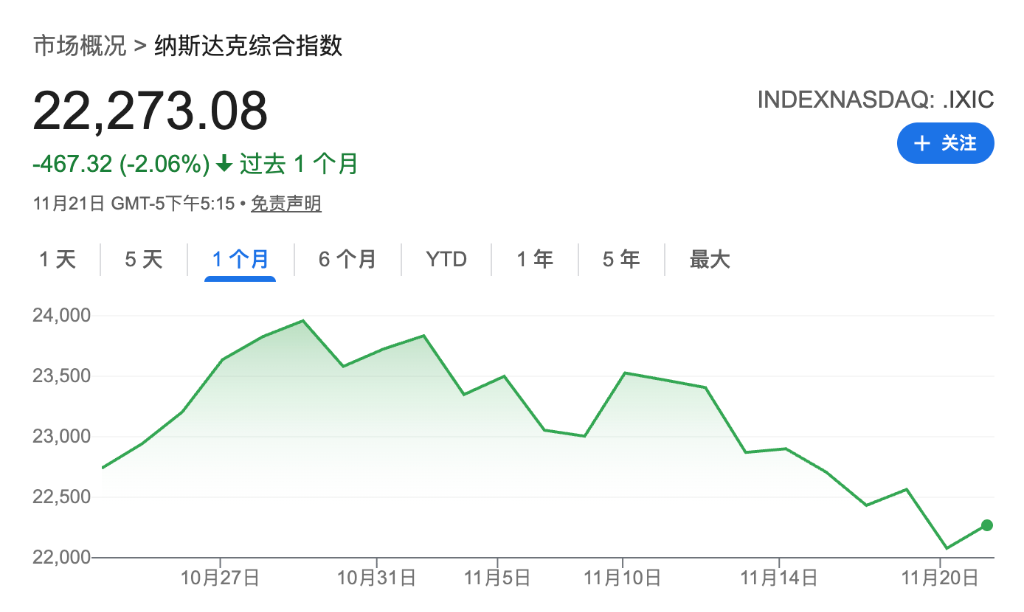
受经济放缓忧虑、投资泡沫风险及投资者获利了结共同影响,美股近期出现数月来最显著的日内波动。标普500指数上周下跌近2%,11月累计跌 幅达3.5%;以科技股为主的纳斯达克指数当月跌幅超6%,创下自4月以来最大三周跌幅。 市场尤为意外的是,被普遍看好的英伟达财报未能延续提振作用。其强劲业绩公布后股价冲高回落,标普500指数随后两小时内暴跌逾2%。有波 动率交易员指出,市场当时充满无法归因的恐慌情绪。 本轮波动中,此前热门股遭受重创:Robinhood市值月内缩水四分之一,Coinbase Global股价暴跌30%,Palantir Technologies下跌约23%。与此同 时,近期加密货币集体遭遇重挫,而加密货币与科技股之间的联动效应显著放大,加剧整体市场压力。 人工智能泡沫争议 尽管英伟达等AI企业仍保持强劲利润增长,但市场对其资本支出能否有效转化为盈利的担忧日益加剧。过去数月全球已宣布逾1.5万亿美元的AI相 关投资,然而相关股票的估值倍数尚未达到2000年互联网泡沫破裂前的水平。 近期,汽车零部件集团第一品牌的倒闭事件,引发市场对私募信贷领域大规模贷款的担忧。该公司曾从债权人处融资约110亿美元。伦 ...
别只盯着英伟达和甲骨文CDS,美国“当红PE”Blue Owl暴雷,影响万亿私募市场
Hua Er Jie Jian Wen· 2025-11-21 02:20
Core Insights - The focus on Nvidia and Oracle's credit default swaps may overlook significant risks in the private credit market, particularly with Blue Owl and Capital One [1][7] - Blue Owl's recent decision to cancel the merger of two private credit funds has led to a sharp decline in its stock price, reaching a low for 2023 [1][3] - The private credit market, valued at $1.7 trillion, is showing signs of deep cracks, with liquidity pressures emerging as redemption requests surge [2][4] Company-Specific Developments - Blue Owl's plan to merge its $1.8 billion non-traded business development company with the publicly traded Blue Owl Capital Corp. was halted due to investor concerns over potential losses of up to 20% [3][4] - Following the merger announcement, Blue Owl's stock faced significant selling pressure, contributing to a year-to-date decline of approximately 22% for its parent company [3][6] - The company is considering various options, including independent listing or asset sales, to address liquidity challenges and potential redemption limits [4][6] Industry Context - The private credit market is experiencing increased scrutiny as liquidity pressures mount, with redemption requests exceeding preset limits [2][4] - High-profile warnings from industry leaders, such as Jamie Dimon and Jeffrey Gundlach, highlight concerns over deteriorating underwriting standards and the presence of "junk loans" in the sector [2][6] - The current market turmoil suggests that private credit may be the weakest link in financing the anticipated $1.5 trillion funding gap for AI infrastructure over the coming years [7]

美联储理事库克警示私募信贷风险,称或给金融体系带来压力
Sou Hu Cai Jing· 2025-11-20 23:41
Core Viewpoint - The Federal Reserve Governor Lisa Cook emphasizes the need to monitor unexpected losses in private credit due to the increasing complexity and interconnectedness of leveraged firms [1] Group 1: Monitoring Risks - Officials should keep an eye on how unexpected losses in private credit could spread to the broader U.S. financial system [1] - Cook highlights the lessons learned from recent bankruptcy cases, particularly regarding the increased use of physical payment arrangements [1] Group 2: Industry Insights - The scale and complexity of exposure in these arrangements lack transparency, raising the likelihood of similar cases reoccurring, especially during rapid growth periods in an industry [1] - Recent bankruptcies in the automotive sector have revealed unexpected losses and risk exposures among a wide range of financial entities, including banks, hedge funds, and specialized finance companies [1] Group 3: Regulatory Context - Cook's statements align with earlier comments from Federal Reserve Governor Michael Barr, who identified private credit as a potential risk area [1]
Point72、Millennium等对冲基金巨头进军私募信贷,开启“慢回报”新时代
Hua Er Jie Jian Wen· 2025-11-12 16:13
Core Insights - The hedge fund industry is undergoing a significant strategic transformation, with top multi-strategy hedge funds shifting focus towards private credit and other non-public markets to seek new growth opportunities [1] - Major firms like Point72 and Millennium Management are actively entering the private credit space, challenging traditional alternative asset management giants such as Blackstone and Ares Management [1] Group 1: Market Dynamics - The rapid expansion of the private market presents substantial development opportunities for hedge fund giants, as the number of publicly listed companies in the U.S. has halved since 2000, while the number of venture-capital-backed private firms has increased 25 times [2] - Since the 2008 financial crisis, the private credit industry has thrived, with significant credit business shifting from banks to buy-side institutions [2] - The total scale of bank synthetic securitization has reached $673 billion, indicating a notable growth in structured credit and risk transfer transactions [2] Group 2: Competitive Landscape - Hedge fund executives believe their expertise in complex risk pricing can be extended to illiquid asset markets, despite the need for longer investment horizons [2] - D.E. Shaw, Point72, Millennium, and Jain Global collectively manage over $195 billion in assets, having established the necessary analytical capabilities, technology systems, and governance structures to handle complex transactions and large-scale risk management [2] Group 3: Early Movers and Strategies - D.E. Shaw, managing over $70 billion, was an early explorer in the private credit space, launching its first private credit fund in 2008, which has since raised over $5 billion [3] - Jain Global has formed a new strategic trading team led by a former D.E. Shaw portfolio manager, focusing on opportunities arising from regulatory inefficiencies, having raised approximately $600 million [3] Group 4: Challenges and Skepticism - Recent high-profile bankruptcies, such as First Brands Group, have raised concerns about the risks associated with opaque assets, with Millennium's investment team facing a projected loss of around $100 million from such investments [4] - Some industry experts express skepticism about the strategic shift towards private credit, suggesting it may reflect excessive expansion without sufficient justification [4] - The cultural and operational challenges of adapting to a long-term investment environment, as opposed to the short-term focus typical in public credit markets, pose significant hurdles for these institutions [4]
隔夜美股 | 三大指数上涨 美政府停摆有望本周末结束 现货黄金涨2.87%
Zhi Tong Cai Jing· 2025-11-10 22:28
Market Overview - Major U.S. indices rose, with the Dow Jones up 381.53 points (0.81%) to 47,368.63, the Nasdaq up 522.64 points (2.27%) to 23,527.17, and the S&P 500 up 103.63 points (1.54%) to 6,832.43, amid discussions in Congress to end a historic government shutdown lasting over 40 days [1] - European indices also saw gains, with Germany's DAX30 up 407.92 points (1.73%) to 23,963.66, the UK's FTSE 100 up 103.35 points (1.07%) to 9,785.92, and France's CAC40 up 111.55 points (1.40%) to 8,061.73 [2] Commodity and Currency Updates - Crude oil prices increased, with light crude for December delivery rising by $0.38 to $60.13 per barrel (0.64%) and Brent crude for January delivery up $0.43 to $64.06 per barrel (0.68%) [2] - Gold prices surged over 2.87% to $4,115.75, with Morgan Stanley predicting potential prices exceeding $5,000 per ounce next year due to continued buying by central banks in emerging markets [4] Cryptocurrency Market - Bitcoin rose by 0.92% to $105,730.9, while Ethereum fell by 0.89% to $3,551.68 [3] Company-Specific News - Coinbase announced a new platform for "token pre-purchase," allowing selected investors early access to new cryptocurrencies before they trade on the main exchange, aiming to limit asset concentration among large buyers [8] - C3.ai is exploring potential sale options following the resignation of its founder and CEO Thomas Siebel due to health issues, with the company's stock down over 54% this year amid financial performance concerns [9] - Wells Fargo reported a significant decline in Tesla's October sales, estimating a year-over-year drop of 23%, attributed to the end of U.S. electric vehicle subsidies and increased competition in overseas markets [9]

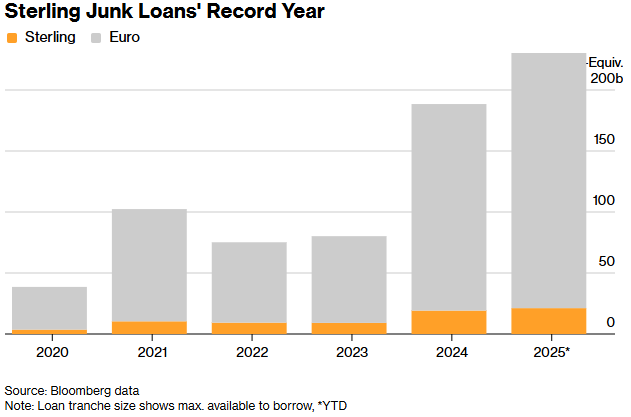
流动性溢价成亮点 英镑垃圾贷款迎来“高光时刻”
智通财经网· 2025-11-10 09:30
Core Insights - The UK is experiencing a surge in GBP-denominated leveraged loans, with issuance reaching £21.2 billion (approximately $27.9 billion) this year, setting a record with two months remaining in the year [1] - Major private equity transactions involving UK assets have increased, with notable deals including KKR's £4.2 billion acquisition of a precision testing equipment manufacturer and Advent International's $4.8 billion acquisition of a consumer goods company [4] - The demand for GBP loans is driven by the relative cheapness of UK assets and the high yields they offer compared to Euro and USD loans, which are currently under pressure [1][4] Group 1: Market Dynamics - The leveraged loan market in the UK is benefiting from a favorable position due to high borrowing costs and inflation, which has led to increased acquisition activity [1] - Private equity firms such as Apollo Global Management, Ares Capital, Blackstone, and KKR are allocating private capital to GBP leveraged loans, indicating strong demand from buyers [1] - The liquidity premium for GBP loans is at least 100 basis points higher than similar Euro and USD assets, making them attractive to investors [11] Group 2: Economic Context - Post-Brexit, UK assets have become more appealing to US acquirers due to lower valuations and simpler privatization rules compared to continental Europe [5] - Despite economic challenges, UK GDP and other economic indicators remain relatively strong, suggesting that pessimism about the UK's economic outlook may be overstated [12] - The issuance of GBP bonds remains a small portion of the overall bond supply, but the demand for collateralized loan obligations (CLOs) has increased, with Ares issuing the first GBP CLO since 2018 [6][11]