
科技研发

Search documents
坚持内需主导,建设强大国内市场
Xin Hua Wang· 2026-01-04 23:29
Group 1 - The core focus of the article is on the importance of domestic demand in driving economic growth and the establishment of a strong domestic market as a priority for the 2026 economic agenda [5][15] - The Chinese government has identified eight key tasks for economic work in 2026, with "insisting on domestic demand as the main driver" being the foremost task [5] - The "Two New" policies and "Two Heavy" project optimizations are set to enhance domestic consumption and investment, with a special bond plan of 625 billion yuan allocated for consumer goods replacement [5][15] Group 2 - The ice and snow economy is highlighted as a significant driver of consumption, with outdoor ski resort searches increasing over threefold year-on-year [6][7] - The implementation of the old-for-new policy has led to a 20% increase in sales for Haier's home appliances, with total sales related to this policy exceeding 2.6 trillion yuan in 2025 [7][8] - Equipment investment has shown a robust growth of 12.2% year-on-year, contributing to an overall investment increase of 1.8 percentage points [8] Group 3 - Experts believe that while challenges exist, the potential for expanding domestic demand remains significant, driven by consumption upgrades and digital economy innovations [10][11] - The article emphasizes the need for effective investment strategies, with a focus on technological upgrades and infrastructure projects, predicting that fixed asset investment will exceed 3.6 trillion yuan in 2025 [16][17] - The government aims to enhance consumer spending by improving social security systems and increasing residents' income, thereby expanding consumption capacity [16][17]

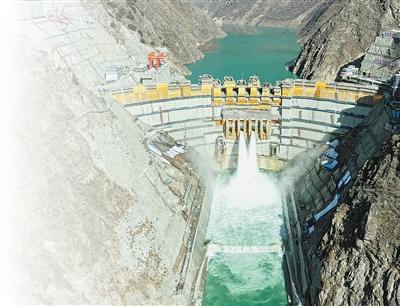
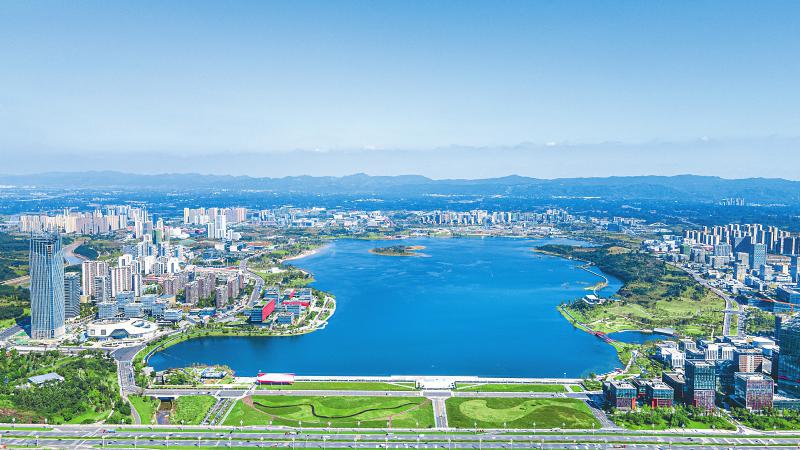
加快探索城市功能导向下的高质量、内涵式发展路径 四川天府新区:跃升国家级新区第一方阵
Si Chuan Ri Bao· 2026-01-04 01:47
Core Insights - Sichuan Tianfu New Area has become a vibrant innovation hub in Chengdu and Sichuan, with a GDP exceeding 400 billion yuan and ranking among the top national new areas [5][8] - The area is focusing on high-quality development, emphasizing the "Park City" concept, and aims to be a new growth pole in the Chengdu-Chongqing economic circle [6][7] Economic Performance - The GDP of Sichuan Tianfu New Area reached 400 billion yuan in 2021, marking a growth of 9.7% and accounting for 7.7% of the province's total GDP [8] - The area has established three industrial functional zones, including Tianfu Headquarters Business District, Chengdu Science City, and Tianfu Digital Cultural and Creative City, to support modern industrial systems [8][9] Innovation and Technology - The Chengdu Supercomputing Center and Tianfu Yongxing Laboratory have been established to focus on key technological advancements, including carbon neutrality [11][12] - The area has developed a comprehensive innovation platform, with over 137.8 million square meters of high-quality innovation space and numerous national-level research institutions [12][13] Open Economy - Sichuan Tianfu New Area is enhancing its role as an inland open portal, with international cooperation parks and significant foreign investment, projected to reach 1.5 billion USD in 2021 [14][15] - The area is actively participating in national strategies, such as the Chengdu-Chongqing economic circle and the Yangtze River Economic Belt, to leverage its strategic position [14][16] Urban Development - The Tianfu Central Legal District has been recognized as a special case in China's reform efforts, aiming to create a comprehensive legal service ecosystem [5][17] - Sichuan Tianfu New Area has been approved as the first national standardized pilot for "Park City," focusing on sustainable urban development [17][18]
大家谈|引育留用 集聚高水平冰雪人才
Xin Lang Cai Jing· 2026-01-01 22:54
Core Viewpoint - The development of the ice and snow economy in Heilongjiang is heavily reliant on cultivating a high-quality talent pool, which is essential for driving innovation and sustaining growth in the industry [1][2]. Group 1: Talent Acquisition - The strategy emphasizes precise talent acquisition to meet the specific needs of the ice and snow industry, focusing on areas such as equipment manufacturing, tourism services, and technological research [1]. - A dual recruitment system is proposed to attract long-term talent while allowing them to maintain their original affiliations, facilitating resource sharing [1]. - The establishment of both online and offline platforms is crucial for attracting talent, with offline efforts centered around industrial parks and online initiatives involving a talent alliance [1]. Group 2: Talent Development - A sustainable talent development approach is necessary, combining external recruitment with internal training to create a continuous talent reservoir [2]. - The integration of education and industry is highlighted, with a focus on building collaborative platforms between leading companies, educational institutions, and research organizations [2]. - A multi-dimensional training matrix is proposed to streamline the transition from education to employment, ensuring that training aligns with industry needs [2]. Group 3: Talent Retention - Retaining talent and fostering a sense of belonging is critical for maintaining long-term competitiveness in the ice and snow industry [3]. - A comprehensive incentive mechanism is needed to enhance job security, career development, and rights protection for talent [3]. - Establishing a systematic career development pathway with multiple channels is essential for providing diverse growth opportunities for ice and snow professionals [3]. Group 4: Talent Utilization - Effective talent utilization is key to transforming talent strength into industrial strength, necessitating precise management of human resources [3]. - The creation of a talent sharing database is proposed to facilitate the movement of talent across enterprises, educational institutions, and regions [3]. - The development of a smart management system and a big data platform for talent in the ice and snow industry is essential for optimizing talent allocation and ensuring rapid matching of skills to job requirements [3].
上峰水泥参股公司长鑫科技科创板IPO申请获上交所受理
Zhi Tong Cai Jing· 2025-12-31 04:09
经合并统计计算,公司间接持有本次公开发行上市前长鑫科技的股权比例约为0.1517%。 智通财经APP讯,上峰水泥(000672.SZ)发布公告,公司近日获悉,公司以全资子公司宁波上融物流有限 公司(简称"宁波上融")、浙江上峰建材有限公司(简称"上峰建材")为出资主体分别通过上海君挚璞创业 投资合伙企业(有限合伙)(简称"君挚璞创投")、中建材(安徽)新材料产业投资基金合伙企业(有限合伙)(简 称"中建材基金")投资的长鑫科技集团股份有限公司(简称"长鑫科技")首次公开发行股票并在科创板上市 申请于2025年12月30日获上海证券交易所受理。 ...

打造创新引领现代化建设的标杆(科技视点)
Ren Min Ri Bao· 2025-12-28 22:17
Core Viewpoint - The Central Economic Work Conference emphasizes the construction of international technology innovation centers in Beijing (Jing-Jin-Ji), Shanghai (Yangtze River Delta), and the Guangdong-Hong Kong-Macao Greater Bay Area to accelerate the formation of China's primary source of original innovation and support the strategic guidance for building a technology power [1]. Group 1: Beijing (Jing-Jin-Ji) International Technology Innovation Center - The expansion of the Beijing International Technology Innovation Center to the Jing-Jin-Ji region is expected to enhance original innovation capabilities and support the construction of a technology power [2][3]. - Beijing has ranked first globally in research cities for nine consecutive years, with a significant increase in unicorn companies and R&D investment intensity maintained at around 6% [2]. - The collaboration among Beijing, Tianjin, and Hebei is fostering a complete innovation chain, with technology contract transaction amounts from Beijing to Tianjin and Hebei rising from over 7 billion in 2013 to over 84 billion in 2024 [5]. Group 2: Shanghai (Yangtze River Delta) International Technology Innovation Center - The expansion of the Shanghai International Technology Innovation Center to the Yangtze River Delta signifies a new phase of deep integration in regional technological innovation [6][7]. - The region has seen over 80 joint projects supported since 2022, with total investments exceeding 1.7 billion, and R&D investment intensity reaching 3.33% [7]. - The Yangtze River Delta is home to one-third of the country's high-tech enterprises, R&D expenditure, and invention patent authorizations, indicating a robust innovation ecosystem [8]. Group 3: Guangdong-Hong Kong-Macao Greater Bay Area International Technology Innovation Center - The Greater Bay Area is leveraging its complementary advantages to build an open regional collaborative innovation community, aiming to become a global technology innovation hub [9][10]. - The area has established 10 major national scientific and technological infrastructures and is home to over 70,000 national high-tech enterprises [12]. - Guangdong is focusing on emerging fields and aims to create a world-class high-tech industrial cluster through comprehensive cooperation from technology R&D to enterprise incubation [12].
发挥引导基金带动作用,激活创新链条
2 1 Shi Ji Jing Ji Bao Dao· 2025-12-27 00:47
Core Viewpoint - The establishment of the National Venture Capital Guidance Fund marks a strategic initiative to support the construction of a modern industrial system and foster an innovation capital chain in the context of increasing international technological competition [1][4]. Group 1: Strategic Significance - The National Venture Capital Guidance Fund aims to inject confidence into the market by signaling long-term governmental support for innovation and entrepreneurship [2]. - It addresses market failures by providing initial funding for high-risk, long-cycle original technology projects, filling the gap left by market-driven capital [2]. - The fund is designed to create an innovation network that promotes collaboration among various market entities, facilitating the flow of capital, knowledge, and management experience [2]. Group 2: Regional Fund Structure - The simultaneous establishment of three regional funds in the Beijing-Tianjin-Hebei, Yangtze River Delta, and Guangdong-Hong Kong-Macao Greater Bay Area is a strategic move based on national priorities rather than mere geographical resource allocation [3]. - Each region represents a different paradigm of innovation: Beijing-Tianjin-Hebei focuses on original innovation, the Yangtze River Delta excels in engineering and industrialization, and the Greater Bay Area specializes in application and business model innovation [3]. - This structure aims to create a complete innovation chain from basic research to technology transfer and industrial application, thereby shortening the time from laboratory results to market [3]. Group 3: Support for Modern Industrial System - The National Venture Capital Guidance Fund is positioned as a key mechanism to support the construction of a modern industrial system, as outlined in the 14th Five-Year Plan, which emphasizes the importance of solidifying the foundation of the real economy [4]. - The plan identifies strategic fields such as quantum technology, biomanufacturing, and advanced communication technologies, which require long-term investment and carry high technical uncertainty [4]. - The fund is intended to provide financial support for critical technological breakthroughs in key areas that are essential for national security and economic stability [4]. Group 4: Institutional Reforms and Market Dynamics - The fund seeks to address the classic dilemma of "incentive compatibility" by allowing for failures while preventing moral hazards, balancing policy goals with professional investment judgments [5]. - It aims to explore mechanisms that encourage state capital to invest in early-stage hard technology projects, thereby creating a collaborative investment environment where risks are shared [6]. - The fund's practices are expected to pave the way for broader participation of long-term capital sources, such as social security funds and insurance assets, in the venture capital market, addressing the current imbalance of short-term versus long-term capital [6].
各部门贯彻落实省委经济工作会议精神——实干开新局 合力谱新篇
Xin Lang Cai Jing· 2025-12-27 00:11
Core Insights - The provincial economic work conference has set the stage for the "14th Five-Year Plan," focusing on revitalization and development strategies [1] - Various departments are actively implementing the conference's directives, emphasizing the importance of improving the business environment and fostering economic growth [1][2][3][4][5][6][7] Group 1: Economic Development Strategies - The provincial development and reform commission aims to enhance the business environment significantly in the short term and fundamentally over the long term, focusing on policy, market, and legal frameworks [1] - The emphasis is on cultivating new growth drivers while strengthening traditional industries, with a particular focus on emerging sectors such as artificial intelligence, low-altitude economy, and marine economy [1] - The provincial technology department plans to create a nationally influential regional technology innovation center, integrating technological and industrial innovation [2] Group 2: Cultural and Tourism Sector - The provincial culture and tourism department is focusing on expanding domestic demand and promoting consumption through innovative strategies and product offerings [3] - Key initiatives include enhancing core competitive capabilities of tourism businesses and optimizing the business environment to stimulate market vitality [3] Group 3: Regulatory and Oversight Measures - The provincial audit office emphasizes the need for rigorous economic supervision to support high-quality development and address key issues effectively [4] - The market regulation bureau is focused on enhancing market access and competition, while also promoting quality standards and brand development [5] Group 4: Healthcare and Social Services - The provincial healthcare bureau is working on reforms to align healthcare with economic development, ensuring sustainable and resilient healthcare systems [6][7] - Initiatives include improving medical insurance management and reducing costs for citizens and enterprises through collaborative procurement [6] Group 5: Energy and Infrastructure - The State Grid Shenyang Power Supply Company is aligning its development goals with the economic work conference, focusing on high-quality power development to support economic growth [7] - Key projects include enhancing the power grid and promoting clean energy initiatives, alongside improving the business environment for electricity services [7]
上海知识竞争力连续四年位居前三
Sou Hu Cai Jing· 2025-12-26 23:52
Core Insights - The 2025 Asia-Pacific Knowledge Competitiveness Index was released, with Singapore, Taiwan, and Shanghai taking the top three spots, marking Shanghai's fourth consecutive year in the top three [1] Group 1: Knowledge Competitiveness Index - The index evaluates 54 regions in the Asia-Pacific using 19 indicators, reflecting the ability to convert knowledge capital into economic value and wealth [1] - Eight regions from China made it to the top twenty, including Beijing and Hong Kong, with Jiangsu, Zhejiang, Guangdong, and Tianjin ranked 15th to 18th [1] Group 2: R&D Investment and Output - National R&D expenditure increased from 33,357 million yuan to 36,327 million yuan, a growth of 8.9%, with basic research funding rising from 2,259 million yuan to 2,501 million yuan, a 10.7% increase [2] - The number of invention patent applications rose from 1,677,700 to 1,828,100, a 9% increase, while authorized invention patents grew from 920,800 to 1,044,800, a 13.5% increase [2] Group 3: Human Resources in R&D - China has a total R&D workforce equivalent to 1.59 times that of the U.S. and 6.93 times that of India, nearing the combined total of the U.S., U.K., France, Germany, Italy, Canada, Japan, and South Korea [3] - Coastal developed regions in China are transitioning into a virtuous cycle of upgrading from knowledge input to output, with Shanghai maintaining a strong knowledge competitiveness [3] Group 4: Policy and Future Directions - The Central Economic Work Conference emphasized the need for innovation-driven growth and the establishment of international technology innovation centers in major metropolitan areas [3]
新型移动出行未来产业科技园正式开园
Huan Qiu Wang Zi Xun· 2025-12-26 01:05
本次开放日还集中展示了中山大学在低空经济、人工智能、新一代信息技术等领域的200余项具有产业 化前景的科技成果。 新型移动出行未来产业科技园临近中山大学广州校区东校园,位于广州大学城核心区,面积约2万平方 米。作为中山大学国家大学科技园的重要组成部分,新型移动出行未来产业科技园将加速引入和培育一 批面向未来的科技创新项目与人才,深化产学研用融合,构建深度融合、高效协同、开放共赢的创新创 业新生态,服务学校一体推进教育改革发展、科技创新和人才培养,为区域高质量发展贡献力量。 同日,新型移动出行未来产业科技园开放日暨中山大学知识产权成果对接会举办。本次活动吸引到了67 个科研团队、科技企业及服务机构参与。 中山大学软件工程学院郑子彬教授团队等科研团队围绕成果应用转化开展项目路演,并与参会企业现场 对接,洽谈合作,深度赋能番禺低空经济、人工智能等未来产业新赛道。 来源:科技日报 科技日报记者 叶青 近日,新型移动出行未来产业科技园在广州大学城正式开园。该科技园由中山大学与广州市番禺区人民 政府共建,聚焦新型移动出行、超算与智算等方向,是科技部、教育部全国首批10家未来产业科技园建 设试点之一。 ...
峰岹科技(688279.SH):拟购买房产
Ge Long Hui A P P· 2025-12-25 12:01
Core Viewpoint - Fengcai Technology (688279.SH) aims to enhance its R&D innovation capabilities and overall competitiveness by purchasing a property in Shenzhen for the development of a new office space [1] Group 1: Property Acquisition - The company plans to acquire a commercial property named Runrong Building (Phase II), located in the Qianhai Shenzhen-Hong Kong Cooperation Zone, with a total construction area of 25,204.97 square meters [1] - The agreed total price for the property is RMB 709,731,278, subject to final confirmation through the signing of the sales contract and related documents [1] - The funding for the property acquisition will come from the company's own funds, and the property is expected to be delivered by December 31, 2027 [1]
