
动力电池

Search documents
社科院报告:加快推动资本市场实现融资与投资功能的平衡
Sou Hu Cai Jing· 2025-10-28 11:23
Group 1 - The global monetary policy landscape is characterized by a divergence in approaches, with the Federal Reserve cutting rates by 25 basis points due to a weakening labor market and concerns over the U.S. economic outlook [2] - The European Central Bank maintains a steady rate, leaning towards a cautious easing policy, while the Bank of Japan shows a hawkish inclination towards rate hikes, influenced by U.S. tariff policies and domestic political uncertainties [2] - The People's Bank of China adopts a proactive stance, with a focus on balancing financing and investment functions in the capital market to support the national technology innovation strategy [2] Group 2 - China's economy shows stability in Q3 2025, with positive signs from the "anti-involution" policy leading to improved economic activity, particularly in key sectors like solar energy and battery manufacturing [3] - The narrowing of the M1 and M2 scissors gap to the lowest level since February 2021 indicates an increase in fund activation and improved expectations [3] - Short-term macro policies should be strengthened, including increased fiscal spending towards consumption and utilizing rate cuts effectively, while long-term strategies should focus on macroeconomic rebalancing and activating consumer potential [3]
最高大涨15倍,“易主”题材火了(附股)
Zheng Quan Shi Bao Wang· 2025-10-28 05:09
Core Viewpoint - The number of control right changes in A-share listed companies has reached a record high in 2025, driven by policy support and market demand, with over 112 cases reported by October 23, 2025 [1][2]. Group 1: Control Right Change Statistics - The number of control right changes has significantly increased, with 112 companies involved, marking the highest annual total in history [2]. - In 2020, the number of control right changes reached 100, and since then, the annual count has consistently exceeded 60 [2]. - Among companies planning control right changes, 22 have seen their stock prices double this year, with five of the top ten gainers involved in such transactions [2]. Group 2: Characteristics of Control Right Changes - A majority of the companies involved in control right changes are small-cap firms, with nearly 70% having a market capitalization below 5 billion [4]. - Many of these companies have poor performance, with approximately 52% expected to report losses in 2024 and a median debt ratio of around 42% [5]. - Private enterprises dominate the control right changes, accounting for about 76% of the cases, with 85 private companies involved [6]. - The most active regions for these transactions are economically developed areas, particularly Jiangsu, Guangdong, and Zhejiang [6]. Group 3: New Features in Control Right Changes - The acquisition subjects have become more diverse, with private capital playing a significant role, participating in 65 cases (60.19%) compared to 43 cases (39.81%) by state-owned enterprises [7]. - The methods of control right changes have become more flexible, with over 60% of cases in 2025 utilizing "agreement transfer + voting rights waiver" [7]. - Control right changes aimed at industrial synergy are increasingly common, benefiting companies like Qidi Pharmaceutical and Sanjia Technology [7][8]. Group 4: Impact on Company Performance - New controlling shareholders often bring transformative changes, injecting new vitality into companies, as seen with companies like Upway New Materials [9]. - Companies like *ST Yazhen have successfully pivoted to new industries post-control change, leading to significant stock price increases [10]. - The collaboration between new shareholders and existing companies can enhance operational efficiency and drive long-term growth, as demonstrated by North China Huachuang's acquisition of Chip Source Micro [10]. Group 5: Future Considerations for Investors - Investors should focus on the operational plans of new controlling shareholders post-acquisition, as effective capital operations can lead to rapid performance improvements [11]. - Successful control right changes have historically resulted in sustained stock price increases and improved performance metrics for companies involved [11].


筹划控制权易主数量创纪录产业协同资本赋能 重构上市公司价值
Zheng Quan Shi Bao· 2025-10-27 18:17
Core Viewpoint - The number of control right transfers among listed companies in the A-share market has significantly increased this year, exceeding 100 cases, driven by policy support and market demand [1][2] Group 1: Current Market Trends - The number of control right transactions has reached a historical high of 112 cases as of October 23, 2025, with a notable increase since 2020 [2] - 22 companies involved in control right transactions have seen their stock prices double this year, with five of the top ten gainers related to control right changes [2] - Small-cap companies dominate the control right transactions, with nearly 70% having a market value below 5 billion yuan before the announcements [4] Group 2: Company Characteristics - Companies undergoing control right changes generally exhibit poor performance, with approximately 52% expected to incur losses in 2024 and a median debt ratio of around 42% [4] - Private enterprises are the main players in control right transactions, accounting for nearly 76% of the cases, with 85 private companies involved [4] Group 3: Transaction Dynamics - The current wave of control right transactions features a more diverse range of acquirers, including state-owned enterprises, private companies, and private equity [5] - Innovative transaction methods are increasingly common, with over 60% of control right changes in the first half of 2025 utilizing "agreement transfer + voting rights waiver" models [5] Group 4: Impact on Company Development - New controlling shareholders often bring significant transformation and revitalization to companies, leading to substantial changes in fundamentals, as seen with companies like Upwind New Materials [7][8] - Successful control right changes can enhance operational performance and financial metrics, exemplified by companies like Zhaojin Mining and its improved revenue and profit figures [8]
宁德时代,两大新签约
DT新材料· 2025-10-27 14:37
Core Viewpoint - CATL has signed strategic cooperation agreements with Jianghuai Automobile Group and Yikong Zhijia, focusing on enhancing battery technology and supply chain security for electric vehicles, as well as promoting green and intelligent mining solutions [2][7]. Group 1: Cooperation with Jianghuai Automobile Group - On October 25, CATL signed a long-term strategic cooperation agreement with Jianghuai Automobile Group, aiming to leverage CATL's advanced battery technology to enhance the safety and efficiency of Jianghuai's entire product line [2][3]. - Jianghuai's "Zunjie" series vehicles will utilize CATL's Kirin and Xiaoyao batteries, incorporating advanced features such as ultra-fast charging and enhanced thermal protection, thereby improving overall vehicle performance and user experience [4]. - The collaboration will focus on three main areas: stable supply of high-quality batteries, development of leading-edge products, and expansion into global markets [5][8]. Group 2: Cooperation with Yikong Zhijia - On October 24, CATL signed a strategic cooperation agreement with Yikong Zhijia, a leader in autonomous mining vehicles, to focus on electric unmanned mining scenarios [7]. - The partnership will explore three key areas: developing next-generation mining-specific batteries suitable for extreme conditions, creating replicable models for safe and efficient open-pit mining transport, and promoting integrated "new energy + autonomous driving" solutions globally [12].


宁德时代再度携手江汽集团!
起点锂电· 2025-10-27 10:27
Core Insights - CATL and Jianghuai Automobile Group have signed a deepening cooperation agreement focusing on technology, supply chain, and international expansion [3] - The collaboration aims to enhance product quality and travel value for Jianghuai's entire product line [3] Group 1: Cooperation Agreement - The agreement includes three main aspects: strengthening the supply chain, introducing advanced technologies, and exploring broader markets together [3] - CATL will provide battery support for all models under Jianghuai, ensuring a stable supply chain [4] - Both companies will jointly develop new technologies such as supercharging, dual-core battery technology, CIIC chassis technology, battery data applications, and battery swapping technology [3][4] Group 2: Product Development - A joint R&D team has been established to tackle technical challenges, leading to the launch of the Tianxing battery brand by CATL, which features four major advantages: super safety, super fast charging, super long lifespan, and super long range [4] - Jianghuai's Yuwei Automobile has signed a CIIC smart chassis cooperation agreement with Shanghai Times Intelligent, focusing on developing new vehicle platforms [4] Group 3: Battery Swapping Innovations - In July, a significant breakthrough was achieved in battery swapping with the successful joint debugging of the first commercial vehicle for the "Chocolate Battery Swapping" initiative [5] - The initiative aims to establish 1,000 battery swapping stations this year, with mid-term and long-term goals of 10,000 and 30,000 stations, respectively [5] Group 4: Product Launches - Jianghuai has launched three products equipped with Chocolate Battery Swapping technology, enhancing its market offerings [6] - CATL is also deepening collaborations with other automotive brands, indicating a robust vertical integration capability within the industry [6] Group 5: Future Energy Ecosystem - CATL is building a comprehensive new energy ecosystem that includes energy storage stations, zero-carbon power grids, new energy vehicles, and battery cell manufacturing [6] - This ecosystem aims to enhance CATL's integration capabilities in both software and hardware, positioning it strongly in the global energy market [6]
第一创业晨会纪要-20251027
First Capital Securities· 2025-10-27 10:25
Group 1: Industry Overview - JD Logistics plans to purchase 3 million robots, 1 million unmanned vehicles, and 100,000 drones over the next five years, indicating strong optimism about the rapid advancement of technology in the logistics supply chain [3] - The growth in domestic traffic is accelerating the deployment of 5.5G, and the recovery of demand in overseas markets is driving performance improvements in companies like Xintian Technology and Shuo Beid [3] Group 2: Advanced Manufacturing - Huichuan Technology emphasizes its leading position in industrial automation and joint power businesses in China, forecasting annual revenue to exceed 40 billion, with a focus on expanding overseas [6] - The company sees significant growth potential in smart robotics and digital energy management, with positive feedback on humanoid robots from various domestic and international manufacturers [6] Group 3: New Energy Sector - Guoxuan High-Tech reported Q3 revenue of 10.114 billion, up 20.68% YoY, and a net profit of 2.167 billion, up 1434%, although the profit surge is attributed to non-sustainable financial asset valuation changes [7] - The company faces operational pressures with a significant increase in inventory and accounts receivable, indicating a need for caution regarding operational quality and turnover [7] Group 4: Consumer Sector - Jieya Co. achieved revenue of 565 million in the first three quarters of 2025, a 38.4% YoY increase, with Q3 revenue growth accelerating to 255 million, up 107.2% YoY, driven by a shift of wet wipes production to outsourcing by international brands [9] - Dongpeng Beverage reported revenue of 16.844 billion in the first three quarters, a 34.13% YoY increase, with Q3 revenue of 6.107 billion, up 30.4% YoY, benefiting from reduced sales expenses and increased fair value changes [10] Group 5: Bond Market Analysis - The bond market experienced slight upward movement in yields, influenced by easing US-China trade tensions and a stable equity market, although the sentiment was initially strong due to expectations of monetary policy easing [12] - The bond market's main focus is not on fundamentals, and while there are opportunities for rate cuts, a triggering event is necessary for a downward trend in bond yields [12]
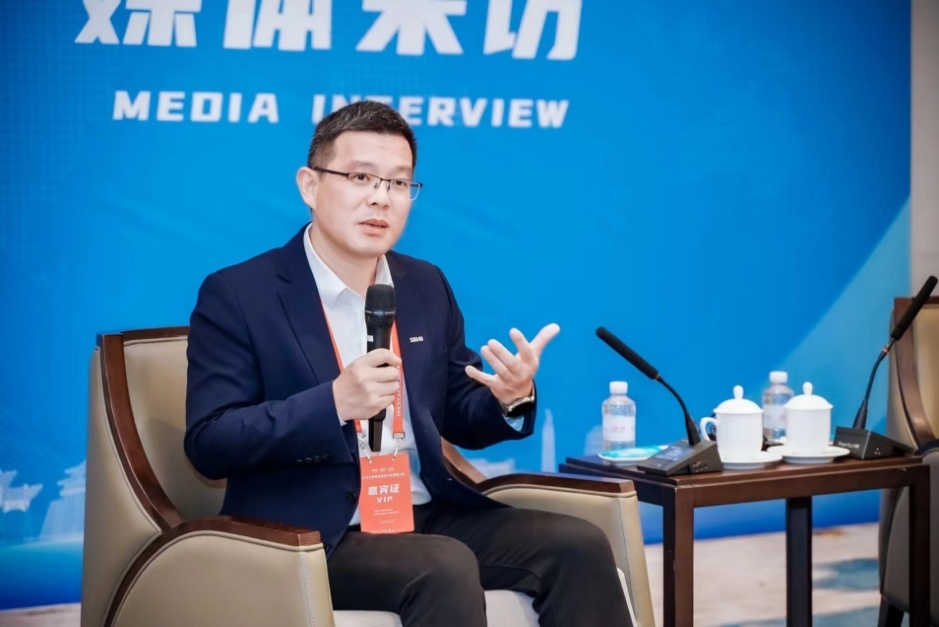
欣旺达动力王华文:坚守长期主义,以价值竞争穿越产业周期
Huan Qiu Wang· 2025-10-27 03:26
Core Insights - The core competitive advantage of the company lies in its ability to produce over a million batteries annually with zero defects, which is deeply integrated into the daily operations of its 70,000 employees [1][3] - The company reported a significant increase in battery shipments, reaching 16.08 GWh in the first half of 2025, representing a year-on-year growth of 93.4% [3] - The company emphasizes long-term value creation over price competition, focusing on high-end positioning, quality, and innovation [4][5] Industry Trends - The Chinese power battery industry is experiencing rapid growth, with a cumulative installation volume of 493.9 GWh from January to September 2025, reflecting a year-on-year increase of 42.5% [4] - The industry is shifting towards high safety and high energy density technologies, with solid-state batteries becoming a key focus for research and development [4][5] Research and Development - The company invested 1.924 billion yuan in R&D in the first half of 2025, marking a year-on-year increase of 35.23% [4] - The company has been developing solid-state battery technology since 2015 and recently launched a new generation polymer all-solid-state battery with an energy density of 400 Wh/kg and a cycle life of 1200 weeks under low pressure [4][5] Strategic Initiatives - The company is transitioning from a product-focused approach to an ecosystem-oriented strategy, emphasizing deep participation across the entire industry chain and lifecycle quality management [6][7] - A joint venture with Li Auto was established to produce lithium-ion batteries for electric vehicles, reflecting a deeper collaboration and value creation between the two companies [7] Global Expansion - The company is expanding its global presence by establishing manufacturing bases in countries like Thailand, Hungary, and Morocco, focusing on compliance management and local ecosystem development [7][8] - The global strategy is not merely about capacity output but involves a comprehensive restructuring around user experience and sustainable value [8]

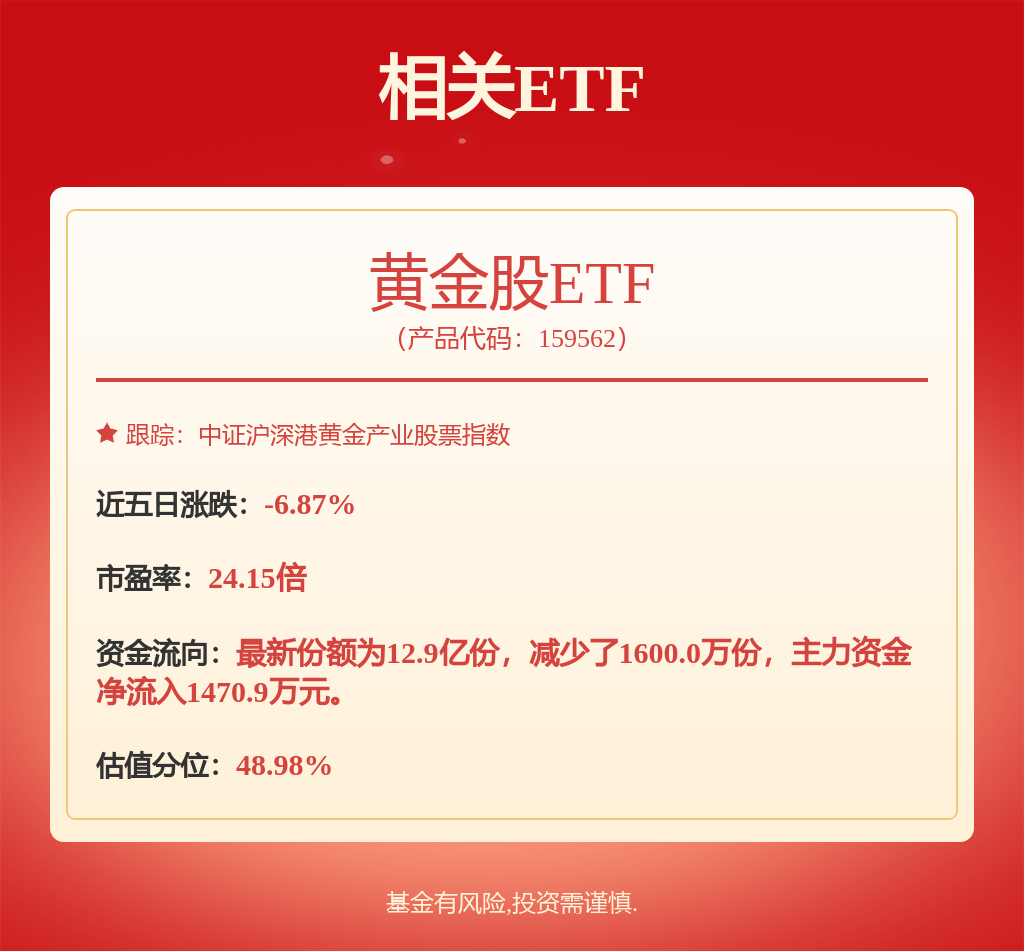
动力电池行业呈稳健增长态势,新能源ETF(159875)盘中涨0.31%,冲击3连涨
Xin Lang Cai Jing· 2025-10-27 02:53
Group 1: New Energy ETF Performance - The New Energy ETF has seen a turnover of 3.36% during trading, with a transaction volume of 46.41 million yuan [3] - The ETF's scale has increased by 19.18 million yuan over the past week, and its shares have grown by 18.8 million since the beginning of the month, ranking first among comparable funds [3] - The latest net inflow into the ETF is 12.67 million yuan, accumulating a total of 129 million yuan over the last 12 trading days [3] - As of October 24, the ETF's net value has risen by 57.63% over the past six months, placing it in the top 10.58% among index equity funds [3] - The ETF has achieved a maximum monthly return of 25.07% since its inception, with the longest streak of monthly gains being five months and an overall increase of 62.44% [3] Group 2: Battery Industry Growth - The power battery industry is experiencing steady growth, driven by strong sales of new energy vehicles, which has bolstered demand for upstream lithium batteries [3] - In the first half of 2025, China's total installed capacity of power batteries reached 299.6 GWh, marking a year-on-year increase of 47.3% [3] - The total installed capacity of power batteries is expected to exceed 600 GWh for the entire year of 2025, supported by the continuous rise in new energy vehicle production and sales, as well as explosive growth in the energy storage market [3] Group 3: Energy Storage Policies - Several provinces, including Inner Mongolia, Hebei, Gansu, Ningxia, and Shandong, have introduced capacity pricing and compensation policies, providing strong baseline returns for energy storage [4] - The capacity pricing policy, combined with market-based peak and valley arbitrage, has significantly improved the economic viability of independent energy storage [4] - There is strong demand for large-scale and commercial energy storage in overseas markets such as Europe, the United States, and Southeast Asia, with various countries implementing energy storage subsidy policies [4] Group 4: Top Weight Stocks in New Energy Index - As of September 30, 2025, the top ten weighted stocks in the China Securities New Energy Index include CATL, Sungrow Power, EVE Energy, Longi Green Energy, Huayou Cobalt, TBEA, China Nuclear Power, Ganfeng Lithium, Lead Intelligent, and Three Gorges Energy, collectively accounting for 45.2% of the index [6]





国轩高科受益奇瑞上市净利增14倍 动力电池装车量25.1GWh全球第七
Chang Jiang Shang Bao· 2025-10-27 02:40
Core Viewpoint - Guoxuan High-Tech (002074.SZ) reported significant profit growth following the IPO of Chery Automobile, with a net profit increase of 514.35% in the first three quarters of 2025 [2][4]. Financial Performance - In the first three quarters of 2025, Guoxuan High-Tech achieved operating revenue of 29.508 billion yuan, a year-on-year increase of 17.21%, and a net profit of 2.533 billion yuan, up 514.35% [2][4]. - For the third quarter alone, the company reported operating revenue of 10.114 billion yuan, a 20.68% increase year-on-year, and a net profit of 2.167 billion yuan, reflecting a staggering growth of 1434.42% [3][5]. Impact of Chery Automobile's IPO - The substantial increase in net profit is attributed to the rise in fair value from the company's early holdings in Chery Automobile, which went public on the Hong Kong Stock Exchange [3][5]. - Chery Automobile's IPO on September 25, 2025, marked the largest IPO of an automotive company in Hong Kong for the year, with a total market capitalization of 184.09 billion HKD on its first trading day [6]. Market Position and Growth - Guoxuan High-Tech is a key battery supplier for Chery's various brands and has seen its battery installation volume reach 26.27 GWh in the first nine months of 2025, ranking fourth in China with a market share of 5.33% [9]. - The global battery installation volume reached 691.3 GWh from January to August 2025, with Guoxuan's share at 25.1 GWh, marking a 71.8% year-on-year growth and a market share increase to 3.6% [9]. Capacity Expansion - The company is accelerating capacity expansion with the groundbreaking of a new lithium-ion battery manufacturing base in Nanjing, with a total investment of 4 billion yuan [8][9]. - Guoxuan High-Tech plans to invest in two major projects, including a 20 GWh new energy battery base and a new lithium-ion battery smart manufacturing base, each with an investment of up to 4 billion yuan [8]. Strategic Partnerships - Guoxuan High-Tech has been collaborating with Chery Automobile since 2012, with a strategic partnership that has deepened over the years, leading to significant increases in battery supply for various models [6][7]. - The partnership aims to enhance cooperation in electric vehicle projects, focusing on advanced battery technologies and expanding into international markets [7][10].


5亿配售落地:正力新能(3677.HK)开启产能履约与价值升级之路
Ge Long Hui· 2025-10-27 01:09
Core Viewpoint - The completion of the HKD 504 million equity placement by Zhengli New Energy signifies strong institutional confidence in the company's long-term growth potential, with funds allocated for accelerating lithium-ion battery production capacity, supporting solid-state battery pilot lines, and supplementing operational funds [1] Group 1: Business Growth and Capacity Expansion - The fundraising is driven by robust business fundamentals and increasing order demand, with revenue for the first half of 2025 reaching CNY 3.172 billion, a year-on-year increase of 71.9%, and net profit of CNY 220 million, with a net profit margin of 6.9% [2] - The company has established a diverse customer base, including major automotive manufacturers, and is experiencing high capacity utilization, with a monthly installation volume nearing 2 GWh, indicating a clear capacity gap due to new orders [2][3] Group 2: Technology Research and Development - The company emphasizes R&D investment, allocating 10% of the raised funds to solid-state battery pilot lines and another 10% to cutting-edge technology research, positioning itself for future advancements in battery technology [4] - Zhengli New Energy has made significant progress in aviation-grade battery applications and is focusing on enhancing energy density and fast-charging capabilities in line with national standards for electric vehicles [5][6] Group 3: Solid-State Battery Development - The company is advancing its solid-state battery technology, with plans for a pilot line expected to be completed by mid-2026, which will facilitate the transition from laboratory to industrial production [7] - The solid-state battery technology is anticipated to play a crucial role in high-end vehicle and aviation applications, potentially becoming a new growth engine for the company [7] Group 4: Conclusion - The equity placement enhances the company's competitiveness across production capacity, technology, and funding, addressing immediate capacity needs while laying a foundation for long-term development in solid-state battery research [8] - Continuous investment in new capacity is expected to support a 50% year-on-year increase in shipment volume from 2025 to 2027, driving revenue and profit growth [8]