国际贸易

Search documents
巴西硬气退回信函后,特朗普继续加码,将对120多国收统一关税
Sou Hu Cai Jing· 2025-07-18 12:17
Core Viewpoint - The article discusses the unexpected backlash against Trump's tariff policies, particularly from Brazil, which challenges the U.S.'s dominant position in global trade [1][2][4]. Group 1: Tariff Policy and Reactions - Trump's administration planned to impose tariffs as high as 50% on Brazilian goods to address perceived trade deficits, but Brazil countered that the trade relationship has resulted in a surplus for the U.S. exceeding $410 billion over the past 15 years [4]. - Brazil's strong rejection of the tariff policy, including a refusal to accept unilateral actions from the U.S., signals a shift in its willingness to act as a subordinate in trade matters [4][10]. - In response to Brazil's defiance, Trump shifted his strategy to impose a uniform 15% tariff on over 120 countries, indicating a significant underestimation of global reactions [6][15]. Group 2: Global Implications - Brazil's stance has prompted other nations, including Japan, South Korea, and Canada, to reassess their positions regarding U.S. trade policies, with many expressing dissatisfaction and considering retaliatory measures [10][11]. - Japan's Prime Minister has indicated a desire for greater independence from U.S. influence, reflecting a broader trend among nations to seek more balanced trade relationships [11]. - Countries like Canada and Vietnam are also preparing to implement countermeasures against U.S. tariffs, highlighting a growing resistance to Trump's unilateral approach [13][15]. Group 3: Long-term Consequences - The article suggests that while Trump's tariffs may yield short-term benefits, the long-term global backlash could force the U.S. to reevaluate its trade strategies [19][21]. - The evolving global economic order, marked by countries asserting their trade rights, indicates a potential shift away from U.S. dominance in international trade [16][19].


中国—上海合作组织地方经贸合作大会青岛倡议发布
Qi Lu Wan Bao· 2025-07-18 10:08
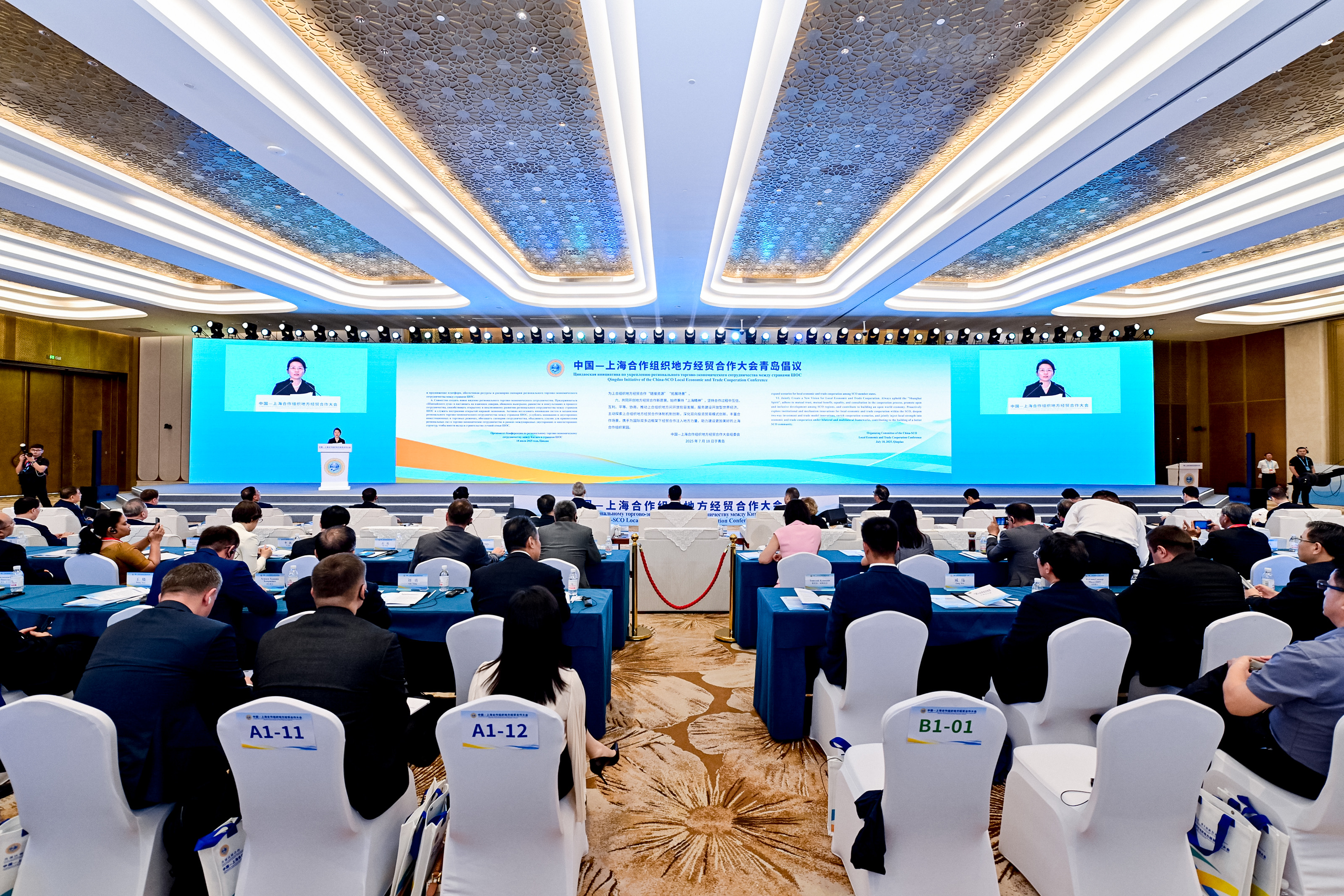
Core Viewpoint - The China-Shanghai Cooperation Organization (SCO) Local Economic and Trade Cooperation Conference in Qingdao released the "Qingdao Initiative," which outlines a clear path for regional economic cooperation under the SCO framework, emphasizing the importance of local collaboration for high-quality economic development [1] Group 1: Key Cooperation Directions - The "Qingdao Initiative" is based on the "Shanghai Spirit" and proposes six core cooperation directions to establish a closer, more efficient, and mutually beneficial local economic and trade cooperation framework [4] - The first direction focuses on building international logistics corridors, enhancing connectivity among SCO member states, and establishing Qingdao as a hub for the Asia-Pacific market [4] - The second direction aims to create sustainable international partnerships in supply chains, ensuring stability and promoting practical cooperation among SCO regions [4] Group 2: Trade and Investment Enhancement - The third direction emphasizes upgrading trade and investment quality by exploring trade potential among SCO regions and optimizing trade structures through e-commerce and digital trade [5] - The fourth direction promotes interactive cooperation among key industrial parks in SCO countries, facilitating resource sharing and enhancing industrial upgrades [5] Group 3: Open Cooperation Platforms - The fifth direction focuses on building shared open cooperation platforms, enhancing the capabilities of various SCO economic cooperation centers and promoting resource linkage [5] - The sixth direction advocates for a new vision of local economic and trade cooperation, emphasizing mutual trust, equality, and innovation in cooperation mechanisms [6]
入境游、跨境合作、企业“出海”……中马互免签证开启多彩新机遇 双边贸易“加速跑”
Yang Shi Wang· 2025-07-18 04:50
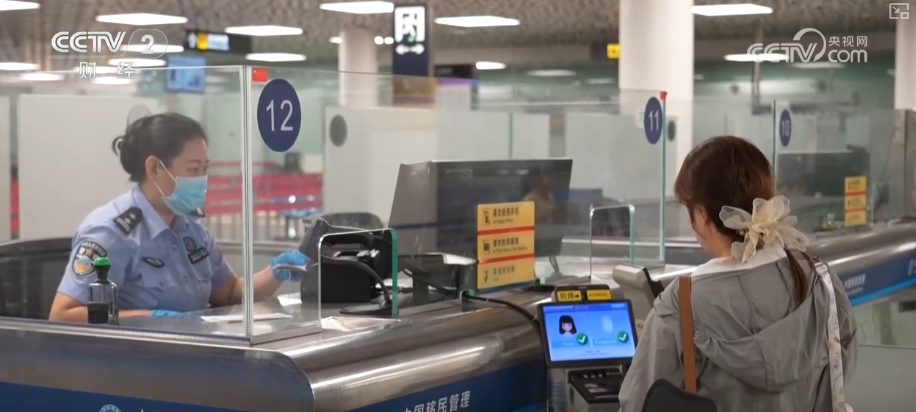
Group 1: Visa Waiver Agreement Impact - The mutual visa waiver agreement between China and Malaysia officially took effect on July 17, allowing citizens of both countries to enter each other's territory without a visa for up to 30 days, with no termination date set for the policy [3][5][15] - Following the agreement, there has been a significant increase in flight operations, with over 4,000 flights to Malaysia since 2025, marking a growth of over 40% [5][6] - The number of Malaysian travelers entering China through Shenzhen Airport has exceeded 148,000 since 2025, reflecting a nearly 60% year-on-year increase, making Malaysian nationals the largest group of foreign travelers at this airport [7][15] Group 2: Tourism Industry Response - Travel agencies in both countries are actively expanding their offerings, with a notable increase in demand for deep travel experiences and educational tours, particularly during the summer peak season [8][10] - Following the announcement of the visa waiver, travel agencies reported a 30% increase in transaction volume, with popular destinations experiencing supply shortages [12][10] - The demand for business travel has also surged, with multiple business delegations from Malaysia visiting China to explore investment opportunities [13][18] Group 3: Economic Cooperation Enhancement - The visa waiver is expected to stabilize business expectations and reduce costs for enterprises, facilitating more efficient cross-border cooperation [15][17] - Companies in Shenzhen have reported a significant reduction in order processing time, from an average of 2-3 months to 1-1.5 months, leading to a 30% increase in order conversion rates [18][21] - Chinese companies are more confident in expanding their operations in Malaysia, with one brand already establishing over 100 stores in the country since 2025 [23]
巴西外长:我们正在等待美国对我们的贸易提议做出回应。
news flash· 2025-07-17 16:38
Group 1 - The Brazilian Foreign Minister stated that Brazil is currently awaiting a response from the United States regarding its trade proposals [1]
瑞士对美出口反弹 与美贸易协议仍悬而未决
news flash· 2025-07-17 06:25
Core Viewpoint - Switzerland's exports to the U.S. rebounded in June, indicating strong bilateral trade amid ongoing tariff negotiations between the two countries [1] Trade Performance - Swiss exports to the U.S. increased by 26.9% in June compared to May, after seasonal adjustments [1] - Imports from the U.S. saw a slight growth of 0.2% [1] Trade Agreement Negotiations - Switzerland is in negotiations with the U.S. to reach a trade agreement, with Swiss Finance Minister Karin Keller-Sutter stating that the two countries are "very close" to an agreement [1] - Reports suggest that the draft agreement includes guarantees to avoid tariffs on Swiss pharmaceutical exports [1] Political Context - U.S. Treasury Secretary Mnuchin indicated to Switzerland that an agreement is imminent, but President Trump mentioned that global pharmaceutical tariffs could be implemented as early as August 1 [1] - Swiss left-wing lawmakers are calling for joint countermeasures with the EU in response to U.S. tariffs [1]
印度寻求与美达成比印尼和越南更低的关税协议
news flash· 2025-07-17 02:26
Core Viewpoint - India is seeking to negotiate a tariff agreement with the United States that is more favorable than those established with Indonesia and Vietnam, with indications from Trump suggesting a potentially beneficial deal [1] Group 1: Tariff Negotiations - India aims to achieve a tariff rate lower than 20% in its trade negotiations with the U.S., which would be more advantageous compared to the current rates for Indonesia and Vietnam [1] - The U.S. has recently reduced the tariff on Indonesia from 32% to 19%, while Vietnam's tariff rate has been lowered to 20% [1] - An Indian official expressed confidence that the trade agreement with the U.S. will be more favorable than those with Southeast Asian countries, as India is not viewed as a transshipment hub like Indonesia and Vietnam [1]
泰国将向美国提出新方案以避免关税,此前已提议对美国产品取消90%的进口关税
news flash· 2025-07-16 14:42
Core Viewpoint - Thailand's Finance Minister is set to meet with U.S. trade officials to propose new measures aimed at avoiding a potential 36% tariff threatened by President Trump [1] Group 1 - The meeting will involve discussions on revised proposals, including further tariff reductions on U.S. products [1] - The Thai Commerce Minister indicated that the Finance Minister will hold a video conference with U.S. Trade Representative Jamison Greer [1]
30%关税威胁下,欧盟考虑动用"反胁迫工具"应对特朗普
Hua Er Jie Jian Wen· 2025-07-16 12:42
据央视新闻,当地时间7月12日,美国总统特朗普宣布自2025年8月1日起,美国将对来自欧盟的输美产 品征收30%的关税。对此,越来越多的欧盟成员国希望在8月1日前无法达成可接受协议的情况下,启动 该集团最强有力的贸易工具——反胁迫工具进行反击。 "这些是具有挑战性的复杂谈判,我们作为欧盟仍专注于实质性讨论。" "在这场谈判中,你需要展示力量、武力、团结和决心。" 风险提示及免责条款 法国主导推动,欧盟委员会持谨慎立场 "反胁迫工具是为非常情况而设,我们还没到那个地步。" 以法国为首的半数以上欧盟国家支持动用这一工具,该工具赋予欧盟官员广泛的报复权力,包括对美国 科技巨头征收新税、限制美国在欧投资,以及限制美国企业进入欧盟市场。据媒体援引知情人士透露, 贸易部长们在周一的会议上讨论了这一问题。 美欧之间的谈判仍在继续。欧盟专员Michael McGrath周三对媒体表示,预计8月1日前能达成协议,尽 管布鲁塞尔对收到特朗普的信件"感到惊讶和失望"。McGrath称: 法国欧洲事务部长Benjamin Haddad表示,欧盟的回应应包括使用这一工具的选项。他在接受采访时 称: 反胁迫工具作为欧盟贸易防线的"重器" ...
国际白银维持涨势 全球贸易和谐前景再添变数
Jin Tou Wang· 2025-07-16 07:26
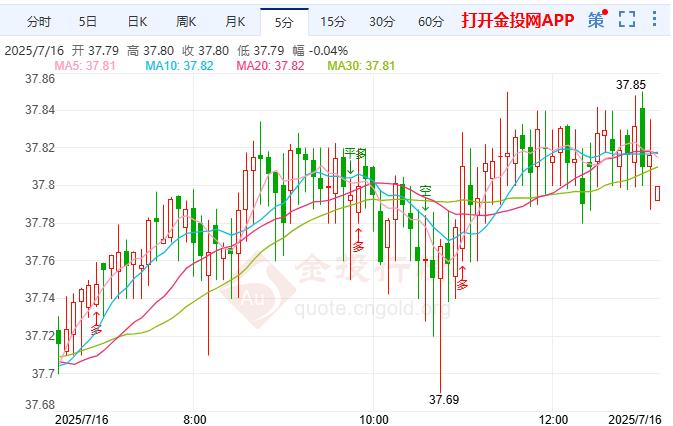
Group 1 - The international silver market is experiencing a fluctuating trend, with the price at $37.83 per ounce, reflecting a 0.35% increase as investors await the U.S. Producer Price Index (PPI) announcement for further Federal Reserve cues [1] - The U.S. has announced reciprocal tariffs on major trading partners, including the EU, Japan, Canada, Mexico, and South Korea, adding uncertainty to global trade dynamics [3] - The U.S. inflation rate has surged to 2.7% year-on-year, driven by rising prices of imported goods, raising questions about the Federal Reserve's potential interest rate cuts in September [3] Group 2 - Silver prices opened at $38.094, peaked at $38.374, and closed at $37.685, indicating a bearish trend with potential targets at $37.8 and $37.5, and further support at $37.30-$37.50 [4] - The silver market is under pressure as the gold-silver ratio rises above 88.00, with a significant support level at $37.30; a break below this level could lead to testing the next support at $35.65-$35.85 [4]
特朗普关税阴云下,一季度全球贸易增长高于预期?WTO这么解读
Di Yi Cai Jing· 2025-07-16 06:26
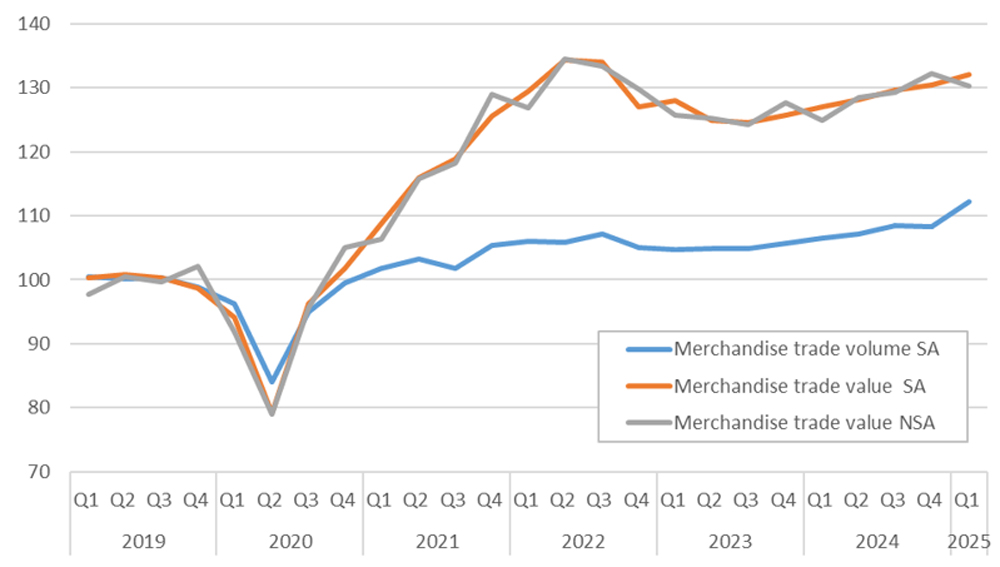
Core Insights - WTO economists predict a slowdown in global goods trade growth later this year due to ample inventories and increased tariffs impacting import demand [1][7] - In the first quarter of 2025, global goods trade volume increased by 3.6% quarter-on-quarter and 5.3% year-on-year, driven by a surge in North American imports in anticipation of higher U.S. tariffs [1][3] - The growth in trade volume exceeded WTO's earlier forecast of a 0.2% decline for the year [3] Trade Volume and Value - The dollar value of global goods trade, adjusted for seasonality, increased by 4% year-on-year in the first quarter, reflecting strong trade volume growth despite a decline in prices [3] - The first quarter saw significant growth in specific categories: office and telecommunications equipment (up 16%), chemicals (up 12%), and clothing (up 7%) [6] Regional Performance - North America led with a 13.4% quarter-on-quarter increase in imports, followed by Africa (5.1%), South America and Central America & Caribbean (3.6%), the Middle East (3.0%), Europe (1.3%), and Asia (1.1%) [4] - In terms of exports, the Middle East recorded the highest quarter-on-quarter growth at 6.3%, followed by Asia (5.6%) and South America (3.2%) [5] Future Trends - Data indicates that after a surge in the first quarter, import demand is beginning to slow down, with U.S. imports growing only 1% in the first two months of the second quarter after a 25% increase in the first quarter [7][8] - The World Bank reports a significant downward adjustment in trade growth forecasts for developed economies, with expected growth for 2025 being about half of earlier predictions [8]