
汽车

Search documents
2026年3月五维行业比较观点:把握成长机遇-20260310
EBSCN· 2026-03-10 07:21
Core Insights - The report introduces a "Five-Dimensional Industry Comparison Framework" that integrates market style, fundamentals, liquidity, trading, and valuation to analyze industry performance comprehensively. It emphasizes that a single indicator is insufficient for effective industry comparison and that future market drivers should be weighted more heavily [3][9]. - Historical backtesting from 2016 to February 2025 shows that industries with higher scores in the framework tend to perform better, with annualized returns of 11.8% for the top group and -10.5% for the bottom group. A long-short strategy between the top and bottom groups yielded an annualized return of 23.7% [21][23]. - In March, the report predicts a market style shift towards growth and balanced styles, with high valuation sectors expected to perform better. Key industries to focus on include electric power equipment, defense, electronics, and machinery [33][34]. Five-Dimensional Industry Comparison Framework - The framework consists of five dimensions: market style, fundamentals, liquidity, trading, and valuation, combining both objective data and subjective judgments to enhance flexibility [8][9]. - The scoring process involves adjusting weights based on market conditions, with a focus on subjective assessments in market style, liquidity, and valuation, while fundamentals and trading rely on objective data [12][20]. March Insights and Industry Recommendations - The report suggests that in March, the focus should be on growth and balanced styles, with high-scoring industries such as electric power equipment, defense, electronics, and machinery being highlighted for potential investment [34][39]. - Specific recommendations include companies like Shenghong Co., Yangguang Electric, and Siyi Electric in the electric power sector, which are expected to benefit from trends in energy storage and grid investments [37][39]. Market Style - The report anticipates fluctuations in economic expectations and market sentiment, leading to a rotation between growth and balanced styles. It predicts that financing funds will dominate the liquidity landscape in March [33][34]. Fundamentals - In March, the weight assigned to fundamentals is reduced to 20% due to it being a non-earnings season, with equal weighting applied to other dimensions [33][34]. Liquidity - The report indicates that financing funds are expected to be the main source of liquidity in March, with public funds likely to see net inflows [33][34]. Trading and Valuation - The trading dimension focuses on identifying industries with potential positive catalysts that have not yet been fully reflected in stock prices, while the valuation dimension assesses industries based on market sentiment and expected future performance [20][21]. Recommended Industries - **Electric Power**: Focus on hydrogen, ammonia, and integrated energy systems, with companies like Shenghong Co. and Yangguang Electric highlighted for their growth potential [39]. - **Electronics and Communication**: Companies such as Zhongji Xuchuang and ShenNan Circuit are recommended due to their roles in AI and data center infrastructure [41]. - **High-End Manufacturing**: Companies like Anpeilong and Jingjin Equipment are noted for their strong market positions and growth prospects in robotics and AI-related sectors [43]. - **Automotive**: Companies like Geely and NIO are recommended for their strategic advancements in smart and high-end vehicles [46]. - **Pharmaceuticals**: Continuous focus on innovative drugs and medical devices is emphasized, although specific companies are not detailed in the provided content [48].
港股评级汇总:交银国际维持比亚迪股份买入评级
Xin Lang Cai Jing· 2026-03-10 07:19
Group 1 - Jiangyin International maintains a "Buy" rating for BYD Company Limited with a target price of HKD 133, highlighting the launch of the second-generation blade battery and MW Flash Charge 2.0 technology, which allows for a 70% charge in 5 minutes at room temperature and 97% in 12 minutes at -20°C, alleviating user anxiety regarding charging [1] - CMB International maintains a "Buy" rating for ZTE Corporation with a target price of HKD 38.6, noting a projected 10.4% revenue growth in FY25, despite a 33.3% decline in net profit due to a higher proportion of enterprise and government business affecting gross margin [1] - CITIC Securities maintains a "Buy" rating for Bilibili Inc., indicating that the company is expected to achieve its first annual GAAP profit by Q4 2025, with advertising revenue growing by 27.4% as a core driver [1] Group 2 - Huatai Securities maintains a "Buy" rating for JD.com with a target price of HKD 147.88, reporting steady growth in retail with double-digit growth in daily categories for five consecutive quarters and a 40% increase in user purchase frequency [2] - CITIC Jiantou maintains a "Buy" rating for JD Health with a target price of HKD 69.22, forecasting a 26.3% revenue increase and a 36.3% rise in Non-IFRS net profit in 2025, driven by prescription drugs and platform advertising revenue [2] Group 3 - Huatai Securities maintains a "Buy" rating for JD Logistics with a target price of HKD 17.1, projecting an 18.8% revenue increase in 2025, with a significant rise in integrated supply chain revenue [3] - Tianfeng Securities maintains a "Buy" rating for Bosideng, reporting an 8.3% revenue increase in brand down jackets for FY26H1, supported by designer collaborations and store reform strategies [4] Group 4 - Tianfeng Securities maintains a "Buy" rating for Nine Dragons Paper Holdings, noting a 318.8% increase in net profit for FY26H1, benefiting from integrated pulp and paper operations and new production lines [5] - Zhongtai International maintains a "Buy" rating for Weisheng Holdings with a target price of HKD 32.68, expecting a 42% to 50% increase in net profit for FY25, driven by smart distribution business growth [7] Group 5 - Shenwan Hongyuan maintains a "Buy" rating for Xidi Intelligent Driving, reporting a 57.9% revenue increase with 304 autonomous mining trucks delivered in H1 2025, and a significant order backlog [8]


宏观高频数据追踪:生产复工节奏较为温和,土拍数据大幅反弹
East Money Securities· 2026-03-10 07:09
1. Report Industry Investment Rating No information provided in the content. 2. Core Viewpoints of the Report - Production resumption is relatively moderate, with the growth rate of the resumption rate narrowing compared to the same period last lunar year. The resumption of real - estate projects is better than that of non - real - estate projects, showing a "faster in the south, slower in the north" pattern. Industrial production resumption is also mild, and the marginal change in the national production rhythm after the weakening of northern weather disturbances needs further attention [3][9]. - Land transactions have rebounded significantly, but the growth of new and second - hand housing transactions has narrowed. The land premium rate in 100 cities has reached a high level since 2021. New - home sales in first - tier cities remain relatively strong, while those in second - and third - tier cities have declined. Second - hand housing sales in 15 cities first increased and then decreased. The "small spring" of the real estate market in March 2026 and the possibility of incremental real - estate optimization policies in each city need continuous attention [3][10]. - International energy prices such as crude oil and natural gas have risen significantly. As of March 6, the IPE Brent crude oil futures settlement price increased by 27.9% from last Friday, and the UK natural gas price rose by 74.9%. Due to the attack on Iranian oil facilities and the near - blockade of the Strait of Hormuz, the development of the Middle East situation and the transmission of rising oil prices to domestic PPI need to be focused on [2][11]. 3. Summary of Each Section According to the Catalog 1.1 Financial Market - Bond indices closed higher, and the Nanhua Energy and Chemical Index rose significantly. Equity indices declined across the board. The gold - copper ratio increased slightly, the gold - silver ratio rebounded, the gold price fluctuated upward, and the silver price declined [12][14][16]. 1.2 Industrial Production 1.2.1 Power Generation - Coal consumption of power plants in eight southern provinces rebounded significantly, and the thermal coal price first increased and then decreased [18][19]. 1.2.2 Coking - The operating rate of coking enterprises declined marginally, while the prices of coking coal and coke futures increased [20]. 1.2.3 Steel - The output of rebar increased, and the futures prices of iron ore and rebar rose. The inventory of major steel products continued to increase, and the arrival volume of iron ore at six northern ports continued to decline [23][25][28]. 1.2.4 Building Materials - The capacity utilization rate of cement clinker increased slightly, and the copper and aluminum inventories increased significantly. The national cement price index declined marginally, and the glass price first decreased and then increased [28][29][31]. 1.2.5 Chemical Industry - The methanol operating rate decreased slightly, while the prices of crude oil and natural gas increased significantly. The operating rate of soda ash fluctuated upward, the operating rate of polyester filament in the Yangtze River Delta region rebounded, and the PTA operating rate increased significantly [40][41][42]. 1.2.6 Automobile - The operating rates of automobile semi - steel tires and all - steel tires increased significantly [45][46]. 1.3 Resumption of Work and Production - The resumption progress of 10,692 construction sites across the country was the same as that of the same period last lunar year. The labor attendance rate of real - estate projects was better than that of non - real - estate projects year - on - year [47][48]. 1.4 Logistics and Transportation 1.4.1 Freight - The road logistics freight rate index increased marginally, and the railway transportation volume and postal parcel collection volume both increased [48][49][51]. 1.4.2 Passenger Transport - The subway passenger volume returned to the pre - holiday level, and the number of domestic flights decreased [52][53]. 1.5 Terminal Demand 1.5.1 Credit - The negative spread between bill rediscount and certificate of deposit first narrowed and then widened, and the rediscount rate of six - month national stock bills declined [54][55][56]. 1.5.2 Real Estate - The land premium rate of 100 - city land transactions increased significantly, and the new - home transaction area first increased and then decreased. The new - home transactions in first - tier cities remained relatively strong, while those in second - and third - tier cities declined. The second - hand housing transaction area of 15 cities first increased and then decreased [57][65][69]. 1.5.3 Building Construction - The apparent demand for rebar rebounded, and the proportion of profitable steel mills declined slightly [69][70]. 1.5.4 Consumption - The total number of movie screenings decreased seasonally, and vegetable prices declined significantly. The average wholesale price of pork continued to decline, and the average wholesale price of fruits increased marginally [70][73][75]. 1.5.5 Export - The SCFI freight rate increased, and the port cargo throughput rebounded. The SCFI index increased significantly, and the CCFI index of most routes turned from decline to increase month - on - month [83].
中标!超6400万元环卫车大单被谁拿下?
第一商用车网· 2026-03-10 06:54
Core Insights - Chengdu Xinhe Urban Management Service Co., Ltd. has announced the evaluation results for the procurement project of sanitation vehicles, with a total budget of 64.065 million yuan [1] - The first winning supplier for Package 1 is Sichuan Ying'an Automobile Sales Co., Ltd., while the first candidate for Package 2 is Chengdu Xizhi New Energy Vehicle Co., Ltd., and for Package 3, it is Chengdu Lijiehua Environmental Engineering Co., Ltd. [1] Summary by Sections - **Project Overview** - The total budget for the sanitation vehicle procurement project is 64.065 million yuan, divided into three packages: 15.7 million yuan for Package 1, 44.02 million yuan for Package 2, and 4.345 million yuan for Package 3 [1] - **Winning Suppliers** - Package 1: New energy garbage trucks awarded to Sichuan Ying'an Automobile Sales Co., Ltd. [1] - Package 2: New energy watering trucks awarded to Chengdu Xizhi New Energy Vehicle Co., Ltd. [1] - Package 3: Electric small sanitation vehicles awarded to Chengdu Lijiehua Environmental Engineering Co., Ltd. [1]


蔚来比亚迪隔空交锋,补能路线之争硝烟再起
Di Yi Cai Jing· 2026-03-10 06:04
Core Viewpoint - The competition between BYD and NIO is shifting from confrontation to coexistence, with both companies advancing their respective charging and battery swapping technologies to address the evolving needs of electric vehicle users [6][8]. Group 1: BYD's Fast Charging Technology - BYD announced its second-generation blade battery, achieving a charging speed from 10% to 70% in just 5 minutes and from 10% to 97% in 9 minutes, even in extreme cold conditions [2][3]. - The company plans to build 20,000 fast charging stations by the end of 2026, including 2,000 high-speed service area stations, effectively covering major long-distance travel scenarios [3][8]. - BYD's advancements aim to alleviate common pain points in electric vehicle charging, particularly during holiday travel and in low-temperature environments [2]. Group 2: NIO's Battery Swapping Advantage - NIO's CEO Li Bin emphasized that battery swapping addresses different scenarios compared to fast charging, highlighting its advantage in extending battery life and allowing users to upgrade to newer battery technologies [4][7]. - NIO plans to add over 1,000 battery swapping stations this year, with a long-term goal of establishing 10,000 stations by 2030 [4][8]. - The company is focusing on creating a flexible battery swapping system that can accommodate various battery standards, enhancing service adaptability [8]. Group 3: Industry Dynamics and Future Outlook - Experts suggest that both fast charging and battery swapping have their unique advantages, and the future of electric vehicle charging will depend on the practical implementation of these technologies [6][8]. - The rising oil prices due to geopolitical tensions are prompting a reevaluation of electric vehicles' value, with both BYD and NIO making significant investments in technology and infrastructure to meet the growing demand for electric mobility [8].

全国人大代表,广汽集团党委书记、董事长冯兴亚:以科技创新为核心引擎 加快形成新质生产力
Qi Huo Ri Bao Wang· 2026-03-10 05:29
Core Insights - The Chinese automotive market is expected to reach sales of approximately 34 million vehicles by 2026, with a growth rate slowing to 3.5% [1] - The industry is entering a phase of micro-growth focused on stock competition, while accelerating the formation of new productive forces [1] - By 2025, both production and sales in the automotive sector are projected to exceed 34 million units, setting a new historical record, with new energy vehicles (NEVs) surpassing 16 million units and accounting for over 50% of domestic new car sales [1] Group 1 - The core of new productive forces is driven by technological innovation, focusing on key core technologies for autonomous control [1] - The automotive industry must undergo revolutionary changes in production methods, with a focus on management transformation and organizational efficiency [1] Group 2 - The formation of new productive forces requires an open and collaborative innovation ecosystem, integrating "automobile + energy + information + city" to create new value [2] - The development of new productive forces necessitates a global market presence, transitioning from "going out" to "going in" and "going up," aiming to build globally influential Chinese automotive brands [2]

2月行业信息思考:如何理解假期消费的亮眼表现和节后消费走势
SINOLINK SECURITIES· 2026-03-10 05:23
Group 1: Industry Insights on Holiday Consumption - The bright performance of holiday consumption during the Spring Festival in 2026 is attributed to a combination of the holiday consumption pulse effect, intensified policy support, and an extended holiday duration [1][12] - Service consumption saw a significant increase, with tourism spending rising by 18.7% year-on-year, while retail and catering consumption grew by 5.7%, surpassing the previous year's growth rates [1][12] - The pulse effect of holiday consumption is particularly pronounced among wage earners, whose consumption behavior is more reliant on holiday windows, leading to concentrated spending during the holiday period [12][13] Group 2: Consumer Trends and Policy Impact - The high growth in goods consumption during the holiday is primarily driven by the implementation of the "old-for-new" policy, rather than a significant holiday pulse effect [12][13] - Sales of six categories of home appliances and four categories of digital products benefiting from the "old-for-new" subsidies increased by 21.7% year-on-year, significantly outpacing overall goods consumption growth during the holiday [12][13] - The overall consumer demand remains weak when combining data from January and February, indicating that the foundation for a comprehensive recovery is not yet solid [4][12] Group 3: Sector-Specific Performance - In the energy and resources sector, coal supply constraints have intensified, while demand remains weak and stable, leading to a mixed price performance [3][26] - The real estate sector experienced a notable decline in new and second-hand housing transaction volumes, with investment continuing to drop during the seasonal low [3][34] - The financial sector saw an increase in A-share market activity, with new credit issuance exceeding expectations in January [3][11] Group 4: Future Outlook - The transmission of consumer recovery from corporate profit stabilization to disposable income growth is critical for future consumption trends [2][13] - The ongoing decline in disposable income growth, which was approximately 4.3% year-on-year as of December 2025, poses a constraint on consumption [2][13] - The adjustment of consumption targets by local governments for 2026 indicates a cautious outlook for overall consumer recovery, with many provinces lowering their retail sales growth targets [2][13]
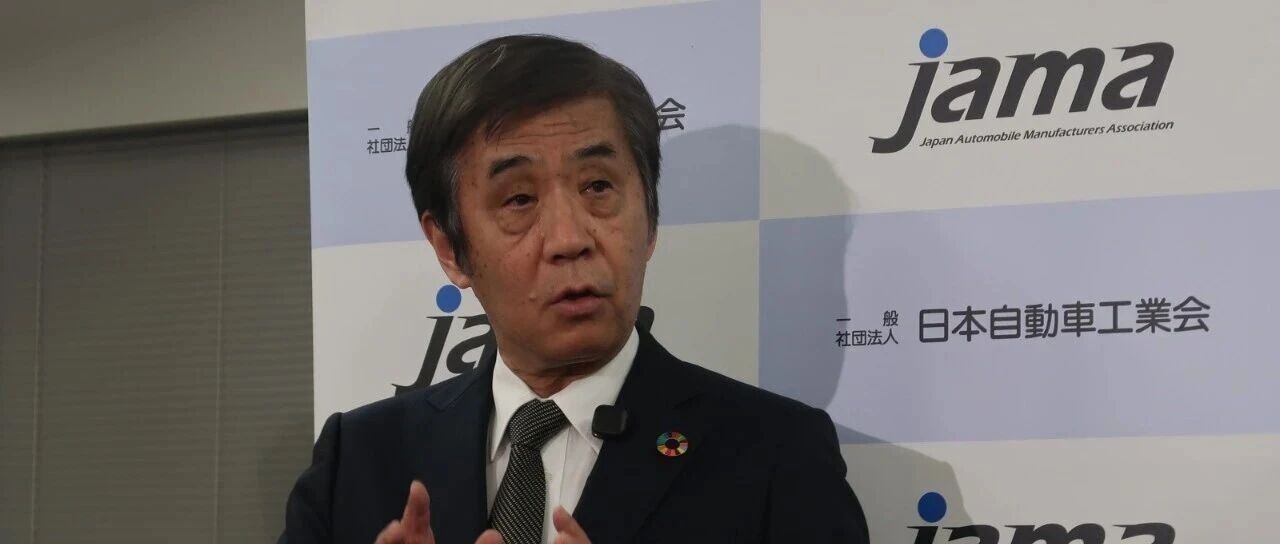
日经BP精选——日本汽车工业会副会长:对中企崛起抱有危机感
日经中文网· 2026-03-10 02:19
Group 1 - The current president of Toyota, Akio Toyoda, will be succeeded by Koji Sato as the president of the Japan Automobile Manufacturers Association (JAMA) starting January 1, 2026 [5] - Sato's appointment comes amid increasing trade and supply chain uncertainties, as well as the rise of emerging competitors from China, with a focus on enhancing collaboration among Japanese automakers to improve international competitiveness [5][6] - This marks the second time a Toyota executive has taken the role of JAMA president since Akio Toyoda held the position from 2018 to 2023, indicating a trend of leadership continuity from Toyota within the association [6]

信达国际控股港股晨报-20260310
Xin Da Guo Ji Kong Gu· 2026-03-10 01:59
Market Overview - The Hang Seng Index (HSI) is currently facing support at 24,696 points due to escalating geopolitical tensions, particularly the conflict between the US and Iran, and the potential implementation of a 15% global tariff by the US [2] - The Chinese government's GDP growth target for 2026 is set between 4.5% and 5%, with a focus on more proactive fiscal policies and moderate monetary easing [2] - The HSI has formed a head-and-shoulders pattern since January, and if it falls below 25,000 points, it may test the support level of 24,696 points [2] Sector Focus - The AI sector is expected to see significant growth due to intensive upgrades in AI models and the semiconductor industry [3] - The Chinese Consumer Price Index (CPI) rose by 1.3% in February, marking the highest increase in over three years, driven by food prices [6] - Major smartphone brands in China, including Xiaomi and OPPO, are planning to raise prices for new models by 600 to 1,000 RMB, with flagship models potentially increasing by 2,000 to 3,000 RMB [7] Company News - Meig Smart (3268) priced its shares at 28.86 RMB, raising approximately 1.1 billion RMB, with a public offering oversubscribed by 173.12 times [8] - Shenghong Technology (300476.SZ) is expected to list in Hong Kong in April, aiming to raise over 2 billion USD for expansion and R&D [8] - Alibaba's cloud division is accelerating the construction of a large-scale computing center in Shanghai, with a total investment of 40 billion RMB [8]



汽车行业点评报告:两会召开,汽车产业提质增效,出海和智能化加速
KAIYUAN SECURITIES· 2026-03-10 01:13
Investment Rating - The industry investment rating is "Positive" (maintained) [1] Core Insights - The government work report highlights the resilience of the domestic economy, with a GDP growth of 5% and a total value reaching 140.19 trillion yuan. The production of new energy vehicles exceeded 16 million units in 2025, and electric vehicle charging facilities surpassed 20 million [5] - The fiscal policy remains proactive, with a special bond issuance of 1.3 trillion yuan to support consumption and the automotive industry. A specific allocation of 250 billion yuan is designated for consumer trade-in programs [6] - The report emphasizes the importance of anti-monopoly measures and fair competition to foster a healthy market environment, alongside promoting high-level opening-up and optimizing global market layouts [7] - The promotion of smart manufacturing and industrial upgrades is a key focus, with suggestions from representatives to enhance intelligent driving regulations and standards [8] Summary by Sections Automotive Market - The demand for domestic high-end luxury passenger cars is expected to exceed expectations, with a favorable competitive landscape. Companies like Jianghuai Automobile and Seres are recommended, while Geely Automobile is identified as a beneficiary [9] - In the auto parts sector, profitability is anticipated to improve against a backdrop of reduced internal competition, with companies such as Desay SV and Zhejiang Xiantong recommended for growth potential [9]