生物医药

Search documents
官方公告:对一上市深企立案调查
Nan Fang Du Shi Bao· 2026-02-07 15:08
Core Viewpoint - The China Securities Regulatory Commission (CSRC) has initiated an investigation into Shenzhen Yahui Long Biotechnology Co., Ltd. (Yahui Long) for allegedly misleading statements in their announcements regarding a strategic cooperation framework agreement [1][2]. Group 1: Investigation Details - On February 6, 2026, the CSRC issued a notice to Yahui Long, stating that the company is under investigation for suspected violations of information disclosure laws [2]. - The investigation is linked to a previous announcement made by Yahui Long on January 6, 2026, regarding a strategic cooperation agreement with Shenzhen Brain Machine Starlink Technology Co., Ltd. [2][3]. - The CSRC's decision to investigate is based on the provisions of the Securities Law of the People's Republic of China and the Administrative Penalty Law [2]. Group 2: Company Announcements and Responses - Yahui Long clarified that the strategic cooperation agreement is a non-binding intention and does not involve specific financial commitments, thus not requiring board or shareholder approval [2]. - The Shanghai Stock Exchange (SSE) sent an inquiry letter to Yahui Long on the same day, emphasizing the need for accurate and complete information disclosure, especially regarding the hot market concept of "brain-machine interfaces" [2][3]. Group 3: Regulatory Concerns - The SSE highlighted inconsistencies in Yahui Long's announcements regarding the technical aspects of the cooperation with Brain Machine Starlink, as well as insufficient risk disclosures related to collaboration feasibility and uncertainties [3]. - The SSE determined that Yahui Long's actions violated relevant regulations of the Shanghai Stock Exchange's listing rules and self-regulatory guidelines, leading to a regulatory warning for the company's then-secretary of the board, Wang Mingyang [3].


锚定2028年目标!上海掷出先进制造业升级“组合拳”
Guo Ji Jin Rong Bao· 2026-02-07 14:21
Core Viewpoint - The Shanghai Municipal Economic and Information Commission has announced the "Three-Year Action Plan for Supporting the Transformation and Upgrading of Advanced Manufacturing (2026-2028)", aiming to enhance the manufacturing sector's capabilities and competitiveness by 2028 [1][7]. Group 1: Action Plan Overview - The Action Plan sets a target to add 100 manufacturing enterprises with an annual output value exceeding 1 billion yuan by 2028, totaling over 600 such enterprises [1]. - The plan will be implemented from January 1, 2026, to December 31, 2028, focusing on enhancing R&D expenditure as a percentage of revenue for large-scale manufacturing enterprises [1]. Group 2: Key Actions and Measures - Four major actions are outlined: 1. Structural Optimization and Upgrading Action, focusing on enhancing traditional industries and supporting emerging sectors like integrated circuits and biomedicine [3]. 2. Innovation and Fundamental Research Action, encouraging increased investment in basic research and providing financial support for R&D centers [3]. 3. Quality and Efficiency Improvement Action, promoting comprehensive upgrades in production and technology, including AI integration in manufacturing [4]. 4. Resource and Factor Support Action, addressing talent acquisition, land use, and financial services to bolster the manufacturing ecosystem [5][6]. Group 3: Economic Context and Goals - By 2025, Shanghai's industrial output value is projected to reach 4.07 trillion yuan, with a year-on-year growth rate of 5.1%, marking the fastest growth in four years [7]. - The plan aims to strengthen ten key industrial chains and develop four trillion-yuan industrial clusters, enhancing the overall industrial landscape [7]. Group 4: Financial and Operational Support - Financial services will be optimized to provide low-interest, high-amount, long-term loans for manufacturing enterprises, alongside support for issuing technology innovation bonds [5]. - The plan emphasizes reducing operational costs, with industrial profit margins expected to improve significantly, as evidenced by a 23% year-on-year profit growth in 2025 [8]. Group 5: Innovation and Technology Focus - The plan highlights the need for breakthroughs in core technologies, particularly in integrated circuits and high-end equipment, to overcome existing technological bottlenecks [9][10]. - There is a strong emphasis on integrating AI into manufacturing processes, with a projected 20% increase in industrial investment by 2025, outpacing national growth rates [10].
东西问|徐飞:中国三大国际科创中心如何成为全球创新“关键极”?
Zhong Guo Xin Wen Wang· 2026-02-07 13:50
Core Viewpoint - The construction of three major international science and technology innovation centers in China—Beijing-Tianjin-Hebei, Yangtze River Delta, and Guangdong-Hong Kong-Macau Greater Bay Area—is a strategic choice to enhance global competitiveness and foster new productive forces, aiming to secure a leading position in future development [1][3]. Group 1: International Innovation Centers - Top international innovation centers serve as hubs for global innovation elements, sources of industrial transformation, and embodiments of national core competitiveness, as evidenced by Silicon Valley and Boston [3][6]. - The three chosen regions in China form a "golden triangle" for international science and technology innovation, leveraging their unique core advantages [3][5]. - Beijing, as the core of the Beijing-Tianjin-Hebei region, boasts the best research resources in China, with top universities and research institutions, ranking third in the GIHI2025 index [5][7]. Group 2: Regional Strengths - The Yangtze River Delta, centered in Shanghai, has a complete industrial system and competes in integrated circuits and biomedicine, ranking 10th globally in the GIHI2025 index [5][7]. - The Guangdong-Hong Kong-Macau Greater Bay Area utilizes its "one country, two systems" advantage to create a unique model of "Hong Kong-Macau R&D + mainland transformation," achieving leadership in 5G and new energy applications [5][7]. Group 3: Challenges and Opportunities - Despite significant advancements, China's three major innovation centers still face structural gaps compared to top global clusters like Silicon Valley and Boston, particularly in original innovation capabilities and high-end resource allocation [7][8]. - The need for enhanced original innovation capabilities, talent development mechanisms, and deeper integration of innovation and industrial chains is critical for future growth [8][9][11]. Group 4: Strategic Focus Areas - Strengthening original innovation capabilities by increasing investment in basic research and fostering long-term scientific exploration is essential [8]. - Transitioning from "policy-driven talent attraction" to "environment-driven talent aggregation" is necessary to build a robust local talent development system [8][9]. - Enhancing the integration of innovation and industrial chains to facilitate the conversion of research outcomes into competitive industrial advantages is crucial [9][11]. - Building an open and collaborative innovation ecosystem to improve global resource allocation and avoid homogeneous competition among regions is vital for the success of these innovation centers [11].
活动 | 马到成功,2025福布斯中国年终盛典
Xin Lang Cai Jing· 2026-02-07 13:33
Group 1 - The Forbes China Year-End Gala held on February 4, 2026, in Shanghai gathered outstanding entrepreneurs and industry leaders from technology, healthcare, semiconductors, and investment sectors to discuss future trends in artificial intelligence, hard technology, biomedicine, and business civilization [2] - Forbes China has been releasing various rankings since entering the Chinese market in 2003, including the Best CEO in China and the Top 50 Innovative Companies in China, which serve as important references for observing changes in China's business society [2] - The event featured a forum with keynote speeches and roundtable discussions covering topics such as healthcare, technology, talent, and sustainable development, aimed at exploring industry development trajectories and prospects [4] Group 2 - The keynote speech by Han Xu, CEO of WeRide, emphasized the strategic significance of autonomous driving as the first large-scale application of physical AI, predicting that within five years, everyone could stop driving, leading to the era of household service robots [6] - Chen Zhisheng, CEO of WuXi Biologics, forecasted that tumors could become controllable chronic diseases within five years, similar to diabetes, and discussed the transformative application of digital technology in drug production [12] - Xu Siqing, founder of Alpha Community, highlighted the dual nature of technological advancement, particularly in AI, which presents both opportunities and challenges to existing human life orders [16] Group 3 - Zhang Hua, founder and chairman of Shibang Group, warned that the era where labor is no longer a necessity is approaching, urging companies to design new job structures for collaboration between humans and intelligent agents [18] - Zhu Jia, partner at Guanghe Venture Capital, pointed out that the core bottleneck limiting AI development is not semiconductor chips but power supply, which is driving nuclear fusion technology towards commercialization [20] - The roundtable discussions included insights on the semiconductor industry's supply-demand mismatch, with Wu Shengwu, chairman of Rongxin Semiconductor, noting a structural contradiction where high-end demand faces capacity shortages while non-specialty processes are oversupplied [27] Group 4 - Liu Yuqing, assistant president of Huafeng Technology Group, emphasized the critical role of advanced packaging in enhancing computing power in the post-Moore's Law era, advocating for a focus on deepening capabilities in the domestic equipment sector [29] - Fang Ling, co-founder of CGL, observed a shift in talent competition within the semiconductor industry from purely technical talent to composite talent with commercial awareness, predicting that AI will exacerbate workplace differentiation [31] - The event also recognized companies like Huafeng Technology and Microchip Technology for their innovative contributions to the industry, awarding them the "2025 Forbes China Innovation Power 50" [58]





乘势而上 攻坚决胜 上海未来五年这样干!
Xin Lang Cai Jing· 2026-02-07 12:33
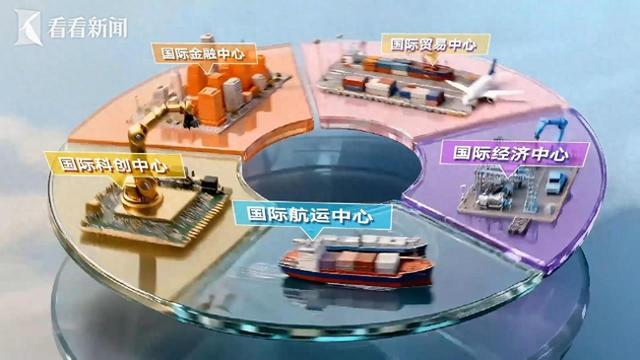
Core Viewpoint - The Shanghai Municipal People's Congress has approved the 15th Five-Year Plan, marking the beginning of a comprehensive implementation phase for Shanghai's development blueprint over the next five years. The economic growth target is set at around 5% during this period, with a focus on enhancing the core functions of five major centers: economy, finance, trade, shipping, and technology innovation [1][16]. Economic Development - Shanghai aims to enhance the overall competitiveness of its modern industrial system, targeting an annual growth rate of over 10% for the manufacturing output of three leading industries: integrated circuits, biomedicine, and artificial intelligence during the 15th Five-Year Plan [3]. - The total output value of strategic emerging industries in Shanghai's manufacturing sector is expected to exceed 50% of the total industrial output by 2030 [3]. Financial Sector - Shanghai plans to explore the pilot launch of RMB foreign exchange futures trading and actively promote the establishment of an international financial asset trading platform, aiming for a total financial market transaction volume exceeding 450 trillion yuan by 2030 [5]. International Trade - The city will strengthen its hub functions and expand offshore trade, with a target of achieving an average annual offshore trade volume of over 100 billion USD in the next five years [7]. - Shanghai aims to collaborate in building a world-class port and airport cluster in the Yangtze River Delta, with a goal of reaching a 55% water-to-water container transfer ratio at Shanghai Port by 2030 [7]. Technological Innovation - The plan emphasizes enhancing original innovation and tackling key core technologies, particularly in fields such as embodied intelligence biomanufacturing and brain-computer interfaces, while accelerating the development of disruptive technologies like photonic chips and controlled nuclear fusion [9]. Social Development - The plan includes specific measures to improve residents' well-being, such as increasing the proportion of nursing beds in elderly care institutions to over 75% and enhancing support for childbirth and parenting services [11][20]. - Shanghai aims to provide 250,000 to 270,000 units of affordable rental housing to attract talent and reduce living costs [13]. Cultural and Tourism Development - The city will focus on cultivating its cultural brand and aims to become a world-renowned tourist city, targeting over 50 million inbound tourists by 2030 [14]. Summary of Goals - The GDP growth target is set at around 5%, with a focus on maintaining the industrial value-added ratio above 20% and ensuring that strategic emerging industries account for over 50% of the total [16]. - The digital economy's core industry is expected to contribute around 20% to the regional GDP by 2025, up from 14% [18].
重庆“免批环评”为企业减负 审批时间压缩至2天
Zhong Guo Xin Wen Wang· 2026-02-07 10:57
Core Viewpoint - Chongqing is implementing an "exemption approval + permit connection" mechanism for environmental impact assessments (EIAs), significantly reducing approval time and costs for enterprises [1][2]. Group 1: EIA Process Optimization - The new mechanism allows enterprises to submit only core materials for "exempt EIA" approval, reducing the approval time from 3 months to 2 working days, achieving over 95% efficiency improvement [1]. - The traditional EIA process required extensive documentation and third-party reports, leading to high costs and long wait times for enterprises [1]. - By 2025, Chongqing will be among the first cities in China to pilot optimized EIA classification management in three specific industrial parks [1]. Group 2: Benefits for Enterprises - The new EIA exemption has allowed companies like Dena (Chongqing) Transmission Technology Co., Ltd. to save approximately 100,000 yuan in EIA costs and expedite project commencement [1]. - The pilot areas focus on industries such as intelligent connected new energy vehicles and biomedicine, enhancing investment attractiveness [1][2]. - Currently, 40 projects in Chongqing have benefited from the exemption approval, saving costs between 60,000 to 200,000 yuan per project and attracting investments totaling approximately 2.1 billion yuan [2]. Group 3: Support Services and Broader Impact - The "park institution + environmental steward" service model has been established to provide comprehensive support and supervision for enterprises throughout the EIA exemption process [2]. - For non-pilot EIA projects, Chongqing has introduced measures to reduce burdens, such as a "report slimming plan" that decreases report preparation workload by over 30% and saves about 30,000 yuan per project [2]. - The changes in the EIA process are expected to accelerate project implementation and support investment attraction, contributing to Chongqing's green and high-quality development [2].
中国GDP50强城市大洗牌:苏州远超天津,济南第18,南宁第49
Sou Hu Cai Jing· 2026-02-07 09:04
Core Insights - The article highlights a significant reshuffling of China's urban economy, with Shanghai leading in GDP at 56,708.71 billion, followed by Beijing, while Suzhou emerges as a surprising contender with a GDP of 27,695.1 billion, surpassing Tianjin by 9,156.28 billion [1][3]. Group 1: Economic Performance - Suzhou's GDP growth of 3.86% is attributed to its strong manufacturing base and vibrant private economy, significantly outpacing Tianjin's growth of only 3.39% [3][11]. - Jinan, with a GDP of 14,210.09 billion and a growth rate of 5.04%, showcases its potential driven by innovation and strategic positioning in the Yellow River basin [5][11]. - Nanning, despite being ranked 49th with a GDP of 6,212.46 billion, demonstrates a growth rate of 3.69%, benefiting from its strategic location and cross-border economic activities [7][11]. Group 2: Future Outlook - The article suggests that the competition among cities will intensify, emphasizing the importance of leveraging inherent advantages and embracing transformation for future success [11]. - The economic dynamics in Suzhou, Jinan, and Nanning illustrate a vibrant and evolving landscape, indicating a robust pulse of China's economy [11].
登上Cell主刊封面:浙江大学顾臻团队开发肥大细胞载药平台,让肿瘤“过敏”,增强癌症免疫治疗
生物世界· 2026-02-07 04:35
Core Viewpoint - The recent study published in Cell journal explores the potential of sensitized mast cells as a targeted drug delivery system for cancer immunotherapy, redirecting the immune response typically associated with allergies to combat cancer [3][4][12]. Group 1: Research Overview - The study introduces an engineered mast cell platform that utilizes tumor-associated antigens as "allergens" to drive the accumulation of mast cells loaded with anti-tumor drugs, such as oncolytic viruses, to tumor sites [4][10]. - The research team developed an antigen-guided mast cell-mediated drug delivery system, demonstrating the innovative design through a cover image that symbolizes the interaction between antigens and mast cells [7]. Group 2: Mechanism and Findings - The study focuses on immunoglobulin E (IgE) sensitized mast cells (IgE-MC) for targeted delivery of oncolytic adenoviruses and local immune activation, showing significant potential in enhancing cancer treatment efficacy [8][10]. - IgE-MC can selectively target antigen-positive tumors, releasing oncolytic viruses and cytokines/chemokines upon antigen binding, thereby reversing immune suppression and activating anti-tumor immune responses [10][12]. Group 3: Safety and Efficacy - The infusion of IgE-MC is cleared within two weeks without disrupting mast cell homeostasis or inducing systemic allergic reactions, demonstrating a favorable safety profile [9]. - Compared to free oncolytic viruses, IgE-MC delivered oncolytic viruses showed reduced liver toxicity and no viral replication detected in normal tissues, indicating a safer therapeutic approach [9].

优势产业“优化提升” 先导产业“战略引领” 新兴产业跨过规模化门槛 上海制造力争三年再增百家“10亿+”
Jie Fang Ri Bao· 2026-02-07 03:24
Core Insights - Shanghai has approximately 10,000 industrial enterprises with an annual output value exceeding 20 million yuan, of which around 500 have an output value exceeding 1 billion yuan. By 2025, these "1 billion+" enterprises are expected to contribute over 60% of the output value of Shanghai's industrial enterprises and over 40% of industrial investment, serving as a stabilizing force for growth and investment [1] Group 1: Action Plan Overview - The action plan consists of "four major actions" with a total of 17 measures to support the achievement of its goals [2] - The "Structural Optimization and Upgrading Action" aims to enhance traditional advantageous industries, encouraging sectors like non-ferrous metals to strengthen specialty steel and expand light alloys [2] - The "Innovation and Fundamental Strengthening Action" supports enterprises in enhancing technological reserves, providing a one-time financial subsidy of 10 million yuan for companies investing over 10 million yuan annually in basic research [2] Group 2: Industry Support and Development - The "Resource Factor Support Action" focuses on talent, space, and funding, including policies to address industrial land lease renewals and promote low-interest loans for manufacturing [3] - By 2025, Shanghai's total industrial output value is projected to reach 4.07 trillion yuan, marking a return to the 4 trillion yuan level after two years [3] - Shanghai's industrial enterprises have seen a continuous decline in core cost factors, with direct industrial costs decreasing by 11.8 billion yuan in 2024 and an additional 10.33 billion yuan in 2025, leading to a cost of 81.5 yuan per 100 yuan of revenue, which is 4 yuan lower than the national average [3]
首款、首个、首次!本周,我国多领域解锁新成就
Yang Shi Xin Wen Ke Hu Duan· 2026-02-07 01:48
Group 1: Breakthroughs in Transportation and Communication Technologies - The world's first hybrid unmanned transport aircraft, the Rainbow YH-1000S, successfully completed its maiden flight on February 1, developed by China Aerospace Science and Technology Corporation's 11th Academy. This aircraft is designed for various applications including international logistics, emergency rescue, and ocean monitoring [1] - The first domestically produced electric vertical take-off and landing aircraft, developed by the 9th Academy of China Aerospace Science and Technology Corporation, successfully completed its maiden flight on February 6. This multifunctional low-altitude vehicle is expected to play a significant role in transportation and logistics [3] - China has made a significant advancement in quantum communication by constructing the first truly scalable quantum network relay unit, achieving secure communication over 11 kilometers of fiber and extending the secure distance to 100 kilometers, marking a decisive step towards practical long-distance quantum communication [17] Group 2: Renewable Energy and Carbon Management - The world's first 20-megawatt offshore wind turbine successfully connected to the grid in Fujian, marking a significant milestone in China's capabilities in manufacturing and operating large-capacity offshore wind turbines [8][10] - The first field trial of a long-distance pipeline for carbon dioxide transportation was successfully completed in Puyang, Henan, representing a key leap from theoretical research to engineering practice in the resource utilization of existing long-distance pipelines [11][14] Group 3: Advancements in Medical Technology - The IP-SAFE project, which focuses on the development of a medical isotope drug research platform based on accelerators, has made significant progress with the successful installation of the main accelerator device, marking a crucial step towards the construction of the world's first alpha medical isotope mass production demonstration facility [18][20]