电动车

Search documents
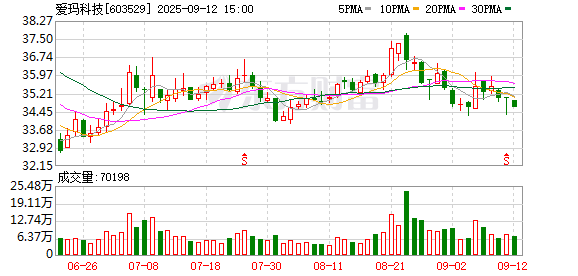
爱玛科技:关于调整2025年限制性股票激励计划预留授予价格的公告
Zheng Quan Ri Bao· 2025-09-12 12:10
Group 1 - The company announced an adjustment to the reserved grant price for its 2025 restricted stock incentive plan, setting the new price at 19.38 yuan per share [2] - This adjustment follows the completion of the company's 2025 semi-annual equity distribution [2] - The decision was made during the second meeting of the sixth board of directors held on September 12, 2025, and is in accordance with the provisions of the draft of the 2025 restricted stock incentive plan and the authorization from the first extraordinary general meeting of shareholders in 2025 [2]


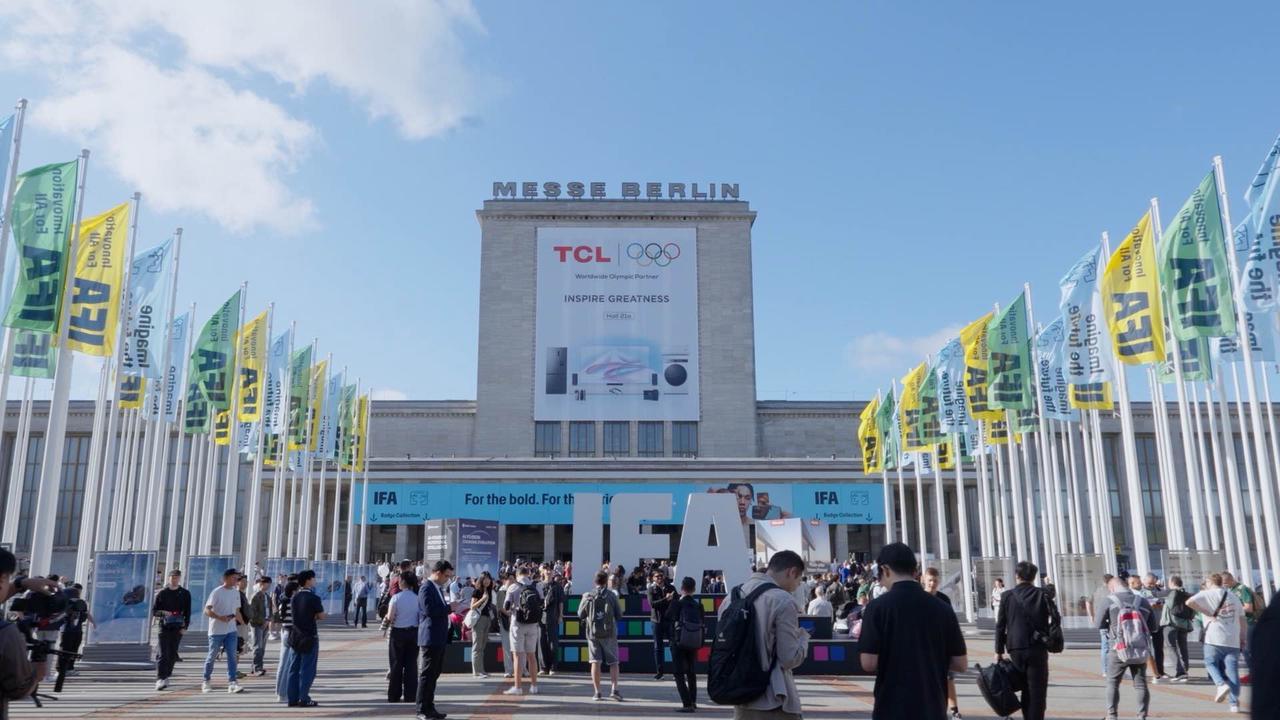
暴走10万步逛遍IFA,这几个产品让我们眼前一亮
3 6 Ke· 2025-09-12 08:15
Core Insights - IFA 2025, a significant consumer electronics and home appliance exhibition, opened on September 5, showcasing over 2800 global brands and highlighting the importance of the event for Chinese manufacturers entering the European market [1][3] Industry Trends - The scope of IFA has expanded beyond traditional home appliances to include innovations in artificial intelligence, the Internet of Things, and green technology, with a notable decrease in smartphone manufacturers this year [3] - The exhibition featured a diverse range of products, including electric vehicles, drones, and AI glasses, indicating a shift towards a broader definition of consumer electronics [3] Company Highlights - The ASTRAUX micro electric vehicle, designed for young Europeans, was a standout product at IFA, emphasizing its unique positioning as a tech product rather than a traditional vehicle [4][6] - ASTRAUX's features include mobile karaoke, ambient lighting, and app connectivity, appealing to the social and entertainment needs of its target demographic [6][8] - Priced at €6990, with an early bird price of €5990, ASTRAUX offers a competitive alternative to existing models like Citroën Ami, boasting better features and lower costs [8][9] - ASTRAUX is positioned as a global lifestyle tech brand, not just a car manufacturer, and also showcased AI companion robots and AI glasses at the event [11] Product Innovations - Lexar introduced the TouchLock dual-encryption portable SSD, featuring advanced NFC and hardware encryption for enhanced data security [12][14] - The Aink Note AI smart notebook combines handwritten notes with audio recording, providing a dual recording method that enhances meeting documentation [15][17] - The ZEN+ home energy management system from a Chinese clean energy tech company offers AI-driven load control and energy optimization, potentially saving users up to 42% on electricity costs [18][20]
Rho Motion:全球8月电动车销量增速放缓至15% 创1月份以来最慢
智通财经网· 2025-09-12 02:00
Core Insights - Global sales of all-electric and plug-in hybrid vehicles in August increased by 15% year-on-year, marking the slowest growth rate since January, indicating a more challenging situation compared to the previous year [1] - China's electric vehicle sales growth slowed to 6% in August from an average of 36% per month in the first half of the year, although strong sales are still expected in Q4 due to new subsidy plans and seasonal rebounds [1] - The total global sales of pure electric and plug-in hybrid vehicles reached 1.7 million units in August, with China accounting for over half of the global total [1] Regional Performance - Sales in China reached 1.1 million vehicles, while Europe saw a 48% increase to approximately 283,453 vehicles, and North America experienced a 13% growth to 201,255 vehicles [2] - Other global regions recorded a 56% increase, exceeding 144,280 vehicles [2] - In the U.S., August sales are expected to reach a new high, with strong performance anticipated in September, although a significant decline may follow [2]
00后大学生清醒消费:实用为先,体验世界,电动车上位,愿为AI付费
3 6 Ke· 2025-09-12 00:00
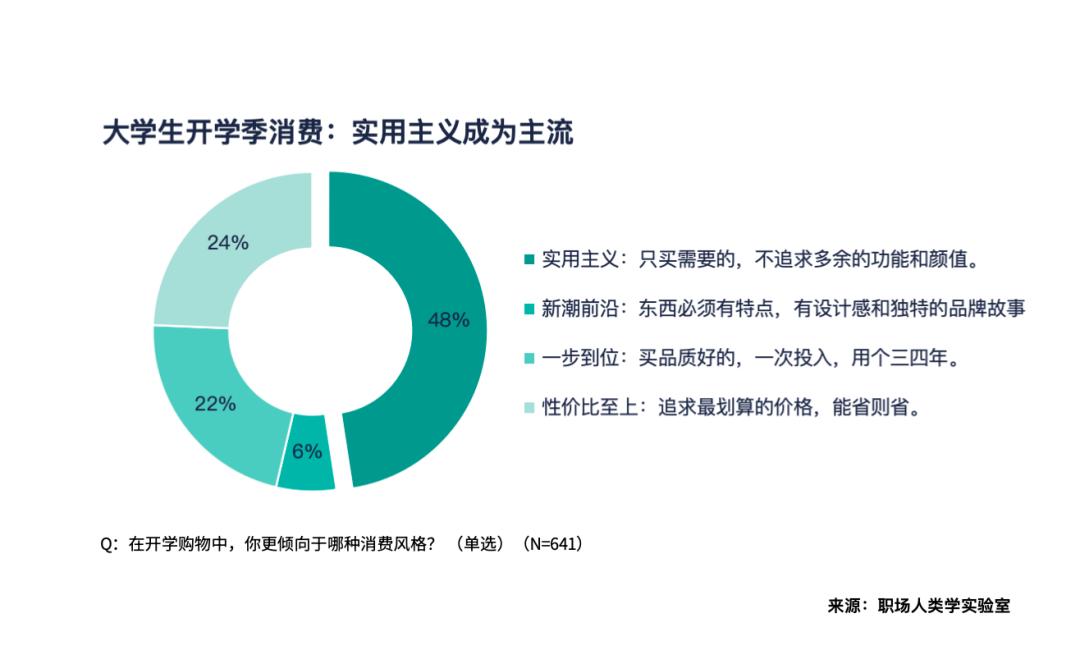
Core Insights - The article highlights the evolving consumption patterns of university students, particularly the 00s generation, who prioritize practicality and value for money in their purchases while also seeking emotional experiences through travel and other activities [1][2][3] Consumption Behavior - University students exhibit a dual approach to consumption: they seek cost-effectiveness for necessary purchases and prioritize experiential value for emotional spending, while also considering long-term returns for future investments [2][3] - A significant portion of students (approximately 48%) identify as practical consumers, focusing on essential needs without unnecessary features, while 25% prioritize the best price [2][3] Regional Differences - Consumption preferences vary by region, with students in first-tier cities like Shanghai and Beijing leaning towards trendy products, while those in central and western provinces like Hubei and Henan favor practicality [6] Financial Insights - The majority of university students (about 58%) have a monthly living expense between 1,000 and 3,000 yuan, indicating a moderate financial capacity for discretionary spending [9] Emotional Spending - A large majority (approximately 84%) of students are willing to spend on travel experiences, reflecting a strong desire for emotional value in their consumption [13] Attitudes Towards Relationships - The majority of students (55%) adopt a relaxed attitude towards dating, indicating a shift towards a more pragmatic approach to relationships [15][19] - When selecting partners, students prioritize character and compatibility, with 83% valuing personal qualities over physical appearance [23] Spending in Relationships - In terms of relationship expenses, 54% of students believe a budget of 501-1,000 yuan per month is necessary, indicating that dating can be a significant financial commitment [28] Smart Consumption Trends - The essential items for the 00s generation have become increasingly "smart," with wearable devices and electric bicycles emerging as key products for university students [31][34] - Electric bicycles are preferred for campus mobility, with 74% of students purchasing them over traditional bicycles [34][40] Digital and AI Spending - A notable 71% of students are willing to pay for software memberships, and 25% have already invested in paid AI tools, indicating a growing trend towards digital consumption [45] Conclusion - The article encapsulates the complex interplay of practicality, emotional value, and digital engagement in the consumption habits of contemporary university students, reflecting a generation that balances rational spending with a desire for meaningful experiences [48]
究竟用什么 迎接AI的“军备”之旅
Sou Hu Cai Jing· 2025-09-11 17:55
Group 1 - The core viewpoint emphasizes that the recent massive capital expenditure by OpenAI has ignited enthusiasm for AI-driven growth, significantly impacting companies like Oracle, which saw its remaining performance obligations (RPO) surge to $455 billion, leading to a 36% stock price increase [1] - The AI-driven growth is described as a "arms race," with various tech giants like Broadcom and Google positioned to benefit from this trend [1] - Tesla is highlighted as transforming from an electric vehicle company to an AI-driven innovation company, with significant developments in robotics and autonomous driving technology [1] Group 2 - The article discusses the perception of a bubble in the AI sector, suggesting that market enthusiasm, while potentially bubble-like, serves as a ticket to the unknown, allowing for trial and error among participants [2] - It is noted that the journey towards AI is not merely a continuation of existing economic structures but requires new designs and tools to meet emerging demands [3] - The need for a clear understanding of AI as a technological leap rather than a continuous function is emphasized, indicating that existing economic ecosystems must evolve based on fundamental principles [3] Group 3 - The article stresses the importance of creating an environment that fosters individual creativity and innovation, advocating for reduced market entry barriers and fair competition [4] - It highlights that AI competition transcends geographical boundaries, necessitating a reevaluation of regulatory frameworks to manage the complexities introduced by AI and Web 3.0 [4][5] - The core competitive focus in the AI arms race is on the clear definition and description of demand, which requires a supportive institutional framework for entrepreneurial freedom [5] Group 4 - The competition in the AI arms race is characterized as not just a battle for computational power and data but also a cognitive transformation that requires a respectful and responsive competitive order for entrepreneurs [6]
加拿大开始求饶,准备取消对华电动车关税,但需要中方答应一个请求
Sou Hu Cai Jing· 2025-09-11 10:41
Core Viewpoint - The Canadian government is facing significant pressure due to its trade policies, particularly regarding high tariffs on Chinese electric vehicles, which have led to retaliatory measures from China that threaten the Canadian canola industry [1][3]. Group 1: Trade Policies and Economic Impact - The Canadian government initially imposed high tariffs on Chinese electric vehicles as a symbolic gesture to align with North American allies, but this decision has backfired, leading to severe economic repercussions [1]. - China's response included targeted actions against Canadian canola, including anti-dumping investigations and deposit measures, which directly impact the livelihoods of thousands of farmers and the overall economic structure of Canada [1][3]. - In 2024, Canadian canola exports to China are projected to be nearly CAD 5 billion, supporting approximately 200,000 jobs, highlighting the critical nature of this trade relationship [3]. Group 2: Government Response and Industry Reaction - The Canadian government has recognized the severity of the situation and is considering adjustments to its trade policies, including potential tariff cancellations, while also providing financial subsidies to the canola industry [3][5]. - Industry leaders, such as Chris Davidson, have expressed dissatisfaction with government subsidies, emphasizing the need for market access rather than financial compensation [3][5]. - Politicians from key provinces are pressuring the government to reassess its trade policies with China, with some openly supporting the removal of tariffs on electric vehicles to restore canola market access [3][5]. Group 3: Diplomatic Challenges and Future Outlook - The Canadian government is navigating a complex situation where any policy changes must not adversely affect other industries or the interests of the United States, its crucial trading partner [5]. - The ongoing trade tensions illustrate China's adaptive strategies in international trade, opting for precise retaliatory measures rather than direct confrontation [5][7]. - The future of this trade dispute will test Canada's diplomatic acumen, as it seeks to balance domestic industry needs with international relations, particularly with the U.S. [7].

对标一流,广西厚植民营经济高质量发展沃土
Guang Xi Ri Bao· 2025-09-11 02:57
Core Viewpoint - The news highlights the efforts of Guangxi to enhance its business environment, focusing on optimizing market access, reducing transaction costs, and promoting high-quality economic development through various initiatives and reforms [6][12][13]. Group 1: Business Environment Improvement - Guangxi has implemented a series of measures to create a favorable business environment, including the introduction of local regulations and policies aimed at optimizing the business climate for private enterprises [12][16]. - The region has focused on reducing market entry barriers and enhancing the efficiency of market access, with significant improvements noted in the processing times for business registrations and approvals [13][10]. - The government has actively engaged in addressing issues raised by businesses, ensuring effective communication between enterprises and authorities to resolve operational challenges [7][8]. Group 2: Cost Reduction and Financial Support - The average electricity price for industrial and commercial users in Guangxi has decreased to approximately 0.6087 yuan per kilowatt-hour, reflecting a year-on-year decline of about 10.37% [13]. - The total loan balance for small and micro enterprises reached 614.97 billion yuan, with a year-to-date growth of 6.72%, and the average loan interest rate stands at 3.75% [13]. - The region has facilitated significant financial support for small and medium-sized enterprises, with 38.93 million enterprises receiving loans totaling 601.11 billion yuan [13]. Group 3: Technological and Regulatory Advancements - Guangxi has seen a remarkable increase in technology contract transactions, with a total value of 41.101 billion yuan, marking a year-on-year growth of 88.38% [15]. - The region has established a robust regulatory framework, enhancing the efficiency of administrative enforcement and reducing unnecessary inspections by 95% [15][17]. - The introduction of a credit repair system has benefited 32,000 enterprises, with a high data accuracy rate of over 99.5%, positioning Guangxi as a leader in credit system innovation [15]. Group 4: Trade Facilitation and International Engagement - The total import and export volume of Guangxi reached 387.15 billion yuan, reflecting a year-on-year increase of 13% [18]. - The region has improved customs clearance efficiency, with the average clearance time at the Friendship Pass reduced from 10 minutes to 1.5 minutes [18]. - Guangxi has enhanced its international trade capabilities, with 100% of customs administrative approvals now processed online, facilitating smoother cross-border trade [18][19].
TrendForce:二季度全球电动车牵引逆变器装机量达766万台 同比增长19%
Zhi Tong Cai Jing· 2025-09-10 09:17
Group 1 - The global electric vehicle (EV) traction inverter installation is expected to reach 7.66 million units in Q2 2025, representing a 19% year-on-year growth, driven by the increase in battery electric vehicle (BEV) sales [1] - The installation ratio of BEVs is projected to be 52%, maintaining its position as the leading power mode, surpassing the combined share of hybrid electric vehicles (HEVs), plug-in hybrid electric vehicles (PHEVs), and range-extended electric vehicles (REEVs) [1] Group 2 - BYD and Denso lead the market with shares of 17% and 14% respectively, while Huawei's market share increased from 3% to 4% due to the popularity of BEV and REEV models [4] - The penetration rate of silicon carbide (SiC) inverters reached 17% in Q2, primarily installed in BEVs, but also expanding into PHEVs and REEVs, with the latter two accounting for nearly 19% of installations, all contributed by Chinese manufacturers [4] - The demand for REEVs has not displaced the demand for other power vehicles but has instead expanded the overall inverter market size, becoming a key driver for the proliferation of SiC models [4] Group 3 - The demand for SiC inverters is expected to grow as the REEV market matures, reducing the risk of over-concentration in the BEV market [5] - The largest markets for PHEVs, REEVs, and BEVs are in China, prompting international semiconductor companies like Infineon to increase their production share in the Chinese market [5] - The mature end-user application market in China is shifting the overall industry chain's bargaining power, making it more challenging for non-Chinese manufacturers to catch up [5]


研报 | 2Q25全球牵引逆变器装机量年增19%,增程式电动车助力SiC机种普及
TrendForce集邦· 2025-09-10 09:02
Core Insights - The global electric vehicle (EV) traction inverter installation reached 7.66 million units in Q2 2025, marking a 19% year-on-year increase, driven by the growth in battery electric vehicle (BEV) sales [2] - BEVs accounted for 52% of the inverter installations, maintaining the largest share, surpassing hybrid electric vehicles (HEVs), plug-in hybrid electric vehicles (PHEVs), and range-extended electric vehicles (REEVs) [2] Market Performance - BYD and Denso lead the market with shares of 17% and 14% respectively, while Huawei's market share increased from 3% to 4% due to the popularity of BEV and REEV models [5] - Inovance has also established itself among the top five suppliers in the market [5] Semiconductor Application - The penetration rate of silicon carbide (SiC) in inverters rose to 17% in Q2 2025, primarily used in BEVs and gradually expanding to PHEVs and REEVs, with the latter two accounting for nearly 19% of installations, all contributed by Chinese manufacturers [6] - The adoption of SiC in REEVs reached 20%, second only to BEVs at 31%, indicating a growing demand that does not detract from other vehicle types but rather expands the overall inverter market [6] - The demand for inverters in PHEVs, REEVs, and BEVs is predominantly driven by the Chinese market, prompting international semiconductor companies like Infineon to increase their production share in China [6]
香港财库局:香港成为全球最大电动车投融资平台 新能源板块占港股市值13%
智通财经网· 2025-09-10 05:55
Core Insights - The Hong Kong government has developed a concrete action plan and clear policies to enhance its status as a green finance center [1] - The Hong Kong Stock Exchange (HKEX) provides a special listing channel for technology companies, attracting many firms from the electric vehicle supply chain and energy storage sectors to list in Hong Kong [1] - The market capitalization of the new energy sector in Hong Kong has reached USD 806 billion, accounting for 13% of the total market capitalization, which is a fivefold increase compared to ten years ago [1] - Hong Kong has become the largest global financing and investment platform for electric vehicles [1] Carbon Trading and Green Bonds - The carbon trading market "Core Climate" in Hong Kong is priced in both HKD and RMB and has served over 60 Belt and Road projects, indicating positive progress in the development of carbon credit tools [1] - Hong Kong's issuance of green and sustainable bonds accounts for 45% of the total in Asia [1] - There are currently over 200 recognized Environmental, Social, and Governance (ESG) fund products in Hong Kong, with an asset management scale of HKD 1.1 trillion, which has increased by approximately 18% compared to three years ago [1]